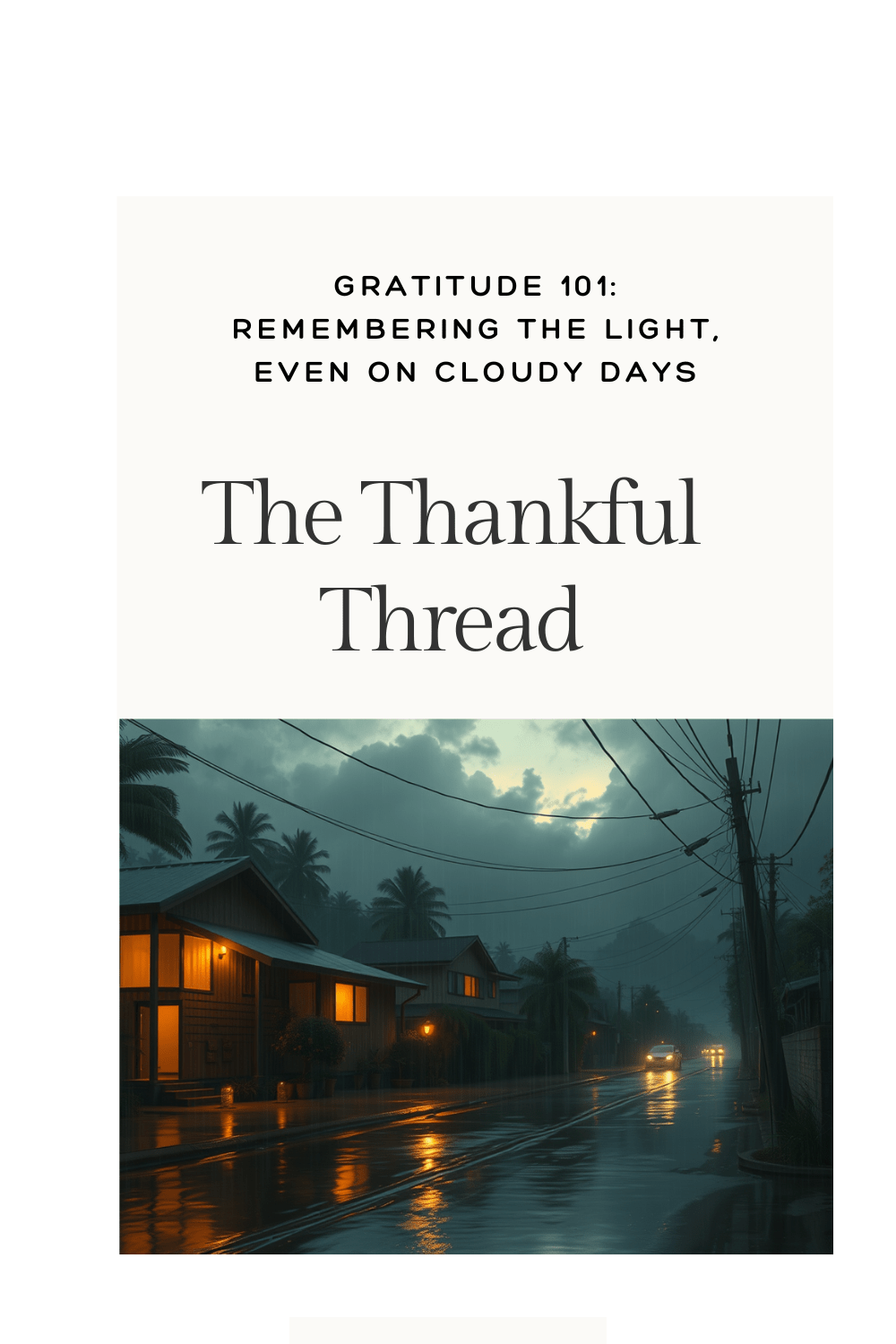
Lately, the rain has been pouring endlessly here in the Philippines. The kind that makes the roads feel heavier, the traffic more unbearable, and the hours slower to pass. Flooded streets mirror the grayness above, and people—under umbrellas, under stress—move through the day with a quiet kind of frustration. A slight bump on the shoulder turns into a scowl. A missed jeepney feels like more than an inconvenience—it feels like the last straw. And in these moments, I’m reminded of how easy it is to forget.
We forget how much we already have.
We forget how far we’ve come from where we started.
We forget the small, quiet blessings that hold our days together when everything else feels uncertain.
Because even when life feels heavy, even when the skies won’t stop crying, gratitude remains
We’ve been conditioned to notice what’s wrong. To tune into delays, imperfections, and what didn’t go as planned. It’s become far too natural to complain. And yet, on this rain-soaked night, I’m choosing a different response. I’m choosing to pause. To breathe. To give thanks—even for the ordinary.
Because even in the middle of slow-moving days and soggy shoes, there’s something to be grateful for. And when we start to name those things, we remember just how held we really are.
Tonight, I’m grateful for the roof above me and the soft bed I get to call home. For warm meals and shoes that protect my feet from the storm outside. I’m thankful for access to the internet, which keeps me connected to loved ones near and far, and to the world I long to be part of. I give thanks for the presence of friends and family—those who listen, encourage, and love without keeping score. For the gift of good health, which allows me to rise, work, and move forward one step at a time. I’m thankful, too, for the kindness of strangers—those fleeting moments that remind me that goodness still quietly exists.
I even give thanks for the hard things. The heartbreaks. The disappointments. The doors that once closed so loudly they left an echo in my chest—because, in hindsight, they built something in me. They shaped my strength, refined my hope, and taught me how to begin again. I’m thankful for the simple gift of being alive, of having breath in my lungs and choices still ahead of me. For the ability to speak, to create, to reflect, and to use the privileges I have to live with meaning. Most of all, I’m thankful for the quiet peace of this very moment—this chance to write, to remember, and to be still.
Because even when life feels heavy, even when the skies won’t stop crying, gratitude remains. It may not shout. It may not sparkle. But it anchors. It heals. It reminds us of the light—especially when we forget.
Gratitude is a word we hear often—tucked inside wellness quotes, printed on journals, whispered in prayers. But the truth is, gratitude is more than just a practice. It’s a perspective. A way of seeing the world not just through what’s lacking, but through what quietly holds us together.
Gratitude is not about ignoring pain or pretending everything is okay. It’s about choosing to acknowledge what is still good, even when life feels heavy. It’s remembering that alongside the disappointments and delays, there are also comforts, provisions, and quiet mercies that deserve to be named.
We often associate thankfulness with the grand moments—graduations, job offers, big breakthroughs. But some of the most powerful gratitude lives in the unnoticed: a warm bed after a long day, a kind message from a friend, a meal cooked with love, or the sound of rain as you fall asleep. Gratitude slows us down. It softens the sharp edges of our days. And when practiced regularly, it shifts the way we move through life.
Here’s the truth: we’ve been conditioned to notice what’s missing. Our minds are wired to scan for problems, to compare, to criticize. We live in a culture that measures success by speed, accumulation, and visibility. But gratitude invites us to pause. It asks us to become aware—of the now, of the enough, of the abundance that already exists in our lives.
So how do we begin? How do we make gratitude a rhythm rather than a reaction?
1. Start Small. Start Specific.
Don’t wait for big things to happen before you give thanks. Begin with what’s already in front of you: clean water, quiet mornings, your favorite coffee mug, a deep breath. The more specific you are, the more powerful the gratitude becomes.
2. Write It Down.
There’s something transformative about putting thankfulness into words. Keep a gratitude journal. Write three things you’re thankful for every night before bed. Or create a running list in your notes app. Make it part of your routine—like brushing your teeth, but for the soul.
3. Say It Out Loud.
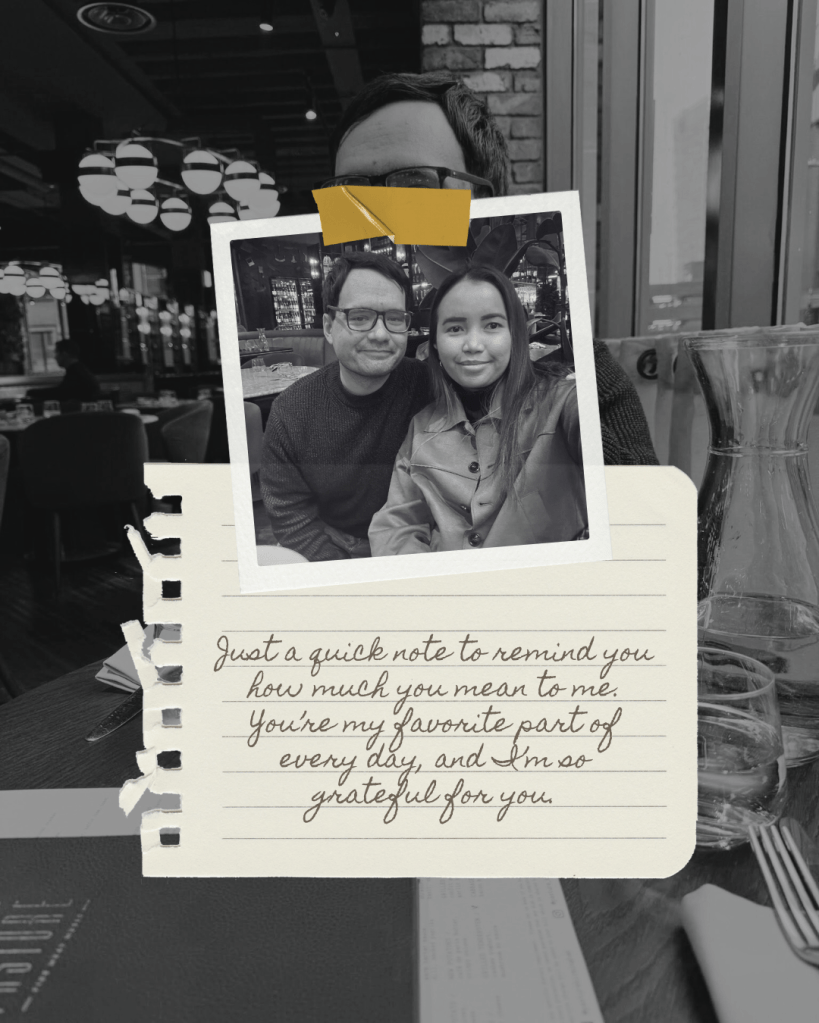
Express your gratitude to others. Say “thank you” more often. Send that text. Write that letter. Let people know when their presence, kindness, or support made your day better.
4. Reframe the Hard Moments.
This doesn’t mean toxic positivity. But when you’re in the middle of a difficult season, ask yourself: Is there something I’m learning here? Something I’m being shaped by? Even the hard things can hold hidden gifts.
5. Pause During the Ordinary.
Gratitude isn’t reserved for holidays or highlight reels. Practice it while doing laundry. While walking to work. While watching the sunset. Let it become a lens, not just a list.
What Gratitude Has Taught Me
Personally, gratitude has saved me more times than I can count. It steadied me during long seasons of waiting. It reminded me I was still surrounded by love, even when dreams felt far away. It helped me reframe setbacks as stepping stones, not dead ends. And it softened my heart when it started to harden from exhaustion, comparison, or fear.
I’ve learned that the most grateful people aren’t always the ones with the most obvious blessings. They’re often the ones who’ve suffered, who’ve known lack, who’ve been broken—and still choose to see the light.
Gratitude doesn’t mean you’re always happy. It means you’re always aware.
Try This: Your Gratitude Starter List
Tonight, ask yourself:
- What made me smile today?
- Who showed me kindness recently?
- What’s something I’ve been taking for granted?
- What is one thing I have now that I once prayed for?
- How has life been quietly generous to me this week?
Answer with honesty. Let it ground you.
Gratitude is a practice. A discipline. A kind of daily poetry. And the best part? It’s free. It requires no perfect setting, no special occasion, no external validation. Just awareness. Just a willing heart.
So the next time the day feels ordinary or overwhelming, pause. Breathe. And give thanks—even for the smallest grace.
Because gratitude, dear reader, is where the healing begins.
With gratitude always,
Anj 🤍



















 superanjventures
Leave a comment