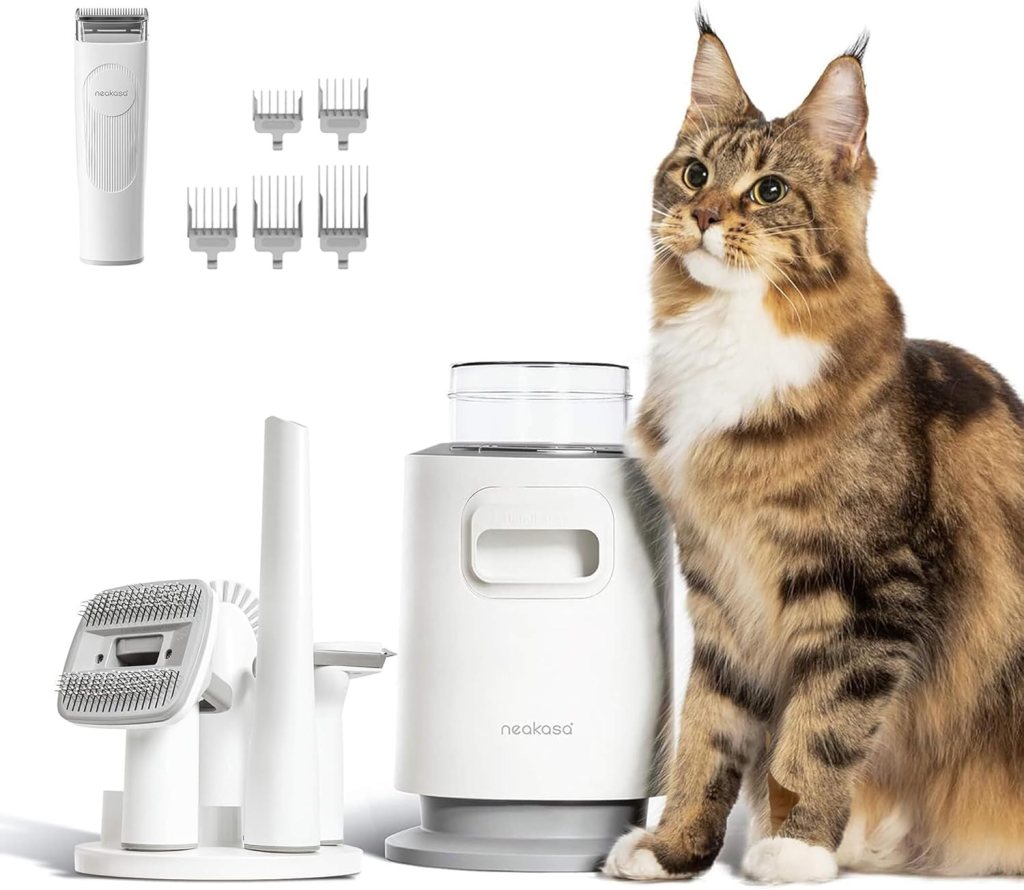
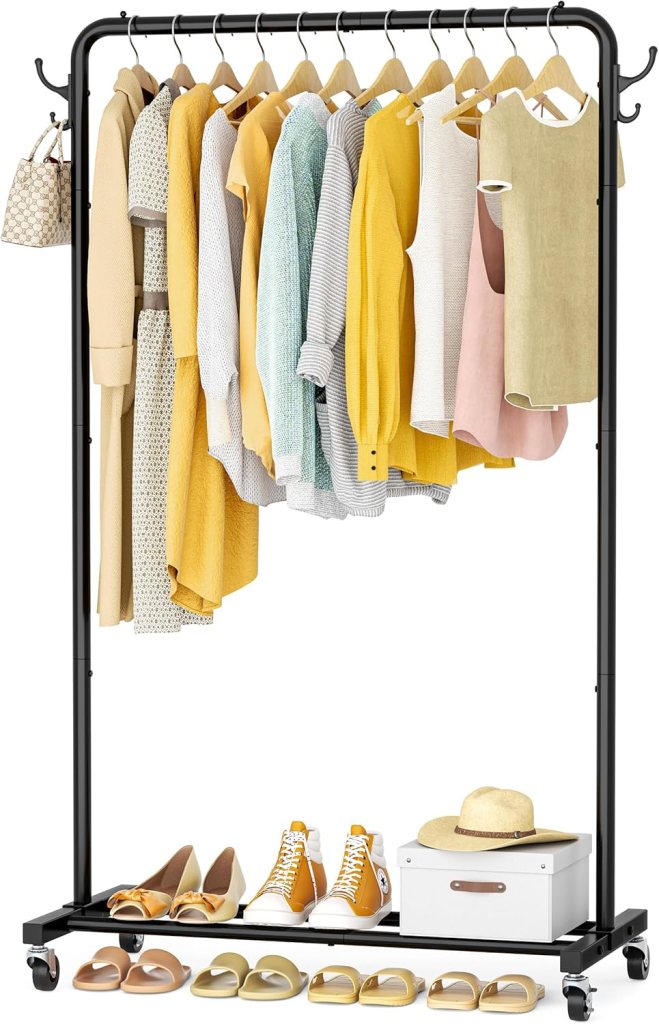
I had three items in my basket and absolutely no intention of buying any of them. A grooming kit for the cats. A pet dryer large enough to suggest bath time was about to become an industrial operation. And a minimalist clothes rack whose product photographs implied that owning it would finally turn me into the sort of woman who hangs clothes properly instead of placing them on a chair and calling it temporary. I inspected all three with unnecessary seriousness. Reviews were opened. Dimensions were checked. Customer photographs were enlarged. I briefly considered whether the pet dryer would genuinely improve our lives or simply introduce a new machine for the cats to distrust. The clothes rack received particular scrutiny because it was selling more than metal and shelving. It was selling a personality. A tidier one. I nearly believed it, then I closed the app.
Days passed. Occasionally the app sent me a reminder that I had left something behind, which felt less like customer service and more like emotional manipulation. Yes, I had left something behind. That was increasingly the point. My online basket has slowly become a waiting room for objects that may never be discharged into my house. Things enter with very convincing arguments about usefulness, beauty and limited-time discounts, then sit there while I decide whether they deserve permanent residency.
I think shopping used to be more of a hobby for me, although I never formally called it that. I do not mean practical shopping. Adulthood remains aggressively committed to charging us for groceries, shampoo, cat litter, batteries, clothes and approximately seventeen different things required to prevent a household from quietly falling apart. I mean browsing for entertainment. Shopping because I was bored, tired, stressed, celebrating, mildly inconvenienced or simply in possession of Wi-Fi and insufficient supervision.
There was a time when I could open an online shop with no intention of buying anything and emerge forty minutes later convinced that my life had been incomplete because I did not own a particular storage basket. Algorithms are frighteningly good at introducing problems you did not know you had. Show me the same elegant organiser six times and eventually I begin wondering whether this is marketing or divine intervention.
Younger me was also exceptionally talented at renaming purchases as investments. A new handbag was an investment. Storage boxes were investments in organisation. Clothes I did not need were investments in a future version of myself who apparently attended sophisticated brunches every weekend and never repeated an outfit. Kitchen gadgets were investments in efficiency, even when they were used twice and then placed at the back of a cupboard where they entered a kind of domestic witness protection programme. My investment portfolio was remarkably diversified.
There is also a particular pleasure attached to pressing Add to Basket. Technically, no money has left the account yet, which means you get the thrill of imaginary ownership without the irritating participation of arithmetic. For several glorious minutes, the object belongs to your future life. Checkout is where reality asks for identification.
And parcels were fun. A delivery at the door felt like a tiny celebration organised by a version of me from three days earlier. Occasionally I had forgotten what I ordered entirely, which meant I was effectively sending myself surprise presents funded by my own questionable judgement. This is difficult to describe as financial strategy, but it was certainly entertaining.
Retail therapy was wonderfully adaptable too. Difficult week? Buy something. Good week? Celebrate by buying something. Completely ordinary week in which nothing particularly noteworthy happened? The plot was clearly moving too slowly and required merchandise.
I still like beautiful things. I like good design, useful gadgets, nice clothes and objects that genuinely make everyday life easier. I have not become one of those serene minimalists who owns three beige shirts, one ceramic bowl and an alarming amount of emotional clarity. I still enjoy things. I have simply developed the inconvenient habit of interrogating them before allowing them into the house.
Do I actually need this? Do I already own something capable of doing the same job? Where exactly will it live? Will I still care about it next month? Is it solving a real problem, or have I seen it so many times online that familiarity has started disguising itself as destiny? These questions have become the unofficial border control of my home.
Some objects survive the interview. Others remain in the basket until the initial excitement expires and I look at them again several days later with absolutely no memory of why I had once considered them essential to human flourishing. It is always slightly humbling to discover that something I regarded as life-changing on Tuesday has become faintly embarrassing by Friday. Apparently my quality of life is remarkably resilient.
I think I have also grown tired of the endless promise of upgrading. For a while, newer automatically felt better. Better storage. Better organisers. Better wardrobe systems. Better containers. Something sleek, neutral and beautifully photographed enough to imply that purchasing it might somehow transfer its organisational abilities directly into my personality.
It never did.
A storage box cannot organise someone who refuses to organise. Very inconsiderate of it, frankly.
Now I find much more satisfaction in making existing things work. Wear the clothes. Finish the skincare. Repair the thing if it can be repaired. Read the books already sitting patiently on the shelf before constructing an extension for the unread ones. Clean the cupboard before buying another storage solution whose eventual destiny is to live inside the cupboard it was supposed to rescue. These are not revolutionary ideas, but adulthood has taught me that common sense often arrives after several parcels.
Even my relationship with clothes has changed. I used to enjoy the possibility attached to buying them. Clothes did not merely cover the body; they arrived carrying fictional lifestyles. This dress belonged to a woman who attended elegant dinners. That coat belonged to someone who wandered gracefully through winter streets with excellent hair. Those shoes clearly belonged to a person who enjoyed going out far more frequently than I actually did.
Then the clothes arrived.
The woman did not.
Over the years, I have funded several imaginary versions of myself. The woman who wakes early every weekend and gets properly dressed before leaving the house. The woman who uses every clever kitchen gadget. The woman whose home becomes effortlessly minimalist after she purchases several additional objects. The woman who discovers a hobby on Tuesday and, by Wednesday, apparently requires professional-grade equipment.
Very few of these women have ever reported for duty.
Perhaps that is what has changed most. I am less interested now in shopping for imaginary identities. I know myself better, including my habits, preferences and impressive capacity for enthusiasm that lasts approximately four business days. A beautiful coat remains a beautiful coat, but it cannot transform me into someone who enjoys leaving the house while British weather is attacking horizontally. The coat is innocent. The fantasy was mine.
What surprises me most is that buying less impulsively does not feel like deprivation. There is something oddly satisfying about wanting something, waiting, and discovering that the wanting has passed. Desire can be surprisingly theatrical. It enters the room convinced that something is absolutely necessary, delivers several persuasive speeches, behaves as though life may never recover without immediate action, and then occasionally disappears by Thursday without leaving a forwarding address.
One of the more useful things I have learned with age is that wanting is not always an instruction.
Sometimes an item stays in my basket because I genuinely need time to decide. Sometimes I enjoy imagining it in the house. Sometimes it remains there for three weeks until I no longer care enough to scroll back and find it. There has been no dramatic conversion to minimalism, no ceremonial decluttering and no vow to own only objects capable of producing spiritual enlightenment. There is simply a woman who has become increasingly capable of closing a shopping tab.
Growth has arrived in stranger disguises.
I suppose I never consciously decided to stop enjoying shopping as entertainment. I simply became less impressed by accumulation. After enough years of bringing new things home, every exciting purchase eventually produces a much less glamorous question: where exactly am I going to put this?
That question has probably saved me more money than most budgeting advice.
These days, I would rather own fewer things I genuinely use than repeatedly chase the brief excitement of another parcel at the door. I am becoming strangely fond of wearing what I already own, finishing what I open, repairing what still works and allowing objects to earn their place instead of expecting them to manufacture a more organised, stylish or disciplined version of me.
This development is undoubtedly terrible news for targeted advertising.
The grooming kit still has a respectable case. The pet dryer remains under review and may yet persuade the committee. The minimalist clothes rack faces a much more serious challenge because unless it can physically prevent me from placing clothes on the chair, I am not convinced it possesses the revolutionary powers suggested by the photographs.
That chair, incidentally, has survived several attempted interventions and appears confident in its position.
So for now, all three items can remain exactly where they are: in the basket, waiting. There is something unexpectedly satisfying about that. The basket can hold the possibility without my house having to hold the object. I can enjoy the idea without immediately turning it into ownership. I can want something without assuming that wanting automatically requires action.
And perhaps that is what I was really buying all those years without realising it: possibility. A tidier house. A more organised life. A better-dressed woman. A more interesting hobby. A version of myself who would become whatever the product photographs quietly suggested.
Now I understand that most of those things cannot be delivered in a cardboard box.
The clothes rack was never going to make me tidier. The organiser was never going to create discipline. The coat was never going to invent a social life. If I want those changes, unfortunately, I appear to be the item that requires assembly.
So the basket can wait.
Apparently, the best storage solution I have discovered lately costs absolutely nothing, takes up no floor space and requires no instructions.
I simply never press Checkout.
Still in the basket. Personality sold separately,
Anj 🖤



































Leave a Reply