Because here’s something I’ve come to understand: we don’t stop talking to those we’ve lost. We just change the way we speak.
We didn’t say much. We didn’t need to. Some silences don’t ask to be filled—they ask to be honored. And on that sun-soaked afternoon, with the heat pressing softly against our backs and the wind barely moving, we stood still. Me, Mama, Jan, and the rest of the family. Together, we made our way through the cemetery, each step echoing not just on the path beneath our feet, but through the tender places in our hearts that still knew how to ache.
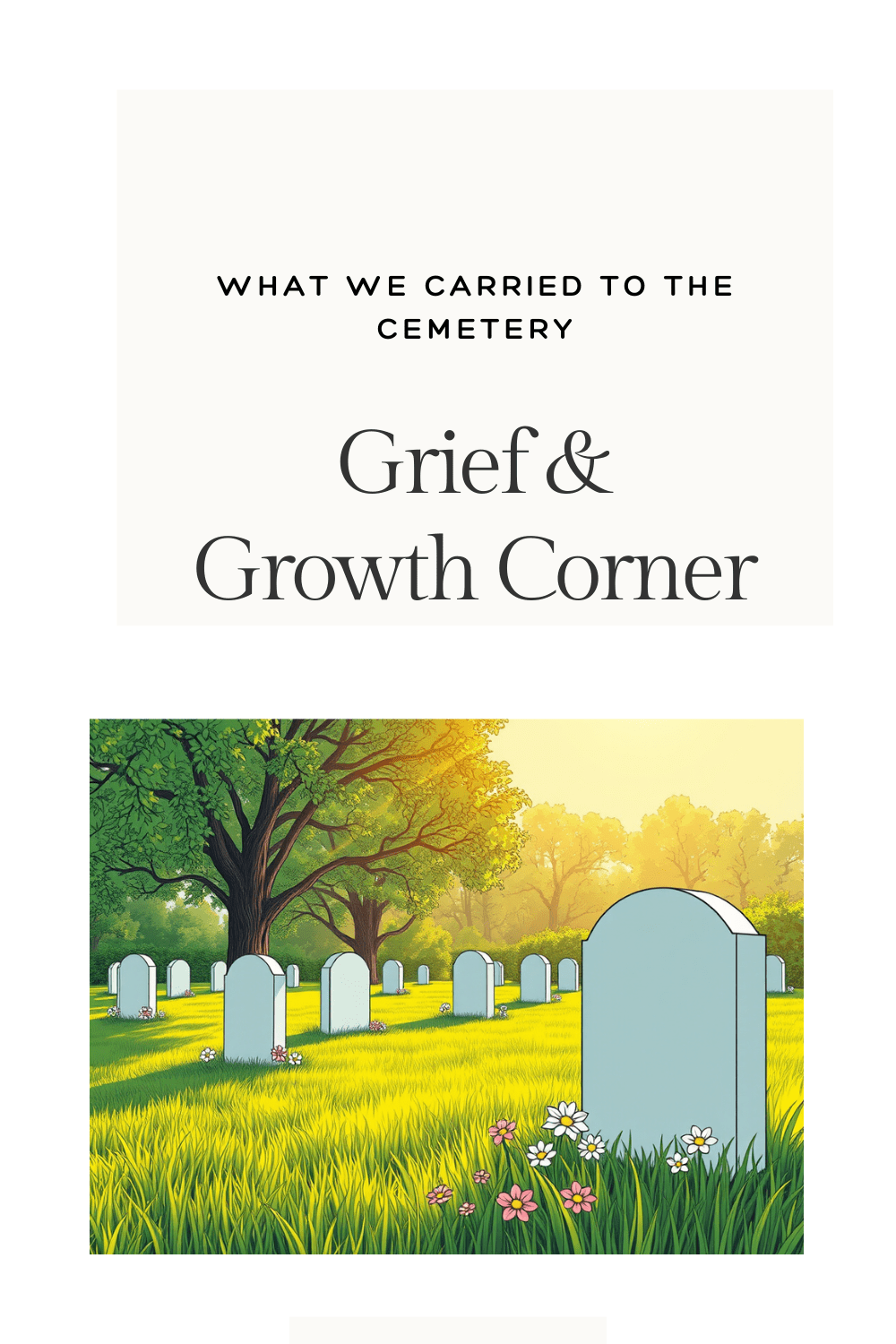
The tombstones were clean. The flowers, fresh and fragrant. There was a quiet reverence in how the grass had been trimmed, the way the sunlit air seemed to hush itself the closer we got. First, Papa’s grave. Then Hans’s, not far away. Two names carved into stone. Two chapters that ended too soon. Two men I loved in completely different ways, but whose losses live side by side inside me.
At Papa’s grave, I knelt slowly, feeling the heaviness in my knees not just from the movement, but from memory. I found myself whispering—things I never said out loud when he was still alive. Things I thought time might make easier to speak, but still caught in the throat. I told him about my writing, my books, my work. I told him Mama still saves food for me, that she still sets aside sinigang in case I’m hungry later, that she keeps the house warm with her quiet rituals of love. I told him I’m still trying to be the daughter he’d be proud of. That some nights, even after all these years, I still ask the sky if he’s listening.
And then, with a gentle turn of my heart, I told him about Hans.
Hans, whose voice still lingers in the corners of memory. Hans, who left before anyone was ready. I told Papa how much it hurts that Baste is growing up without his father’s music in the background—without the silly jokes, the half-sung lullabies, the way Hans used to hum Dandansoy like it was his own prayer for home. I told him we never saw it coming. That grief, this time, came like a storm with no warning.
When I moved to Hans’s grave, the shift inside me was almost immediate. Papa’s death lives in me like a gentle tide, always there, rising and falling in seasons. But Hans’s passing still feels like broken glass beneath the skin—sharp, sudden, hard to hold. And yet, standing there, I felt something else, too. Peace. Not the kind that erases pain, but the kind that says, You don’t have to carry this alone. The kind of peace that comes when you realize that even absence can be a form of presence.
Because here’s something I’ve come to understand: we don’t stop talking to those we’ve lost. We just change the way we speak. Sometimes, it’s in whispered prayers. Other times, it’s in the way we cook their favorite meal, play the song they loved, or pause during a random day because something—a smell, a joke, a sunset—reminds us of them. Grief is strange that way. It doesn’t leave when you walk out of a cemetery. It follows you home. It shows up in the quiet moments, the crowded tables, the empty chairs.
But maybe that’s not such a terrible thing.
Because grief, at its core, is love that has nowhere to go. And if that’s the case, then these visits to Papa and Hans aren’t just rituals of remembrance. They are reunions. They are reminders that love is not bound by breath. That the people we’ve lost are not truly gone—they’re just resting in the parts of us that still remember.
After we said our prayers and straightened the flowers, we stood quietly again. Not because we had nothing more to say, but because we had said everything in the way we showed up. In the way we kept their names alive. In the way we let ourselves feel.
And as we walked back to the car, I thought about all the versions of myself that still live inside these goodbyes. The daughter still wishing for more time. The cousin still searching for sense in sudden loss. The woman still learning that presence doesn’t always need to be visible to be real.
Grief, I’m learning, is not a thing to finish. It’s not a process to graduate from. It’s a language. A rhythm. A quiet ache that teaches us, again and again, how deep love goes. And maybe that’s the lesson these visits offer—not how to move on, but how to carry on. How to keep living without leaving anyone behind.
Because in the end, that’s what we carried with us—not just flowers or candles, not just whispered prayers or folded umbrellas. We carried love. We carried memory. We carried them.
And perhaps that’s enough.





















 superanjventures
Leave a comment