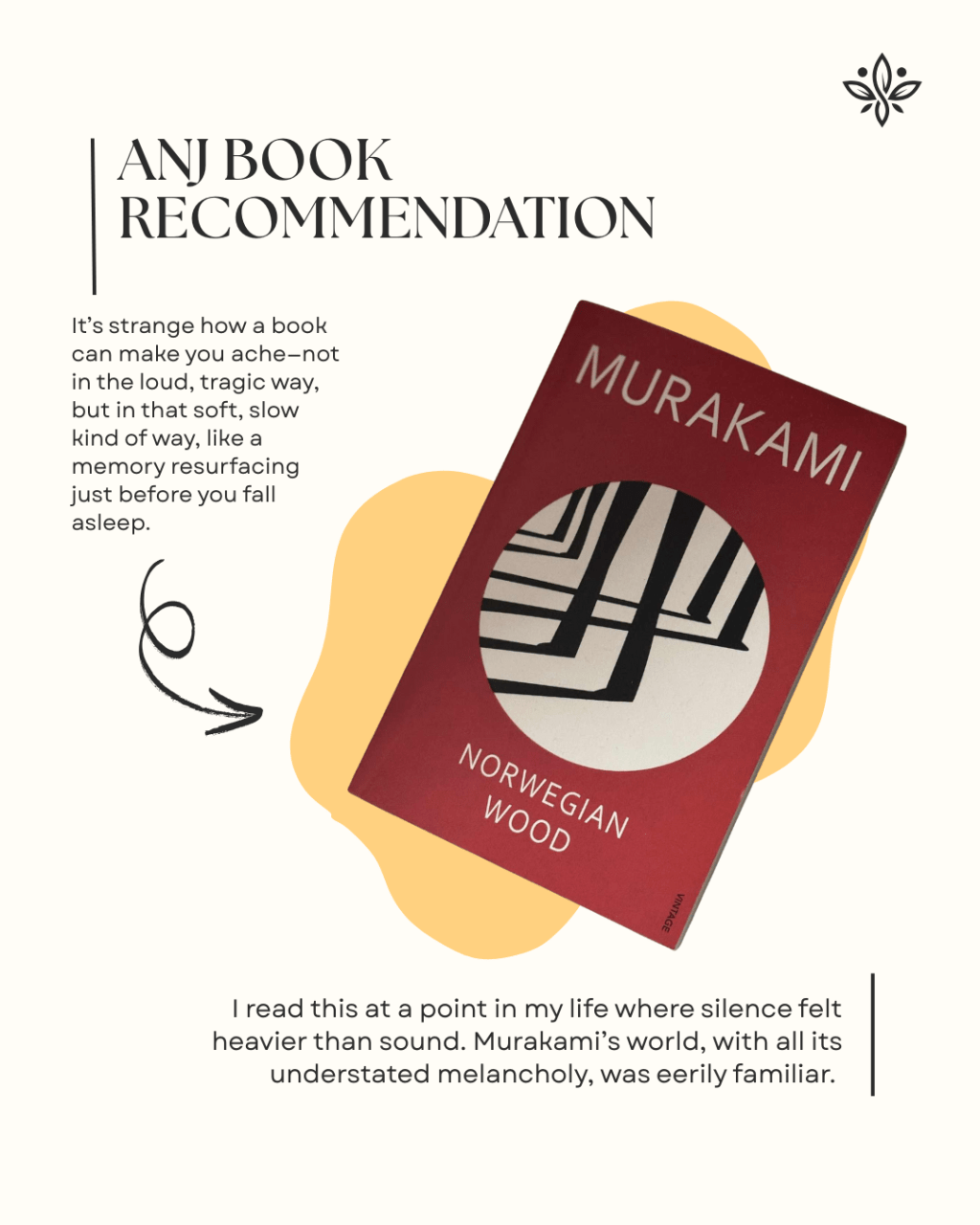
Norwegian Wood by Haruki Murakami
It’s strange how a book can make you ache—not in the loud, tragic way, but in that soft, slow kind of way, like a memory resurfacing just before you fall asleep. Norwegian Wood by Haruki Murakami did exactly that to me. And maybe that’s why I delayed writing this review. Because how do you put into words the way a book reaches into the corners of your own past, your youth, your forgotten selves—and quietly lingers there?
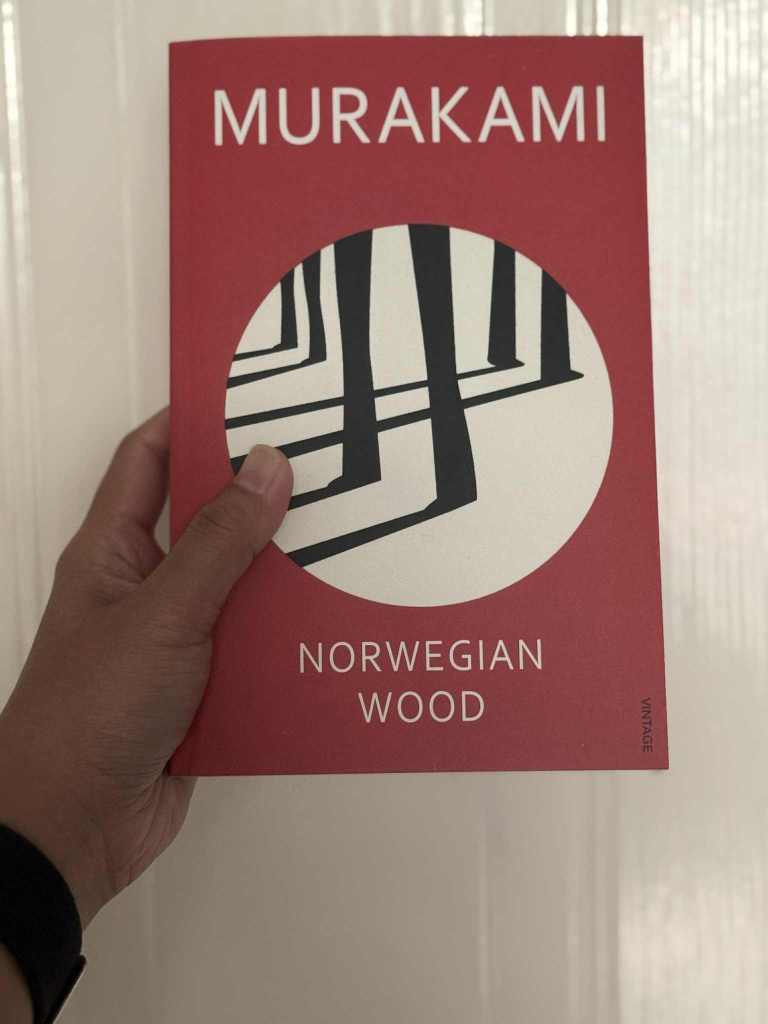
“Memory is a funny thing. When I was in the scene, I hardly paid it any attention… but now, I can recall it in perfect detail.”
I read this at a point in my life where silence felt heavier than sound. Murakami’s world, with all its understated melancholy, was eerily familiar. Set in 1960s Japan, Norwegian Wood follows Toru Watanabe as he reflects on his college days, the people who shaped his becoming, and most especially the haunting presence of Naoko—a girl broken by grief. But this isn’t just a story about love or loss. It’s about loneliness, longing, memory, mental health, and that tender confusion of being young and not quite knowing how to carry the weight of what life suddenly hands you.
What I loved most about this book was its stillness. Murakami has a way of writing that is both detached and devastating. You read quietly, and then suddenly, a line hits you like truth you didn’t know you needed. It reminded me of long walks with no destination, of late-night talks where no one is trying to solve anything, of friends you once loved fiercely but no longer speak to.
And isn’t that what life is? A series of meetings and partings, of trying to hold on and learning to let go.

What stayed with me:
The raw, unfiltered grief Naoko carried—and how mental illness was delicately woven into the narrative without romanticising it. As someone who works in healthcare, especially in stroke and neuro, I felt the weight of her internal struggle. Mental health needs space, not just empathy.
Midori’s chaos and color. She was the contrast to Naoko’s silence, and a reminder that even in sorrow, there are people who still choose joy and irreverent laughter.
Toru’s search for meaning. His honesty, passivity, and eventual clarity made me reflect on how we all try to piece ourselves together using the people we’ve loved—and lost.
The negatives?
If you’re looking for a plot-driven story, this may not be it. It meanders. It’s more about mood than movement. And sometimes, the emotional detachment can be frustrating. But for me, those “flaws” are also what made it feel real. Because life rarely follows neat arcs. It’s messy, open-ended, filled with pauses and people who disappear without warning.
Reading this felt like…
Walking into a fog and not minding that you can’t see the end. Like drinking coffee alone in a bookstore. Like staring at an old photo and suddenly remembering the exact scent of that day.
This isn’t a book you recommend to everyone. It’s a book that finds you when you’re ready. And when it does, you’ll know. Because it doesn’t just tell a story—it mirrors a part of yours.





























 superanjventures
Leave a comment