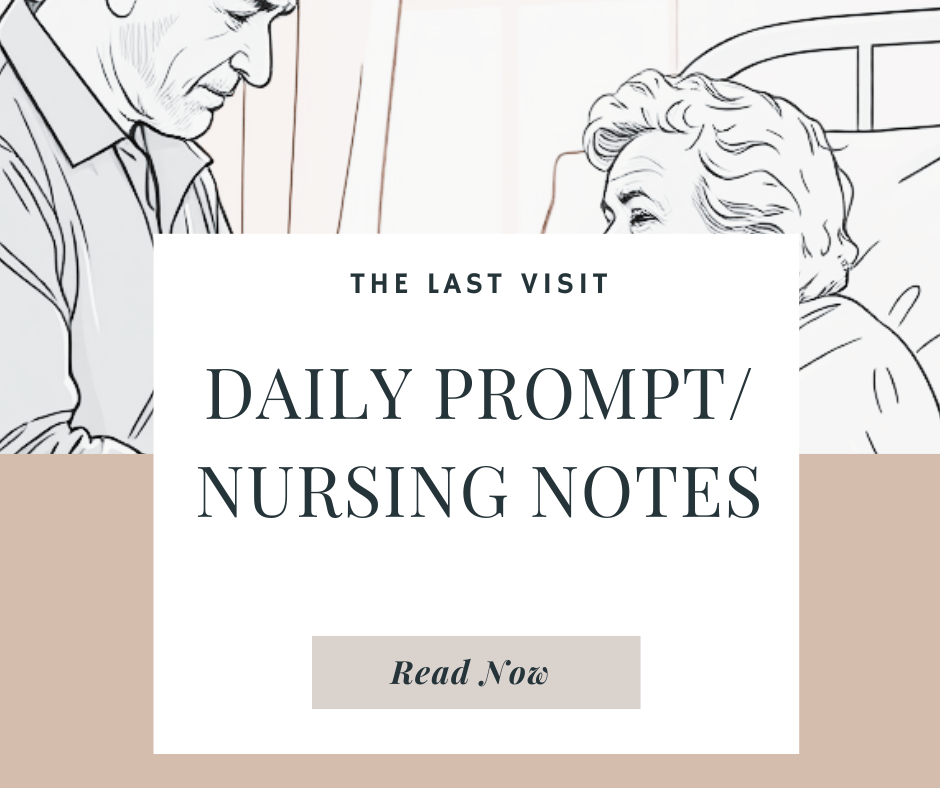
There are small kindnesses we offer in the everyday—blankets tucked over knees, water sipped through a straw, handovers spoken gently instead of rushed. And then there are acts that stay. Not because they were grand, or heroic, or even acknowledged—but because something about them shifted us. Left an imprint. Changed the way we walk through the world.
This is one of those stories.
She was a patient under our care—frail, declining, slowly fading in the way people do when life begins to loosen its grip. She had no children. No siblings. No friends who called. Only one person in the world seemed to know she existed—her husband, who lived far from the hospital. He wasn’t nearby. And from what I gathered, he hadn’t been able to visit her often. Perhaps distance. Perhaps circumstance. Perhaps a kind of emotional fragility that doesn’t show up on charts.
That day, her breathing changed. The signs were there. She was going. Quietly. Gently. As nurses, we know this rhythm—the way life begins to soften before it disappears. And so, I called him.
His voice was shaky on the other end. Not dramatic. Not wailing. Just… confused. Lost.
He said he didn’t know how to book an Uber. He had no one to help him. That it would take him over two hours by bus. And then he said something that broke me:
“I don’t want her to die without me.”
I paused. I looked around at my ward, at my colleagues, at the time on the clock. There were still patients to review, tasks to complete, medication rounds to finish. But in that moment, none of that mattered more than this: a man was trying to get to his dying wife—and had no way to.
So I did something simple. Something human. I booked him a taxi. I paid for it myself. It didn’t feel like a big deal in that moment—it felt like the only thing to do. And yet, I knew, as I hung up the phone, that it might just be one of the most important things I would do that week. Maybe that month. Maybe even in my career.
When he arrived nearly an hour later, I recognized him immediately. His clothes were wrinkled. His shoes were worn. He looked as if he had been unraveling for a long time and had only just realized it. And then, softly, he said,
“She always takes care of me. She’s the one who keeps me together.”
“She always takes care of me. She’s the one who keeps me together.”
That line undid me.
There was so much love in it. So much grief already blooming even though her body hadn’t let go yet. He stayed with her. Held her hand. Whispered things I will never know. And then, quietly, she passed.
But he stayed. He sat beside her for a while longer. I gave him space. Eventually, he turned to me and asked if I had a moment to talk. We sat—two strangers, bound by grief that wasn’t even ours. He spoke of her. How they met. How she used to make lists for him because he forgot things. How she laid his clothes out each morning. How, in losing her, he wasn’t just losing a wife—he was losing the rhythm of his life.
Before he left, I did what I could. I raised a safeguarding referral. Escalated his case. Made sure someone would check on him, follow up, not let him fade away with her.
But when he walked out of that ward, alone, I turned the corner and cried. Not just for her. Not just for him. But for all the people who love deeply and are left behind in lives too quiet for anyone else to notice. For all the partners who were never taught how to exist without the other. For all the ordinary love stories that don’t make headlines, but hold the world together in quiet apartments and long bus rides.
That day taught me more than any training, any module, any textbook.
It taught me that kindness isn’t always clinical.
Sometimes, it’s knowing that love can’t wait for public transport.
Sometimes, it’s recognizing that a “patient’s relative” is not just a visitor—they’re a soul mid-collapse.
And sometimes, it’s choosing to be a bridge. Even if it costs you.
People often think being a nurse is about medicine. But it’s also about noticing what hurts that can’t be charted. And trying, however imperfectly, to ease it.
I don’t know what happened to him after. I never saw him again. But I think of him often. Of his unbuttoned coat. Of the way he looked at her like he was already half gone himself. Of the quiet he left behind.
And when I find myself overwhelmed, or wondering if any of this makes a difference—
I remember that act.
That one taxi fare.
That last visit.
And I know that sometimes, the smallest choices are the ones that make the biggest difference—not just for others, but for who we become.


















 superanjventures
Leave a comment