
The Girl Who Outsmarted Expectations: A Quiet Love Letter to Independence
About
Some films begin with a mystery. Others begin with a mood.
Enola Holmes did both—and added a mirror.
I remember watching this film late in the evening, a blanket around my shoulders, expecting something lighthearted and perhaps a bit cheeky. What I found was a story that quietly crept beneath the surface—a story of rebellion, identity, and choosing to define yourself before others do it for you.
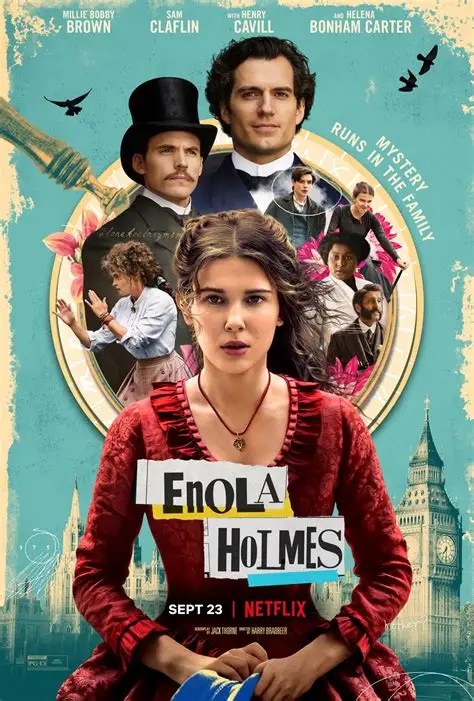
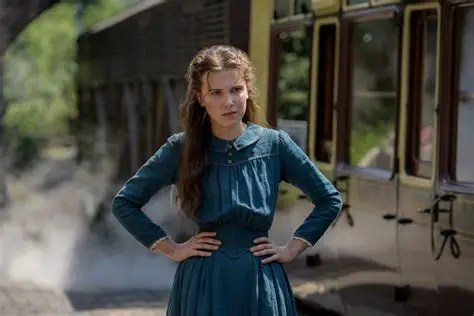
Set in 1884 England, the film introduces us to Enola Holmes—youngest sibling to the famed Sherlock and Mycroft Holmes. But Enola isn’t just a side note in someone else’s legend. She’s the kind of girl who reads instead of obeys, listens carefully but speaks louder when needed. Raised in the countryside by her free-spirited, suffragette mother (Helena Bonham Carter), Enola is clever, capable, and fiercely independent. That is, until her mother disappears on her sixteenth birthday.
What follows is not just a detective story. It’s a journey of becoming.
Millie Bobby Brown is magnetic. She doesn’t just play Enola—she becomes her. There’s mischief in her smile, uncertainty in her eyes, and courage in her bones. She breaks the fourth wall often, speaking directly to us, making the audience her co-conspirator. I found myself smiling every time she glanced at the camera. It’s intimate. Almost like she was letting me in on her thoughts—reminding me of a time I, too, was sixteen and trying to figure out who I was.
Henry Cavill’s version of Sherlock is less cold, more humane. His presence is quiet but solid, a subtle acknowledgment that Enola’s brilliance deserves space. Mycroft, in contrast, represents the world Enola is expected to conform to—where women wear corsets not because they want to, but because society demands it.
But Enola doesn’t want a life of teacups and chaperones.
She wants adventure. She wants her mother.
She wants choice.
There’s a sweetness to her bond with Tewkesbury (Louis Partridge), the runaway Viscount she ends up helping (and saving more than once), but romance is never the center of the story. And I loved that. Because so often, coming-of-age tales are tangled in love stories. But Enola Holmes is, at its core, a love letter to selfhood.
The cinematography is rich and warm—muted earth tones with bursts of Victorian charm. The pace is brisk but thoughtful, balancing tension and tenderness well. The film doesn’t shout. It whispers truths if you’re willing to listen.
By the end, Enola says something that stayed with me:
“I am not an ordinary lady. And I don’t want to be.”
It made me pause.
How often have we tried to be ordinary to fit in, to be accepted, to avoid the discomfort of being misunderstood? How often have we dimmed our voice, just to keep the peace?
This film reminded me that choosing your path, even when it’s the harder one, is worth it. That being different isn’t defiance—it’s authenticity. That your story—your real one—is still being written, and it deserves to be told on your own terms.
Enola Holmes is witty, charming, and quietly revolutionary. It’s the kind of film you watch once for fun, and then again because you realize it was speaking to something you forgot you needed to hear.
Rating: ★★★★☆ (4.5/5)
For the girl who won’t shrink just to fit in.






















 superanjventures
Leave a comment