
by Arthur Golden
Rating: ★★★★☆ (4.5/5)
Category: Book Reviews | Historical Fiction | Vintage Finds
“We lead our lives like water flowing down a hill, going whichever way it can.”
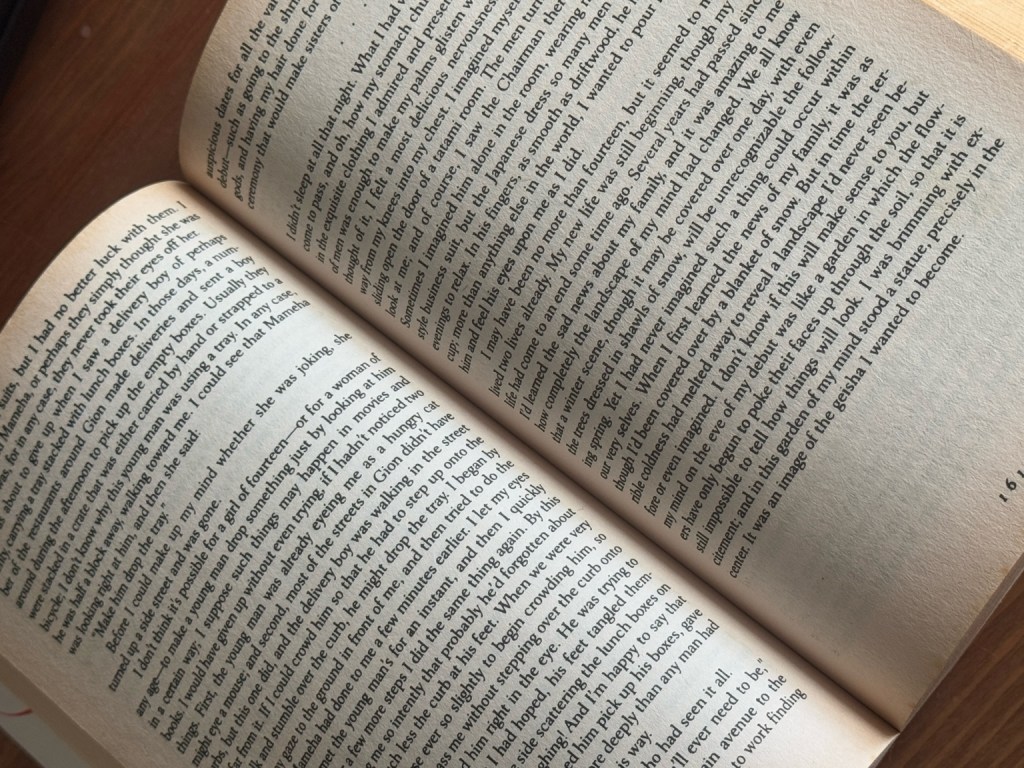
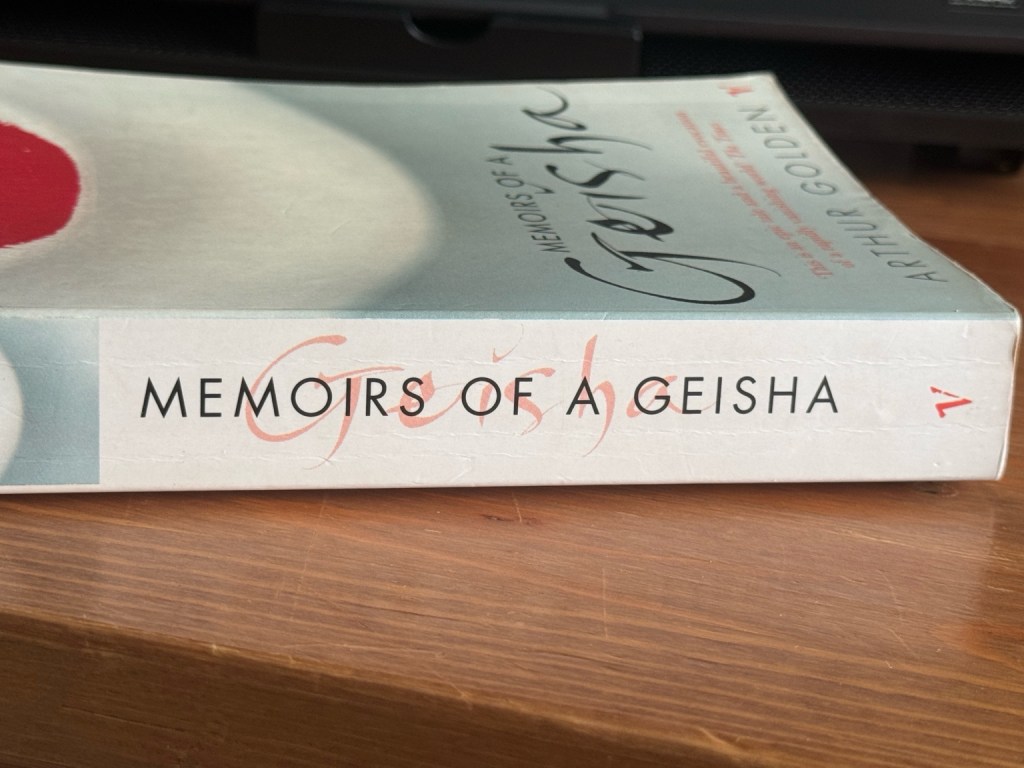
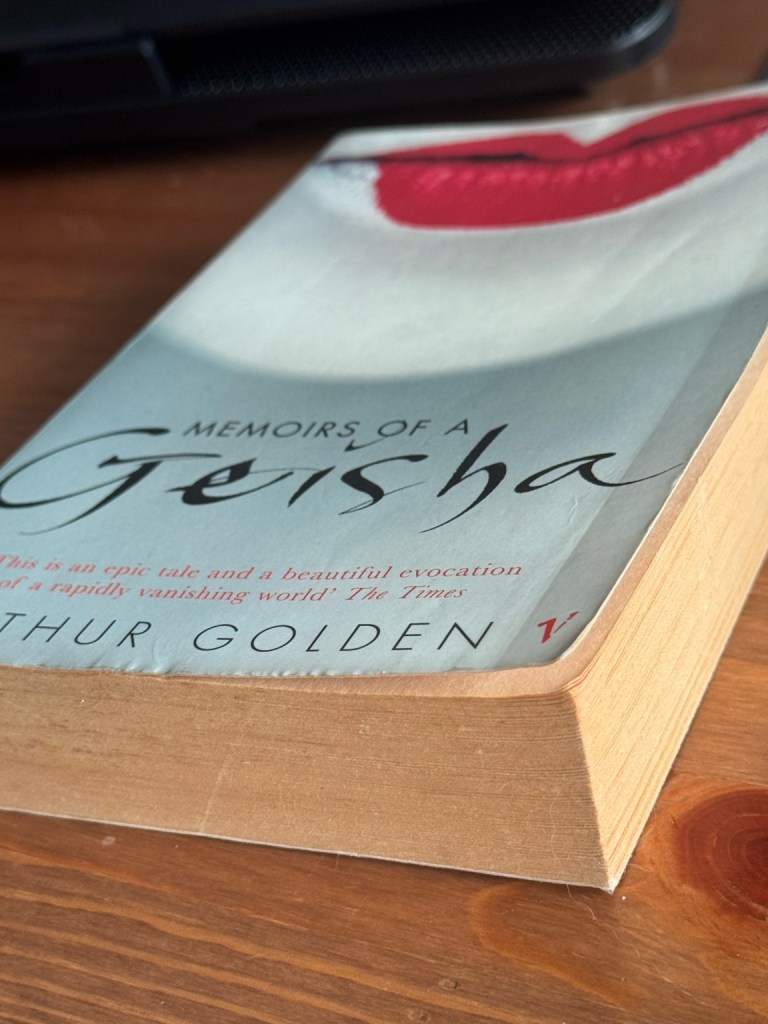
There’s something about holding a secondhand book that makes the reading experience feel different—more intimate, more alive. The creases, the sun-faded edges, the faint scent of time. It’s as though the book has lived before me, whispering stories not just from its pages, but from the hands that once turned them.
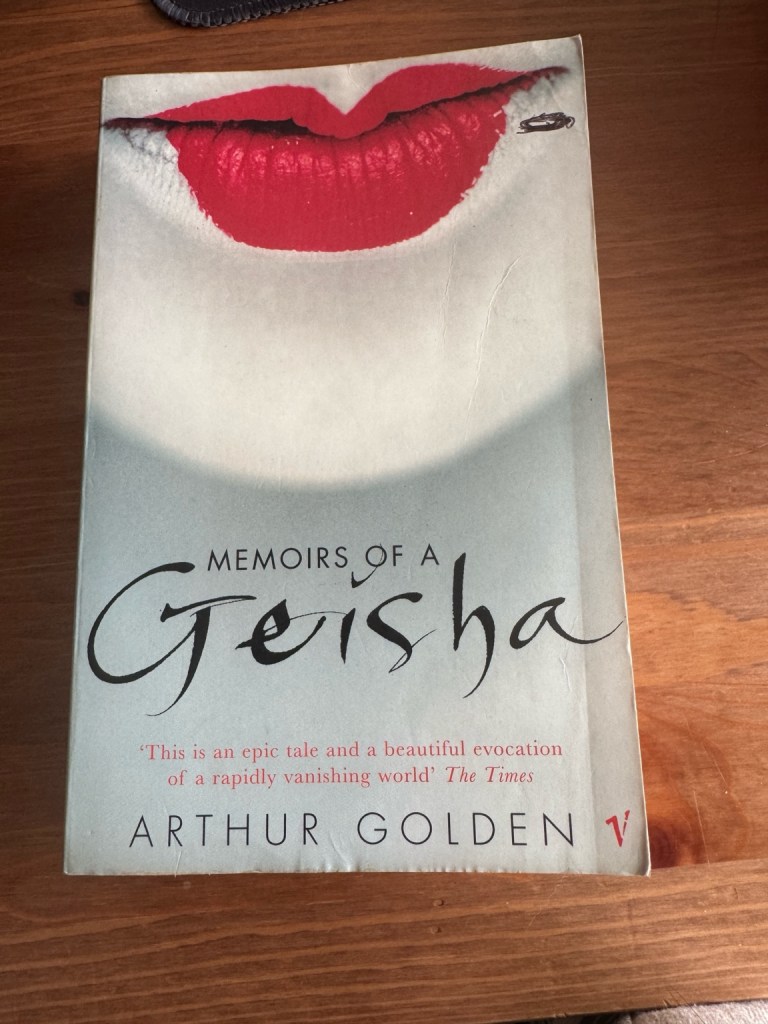
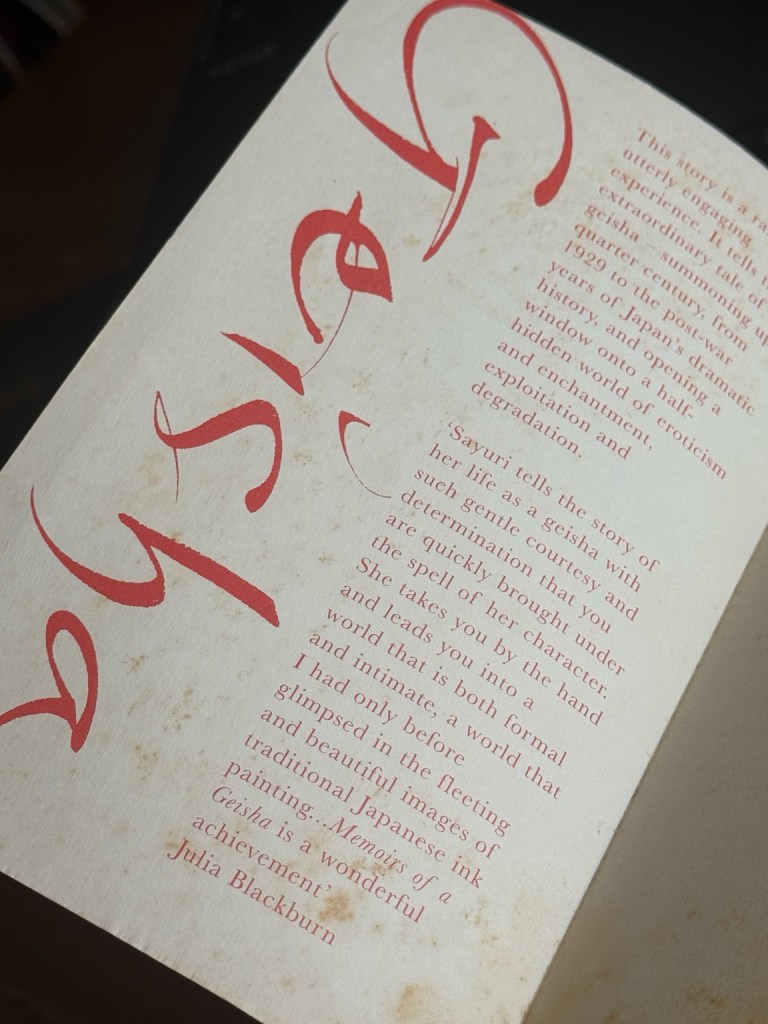
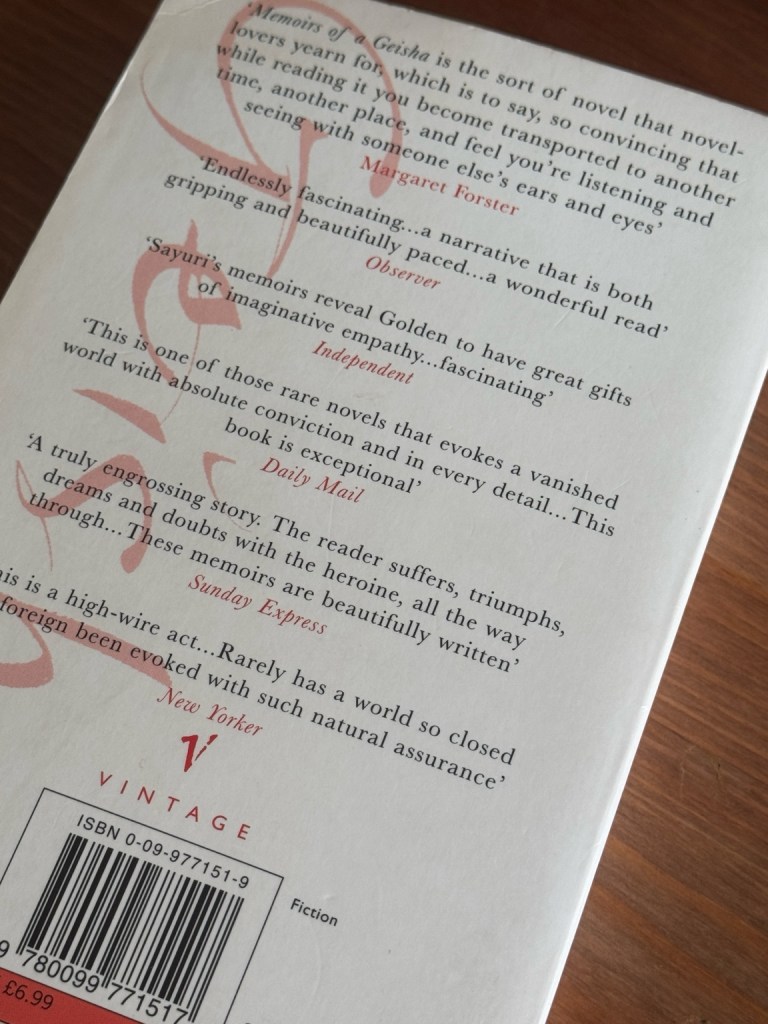
I found my copy of Memoirs of a Geisha in a quiet vintage thrift shop. It was one of those afternoons when I wasn’t looking for anything in particular—just space to wander. But the moment I saw the soft, weathered cover, with that haunting red lip on pale skin, I reached for it instinctively. I didn’t expect to be so captivated. But I was.
A World I Entered Slowly—and Couldn’t Leave
Arthur Golden’s Memoirs of a Geisha is a richly imagined, emotionally immersive novel that transports you into the hidden world of Kyoto’s geisha districts. From the first page, I found myself being pulled into the life of Chiyo, a poor fisherman’s daughter sold into a world she couldn’t begin to understand—let alone escape.
Through years of training, loss, longing, and transformation, Chiyo becomes Sayuri, one of the most celebrated geisha in Gion. But the transformation is not glamorous—it is painful, relentless, and quietly powerful. This isn’t a fairy tale. It’s a story of survival wrapped in silk, drenched in duty, and stitched with desire.
Golden’s prose is lyrical and hypnotic. He writes with the kind of detail that makes you feel like you’re standing inside the wooden teahouses, smelling the incense, hearing the rustle of silk kimono, and tasting the bitterness of unspoken dreams.
What Moved Me Most
This is not just a historical novel—it is a story about what it means to have your life shaped by forces beyond your control, and still find ways to bloom.
Sayuri’s inner world—her silent observations, her growing self-awareness—was where I saw echoes of myself. She is graceful not because she was taught to be, but because she had to be. Because softness was her only shield in a world that asked her to bend, not break.
There is a quiet ache to this book. A beauty that doesn’t come from joy, but from restraint. From the way Sayuri never really owned her life, and yet learned how to live within it.
“A mind troubled by doubt cannot focus on the course to victory.”
That line sat with me longer than I expected. Because for so long, I was that mind—crowded, anxious, doubting myself at every turn. But lately, I’ve noticed a shift. I’ve been more at ease, more at peace with the pace of my own becoming. Less obsessed with figuring everything out, and more curious about what life unfolds when I let it.
Personal Reflection
As I turned the yellowed pages of this thrifted copy, I felt like I was being let into something sacred. Not just a story, but a mindset. A way of being—measured, intentional, aware.
Maybe that’s why I connected with this book so much. I’m in a season now where I’m learning to love myself in gentler ways. I’ve stopped rushing my healing. I’ve stopped proving my worth to everyone. I’ve been choosing softness, choosing to sit with my own company without judgment.
Reading Memoirs of a Geisha during this time was like walking alongside Sayuri in a quiet, moonlit garden. We didn’t say much to each other. But I felt seen.
What I’ll Remember Most
- The stunning imagery of Kyoto in the 1930s—cherry blossoms and rooftops wet with rain.
- The sharp pain of being seen only as beauty, and not as a full person.
- The resilience of a girl who was taught to be ornamental, yet held oceans inside her.
- The bittersweet realization that even survival can be elegant.
Final Thoughts
Memoirs of a Geisha is a haunting, poetic novel about longing, identity, and the unspoken cost of living in a world that defines your worth for you. It’s not always comfortable. It’s not always kind. But it is unforgettable.
I’m grateful I found this copy in a secondhand shop. There was something poetic about reading Sayuri’s story in a book that had already lived another life before reaching me. It felt like it had waited for me. And now, I’ll be keeping it—for the lessons, for the beauty, and for the silence between the words.
Would I recommend it?
Yes—especially if you love atmospheric storytelling, slow-burning narratives, and stories of women learning to reclaim their voice in quiet, powerful ways.
Best read when:
You want to travel without leaving your room. Or when you’re in a reflective mood and need a story that lingers.
Quote to remember:
“We don’t become geisha because we want our lives to be easy. We become geisha because we have no choice.”


























 superanjventures
Leave a comment