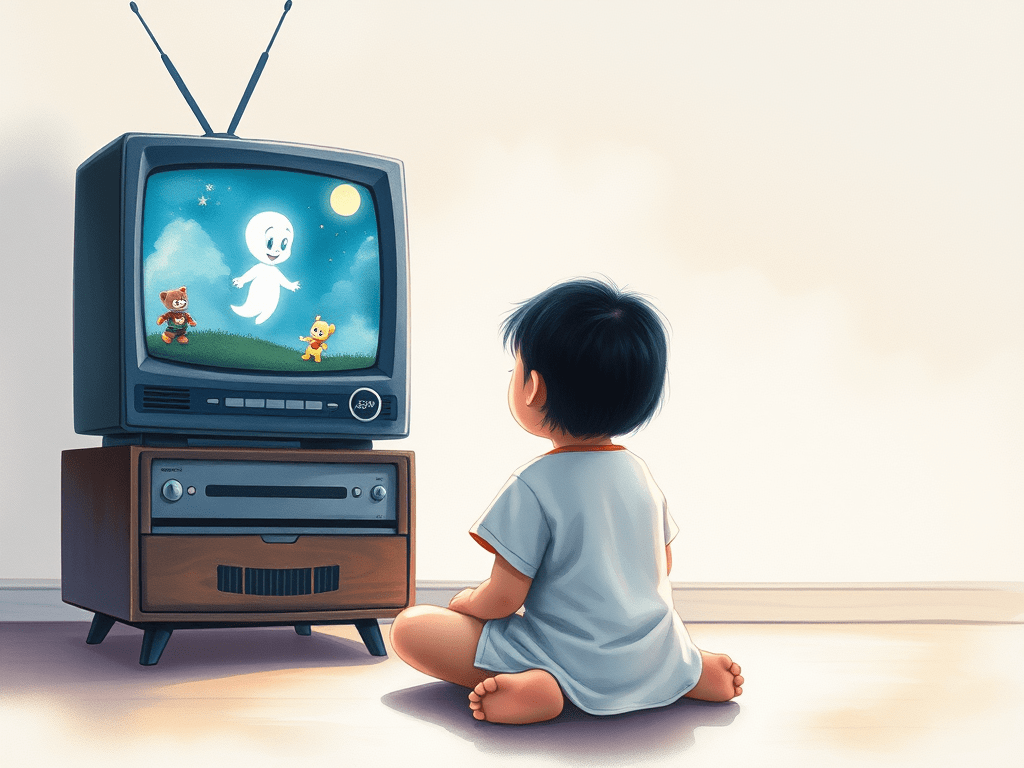
What TV shows did you watch as a kid?
When I think about the TV shows I watched as a child, it feels like opening an old scrapbook where the pages are worn but the memories are still alive. Back then, the world felt smaller—no streaming platforms, no endless scroll of choices, just the rhythm of whatever aired on local television. And yet, those shows colored my childhood in ways that even now, as an adult, I carry quietly with me.
Afternoons in Cebu often began with cartoons. Tom and Jerry chased each other endlessly, and though I already knew Jerry would escape, I laughed like it was brand new every time. Looney Tunes was witty chaos—Bugs Bunny with his carrot, Daffy Duck with his misfortunes, and that famous “That’s all, folks!” echoing in my memory even now. Casper the Friendly Ghost was a softer companion—lonely, gentle, reminding me that being different didn’t mean being unlovable. Then there was Mr. Bean, whose clumsy brilliance had us rolling with laughter, and Power Rangers, where kids turned superheroes taught me that even ordinary lives could become extraordinary when courage called. These shows were simple, yes, but they gave shape to afternoons where childhood stretched wide and unhurried.
But it wasn’t just foreign shows that raised me. The heart of my nostalgia lies in the Filipino TV shows that defined what it meant to grow up in the ’90s. They were more than programs—they were pieces of culture, identity, and memory that stitched our childhoods together.
Wansapanataym was the one that lit up my Sunday nights. Its stories were steeped in magic—trees that spoke, children who became heroes, ordinary people granted wishes that revealed extraordinary lessons. Every episode ended with a moral, tucked carefully inside fantasy. Looking back now, I realize those stories were the first time I learned that imagination and values could live side by side. It wasn’t just make-believe; it was teaching us, quietly, how to dream without losing our grounding.
Then there was Bayani, a show that brought history to life in ways textbooks never could. I can still picture the kids traveling back in time, meeting Filipino heroes like Jose Rizal or Gabriela Silang. The costumes looked simple, the effects dated now, but at that time it was magic—the kind of magic that made me proud of where I came from. Through Bayani, I learned that history wasn’t dusty pages—it was courage, sacrifice, and ordinary people who chose to do extraordinary things.
Sineskwela was school disguised as fun. We watched with wide eyes as experiments came alive, as characters explained science in ways no classroom chalkboard ever could. It made knowledge exciting, possible, reachable. And Hiraya Manawari—oh, that one still stirs something in me. It was gentle, dreamy, almost like a lullaby in the form of a TV show. Its stories carried values of kindness, honesty, perseverance, and hope. The title itself means “may your wishes come true”—a phrase that felt like a blessing spoken over us children who didn’t yet know what to wish for, but somehow believed life would unfold in wonder.
Thinking about those shows now makes me both smile and ache. There’s joy in remembering, but sadness in realizing that those moments are gone—that we’ll never again sit cross-legged on the floor with cousins and siblings, waiting for the familiar theme songs to play. The world has changed. Children today have endless choices, but I sometimes wonder if they will ever know the magic of all of us leaning toward one glowing screen, sharing laughter, silence, or awe.
Childhood TV shows were more than entertainment—they were memory markers. Tom and Jerry taught persistence, Casper taught gentleness, Looney Tunes taught humor, Mr. Bean taught lightheartedness, Power Rangers taught courage. And from the Filipino shows, I learned even deeper things: Wansapanataym taught imagination with morals, Bayani taught pride in identity, Sineskwela taught curiosity, Hiraya Manawari taught hope.
Now, as an adult, when I look back on those afternoons and Sunday nights, I realize that what I miss most isn’t the shows themselves, but who I was while watching them. A child without deadlines, surrounded by family, laughing, wondering, learning—held by a time when life was simpler, slower, and sweeter. Nostalgia is like that: it makes you happy to remember and sad to know you cannot return. But maybe that’s the beauty of it too—those shows may no longer air, but the lessons they gave us remain, stitched quietly into who we are.
So when someone asks me, What TV shows did you watch as a kid? I don’t just list titles. I remember afternoons scented with home-cooked rice, the hum of an electric fan, cousins squeezed into one living room, eyes bright with wonder. I remember that TV wasn’t just a screen—it was a portal, a teacher, and a companion. And I realize now that perhaps the greatest lesson those shows taught me is this: the stories we grow up with shape us, but the memories of watching them with people we love shape us even more.ne asks me what I watched as a kid, I smile, because it’s not just about the shows—it’s about who I was while watching them. A child surrounded by family, laughter, and the warmth of a home where even the simplest things felt enough.



















 superanjventures
Leave a comment