
There are times in our lives when distance becomes painfully loud — when the places we come from suffer, and we can do nothing but watch from the other side of the world. But there are also moments when distance becomes irrelevant, when compassion moves faster than storms, and when community proves that its reach is far greater than geography. Earlier this week, in the shattered barangays of Balamban, Cebu, I witnessed one of those moments. From here in the UK, I watched my family and community mobilize in ways both heroic and heartbreakingly human. And in that collective movement, I realised something: even in disaster, hope has its own quiet engine.
Typhoon Tino struck without the theatrics of fear that often accompany larger storms. It came disguised in ordinary rain, then unfolded into something far more destructive. It swallowed homes, drowned roads, and pushed families to higher ground with nothing but the urgency of survival guiding their steps. But disasters have always been two stories running parallel — the story of loss, and the story of how people respond to that loss. This is about the second story.
A Relief Effort Carried by Many Hands
When news from Cebu reached me — the flooding, the families stranded, the rising number of evacuees — I felt the familiar ache of helplessness. Being abroad during a crisis back home is its own kind of grief. You carry the heaviness of knowing you cannot physically be there, yet you also carry the instinct to act. And so, the relief effort began — not with an organisation, not with any official funding, but with people who simply cared.
Through the kindness of friends here in the United Kingdom, including the unwavering support of the Wolverhampton Filipino community, I was able to gather £270. I added some of my own to bring the total to ₱30,000. It is not a vast amount in the context of a disaster, but it is enough to deliver something immediate — something tangible — to families who have almost nothing left to call their own.
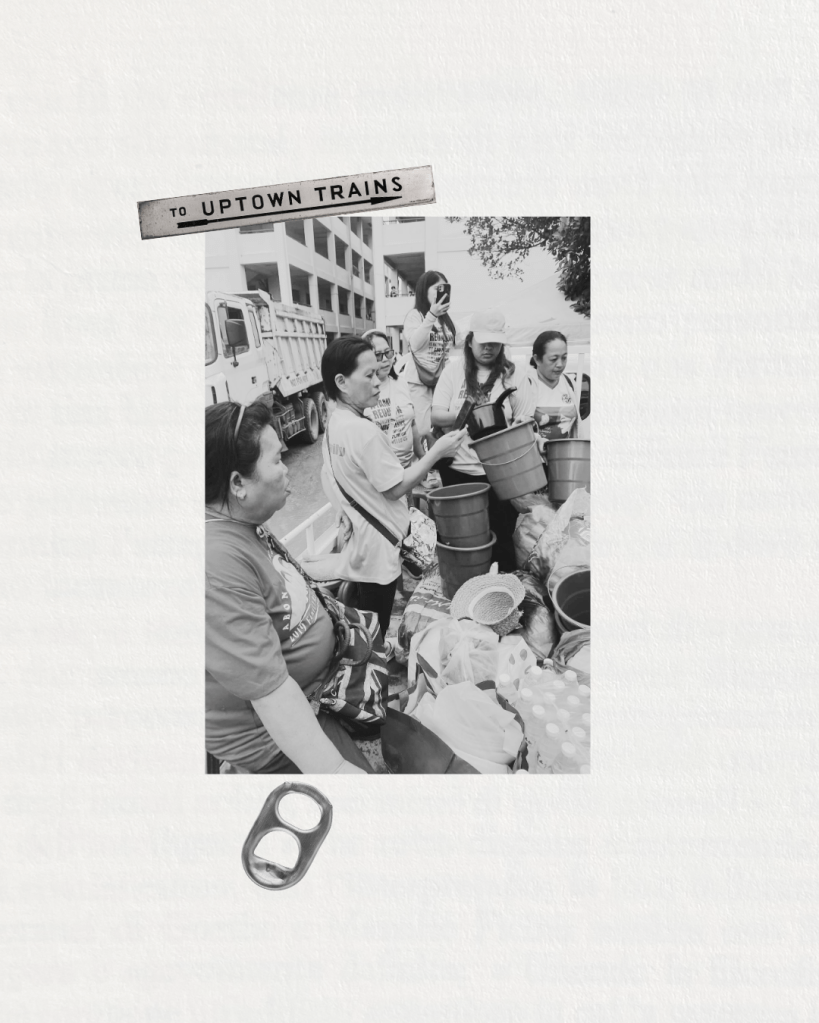
From there, my ATM family in Cebu took over. They gathered as early as they could. They repacked goods, loaded sacks of rice, sorted clothes, lifted gallons of drinking water, and prepared utensils and washing essentials. They travelled across muddy, broken roads to reach sitios that had been isolated for days. They executed the kind of relief effort that requires stamina, patience, and a quiet kind of courage — the kind that doesn’t make headlines, but makes a difference.
What Disaster Really Looks Like Up Close
Looking at the videos and photos they sent, I found myself pausing more than once — not because the scenes were dramatic, but because they were painfully ordinary in the aftermath of disaster. Roads had become rivers of mud thick enough to trap vehicles. Houses were either washed out or filled with knee-high sludge. Children stood barefoot, their clothes stiff with dried mud. Parents held onto plastic bags of donated items as if holding onto the final threads of normal life.
These moments don’t appear in government briefings. They rarely reach international news. They live in the quiet recordings of people who survive storms and then survive everything that follows.
Because of your donations, these families received:
- Rice sacks
- Clean drinking water
- Buckets, basins, and cooking utensils
- Clothes, blankets, and other daily essentials
These were more than supplies — they were reassurance. They were small but powerful signals of care. They were reminders that someone out there was thinking of them, even if that someone was thousands of miles away.
The Unseen Realities Inside Evacuation Centers

What many people do not see is what happens after the photos are taken, after the first wave of relief arrives. In Balamban, many families are still living inside the schools, sleeping on cold cement floors covered with thin blankets or whatever they managed to salvage. Classrooms have turned into temporary homes. Children sleep beside chalkboards that once carried lessons. Parents sit by windows that no longer look out to their own houses. Life continues, but only because it has to.
They are waiting for something more permanent — for the government’s support to rebuild, for materials to start anew, for the long process of recovery to finally begin. Until then, they depend on the kindness of people willing to step forward.
This is why the need continues. They urgently require:
- More clothes (especially undergarments)
- Rice
- Blankets
- Utensils for eating
- Basins and washing items
These may look like small, everyday objects, but in this context, they are pillars of basic dignity.
Gratitude That Travels Both Ways
To my ATM family who worked tirelessly on the ground: daghang salamat. You became the hands that carried hope to places even vehicles struggled to reach. You faced the mud, the heat, the exhaustion — and you did it with wholehearted generosity.
To the Wolverhampton Filipino community, led by people who understand the meaning of bayanihan even from afar — thank you for responding quickly and generously. Your solidarity reached Cebu faster than any flight ever could.
And to my friends here in the UK who donated without hesitation, without overthinking, without waiting — thank you. You turned compassion into movement, and movement into relief.
When We Move Together
Typhoon Tino left scars that will take time to heal. The roads remain damaged. Families remain displaced. And many are still waiting for answers, for support, for the rebuilding that must follow. But today, one thing became clear to me:
When we move together — maskin layo ta sa usa’g usa — we can reach even the places that storms have tried to silence.
Disasters test people. But they also reveal them. And in this moment, what I saw was not despair, but humanity — steady, quiet, and profoundly real.
To everyone who became part of this small movement of hope: thank you. The story of Balamban is still unfolding, but because of you, the next chapter begins with compassion.

























 superanjventures
Leave a comment