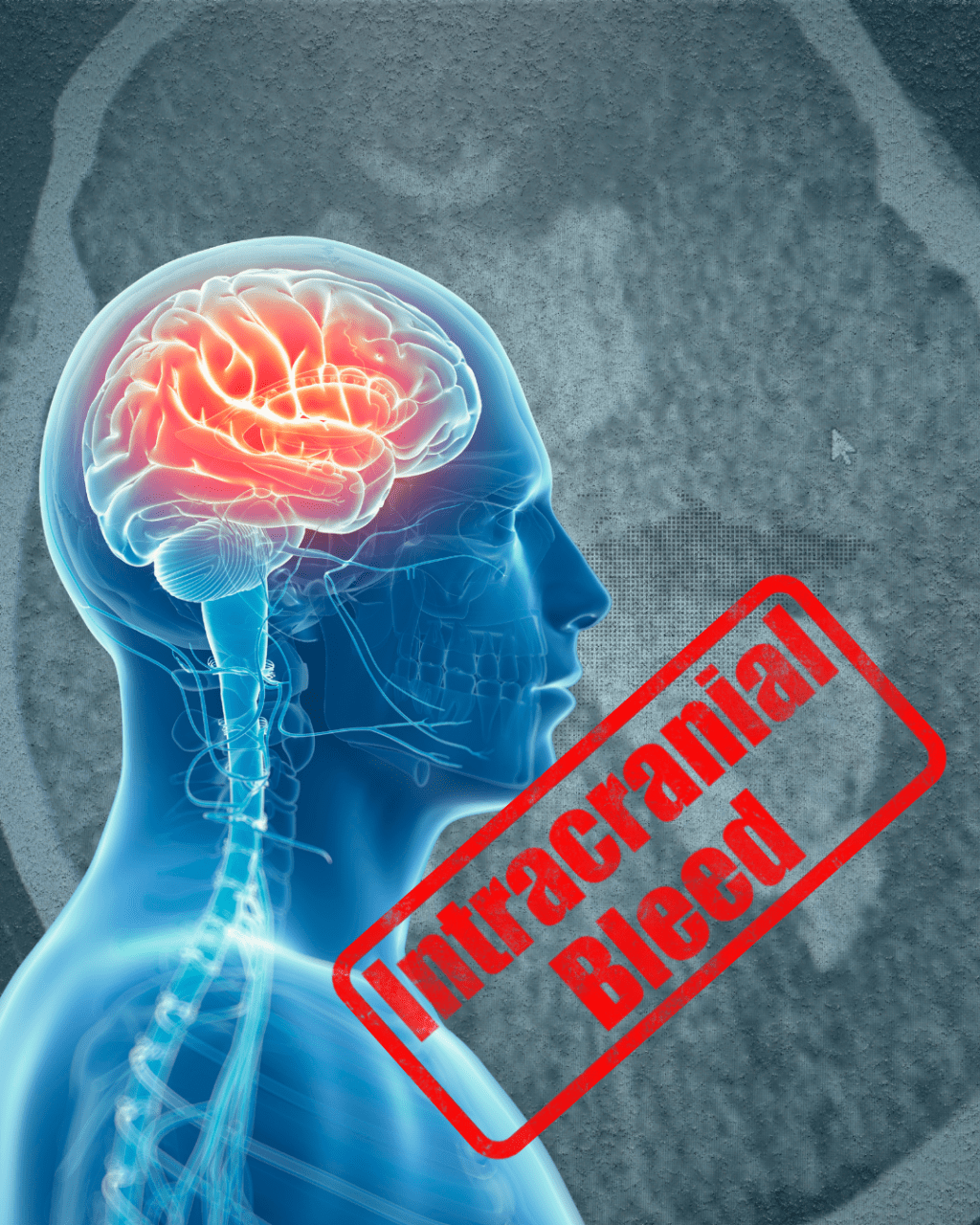
There are nights in the hospital that pass quietly, almost unnoticed… and then there are nights that stay with you long after the sun rises.
Last night was one of those.
I walked into my shift carrying the usual things—my pen torch, my reflex hammer, my notes—and the quiet readiness that comes with being a Stroke Clinical Nurse Specialist. It’s a role that lives in the in-between: between urgency and patience, between science and instinct, between holding hope and preparing for the worst.
I had two patients.
Both with haemorrhagic strokes.
Two scans that, at first glance, looked almost the same—bright white blooms of bleeding where there should have been silence. But their stories began long before I met them.
One of them had been unwell even before arriving in ED. The kind of presentation that already tells you this is not going to be straightforward. And then, in the most ordinary moment—while preparing dinner—everything changed. A sudden, severe headache. A collapse into reduced consciousness. From a simple, everyday act… to a life-threatening event in seconds.
It’s always that part that stays with me.
How something so catastrophic can begin in something so normal.
By the time they reached us, they were already fragile. Already on a path that felt difficult to reverse.
The other patient, in contrast, held steady through the night.
Observations stable. Neurology unchanged. A quiet kind of reassurance in a setting that rarely offers it. I found myself returning to their bedside not out of urgency, but out of a silent hope—that this steadiness would continue, that this story might unfold differently.
And for that patient, it did.
But the first patient…
There is a moment in nursing that cannot be taught—the moment when deterioration is no longer a possibility, but a reality unfolding in front of you. A drop in GCS. Changes in breathing. That instinctive knowing that time is no longer on your side.
From there, everything becomes movement.
Escalation. Urgent reviews. Monitoring. Trying to hold on to something that is already slipping away. You do everything—everything you were trained to do. You act quickly, you think clearly, you stay present.
But sometimes, the damage has already been done long before they reached you.
They deteriorated quickly.
And then they died.
There is no way to make that part feel routine.
You continue with your role—because you have to. You support the family, who are trying to process how a normal evening turned into loss. You speak gently, even when the words feel heavy. You document. You step out. You breathe.
And then you step back in again.
Because just a few steps away, another patient still needs you.
Two patients.
Same diagnosis.
Different journeys.
Different endings.
And last night reminded me of the quiet truths that come with this role.
That strokes do not wait for the “right” moment—they arrive in the middle of dinner, in laughter, in ordinary life, and change everything without warning.
That early deterioration is not always preventable, and sometimes what we witness is not failure—but the natural course of a devastating pathology.
That stability, no matter how uneventful it seems, is something to be deeply grateful for.
And that being a Stroke Clinical Nurse Specialist is not just about clinical expertise—it is about standing at the intersection of science and humanity. About holding space for both hope and loss in the same shift.
This job teaches you to be strong, but not in the way people often think.
Strength, here, looks like continuing after loss.
It looks like showing up fully for your next patient.
It looks like carrying stories you will never forget, while still being gentle with the ones you are still writing.
I came home this morning thinking about that moment—someone preparing dinner, not knowing it would be their last normal evening.
And it reminded me, quietly, to never take the ordinary for granted.
Because in stroke care, and in life, everything can change… in an instant.

























 superanjventures
Leave a comment