When I was a child, there was one name that could make an ordinary evening suddenly feel unsafe: Maria Labo.
I cannot remember exactly who first told me about her, which is probably appropriate because nobody in our barangay seemed to know where the story had actually started either. I only remember that, for a period of time, Maria Labo was everywhere without actually being anywhere. Her name travelled from one neighbour to another, slipped into conversations outside houses and sari-sari stores, and eventually reached children like me who were probably far too young to be listening. According to the rumours, she was an aswang—or an ongo, as we would also call such creatures—and the stories surrounding her were gruesome enough to make any child reconsider the wisdom of being awake after sunset. Different people told different versions. One neighbour had heard one thing, somebody else’s version contained an additional horrifying detail, and another person insisted that their version was the real one. Looking back, I am amazed at how nobody seemed entirely certain of the facts, yet this did absolutely nothing to reduce anyone’s confidence while telling the story.
As a child, however, I was not interested in evaluating the reliability of sources. I was terrified. Adults could discuss Maria Labo in the afternoon, exchange theories about where she had supposedly been seen, and then apparently go home and sleep peacefully as if they had not just informed every child within hearing distance that an aswang might be travelling around the Philippines. I found this remarkably irresponsible. What exactly was I supposed to do with that information at bedtime? The worst part was how rumours seemed to shorten geographical distances. At first, Maria Labo belonged somewhere far away, which was frightening but manageable. Then somebody would say she had supposedly been spotted somewhere else. Another rumour would place her in another province or town. I cannot remember all the locations people attached to her name, but I remember the feeling each update produced: somehow, she seemed to be getting closer. Nobody had Google Maps showing Maria Labo’s live location, but our barangay gossip network gave surprisingly convincing travel updates.
Someone would begin with, “Nakadungog ka? Si Maria Labo kuno…” and that little word kuno—apparently—did an extraordinary amount of work. Apparently somebody had seen her. Apparently she had travelled somewhere. Apparently somebody knew somebody who knew somebody who had information. The original source was rarely available for questioning, but the delivery was confident enough to compensate. Before long, adults were discussing the story near gates, outside houses and around sari-sari stores, where neighbourhood information traditionally held its press conferences. One person had heard one version, another had additional details, and somebody’s relative had apparently heard something even more convincing. Nobody around me could actually confirm any of it, yet everybody seemed to have an update. Because I was a child, repetition gradually began to sound like evidence. If one person had told me the story, perhaps I could have dismissed it. But when neighbours knew about Maria Labo, other children knew about Maria Labo and adults kept discussing Maria Labo, my young brain reached what seemed like the only logical conclusion: surely all these people could not be talking about something that was not real.
Nighttime consequently became a completely different environment. During the day, I could be brave because daylight gives children unreasonable confidence. There were neighbours talking, motorbikes passing, somebody cooking, children playing outside and all the familiar noises of barangay life. Then the sun disappeared and apparently took my common sense with it. Every sound required investigation. Dogs barking suddenly became suspicious. Something moving outside became extremely suspicious. A noise on the roof meant my entire life needed immediate review. Never mind that our neighbourhood dogs barked at other dogs, cats, motorbikes, strangers, familiar people, falling leaves and occasionally what appeared to be absolutely nothing. After hearing stories about Maria Labo, I treated them like a supernatural early-warning system. If the dogs started barking late at night, I listened. If several joined in, I assumed they knew something I did not.
Even the ordinary sounds of our house changed after dark. A branch brushing somewhere outside could become something approaching. A shadow near a window deserved serious concern. Something landing on the roof was no longer automatically a bird or cat because my imagination now had access to Filipino folklore and was using the material irresponsibly. Going to the toilet at night became a negotiation between fear and bladder capacity. I would lie in bed asking myself whether I really needed to go. My bladder would say yes; my imagination would mention Maria Labo; suddenly waiting until sunrise seemed medically reasonable. When I eventually gathered enough courage, I moved through the darker parts of the house with a speed I had never demonstrated in any sporting activity, then returned to bed and pulled the blanket over myself because childhood logic apparently considers a thin piece of fabric adequate protection against an aswang. Maria Labo might have supernatural powers, but clearly she would have to respect the blanket.
Windows were another problem. Looking through a dark window after listening to an aswang story should probably be prohibited for children. During the day, the window showed trees, houses and neighbours. At night, it became a large black rectangle where my imagination was allowed an unlimited special-effects budget. I would avoid staring outside for too long because there was always that horrible childish thought: what if somebody—or something—was staring back? Even now, I laugh remembering how frightened I was, but I also find it fascinating that a story nobody around me could personally confirm managed to occupy so much space in my mind. Nobody in our barangay, as far as I knew, had actually met Maria Labo. Nobody brought her to the barangay hall for identification. Nobody produced reliable evidence proving the terrifying claims being repeated. Still, the story travelled, and my lost sleep was very real.
That may have been my earliest lesson in the strange power of rumours: something does not have to be proven before it begins producing real consequences. A child can lose sleep because of it. People can become suspicious because of it. Behaviour can change because enough people repeat something with confidence. Looking back, I realise that long before Facebook, TikTok, X and viral posts, we already understood how to make something trend. We simply did not call it “going viral.” In the barangay, we called it chismis, and the distribution system required no internet connection whatsoever.
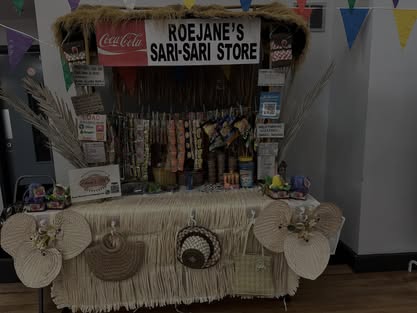
The barangay itself was the algorithm. Information travelled through open windows, front gates, sari-sari stores, afternoon gatherings and people who had left the house intending to buy one thing and somehow returned carrying enough information for an evening news bulletin. You could go out to buy vinegar and come home knowing who had argued with whom, whose daughter had a new boyfriend, who had recently returned from abroad and where Maria Labo had allegedly been spotted most recently. The sari-sari store was especially efficient. It sold canned goods, coffee, shampoo sachets, sweets and breaking news. You could buy one egg and receive three rumours at no additional charge. There was no blue verification tick and nobody requested supporting documents. A perfectly acceptable source could be somebody’s cousin’s neighbour’s sister who heard something from another person while buying pandesal.
What interests me now is what happened to information while it travelled. One person might begin with, “I heard something.” By the next house it became, “Someone heard something strange.” A few conversations later, somebody had apparently seen something. By the time the story reached the other side of the barangay, the mysterious creature had acquired a description, a location and possibly travel arrangements. Human beings have always been enthusiastic editors. We fill gaps, improve details and gradually remove uncertainty until the final version is sometimes repeated with greater confidence than the original source ever possessed.
Years later, I can sit with my iPad scrolling through social media and watch essentially the same process happen at extraordinary speed. A video appears showing perhaps fifteen seconds of somebody’s life, and within an hour strangers are conducting what appears to be a nationwide investigation. Somebody provides context, another disputes it, somebody claims to know the person, another has a cousin who apparently went to school with them, someone discovers an old Facebook photograph, and another person screenshots a deleted comment. Eventually someone enters with the sentence capable of gathering an entire Filipino comment section: “Guys, may update.” Suddenly everybody is seated and ready. The barangay has gone digital.
The bench outside the house became the comment section. The neighbour leaning across the fence became Messenger. “Nakadungog ka?” became “Have you seen this?” The whispered story became a screenshot, and instead of walking next door with new information, we press Share. Even the mysterious source survived technological progress. Before, it was “Sabi ng kapitbahay…” and now it is “I saw somewhere…” The source quality has occasionally remained the same; only the Wi-Fi improved.
Social media did not invent our love of kwentuhan. Filipinos have always been storytellers. We tell stories while eating, travelling, after church, during fiestas, at family gatherings and while standing at the gate after somebody has already announced that they are going home. A Filipino goodbye can take longer than some domestic flights. You say goodbye in the living room, continue talking at the door, reach the gate, remember another story and begin an entirely new conversation. Stories are part of how we connect. They preserve family memories, carry humour and allow grandparents to tell younger generations what life looked like before them. The same barangay network that spread questionable gossip could also tell everyone when somebody was ill, when a neighbour needed help, when someone had died or when a family was struggling. People showed up because people knew. There is something beautiful about that kind of community.
The danger begins when curiosity becomes certainty before truth has had time to catch up. The old barangay at least had a geographical boundary. Eventually, you ran out of houses. The internet does not.
A rumour that once required an afternoon to cross a neighbourhood can now cross countries in minutes. One embarrassing moment can be filmed at lunchtime and watched by millions before dinner. A mistake can be downloaded, edited, reposted and rediscovered years later. A private disagreement can become public entertainment for people who have never met anyone involved, and every repost gives the story another opportunity to change.
A caption can alter how people interpret a video. A cropped clip can remove what happened immediately before it. A screenshot can erase the conversation surrounding one sentence. A comment offers speculation, somebody repeats that speculation, another person sees it repeated several times and assumes it must have been confirmed. Eventually, “People are saying…” begins to sound suspiciously like “This happened.” I recognise that process because I have seen it before. I was simply much younger then, there were no smartphones involved, and the story everybody was talking about was Maria Labo.
The important difference is that the people inside today’s viral posts are usually real people living ordinary lives. Online, somebody can very quickly stop being treated like a person and become “the woman in that video,” “the guy everyone is talking about,” or whatever nickname strangers assign them. Thousands of people can judge their intelligence, appearance, relationships, family and character from a fragment of their life. Yet that person may read the comments. Their children might read them. Their parents, friends or colleagues might see them. When the internet eventually becomes bored and moves on to another story, the person at the centre of yesterday’s entertainment still has to live with whatever was left behind.
Of course, I am not pretending that I have transcended curiosity. I am Filipino. If somebody sits beside me and whispers, “May chika ako,” I am not going to close my eyes, breathe deeply and announce that I have risen above earthly gossip. Please. I will listen, and depending on the opening sentence, I may even move my chair slightly closer. Let us keep this blog credible. But listening, believing and spreading are three different decisions, and adulthood has made me understand the difference between them.
The Maria Labo story frightened me because I heard it repeatedly. Nobody needed to prove it to me. Repetition did part of the work, and other people’s confidence did the rest. Every additional person who knew the story made it seem slightly more believable. That is funny now when I remember hiding beneath my blanket because of a childhood urban legend. It becomes much less funny when the rumour concerns a real person. A false accusation can damage a reputation. A misleading clip can invite thousands of strangers to ridicule somebody. An edited video can create a version of an event that never happened quite the way viewers believe it did. “Everybody is saying it” has never been the same thing as evidence.
Perhaps that is the responsibility social media has added to one of humanity’s oldest habits. We will always tell stories. We will always be curious. Filipinos will probably always have chismis. Technology did not create those instincts; it simply handed them a microphone capable of reaching the world. And the microphone cannot distinguish between truth, misunderstanding, exaggeration and complete nonsense. We have to do that ourselves. Before helping something travel, perhaps it is worth asking where it came from, whether we know it is true, whether we are seeing the whole story and whether we would share it so casually if the person involved were our sibling, friend, parent or child. Curiosity may be instinctive, but sharing remains a decision.
Sometimes I still think about that little girl lying awake in Cebu, blanket pulled high, listening to the dogs barking outside because somewhere in the barangay somebody had mentioned Maria Labo. I want to tell her that she can sleep. The noise on the roof is probably a cat. The shadow outside is probably a tree. The dogs are probably barking because barking at questionable things is one of their principal hobbies. But I would also tell her to remember what happened: remember how a story nobody around you could confirm still became frightening because enough people repeated it; remember how each retelling acquired another detail; remember how kuno gradually began to sound like fact.
Years later, the sari-sari store has competition. The neighbours have smartphones. The aunties have Facebook. “Nakadungog ka?” has become “Have you seen this?” A rumour no longer needs to walk from house to house because it can cross the world before the people next door have even heard about it. We have become extraordinarily good at making stories travel, but perhaps wisdom lies in becoming equally good at deciding which stories deserve the journey. The scariest thing I remember about the Maria Labo rumour was not really the aswang I imagined hiding somewhere in the darkness. Looking back, it was how quickly an unconfirmed story could become something an entire neighbourhood repeated as though somebody, somewhere, must surely have checked it.
From barangay gossip to viral posts, that part of human nature has barely changed. The story still begins with someone saying they heard something. Another person still adds a detail. Someone else still repeats it with greater certainty. The only difference is that our barangay no longer ends at the last house on the road. Now it has timelines, comment sections, screenshots and millions of neighbours. The whole world can hear the gossip before we discover whether there was ever anything outside the window at all.
From the barangay, with better fact-checking,
Anj


































Leave a Reply