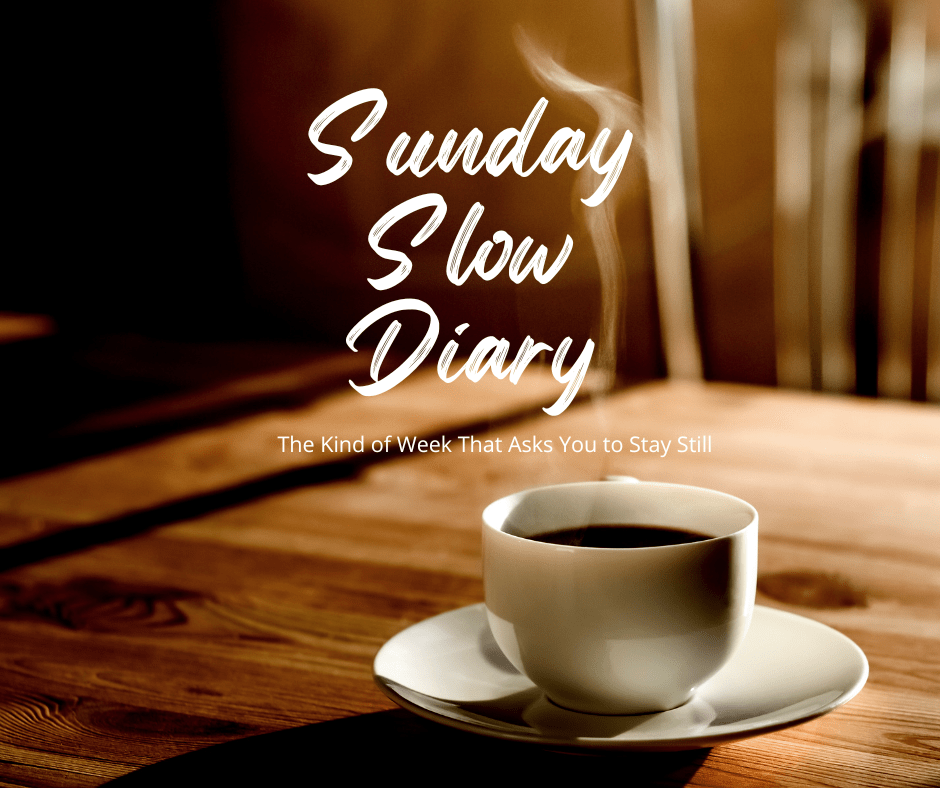
Sundays carry a different kind of stillness. Not the silence that follows chaos when everything has finally exhausted itself, but something softer, almost deliberate, like the air after rain. I am sitting by the window now, watching the light fall unevenly across the room and noticing how the day seems to move without urgency. There is something about Sundays that makes reflection arrive without being invited. Perhaps it is because the week has finally stopped speaking loudly enough for us to hear what has been quietly sitting underneath it, and this week, what has been sitting underneath almost everything is control. Or perhaps, more accurately, my complicated relationship with it and the slow, reluctant process of learning when to loosen my grip.
I did not plan for control to become the theme of my week. These reflections rarely announce themselves on Monday morning with a convenient lesson attached. Usually, I understand what a week has been trying to teach me only after I have already lived through it. Somewhere between rearranged schedules, unanswered messages, conversations I could not predict and outcomes that refused to follow the version I had already rehearsed inside my head, I noticed that familiar tension returning: the instinct to fix, organise, anticipate and somehow stay several steps ahead of life.
I like knowing what comes next. There is comfort in preparation, in having a plan and understanding where things are going. I like knowing what I am dealing with because uncertainty leaves too much room for imagination, and imagination, when mixed with worry, can become remarkably creative. Perhaps part of me has always believed that if I prepare thoroughly enough, think carefully enough and anticipate enough possibilities, I can protect myself and the people I care about from unnecessary problems. There is a reassuring illusion hidden inside planning: the idea that enough preparation can somehow negotiate with uncertainty. We can prepare for life, but preparation was never a guarantee that life would follow the plan.
This week reminded me of that more than once. Things changed. People responded differently from what I expected. Some situations required waiting when I would have preferred immediate answers, while others simply existed outside the reach of anything I could reasonably do. My first instinct was familiar: think harder, analyse more, find the missing variable and work out what could be done differently. There is something almost automatic about the way my mind enters problem-solving mode, as though every uncomfortable situation must contain a solution somewhere and my responsibility is simply to find it quickly enough.
But I am beginning to understand that not everything uncomfortable is a problem waiting to be solved.
Sometimes discomfort is simply uncertainty, and uncertainty cannot always be organised away. There is a strange arrogance hidden inside anxiety sometimes, not arrogance in the usual sense, but the unconscious belief that if we think about something long enough, perhaps we can eventually control it. We replay conversations because we think another interpretation might reveal an answer. We imagine possible outcomes because being mentally prepared for disappointment somehow feels safer than being surprised by it. We construct scenarios and responses for conversations that have not happened and may never happen, convincing ourselves that we are simply being responsible. Sometimes overthinking is not preparation at all; it is fear trying very hard to look productive.
That was uncomfortable to recognise because responsibility is something I value. I like being dependable. I like solving problems rather than watching them grow. There are areas of life where those instincts are useful and even necessary, but perhaps the difficulty begins when a strength that serves us well in one part of life quietly follows us into places where it does not belong. Not every situation requires my intervention, not every silence needs me to fill it, not every person needs rescuing, not every misunderstanding requires an immediate defence and not every uncomfortable feeling needs to be converted into action. Sometimes maturity is not knowing what to do next; it is recognising when doing nothing for a while is actually the wiser thing to do.
There were moments this week when I caught myself wanting to intervene simply because doing something felt more comfortable than waiting. Waiting can make us feel strangely powerless, especially when we care about the outcome. We want to send another message, explain ourselves one more time, defend ourselves or someone else, clarify what somebody meant, check what another person is thinking or somehow push the situation towards whichever conclusion feels safest. There is comfort in movement because movement gives us the impression that we are influencing what happens next.
But something interesting happened when I resisted that impulse. Nothing collapsed. The world continued. A conversation I did not immediately resolve was still capable of finding its own direction. A silence I did not rush to fill remained only silence rather than automatically becoming rejection. When I stopped trying to defend myself or other people before defence was even necessary, some of the tension disappeared on its own. And when I finally admitted internally, I don’t have control over this, I noticed something surprisingly physical happen: my shoulders relaxed. Maybe the body sometimes understands surrender before the mind is willing to call it that.
For a long time, I misunderstood surrender as passivity. I thought letting go meant giving up, becoming careless or simply allowing things to happen without taking responsibility for my own life. But I am beginning to understand surrender differently. It is not abandoning responsibility; it is recognising where responsibility ends.
There is a difference between giving up and giving something room to unfold. One comes from defeat, while the other can come from wisdom.
Some things genuinely require action, and when they do, I want to act. Some conversations require honesty, some problems require decisions, some relationships require effort, and some situations require us to speak, intervene, protect ourselves or change direction. Surrender should never become an excuse for avoiding what belongs to us. But there are also things that simply need time. Some people need space to understand their own feelings without us managing the process for them. Some questions need to remain unanswered for a while. Some opportunities require patience. Some disappointments need to settle before we decide what they mean. Some situations become clearer precisely because we stopped touching them long enough to see what they would become on their own.
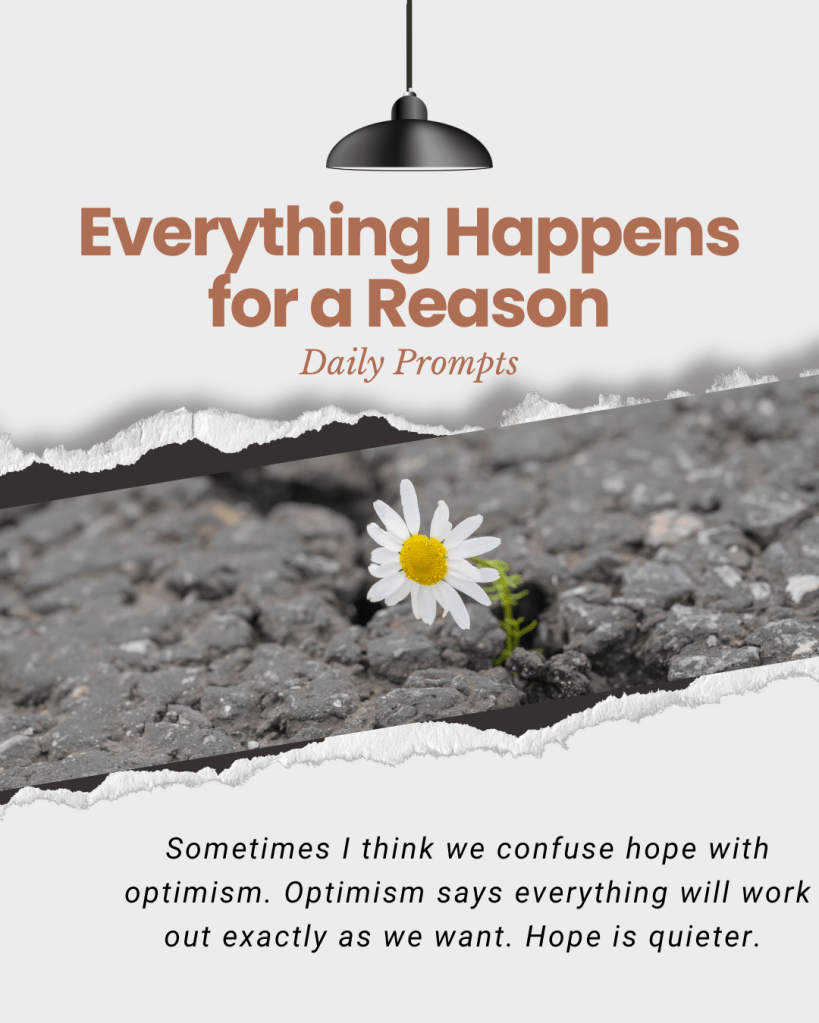
There is discomfort in not knowing. Uncertainty can feel like standing in a familiar room after somebody has dimmed the lights just enough to make you question where everything is. You know you are probably safe, but your steps become cautious because you cannot see the entire path in front of you. My instinct has often been to search immediately for the light switch, but perhaps uncertainty is not always something that needs to be illuminated immediately. Sometimes it is simply the space where trust is being built.
That trust takes different forms. It is trust in timing, trust that other people are capable of making their own decisions, trust that not every delay means something has gone wrong and trust that a change in direction does not automatically mean I have lost my way. More importantly, it is trust in myself that I can handle disappointment if it arrives and that I do not need to predict every possible future in order to survive whichever one eventually becomes real. Maybe peace does not come from knowing what happens next. Maybe it comes from knowing that whatever happens next, you will meet it when it arrives.
That feels different from the kind of confidence I once thought I needed. I used to associate confidence with certainty: knowing what to do, having the answer and feeling prepared. But perhaps there is another kind of confidence that is quieter and more durable. It is being able to admit that I don’t know yet without immediately feeling threatened by those words. I don’t know how everything will unfold. I don’t know what every person is thinking. I don’t know whether every plan will work, which delays are temporary, which ones are redirections or whether some of the things I currently want will still matter to me a year from now. Strangely, the more comfortable I become admitting that, the less frightening uncertainty begins to feel.
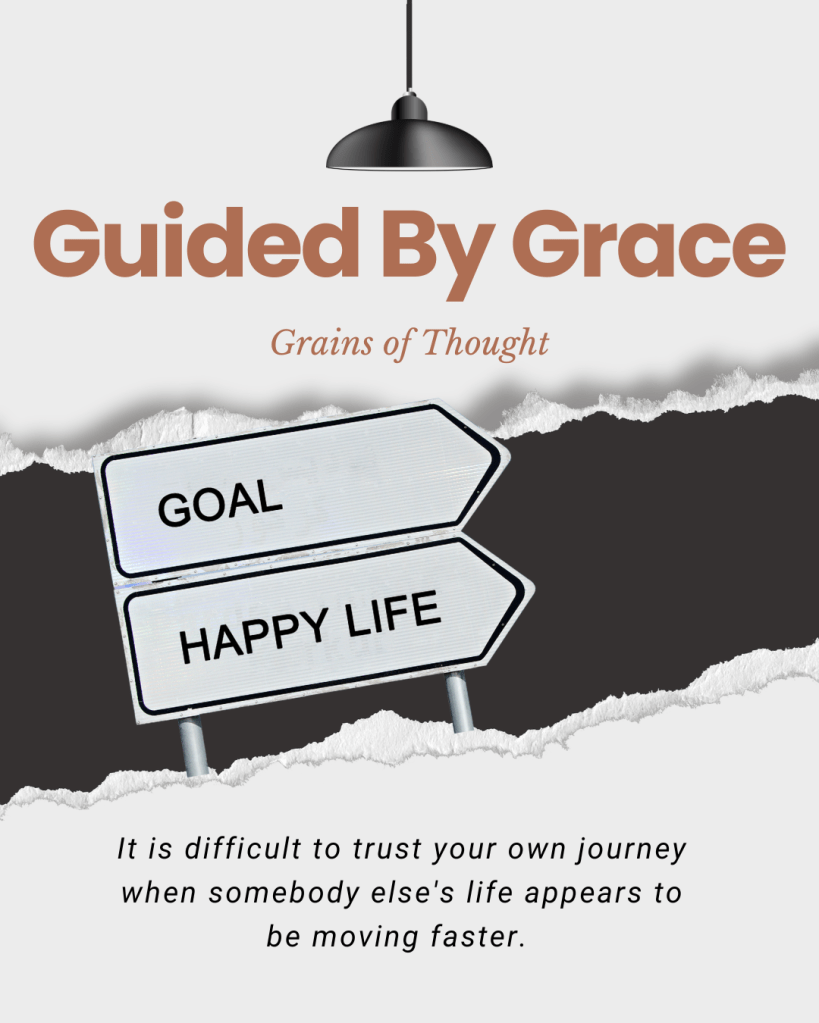
Perhaps adulthood is partly discovering how little control we ever actually had. When we are younger, we imagine adulthood as the stage when everything finally makes sense. Adults seem to know where they are going, what decisions to make and how life works. Then we become adults ourselves and discover that much of it involves making the best decision available with incomplete information and trusting that we will know how to adjust later. We plan careers and encounter opportunities we never predicted. We build relationships with people who continue changing because human beings are not fixed objects. We make financial plans in economies that change, arrange schedules that circumstances rearrange and imagine timelines for lives that have never been particularly respectful of timelines.
Yet somehow we continue. Plans change and we adapt. Doors close and eventually we notice another one. People leave and different people arrive. Something we desperately wanted does not happen, and sometimes years later we understand why. Other times, we never understand at all, and perhaps that is another part of surrender we rarely talk about. Not every disappointment eventually reveals itself as a blessing in disguise. Sometimes something simply does not work out, and there may never be a beautiful explanation waiting at the end. Trust is not believing that everything will happen exactly as we want; it is believing that our lives can still become meaningful when it doesn’t.
This week made me think about how often control is connected to fear. We want to control outcomes because we are afraid of disappointment. We want to control how people perceive us because we are afraid of being misunderstood. We want to control conversations because we fear saying the wrong thing, and we want to control timing because waiting leaves us vulnerable to possibilities we cannot predict. The desire for control often begins with a perfectly reasonable wish to feel safe, but safety built entirely around control is fragile because life contains too many variables belonging to other people, circumstances and timing.
Perhaps that is why I am beginning to value a different kind of peace, one capable of surviving uncertainty. Real peace cannot depend entirely on everything going according to plan. If my peace exists only when everyone behaves as expected, every message receives the response I want and every plan unfolds exactly on schedule, then perhaps what I have is not peace at all. Perhaps it is simply temporary comfort provided by circumstances.
That thought made me look at the things I have been holding too tightly: plans, expectations, conversations, other people’s decisions, timelines and even the version of myself I sometimes think I should already have become by now. Maybe some things need softer hands. That phrase has stayed with me because softer hands do not mean careless ones. I still want to make plans, work towards things that matter to me and remain responsible and prepared because those qualities are part of who I am. I simply don’t want to grip everything so tightly that any change begins to feel like failure.
There is wisdom in knowing what deserves our effort and what deserves our release.
Holding plans lightly does not mean caring less about them. It means leaving enough room for life to surprise us. It means recognising that redirection is not automatically failure and that a different route can still lead somewhere worthwhile. It means understanding that not every delay is a denial while also accepting that sometimes the answer really may be no. Perhaps the harder form of trust is not believing everything we want will eventually become ours; it is knowing that if something does not, we will still be okay.
There is something liberating about that realisation because it means I do not need every person to understand me, every conversation to end exactly where I want it to or every unanswered question resolved before I allow myself to enjoy the present. I do not need to know today what will happen six months from now, and I certainly do not need to rehearse every possible disaster in the hope that imagining it first will somehow make me immune to disappointment. We cannot prevent every difficult future by worrying about it in advance; sometimes all we accomplish is borrowing its pain before we even know whether it exists.
One thought surfaced somewhere in the middle of the week and stayed with me: You are allowed not to have the full picture. I don’t know why those words felt so reassuring, but they did. Maybe because so much of life encourages us to behave as though certainty is something we should possess. We are expected to have plans, answers, goals and timelines. We ask young people what they want to become before they have had enough life to understand the question, and we ask adults about their five-year plans as though five years has ever asked permission before changing everything.
Perhaps I needed permission to admit that I am standing somewhere in the middle, and the middle is not necessarily a bad place. Stories would be terribly boring if we understood everything halfway through them, and perhaps life is similar. We are living inside chapters whose meaning may only become visible later. The person we are worried about today may eventually become someone we understand differently. The opportunity we think we missed may redirect us towards something else. The waiting season we resent may be quietly changing us in ways movement could not. Or perhaps nothing dramatic will happen at all and we will simply continue. That can be enough too. We do not need to know the ending to know that the chapter we are living still matters.
This Week’s Companion Song
“Vienna” by Billy Joel
As I was tidying up last night, Billy Joel’s Vienna was playing in the background, and it felt strangely appropriate for everything I had been thinking about. There is something timeless about music that reminds us not to hurry through our own lives. It made me think about how often I rush mentally even when physically I am standing still. I can be sitting quietly while my mind is already six months ahead, calculating possibilities, preparing responses and constructing imaginary versions of conversations that may never happen. Perhaps slowing down is not only about doing fewer things. Sometimes it means thinking less urgently and allowing questions to exist without immediately demanding answers from them. Not every question needs an answer today simply because it entered your mind today.
So this Sunday, I am sitting by the window and allowing the day to remain quiet. There are still things I do not know, situations I cannot control and outcomes that will eventually arrive without asking me how I would prefer them to unfold. Tomorrow will bring another week with its own plans, interruptions and surprises, and I know myself well enough to understand that my instinct to organise everything will not disappear simply because I wrote one reflective blog post about surrender. But perhaps awareness is enough for now. Maybe next time I feel myself gripping something too tightly, I will notice it before I exhaust myself trying to control it.
Perhaps I will pause before reacting and ask myself whether the situation genuinely requires my intervention or whether I am simply uncomfortable because I cannot control it. Perhaps I will leave a little more room for other people to have their own process, for timing to reveal what I cannot yet see and for life to unfold without my constant supervision. There is a strange peace in realising that the world does not depend entirely on my vigilance. Things will happen without me directing them, people will make their own choices, some problems will resolve themselves, others will require me later, and some things I currently worry about may eventually become so insignificant that I will wonder why I gave them so much space inside my mind.
Maybe that is what this week has quietly been teaching me. Control can make us feel safe, but sometimes the constant effort to maintain it becomes its own kind of prison. We hold everything tightly because we are afraid something might fall apart, never noticing how exhausted our hands have become from carrying things that were never entirely ours to hold.
Sometimes letting go is not losing control; it is finally recognising the difference between what belongs in our hands and what never did.
I think that is what I want to practise in the week ahead: softer hands. I want to make plans without worshipping them, care about outcomes without allowing them to determine my peace, love people without trying to manage their choices and prepare for the future without mentally living there before it arrives. I want to remember that patience is not inactivity and uncertainty is not automatically danger. There will always be things outside my control, but perhaps my task was never to eliminate uncertainty from my life. Maybe it was to become someone who can remain steady inside it.
As the light by the window begins to change and another Sunday quietly moves towards its ending, I realise I do not need to leave this week with every question answered. Some things can remain unfinished. Some conversations can wait. Some people can have their space. Some plans can change. I can stand in the middle of a story without forcing myself to know how it ends, because my life does not become less meaningful simply because I cannot see the entire road from where I am standing. Perhaps surrender is simply learning to walk forward with open hands, trusting that what is truly ours will not require us to destroy our peace trying to hold onto it, and that whatever leaves those hands may sometimes be making room for something we could never have planned ourselves.









 superanjventures
Leave a comment