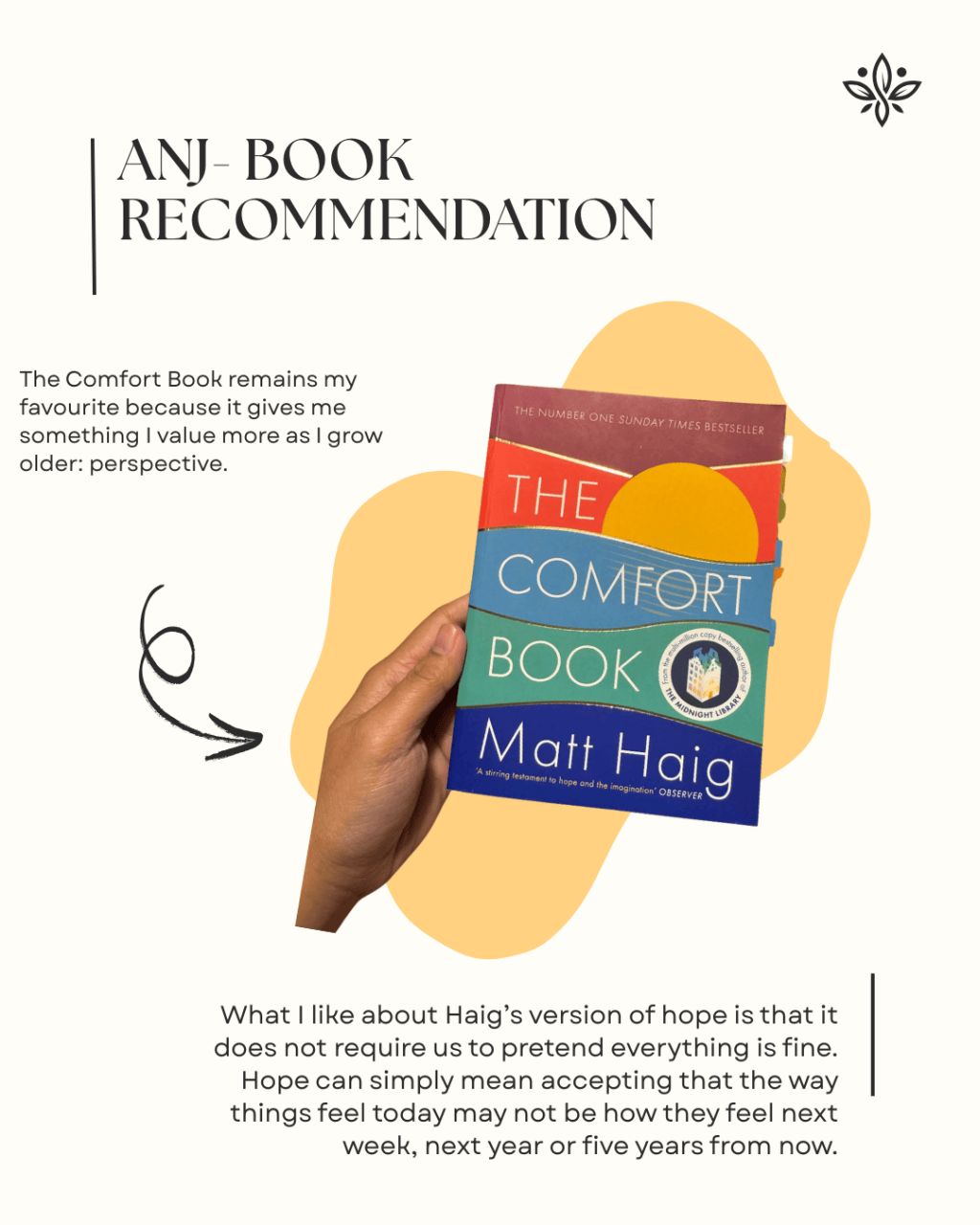
The Comfort Book: My Favourite Book for the Days Life Feels Too Much
There are days when the last thing I need is another instruction on how to become a better version of myself. Wake up earlier. Drink more water. Exercise. Meditate. Journal. Practise gratitude. Fix your sleep schedule. Stop overthinking. Find your purpose. Declutter your house. Somehow, being a functioning adult has become a never-ending improvement programme, and apparently there is always one more habit standing between us and enlightenment. Some days, I simply want coffee, a comfortable chair, and the freedom to exist without treating myself like an unfinished renovation project. This is part of why Matt Haig’s The Comfort Book became my favourite book. Not one of my favourites—my favourite. I have read books that impressed me, books that entertained me, and books that taught me things I still remember, but this one has a different place on my shelf and in my life. I do not think of it as something I finished. It is something I return to, especially when my thoughts are running faster than necessary and life feels more complicated than it probably looked on the calendar.
Some Days, We Don’t Need Another Life Lesson
What Kind of Book Is It?
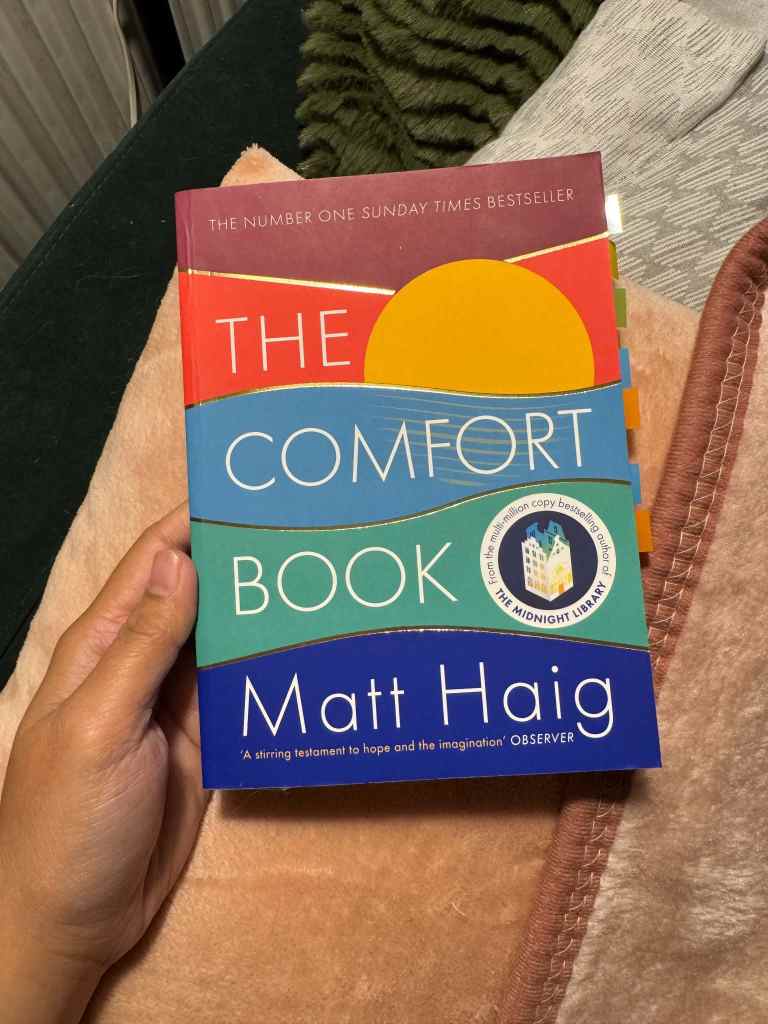
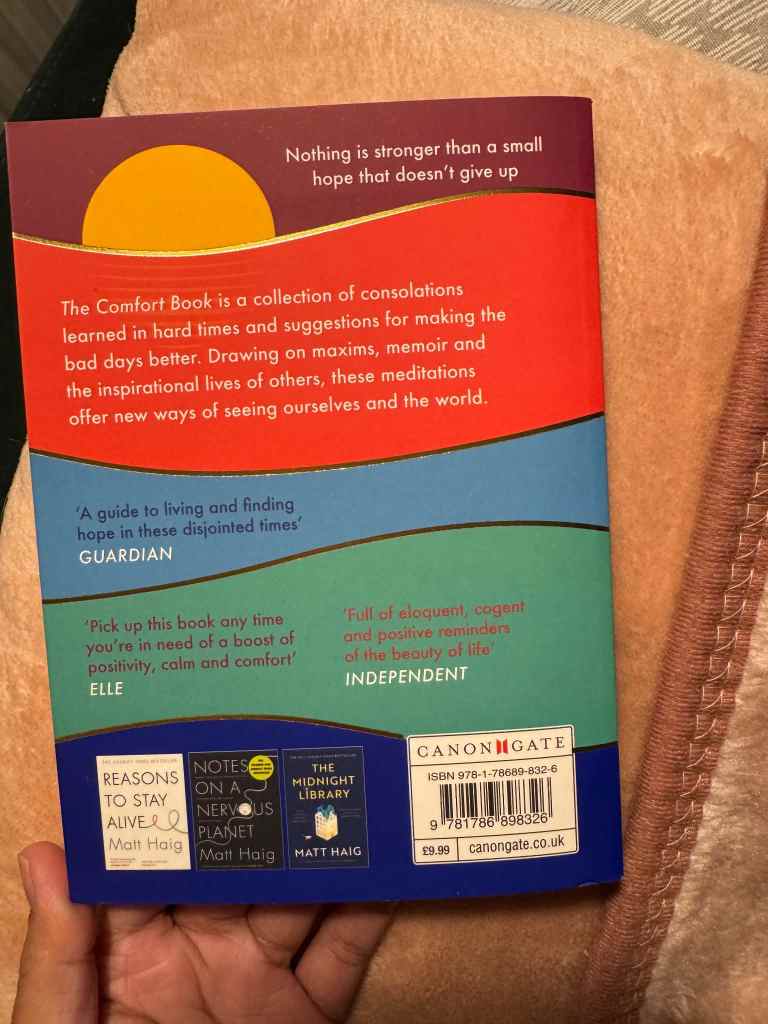
The Comfort Book is a collection of short reflections, memories, observations, philosophical thoughts, lists and personal experiences. It moves between subjects such as hope, fear, time, books, music, nature, mental health and the strange business of being human. Some entries last only a few lines, while others take a little more space to unfold. There is no need to remember what happened twenty pages earlier, because this is not the kind of book that punishes you for losing your place. You can read ten pages in one sitting or open it at random and read one. You can leave it untouched for a month and come back without needing a recap. For someone whose bookshelf already contains several books patiently waiting for their turn while I continue purchasing new ones as though I have been granted an additional lifetime exclusively for reading, this format is very convenient. More importantly, it suits what the book is trying to do. These are thoughts meant to be considered, revisited and sometimes encountered again when life has changed enough for them to mean something different.
Why It Became My Favourite
Favourite books are difficult to explain because the answer is rarely based on literary merit alone. Sometimes a book simply finds the exact part of you that understands what it is saying. The Comfort Book does that for me because it never makes life seem easier than it is. It accepts that some experiences are confusing, painful or unfair and that we will not always understand them while they are happening. I appreciate that because I have never found much comfort in the idea that every painful experience must immediately become a valuable lesson. Sometimes a bad experience is simply a bad experience, and perhaps the meaning comes later. Perhaps it does not. We are still allowed to keep going. The book reminds me that I do not have to solve everything today. I do not need an explanation for every disappointment or a five-year strategy for every uncertain season. Sometimes getting through what is directly in front of us is enough. There is something reassuring about being reminded of that by a book rather than by another motivational quote insisting I should be thriving before breakfast.
One Difficult Day Does Not Predict the Rest
One of the ideas I keep returning to is that our present feelings are terrible fortune-tellers. A difficult day can convince us with remarkable confidence that everything ahead will be equally difficult. The human brain can be very theatrical when given the opportunity. One thing goes wrong at 9 a.m. and by lunchtime it has written an entire tragedy, cast the supporting characters and scheduled the sequel. Yet when I look back at my own life, there are worries I once carried everywhere that I can barely remember now. There are situations that felt enormous at the time and eventually became something I could look at from a distance. That does not mean painful experiences become insignificant or that every wound disappears neatly. It means life continues to accumulate around them. New people, new memories, ordinary Tuesdays, unexpected laughter, workdays, holidays, meals, disappointments and good news all keep adding themselves to the story. Eventually, something that once occupied the whole page becomes part of a much longer chapter.
We Know More Than We Remember
Many ideas in The Comfort Book are simple, and I mean that as a compliment. We already know that rest matters. We know that comparison is unhealthy. We know that spending time outside can help clear the head, that music can change a mood and that the people we love matter more than many of the things we spend our days worrying about. The difficulty is remembering any of this at the appropriate moment. We know comparison makes us miserable, then we open social media and discover that somebody younger than us has purchased a house, launched a successful company, travelled through Europe, married their soulmate, mastered pottery and somehow maintained perfect skin throughout the process. Meanwhile, we are wondering why we walked into the kitchen. Knowledge is not always the missing ingredient. Sometimes we need reminders. That is one of the things this book does well. It takes truths we may already understand and places them back in front of us at a time when we might actually pay attention.
Hope That Feels Believable
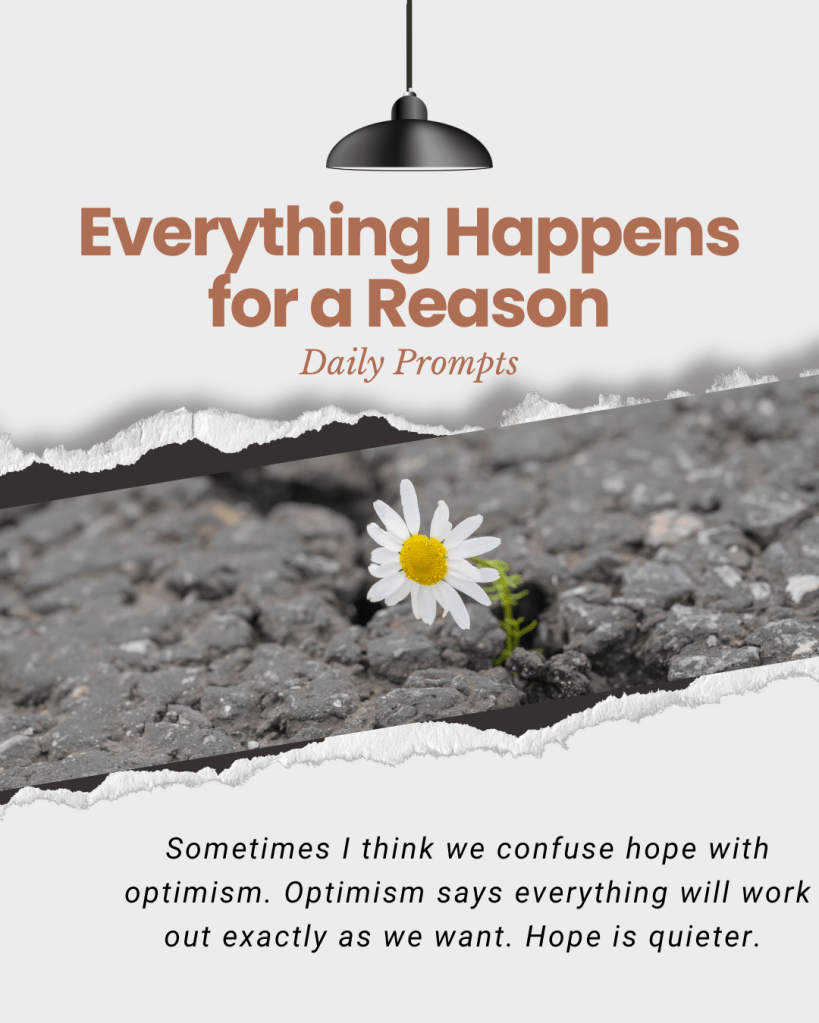
What I like about Haig’s version of hope is that it does not require us to pretend everything is fine. Hope can simply mean accepting that the way things feel today may not be how they feel next week, next year or five years from now. That feels far more useful to me than relentless positivity. There are days when being told to “look on the bright side” makes a person want to locate the bright side and throw something at it. Real life contains grief, uncertainty, disappointment and exhaustion alongside happiness, excitement and everything else. Hope does not erase any of those things. It gives them a time limit on their authority. A bad Monday does not get to decide what Wednesday will be. A difficult year cannot automatically claim the decade. Feeling lost for a while does not mean we have permanently misplaced ourselves. Sometimes moving forward simply means allowing tomorrow to have a chance to be different.
The Ordinary Things Matter More Than We Admit
One of my favourite parts of the book is its appreciation of ordinary comforts. We tend to imagine resilience as something impressive and cinematic: dramatic breakthroughs, major decisions, powerful speeches and inspirational music playing somewhere in the background. In reality, the things that keep us going can be embarrassingly ordinary. Coffee. A favourite meal. A familiar song. A message from someone who knows us well. A walk. A prayer. A television series we have already watched enough times to qualify as unofficial cast members. A cat occupying most of the bed while contributing absolutely nothing towards household expenses. These things seem small until they are exactly what we need. I think we sometimes spend so much time waiting for major happiness that we forget how much of life happens between the milestones. A good conversation, sunlight through a window, coming home after a long day, laughing when we expected to be miserable—none of these will make the front page, but they are often the things that make life feel worth participating in.
A Book You Can Read Differently Each Time
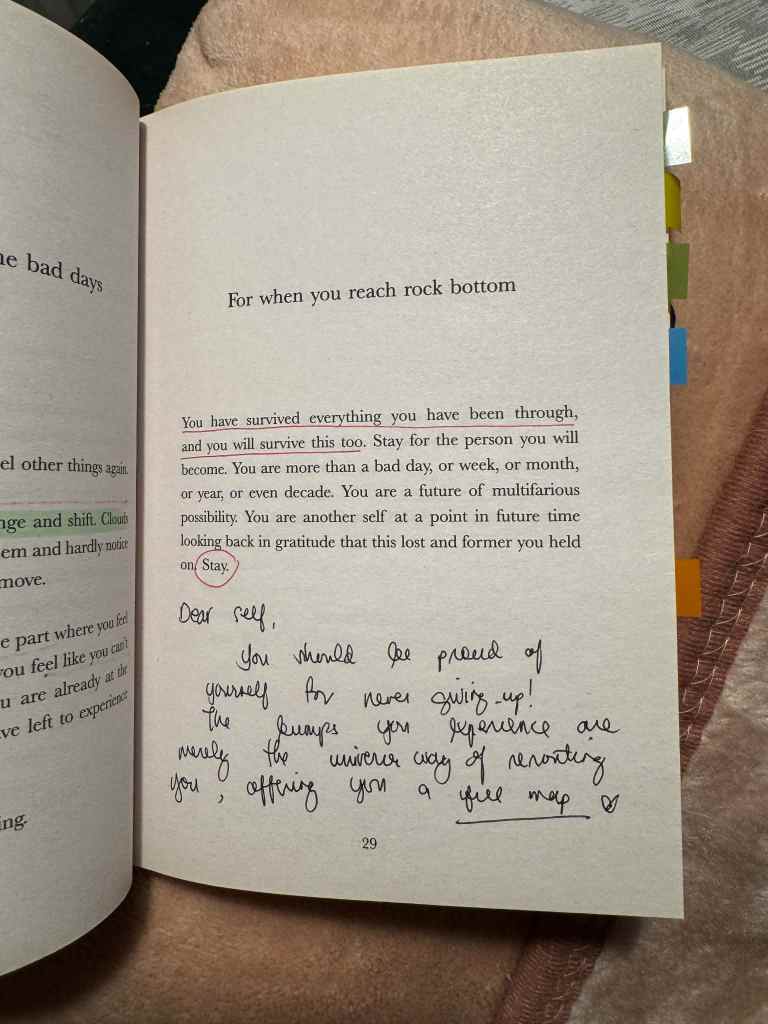
I also love that The Comfort Book changes depending on when I read it. The words stay exactly where they were printed, but I rarely arrive at them as the same person. A paragraph I once skimmed might suddenly mean something several months later because something in my own life has shifted. That is part of the pleasure of returning to books. We often say we are rereading them, but in some ways they are meeting a different reader every time. Age, experience, grief, happiness, disappointment and perspective change what we notice. This is particularly true of a book made from short reflections. There is no requirement to extract something profound from every page. Sometimes a passage means nothing to me and another one makes me stop for several minutes. I like that unpredictability. A book does not need to speak at full volume on every page to earn its place on my shelf. It simply needs to say something worthwhile when I need to hear it.
What I Don’t Love About It
Some reflections repeat similar ideas, and a few may feel obvious depending on the reader. People who prefer detailed research, structured arguments or traditional narrative nonfiction may find the format too fragmented. It is also worth remembering that although Matt Haig writes openly about mental health and draws from personal experience, this is not a clinical psychology textbook or a therapeutic manual. It offers reflections rather than treatment, and personal insight rather than a comprehensive scientific argument. I actually think knowing this beforehand makes the book easier to appreciate for what it is. I would not pick it up expecting academic analysis. I would pick it up because I want perspective, reflection and a reminder that another human being has also spent a considerable amount of time trying to understand why being alive can be both wonderful and completely ridiculous.
Why It Is Still My Favourite
It reminds me that I do not need to understand everything immediately, that a bad season is still only one season, and that life does not become meaningless simply because it becomes difficult. It also reminds me to pay attention to the ordinary things I might otherwise hurry past—the people who stay, the food that tastes good after a long day, the animals waiting at home, the places that feel familiar, the songs I return to, the prayers said quietly, the jokes that make me laugh when I was determined to remain annoyed, and the small plans that give tomorrow something to look forward to. I do not love this book because it promises a perfect life. I love it because it makes an imperfect life feel worth noticing. Maybe that is why I keep returning to it. Every time I do, I come away remembering that life does not need to be spectacular every day to be valuable. Sometimes it is enough to have one good conversation, one good meal, one reason to laugh, one person to call, one page worth rereading—and another morning still waiting for us.
Who I Would Recommend It To
I would recommend The Comfort Book to anyone who tends to overthink, which probably covers a fairly impressive percentage of humanity. I would give it to someone going through a transition, someone feeling tired, someone who enjoys thoughtful nonfiction, or someone who likes books they can underline and revisit. I would also recommend it to people who are tired of self-help books that make them feel as though they have acquired another set of homework assignments. This book is easier to live with. You can read it slowly. You can disagree with parts of it. You can return only to the pages that mean something to you. Readers who want extensive evidence, detailed psychology or a tightly developed argument may want something different, but anyone who appreciates reflective writing will probably find something here worth keeping. And I think that is the right word for this book: keeping. Some books are made to be read once and passed along. This is one I want within reach.

















Leave a comment