
What’s the best advice you’d give to someone younger than you?
View all responses
It is my fourth night shift in a row, and somewhere between trying to convince my body that nighttime is an entirely reasonable time to be awake and wondering how many cups of coffee officially become too many, my mind has started wandering. This often happens when I am tired. My thoughts seem to loosen themselves from their usual places and travel backwards, forwards, and occasionally somewhere completely unnecessary. There is something peculiar about being awake while most people are asleep. Even when I am busy, I remain aware that somewhere outside, houses are dark, curtains are drawn, people are tucked underneath their duvets, and the world is continuing without much noise. Meanwhile, I am watching another night slowly move towards morning, feeling that familiar heaviness behind my eyes and thinking about life for absolutely no practical reason.
Perhaps tiredness makes us sentimental. Or perhaps there is simply something about the middle of the night that makes everything feel slightly more honest. During the day, there are too many distractions. There is always somewhere to go, something to answer, something to finish, something waiting for our attention. At night, especially after several night shifts in a row, the mind somehow finds the drawers we have not opened for a while. Mine decided tonight that it wanted to think about age, which felt a little rude considering I was already tired enough.
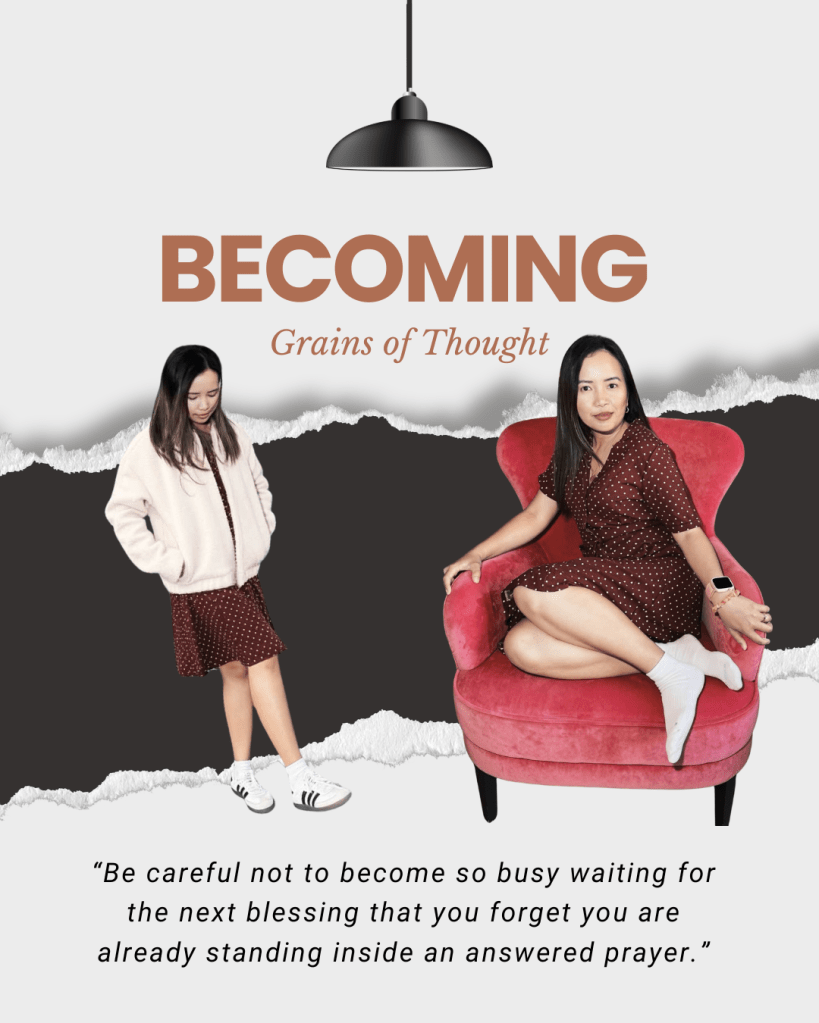
I am thirty-six now, and saying that still feels strange sometimes. I do not feel particularly wise, and I certainly do not wake up every morning with a mature understanding of the universe. There are days when I am organised and sensible and days when I open the refrigerator several times as if new food might materialise if I give it another chance. I still overthink. I still change my mind. I still occasionally make decisions and then wonder five minutes later whether I should have done the exact opposite. Yet something has undoubtedly changed between the woman I am now and the younger versions of myself I carry around with me.
I notice it most when I listen to people younger than me talk about their lives. There is an urgency in some of their worries that I recognise immediately because I once carried the same urgency. They worry that they are behind, that they have chosen the wrong path, that they should already be earning more, travelling more, settling down, buying a house, getting married, having children or at least possessing a convincing answer when someone asks where they see themselves in five years. Sometimes I want to tell them that I am thirty-six and still occasionally look at my own life and think, Well, this was not exactly how I pictured the chapter.
I do not mean that with disappointment. If anything, I have become fascinated by how little life resembles the plans we make for it. When I was younger, I imagined adulthood as something far more orderly. I thought growing up meant gradually collecting certainty. I assumed there would be a point when I would know exactly who I was, what I wanted and where everything was going. There would be a career, a home, a relationship, financial security, perhaps a few stamps in my passport, and somewhere among all of that I would apparently become one of those calm adults who remembers appointments without setting three alarms.
I am still waiting for that woman to arrive.
Instead, adulthood has been much more interesting. It has been a mixture of plans and detours, confidence and doubt, beautiful surprises and things I would happily have skipped. There have been periods when everything seemed to be moving in the direction I wanted and others when life appeared to pick up my carefully organised map, fold it several times and put it somewhere I could not reach. There have been things I worked hard for that took much longer than expected, things I desperately wanted that eventually mattered less, and things I never imagined wanting that became deeply important to me.
Looking back, I think younger me spent too much time believing that timing was evidence. If something happened quickly, perhaps I was doing well. If something took longer, maybe I had somehow fallen behind. I know now that life does not work like that. Some good things take years. Some things arrive at the wrong time and have to be released. Sometimes you receive exactly what you asked for and discover that it does not feel the way you imagined. Sometimes you do not receive it at all, and years later you realise that the person you became would not have wanted it anymore.
There are also things for which I still do not have a neat explanation. I have learned not to force one. When I was younger, I wanted everything to make sense eventually. If something hurt, I wanted to know why it happened. If a door closed, I wanted reassurance that a better one was waiting immediately beside it. If someone left, I wanted the lesson clearly labelled. Life is rarely that considerate. Some things eventually make sense, while others simply become part of the story you carry.
Perhaps that is one of the things I would tell someone younger than me now. Do not be so frightened when you do not understand what is happening yet. You are sometimes standing too close to your own life to see its shape. There have been moments in mine when one disappointment seemed enormous simply because I could not see what came after it. Time did not necessarily make those experiences unimportant, but it placed other things around them. New memories arrived. Different people entered my life. I became occupied with new responsibilities, discovered new interests, laughed again and eventually noticed that something which had once taken up almost all of my emotional space had become only one room in a much larger house.
This is why I no longer believe every bad season deserves a permanent conclusion.
A terrible week can simply be a terrible week. Rejection does not automatically mean you are inadequate. Feeling lost does not necessarily mean you are on the wrong road. Sometimes you are simply tired, disappointed, grieving, overwhelmed or in the uncomfortable middle of becoming somebody you have not met yet.
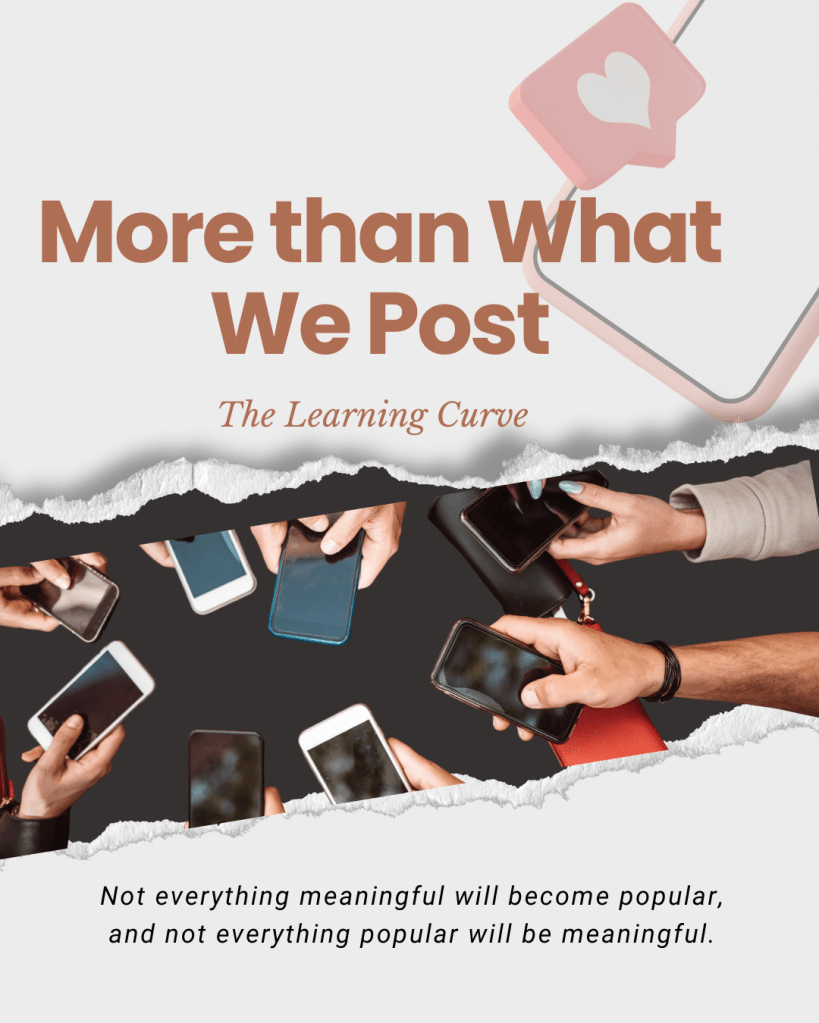
I wish I had understood that sooner, particularly when it came to comparison. There has probably never been an easier time to feel behind. We can now open our phones and, within five minutes, find someone younger who appears to be wealthier, happier, more beautiful, more travelled, more successful and somehow capable of waking at five in the morning to exercise voluntarily. You can begin the day reasonably satisfied with your existence and end breakfast wondering whether you have wasted your entire life because somebody on the internet has just purchased their second property.
I have fallen into that trap too. I think most of us have. It is easy to forget that we are looking at pieces of lives rather than whole ones. We see the wedding but not every difficult conversation that came before it. We see the house keys without seeing the mortgage, the savings, the sacrifices or the anxiety. We see the promotion and not the years of feeling overlooked. We see someone smiling somewhere beautiful and forget that sadness is perfectly capable of travelling internationally.
The older I become, the more interested I am in what a life feels like from the inside. I am less impressed by things that merely look impressive. I still appreciate achievement, of course. I have always wanted to grow, learn and become better at what I do. Ambition has been part of me for a long time, and I do not think ambition is something we need to apologise for. But I have also learned that a life can look successful to everyone else and still be deeply uncomfortable to live.
Success has become quieter to me now. It looks more like having a home where I can exhale. It looks like having enough money not to panic every time something unexpected happens, while still allowing myself to enjoy some of what I work for. It looks like having people I can laugh with without needing to perform, work I can take pride in without allowing it to swallow my entire identity, a few places that feel like home, something to look forward to and enough peace that silence does not frighten me.
Money, strangely enough, is something I wish I had understood more practically when I was younger. Nobody really makes saving sound exciting, especially when you are young and there are trips to take, clothes to buy, food to eat and a suspicious number of things online that suddenly seem essential at eleven o’clock at night. I still believe money should be enjoyed. I do not want to spend my entire life saving for a version of myself who may be too old or too tired to enjoy any of it. I want the coffee, the trip, the meal, the experience and sometimes the completely unnecessary little thing that makes me happy.
At the same time, I have learned that there is enormous peace in not owing your future self too much. Financial security is not always glamorous. It does not necessarily photograph well. Nobody is going to applaud the emergency fund sitting quietly in an account, but there is something comforting about knowing that an unexpected expense will be inconvenient rather than catastrophic. I would tell someone younger to learn the boring things early: interest, credit, saving, pensions, budgeting and the difference between being able to buy something and actually being able to afford it.
Then, once you understand those things, enjoy your money without allowing it to become the measurement of your worth.
I would say something similar about work. I have always cared about doing well. I like learning. I like becoming competent at things that once intimidated me. There is a certain satisfaction in looking back at something you struggled to understand and realising that it has become part of what you now know. But somewhere along the way I also learned that work can take as much of you as you are willing to surrender.
There will always be another responsibility. Another task. Another qualification. Another opportunity to prove yourself useful. Work can be meaningful, but it cannot be the only evidence that you matter. I have learned this slowly, perhaps because people who care deeply about what they do can easily become consumed by it. You begin by wanting to do your job well, and before you know it, your sense of worth is attached to how productive, knowledgeable or indispensable you have managed to become.
But you are still a person when you go home.
You need something that has nothing to do with your professional usefulness. For me, there are books, writing, photographs, travelling, television series, music and those quiet moments when nothing particularly productive happens. I have come to appreciate hobbies that do not need to become achievements. We live in a time when everything seems to require an outcome. If you write, perhaps you should publish. If you take photographs, perhaps you should build an audience. If you bake, somebody will eventually ask whether you have considered selling them.
Sometimes I want to do something simply because I like doing it.
There is freedom in that.
Music, especially, has always had a strange relationship with my memory. There are songs that can take me back to my younger years before I have even realised where my mind has gone. A few notes and suddenly I can see places that no longer look the same, remember people I have not spoken to in years and meet a younger version of myself who thought she knew exactly what mattered.
Sometimes I feel affectionate towards her. Other times I want to shake her gently and say, “Please stop worrying. Half of this will not matter.”
I think that is one of the gifts of getting older. You discover that not everything deserves the same amount of energy.
When I was younger, being misunderstood bothered me more. I wanted people to know my intentions. If somebody formed an opinion about me that I thought was unfair, there was a part of me that wanted to explain the entire story until they saw it correctly. I thought understanding could always be achieved through enough words.
It cannot.
Some people will misunderstand you after you explain. Some will misunderstand you because they never intended to understand you in the first place. Others will simply see things differently, and that is allowed too. You can spend an enormous amount of your life trying to control the version of you that exists inside other people’s minds.
Eventually, you become tired enough to stop.
That does not mean you should stop communicating or correcting things that genuinely matter. It means learning to recognise when an explanation has become a performance. There is peace in knowing your own intentions, taking responsibility when you are wrong and allowing other people to make whatever conclusions they choose after that.
I have also learned to apologise differently.
Age has made it easier to say, “I was wrong,” perhaps because I no longer think admitting a mistake removes something from me. Pride can be surprisingly expensive. We sometimes spend years protecting our ego from a sentence that could have repaired something in five minutes. I would tell someone younger not to become so attached to being right that they become incapable of being kind.
Forgiveness, however, has become more complicated to me with age. I used to think forgiving someone meant things should eventually return to normal. I do not believe that anymore. You can forgive and still remember what something taught you. You can care for somebody and recognise that they should no longer have the same access to your life. You can wish someone well without travelling beside them again.
At the same time, I have become cautious about labelling every difficult person or uncomfortable relationship as something toxic. Sometimes people disappoint us because they are human. Sometimes we disappoint them too. Some conversations are uncomfortable precisely because they are necessary.
Growing older has taught me that boundaries matter, but so do humility, patience and the willingness to consider that perhaps I am not always the easiest person in somebody else’s story either.
The subject I would probably linger on longest, though, is time.
Time feels generous when you are young. A year seems enormous. Five years sounds like another lifetime. You assume there will be another birthday, another Christmas, another Sunday, another visit, another Growing older has taught me that boundaries matter, but so do humility, patience and the willingness to consider that perhaps I am not always the easiest person in somebody else’s story either.to say whatever you did not say today.
Then people disappear from your life.
Death changes the mathematics of time.
I know that now.
There are memories of my father that come back to me in pieces rather than complete scenes. There are ordinary moments that I did not know I was supposed to preserve. Sometimes I remember his voice. Sometimes it is something he used to do, a particular expression or simply the knowledge that there was once a time when I could speak to him without understanding how extraordinary that privilege was.
I think about Sundays at home sometimes. Nothing dramatic necessarily happened. People were simply there. Someone was cooking. Somebody was talking. The house had its familiar sounds. There was probably a television somewhere, ordinary conversation, food on the table and all the small things we barely notice because we assume they will repeat forever.
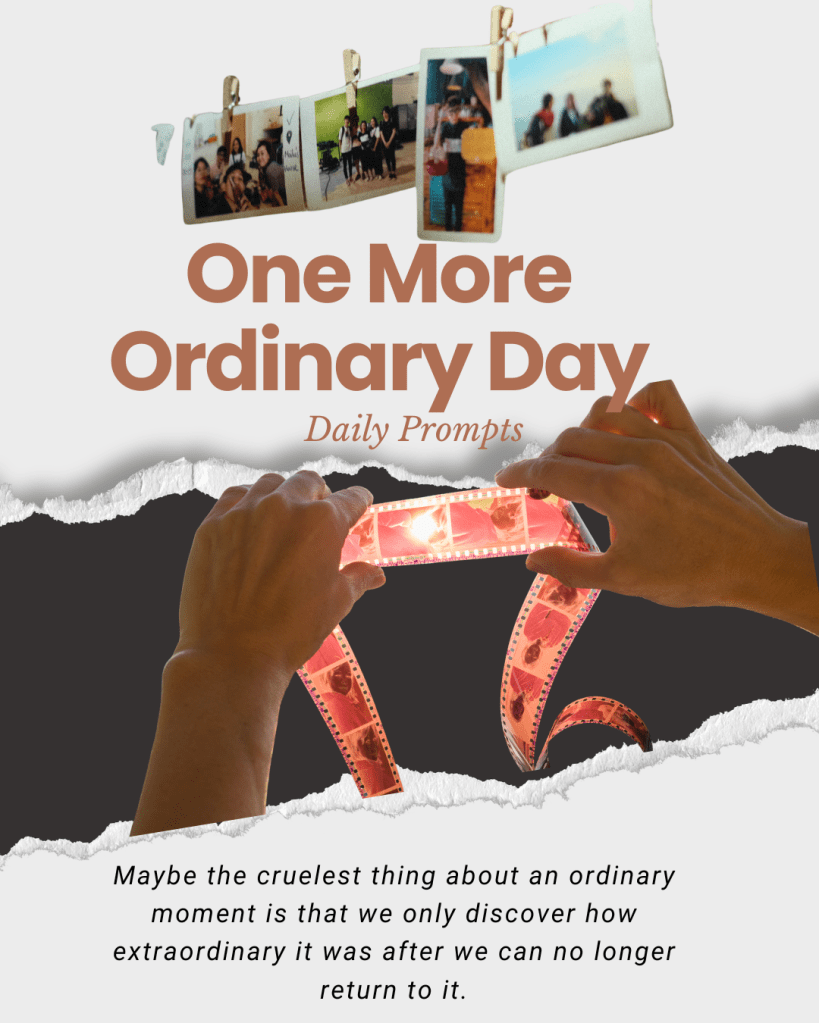
Those are the memories that hurt differently. Not the grand occasions. The ordinary ones. That is something I wish I could place carefully into the hands of every younger person I know: pay attention to ordinary days. I do not mean you need to become sentimental about every Tuesday morning or photograph every cup of tea. I mean understand that the things you assume will always be there are often the things you miss most when they are gone.
Ask your parents questions while you can still hear their answers. Listen to your grandparents repeat stories even if you think you already know the ending. Take photographs when nobody looks perfect. Save voice messages. Sit a little longer at the table. Call home without waiting until you have important news.
One day, you may discover that the sound of somebody saying your name was a kind of wealth.
Loss has also changed how I understand faith.
I wish I could say faith has given me simple answers to everything, but it has not. There have been things I prayed about that unfolded very differently from how I hoped. There have been losses I would never have chosen, questions for which I still do not have satisfying explanations and moments when surrender sounded beautiful in theory but was much harder in practice.
Yet I still believe. Perhaps differently now.
When I was younger, I may have thought faith meant trusting that God would eventually give me the outcome I prayed for. Now I think faith is sometimes trusting God while accepting that I may not receive the outcome at all. It is praying when you are grateful and praying when you are confused. It is continuing to believe when you cannot neatly connect every event to a reason.
There are prayers I look back on now and recognise were answered differently from what I requested. There are others where I still do not know what the answer was. I have learned to live with both.
Maybe that is another thing I would tell someone younger: leave room for mystery.
You do not have to understand every season while you are inside it. Some things only become visible in retrospect, and some may never become clear at all. You can still build a meaningful life without possessing explanations for every difficult thing that has happened to you.
And while you are building that life, please do not spend all of it trying to become somebody else.
This is something I have become increasingly aware of as I grow older. We are influenced constantly by what we see. How a woman should look, what a successful career should resemble, what relationships should look like, how homes should be decorated, where we should travel and even how happiness itself should appear.
It is exhausting.
There comes a point when you have to ask yourself whether you actually want something or simply want to be seen having it.
Those are not the same desire.
Some of the things that make me happiest now are surprisingly ordinary. Being home after several exhausting shifts. Sitting comfortably with nowhere urgent to go. My cats doing something ridiculous. Jan nearby. A familiar song. A new book. Planning a trip. Talking to my mother. Writing something that has been sitting inside my head. Eating something good when I am genuinely hungry. Sleeping without an alarm after several nights of forcing my body to stay awake when it clearly had other plans.
These are not enormous achievements.
But increasingly, they are the things that make life feel like mine. Maybe that is what ageing has done more than anything else. It has slowly removed some of the decoration from my definition of happiness.
I still want things. I still have dreams, ambitions and plans. There are places I want to see, things I hope to achieve and versions of my future I quietly imagine. Growing older has not made me less hopeful. If anything, I think I dream differently now because I understand that the future is never guaranteed simply because we have planned for it.
I want to reach those future places, but I do not want to sacrifice every present moment trying to get there.
That is perhaps the lesson my younger self needed most. She was always looking ahead. I understand why. She wanted a good life. So do I.
The difference is that I now know a good life is not waiting somewhere at the end of the road after everything has finally gone according to plan. It is happening in fragments all along the way. It is happening during exhausting weeks and slow Sundays. It is hidden in meals, journeys, conversations, photographs, inside jokes, disappointments survived and mornings we hardly notice.
A good life is not one perfect season. It is the accumulation of ordinary ones.
Tonight, during my fourth night shift in a row, I am tired enough that my eyes probably have their own opinion about this entire reflection. I know that when these shifts are finished, one of the first things I will want is sleep. Nothing profound. Nothing particularly Instagram-worthy. Just a dark room, my bed and several uninterrupted hours in which nobody expects me to know what time it is.And perhaps that is why this thought found me tonight.
Growing older has made me realise how often the things we eventually value are simpler than the things we once chased.
If someone younger than me asked what I know at thirty-six that I did not understand when I was younger, I still would not claim to have mastered life. I would probably laugh at the suggestion. I am still learning too. I still get things wrong, become impatient, worry unnecessarily, make plans that have to change and ask God questions I cannot answer myself.
But I would tell them that life is much bigger than whatever is frightening them today. I would tell them not to measure their worth against somebody else’s timeline, not to spend too much energy convincing people to understand them, not to confuse being busy with being fulfilled and not to postpone every beautiful thing until some imaginary future when everything is finally perfect.
I would tell them to learn about money but not worship it, work hard but remember who they are outside their work, take photographs but occasionally put the phone down afterwards, travel when circumstances allow it, apologise sincerely, forgive carefully, love people while they are still close enough to hear it and keep faith even through the seasons that do not make sense.
Most of all, I would tell them not to rush through being young simply because they are impatient to become whoever they think they are supposed to be. The strange thing about time is that while we are living it, it often feels slow. Then one day we turn around and entire chapters are behind us. The house has changed. People have aged. Some people are missing. Songs that once felt new are suddenly nostalgic, and the person in an old photograph looks familiar but also impossibly young.
At thirty-six, I am beginning to understand that perhaps growing older is not about finally becoming someone who has life figured out. Maybe it is simply becoming more aware of what deserves to matter. The list gets shorter. Peace begins to outrank approval. Time becomes more valuable than appearances. The people you love matter more than the people you are trying to impress, and an ordinary day with the right people can become far more precious than the achievements you once thought would define you.
So if I could tell someone younger something sooner, I think I would tell them to build the future, certainly, but not at the cost of constantly abandoning the present. Make plans, work towards them and dream as extravagantly as you want, but notice your life while it is still happening around you. Notice the people who call you, the places that feel like home, the laughter coming from another room, the person sitting beside you, the parent whose voice you assume you will always be able to hear and even those completely ordinary days you are tempted to hurry through because nothing exciting seems to be happening.
Years from now, some of those ordinary days may be exactly the ones you wish you could visit again. And perhaps that is the kind of wisdom nobody can simply hand to us when we are young, because some things only become real after we have lived long enough to miss them.










 superanjventures
Leave a comment