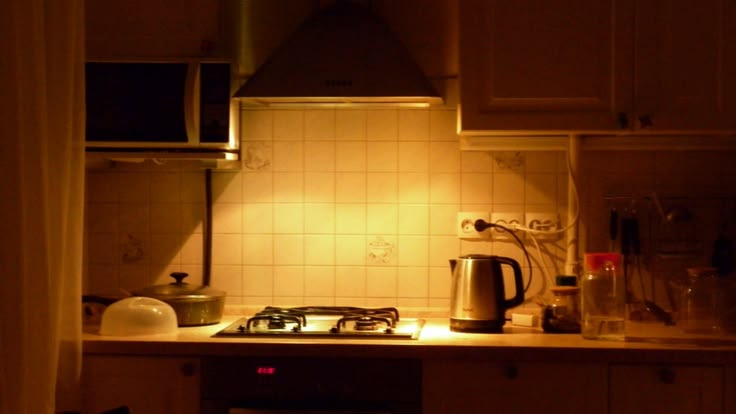
The kettle clicked off in the kitchen just as something small and plastic dropped onto the floor behind me. I turned around slowly, partly because I had no idea what it was and partly because houses become strangely suspicious when they start shedding pieces. The thing was about the size of a thumbnail, beige, slightly curved and completely unhelpful. I picked it up and stood there in my socks, holding it beneath the kitchen light as though better illumination might reveal its profession. Nothing. I checked the cupboard door, the drawer, the toaster and finally the kettle, which had already completed its only known duty and appeared unwilling to participate further. For several minutes, I moved around the kitchen conducting what can only be described as a very low-budget investigation.
Eventually, I opened the drawer where instruction manuals go to disappear. It was an archaeological site. There were booklets for appliances I had forgotten we owned, warranty cards that had probably expired during a previous government, a folded leaflet for something I could not identify and several manuals written in six languages except the one I currently needed. I started flipping through them anyway because that is what we do when something breaks: we assume the explanation exists somewhere. There must be a diagram, a numbered step, a sentence beginning, If this part becomes detached… followed by the comforting reassurance that somebody, somewhere, has already anticipated the problem and knows exactly what happens next.
I think that is what I once wanted from life too. Whenever something painful happened, I went looking for the manual. Why did this happen? What was I supposed to learn? Was this redirection, protection, preparation? Was one door closing because another was already opening somewhere else? I wanted the missing page that would explain the loss, the disappointment, the person who left, the plan that collapsed. If I could understand the reason, perhaps the whole thing would feel less random. Perhaps pain would become easier to carry if I knew what it was for.
That is probably why everything happens for a reason once sounded so comforting to me. It is a remarkably efficient sentence: five words, no difficult punctuation, just enough hope to sound reassuring and enough certainty to make chaos appear temporarily organised. It fits neatly inside a message box after bad news, beneath a broken-heart emoji, beside the announcement that a relationship has ended or a carefully built plan has fallen apart. If something hurt, perhaps there was a purpose. If somebody left, perhaps they were never meant to stay. If a door closed, perhaps another one was already being opened somewhere I could not yet see. Pain felt easier to carry when I believed an explanation had already been written, even if I had not yet reached the page.
I still understand why people reach for sentences like that. Most of the time, I do not think they come from carelessness. They come from helplessness. Someone tells us something terrible and suddenly there is nothing useful to do with our hands. Human beings are much more comfortable when suffering comes with instructions. Bring this. Call that person. Make an appointment. Drive them somewhere. Cook something. Fix something. Give us a task and we can become surprisingly efficient. Give us a person sitting in front of us with a pain we cannot remove, and suddenly language starts doing overtime.
Perhaps nursing has made me more aware of that instinct. Healthcare trains the brain to search for the next step. A patient develops symptoms, so we assess. Something changes, so we investigate. Somebody deteriorates, so we escalate. There may be uncertainty, fear and incomplete information, but there is usually an action somewhere in the pathway. Even in serious situations, knowing the next step gives the mind something to hold. Life outside a clinical pathway is considerably less cooperative. There are phone calls that split an ordinary afternoon into everything before and everything after. There are diagnoses whose names do nothing to make their reality kinder. There are relationships people desperately wanted to save that end anyway, betrayals by people once trusted completely, plans built over years that disappear for reasons nobody could control, and goodbyes that happen before anyone has found the correct words. In front of things like that, five words can look painfully small.
The older I become, the less certain I am that every difficult experience owes us an explanation. I once assumed enough time would eventually turn every wound into a chapter with a meaningful conclusion. Some experiences do look different from a distance. I have lived long enough to know that. There are disappointments I understand better now, plans I am grateful did not survive and situations that eventually pointed me somewhere I could not see at the time. But there are other things that remain exactly what they were: something I wish had never happened. I think we should be allowed to say that.
There is a peculiar pressure to become grateful for suffering once enough years have passed. We admire stories in which someone looks back and says they would not change a thing because the pain made them who they are. For some people, that may be completely true. But I do not think everybody owes the world that conclusion. Something can shape us without becoming something we would willingly choose again. A scar can become part of the body without becoming our favourite feature. We can learn to live around an absence without deciding the absence was necessary. Wisdom may come afterwards, but wisdom is not always adequate compensation for what was lost. That distinction matters to me more now.
We have a deep appetite for stories that behave properly. The difficult beginning should lead to a meaningful middle, and by the final chapter everything should make sense. Heartbreak should lead to the right person. Rejection should redirect us to the better opportunity. The storm should reveal a rainbow on schedule. We like stories like that because they reassure us that suffering is organised. Somewhere behind the chaos, somebody has filed everything correctly. Real life has never been particularly respectful of narrative structure. Sometimes good people lose. Sometimes somebody who has already carried far too much is handed something else. Sometimes you work hard and another person gets the opportunity. Sometimes the apology never comes because the person who hurt you does not believe they did anything wrong. Sometimes you pray until the words become familiar enough to say half-asleep, and the answer still looks nothing like the one you hoped for. Sometimes justice takes longer than your patience. Sometimes there is no satisfying explanation waiting three chapters later.
When I was younger, I needed the why much more than I do now. I think I believed understanding would give me some control over what had happened. Why did this person leave? Why did this opportunity disappear? Why did life turn in that direction when I had very clearly preferred another one? I treated painful experiences like puzzles. Somewhere there had to be one missing piece that would finally make the entire picture acceptable. But explanations are not anaesthetic. You can understand exactly why somebody left and still miss them. You can recognise that a relationship was unhealthy and still grieve the future you once imagined inside it. You can know every medical fact surrounding an illness and still wish the diagnosis had never been made. You can eventually see why an opportunity was wrong for you and still remember how humiliating it felt to lose it. Knowing why does not reverse what happened. Oddly, learning that was freeing.
There is relief in saying, I do not know why this happened, and allowing the sentence to remain unfinished. Not every painful experience is a coded message we have failed to decipher. Sometimes something happened, and the work afterwards is not understanding why but learning how to live in the world that exists now. That version is less tidy than everything happens for a reason, but perhaps it is also more merciful. When we insist too quickly that pain must have a purpose, we can accidentally hand another assignment to somebody who is already exhausted. Now they must survive what happened, identify the lesson, become stronger, forgive beautifully, discover the blessing, recognise the redirection and eventually produce an inspiring conclusion so everybody watching can feel reassured that suffering still follows the rules. That is a tremendous amount of paperwork for grief.
Sometimes a person is simply trying to get through Tuesday. They may not need to know what the experience will teach them five years from now. They may only need permission to say, This is awful, and hear another person answer, Yes, it is. I have started to think compassion sometimes becomes smaller rather than larger. Fewer words. Less advice. Less hurry to steer someone towards hope before they are ready to look in that direction. We often assume helping requires us to say something impressive because silence makes us nervous. Yet some of the people I remember most fondly from difficult moments were not the ones with the cleverest advice. They were the ones who could sit near pain without immediately trying to renovate it. They did not rush the story. They did not ask grief to become productive. They stayed.
That sounds simple until you try it. Sitting beside another person’s sadness without turning it into your opportunity to fix, compare, interpret or philosophise requires restraint. Sometimes we say comforting things partly because another person’s pain makes us uncomfortable. If we can persuade them that something good will eventually come from the experience, perhaps the room becomes easier for everyone to inhabit. But the room does not always need to feel better immediately. Sometimes it only needs one person who is willing not to leave it.
I have come to admire people who understand that. People who do not decide when somebody should be “over it.” People who do not reduce grief by pointing out that another person has suffered more, as though sorrow were a competitive sport with a leaderboard. People who can hear the same story several times because they understand repetition is sometimes the mind trying to place an experience somewhere survivable. There is also a difference between listening and waiting for your turn to speak. We usually feel it. One person collects the facts. Another notices what the facts have done to you. One hears the polished version you have learned to tell without crying. Another catches the sentence where your voice changes. Pain can be lonely even in a crowded room, and being understood does not remove it, but it can alter the weight for a while. Maybe that is empathy in its least glamorous form: not absorbing another person’s suffering until it becomes our own, not solving it, not extracting the moral, simply refusing to make them carry the full emotional reality alone while we stand beside them holding slogans.
I have also become more cautious about saying that pain made somebody stronger. We love resilience stories, and there is good reason for that. I have met people whose experiences made them extraordinarily compassionate. People who knew grief and became gentler with grieving people. People who once needed help and later became the person offering it. Some transformed pain into advocacy, writing, service, art or a different way of treating other human beings. Those stories matter, but perhaps we sometimes congratulate the wrong thing. The pain did not necessarily deserve the credit. The person did. Suffering does not automatically improve character. Sometimes it leaves someone exhausted, frightened, suspicious, angry or altered in ways that take years to untangle. If a person eventually becomes stronger, kinder or braver, perhaps that tells us more about what they chose to build after the damage than it tells us about the damage itself. Flowers growing over ruins do not prove the ruin was necessary. They prove something living remained.
I think people do that too. We create meaning after events that may not have contained any meaning we could recognise while they were happening. We learn boundaries because somebody showed us what happened when we had none. We become careful with time because we discovered it was not unlimited. We notice another person’s grief because our own once made us feel invisible in a crowded room. We begin again because eventually remaining where we were hurts more than trying. That meaning is real, but meaning created afterwards is not the same as saying the original pain was required. My faith sits somewhere inside that distinction now.
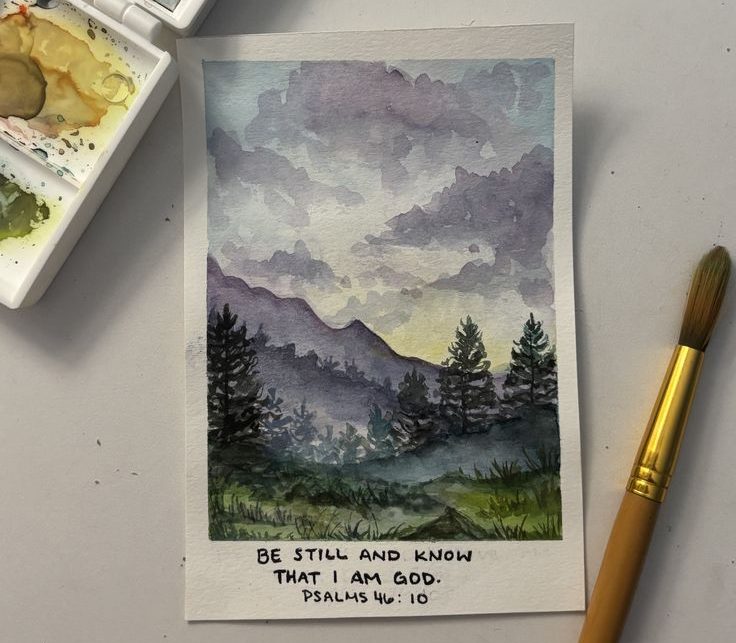
I still believe God can bring good from circumstances I would never have chosen. My own life contains things that looked different after enough years passed. There were disappointments that redirected me. Plans I desperately wanted to keep eventually became things I was grateful did not survive. Experiences I resented developed qualities I later needed somewhere else. I can recognise all of that without promising everybody that one day they will look back at their worst experience and say thank you. Faith and honesty do not have to take turns. I can trust God and still tell Him I do not understand what He allowed. I can believe He is present while still disliking where I am standing. I can pray and ask why in the same breath. I can believe He can redeem something without telling another person that their suffering must therefore have been part of a beautiful design they should eventually appreciate. Perhaps that is the kind of faith I trust more now: one capable of remaining in the room even when certainty has left it.
I used to think hope and optimism were almost the same thing. I do not anymore. Optimism expects circumstances to improve. It likes the sentence everything will work out. Hope seems less demanding. Hope can survive even when “working out” no longer means returning to what existed before. Sometimes hope is simply believing that a person may eventually learn how to carry what cannot be changed. It is not as pretty as saying something better is coming, but pretty is not always what a hurting person needs.
These days, when somebody tells me something painful, I try to resist immediately converting their experience into a lesson. I do not always succeed. Familiar phrases live dangerously close to the tongue. We have been trained to think comfort requires language, preferably something meaningful and quotable, and sometimes the old sentences appear before I have decided whether they belong. I am trying to ask a different question instead: What does this person need from me right now? Sometimes they want advice. Sometimes there is practical help I can offer. Sometimes they want another perspective because they are standing too close to the problem to see anything except the part that hurts. And sometimes they simply need somewhere to put the story for a while. No analysis. No silver lining. No deadline for becoming okay again.
I would have understood that less when I was younger. I wanted pain to explain itself because I thought meaning made suffering easier. Now I think sometimes suffering becomes more bearable because somebody helps us survive the period before meaning matters. Perhaps meaning never matters. Perhaps the reason becomes obvious years later. Perhaps nothing ever explains it satisfactorily. Perhaps someone creates a beautiful life after something terrible and still never calls the terrible thing a gift. All of those possibilities can exist. Compassion does not require the ending first.
I still hear everything happens for a reason and understand the instinct behind it. Some days, part of me still wants to believe the sentence exactly as I once did. Certainty is comforting. The idea that every painful event is attached to an invisible explanation makes the world feel safer than admitting there may be parts of life I will never fully understand. Maybe there are reasons. Maybe some reveal themselves later. Maybe some things genuinely will look different when enough distance has passed. I am simply less willing now to hand that possibility to someone as though it were an answer they are required to accept while they are still bleeding from the question. Perhaps the sentence can wait. The person should not have to.
That brings me back to the kitchen drawer. I never did find the correct manual for that small piece of plastic. I eventually put it on the counter where mysterious household objects apparently wait for either identification or permanent adoption. The kettle still worked. The cupboard remained attached. Nothing collapsed overnight. For all I know, the piece belonged to something completely unrelated and had been sitting on the floor for weeks, patiently waiting for me to develop a theory about it. But I kept thinking about how quickly I had assumed an explanation must exist somewhere, neatly printed and numbered, and how comforting it felt to imagine there was a page telling me exactly what the broken piece meant and exactly what I should do with it.
Life has not always given me that page. Neither has grief, and neither has faith. When someone I love is standing in front of me with pieces they cannot put back where they came from, perhaps my job is not to rummage desperately through every drawer looking for instructions. Perhaps I do not need to explain why it broke, what lesson the pieces contain or what beautiful thing they might eventually become. Maybe compassion is knowing when to stop searching for the manual, sitting down beside the mess and allowing the explanation to remain missing without allowing the person to feel abandoned with it. If I have nothing wiser to say, perhaps fewer words will do: I’m here. Then I hope I stay long enough that they never have to wonder whether I meant it.
Still reading the fine print of hindsight,
Anj 🖤














Leave a Reply