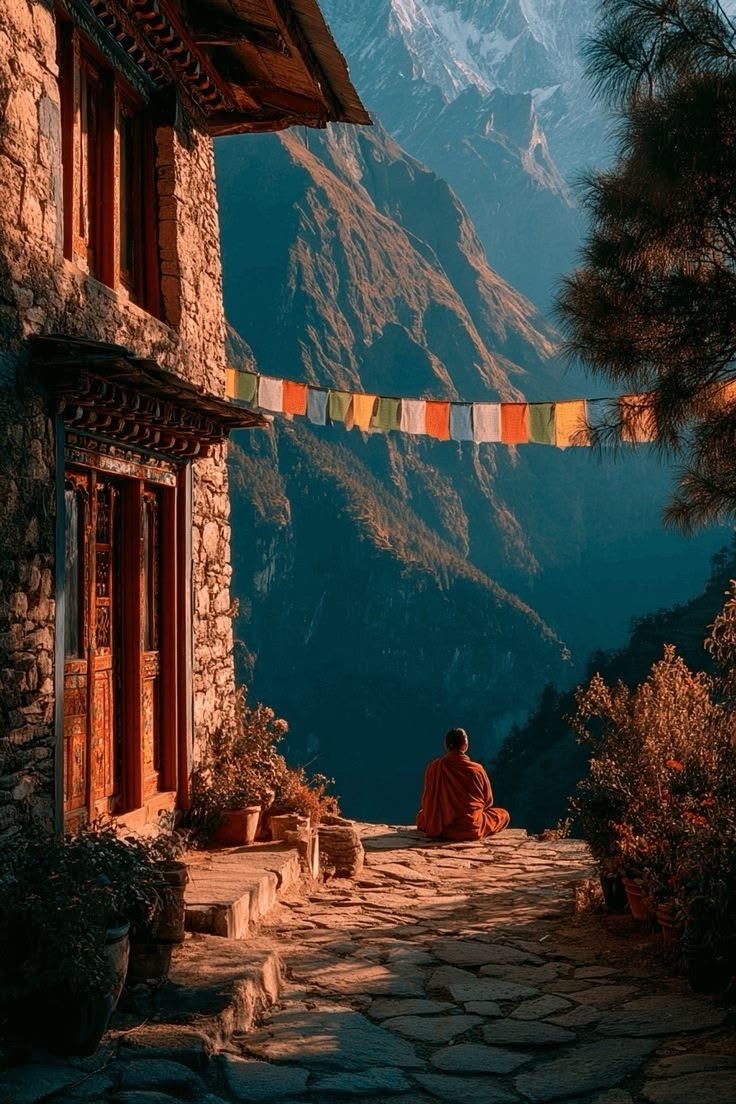
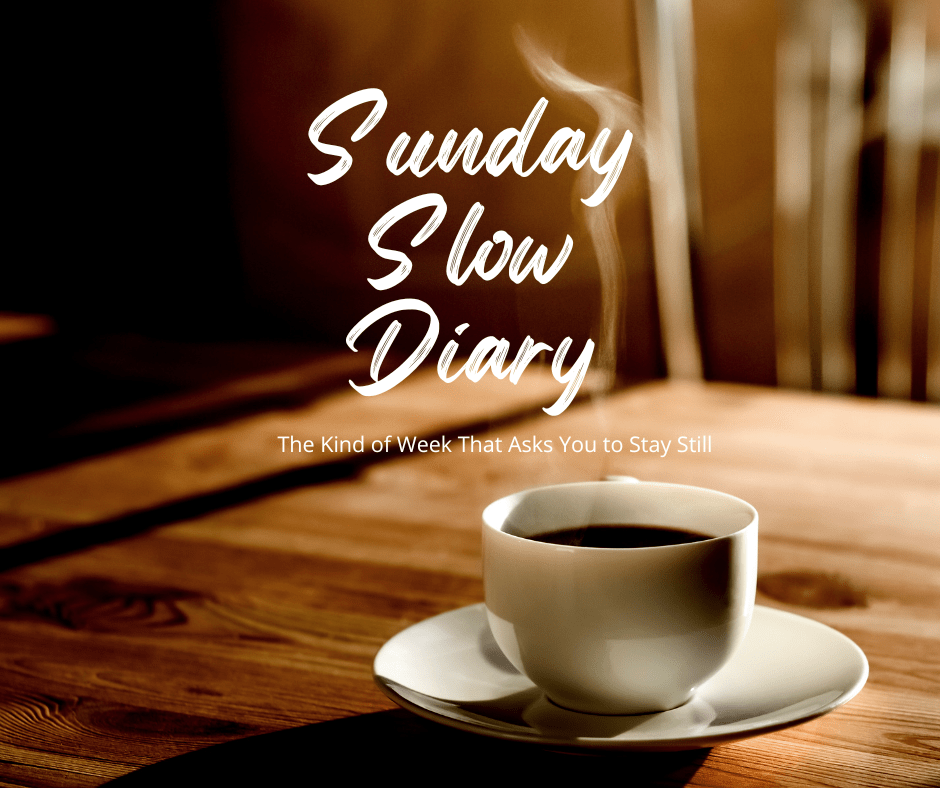
Today is Sunday, and ordinarily this would be the space where I write my Sunday Slow Diary. It has been a while since I last allowed myself to sit with one properly. Sundays have always possessed a different cadence for me, as though the week, after spending six days insisting on urgency, finally remembers how to whisper. They are made for coffee left beside the keyboard long enough to cool, curtains opened to whatever weather has arrived, familiar sounds moving quietly around the house, and thoughts that have spent the week waiting patiently for somewhere to land. I usually write about the ordinary architecture of life during these moments: gratitude, family, faith, work, memories, the things I am learning and the things I am still trying to understand. This morning, however, my thoughts kept travelling far beyond the quiet of my own home. They kept returning to Nepal.
NEPAL
For the past few days, images from the disaster have appeared repeatedly on my screen, and some have been difficult to forget. I have seen people running with the unmistakable urgency of those who understand that remaining where they are could cost them their lives. I have seen elderly people trying to move faster than ageing bodies were ever meant to move, and animals fleeing through chaos they could neither comprehend nor anticipate. Those images affected me in a way I have struggled to articulate. Perhaps it is because disaster footage compresses distance so brutally. Nepal may be thousands of miles away, yet for several seconds a small screen can place another person’s terror directly into your hands. Geography can separate human beings by continents, but compassion has always possessed a peculiar disregard for distance.
What happened in the Himalayan region is not merely a collection of dramatic images circulating online. The disaster involved a catastrophic high-mountain collapse that generated destructive debris flows and flooding through communities below, leaving substantial loss of life and widespread devastation while search and recovery efforts continued across difficult terrain. Scientists examining events of this nature also have to consider the increasing instability of high-altitude environments, including the effects of a warming climate on glaciers and mountain slopes. The Himalayas may appear immutable from a distance, ancient enough to make human history seem momentary, yet even mountains exist within systems that are changing. There is something profoundly humbling about that reality. We often mistake longevity for permanence simply because something has existed longer than we have.
Yet it is not the geology that has occupied my thoughts most persistently. It is the morning before the disaster became a disaster.
Somewhere, somebody woke and began preparing breakfast. Someone complained about being tired. A mother probably reminded a child about something they had forgotten. Someone fed an animal, swept a floor, boiled water or stepped outside to inspect the weather. An elderly person may have looked towards mountains they had known for most of their life without imagining that familiarity could become danger. There would have been clothes waiting to be folded, unfinished conversations, appointments written somewhere, food intended for dinner and people saying, “See you later,” with the unconscious confidence we all place in the word later. History records catastrophes by dates, but the people inside them rarely wake knowing that the ordinary morning they have been given is about to acquire a name.
Perhaps that is what has unsettled me most. We live by assuming continuity. We have to. We buy groceries for next week, schedule appointments for next month and make plans for next year. We leave conversations unfinished because there will surely be another evening. We become irritated with people we love and occasionally allow pride to prolong silence because some part of us assumes time will eventually provide another opportunity. There is nothing inherently wrong with that confidence; living in constant anticipation of catastrophe would be unbearable. But occasionally something happens somewhere in the world that exposes how fragile our certainty really is. Tomorrow is one of humanity’s most useful assumptions, but it has never been one of our guarantees.
I do not want that realisation to produce fear.
Fear is a poor way to honour life.
I would rather allow it to produce attentiveness. There is an important difference between living as though something terrible could happen at any moment and living with the awareness that what exists today deserves to be noticed while it is still here. One creates anxiety; the other creates gratitude. Perhaps wisdom lies somewhere between remembering life’s impermanence and refusing to become terrified by it.
The elderly people in those videos have remained particularly vivid in my mind. There is something almost unbearable about watching someone who should be permitted the dignity of moving slowly suddenly being required to outrun catastrophe. Age may diminish speed, but it does not diminish the instinct to survive. Watching them made me think about vulnerability in its most elemental form. Beneath our professions, possessions, ambitions and carefully constructed identities, every human being remains a body capable of becoming frightened, tired and helpless. We spend years constructing lives that feel permanent, yet vulnerability remains one of the few languages every human being eventually understands.
The animals affected me differently but no less deeply. They knew nothing about glaciers, emergency warnings or evacuation routes. They understood only that the familiar world had changed and that instinct was telling them to move. Disaster does not discriminate according to comprehension. It reaches people, animals, forests, rivers and homes alike, and perhaps that is why images of natural catastrophe can feel so primordial.
They remind us that despite everything humanity has accomplished, we remain inhabitants of nature rather than its masters.
We have learned to tunnel through mountains, span rivers with bridges, predict storms through satellites and observe the Earth from space. Our technological sophistication can make the world feel increasingly controllable. Then a mountain shifts, a river escapes its boundaries or the ground beneath a city begins to move, and suddenly the hierarchy we imagined between humanity and nature becomes less convincing. Civilisation has given us extraordinary power over our surroundings, but power should never be confused with sovereignty.
Somewhere inside that thought, my mind inevitably returned to God.
Faith becomes more intellectually difficult when suffering enters the conversation. It is relatively easy to speak about God’s providence when life is orderly, when prayers appear to be answered and when the people we love are safe. It becomes far more complicated when we are confronted with suffering that appears indiscriminate. Natural disasters resurrect questions humanity has carried for centuries: If God is good, why does suffering exist? Why does one person survive while another does not? Why do innocent people find themselves beneath collapsing homes, flooded valleys or falling mountains?
I do not possess an answer sophisticated enough to make those questions disappear. Perhaps nobody does. And strangely, I no longer think faith requires one.
There was a time when I thought strong faith meant finding meaning in everything that happened. I am less convinced of that now. Sometimes our determination to attach a reason to suffering becomes another way of protecting ourselves from the terrifying possibility that life contains mysteries we cannot resolve. We say everything happens for a reason because uncertainty makes us uncomfortable, but those words can become painfully inadequate when spoken beside genuine devastation. I cannot look at Nepal and declare that hundreds of people needed to suffer because God wanted the rest of us to learn gratitude. That would transform somebody else’s tragedy into a spiritual lesson designed for my benefit, and I do not believe compassion permits that.
Faith does not require us to manufacture explanations where none have been given; sometimes its deepest expression is the humility to say, “I do not understand this, God, but I refuse to believe that You have abandoned the people inside it.”
We often imagine faith as having the correct words when terrible things happen. Maybe sometimes faith is knowing when words have reached their limit. Maybe the prayer becomes simpler.
God, stay near.
Near the mother waiting for news. Near the child who no longer recognises the place called home. Near the rescuers moving through unstable terrain. Near the families searching names and photographs. Near the people who survived and may spend years wondering why they did when somebody beside them did not. Near those who have lost homes, livelihoods, animals and the geography that once represented safety.
I do not need to understand God’s entire architecture to ask Him to inhabit the rooms where people are grieving. And perhaps this is where faith becomes less theoretical. We sometimes search for God in explanations when He may be more visible in responses. I think of rescuers entering dangerous places because somebody might still be alive. Medical workers treating strangers. Families sharing whatever remains. Communities creating shelter. People donating food, clothing, money and time to people whose names they may never know. None of these actions erase what happened, and they should never be used to romanticise catastrophe, but they reveal something stubbornly hopeful about humanity.
Perhaps one of the quietest manifestations of faith is the refusal to let another person’s suffering remain somebody else’s problem.
That is where values become important. Compassion is easy when it remains an emotion. A video makes us cry, we whisper that what happened is terrible, and then the algorithm gives us something else to watch. But compassion worthy of its name should eventually acquire hands. It becomes prayer, generosity, responsible sharing of verified information, support for credible humanitarian organisations and respect for the dignity of those affected. It also means refusing to circulate graphic images simply because they provoke attention. The person inside a devastating video is not content. They are somebody’s family.
There is a moral responsibility in how we witness suffering now because social media has made witnesses of all of us. Previous generations could know that tragedy existed elsewhere; ours can watch it unfold almost immediately. That access can deepen empathy, but it can also make suffering strangely consumable. We scroll from somebody’s worst moment into a recipe, a joke or an advertisement within seconds. I sometimes wonder what that does to the human mind.
I have learned that I do not need to watch every video to prove that I care.
There is a point where witnessing stops informing compassion and begins overwhelming it. Turning the phone off does not mean turning humanity off. We can remain informed without repeatedly exposing ourselves to another person’s terror. We can pray without watching someone die. We can care without memorising every devastating image. Compassion is not measured by how much suffering we can absorb; it is measured by what kind of person we become after suffering has asked for our attention.
That thought has made me look differently at this Sunday.
Around me are things so ordinary that yesterday I would hardly have considered them blessings. A roof. Electricity. Water. Food. A familiar room. People I love who are still somewhere in this world where I can reach them. The expectation that tonight I will sleep somewhere safe and wake tomorrow to responsibilities I occasionally complain about.
Nothing about those things feels miraculous because they happen repeatedly. Perhaps repetition is exactly what makes us forget. We become accustomed to answered prayers. We stop thanking God for the journey home because we have made it safely hundreds of times. We stop noticing the voice of someone we love because we hear it every day. We complain about work without remembering that returning home exhausted still contains the word home. We become impatient with ordinary routines because they repeat themselves, never considering how desperately someone somewhere would give anything for one more repetition.
Some blessings become invisible not because they are small, but because God has allowed them to become familiar.
That may be one of the most important realisations Nepal has brought into my Sunday reflection. Gratitude is not pretending life is perfect. It is not denying exhaustion, disappointment or legitimate pain simply because somebody elsewhere is suffering more. Comparative suffering has never been a healthy foundation for gratitude. Our problems do not become imaginary because someone else’s are larger.
But perspective matters.
There are battles worth fighting and grievances worth addressing. There are also things we carry far beyond their rightful weight. Pride. Resentment. The opinion of someone who barely knows us. Arguments that have already taken more time from our lives than the original offence deserved. The compulsive need to be understood by people determined to misunderstand us.
Life is too finite to make permanent homes for every temporary hurt.
Mortality does not make our problems meaningless; it teaches us to become more discerning about which problems deserve pieces of our limited lives.
That is a value I want my faith to shape more deeply. Not merely believing in God when I need something, but allowing belief to alter the way I move through ordinary life. To become slower to judge. More deliberate with words. More generous without requiring recognition. More willing to apologise when pride is the only obstacle. More comfortable walking away from battles that serve nothing except ego. More attentive to the people God has placed within reach.
Because perhaps the question is not only whether I believe in God. Perhaps another question is whether the way I live makes that belief visible.
Faith should influence how I speak to someone who cannot offer me anything. It should affect what I do when nobody is watching. It should shape the way I respond to suffering that does not directly inconvenience me. It should make kindness less dependent on mood and generosity less dependent on applause.
Values become meaningful only when they cost us something: time, convenience, pride, money, attention or the comfort of looking away.
And there is another uncomfortable realisation. The world’s attention span is far shorter than grief.
Today, Nepal occupies our screens. Eventually another event will replace it. The headlines will move. The videos will become less frequent. The algorithm will decide that our attention belongs somewhere else. Yet people affected by this disaster will still wake to the same absence. Homes will still need rebuilding. Injuries will still need treatment. Families will still be learning how to exist around missing chairs.
For us, tragedy eventually becomes past tense. For them, it may remain present tense for years.
The news cycle measures catastrophe in days; the human heart measures it in before and after.
Perhaps that is another place where faith should distinguish itself: in staying after attention has moved elsewhere. There is nothing particularly glamorous about sustained compassion. It rarely trends. Quiet generosity receives fewer witnesses than public grief. But Christianity has always placed unusual value on what happens without an audience. The unseen prayer. The anonymous gift. The meal delivered quietly. The person who stays after everyone else has gone.
Maybe heaven keeps different statistics from the internet. I find that thought comforting.
Today was supposed to be another Sunday Slow Diary, and perhaps it still is, just not in the way I expected. Slowing down is not always candles, coffee and peaceful reflections. Sometimes slowing down means refusing to swipe immediately to the next thing. It means sitting with discomfort long enough for another person’s humanity to become more important than the headline describing them.
And maybe that is what this Sunday has become for me. A reminder that the world is simultaneously beautiful and fragile. That science can explain mechanisms without eliminating mystery. That faith can coexist with unanswered questions. That gratitude and grief are capable of sitting at the same table. That being safe should not make us guilty, but perhaps it should make us useful. That prayer is not the alternative to action; at its best, prayer changes the heart until action becomes harder to avoid. And that an ordinary day may be one of God’s most underestimated gifts.
I do not know what tomorrow holds for Nepal. I do not know what tomorrow holds for any of us. That sentence once frightened me more than it does now. Perhaps faith has gradually changed its meaning. I no longer need certainty about tomorrow in order to find peace today.
The future has always belonged beyond the boundaries of my control.
Maybe surrender is not saying that whatever happens will be easy. Maybe it is saying that whatever happens, God will still be God.
So my prayer this Sunday is for Nepal: for those grieving, those searching, those displaced and those whose lives have been divided permanently into before and after. I pray for the rescuers, medical teams, volunteers and ordinary people doing extraordinary things because another human being needs them. I pray for wisdom among leaders, generosity among those able to give, and strength for communities facing a recovery that will continue long after the world’s cameras have turned elsewhere.
But I also pray for those of us watching from a distance. May we remain tender without becoming consumed. May we become informed without becoming spectators. May gratitude make us generous rather than merely comfortable. May faith make us compassionate rather than certain about things we cannot possibly understand. May we learn to recognise the sacred while it still looks ordinary.
Today is Sunday. Somewhere in my house, life continues with its familiar sounds. There will be another cup of coffee, another conversation, another ordinary task waiting to be done. Tomorrow will arrive with responsibilities, schedules and all the little things that make life feel normal again. I cannot know how many ordinary Sundays I will be given, and I do not want that uncertainty to frighten me into living cautiously. I want it to teach me reverence.
Perhaps that is what I have been trying to understand all morning. We spend so much of our lives searching for God in extraordinary signs, answered prayers and moments dramatic enough to feel divine, while some of His greatest gifts arrive so consistently that we eventually stop recognising them: another sunrise, another safe return home, another voice we love, another meal, another chance to forgive, another opportunity to become kinder than we were yesterday. Maybe an ordinary day is not ordinary at all. Maybe it is simply a miracle we have received often enough to forget its name, and faith is learning to recognise it again before time turns what we once overlooked into something we would give anything to have back.















 superanjventures
Leave a comment