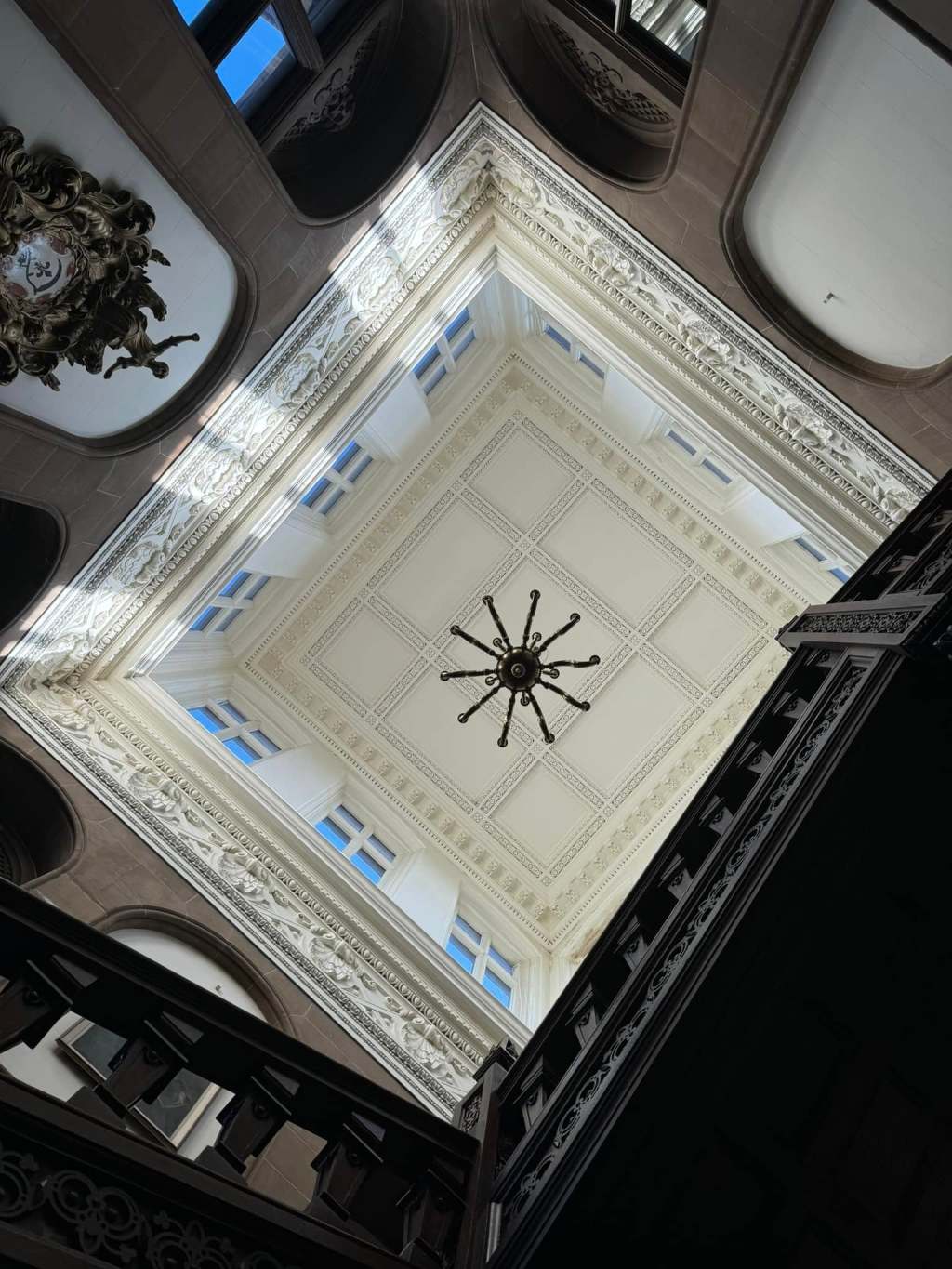
I was sitting inside the WMI Building, just outside the room where my BLS training was about to begin, with my iPad balanced on my lap and the sort of sleepiness that makes blinking feel dangerously close to a commitment. The corridor had that familiar training-day stillness: closed doors, muted footsteps, the occasional voice drifting from somewhere farther down, and people waiting with the resigned patience of adults who know they are about to be reminded how hard they are supposed to press on a plastic chest. Outside, the West Midlands weather had spent much of the day raining with admirable consistency, and I had arrived carrying the damp grey mood of it with me. I still had a little time before they called us into the room, and instead of spending another twenty minutes scrolling through things I would forget almost immediately, I opened my blog. Apparently, somewhere between avoiding Excel and preparing to practise Basic Life Support, my brain had decided this was an excellent moment to become reflective.
The day had started with very little enthusiasm for participating in adulthood. I woke up with no desire to achieve anything significant, though I would like it formally recorded that I had already completed most of the household chores the day before. The house was clean. Things were where they belonged. No laundry mountain was sitting in a corner staring at me with the moral superiority of fabric that knows it will eventually win. The only genuine task left was my Excel spreadsheet. I had intended to update my finances, check my spending and investigate which perfectly innocent-looking category had quietly been eating through my money again. I already knew the process. I would open the spreadsheet, inspect several purchases that had seemed completely reasonable at the time and suddenly become both accountant and suspect in my own financial investigation. Naturally, I postponed it.

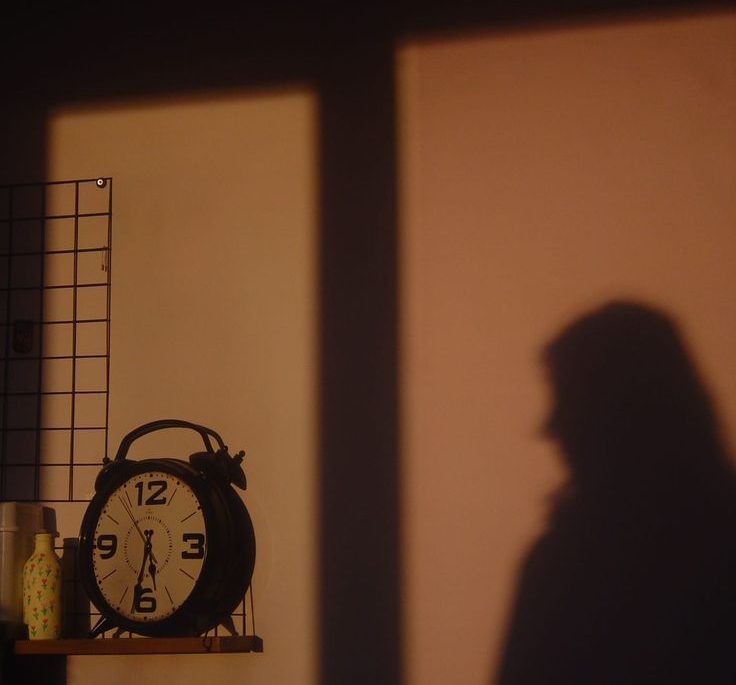
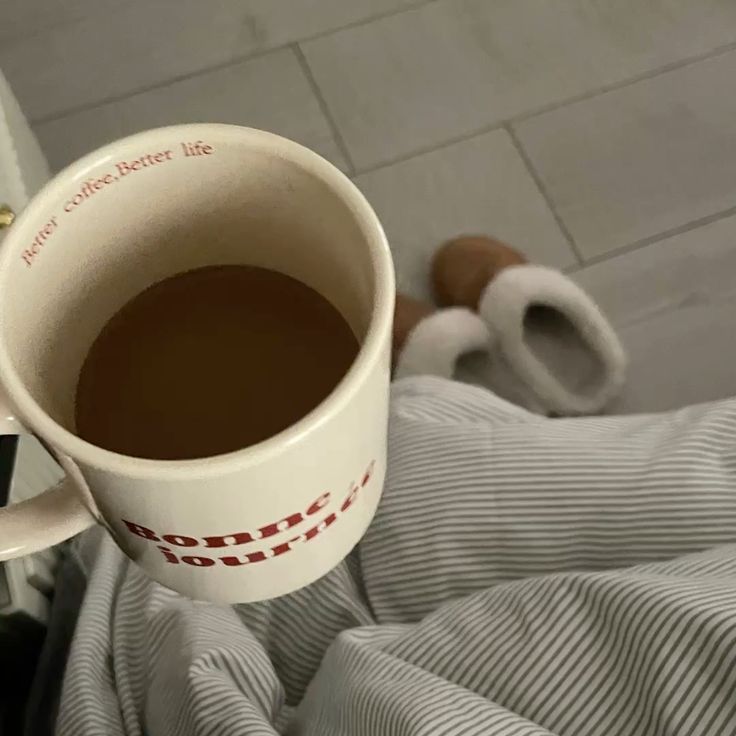
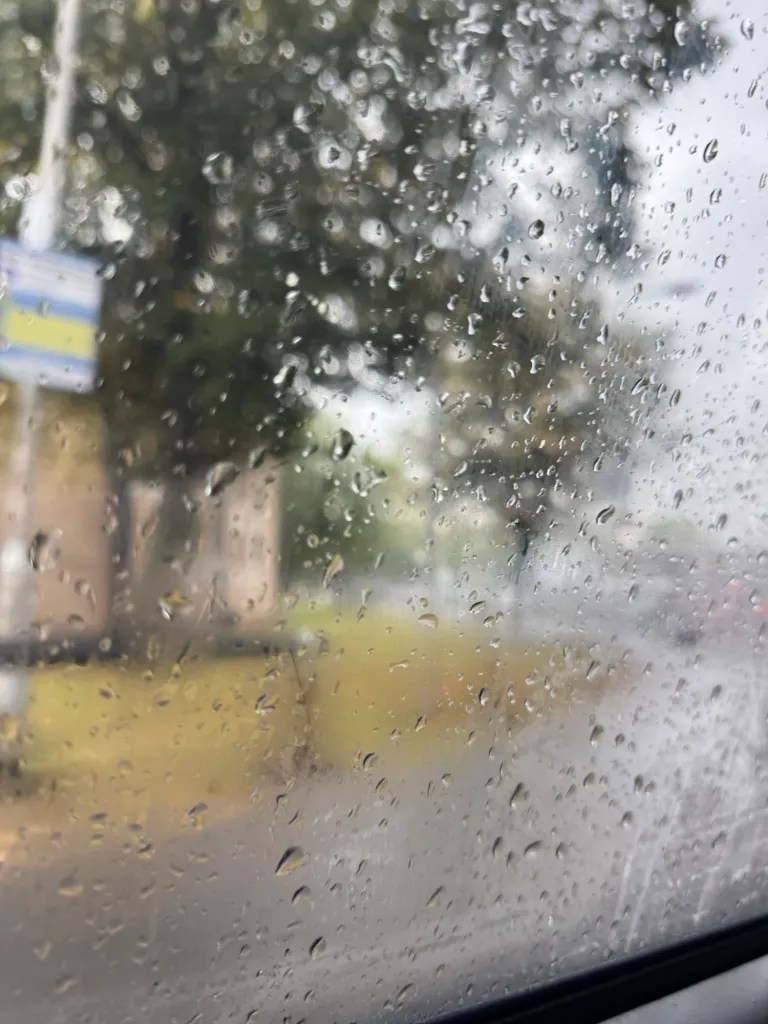
The weather supported this decision with remarkable professionalism. Rain had been falling across the West Midlands, with occasional thunder adding unnecessary theatricality, and the sky wore that particular British grey that can make productivity feel almost medically contraindicated. Nothing about the morning suggested financial discipline. The weather was clearly recommending coffee, a blanket and the temporary suspension of all non-essential administrative activity. For once, I respected expert advice.
I am becoming slightly better at allowing myself days like that without immediately putting laziness on trial. There was a time when a day off simply became another version of work. If I was not on shift, I should be cleaning. If the cleaning was finished, I should organise something. If everything was organised, there were finances to review, emails to answer, writing to finish, plans to make or some entirely unnecessary task I could invent so the day would have evidence in its defence. Adulthood has convinced many of us that an hour without measurable productivity requires an explanation. But that morning, the house was already clean, nobody was waiting for me to solve an urgent problem, and my spreadsheet was not haemodynamically unstable. Excel could survive another day without intervention.
That thought amused me, but it also made me realise how strangely we sometimes treat rest. We behave as though it exists at the far end of a completed life. Finish everything first, then rest. The difficulty is that everything has no intention of ever being finished. Laundry returns with suspicious reliability. Bills arrive. Messages multiply. Rooms become untidy approximately twelve minutes after being cleaned. Another task appears the moment you cross one off. Life seems to reproduce responsibilities when nobody is looking. If rest must wait until every obligation has been completed, I suspect many of us will eventually leave this earth with an unfinished to-do list beside us and a mildly offended basket of washing waiting in the next room.
Thankfully, Jan was working from home, and rainy days feel different when another person is somewhere inside the house with you. We do not need to spend the entire day together. He has his work; I have whatever I am supposed to be doing—or, in this case, whatever I am successfully avoiding—but every so often our separate little worlds cross. That day they met at lunch. He made food for us. There were no candles, no dramatic surprise and no romantic soundtrack swelling as the plates arrived. We were hungry. He was home. He made lunch. That was all.
And perhaps that was why it mattered.
The older I get, the more I appreciate gestures that would make terrible cinema. We are taught to recognise love through its most photogenic forms: flowers, anniversaries, holidays, elaborate surprises and declarations large enough to require background music. But living with another person has taught me that love spends most of its working hours doing completely ordinary things. It makes lunch. It asks whether you have eaten. It remembers something from the shop. It notices that you are tired and quietly takes one task away from you. Nobody photographs it. Nobody applauds. Often nobody mentions it. Yet these are the small acts doing most of the construction underneath a shared life. Grand gestures make memorable photographs; ordinary kindness tends to build the house around them.
After lunch, I spoke with my cousin in London, and my beautifully unproductive rainy day suddenly acquired considerably more emotional paperwork. We talked about family issues back home. The details belong partly to people who never volunteered to become characters in my writing, so they can stay where they belong. One thing blogging has taught me is that honesty does not require publishing everything I know. Some stories pass through us because we are involved, trusted or simply standing nearby. That does not automatically make them ours to display. I can, however, write about what a conversation leaves behind.
Family is complicated. This may be one of the least revolutionary observations ever committed to a blog, but families have a special talent for placing love, gratitude, history, money, sacrifice, expectation, disappointment and pride into the same bowl, stirring aggressively, and then wondering why nobody can identify the original ingredient. Distance does not protect you from any of this. Apparently family drama has excellent international coverage. One phone call can carry you from a rainy house in the West Midlands to a problem thousands of miles away faster than any aeroplane.
One moment I had been sitting at home with rain against the windows and an Excel spreadsheet waiting patiently to judge me. The next, my mind was somewhere else entirely, moving between people I loved, decisions I could not control and situations I could not personally repair. That last part is particularly difficult for me because I like solutions. When someone I care about is struggling, my brain immediately opens a full department. What happened? What can be done? Who needs to speak to whom? Is there another option? Can I help? Can this still be fixed? Within minutes, concern develops a clipboard and begins behaving like project management.
Caring can disguise itself remarkably well as responsibility.
And if I am not careful, somebody else’s problem starts looking suspiciously like my assignment.
That is where adulthood has been teaching me a sentence I understand intellectually far better than I practise emotionally: not everything belongs to me to solve. Family makes this particularly difficult because family problems rarely begin on the day somebody finally talks about them. They arrive carrying luggage. Old disagreements. Past sacrifices. Things somebody gave years ago. Expectations nobody formally discussed but everybody remembers differently. Kindness that one person recalls as generosity and another remembers as a debt. Then money walks into the conversation, as money often does, and manages to make an already complicated room several degrees less comfortable.
Money has an extraordinary ability to reveal what people secretly believe they owe one another. Someone helped before, therefore somebody else should help now. A sacrifice was made years ago, therefore repayment is expected later. One relative appears financially stable, and suddenly stability begins looking suspiciously like an unlimited family emergency fund. Before long, affection starts acquiring columns, balances and historical transactions.
I believe strongly in gratitude. I believe we should remember who stood beside us when we had very little to offer in return. I also believe that if we genuinely have the capacity to help someone we love, generosity is worth practising. But gratitude and permanent indebtedness are not the same thing. Kindness should not quietly mature into an invoice. A family can honour what someone once gave without preserving the gesture indefinitely as something that must eventually be collected.
Perhaps adulthood is partly the uncomfortable discovery that love and boundaries can occupy the same room without cancelling one another. You can be grateful and still say no. You can care deeply about someone without assuming responsibility for every consequence of their decisions. You can love your family and disagree with them. You can acknowledge what somebody once did for you without surrendering every future choice to that history. Sometimes we help so repeatedly that our help stops solving anything and simply delays the next crisis.
We are often so frightened of disappointing other people that we volunteer ourselves for the position instead. We give beyond what is comfortable. We explain a decision five different ways because apparently the first no failed to satisfy the committee. We join arguments that had already been operating perfectly well without us. Eventually resentment begins growing in the space where generosity used to live, and then everyone wonders why helping no longer feels kind.
The call ended, but serious family conversations have the irritating habit of continuing after the phone disconnects. I carried it around while getting ready for BLS. I thought about the different sides of the situation, the things people say when pride enters a conversation and the remarkable ability of an argument to mutate beyond recognition. Something begins with one issue and suddenly nobody is talking about that issue anymore. Now the discussion concerns who spoke disrespectfully, who should apologise first, who sacrificed more, who remembers events correctly and which relative has apparently maintained a private evidence archive since 2009.
That is the part that saddens me. People grow older while waiting for apologies. Months become years while everyone remains firmly seated on their own side of the argument. Entire portions of family life disappear while people try to establish who was right. I do not believe peace means tolerating disrespect, and forgiveness does not require pretending nothing happened. Some relationships genuinely become healthier with distance. But I sometimes wonder how many arguments eventually cost far more than the original offence ever deserved. Being right can become extraordinarily expensive.
I was still carrying some of those thoughts when I arrived for BLS, and that is how I ended up here: already inside the WMI Building, sitting in the corridor just outside the training room, sleepy, typing into my iPad and waiting to be called in to refresh my life-saving skills. A few hours earlier I had been at home ignoring Excel, listening to thunder, eating lunch with Jan and discussing complicated family matters. Now I was waiting to practise chest compressions. Life has very little interest in providing courteous transitions.
There is rarely a proper chapter break between the different versions of ourselves. The person worried about family does not disappear when the uniform goes on. The person thinking about money does not magically leave those thoughts in the car park. The person who argued with a partner, received difficult news or cried before leaving home may walk into work five minutes later and answer, “Morning, you alright?” with convincing professionalism. We change clothes, pick up our bags and continue. Whatever occupied the whole mind half an hour earlier has to squeeze itself into a corner because somebody now needs our attention elsewhere.
Maybe that is why I sometimes look at people at work and wonder what happened before they entered the room. We know remarkably little about one another’s mornings. Someone unusually quiet may have received bad news before their shift. Somebody distracted may be thinking about a parent thousands of miles away. Someone may be worried about rent, illness, children or a relationship. A person can be grieving while answering emails perfectly normally. Another can be carrying a family problem they cannot solve while appearing entirely competent on the outside because rotas, inconveniently, do not contain a box labelled emotionally preoccupied today.
There are whole private lives moving behind ordinary faces.
That alone feels like a good reason to handle people carefully.
Meanwhile, my own private life at that exact moment included an increasingly serious battle with my eyelids. There is something faintly ridiculous about waiting to practise life-saving interventions while personally trying not to fall unconscious over an iPad. I am sure there is a poetic interpretation available, though I suspect the BLS trainer might choose a less flattering term if I start yawning during the assessment. If alertness happens to be graded, I may need to rely heavily on personality.
Nothing remarkable had really happened that day. I woke up unmotivated. The house was already clean. The weather was miserable. My finances remained courageously unsorted. Jan made lunch. My cousin called. I thought far too much about family. I got ready, travelled to WMI and sat outside the training room waiting for the next thing to begin. That was essentially the entire plot. Nobody solved the family issue. I did not achieve sudden financial enlightenment. The rain remained committed to its duties, and I remained impressively sleepy.
Perhaps that was exactly why I wanted to write it down.
We ask an awful lot from ordinary days. We want lessons, breakthroughs, productivity, memorable experiences and preferably a photograph good enough to accompany all of it. An uneventful twenty-four hours can begin to feel like wasted material. But most of life is not made from days that announce themselves as important. It rains. Somebody makes lunch. Somebody phones. Your thoughts travel farther than your body. Something remains unresolved. You put on different clothes, leave the house, enter a building and sit in a corridor waiting for another door to open.
And somehow, life is still happening.
There is something reassuring in that. Not every thought needs an answer tonight. Not every family problem requires my intervention simply because I care about the people involved. Not everything on my list has to be completed before the day is allowed to count. Excel can remain at home without entering circulatory collapse. Other adults can carry the portions of their lives that belong to them. I can care without collecting every burden I encounter as though emotional baggage comes with loyalty points.
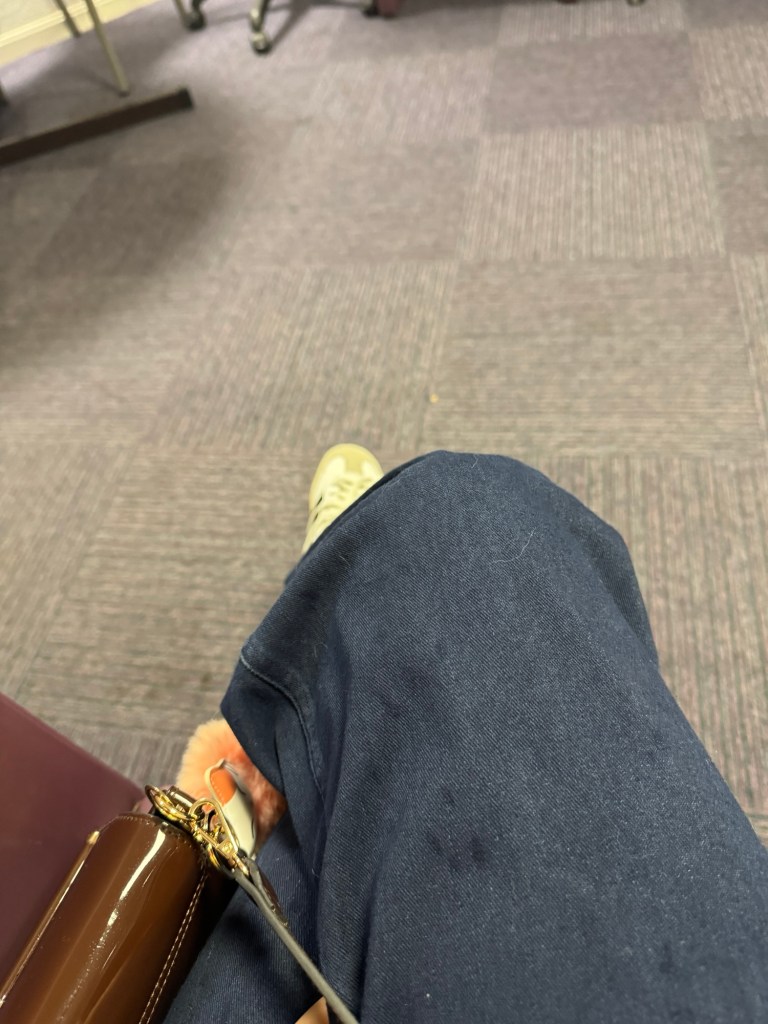
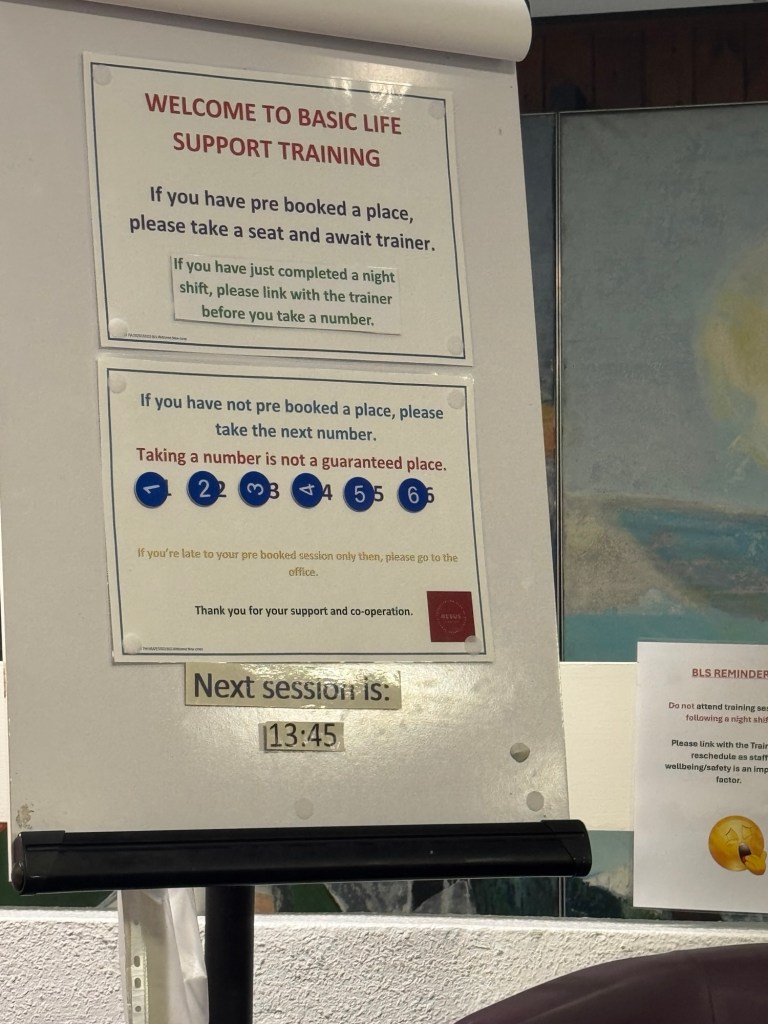
Soon I will close this iPad and walk through the training-room door. Tomorrow will almost certainly produce another list, another task, another conversation and perhaps a minor crisis convinced that it deserves immediate attention. There will always be something reaching for a portion of the day. But for a few minutes, there was this corridor: chairs, closed doors, footsteps passing occasionally, the muted sounds of other rooms, a sleepy nurse waiting for BLS, an unfinished spreadsheet at home and a family conversation still pacing around somewhere in the back of her head.
At first, it looked like dead time—the awkward little gap between arriving and whatever happened next.
But perhaps those gaps are not empty at all.
Maybe a surprising amount of life lives there: between work and home, helping and interfering, generosity and resentment, exhaustion and responsibility, the phone call ending and the thoughts it leaves behind, the room we have just left and the door we are about to enter.
I had thought I was only sitting in a corridor waiting for BLS.
Apparently, the corridor had other plans.
Still learning what belongs on my side of the door,
Anj🖤
























Leave a Reply