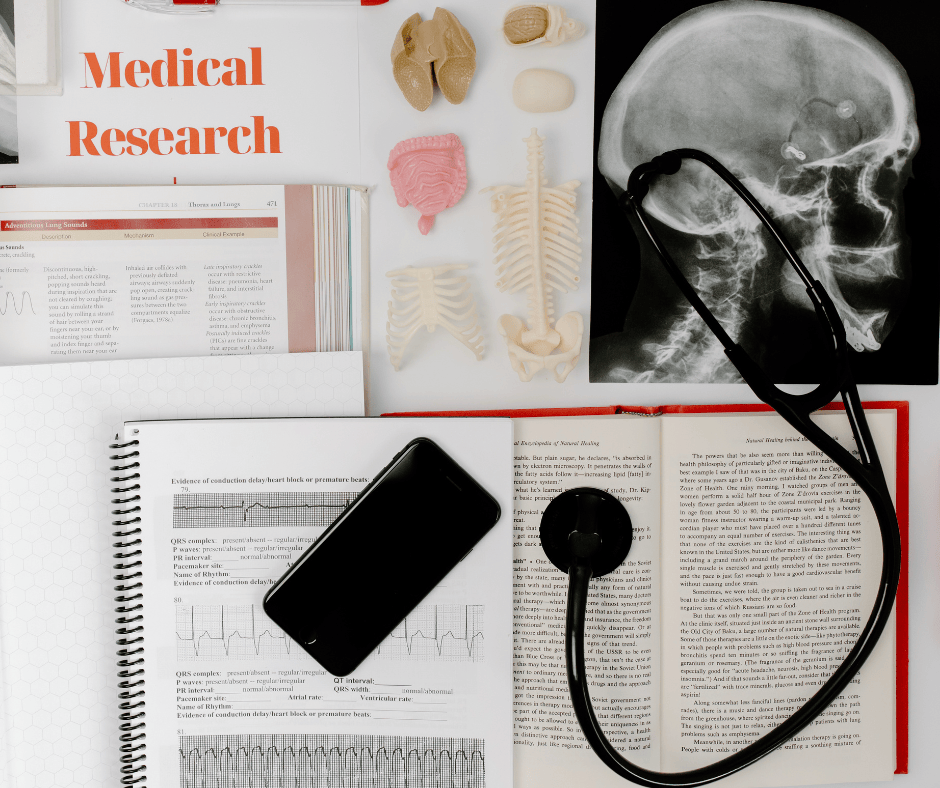
On forgotten nursing concepts, old textbooks, and the embarrassing discovery that knowledge does not come with a lifetime guarantee.
There should be a warning printed on every nursing textbook: Information stored in this brain may disappear without prior notice. Preferably in bold letters, somewhere between the table of contents and the first chapter, where unsuspecting nursing graduates can see it before developing unreasonable confidence in their academic achievements. I have spent four years studying the human body, memorising complicated medical terminology, preparing nursing care plans, and surviving examinations that occasionally made me question whether my brain was functioning according to its intended specifications. I passed my Nursing Licensure Examination, earned the right to place RN after my name, and reasonably assumed that the knowledge I had worked so hard to acquire would remain available whenever I needed it. Apparently, my memory and I had very different interpretations of that arrangement.
Tonight, I am sitting with my nursing notes again, preparing for the possibility of another nursing examination. Yes, another one. Because apparently, one national licensure examination was not sufficient entertainment for a lifetime. I have not even confirmed everything about this next academic adventure, yet here I am, surrounded by familiar subjects and experiencing the uncomfortable sensation of meeting people I once knew very well but whose names I can no longer remember.
It has been almost two years since I last seriously opened some of these notes, and goodness, what an interesting reunion this has become.
I recognise the terminology. I remember studying the concepts. Certain diagrams look vaguely familiar, and occasionally a particular topic produces that satisfying little spark of recognition. But then I encounter something I was once able to explain confidently, and suddenly my brain behaves as though I am presenting it with information from an entirely unfamiliar civilisation. I stare at the page. The page stares back. Neither of us appears particularly impressed with the other.
What happened to everything I learned?
Did my knowledge quietly pack its belongings and leave after graduation? Did my neurons hold a farewell party while I was occupied with other things? Or did my brain simply decide that since the board examination was over, a significant portion of its nursing department could be closed for renovations?
I would appreciate some explanation.
It is a peculiar experience to return to studying after spending so much time away from the routine. During nursing school, learning was woven into almost every part of my day. There were lectures, clinical rotations, return demonstrations, assignments, case studies, and examinations waiting around practically every corner. We complained about the workload, naturally, but the constant repetition meant that certain concepts became wonderfully familiar.
We discussed diseases, reviewed nursing interventions, and practised applying our knowledge in different clinical settings. Even when I was not actively studying, I was surrounded by people who spoke the same academic language. My classmates and I could turn an ordinary conversation into a discussion about nursing rationales, examination questions, or the unfortunate tendency of Clinical Instructors to ask precisely what we had neglected to review.
Now, sitting alone with my notes, I am beginning to appreciate how much that environment contributed to keeping information fresh in my mind.
Without the daily lectures and continuous examinations, certain details have become less accessible. I know I studied them. I know I understood at least some of them. But recognising a topic and being able to explain it confidently are two very different accomplishments.
And tonight, that distinction is being demonstrated with remarkable enthusiasm.
I have given myself a thirty-minute study break, which I originally intended to spend relaxing. Instead, I have somehow ended up writing about studying, which suggests that nursing continues to occupy my thoughts even when I am supposedly taking time away from it. Perhaps I should consider this a form of academic dedication. Or perhaps I have simply forgotten how to enjoy a break without discussing the very activity I am trying to escape.
Either explanation seems possible.
The funny thing is that I used to believe graduation would mark the end of this particular relationship with textbooks. I imagined that after completing my degree and passing the board examination, I would finally be free from the endless cycle of reading, memorising, and answering questions. I would become a Registered Nurse, begin working towards my professional ambitions, and enjoy the satisfaction of knowing that my academic efforts had reached a successful conclusion.
What a charming little misunderstanding.
I am beginning to suspect that nursing is one of those professions in which learning does not come with a convenient expiration date. You may finish your degree, obtain your licence, and proudly introduce yourself as a nurse, but the responsibility to remain knowledgeable continues. New situations require further understanding, old information needs revisiting, and clinical knowledge becomes more useful when it is regularly applied and updated.
Apparently, becoming a professional does not mean the brain is permitted to retire.
I should have realised this sooner.
After all, the human body has not become less complicated simply because I have received a diploma. Diseases have not agreed to behave according to the chapters I found easiest to remember, and patients certainly cannot be expected to present themselves with neatly arranged multiple-choice questions.
There is still an enormous amount to understand.
Perhaps that is what I find both frustrating and fascinating about nursing. The more I study, the more I discover how much information exists beyond what I already know. Every topic seems connected to another, and every explanation introduces questions I had not previously considered. What initially appears straightforward becomes more complex when I examine the details.
I used to think knowledge would eventually resemble a completed collection. Study enough, understand the important concepts, pass the examinations, and surely there would come a point when everything fitted together beautifully.
But learning seems to operate rather differently.
The more familiar I become with a subject, the more clearly I recognise its complexity. There are details I overlooked during my first encounter, connections I did not appreciate, and questions that only become interesting once I understand enough to ask them.
It is a rather humbling arrangement.
I once encountered the familiar philosophical observation that greater knowledge often makes us more aware of our ignorance. I thought it sounded wonderfully intellectual, the sort of statement that belongs in a serious conversation between people who have read far more books than I have.
Tonight, however, I am experiencing its practical application.
I open a notebook, recognise a subject, and immediately discover several things I need to review.
How delightful.
Still, perhaps I should not be quite so annoyed with myself.
It is unreasonable to expect every detail learned during four years of university to remain permanently available without regular use. Memory requires reinforcement, and information that has not been revisited for a long period can become more difficult to retrieve.
Besides, forgetting something does not necessarily mean I never understood it.
Sometimes I only need to encounter the information again for the familiar connections to return. A definition reminds me of a lecture. A diagram brings back an explanation. A nursing rationale I initially struggle to remember gradually begins making sense as I work through it.
And when that happens, I feel a little less inclined to accuse my brain of professional negligence.
Perhaps reviewing is not exactly the same as beginning again.
There is already a foundation beneath the information I am revisiting, even if parts of it have become rather dusty. The knowledge I acquired during nursing school has not necessarily disappeared completely. Some details simply require more effort to recall than I expected.
That is reassuring, particularly because the prospect of learning everything from the beginning would be enough to make me seriously reconsider my plans for the evening.
I have also noticed how quickly expectations can make studying more intimidating than it needs to be. The possibility of another examination has already encouraged me to imagine difficult questions, unfamiliar topics, and the extraordinary embarrassment of discovering that something I once knew has become a mystery.
But perhaps I am getting ahead of myself.
The examination is still a possibility, and worrying about every question before I have even established the full details seems a rather inefficient use of my imagination.
For now, I have notes to review and enough time to begin reacquainting myself with the subjects I studied before.
I do not have to understand everything tonight.
Although, admittedly, it would be terribly convenient if I could.
What I find interesting is that despite my complaints, I am actually enjoying parts of the experience. There is something satisfying about rediscovering information, recognising familiar concepts, and remembering why certain subjects interested me during nursing school.
It reminds me that I did not choose nursing simply because I wanted a professional title. I wanted to understand the work, develop useful skills, and become capable of contributing meaningfully to patient care.
Those ambitions remain important to me.
And perhaps returning to my notes is one way of reminding myself that obtaining a nursing licence was only one stage of a much longer professional journey.
I wonder what my former classmates would say if they could see me now. We spent years dreaming about the day when we would finally finish our studies, and here I am voluntarily opening nursing textbooks again.
They would probably laugh.
I would laugh too, if I were not currently trying to remember information that once occupied a substantial portion of my examination preparation.
But perhaps this is simply what happens when we choose a profession built upon knowledge that continually develops.
We study, we practise, we forget certain details, and we return to learning when new responsibilities or opportunities require it. Our understanding becomes stronger through experience, reflection, and the willingness to revisit what we thought we already knew.
There is no particular disgrace in admitting that we need to review something.
The more important question is whether we are willing to make the effort.
And apparently, tonight, I am.
Although my enthusiasm may require occasional supervision.
My thirty-minute break is nearly over, and the nursing notes remain exactly where I left them, waiting with an almost insulting degree of patience. There are still pages to read, concepts to reconsider, and several subjects that have apparently decided to introduce themselves to me all over again.
I suppose I should return to studying.
After all, if another examination is somewhere in my future, I would rather encounter it with a reasonably prepared brain than arrive expecting the questions to recognise me from 2011.
It would be wonderful if knowledge worked that way.
“Hello, Anj! We remember you. You studied us two years ago. Please proceed directly to the correct answer.”
Unfortunately, I suspect the examination will be considerably less sentimental.
So here I am, a Registered Nurse, rediscovering the remarkable depth of what I still have to learn and occasionally wondering whether my younger self might have left a few helpful notes for her future replacement.
Actually, she did.
They are sitting right in front of me.
Perhaps I should stop complaining and read them.
From an ordinary study break on May 21, 2013, with appreciation for old nursing notes, an occasionally uncooperative memory, and the uncomfortable truth that graduation does not mark the end of learning.
— Just Anj, RN, whose brain is currently undergoing a much-needed refresher course.


































Leave a Reply