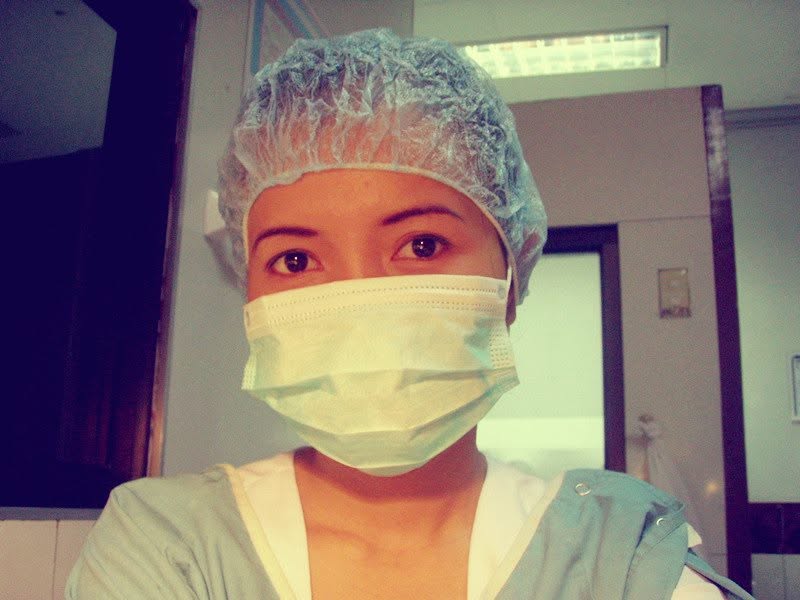
Facebook has a peculiar talent for returning versions of ourselves we did not specifically request. You open the app because someone has tagged you in something, or because you have five idle minutes, and there it is: You have memories to look back on. Sometimes Facebook brings back a photograph with a filter that should probably have remained buried with the decade that produced it. Sometimes it resurrects a status written with alarming confidence by a younger version of you who clearly believed punctuation was optional and emotional privacy was overrated. This time, though, the memory did something else. It pulled me backwards into my early nursing years, and suddenly I remembered a diary I used to keep when becoming a nurse still felt less like a career and more like trying repeatedly to convince a locked door that I had every right to be standing outside it.
I went looking for those old writings afterwards. Some of the pages were neat. Others looked as though my handwriting had become emotionally involved in the situation. There were sentences underlined more than once, unfinished thoughts, little observations and the sort of dramatic declarations you write only when you are certain nobody else will ever read them. Looking through them now, I realised that several emotions had been living inside that young woman at exactly the same time, apparently without any concern for safe staffing levels. Hope worked mornings and arrived annoyingly early, convinced that today might finally be the day somebody called. Frustration usually took over by afternoon and wanted to know how many applications a person was expected to submit before the universe acknowledged receipt. Embarrassment specialised in family gatherings and appeared whenever somebody asked, “Wala pa kay work?” Envy worked irregular hours but was extremely reliable whenever another batchmate announced a new hospital job. Pride insisted everything was fine. Fear sat somewhere at the back asking whether perhaps I was simply not good enough. And then there was Determination, which sounds heroic now but at the time mostly involved photocopying documents, straightening the same folder and trying again.
Reading those pages at thirty-six, I wanted to tell that younger woman several things. I wanted to tell her that the story would eventually become much larger than the job she was desperately trying to get. I wanted to tell her that one day she would work in hospitals far from the ones she was applying to then, that nursing would become part of her identity in ways she could not yet understand, and that some of the people she would eventually teach would look at her with the same uncertainty she once carried into wards herself. I also knew that if somebody had told her all of that at the time, she probably would have smiled politely and thought, That is lovely, but can someone please just employ me first?
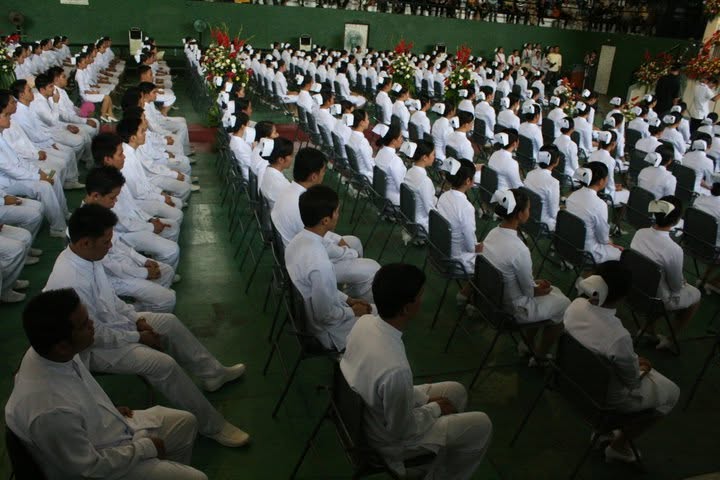
When I finished nursing school in the Philippines, I honestly thought the hardest part had already happened. In my defence, nursing school gave us every reason to believe this. We had survived examinations, clinical duties, return demonstrations, case presentations, care plans, sleepless nights and the extraordinary phenomenon where a clinical instructor asks one perfectly reasonable question and your brain immediately behaves as though it has never encountered the human body before. We learned to memorise drug classifications, disease processes, normal values and nursing interventions. We learned how to present ourselves properly in uniform. We practised procedures until movements that once felt awkward began to resemble competence. Graduation therefore felt like the natural ending to difficulty. We had finished. We had passed. We had photographs proving it.
There was a particular confidence attached to that stage of life. Not arrogance exactly, but the optimism of young people who assume the world will recognise effort in a reasonably organised fashion. I had done what was required. I had studied nursing. I had completed my clinical requirements. I had earned my licence. Surely the next part was straightforward enough: apply to a hospital, get interviewed, get hired, work hard and become the nurse I had spent years training to be. I had not yet learned that adulthood has a habit of adding extra pages to instructions after you have already followed them.
The folder became part of my routine. I remember it almost as clearly as I remember the applications themselves. Inside were copies of my résumé, certificates, school records, identification documents and the other official pieces of paper meant to demonstrate that I existed, had studied nursing and could potentially be trusted with employment. At the beginning, I treated that folder almost ceremonially. Everything had to be complete. The papers needed to be arranged properly. I would check them again before leaving because some part of me believed that one missing photocopy might be the only thing separating me from my first hospital job.
Then I would carry it to another hospital. The ritual became familiar: dress properly, bring the folder, present myself well, find where applications were received, hand over another copy of my résumé and whatever supporting documents were requested, answer questions politely, smile, thank the person receiving the papers, and leave. That final part was always strange. You walk into a hospital carrying possibility and walk back out carrying almost exactly the same life. Nothing visible has changed. You have submitted an application, which means technically you have done something, but the meaningful part now belongs entirely to people you may never see again. Somewhere behind you, your documents are being placed with other documents belonging to people who also need work, also trained hard and also hope their name will be the one somebody notices. The folder travelled with me often enough that its corners eventually began losing their dignity. The plastic sleeves softened. Papers were removed, replaced and photocopied again. My résumé probably visited more hospitals during that period than I did socially. By the time I had submitted enough applications, even my photocopied photograph seemed tired of presenting itself professionally.
Then came the waiting. Waiting for your first job has a way of turning your mobile phone into an emotional device. Every unknown number suddenly acquires significance before you have even answered it. For a few seconds, hope can build an entire future from six digits you do not recognise. Maybe this is the hospital. Maybe they want me to come for an interview. Maybe this is it. Then you answer in your most respectable professional voice and discover somebody wants to offer you a mobile package. There is a very particular disappointment in saying, “No, thank you,” politely to a sales call while your nursing career remains unemployed in the background.
The more applications I submitted, the more familiar silence became. An actual rejection, unpleasant as it is, at least gives you something definite. You know where you stand. You can be disappointed, complain privately, eat something and eventually move on. Silence behaves differently. Silence gives hope enough room to keep negotiating. Perhaps they have not finished recruitment. Perhaps they will call tomorrow. Perhaps the papers are still being reviewed. Perhaps next week. Perhaps. Eventually, the absence of an answer becomes the answer.
During that time, I also became familiar with conversations about having a “backer.” Anyone who grew up around that environment will probably understand immediately what the word means. Someone knows somebody. A relative has a connection. A friend has an acquaintance inside. A name might help another name be noticed. I am careful when I write about that now because I can only tell this story from where I stood then. I cannot say every hospital worked that way, and it would be unfair to suggest that everyone who found employment did so through connections. Many nurses were hired because they earned their positions, hospitals had their own recruitment processes, and plenty of factors affected who eventually got a job. But when you are young, inexperienced and applying repeatedly without hearing back, perception becomes part of the experience. From where I stood, connections sometimes looked like shortcuts on a road I was travelling entirely on foot. I did not know the right person, so I kept walking.
There were days when I wondered whether the problem was the résumé. Maybe I needed to change the wording. Maybe the format was wrong. Maybe another certificate would help. Maybe there was something obvious everybody else understood about job applications that I had somehow missed. Other days the questions became more personal. Maybe there was something wrong with me. That is the danger of repeated silence. Eventually the mind stops reviewing the application and begins reviewing the applicant.
Meanwhile, people from my batch were finding work. Someone would announce that they had been accepted somewhere, then another person would share good news. I congratulated them because I genuinely was happy for them. They had studied hard too. They deserved their opportunity. But human emotions are annoyingly capable of multitasking. I could be happy for someone and disappointed for myself in the same minute. I could congratulate a friend and later wonder why my turn had not come. I could admire somebody’s beginning while feeling frightened by the absence of my own. For a while I felt guilty about that. I thought envy belonged only to people who wanted others to lose what they had. Mine did not feel like that. I did not want anybody else’s job taken away. I simply wanted a job too. That difference took me years to understand. Good people can experience envy. Kind people can compare. Grateful people can still feel disappointed. Emotions do not become moral failures simply because they are uncomfortable. The important part is what we do with them.
Then there were the questions from relatives, neighbours, friends and well-meaning people who probably thought they were simply making conversation. “Wala pa kay work?” No work yet? Most of them probably forgot asking almost immediately. I did not. There is something almost comical about the efficiency of a four-word question when it lands directly on the thing you have been worrying about for weeks. I would smile and answer, “Wala pa.” Not yet. I became extremely good at that smile. It was the smile of a woman who wanted to appear relaxed while internally reviewing every professional decision she had made since nursing school. If there had been an award for looking unbothered while experiencing a small existential crisis, I might finally have had something impressive to add to my CV.
The experience problem was the most frustrating part. Hospitals understandably wanted nurses who already had clinical experience. I also wanted clinical experience. On this issue, hospitals and I were in complete agreement. The difficulty was accessing it. To get the job, I needed experience; to get experience, I needed the job. It felt like adulthood’s first proper riddle. I kept waiting for somebody to explain the clever solution. Eventually I discovered there was no clever solution available to me at the time.
After enough applications and enough silence, I found a hospital where I could gain the clinical experience I desperately wanted. There was one important detail: we had to pay for the opportunity. Even now, years later, I pause at that sentence. I had completed nursing school and obtained my licence, yet the route available to me then involved paying so that I could work and gain the experience hospitals wanted. It was not quite the triumphant beginning I had imagined while wearing my graduation uniform. Nobody poses for graduation photographs thinking, One day, if everything goes according to plan, perhaps I will get to pay someone so I can work twelve-hour shifts.
I wish I could tell the story differently. I wish younger me had stood up immediately, delivered a powerful speech about professional worth, turned dramatically towards the exit and waited for a perfect opportunity to recognise her value. That would make excellent writing. It would also be untrue. I needed experience. I wanted desperately to begin. By then, repeated applications had taught me that the ideal opportunity might not appear simply because I had been patient enough. The choice did not feel like one between a perfect beginning and an imperfect one. It felt like a difficult beginning or no beginning at all. So I accepted.
Looking back, I do not romanticise it. I do not transform the arrangement into something noble simply because good things eventually came afterwards. But neither do I judge the woman who accepted it. It is remarkably easy to become wise about yesterday when today has given you more options. She made the choice using what she knew, what she had and what was available to her then. Mostly, she just wanted someone to let her become a nurse.
Then came the strange moment when the thing I had been begging for finally became real. I had spent months wanting somebody to give me a chance. Then somebody did. And suddenly another thought appeared: Oh no. They are going to expect me to know things. The first days carried an entire new cast of emotions. There was relief because I was finally inside a hospital rather than carrying applications between them, excitement because clinical nursing was what I had trained for, pride because I could finally begin building the experience I had struggled to obtain, and frustration because the road had been harder than I had imagined. Terror, meanwhile, arrived with excellent attendance.
Nursing school had taught me information. Hospital nursing taught me what information feels like when a human being is attached to it. In a textbook, blood pressure is a number. In a hospital, the number belongs to someone’s mother. The medication belongs to somebody who might have allergies, kidney problems, a history you have not yet heard or a family member watching what you are doing. The patient in front of you does not know which chapter you studied last night. Patients are terribly inconsiderate that way.
Textbooks are wonderfully organised. The symptoms are presented in useful order. The important history is usually included because somebody has already decided it matters. The case leads somewhere sensible. Even difficult scenarios have been written by someone who knows the diagnosis. Real patients refuse to follow the format. They arrive with fear, previous illnesses, family problems, financial concerns, incomplete histories and medicines they remember only by colour or by something like, “the small white one I take in the morning.” A textbook may say, The patient reports pain in the right lower quadrant. A real patient may say, “It feels strange here,” while moving their hand over an area approximately the size of Luzon. And suddenly everything you know has to become useful.
That was one of the first lessons my hospital experience gave me: nursing knowledge is not valuable merely because you can remember it. It becomes valuable when you can recognise what matters in the person standing in front of you. I learned very quickly that being useful did not mean pretending I knew everything. That took humility. As a new nurse, I was afraid of questions because questions could expose what I did not know. I worried that saying, “I’m not sure,” would reveal that I was inexperienced, as though this were otherwise a well-kept secret. Over time, I learned that one of the safest sentences a nurse can say is, “I’m not sure. Let me check.” There is no prize for guessing confidently in healthcare. Pride has never improved a patient outcome.
That first hospital also taught me to notice things that never appeared in examinations: a pair of slippers underneath the bed, a rosary wrapped around a patient’s hand, a plastic bag holding clothes that belonged to whatever life the patient had been living before illness interrupted it, a relative repeatedly adjusting the same blanket because it was the only thing in the situation they could control, a husband sitting beside his wife for hours, a daughter asking the same question several times, not because she had failed to listen, but because fear sometimes requires information to be repeated before the mind can accept it. None of those details would have gained marks in an exam. They taught me nursing anyway.
Before working in a hospital, illness had existed largely in clinical language. A disease affected a system. A symptom belonged to a condition. A patient had a diagnosis. Then I began seeing the lives attached to those words. A patient never arrives carrying only an illness. They bring families, habits, responsibilities, beliefs, worries, unfinished conversations, work, debts, favourite food, embarrassing stories and plans for a future that did not include becoming a patient that week. Somebody somewhere is waiting for them to come home. Understanding that changed the way I looked at the bed in front of me.
It also changed my understanding of dignity. Dignity is a large word in policies and professional values, but in practice it often lives in very small movements. Pull the curtain properly. Explain before touching somebody. Cover the part of the body that does not need to be exposed. Speak to the patient rather than discussing them over the bed as though illness has removed them from the conversation. Help somebody wash without making them feel ashamed for needing help. Give them time to do what they can still do themselves. Ask before assuming. These things do not look dramatic. Nobody photographs them. They rarely become the nursing stories people tell at award ceremonies. But I began to understand that dignity often depends on whether another person feels human in the most vulnerable moments of their life.
There was one patient who apologised whenever she needed help. “Sorry, nurse.” Again, “Sorry.” Another request, another apology. I do not remember all the clinical details surrounding her now. I remember the apology. It stayed with me because I could not understand why someone who was unwell felt responsible for making my job easier. She needed help. That was why I was there. Yet somehow she had reached a point where needing another person made her feel inconvenient. That patient taught me something I could never have memorised from a nursing textbook. Sometimes care is not only what we do. Sometimes it is what we remove from the interaction: shame, embarrassment, fear, the feeling of being a burden. Sometimes saying, “You don’t need to apologise,” is part of nursing too.
The hospital also introduced me to the fact that nurses are human beings attempting to care for other human beings while remaining inconveniently human themselves. We become hungry. We need the toilet. Our feet hurt. We become mentally tired. Coffee behaves very differently in healthcare from coffee everywhere else. A cup can be made at eight in the morning, forgotten until ten, discovered at eleven, reheated around noon, abandoned again and finally found in the afternoon looking as though it has lived a more difficult shift than you have. There comes a point when reheating it again feels less like persistence and more like refusing to accept that the relationship is over.
“I’ll eat after this” also became one of the least reliable sentences in the profession. There is always another this. The patient needs something. Someone asks a question. Something needs documenting. A task takes longer than expected. Then suddenly you realise the meal you planned to eat at a reasonable hour has become an archaeological object in your bag. I laugh about those things now, but they were part of learning what working as a nurse actually demanded.
There were mistakes too. Nothing cinematic. Nothing that belongs in a dramatic medical television episode. Just the small, uncomfortable mistakes of being new: forgetting something and having to return, taking longer than everybody else, asking a question I worried was embarrassingly basic, watching an experienced nurse perform a task smoothly while I stood nearby mentally recording every movement. At the time, these moments felt much larger than they do now. Embarrassment magnifies everything when you are learning. A small correction can feel like public evidence that perhaps you should never have been allowed into nursing. Years later, I understand those moments differently. Embarrassment is often the entrance fee for learning. You pay it, learn something and hopefully do not have to buy the same ticket twice.
I also remember the people who taught me kindly. That kindness mattered more than I understood at the time. Someone explaining something without making me feel foolish. Someone showing me a procedure again. Someone answering a question even though they were busy. Someone correcting me without turning the correction into a performance. There is a particular generosity in teaching someone who is still finding their feet. Knowledge can be shared in many ways. Humiliation is simply one of the worst. The best nurses I learned from never needed to make themselves look more intelligent by making a beginner feel small. They already knew what they knew. They could afford to be generous with it.
That became one of the lessons I carried further than the technical skills themselves. Years later, when somebody newer asked me a question, I remembered what it had felt like to be the person asking. I remembered the brief pause before admitting you did not know. I remembered the fear that somebody might think the question was stupid. I remembered how much easier learning became when the answer came without humiliation attached. That first hospital therefore taught me nursing in two directions at once: patients taught me how I wanted to care, and experienced nurses taught me how I wanted to teach.
Of course, not every day produced a beautiful revelation. Some shifts were simply exhausting. There were days when every call bell appeared to have attended the same planning meeting and agreed to ring together. Some patients tested patience. Some relatives tested whatever patience remained. Paperwork seemed capable of reproduction without human intervention. Five minutes could become forty-five. A twelve-hour shift could feel like three hours when everything was happening at once or approximately three fiscal years when exhaustion had taken over. I learned that hospital time is not governed by the same physics as normal time.
Somewhere inside those shifts, though, I slowly stopped feeling like somebody pretending to be a nurse. I learned where things were kept. I learned what to ask first. I became faster at recognising what mattered. I stopped rehearsing every sentence in my head before speaking. I began understanding that the calm nurses were not calm because nothing frightened them. Many of them were calm because they had already been frightened by similar things before. They had accumulated experience. They recognised patterns. They knew which problems required immediate attention and which ones could survive another minute.
That realisation changed how I understood confidence. I used to imagine confidence arriving when I finally knew enough. It never arrived like that. There was no morning when I woke up and suddenly felt professionally complete. Confidence accumulated so gradually that I barely noticed it happening: one patient, one shift, one mistake, one correction, one procedure that frightened me less the second time, one question I answered without having to find somebody else, one situation where I realised my hands were already doing what they had once trembled trying to do. That was how it grew.
There were days when I went home exhausted but strangely proud, not because I had done anything extraordinary. Most shifts contained no heroic moment. I had simply done work that an earlier version of me would once have found terrifying. I had helped somebody. I had recognised something. I had learned. I had been trusted with somebody else’s vulnerability and tried to handle it carefully. That was enough.
The first hospital was not the glamorous beginning I had imagined during graduation. Maybe glamour would have taught me very little. Eventually, after gaining that experience, another hospital hired me properly. That was another beginning: new people, new responsibilities, new things to learn, another version of myself waiting several shifts ahead. That story deserves its own chapter because each hospital changed me differently. But I cannot tell the later story honestly without giving this beginning enough room.
For years, I thought those months before my first hospital job were simply the period when my career had not started yet. Looking back, I think they were already part of it. The applications taught me what rejection feels like before anybody uses the word. The silence taught me how easily confidence can shrink when nobody validates it. Watching other people move ahead taught me how complicated comparison can be. Being inexperienced taught me humility. Needing someone to give me a chance made me remember, years later, what beginners carry into rooms even when they are trying very hard to look confident. The imperfect opportunity taught me that careers do not always begin where we expected. The patients taught me that illness belongs to a life, not just a diagnosis. The nurses who taught kindly showed me what authority looks like when it does not need to humiliate anybody.
None of this means I now look backwards and call every difficult part necessary. I do not believe that. Some things were frustrating because they were frustrating. Some systems could have been kinder. Some opportunities should not have been so difficult to access. I do not think suffering becomes good merely because we eventually extract something useful from it. But once those experiences belonged to me, I had some choice over what I allowed them to become. I carried persistence. I carried empathy for people who feel left behind. I carried respect for nervous beginners. I carried gratitude for people who offer chances. I carried a dislike of teaching through humiliation. And I carried the memory of what it feels like to stand outside a door with a folder in your hands and wonder what else you need to prove before somebody lets you enter.
Perhaps that is why I am careful now when somebody tells me they are still waiting for their turn. I hesitate before saying everything happens at the right time. Sometimes that phrase comforts people. Sometimes, when you are the one watching everybody else move forward, it sounds suspiciously like something said by somebody who is already safely on the other side of the door. I would rather say something closer to what I wish I had understood then. A difficult beginning is still a beginning. A slow start does not mean you have less to offer. Being overlooked does not make you invisible forever. Taking an imperfect route does not automatically lead to an inferior destination. But even those sentences are easier to believe once you have lived far enough beyond the struggle.
The diary reminded me of that. Reading it now, I found some entries funny because time had removed their teeth. Things that once felt enormous had become memories I could hold without becoming them again. I smiled at the dramatic sentences. I recognised the frustration. I remembered how seriously I watched my phone. I could almost feel that battered folder in my hands again. Younger me had no idea what happened after the page she was writing. That may be the strangest part of reading an old diary. I know the next chapter. She did not.
She did not know there would be another hospital after the first. She did not know she would eventually leave the Philippines. She did not know how many patients would pass through her care. She did not know that one day nursing would take her into specialist practice, that she would become the more experienced person in some rooms, or that younger nurses would sometimes look to her for answers. She only knew what was true on that particular page. She wanted a job. She wanted experience. She wanted somebody to call. She was tired of saying, “Wala pa.” And still, somewhere beneath Hope, Frustration, Embarrassment, Envy, Pride and Fear, Determination kept turning the page.
That is the part I notice most now, not because determination made her fearless. It did not. Not because she always believed things would work out. She did not. Determination was much less impressive than that. It was checking the documents again, making another copy, carrying the folder to another hospital, answering another question about work, feeling disappointed when somebody else moved ahead and trying not to become bitter about it, accepting an imperfect beginning because it was the beginning available, walking into the first hospital afraid and returning the next day anyway.
I closed the diary after reading those pages and Facebook was still there, casually presenting the memory as though it had not just opened an entire corridor of my life. That is probably what memories do best. They show you something small and leave you standing in front of everything attached to it: a photograph, a date, a sentence written years ago, a folder with softened corners.
I used to think that folder contained everything needed to prove I was ready to become a nurse. My résumé was inside it. My certificates were inside it. My school records were inside it. All the official evidence was there. But none of those papers could prove the things nursing would eventually ask from me. They could not show whether I would remain kind when I was tired. They could not show whether I would admit when I did not know. They could not show how I would speak to somebody who felt embarrassed needing help, how I would respond to frightened relatives, how I would recover after a mistake or whether I would remember what it felt like to be a beginner once I was no longer one.
The papers got me towards the door. The people on the other side taught me the rest. And if Facebook decides to bring that memory back again in another ten years, I suspect I will still look at that young nurse with the battered folder and feel a little sorry for her, a little proud of her and slightly amused by how seriously she watched every unknown phone number. She thought she was waiting for nursing to begin. She had no idea it already had.
To every beginning that looked like waiting,
Anj
















Leave a Reply