About
My Honest Review of Their Compression Socks After Long Hospital Shifts
There is a particular point in every twelve-hour shift when your feet stop being passive participants and start developing opinions. Mine usually begin politely enough. By mid-shift, they are still cooperative. By the final few hours, after enough standing, walking, doubling back through corridors and telling myself I will sit down “after this one thing,” my legs have generally become a separate governing body with several unresolved complaints.
That is why I have become more particular about what I wear to work. We talk a lot about supportive shoes—and rightly so—but socks are doing their own twelve-hour shift underneath them. They are there through every corridor walk, every prolonged period of standing and every moment when sitting down becomes an aspirational concept rather than an actual plan.
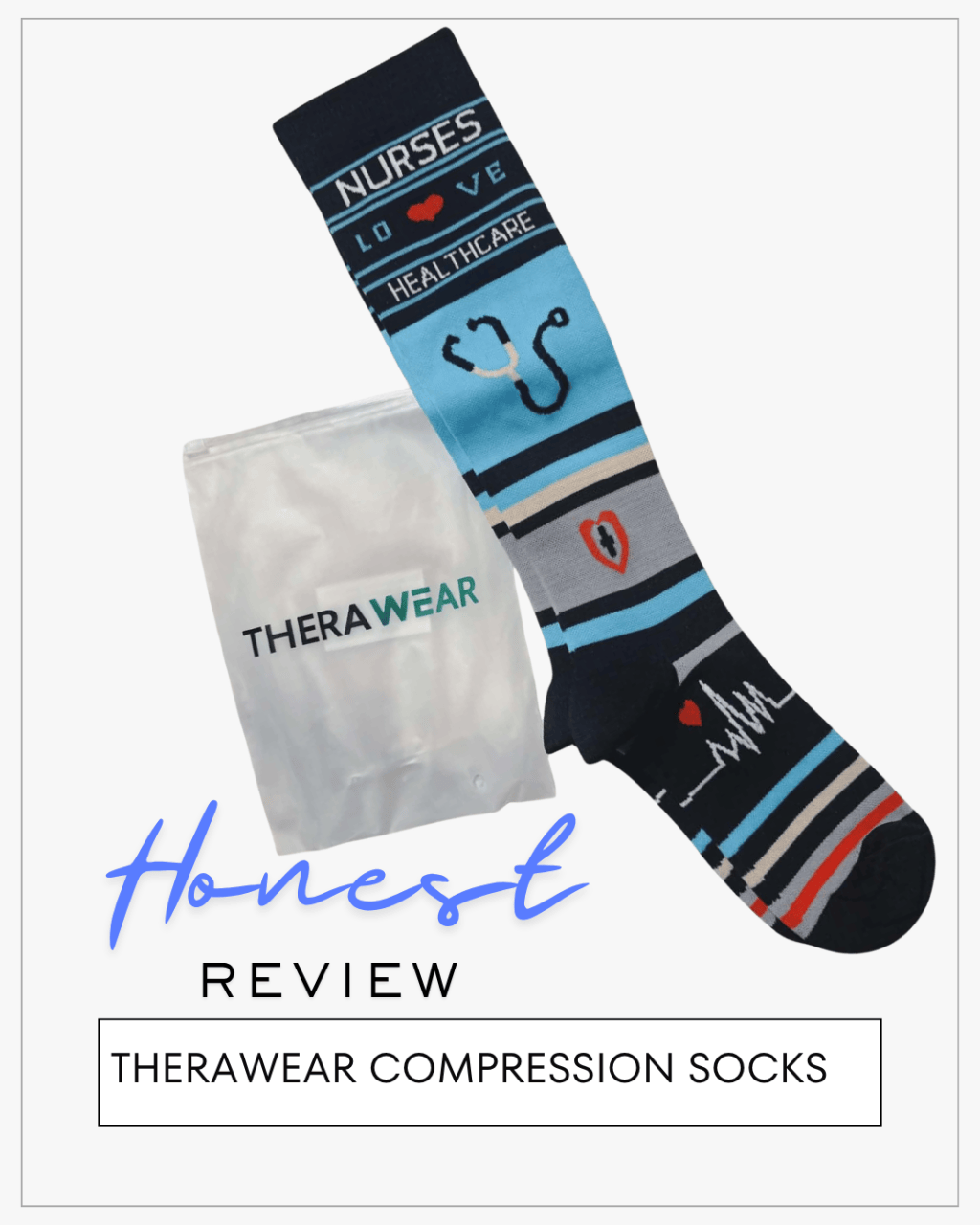
So when TheraWear offered to send me a pair of their compression socks to try, I was genuinely interested. I already knew I liked the idea of compression socks for long shifts, but I wanted to know what these were actually like after several hours of real use. Were they comfortable? Did they stay in place? Would the compression feel supportive or simply too tight? Would they fit properly inside my work shoes? And, perhaps most importantly, would I still want to wear them again after twelve hours?
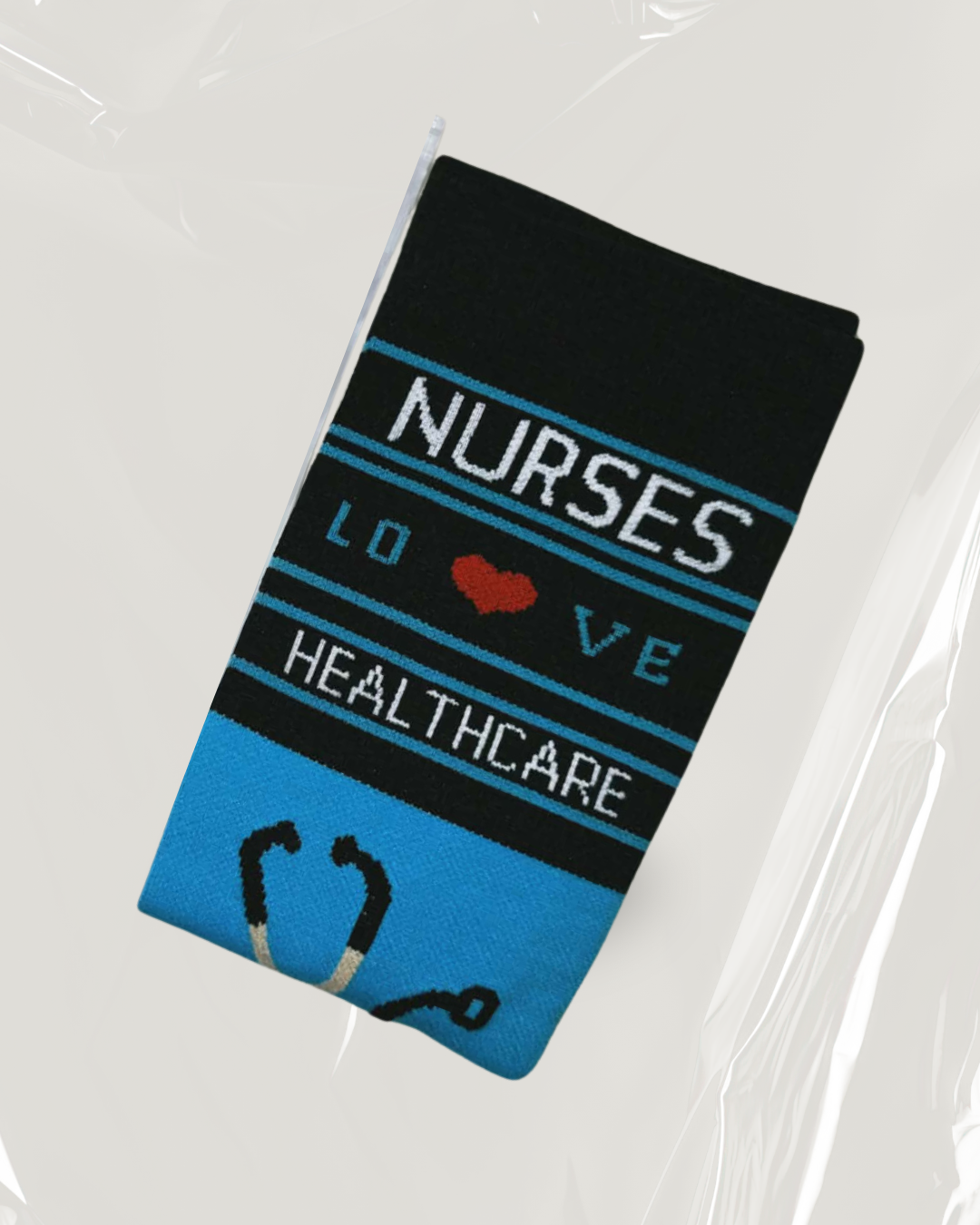
There was also another reason I was immediately interested: the designs. Compression socks have historically had a reputation for looking more functional than fun, but these did not. I chose the Nurses Love Healthcare pair, covered in stethoscopes, ECG lines and little medical motifs, which felt appropriately on-brand for someone who apparently now wants even her calves to declare her occupation.
The Pair I Chose: Nurse Love COMPRESSION SOCKS
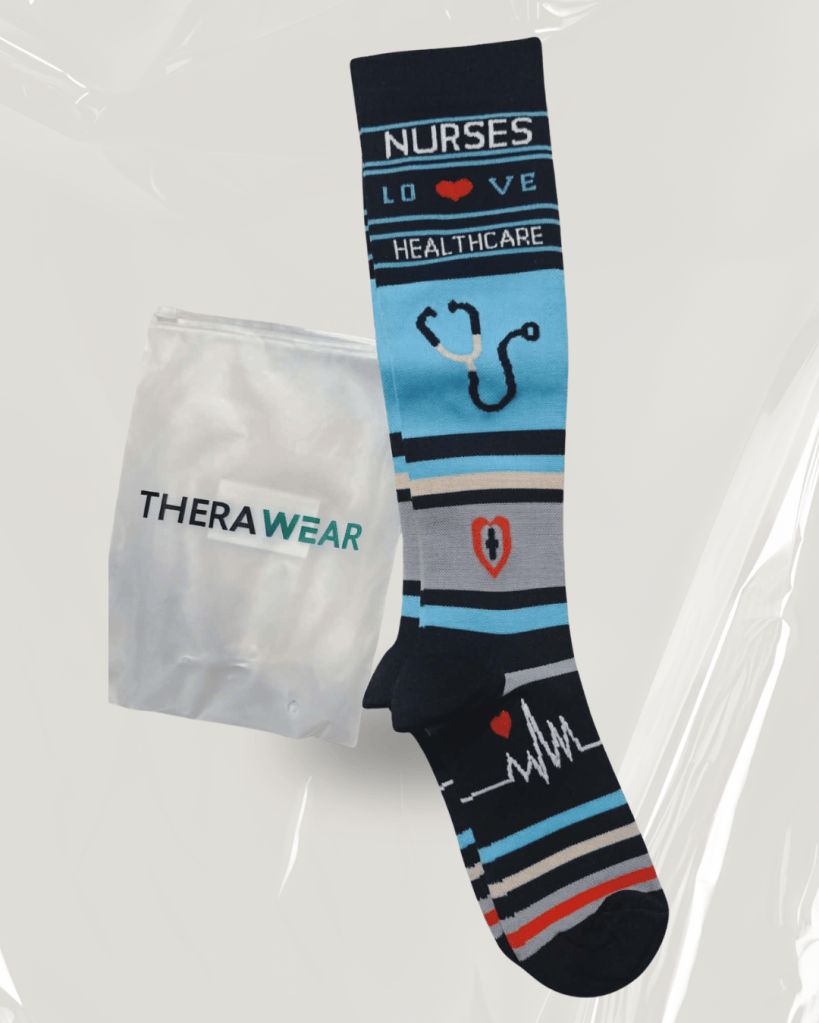
I genuinely loved the design as soon as I opened the package.
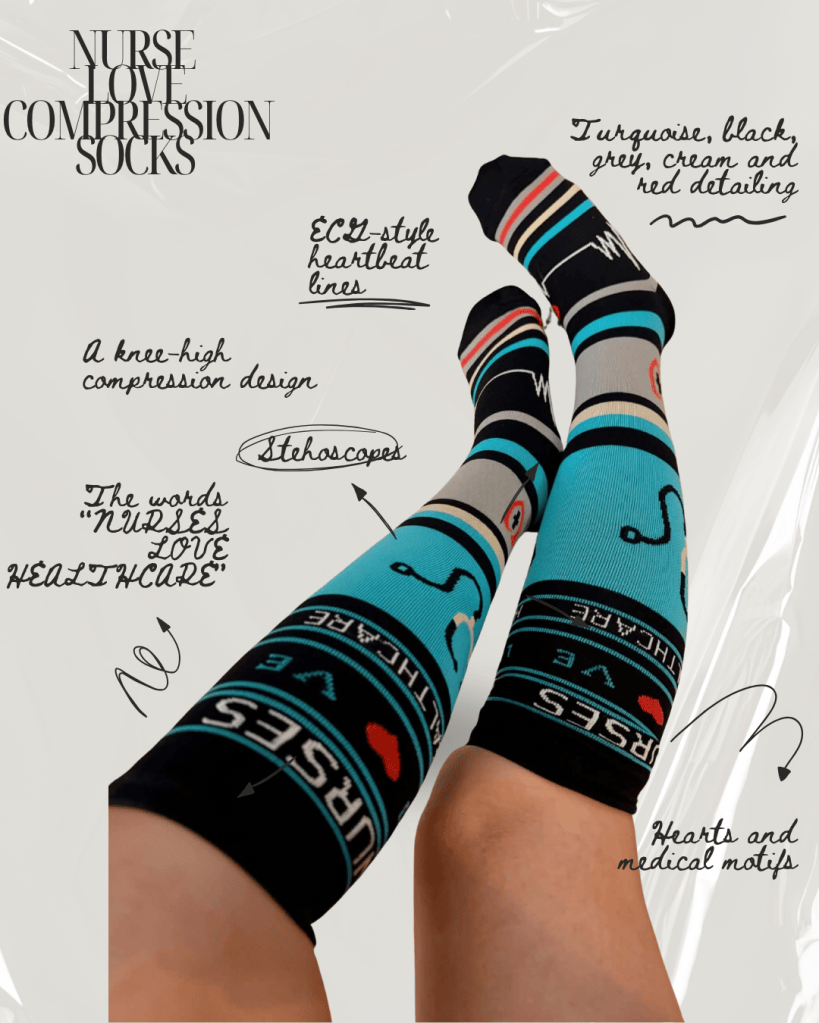
Mine features:
- Stethoscopes
- ECG-style heartbeat lines
- Hearts and medical motifs
- The words “NURSES LOVE HEALTHCARE”
- Turquoise, black, grey, cream and red detailing
- A knee-high compression design
Apparently carrying an actual stethoscope at work was not enough. My calves have now officially joined the profession.
What I like about the design is that it gives something practical a bit of personality. Hospital uniforms are not exactly famous for allowing much creative expression, so socks are one of the few places where you can get away with something more playful.
TheraWear also has a wider variety of colours and patterns on its website, which I appreciate. Compression socks do not have to look clinical or boring. My only small criticism is that I would love to see more healthcare-specific designs. The general range has plenty of options, but there are fewer styles specifically aimed at nurses and healthcare workers.
Personally, I would happily see more nursing prints, different colour combinations, specialty-inspired designs and perhaps something dedicated to night-shift staff whose circadian rhythm has formally resigned.
The Compression Level
The pair I tried is 15–20 mmHg graduated compression.
Compression strength is measured in mmHg, or millimetres of mercury. With graduated compression, the pressure is designed to be firmer around the ankle and gradually reduce higher up the leg.
For me, the 15–20 mmHg level felt clearly supportive without becoming excessively restrictive.
Quick Guide to Compression Levels
| Compression level | General description | Common use |
|---|---|---|
| 8–15 mmHg | Light compression | Everyday comfort, mild tiredness, travel |
| 15–20 mmHg | Mild to moderate compression | Long periods standing or sitting, travel, general leg support |
| 20–30 mmHg | Firm compression | Often used for more significant swelling, varicose veins or specific clinical indications |
| 30–40 mmHg+ | Strong medical compression | Usually used for more complex venous or lymphatic conditions under clinical guidance |
One important point: stronger does not automatically mean better. If you need compression because of a medical condition, it is better to check the appropriate level with a healthcare professional rather than simply choosing the strongest pair available.
Fit and Sizing
This is probably one of the most important practical points.
TheraWear advised me that calf measurement matters more than simply choosing according to shoe size, and after wearing them, I understand why.
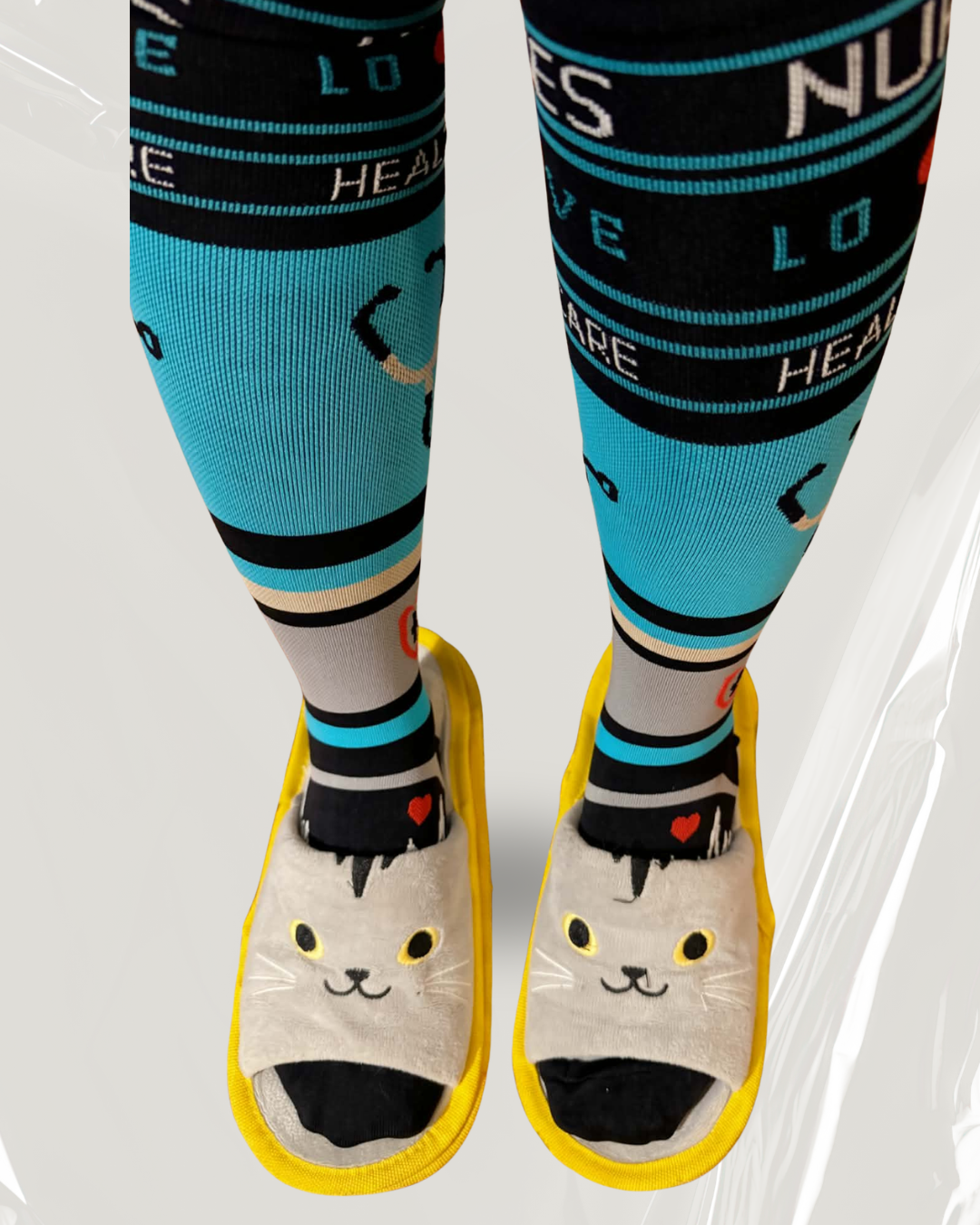
These socks are noticeably snug around the calf.
Not painful.
Not uncomfortable for me.
But definitely snug.
For me:
- The calf feels firmly held
- The sock sits securely against the leg
- There is no loose or floppy feeling
- The fabric stays in place well
- I can clearly tell I am wearing compression hosiery
If you have only worn ordinary socks before, that snugness may take some getting used to.
Before ordering, I would recommend:
- Measuring around the widest part of your calf
- Checking that measurement against the size guide
- Using shoe size as secondary guidance
- Avoiding guessing
- Avoiding deliberately sizing down because you think tighter must mean better
This is one of those situations where optimism is not a measuring tool.
A properly fitting compression sock and an unnecessarily tight sock are not the same thing.
Putting Them On
Ordinary sock:
Pull. Done.
Compression sock:
There will be negotiations.
Because these are more fitted, I found it easier to position the foot first and then gradually work the fabric upwards rather than trying to drag the whole thing up in one heroic movement.
Once I got used to them, it became easier. But they definitely take more effort to put on than ordinary socks. That is not necessarily a flaw. It comes with the territory of compression hosiery. Still, first-time users should know what to expect.
Taking Them Off
This was one of the few things I found slightly less convenient. After a twelve-hour shift, there is a particular pleasure in removing anything associated with work.
Badge off.
Shoes off.
Uniform off.
Freedom.
These socks, however, do not surrender immediately. Because the compression around the calf is fairly firm, I find they take more effort to pull down and remove than ordinary knee-high socks. I am not wrestling them on the bedroom floor while calling for backup. But after a long shift, when my enthusiasm for additional physical effort has already expired, I notice it. The easiest way for me is to gradually roll or peel them down rather than simply tugging them from the top.
Would this stop me wearing them? No.
It is simply the trade-off for the secure compression I like while I am working. Still, my hour-twelve self would appreciate an emergency release button.
The Twelve-Hour Shift Test
This is where the review really matters to me. Trying compression socks for five minutes at home tells me very little. A hospital shift is a much better test.
A long shift for me can involve:
- Hours of standing
- Repeated walks through corridors
- Moving constantly between different areas
- Sitting briefly and immediately getting up again
- Long periods without much leg rest
- A step count that becomes increasingly judgemental as the day goes on
After wearing these through long shifts, what I liked most was the firm, contained feeling around my lower legs. I would not describe the experience with exaggerated language. I did not put them on and suddenly float through twelve hours like a woodland fairy. I still knew I had worked a long shift. But they felt comfortable enough that I was happy to keep them on throughout the day. And for me, that matters. By hour nine or ten, anything annoying becomes approximately seventeen times more annoying. These did not.
What I Actually Noticed During Wear
My personal experience was:
- My lower legs felt securely supported
- The socks stayed in position
- I did not need to keep pulling them back up
- They did not bunch noticeably around the ankle
- They fitted comfortably inside my work shoes
- The compression around my calves was noticeable
- I still found them comfortable for prolonged wear
- I was happy wearing them for the whole shift
The biggest compliment I can give them is that, after a while, I mostly stopped thinking about them. That is what I want from good workwear.
Comfort Inside My Work Shoes
The socks are not excessively bulky around the foot. That matters because calf compression is one thing. Calf compression plus shoes that suddenly feel half a size too small is another. I wore them with my usual work footwear and did not feel that they crowded my shoes or made them uncomfortable. For me, that is essential. A sock can offer every feature imaginable, but if it creates friction or makes my work shoes uncomfortable, it is staying at home.
Ordinary Socks vs TheraWear Compression Socks
| Feature | Ordinary Socks | TheraWear Compression Socks |
|---|---|---|
| Fit | Relaxed | Firm and snug |
| Coverage | Usually ankle/foot | Knee-high |
| Calf sensation | Minimal | Clearly compressed and supported |
| Staying up | Depends on the pair | Stayed securely up for me |
| Putting on | Very easy | Requires more technique |
| Taking off | Easy | Takes more effort |
| Work-shoe fit | Usually easy | Comfortable in my usual shoes |
| Long-shift use | Fine for normal days | Better suited to my work routine |
| Designs | Varies | Lots of colourful options |
| Healthcare-specific choice | N/A | I would like more |
| Ability to make my calves look clinically employed | Very low | Outstanding |
I acknowledge the final category is not currently recognised by NICE. A missed opportunity.
What I Loved
After actually wearing them through long shifts, these were my main positives:
- Firm, supportive feel
- Stayed up well on my legs
- Comfortable enough for twelve-hour shifts
- No excessive bulk inside my shoes
- Fun healthcare design
- Bright colours and personality
- Good overall variety on the website
- Knee-high coverage
- Clearly different from ordinary socks
- Comfortable for prolonged wear
What I Think Could Be Better
Because this is an honest review, there are a few things I would change or at least want readers to know.
- The calf feels noticeably snug. I personally like that supportive feeling, but anyone sensitive to tight clothing should take sizing seriously.
- They take more effort to remove. The same compression that keeps them secure also means they do not simply slide off after work.
- I would like more healthcare-specific patterns. The overall range is varied, but I would love a larger selection aimed specifically at nurses and healthcare workers.
- They require more effort to put on than ordinary socks.
- Correct sizing really matters.
None of these are deal-breakers for me.
But they are exactly the kind of things I would want another nurse to tell me before I bought a pair.
My Twelve-Hour Performance Appraisal
| Category | My Rating | My Honest Take |
|---|---|---|
| Comfort | ★★★★☆ | Comfortable for me despite noticeable calf compression |
| Supportive feel | ★★★★★ | Firm and secure |
| Staying in place | ★★★★★ | Very good throughout my shifts |
| Work-shoe compatibility | ★★★★★ | Slim enough for my usual footwear |
| Ease of putting on | ★★★☆☆ | More effort than ordinary socks |
| Ease of removing | ★★★☆☆ | Requires patience after a long shift |
| Design | ★★★★★ | I genuinely love mine |
| Overall design variety | ★★★★★ | Plenty of styles |
| Healthcare design variety | ★★★☆☆ | I would like more options |
| Long-shift suitability | ★★★★★ | I would happily wear them again |
| Subtlety | ★★☆☆☆ | My profession is now printed on my calves |
| Personality | ★★★★★ | Absolutely no shortage |
Overall verdict: a very good pair for my long shifts, with a few practical quirks worth knowing before buying.
Who I Think They Would Suit
Based on my experience, I think they are worth considering if you:
- Spend long periods standing
- Work long shifts
- Like the feel of snug knee-high compression
- Want something more interesting than plain hosiery
- Enjoy colourful work accessories
- Already wear or want to try graduated compression
- Work in healthcare and like themed designs
I would be more cautious if you strongly dislike anything fitted around the calf.
And if you need compression for a specific medical reason, I would choose the appropriate level based on proper clinical advice rather than because a blogger said the stethoscope pattern is cute. Even though it is.
Would I Wear Them Again?
Yes. And this is probably the most important part of the review.
After twelve hours of actually wearing them, would I voluntarily put them on again before another long shift?
Yes. That matters more to me. Being gifted something does not automatically earn it permanent residence in my wardrobe. I have limited drawer space and surprisingly strict admission criteria.
Gifted Product, Ungifted Opinion
TheraWear gave me the opportunity to choose a pair and sent them to me free of charge. There was no requirement for a positive review. So, in plain terms:
- I love the design.
- I like the firm, secure compression.
- I found them comfortable through my long shifts.
- They feel noticeably snug around my calves.
- They take more effort to remove than ordinary socks.
- I wish there were more healthcare-themed designs.
- I would wear them again.
That is my review. No calves were bribed in the production of this article.
Final Verdict: The Calves Have Spoken
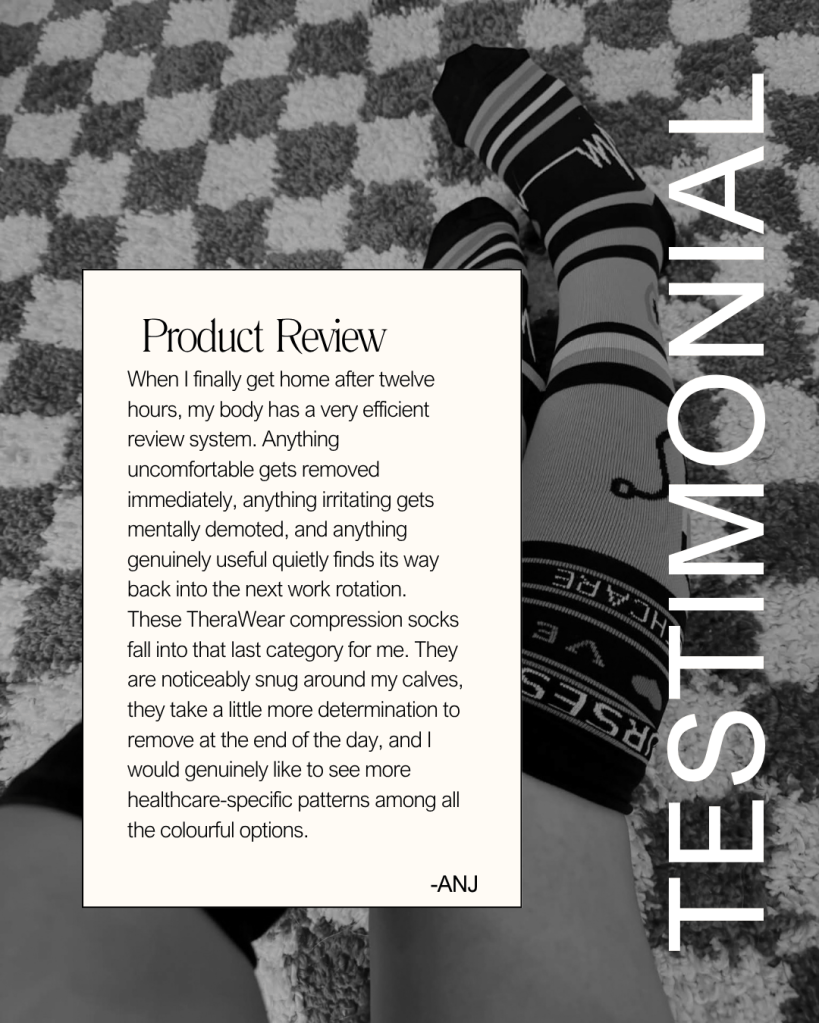
When I finally get home after twelve hours, my body has a very efficient review system. Anything uncomfortable gets removed immediately, anything irritating gets mentally demoted, and anything genuinely useful quietly finds its way back into the next work rotation. These TheraWear compression socks fall into that last category for me. They are noticeably snug around my calves, they take a little more determination to remove at the end of the day, and I would genuinely like to see more healthcare-specific patterns among all the colourful options. But I also like the secure fit, I like that they stay where I put them, I like how they feel during a long shift, and I absolutely love having tiny stethoscopes marching around beneath my uniform trousers. TheraWear gifted me the socks, but twelve hours on a hospital floor supplied the review. My legs may still complain when I finally sit down after a ridiculous number of steps, but so far they have not blamed the socks—and after everything I ask of them during a shift, I consider that a rather respectable endorsement.
Want to Try Them?
If you want to have a look at the designs, check the sizing guide, or choose a pair for yourself, you can browse TheraWear’s compression-sock collection here:
Visit TheraWear Compression Socks
And please—measure your calves first. Your future hour-twelve self may thank you.
































Leave a Reply