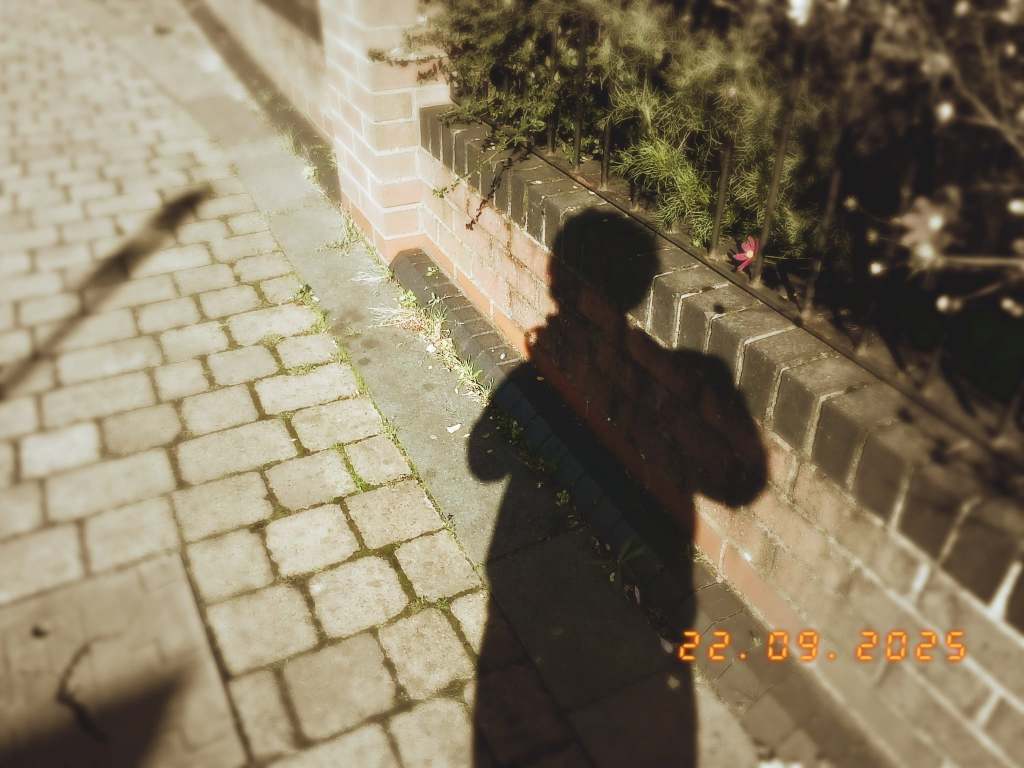
There is a particular humiliation in watching the little blue dot on Google Maps realise you are lost before you do. You are still walking with impressive confidence, shoulders squared, phone held casually enough to suggest complete geographical competence, while the map has already rotated itself three times and is quietly reconsidering every decision that brought you here. Then comes the instruction: Rerouting. I have always found that word slightly judgemental. It does not accuse. It does not ask why you ignored the turn it clearly told you to take. It simply accepts that you have wandered somewhere you were not meant to be and starts looking for another way back. I was thinking about that recently because life has felt strangely similar. Most of the time, I have known the general direction I wanted to go. Be kind. Stay grounded. Keep learning. Protect my peace. Do not allow hurt to turn into cruelty. Do not become so disappointed by life that I stop recognising what is still good in it. The directions were there. That was never really the problem. The problem was that knowing where you want to go and actually walking that way every day are two entirely different skills.
Years ago, somewhere inside a difficult season I can no longer date precisely, I made a promise to myself. There was no journal entry underlined three times, no dramatic sunset, no conveniently timed music and certainly no witness standing nearby to make the moment official. It probably formed slowly, after enough disappointments had shown me how easily pain can start editing a person without permission. The promise was simple:
I did not want the things that happened to me to decide entirely what kind of person I would become.
Life had already supplied enough reasons to test that promise. There were losses that changed the shape of family gatherings and made certain dates feel heavier than the other squares on the calendar. There were nights at work when my body had clearly reached the end of negotiations while responsibility continued issuing demands. There were plans moving so slowly I occasionally wondered whether they had mistaken waiting for permanent accommodation, dreams apparently taking the scenic route, disappointments I could not control, and seasons when other people seemed to be moving forward while I stood still wondering whether life had accidentally skipped my number.
Bitterness would have been understandable at times, which is precisely why bitterness can be so persuasive. It rarely arrives looking unreasonable. It brings receipts. It reminds you what somebody said, what you lost, how long you waited, how unfair something felt and every occasion when life failed to follow the itinerary you had thoughtfully prepared for it. It can make an excellent case for itself. I have replayed conversations long after the other person was probably sleeping peacefully. I have invented devastatingly brilliant replies approximately six hours after they would have been useful. I have argued with people inside my own head and, unsurprisingly, performed extremely well. I have allowed situations to occupy far more mental property than they were paying rent for. I am not above any of it.
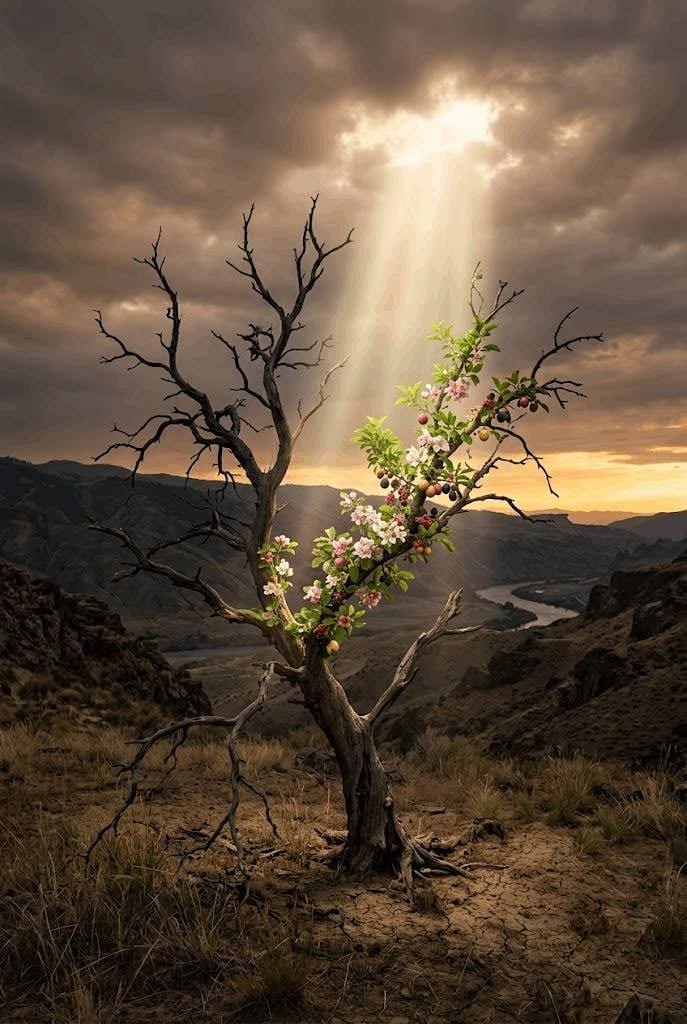
Somewhere along the way, though, I began to understand that admitting something hurt me and allowing the hurt to redesign me were not the same thing. Pain changes us. I do not think difficulty is supposed to leave us entirely untouched. Experiences alter boundaries, expose weaknesses, sharpen instincts and sometimes force us to stop offering access where we once gave it too freely. What frightened me more was the possibility of looking at myself years later and discovering that disappointment had taken things it was never entitled to keep.
That was when the promise became practical. It stopped being a grand statement about character and began appearing in very ordinary decisions. It appeared at work after too little sleep, when the person in front of me still deserved care even though my own energy was running embarrassingly low. It appeared when somebody else received good news while I was still waiting for mine and I had to decide whether their happiness was somehow evidence of my failure. It appeared when an apology never came and I learned that forgiveness and renewed access to my life were not the same transaction. It appeared when an argument could probably have been won, but winning would achieve little except extending the argument. It appeared on mornings when motivation had apparently called in sick and forgotten to arrange cover.
None of those decisions looks particularly impressive from the outside. Nobody gives certificates for deleting a message before sending it because tomorrow’s version of you would regret both the wording and the punctuation. There are no awards for walking away from a situation that repeatedly hurts you, for trying again after a failure nobody knew about, for continuing to study when your brain has stopped cooperating, or for remaining humble after something finally goes well. Yet when I look backwards now, I suspect those unphotographed decisions have formed far more of me than many of the milestones I normally mention when somebody asks about my life.
The obvious markers are easier to name. Education. Work. Moving countries. Professional milestones. Places travelled. Things published. Goals reached and others still sitting somewhere ahead, perhaps checking whether I have developed enough patience to deserve them. But underneath those visible events is another history made of days nobody photographed. Evenings when I kept studying although my mind was exhausted. Shifts when I turned up tired and still had to think clearly. Nights when I opened my laptop and wrote without knowing whether ten people or nobody would ever care about the words. Moments when I stayed silent because anger had already drafted something I knew I would later have to apologise for. Times when I eventually realised that peace was worth more than being formally recognised as correct.
Growth is irritatingly poor at announcing itself. Birthdays come with candles. Graduations have gowns. Promotions arrive by email. Nobody wakes you one morning to announce that congratulations are in order because you are now eighteen per cent wiser and significantly less likely to respond immediately when annoyed. Often the only evidence appears when an old problem returns and you notice that your reaction is different. You do not explain yourself twelve times. You do not stay as long. You do not take every comment personally. Something that once would have ruined an entire week now receives perhaps twenty minutes of irritation, a cup of coffee and substantially less internal litigation. Maybe that counts as progress even if nobody thought to photograph it.
I still want to grow, although I no longer imagine growth as a tidy line travelling obediently upwards. There are days when patience seems naturally available and others when I appear to have misplaced the entire supply. There are moments when I feel grateful for my own pace and others when I look sideways at somebody else’s life and briefly wonder whether mine has been placed in the slower queue. I still want to learn. I want to write. I want to travel whenever life and my bank account are both feeling cooperative. I want to remain curious enough to change my mind when something teaches me better.
I also want to keep some things from becoming unnecessarily complicated. Kindness is one of them. I used to think kindness meant giving endlessly, understanding endlessly and remaining available longer than was probably healthy. Age corrected that definition. Kindness without boundaries can become an extremely efficient method of disappearing from your own life. Generosity should not require self-erasure. Forgiveness does not automatically mean reopening the same door. Love does not require chasing somebody until they finally recognise your worth. If I could advise my younger self, I would never tell her to become less kind. I would simply teach her not to confuse kindness with permission.
Time has corrected a few of my assumptions too, particularly the idea that adulthood would unfold according to some sensible sequence. Study. Career. Love. Home. Success. Insert several dreams between those headings, attach invisible ages to everything and proceed confidently into the future. I never wrote the timetable down, but I carried one anyway. By this age, I should have achieved that. By another age, surely I should be here. There is something almost charming about the confidence with which we assign deadlines to a future we have never met.
Life has demonstrated very little respect for mine.
Some things arrived earlier than expected. Others took years longer. Some dreams changed so completely that I can barely recognise the woman who once wanted them. Other hopes remain stubbornly alive and apparently have no intention of vacating the premises. I used to interpret delay much more personally, as though taking longer meant everybody else had understood the assignment and I had somehow missed an important email. I believe that less now. A slower road is still a road. More importantly, the person waiting at the beginning may not be the same person who eventually arrives at the other end. We spend so much time asking when something will happen that we occasionally fail to notice what all the waiting is doing to us.
If I could sit across from a younger version of myself now, I doubt I would arrive carrying the enormous catalogue of instructions I once imagined giving her. She probably would not listen to half of them anyway. Younger people possess the extraordinary ability to receive excellent advice and then conduct independent research into exactly why it was excellent. I would not tell her who stays, who leaves, which plan fails or which prayer eventually receives an answer she would never have recognised in advance. Some things have to be lived before the wisdom attached to them becomes usable.
I think I would mostly tell her to continue. Keep studying even when she wonders whether any of it is leading where she hopes. Keep writing things nobody requested. Keep the notebooks. Take the photographs. Travel whenever circumstances allow. Believe in God even when the answer bears very little resemblance to the prayer. Be kind, but learn that saying no does not cancel kindness. Give when she can, but do not empty herself simply to prove she has a generous heart. Love people properly without chasing them into recognising her worth. Choose relationships that make life steadier rather than ones requiring a weekly forensic investigation. She would probably nod very seriously and then proceed to learn several of those lessons the difficult way anyway. I know this because the thirty-six-year-old version of her occasionally does exactly the same thing.
I would also tell her that she survives things she once thought would undo her. Not elegantly every time. Survival is disappointingly uncinematic from inside it. Sometimes it looks like getting up, going to work, eating something, replying to one message and trying again the next morning. Courage does not always feel heroic while you are using it. Sometimes it feels suspiciously similar to having no attractive option except continuing.
What I would want most, though, is for her to recognise me. Not necessarily be impressed by where I live, what I do for work, where I have travelled or what I have achieved. Those things matter, and thirty-six has certainly not transformed me into someone who has renounced ambition and now spends her afternoons serenely accepting everything the universe provides. I still make plans. I still become impatient. I still want to learn more, travel more, write more, build more and experience pieces of life that have not reached me yet. But I would want that younger version of myself to look across the table and recognise enough of herself to know I did not trade everything away while trying to survive.
I am unfinished, and I am much less frightened by that word than I used to be. There was a time when unfinished sounded dangerously close to behind. Now it sounds like evidence of being alive. There is still time to change my mind, improve, fail at something new, begin again, apologise, learn better and occasionally create fresh material for future introspection.
Age has also given me the mildly uncomfortable ability to recognise how many things I once prayed for have become so familiar that I occasionally complain about them. Human beings adjust quickly, even to blessings. The job once desperately wanted becomes Monday morning. The country once dreamed about becomes the place where you complain about grocery prices and weather. The opportunity that once looked enormous becomes something you squeeze between errands and laundry. Familiarity is very good at removing the ribbon from gifts.
I do not want gratitude to depend on completion. If I wait until every plan succeeds before allowing myself to appreciate my life, I may spend most of it leaning towards the next thing. There are already pieces of my present that an earlier version of me would have considered answered prayers. That does not mean I should stop wanting more. Gratitude and ambition are perfectly capable of sharing the same table. I can appreciate where I am without pretending I no longer want to go anywhere else.
And that brings me back to the promise. I never promised myself that difficult things would stop hurting. I did not promise to remain positive every minute because that sounds exhausting and frankly a little suspicious. I still complain. I become angry. I lose confidence. I get disappointed. Sometimes I am profoundly unimpressed with circumstances. The promise was much more modest and probably much harder: do not let what hurts take more than it has already taken.
Loss has already taken people I loved. It does not also get to take my ability to love those who remain. Disappointment can take a plan, but I do not want it taking my capacity to celebrate someone else. Exhaustion may take my energy for a day without permanently taking my compassion. Failure can take one attempt; it does not automatically own the next one. If success comes, I do not want it taking the humility built during the years when success appeared to have misplaced my address. And whatever happens, I do not want hardship to make me permanently suspicious of goodness simply because I have encountered its opposite.
That does not mean I succeed every time. Some days the better version of me arrives late. Sometimes I recognise the lesson several hours after I needed it. Sometimes I wander very far from the things I claim matter to me and have to admit that knowing a value and living it are different skills. Perhaps promises to ourselves work less like contracts and more like directions. Their purpose is not to prove we never wandered. Their purpose is to remind us which way we wanted to return.
There are smaller directions inside that larger one. Keep learning even when nobody is impressed. Keep writing when the words insist on coming, whether they are read by ten people or none. Travel whenever reasonably possible and collect experiences that make familiar life look different when you come home. Love people without reducing yourself to keep them. Remain generous without becoming careless about where generosity is placed. Notice ordinary parts of life before memory has to explain their price. Stay capable of being surprised by goodness instead of treating cynicism as evidence of intelligence.
I may not have everything I imagined I would have by now. Surprisingly, that frightens me much less than it once did. Some of those old wishes belonged to versions of me who no longer exist anyway. The question that interests me more is not whether life eventually hands me every item from an old list, but what all the waiting, receiving, losing, failing, learning, loving and beginning again is doing to the person living through it.
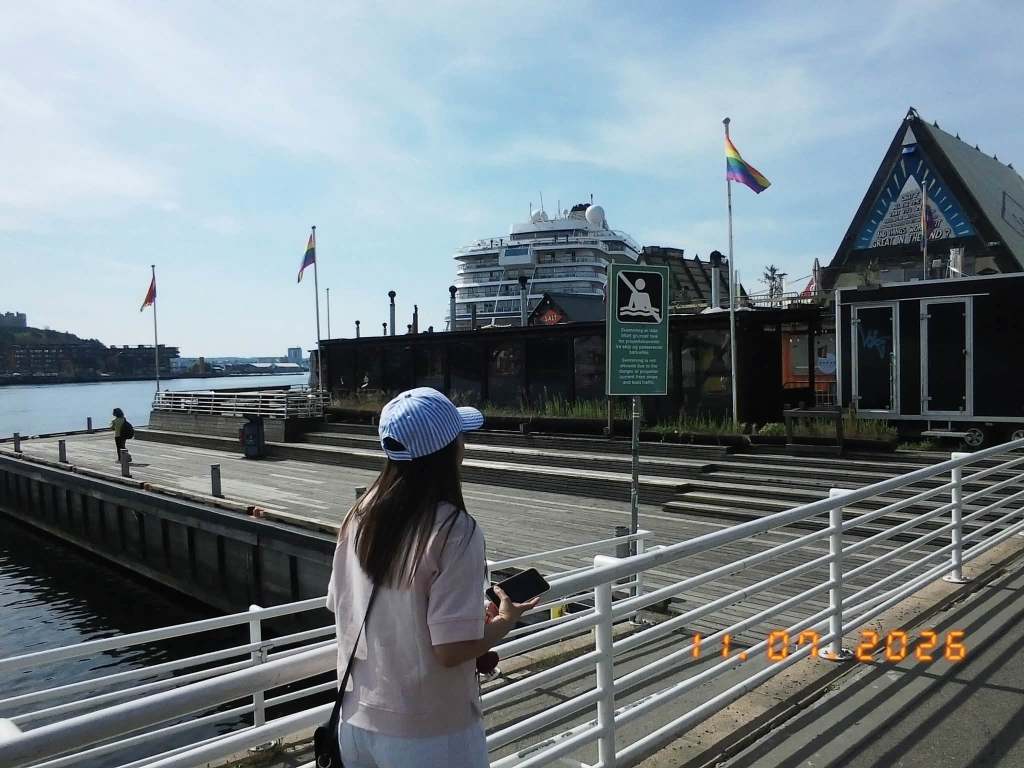
Who am I becoming while I wait?
I do not have a final answer, and perhaps I should be suspicious if I ever believe I do. Circumstances will change again. Plans will move. People will surprise me beautifully and disappoint me in ways I did not predict. Dreams I currently protect may become irrelevant, while something I cannot yet imagine may eventually rearrange the whole picture. I cannot control all of that. What I can choose, repeatedly and imperfectly, is how much authority I give those things over the person I become.
At the end of an achievement, I still have to live with myself. After disappointment, I still have to come home to myself. When applause disappears, when someone misunderstands me, when one plan succeeds and another collapses, the same person remains in the room. I would like to recognise her. I would like the younger version of me to recognise her too—not because she became everything that girl imagined, but because after everything she encountered along the way, she kept enough of the things that mattered.
And perhaps this is where I misunderstood growth for years. I thought becoming meant arriving. I imagined there would eventually be some final destination where I would be sufficiently wise, sufficiently healed, sufficiently certain and therefore permanently capable of choosing the correct road. There would be no more wrong turns, no revisiting old lessons, no moments when the better response arrived three hours after the conversation had ended.
Apparently, there is no such arrivals hall. There is only the road, the occasional wrong turn and that irritatingly calm voice asking whether I would like to reroute. So the promise remains. I keep it imperfectly. I still wander. I still become distracted by roads that lead nowhere useful. I occasionally walk quite confidently in the wrong direction before noticing that the little blue dot has already turned around. But the directions are still there.
Maybe becoming was never about arriving at some flawless version of myself.Maybe it has always been about recognising when I have wandered too far, stopping long enough to look at the map again, and remembering which way I wanted to return.
I had the directions. That wasn’t the problem. The work was learning to follow them again.
Still rerouting when I need to,
Anj 🧭















Leave a Reply