August 8, 2013 | Of Early Morning Courage, Unexpected ICU Assignments, and the Heartbeat of a Nurse’s Ordinary Day
At five o’clock in the morning, I believe the human body should be granted the constitutional right to remain in bed. Unfortunately, hospitals operate under an entirely different constitution, one in which alarm clocks possess extraordinary authority and coffee is practically considered a member of the healthcare team. By 5:10 AM, I was finishing my breakfast and swallowing the last sip of coffee, which had been entrusted with the difficult responsibility of convincing my brain that the day had already begun. I glanced at the wall clock, calculated the minutes remaining, and prepared myself for another eight hours of nursing duty. Somewhere between the empty cup and the approaching morning, I wondered what sort of adventure the hospital had prepared for me. In nursing, one learns rather quickly that the answer to that question is seldom available in advance.
I arrived fifteen minutes before our devotional prayer began, giving myself a little time to settle into the morning. I have always appreciated the practice of beginning hospital duty with prayer. There is something meaningful about gathering our thoughts before entering an environment where people are experiencing illness, uncertainty, and circumstances beyond their control. As nurses, we prepare ourselves by checking our assignments, understanding our responsibilities, and ensuring that we are ready to provide safe care. But I also find comfort in spending a few quiet moments asking God for wisdom, patience, and the ability to approach the coming hours with compassion. Perhaps prayer cannot tell me what the shift will bring, but it reminds me how I want to respond when the unexpected happens.
After our devotion, I began preparing myself for duty. I took a moment to compose my thoughts, gathered my confidence, and quietly whispered, “I can do this.” It was hardly a grand declaration, and I doubt anybody nearby would have considered it particularly remarkable. But I have discovered that a few encouraging words can sometimes make an unfamiliar responsibility appear slightly less intimidating. I am still relatively new to this stage of my nursing career, and although I have finally returned to clinical practice after a long interval, there are moments when I need to remind myself that confidence is something I must develop through preparation and experience. The white uniform may identify me as a Registered Nurse, but it does not automatically provide answers to every question I will encounter.
Naturally, the first thing I wanted to know was where I had been assigned. I reached for the assignment notebook and began looking through the names of the nurses and patients, expecting to see the details of my anticipated medical ward duty. I had already prepared myself mentally for that environment, imagining the routines and responsibilities I might encounter throughout the shift. I suppose there is a certain comfort in believing we know what to expect, especially when the day has barely begun and the coffee has not yet completed its mission. But hospitals have a charming habit of introducing surprises at precisely the moment we begin feeling organised.
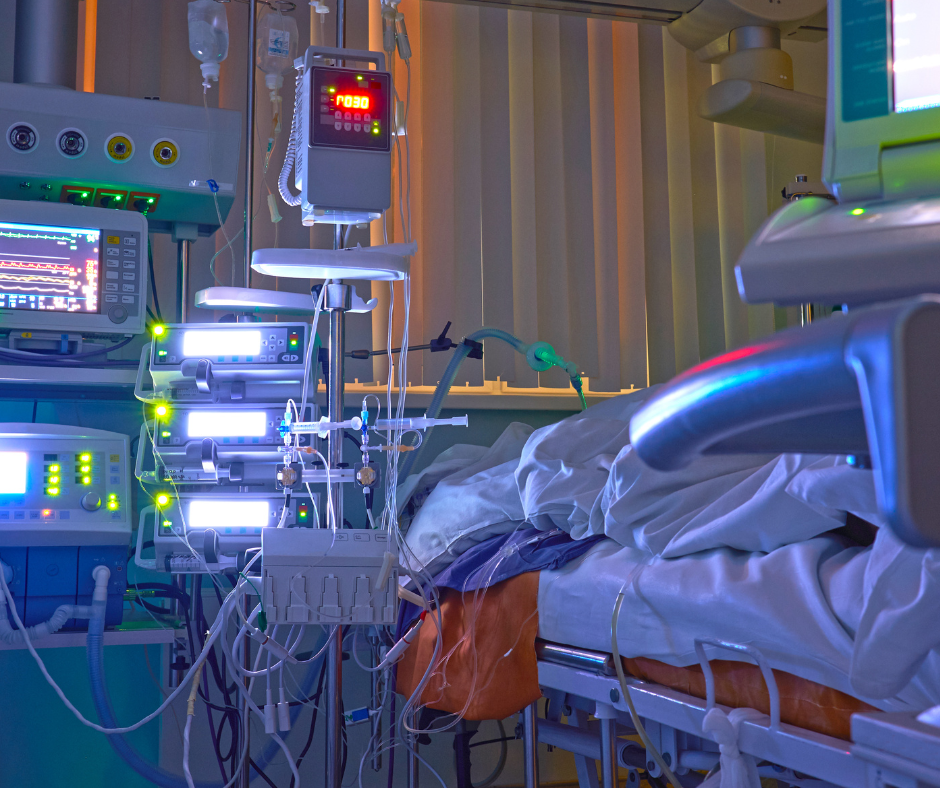
And there it was. Instead of the medical ward, I had been assigned to the Intensive Care Unit.
Of all the possible changes to my morning, this was certainly one that captured my attention. ICU! The very department that had fascinated me during our hospital orientation and one of the clinical specialties I had been imagining for my future. I remember admiring the work of critical care nurses and wondering whether I might eventually become competent enough to practise confidently in such a demanding environment. Now I was being given another opportunity to learn within that very department. What had begun as an ordinary morning suddenly became considerably more interesting, and I found myself grateful that I had taken the time to offer that small encouragement to myself before opening the assignment notebook.
The Intensive Care Unit is an environment where seriously ill patients receive a higher level of monitoring and specialised care than is ordinarily provided on general wards. Patients may require close observation, complex treatments, or support for important bodily functions, and the nurses working there must be attentive to changes that can occur rapidly. During nursing school, I studied the principles of critical care and encountered intensive care through clinical exposure, but I am beginning to understand how different it feels to consider these responsibilities as a practising nurse. Medical textbooks can explain the importance of monitoring, assessment, and clinical judgement, yet the realities of providing care become much clearer when those principles must be applied to an actual patient.
One feature of our ICU arrangement that particularly interested me was the one-to-one nurse-to-patient assignment. At first glance, someone unfamiliar with critical care might consider caring for one patient easier than looking after several patients on a general ward. I must admit that when the arrangement is described so simply, it almost sounds generous. One patient for one nurse! Surely that should make the workload considerably more manageable. Unfortunately, the arithmetic tells only a small part of the story. A patient requiring intensive care may need extensive observation, repeated assessment, complex treatment, and a level of clinical attention that makes a single assignment demanding throughout the shift. The number of patients does not necessarily reflect the complexity of their needs.
During my duty, I became more aware of the responsibility involved in comprehensive patient care. Our assigned monitoring included frequent observations, with vital signs and Glasgow Coma Scale assessments scheduled at fifteen-minute intervals according to the patient’s care requirements. Urine output also required hourly measurement, while prescribed medications and other aspects of treatment had to be managed according to the established plan. Each activity served a clinical purpose, and I was learning the importance of understanding why particular observations were necessary rather than regarding them merely as tasks to complete. In critical care, a measurement is valuable not simply because it has been recorded but because it contributes to recognising the patient’s condition and identifying changes that may require further attention.
The Glasgow Coma Scale was one of those familiar subjects that suddenly felt much more significant outside the classroom. I remembered studying its components and answering questions about assessing a patient’s level of consciousness. During examinations, it had been possible to concentrate on remembering the correct scores and interpretations. In the ICU, however, I could appreciate why a structured neurological assessment needed to be performed accurately and interpreted in context. The numbers represented findings about an actual person’s neurological condition, and changes could be clinically important. It reminded me that nursing education provides the foundation, but meaningful clinical understanding develops as we learn to connect that knowledge with the person receiving care.
I found the same lesson in the monitoring of vital signs and fluid balance. Blood pressure, pulse, respiration, oxygen saturation, and urine output are subjects every nursing student becomes familiar with, often long before graduation. We learn the techniques, memorise normal ranges, and practise recording observations until the procedures become routine. Yet caring for a critically ill patient reveals how much thought may be required to interpret the information. Trends, clinical context, and the patient’s overall condition matter, and nurses need to know when findings require prompt communication or escalation. I was beginning to appreciate that accurate assessment involves more than collecting numbers; it requires understanding what those numbers may indicate and recognising the limits of our own knowledge.
Of course, the responsibility could feel intimidating. I am still learning, and I would be pretending to possess far more experience than I actually have if I claimed that every aspect of intensive care already felt familiar. There were details I needed to review and questions I was grateful to discuss with more experienced colleagues. But I have begun to see uncertainty differently since returning to hospital duty. During my earlier rotations, I sometimes worried that asking a question might reveal how much I did not know. Now I am increasingly convinced that asking for clarification is part of becoming a responsible professional. Patients deserve care based on sound knowledge and appropriate guidance, not the confidence of somebody who is too embarrassed to admit uncertainty.
There is an enormous amount to learn from nurses who have spent years working in specialist departments. Their experience becomes evident in the way they organise responsibilities, recognise clinical changes, communicate concerns, and approach situations that may appear overwhelming to somebody less familiar with the environment. I do not imagine that expertise develops overnight, nor do I think it is something a person acquires simply by memorising enough textbook pages. It is built through education, supervised experience, reflection, and the willingness to keep learning long after formal examinations have ended. Watching how experienced colleagues approach their work reminds me that the nurse I hope to become will require years of effort from the nurse I am today.
I also discovered how important organisation can be during an eight-hour shift. When observations and responsibilities must be completed at frequent intervals, time seems to move according to a different rhythm. There may be moments when the clock appears to advance unusually quickly, especially when several activities require attention close together. A carefully planned routine can help, but clinical needs and changes in the patient’s condition must always take priority. There is very little room for assuming that everything will unfold exactly as anticipated, and I am learning to remain attentive rather than becoming too comfortable with a particular sequence of tasks.
What struck me most was the contrast between the apparent stillness of an ICU patient and the amount of clinical work taking place around them. A person lying quietly in bed may require extensive monitoring, treatment, and assistance. The absence of visible movement does not mean that the nursing workload is light or that the clinical situation is uncomplicated. In fact, it can demand considerable vigilance. I began to understand why intensive care nurses are expected to possess detailed knowledge of their patients and remain alert to changes that might otherwise be overlooked. Their work requires precision, patience, and the ability to combine practical skills with thoughtful assessment.
Yet amid all the observations and responsibilities, I found myself returning to something I had been reflecting on since my first days of duty: the importance of remembering the individual behind the clinical information. It can be easy to become absorbed in charts, measurements, treatments, and the many tasks necessary for safe patient care. These responsibilities are essential, and I would never suggest otherwise. But a critically ill patient is still a person whose dignity, comfort, and individual needs matter. The clinical complexity of intensive care should strengthen our responsibility to provide compassionate care rather than make us forget the human being at the centre of it.
I think this is one of the reasons I continue finding nursing meaningful despite its demands. It offers opportunities to apply scientific knowledge while remaining closely connected to human experiences. We study anatomy, physiology, pharmacology, and disease processes because these subjects help us understand the conditions affecting our patients. But our work also requires communication, consideration, and respect for people whose lives may be very different from our own. A nurse must learn how to combine technical competence with the ability to recognise that illness affects more than the body alone.
By the time my eight-hour shift came to an end, I felt tired but satisfied. It had been a demanding day of learning, and I was pleased to have gained more knowledge about intensive care and my patient’s condition. I cannot claim to have understood everything after a single shift, and I certainly do not expect to become an ICU expert simply because I have spent another day within the department. But I could recognise that I had made progress. Certain concepts felt clearer, the responsibilities were becoming more familiar, and I had another opportunity to connect what I learned during nursing school with the realities of professional practice.
There is something particularly satisfying about finishing a duty and knowing that the experience has contributed to your understanding. The exhaustion feels different when accompanied by the recognition that you have learned something useful. I may return home needing food, rest, and perhaps another serious discussion with my alarm clock, but I also carry the quiet satisfaction of having completed another day in the profession I worked so hard to enter. Not every shift will feel rewarding in exactly the same way, and I know that the realities of nursing can sometimes be difficult. Still, today has reminded me why I remain interested in pursuing critical care.
I began this morning expecting to work in the medical ward, with my mind already preparing for the routines I thought I would encounter. Instead, an entry in the assignment notebook redirected me towards the ICU and provided an experience I had not anticipated. It is amusing how much energy we sometimes devote to preparing for a particular version of the day, only to discover that life has arranged something different. I suppose the important question is not whether every plan unfolds exactly as expected, but whether we are willing to respond thoughtfully when circumstances change.
That seems particularly relevant to nursing. We can begin a shift with an organised plan, familiar responsibilities, and a reasonable understanding of what the day may require. Yet patients’ conditions can change, new responsibilities can emerge, and situations may develop that require us to reconsider our priorities. Preparation remains important, but so does adaptability. A nurse needs to remain attentive to what is actually happening rather than becoming so attached to expectations that an unexpected development leaves her unable to respond effectively.
I have always enjoyed planning my future, particularly when imagining the kind of nurse I hope to become. During our hospital orientation, I was fascinated by both intensive care and haemodialysis nursing, and I began wondering which specialty might eventually suit me best. Perhaps I will pursue one of them, or perhaps further experience will introduce another field that interests me just as much. I do not have enough experience yet to make every professional decision with confidence, but I am discovering that opportunities to learn can help me understand my interests more clearly than imagination alone.
Today was one of those opportunities.
If I had allowed the unexpected assignment to overwhelm me, I might have spent the entire morning worrying about what I did not know. Instead, I tried to approach the experience with curiosity, a willingness to ask questions, and the determination to carry out my responsibilities carefully. That does not mean I suddenly became fearless. I still experienced uncertainty, and I still recognise the importance of appropriate guidance. But I am beginning to appreciate that professional growth often involves entering unfamiliar situations while remaining honest about what we need to learn.
Perhaps that is what I want to remember about August 8, 2013. Not simply that I was assigned to the ICU instead of the medical ward, or that I spent eight hours learning about critical care responsibilities. I want to remember the feeling of opening the assignment notebook and discovering that my carefully imagined day had been rearranged. I want to remember the nervous excitement of entering a department I have long admired and the satisfaction of leaving with a little more understanding than I possessed that morning.
I also want to remember the small moment before everything began, when I whispered to myself that I could do it. Those words did not guarantee that the shift would be easy or that I would immediately understand every responsibility. They were simply a reminder to approach the coming hours with courage and a willingness to learn. Sometimes that is all the encouragement we can reasonably give ourselves before facing an unfamiliar experience.
Now, with the duty completed, I find myself thinking about the wall clock I glanced at during breakfast. At 5:10 AM, its hands seemed to be warning me that another working day was approaching, and I was still trying to persuade myself to become fully awake. Eight hours later, I had learned something new, gained another glimpse into the responsibilities of intensive care, and discovered that an unexpected assignment could become the most memorable part of my day.
The clock had continued moving whether I felt prepared or not. The hospital had continued its work, and I had simply done my best to keep up with the responsibilities placed before me. I suppose that is part of what makes nursing so interesting. We may never know exactly what the next shift will bring, but we can continue preparing ourselves to meet it with knowledge, adaptability, and compassion.
And perhaps that is what keeping the beat really means. It is learning to recognise the rhythm of the work without expecting every day to follow the same pattern. It is understanding when to observe, when to act, when to ask questions, and when to acknowledge that we still have much to learn. In the ICU, that rhythm carries particular importance, because every observation and every responsibility contributes to caring for someone whose condition may be serious and uncertain.
I started the morning listening to the ticking of a clock while finishing my coffee. I ended it thinking about the importance of monitoring a patient’s condition, recognising changes, and remaining attentive throughout the shift. Somewhere between those two moments, an ordinary duty became another meaningful lesson in my nursing journey.
Tomorrow may bring a different assignment, unfamiliar responsibilities, or another surprise waiting inside the notebook. I cannot predict any of those things, and perhaps I should stop pretending that I can. What I can do is prepare, continue studying, listen to experienced colleagues, and remain willing to learn from whatever circumstances the next duty presents.
For now, I am grateful for today’s experience, grateful for the guidance I received, and grateful to God for another opportunity to develop in the profession I love. My eight-hour shift is finished, my knowledge of intensive care has grown a little, and I am returning home with the pleasant exhaustion of someone who has discovered that an unexpected day can still become a worthwhile one.
As for tomorrow’s assignment, I have decided not to negotiate with the schedule in advance. I shall simply open the notebook and see what happens.
After all, in nursing, you never really know what will come through the door next.
And preferably, the next surprise will arrive after I have finished my coffee.
From my nursing memoirs, August 8, 2013 — an unexpected morning in intensive care, another lesson in clinical responsibility, and a reminder that becoming a good nurse begins with remaining willing to learn.
— Just Anj, RN, still keeping the beat.


































Leave a Reply