Carnival Night | Of Ferris Wheels, Flickering Lights, and the Peculiar Pleasure of Being Young Enough to Enjoy the Ridiculous
I have always found it suspicious that people willingly pay money to be frightened by machines. We spend most of our ordinary lives trying to avoid unnecessary danger, discomfort, and situations in which we have absolutely no control over what happens next. Yet place a brightly illuminated ride in the middle of a carnival, surround it with music and excited strangers, and suddenly otherwise reasonable adults become enthusiastic about being spun, lifted, and shaken in ways that would normally justify a complaint to the appropriate authorities. I suppose the difference is that carnival rides come with colourful lights and the promise of entertainment, whereas life’s unexpected complications rarely provide either. Personally, I find the arrangement fascinating, although I remain convinced that whoever first decided to turn dizziness into a recreational activity possessed a particularly adventurous imagination.
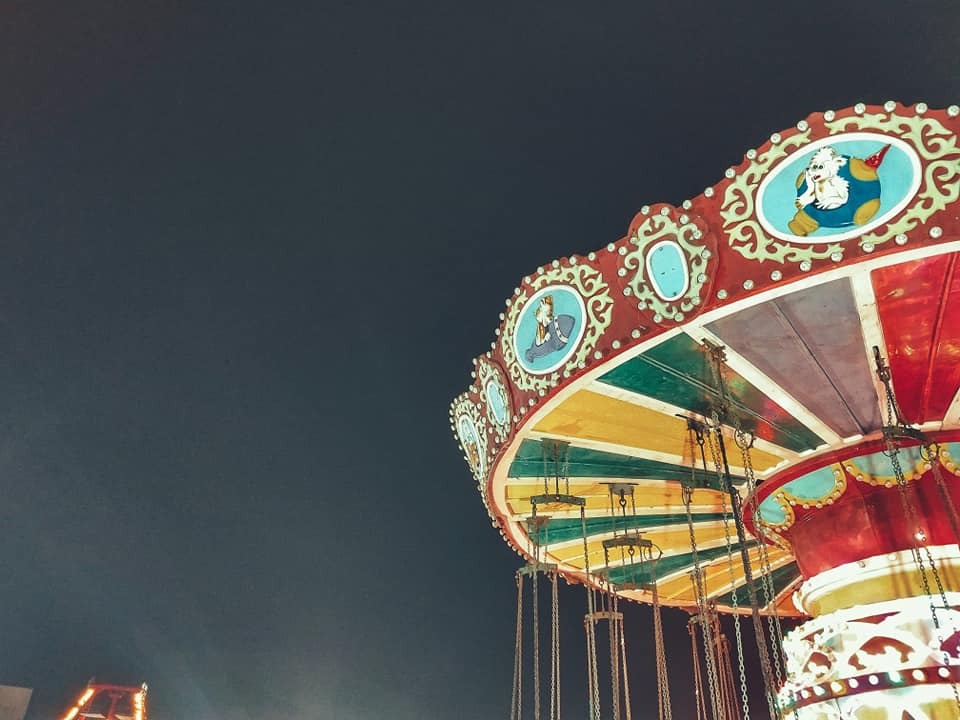
There is something wonderful about a carnival after sunset. During daylight, the rides and stalls may appear like ordinary temporary structures, waiting for the evening to give them a little personality. But as darkness settles and the lights begin to glow, the entire place undergoes a transformation. Colours flicker against the night, music drifts across the grounds, and the familiar sounds of people laughing, talking, and calling out to one another create an atmosphere that feels almost separate from the ordinary world outside. Even the Ferris wheel seems to acquire a certain grandeur, turning slowly above everything else like an enormous illuminated clock that has decided counting minutes is a terribly uninteresting occupation.
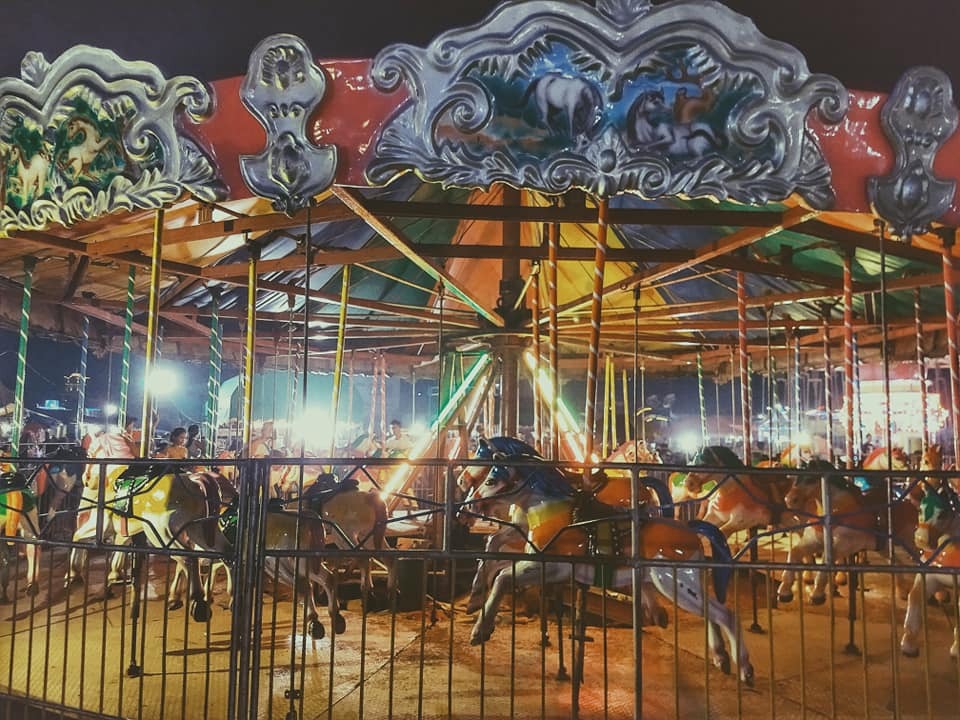
I have always enjoyed places that can make adults temporarily forget their determination to behave like adults. A carnival seems particularly talented at accomplishing this. People who spend their weekdays dealing with responsibilities and complicated schedules suddenly become interested in games, colourful attractions, and the possibility of winning an oversized stuffed toy that they have absolutely nowhere sensible to put at home. There is an unmistakable energy in the air, fuelled by excitement and the delightful understanding that nobody needs a particularly serious reason to be there. We come because the lights are beautiful, the atmosphere is entertaining, and sometimes an ordinary evening deserves something more interesting than returning home to complete another collection of chores.
Perhaps that was what I enjoyed most about our carnival night. I had been spending so much time concentrating on responsibilities and future plans that a little uncomplicated enjoyment felt particularly welcome. Lately, my thoughts have been occupied with applications, professional ambitions, and the uncertainty of what might happen next. There are days when I find myself mentally travelling several months into the future, imagining possibilities and attempting to prepare for circumstances that have not yet occurred. It is a habit I am trying to manage, particularly because worrying about tomorrow has never demonstrated any remarkable ability to make tomorrow behave more sensibly. An evening surrounded by colourful lights offered a pleasant interruption to that routine.
What struck me first was the atmosphere. Carnivals possess their own peculiar soundtrack, composed of music from different directions, the mechanical sounds of moving rides, and the unpredictable reactions of people enjoying themselves. Somewhere, somebody is laughing with complete abandon, while another person is probably reconsidering an earlier decision to board a ride that looked considerably less intimidating from the ground. Children move through the surroundings with an enthusiasm that makes adults appear unnecessarily cautious, and groups of friends gather near attractions to discuss which activity deserves their attention next. It is cheerful, slightly chaotic, and wonderfully indifferent to the ordinary seriousness we carry through much of our lives.
The Ferris wheel has always been one of my favourite things to observe at a carnival. There is something almost poetic about its circular movement, especially at night when its lights create patterns against the dark sky. It rises above the surrounding attractions, offering a different perspective of the grounds, before eventually returning each passenger towards the place where the journey began. Unlike the rides that seem designed to rearrange a person’s internal organs, the Ferris wheel possesses a more dignified sort of entertainment. It allows people to appreciate the view without requiring them to demonstrate extraordinary enthusiasm for being turned upside down. I find that quality admirable, particularly because my understanding of recreation does not necessarily include testing whether my stomach has developed an independent sense of direction.
Even from the ground, I enjoy watching the changing lights. They remind me of the carnivals and town celebrations that formed part of the excitement of growing up in the Philippines. There is something distinctly familiar about a perya, with its colourful rides, games, and atmosphere of cheerful disorder. During childhood, such places seemed enormous, almost magical in their ability to transform an ordinary space into somewhere filled with excitement. We noticed the lights, the music, and the possibility of trying something new, rarely considering the practical arrangements involved in bringing the entire attraction together. Everything seemed to exist for our entertainment, and perhaps that was one of the small privileges of being young.
Growing older changes the way we experience these things. We become more aware of expenses, responsibilities, and the practical considerations that childhood allowed us to ignore. A carnival no longer feels quite as enormous as it did when we were little, and the games that once appeared irresistible may now inspire a more cautious examination of their difficulty. We begin recognising that winning a prize may require considerably more luck than our enthusiasm initially suggests. Still, the atmosphere retains something familiar. The sight of a brightly illuminated ride can bring back memories of earlier celebrations, when an evening outside felt like an adventure and returning home with a little souvenir was enough to make the occasion memorable.
I think that is one of the reasons I enjoy photographing carnival lights. There is something wonderfully dramatic about the contrast between the darkness and the brilliant colours of the attractions. Ordinary objects become more interesting beneath artificial lights, and the movement of the rides creates shapes that seem almost impossible to capture perfectly. A photograph preserves only one moment of an environment that is constantly changing, but perhaps that is part of its charm. The lights continue flashing, people keep moving, and the atmosphere refuses to remain perfectly still simply because somebody has decided to take a picture.
Of course, taking photographs at night presents its own collection of difficulties. A scene can appear magnificent to the human eye and considerably less cooperative through the camera. Lights become blurred, moving objects refuse to remain in focus, and the photograph that looked promising a moment earlier may resemble evidence of a small electrical disturbance. I have learned that enthusiasm for photography does not automatically provide the technical skills necessary to capture every beautiful scene exactly as I imagine it. Nevertheless, I continue trying, partly because I enjoy the process and partly because photographs allow me to preserve the atmosphere of an evening that might otherwise become difficult to remember in detail.
There is also something rather entertaining about the photographs we take during ordinary outings. We may spend several minutes attempting to arrange the perfect composition, only to discover later that the pictures we enjoy most are those captured without much preparation. A candid expression, an unexpected movement, or a colourful background can preserve more of an occasion’s personality than a carefully organised portrait. I have become increasingly fond of these imperfect images, particularly when they remind me of how much fun we were having rather than how successfully we managed to pose for the camera.
As I wandered through the carnival atmosphere, I found myself appreciating how little was required to make the evening enjoyable. I did not need an elaborate itinerary, a long journey, or a destination famous enough to appear in every travel recommendation. There were lights, rides, music, and the pleasant excitement of being somewhere different from my ordinary surroundings. Sometimes that is enough. I think we can become so interested in extraordinary experiences that we begin overlooking the smaller opportunities for enjoyment already available to us.
This has been on my mind lately because I am approaching a stage of life filled with uncertainty. Having left my previous nursing position to concentrate upon opportunities abroad, I have been spending a considerable amount of time thinking about professional requirements, applications, and plans that remain unfinished. I know those responsibilities deserve attention, and I intend to approach them seriously. But I am also beginning to recognise that pursuing a future ambition should not require me to suspend every enjoyable part of the present. There will always be another document to prepare, another decision to consider, or another unanswered question occupying my thoughts. If I insist upon resolving everything before allowing myself a pleasant evening, I may find that the opportunity for relaxation remains permanently postponed.
Perhaps that is the peculiar gift of a carnival. It asks very little of the people who enter beyond a willingness to enjoy the atmosphere. Nobody needs to explain their professional achievements before admiring the lights, and the Ferris wheel does not appear particularly interested in whether its passengers have completed their long-term goals. The attractions continue operating, the music plays, and people enjoy the moment according to their own preferences. It is a refreshing contrast to the expectations we encounter in other parts of life, where almost every activity seems to require a purpose, an outcome, or some measurable demonstration of productivity.
I have always been ambitious, and I do not want to lose that part of myself. There are professional opportunities I hope to pursue, places I want to visit, and experiences I would love to have in the years ahead. But I am beginning to understand that ambition and enjoyment need not become opponents. I can work towards something meaningful while making time for ordinary pleasures. I can be concerned about the future without requiring every present moment to participate in the worrying. And I can spend an evening appreciating carnival lights without needing to justify the activity through a complicated explanation of personal development.
There is something wonderfully reassuring about recognising that happiness does not always require an impressive occasion. Sometimes it appears through laughter, a familiar song, an unexpectedly beautiful view, or the simple pleasure of wandering somewhere colourful after a long week. These experiences may not change the direction of our lives, but they can become the little details that make a particular period worth remembering. I suspect that years from now, I will not recall every ordinary day spent thinking about my applications, but I may remember the evenings when I allowed myself to step away from those concerns and enjoy something different.
I have also been thinking about the way memories become more valuable as time passes. We take photographs with the intention of remembering a place or occasion, but often discover later that the people and circumstances surrounding the picture matter just as much as the subject itself. A photograph of a carnival may show an illuminated ride, but when we look at it years afterwards, we may remember where we were living, what we were hoping for, and the familiar company that made the evening enjoyable. The picture becomes connected to a particular version of ourselves, one that may eventually feel quite different from the person examining it.
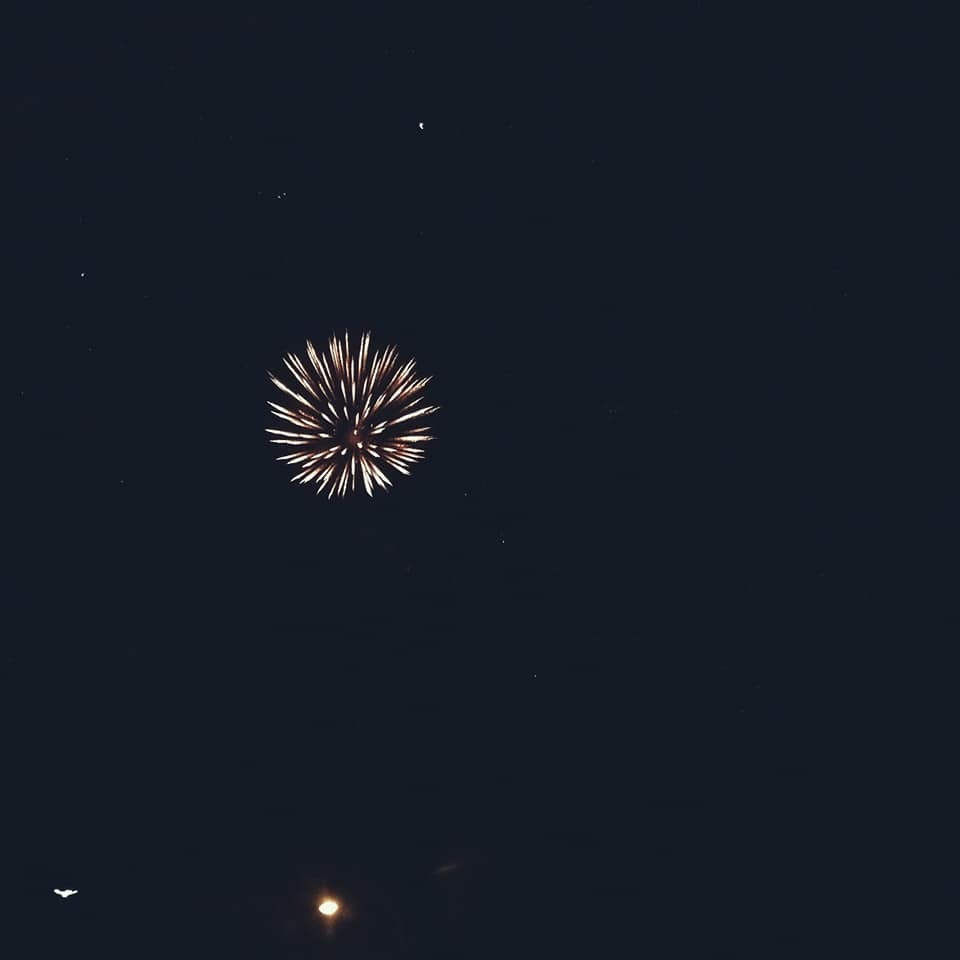
Perhaps that is why I want to keep recording these little adventures. I have spent several years writing about significant occasions, professional experiences, travel destinations, and family celebrations. Those memories deserve preservation, but I am beginning to appreciate the value of smaller moments too. An ordinary carnival night may not appear particularly important when compared with a major achievement or life-changing decision. Yet it belongs to the collection of experiences that make up everyday life, and I would rather remember those details than allow entire months to disappear into a vague recollection of being busy.
There is a temptation to postpone happiness until circumstances become more favourable. We tell ourselves that we will travel when work becomes less demanding, celebrate when our plans succeed, or finally enjoy life once we reach a particular milestone. I understand that some ambitions require financial preparation and practical priorities, and not every desire can be fulfilled immediately. But I have also noticed how easily the habit of postponement becomes automatic. Even when a simple opportunity appears, we may dismiss it because something more important seems to be waiting somewhere ahead.
I do not want to become the sort of person who treats every enjoyable experience as an interruption to a more serious life. There will always be responsibilities, particularly as I grow older and my circumstances change. But I hope I retain enough curiosity to appreciate ordinary adventures, whether they involve travelling to another city, visiting a beautiful garden, or spending an evening surrounded by carnival lights. I want my memories to contain more than the things I accomplished and the difficulties I managed. I want them to include occasions when I laughed, explored, and allowed myself to enjoy being alive without expecting the moment to provide anything further.
The carnival also reminded me of how differently people experience excitement. Some visitors are attracted to the fastest rides, apparently convinced that recreation should involve a temporary suspension of their relationship with gravity. Others prefer games, food, photographs, or the opportunity to observe the atmosphere without participating in every activity. I appreciate that variety because it means there is no single correct way to enjoy an outing. A person can love carnivals without needing to board every ride, just as someone can admire the sea without becoming an accomplished swimmer. I have learned through my travels that appreciation and participation do not always need to involve the same level of enthusiasm.
Personally, I find the spectacle of the rides entertaining enough on its own. The Ferris wheel moves with a calm determination that I admire, while other attractions appear designed by people who consider ordinary movement insufficiently interesting. I sometimes wonder how the human imagination developed such complicated methods of entertainment. We have invented machines capable of lifting people into the air, turning them in circles, and returning them to the ground, all while charging admission for the experience. It is a remarkable business arrangement, particularly because the customers often emerge laughing and immediately begin discussing whether they should do it again.
Perhaps it is the temporary surrender of control that makes certain rides appealing. During ordinary life, we attempt to plan our schedules, manage responsibilities, and anticipate circumstances as carefully as possible. A carnival ride offers a brief experience in which the movement follows a predetermined mechanical pattern, allowing passengers to enjoy excitement within the attraction’s safety arrangements. I can understand the appeal, although I personally prefer experiences that do not require me to question whether my stomach intends to remain in its original position. There are many ways to experience adventure, and I am perfectly comfortable allowing more enthusiastic people to demonstrate the appeal of the faster options.
As the evening continued, I found myself appreciating the carnival’s temporary nature. These attractions do not ordinarily remain in one place forever. They arrive, illuminate the surroundings for a period, entertain visitors, and eventually disappear, leaving the space to return to its usual appearance. There is something fascinating about that transformation. A place that seems extraordinary beneath carnival lights may look entirely ordinary once the rides have been dismantled and the music has stopped. The experience becomes memorable partly because it belongs to a limited period, encouraging people to enjoy the occasion while it is available.
I think many of our favourite memories share that quality. Family gatherings eventually conclude, holidays end, and even the most enjoyable evenings become stories we tell afterwards. We cannot preserve the exact atmosphere of a moment indefinitely, regardless of how many photographs we take. But perhaps we do not need to. The experience can remain meaningful without continuing forever, and the memory can become something we appreciate precisely because it belongs to a particular time.
I imagine my future self discovering these carnival photographs among a collection of older pictures. Perhaps by then I will be working somewhere different, surrounded by unfamiliar routines and responsibilities. I may have accomplished some of the ambitions currently occupying my thoughts, or perhaps my life will have developed in directions I cannot yet predict. Either way, I hope the pictures remind me that I made room for ordinary enjoyment during a period when the future seemed uncertain. I want to remember that there was once an evening when colourful lights were enough to persuade me to stop thinking about applications and simply enjoy the atmosphere.
There is a certain kindness in giving our future selves memories that do not require explanation. We may forget the practical details of an outing, but a photograph can preserve something of its mood. I might not remember exactly which songs were playing or what conversations accompanied the evening, but I suspect the bright lights and familiar carnival atmosphere will bring back the feeling of being there. That seems like a perfectly worthwhile reason to keep a little collection of photographs, even when the occasion itself appears too ordinary to deserve an elaborate account.
I also think we should be careful about expecting every happy memory to look impressive from the outside. Social media often encourages us to present our experiences through their most attractive moments, choosing photographs that suggest our lives are permanently filled with beautiful destinations and extraordinary adventures. But some of the memories I value most involve ordinary circumstances that would hardly attract much attention beyond the people who experienced them. A quiet conversation, an amusing mistake, or a spontaneous evening out can become significant because of what it meant to us rather than how impressive it appeared to everyone else.
Our carnival night was one of those simple experiences I wanted to preserve. There were colourful lights, familiar attractions, and an atmosphere that made the evening feel pleasantly different from the usual routine. I enjoyed the opportunity to take photographs and appreciate the surroundings, but I did not need the occasion to become something more elaborate than it was. Sometimes a little excitement is enough to make a day memorable, particularly when it arrives during a period otherwise dominated by serious responsibilities.
I began this entry wondering why people willingly pay for machines that frighten them. Having spent an evening appreciating the carnival atmosphere, I think I understand the appeal a little better. Most of our ordinary fears involve circumstances we would rather avoid, while a carnival transforms controlled excitement into an experience people choose to enjoy. It provides an opportunity to laugh at our reactions, admire colourful attractions, and temporarily become less concerned with appearing perfectly composed. There is something delightful about that, even for someone who prefers to keep her relationship with gravity relatively uncomplicated.
Still, I suspect the Ferris wheel understands my preferences better than most of the other rides. Its slow movement seems almost considerate compared with attractions that regard spinning as an essential form of entertainment. I like watching it rise above the carnival grounds, carrying passengers towards a view they could not enjoy from below before gradually bringing them back to where they started. It is an amusing little journey, particularly because the destination is the same place from which everyone departed. Yet people board it willingly because the experience between departure and return is what makes the ride worthwhile.
Perhaps there is something familiar about that arrangement, although I shall resist turning a perfectly enjoyable carnival attraction into a grand explanation of the human condition. I have already spent enough time examining life’s uncertainties, and I suspect the Ferris wheel would prefer to continue operating without being assigned responsibility for my philosophical reflections. Sometimes a ride is simply a ride, and a beautiful collection of lights deserves to be admired without requiring an elaborate moral lesson.
Nevertheless, I am grateful for evenings like this. They remind me that enjoyment can appear in modest circumstances and that I do not need to wait for every important question to be answered before making another pleasant memory. I am still working towards my professional plans, still learning to manage uncertainty, and still hoping that the future will eventually provide a little more clarity. But those concerns can remain unfinished while I appreciate something beautiful in the present.
I hope that years from now, when I am older and perhaps considerably more occupied with responsibilities, I will look back upon these pictures with affection. I want my future self to recognise that I tried to enjoy the opportunities available to me rather than treating every year as a temporary inconvenience before reaching the next milestone. I hope she will find enough photographs to remind her that there were nights filled with colour, laughter, and ordinary adventures, even during periods when life felt complicated.
Perhaps she will also wonder why I took so many pictures of illuminated rides that looked almost identical from certain angles. I shall leave her to investigate that question independently, although I suspect the answer will involve my enthusiasm for photography and a camera that was simply too accessible for its own good.
For now, I am pleased to add another little memory to this diary. Carnival night gave me a reason to appreciate the cheerful disorder of a familiar celebration, the beauty of lights against the dark sky, and the pleasure of an evening that required very little explanation. There will be other responsibilities tomorrow, and the future will continue demanding preparation. But I am glad I made time for something enjoyable before returning to them.
As the lights eventually disappear and the carnival returns to its ordinary surroundings, I hope the photographs will preserve enough of the atmosphere to make me smile when I see them again. They may not represent a significant achievement or an extraordinary journey, but they belong to a night I wanted to remember. And perhaps that is reason enough to write about it.
I once believed the most important memories would naturally come from the grand occasions in life: graduations, professional milestones, remarkable destinations, and celebrations requiring careful preparation. I still appreciate those experiences, but I am discovering that ordinary evenings deserve a place beside them. A carnival may be temporary, and its attractions may disappear within days, but the enjoyment we experienced can remain part of the story we tell ourselves about a particular period of life.
So here is a little reminder to my future self: I hope you have continued finding reasons to laugh, wander, and appreciate the things that make an ordinary day different. I hope you have not become so serious about responsibilities that colourful lights seem unworthy of your attention. And if you ever find yourself walking past a carnival after a difficult week, perhaps you might consider stopping for a moment rather than assuming you have somewhere more important to be.
After all, the lights will not remain there forever, and neither will the particular version of yourself who happens to be standing beneath them tonight.
Make sure you collect enough happy memories for your future self to discover. Not every one needs to be extraordinary; sometimes a carnival, a camera, and an evening worth remembering will do perfectly well.
Carnival Night | A few colourful snippets from an ordinary evening that deserved to be remembered.
— Anj, occasional carnival wanderer, enthusiastic collector of photographs, and a woman who believes the Ferris wheel deserves recognition for offering entertainment without unnecessary violence towards the stomach.


































Leave a Reply