There is something rather suspicious about a gift that comes with a calculator. Not immediately, of course. At first, everything looks generous. Someone offers help when you need it. You hesitate because receiving can sometimes feel more uncomfortable than giving. They insist. You thank them. Perhaps they even tell you there is nothing to repay. Life moves on, years pass, and the thing they helped you through becomes part of your history rather than an active crisis. Then one day, usually during an argument that began about something entirely different, the past walks back into the room carrying an imaginary receipt. Suddenly, after everything I have done for you appears, and something you had remembered as kindness begins behaving suspiciously like an unpaid invoice.
I have thought about this more than once because gratitude becomes complicated when love, family and money all sit at the same table. Money itself is wonderfully uncomplicated by comparison. If I borrow £100 from someone and agree to repay it, then I owe £100. We can discuss dates, instalments and whether I am permitted to become temporarily invisible until payday. There is a number, an agreement and ideally a record somewhere more reliable than two people insisting, “I’m sure that’s what we said.”
Emotional debts do not behave so politely. How exactly do you repay someone who helped you when you had very little? What is the correct amount for the relative who contributed towards your education, the parent who worked harder so you could have opportunities they never had, or the friend who gave you somewhere to stay during a difficult period? What currency measures sacrifice, and at what point can somebody declare that the account is finally settled?
Growing up Filipino makes the question even more interesting because we already have a language for this kind of obligation: utang na loob. It is usually translated as a debt of gratitude, although I have always thought the English translation sounds far too financial for something that is supposed to live in the heart. At its best, utang na loob is beautiful. It reminds us that very few people become who they are entirely through their own effort. Behind one graduation may be parents stretching their wages, relatives contributing what they can, teachers encouraging someone who had begun doubting themselves, or another person opening a door at exactly the moment it was needed. Nobody becomes completely self-made. Even the most fiercely independent adult once needed somebody to teach them how to hold a spoon.
I believe in remembering those things, and I believe in gratitude. What troubles me is the moment gratitude becomes a leash. There is a particular uneasiness in discovering that something you believed had been freely given was apparently carrying conditions nobody mentioned at the time. It makes you revisit the original act differently. Was it really a gift? Was it a loan nobody called a loan? Was repayment always expected, or did the expectation appear only after the relationship became strained?
That distinction matters because language matters. If something is a loan, call it a loan. There is nothing shameful about that. Not everybody can afford to give money away permanently, and expecting repayment is perfectly reasonable when both people understand that from the beginning. If someone helps with tuition, rent, travel or another significant expense and expects that money returned, clarity protects both people. What becomes painful is when the definition changes years afterwards and something offered as generosity is retrospectively reclassified because disappointment has entered the relationship.
A gift should not quietly become a loan simply because somebody is angry with the recipient. At the same time, receiving help does not give us permission to develop convenient amnesia. It is easy to remember generosity from the comfortable side of receiving it. We may never fully know what somebody postponed, sacrificed or went without in order to help us. Money that appeared readily available may have represented overtime, cancelled plans or years of careful saving. Gratitude should not disappear merely because the arrangement was informal.
That is why I have never been entirely comfortable with the fashionable declaration that nobody owes anybody anything. It looks wonderful printed in a minimalist font and shared online, but actual relationships are considerably messier. We owe honesty. We owe acknowledgement to those whose efforts contributed to our opportunities. If we made a promise to repay something, that promise matters. If someone helped us in a way that altered the direction of our life, pretending it meant nothing simply because we eventually became independent would be its own kind of cruelty.
But appreciation is not ownership. Someone can contribute enormously to your life without acquiring permanent voting rights over it. A relative may help pay for your education without purchasing the career that comes afterwards. Parents can deserve profound gratitude without becoming owners of every decision their adult children make. A friend can carry you through one terrible year without earning lifelong authority over whom you love, where you live or what boundaries you eventually establish. Opening a door for another person does not make you the owner of every room they later enter.
That is where utang na loob can become distorted. Something rooted in gratitude begins functioning as a reminder that independence is conditional. Every disagreement becomes vulnerable to the past. Every boundary can be interpreted as ingratitude. Every decision the giver dislikes has the potential to summon that familiar sentence about everything they once did for you. Sometimes I wonder what the sentence is really asking for. Perhaps acknowledgement, perhaps repayment, perhaps obedience, or some complicated mixture of all three that even the person saying it has never properly separated.
People are rarely calculating villains sitting at home maintaining spreadsheets of favours. Someone may have genuinely helped out of love and later become resentful because they felt forgotten. A reminder of old sacrifices can be a clumsy expression of pain rather than a carefully designed attempt at manipulation. Human motives are inconveniently mixed. A person can love you sincerely and still use guilt unfairly when disappointed, because good intentions do not automatically make emotional pressure harmless.
This is why I increasingly think one of the most revealing questions about generosity is what happens to the recipient afterwards. Does the help make them freer or more afraid? Does it give them a chance to build a life, or does it create a future in which every independent decision must first pass through the memory of what somebody once did for them?
Guilt is particularly clever because it can dress itself as morality. Sometimes it is useful. If I treat somebody unfairly, my conscience should bother me. If I borrow money and promise to repay it, discomfort may be precisely what reminds me to honour the agreement. But guilt can continue long after reasonable responsibility ends. It can make a person feel selfish for saying no, turn adulthood into something requiring permission and transform ordinary decisions into internal court cases where the prosecution keeps submitting evidence from ten years ago.
There is an uncomfortable irony in that. Help originally intended to give somebody a better future can eventually make them frightened to live it. That cannot be the purpose of generosity.
I do not think gratitude needs to disappear for freedom to exist. The two should be able to sit beside each other. I can remember the person who helped me without promising to agree with them forever. I can appreciate an opportunity without surrendering every decision in repayment for it. I can choose, when I am able, to give something back because gratitude makes generosity feel natural rather than compulsory. The difference may not always be visible from the outside, but it matters enormously to the person giving.
Two people can send exactly the same amount of money to a relative and experience entirely different emotions. One sends it gladly because they remember being helped and now have the means to return some of that kindness. Another sends it because refusal would trigger accusations, hostility or emotional punishment. The bank transfer may look identical on a statement, but the relationship behind it is not.
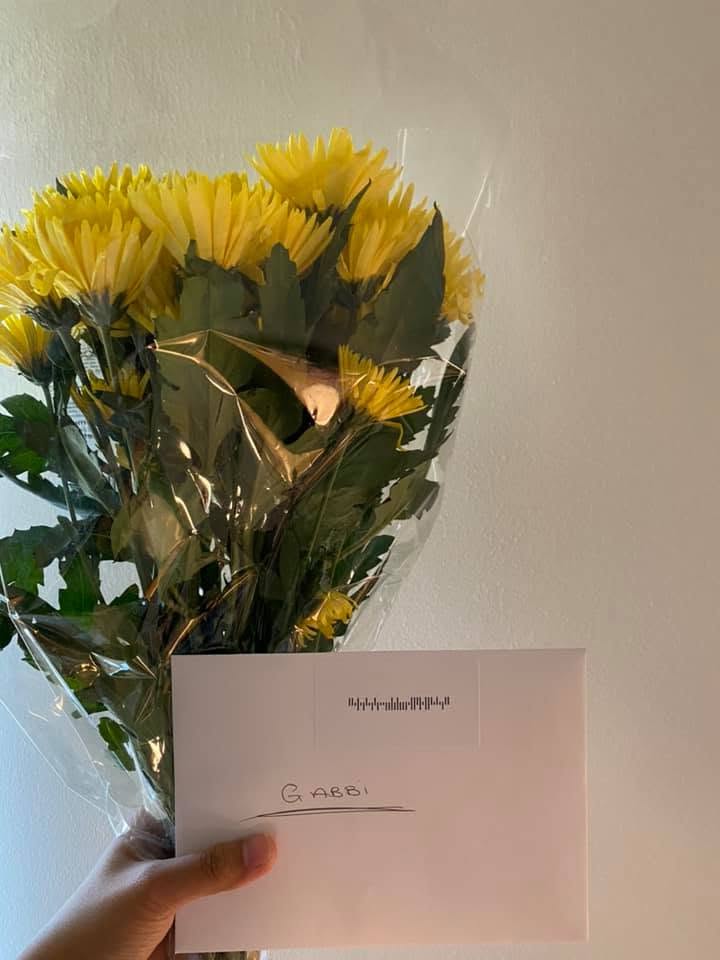
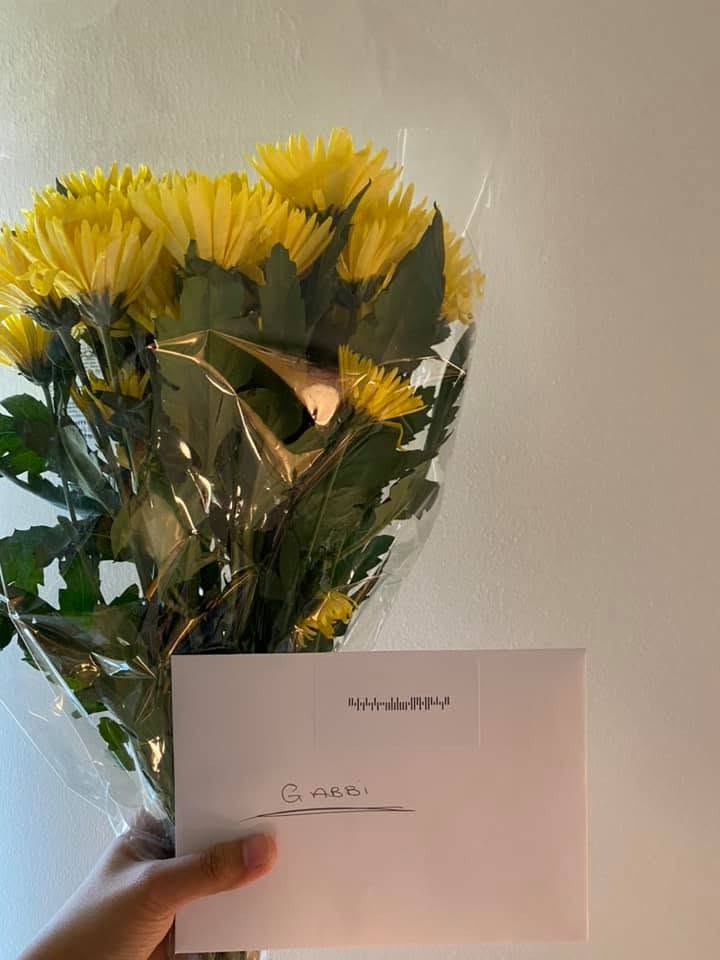
I sometimes think about a much smaller gift I received during those early years of living in England. One day my neighbour knocked on my door. There was no birthday, no celebration and no occasion I could remember requiring flowers. I opened the door and found them standing there with a bouquet of bright yellow chrysanthemums and an envelope with my name written across it. Nothing extravagant, nothing staged, just flowers wrapped in clear plastic and a card addressed to “Gabbi.”
For a second, I genuinely wondered what I had forgotten. Had I accidentally acquired an English holiday nobody had explained to me? Was this a neighbourhood custom? Had I somehow reached an anniversary I did not know I was celebrating? Living abroad leaves you permanently suspicious that everyone else received a cultural memo you missed.
But there was no hidden occasion. They had simply thought of me. That was all.
I remember standing inside my flat afterwards with the flowers in my hand, looking at those ridiculous, cheerful yellow heads and feeling more moved than the situation technically required. I was far from home, still learning what it meant to build a life in another country, and somebody living only a wall or a few doors away had decided that kindness did not require a reason. There was no invoice inside the envelope. No small print beneath the chrysanthemums. No clause stating that I was now contractually required to water her plants for the next seventeen years.
They gave them to me, I thanked her, and the gift remained exactly what it had been when it crossed my doorstep: a gift.
Years later, I can still remember those flowers. That is perhaps the strange thing about generosity freely given. Because nothing was demanded afterwards, the memory stayed uncomplicated. I can remember it warmly without having to defend myself against it. The kindness never became evidence. Nobody returned during a disagreement and placed the chrysanthemums metaphorically on the table as proof that I owed something.
The flowers eventually died, as flowers rudely insist on doing, but the gesture outlived them.
That memory has become one of the simplest examples I have of what giving can look like when it leaves the recipient with gratitude rather than obligation. I wanted to be kind to my neighbour afterwards, naturally. I wanted to return generosity when opportunities arose. But the desire came from affection, not fear. I was not balancing an account. I simply remembered what it felt like to open a door and find unexpected kindness standing on the other side.
Perhaps that is why the most interesting form of repayment is sometimes not repayment at all. Kindness travels. Somebody helps you finish school, and years later you help somebody else apply for theirs. Someone gives you somewhere to stay during a difficult season, and eventually you become the person with a spare room. A teacher believes in you before you believe in yourself, and one day you find yourself encouraging somebody younger who is convinced they are not capable. A neighbour gives you yellow flowers for no reason, and years later the memory still makes you want to be the sort of person who gives people reasons to feel remembered.
The original giver may never receive an equivalent amount back, but something they started continues. I like that version of gratitude far more than the ledger because it allows kindness to multiply instead of forcing it to return immediately to its original account.
None of this excuses genuine financial obligations. If money was borrowed, repay it. If a promise was made, take it seriously. If somebody’s sacrifice made something possible for you, acknowledge it while you still have the chance. Gratitude should not become an excuse for avoiding responsibility any more than responsibility should become an excuse for demanding control.
The real trouble often begins when nobody agreed on what the help meant. This is why some of the least romantic conversations may protect relationships best. If it is a loan, say so before the money changes hands. If repayment is expected, agree on the terms. If it is genuinely a gift, understand that the recipient may eventually make decisions you dislike. If assistance comes with conditions, explain them while the other person still has the freedom to decide whether accepting the help is worth accepting those conditions too. Ambiguity is charming in poetry. It becomes considerably less charming when somebody is asking for ten thousand pounds.
Years later, when resentment enters a relationship, both people can begin rewriting the same memory. The giver remembers sacrifice and wonders whether they were used. The recipient remembers generosity and begins questioning whether they were ever really helped or merely purchased in instalments. The argument no longer affects only the present; it reaches backwards and changes the emotional colour of the past. Something that once felt loving becomes suspicious, something once remembered with gratitude develops an asterisk, and suddenly two people are standing over an old kindness asking what it really meant.
Perhaps that is why some debts cannot be settled with money. Not because money is irrelevant, but because the thing beneath the disagreement was never completely financial. It was about expectation, loyalty, sacrifice, freedom, recognition and the stories two people attached to the same act. A repayment may settle a number. It cannot automatically settle those.
I still believe we should remember the hands that helped us climb. I hope I never become so proud of where I eventually stand that I forget who offered support when the ground beneath me was uncertain. There is humility in understanding that parts of our success carry fingerprints other than our own.
But gratitude should not require us to remain permanently at the bottom of the ladder simply to prove we remember who helped us climb it.
Someone can help you upwards and still allow you to decide where you go next. Perhaps the finest repayment for sincere generosity is not lifelong obedience but becoming someone who remembers what being helped felt like and therefore becomes less reluctant to help when their own turn comes. That kind of debt may never completely disappear because it was never meant to reach zero. It moves forward.
I return to the imaginary present I started with, beautifully wrapped and offered with a smile. Years later, somebody produces a receipt that neither person remembers signing. Perhaps before reaching for the calculator, they need to ask a different question: was this meant to be a transaction, or was it meant to be love?
Money can be counted, borrowed, transferred, returned and recorded. A clearly agreed financial debt can eventually reach zero. Human relationships are more complicated. There is nothing wrong with keeping financial records; in fact, I strongly recommend it. I am simply becoming more careful about keeping people in the same kind of ledger.
And sometimes I think again about those yellow chrysanthemums sitting in my flat, bright against the plain wall, an envelope propped in front of them with my name written by hand. They cost somebody something, however small. I received them. I enjoyed them. I remembered them. Years later, I still feel grateful.
Nobody ever sent the invoice.
Perhaps that is exactly why the debt remained worth carrying.
Still grateful, just no longer carrying the calculator,
Anj

























Leave a comment