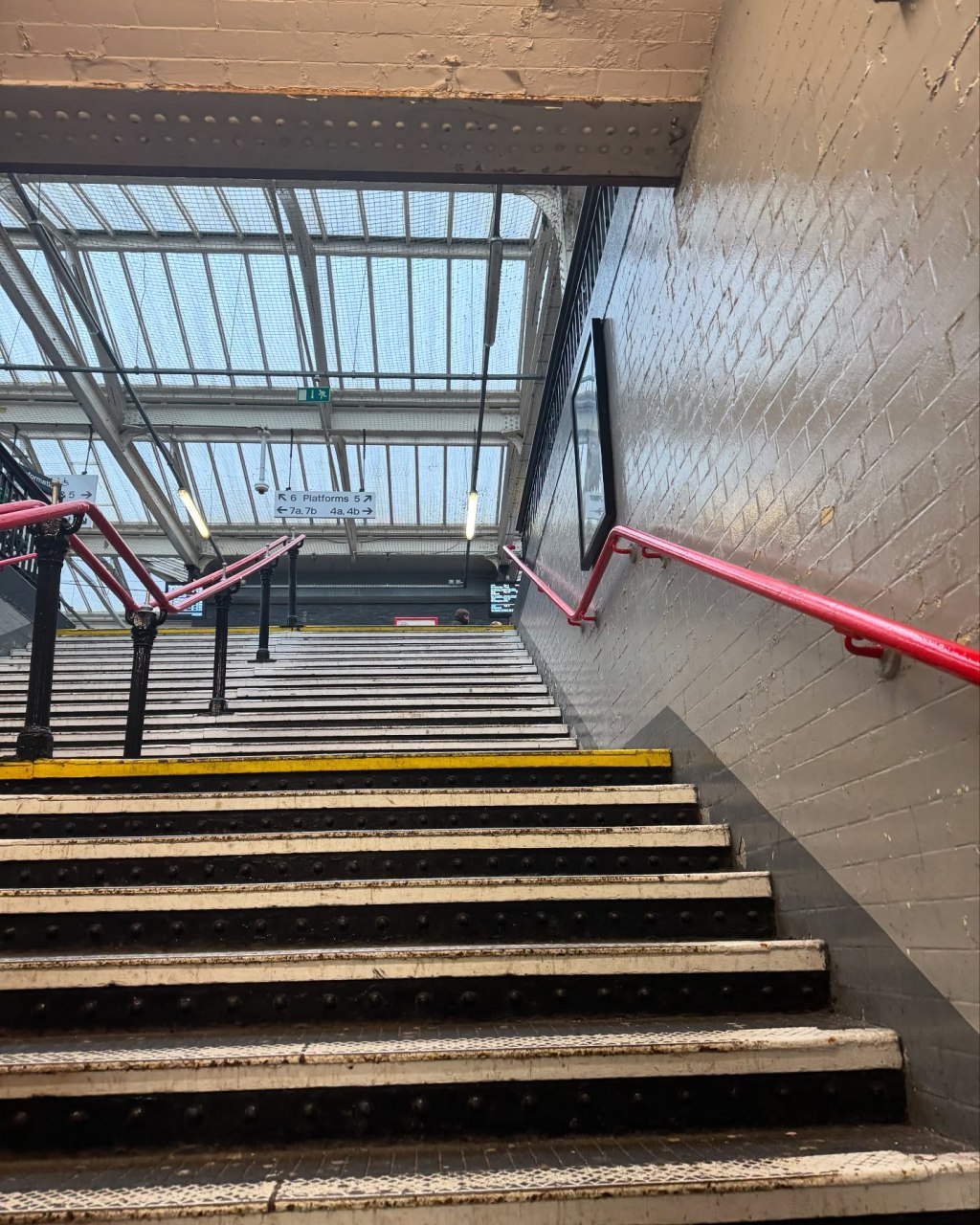
The woman sitting across from me on the train has absolutely no idea that she is about to ruin my concentration. She is doing nothing particularly offensive. She has a paperback balanced on her lap, a half-finished coffee beside her and a suitcase that appears to have survived several disagreements with airport baggage handlers. Every now and then, she looks out of the window, checks her phone and returns to her book. A perfectly ordinary passenger, minding her own business. Naturally, I begin inventing several possible versions of her life.
Perhaps she is travelling to a job interview. Perhaps she is visiting somebody she has not seen in years. Perhaps she is returning home after making a difficult decision. Or perhaps she is simply going to Birmingham to buy something unavailable in her own town, in which case I have unnecessarily assigned an emotional arc to a woman who only wanted shoes. Still, the possibilities fascinate me because somewhere along her journey she will make choices. She might speak to somebody she would otherwise never have met, miss a train, answer a message, take a different route home or decide something seemingly ordinary that will later turn out to matter.
That is the peculiar thing about decisions. We often recognise the significant ones only after discovering their consequences. We imagine life-changing choices arriving with ceremony, perhaps with a dramatic soundtrack and a conveniently placed crossroads. In reality, they often look embarrassingly ordinary: an application submitted on a Tuesday, a message answered instead of ignored, an invitation accepted despite being tired, a seat chosen on a crowded bus or a conversation that lasts five minutes longer than expected. Nothing about these moments announces their importance. They enter our lives disguised as routine, and only later do we wonder what might have happened if we had chosen differently.
I think about this more than I probably should because my own life contains decisions that, at the time, did not feel cinematic at all. Moving abroad, changing roles, saying yes to opportunities, saying no to others, choosing which plans to pursue and which ones to leave behind — each of those decisions eventually shaped a version of me that younger Anj could not have predicted. Looking backwards, the path can appear oddly coherent, as though every step had been moving deliberately towards the life I now have. Living through it felt far less organised. There were forms to complete, practical worries, shifts to work, tickets to book, conversations to have and moments where I was not entirely sure whether I was making the sensible decision or simply the best one available with the information I had. Life-changing choices rarely looked life-changing while I was making them. Most of them looked like paperwork.
That is why hindsight can be so unfair. Once we know what happened, earlier choices start to look obvious. When something turns out well, we congratulate ourselves for being wise. When something disappoints us, we wonder why we did not recognise the warning signs. We forget that the person standing at the original crossroads did not possess the knowledge we have now. Hindsight is an exceptionally demanding examiner because it expects our younger selves to have predicted events that had not yet happened and understood information they had not yet received. Naturally, they fail.
I think we should be gentler when judging the people we used to be. Some of our choices were poor. Others were reasonable and simply produced outcomes we did not want. A good decision can end badly, while a questionable decision can occasionally lead somewhere worthwhile. The quality of a choice and the convenience of its consequences are not always the same thing.
This matters whenever I catch myself wondering about the lives I almost lived. There is the version of me who stayed where she was, the version who accepted a different opportunity, and the version who pursued another ambition, spent more time with certain people, travelled somewhere else or remained closer to home. They are impossible to verify, which gives them a tremendous advantage. Imaginary lives are very generous to themselves.
In the version where I made another choice, the career works beautifully, the timing is excellent, the people I meet are wonderful and the trains are apparently punctual. There is no reason for that fantasy to include difficult colleagues, financial worries, homesickness, missed opportunities or the possibility that I might have regretted the alternative decision just as strongly. The road not taken is always suspiciously well maintained.
Our actual lives do not receive the same editing. We know their inconveniences intimately. We know the disappointing conversations, delayed plans, bills, wrong turns and mornings when nothing particularly inspiring happened. The alternative life, meanwhile, exists entirely in imagination, which means we can quietly remove anything that would make it less attractive. No wonder it sometimes looks better.
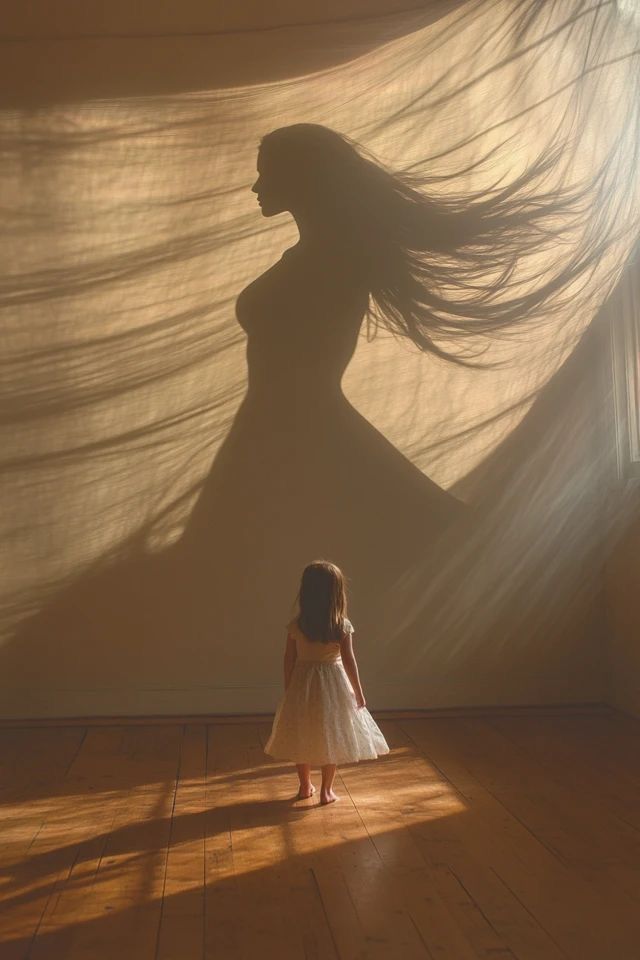
But I do not think curiosity about other lives always means dissatisfaction with the one we have. Sometimes it simply reveals how many different people we might have become under different circumstances. We often talk about identity as though there is one true self hidden inside us waiting to be discovered. I am less certain of that now. Experience shapes us. Moving somewhere new changes what we notice. Work develops strengths we may never have needed elsewhere. Friendships introduce ideas and habits we might never have encountered alone. The person I am now partly exists because of people I once had not met yet, and that thought still amazes me.
Some of the people who became important in my life were once complete strangers going about ordinary days with no idea that our paths would eventually cross. A colleague assigned to the same workplace, someone introduced through another person, a conversation started for no important reason — relationships that later felt familiar began in circumstances that could easily have been different. If one of us had been off that day, if the seating had changed or if neither person had spoken, the friendship might never have existed.
There is something beautiful and slightly unsettling about realising how much of life begins that casually. The people we now know well once had no place in our story. We did not know their names or what they would eventually mean to us, and the future is still full of people like that. Some will remain strangers, some will become passing acquaintances, and some may eventually become part of the stories we tell as though they had always been there.
Perhaps that should make us a little more curious about strangers and a little less confident about first impressions. The woman across from me may be heading towards an ordinary appointment or towards a decision that changes everything. I cannot know from looking at her. She is carrying an entire history and several possible futures inside a body I currently know only as “woman with book, coffee and battered suitcase.” Everyone around us is carrying possibilities, and the same is true of us.
That can become exhausting if we think about it too much. Every decision seems to close countless other doors. If I choose one career, I cannot simultaneously build every other career I might have enjoyed. If I live in one city, I am not living all the lives available elsewhere. If I commit deeply to one direction, certain possibilities become less available. Freedom begins to feel strangely restrictive when every choice is interpreted as the death of several alternatives.
Yet refusing to choose does not preserve life indefinitely. It simply creates another kind of life. Depth requires commitment. A friendship becomes meaningful because people keep showing up, a profession becomes part of us because years are spent learning it, and a home becomes familiar because ordinary life repeatedly unfolds inside it. We cannot experience the depth of every possible path because depth itself requires staying somewhere long enough for it to become real.
That has become one of the more comforting thoughts for me. Perhaps there is not one perfect life hidden among hundreds of wrong ones. Perhaps several different paths could have produced lives worth living, each with its own joys, difficulties and people. If that is true, the question becomes less frightening. I do not have to prove that every choice I made was the only correct one; I only have to decide what I am willing to build with the life that became mine. That is less romantic than destiny, but considerably more useful.
It also changes the way I think about comparison. Someone else may be living something I once imagined for myself. Their career may look exciting, their travels may remind me of places I still want to see, or their family life may resemble a future I once pictured. For a moment, another person’s life can feel like evidence of the version of mine that did not happen. But comparison rarely includes the full cost of another path.
We see the achievement more easily than the sacrifice. We notice the freedom and not the instability, the success and not the hours, the family photograph and not every compromise required to sustain the life behind it. Every path contains trade-offs, even the ones that photograph beautifully. So perhaps curiosity is more useful than envy. I can ask what exactly I admire, whether it is the life itself or something underneath it, and whether another person’s path reveals something I genuinely still want or merely presents the visible highlights of circumstances I do not fully understand.
There are, of course, things that did not happen because circumstances intervened rather than because I deliberately chose otherwise. Applications fail, plans become impractical, opportunities disappear and projects end. Sometimes the future closes a door before we have properly decided whether we wanted to walk through it. Those losses can be real, and I do not believe every disappointment needs to be rewritten as a blessing in disguise. Some missed opportunities are simply disappointing, and some doors close for reasons that remain unfair or unclear. But one future disappearing does not mean the future itself has disappeared. There may still be directions we cannot yet see.
That uncertainty has become easier for me to tolerate because changing one event in the past would rarely change only that event.
It is tempting to imagine correcting one disappointment while preserving everything else I value, but life does not offer selective editing. If I had made another decision, perhaps the friendships that followed would never have formed. Perhaps the skills I developed would be different. Perhaps the ordinary routines I now take for granted would belong to another version of me. I cannot remove one piece and guarantee that everything I love remains exactly where it is.
That does not mean every difficult experience was necessary, and it certainly does not mean harm should be romanticised because something good later happened. It simply means alternative histories are too complicated to calculate honestly. Sometimes the most accurate answer to “What if?” is simply, “I don’t know.” I do not know whether another job would have made me happier, whether staying somewhere familiar would have produced a better life, whether an opportunity I missed would have become what I imagined, or which people, experiences or parts of myself would be absent from those alternatives. Uncertainty is not a satisfying conclusion, but it may still be the most truthful one.
The woman on the train has now finished her coffee and placed a bookmark inside her novel. Her suitcase remains wedged beside the seat as though it has purchased its own ticket. Outside, the landscape moves through houses, fields, industrial buildings and stations, and I still have no idea where she is going. Perhaps she has already made the decision that matters, perhaps it is waiting for her after she gets off, or perhaps this will remain exactly what it appears to be: an ordinary train journey she barely remembers. The uncertainty belongs to her. I have simply borrowed it for philosophical entertainment.
Eventually she gathers her belongings and prepares to leave, and for a moment I imagine all the people she might encounter beyond the carriage door. Then it occurs to me that I am also travelling somewhere. My own journey has a destination, and my own decisions remain unfinished. While I have been busy inventing possible lives for a stranger, my actual life has continued moving forward beneath me. There is something amusing about that because we can spend so much time wondering about alternate lives that we forget how many decisions still exist inside the one we have.
I cannot return to every crossroads, test every alternative or meet every version of myself who might have emerged from another choice. I cannot know which ordinary moment would have changed everything, but neither have I finished becoming who I will be. There are people I have not met, conversations I have not had and choices I do not yet know I will need to make. Some of them will matter enormously, while others will disappear into the background of ordinary afternoons. I probably will not know which is which while they are happening, and perhaps I do not need to.
As the train approaches my stop, I gather my things. My coffee has gone cold, my attention has travelled considerably farther than the carriage, and I have spent an unreasonable amount of time constructing imaginary futures for a woman whose name I will never know. For one second, I wonder what would happen if I stayed on the train. Perhaps I would discover a beautiful little town, an excellent café or a bookshop selling something I absolutely do not need. Perhaps I would simply miss my stop, spend extra money on another ticket and return home annoyed with myself. Both seem entirely plausible.
I get off where I intended, and it is a thoroughly ordinary decision. Still, as the train pulls away, I realise there will always be a tiny invisible life in which I remained seated. I will never know what happened there, and that is the bargain of choosing. One direction becomes real while the others remain possible only in imagination. Perhaps the point is not to mourn every life I could have lived, but to keep noticing that the one I am living has not finished surprising me yet.
Still choosing this road,
Anj ❤












Leave a comment