I should begin with an important piece of information: I do not like hiking. I like views. I like countryside. I like fresh air, photographs, coffee before an outing and the satisfaction of saying, “That was beautiful,” once I am safely back somewhere with a chair. The actual business of repeatedly walking uphill to obtain the view has never been the part that excites me. If there is a cable car, tram or any other mechanical invention willing to transport me upwards, I am generally very supportive of technological progress.
And yet, on this particular day off, I hiked.
Voluntarily.
Well, mostly voluntarily.
The morning started far more comfortably. No bleeps, no handovers, no hospital corridors and nobody asking me something urgent before I had finished my coffee. After a stretch of work, that alone already felt luxurious. My partner and I headed to the station at around 10 a.m. with takeaway Starbucks in hand and the optimism of two people who had not yet encountered the hills.
This is the dangerous thing about drinking coffee before a hike. Caffeine gives you confidence before your legs have been properly consulted.
At the station, everything still felt wonderfully manageable. I had comfortable clothes, sensible shoes, a drink and the vague belief that we were going for a pleasant walk through Carding Mill Valley. “Pleasant walk” is a phrase capable of hiding an extraordinary amount of information. It can mean a gentle stroll beside a river. It can also mean climbing over rocks while wondering why nobody mentioned the gradient.
Carding Mill Valley chose the second interpretation.
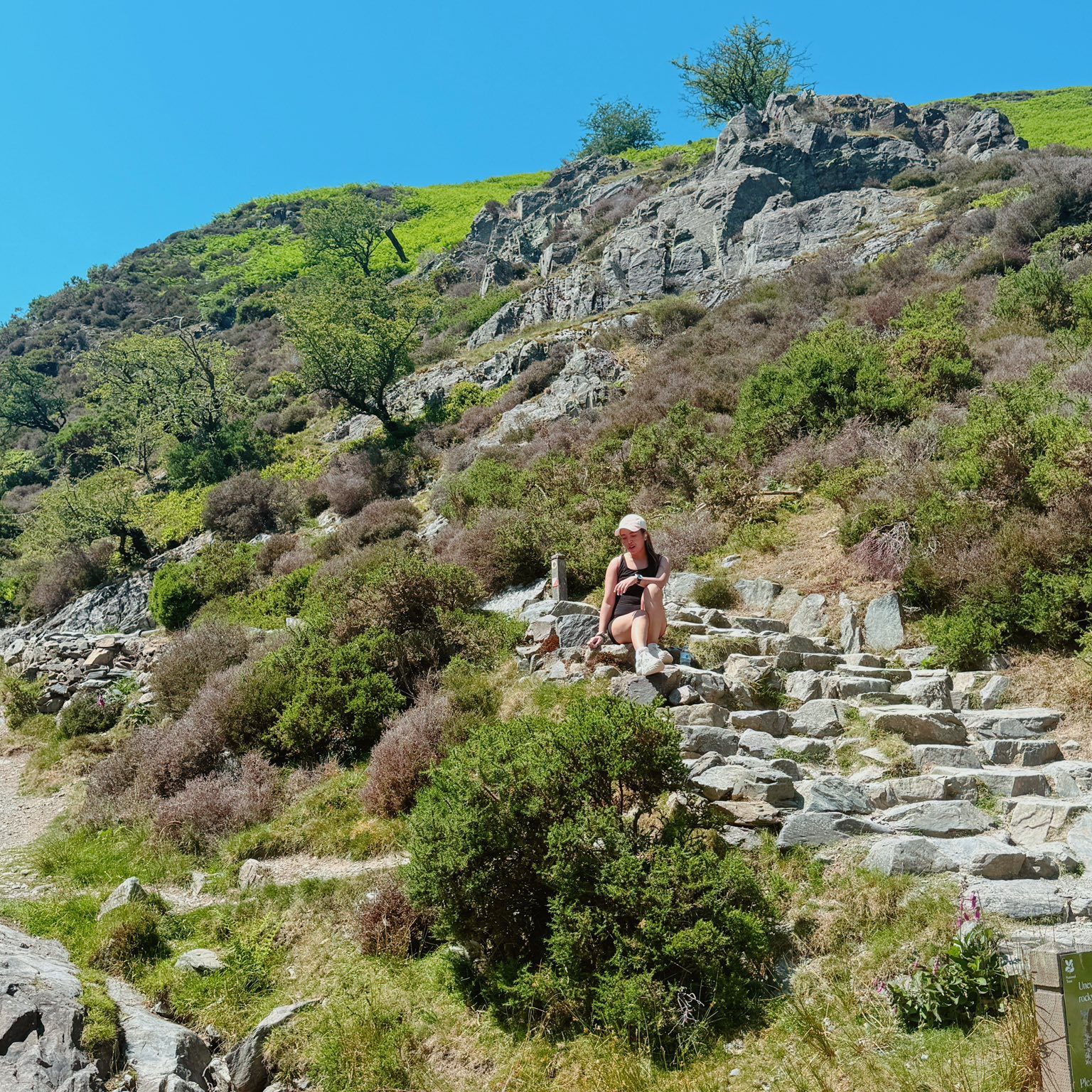
When we arrived, the scenery immediately started making a strong argument for why people willingly do this sort of thing. The sky was wide and blue, the hills stretched ahead in different shades of green, and the whole place looked absurdly fresh compared with the fluorescent familiarity of hospital corridors. There is something satisfying about going from spending long shifts indoors to standing somewhere where the ceiling is literally the sky.
For several minutes, I forgot that hiking was involved.
Then we started walking.
I would love to tell you that we confidently located the correct route and strode towards the hills like experienced outdoor people who owned specialist walking equipment and understood contour lines.
We got lost.
Not dramatically lost. There was no rescue helicopter involved. We were simply lost enough to start looking at signs with increasing seriousness and pretending we were both completely calm about not knowing whether we were going in the correct direction.
Nothing gives a hike an encouraging start quite like becoming uncertain about the route before your legs are even properly tired.
There comes a specific moment when two people who do not know where they are going begin asking each other questions neither can answer. “Do you think it’s this way?” becomes less of a genuine question and more of an invitation for the other person to accept responsibility.
Fortunately, a kind local eventually pointed us in the right direction.
This was excellent news because my navigation strategy until then had consisted mainly of looking around and hoping the correct path would somehow identify itself.
I could turn this into an elegant lesson about life and say that getting lost reminded me that it is okay to ask for directions. That is true. But it also reminded me that sometimes a local person who knows the area is significantly more useful than two people staring at a map and saying, “It must be around here somewhere.”
Once corrected, we continued.
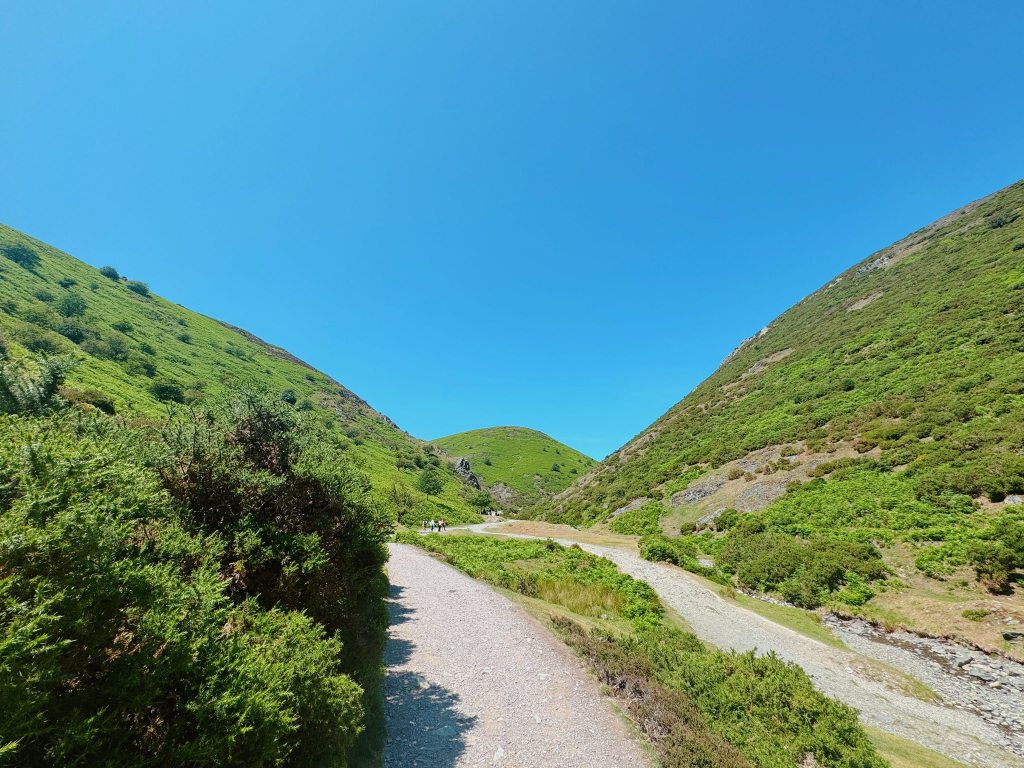
The path became rockier, the landscape greener and my relationship with hiking increasingly complicated. I still did not like hiking, but I had begun enjoying the hike, which felt like a betrayal of my established personality.
This was unsettling.
Every so often, we would turn and another view would appear. Hills behind hills. Trees overhead. Sunlight catching the path. The kind of countryside that makes you stop complaining temporarily because the scenery has presented evidence against you.
Then came the sheep.
One stood on the hillside looking completely at ease while I was making considerably more effort simply to occupy the same landscape.
I looked at the sheep.
The sheep looked at me.
There was judgement.
Perhaps I projected this because sheep probably have better things to think about, although looking at its face, I am not entirely convinced. It stood there covered in wool, navigating hills as casually as I cross my living room, while I was becoming increasingly aware of my cardiovascular system.
I work twelve-hour shifts. I walk hospital corridors. I spend long periods on my feet. I like to think this means I possess reasonable stamina.
The sheep was unimpressed.
It had probably climbed that hill before breakfast.
Still, it made me laugh, and that became one of my favourite moments of the walk. Not because anything extraordinary happened, but because sometimes the funniest memories from a day out are completely ridiculous. Years later, you may forget exactly which path you followed, but you remember the sheep that seemed personally disappointed in your fitness.
We continued walking, sometimes talking and sometimes saying nothing because conversation becomes noticeably less ambitious while going uphill. There is a point in hiking when meaningful discussion is replaced by shorter statements such as, “Wait,” “Water,” and “How much further?”
Romance, but outdoors.
The photographs make everything look wonderfully serene. Green paths, trees, sunlight, rocks, countryside and me standing there looking as though hiking is something I regularly choose for pleasure.
Photographs are capable of extraordinary deception.
They do not record the moment immediately before the picture when you were catching your breath. They do not show the discussion about whether the route continues left or right. They certainly do not capture you internally negotiating with your legs.
Instead, they preserve the flattering evidence: woman in nature, enjoying life.
I support this version of events.
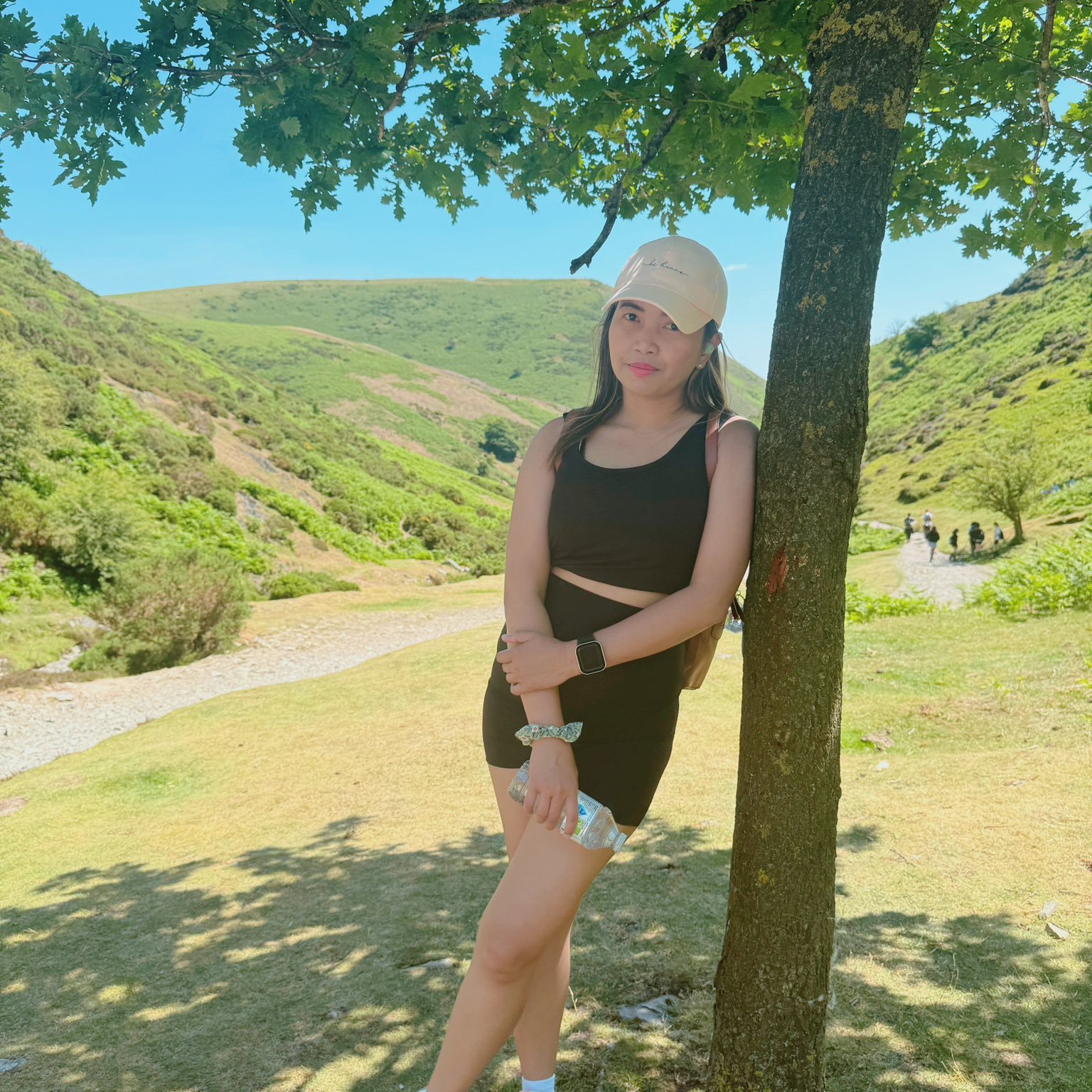
At some point, I stopped beneath a tree, leaned against it and drank from my water bottle. There was shade above me, the path nearby and no urgent reason to move again immediately. It became one of those small moments I enjoyed far more than expected. I was not trying to reach the top before anybody else, there was no stopwatch, nobody was grading my technique, and the tree had no performance expectations. For once, stopping did not feel like falling behind. It was simply part of the walk.
That is something I probably needed to remember more than I realised. In work and ordinary life, stopping can sometimes feel uncomfortable because there is always something else that could be done. Another task, another message, another responsibility. Even on days off, there can be a strange pressure to use the hours well. But there, leaning against a tree halfway through a hike I had already admitted I did not particularly enjoy, taking a break felt completely legitimate. My legs strongly endorsed this philosophy.
Later, we reached some rocks that made a good resting place. I sat there with windswept hair, flushed cheeks and the look of someone who had acquired a new respect for elevation. There was no dramatic summit moment waiting for us, no choir began singing and nobody handed me a certificate saying, “Congratulations, Anj. You have officially become a hiking person.” Thankfully, because I am not prepared to make that commitment. But I had hiked. Me. The person who normally looks at a mountain and thinks, “Beautiful. Is there parking near the top?”
I was oddly proud, not because the walk was some enormous physical achievement, but because I had done something I usually avoid and discovered that I could enjoy it without needing to reinvent myself afterwards. Sometimes trying something different does not mean you suddenly have to make it your entire personality. I can hike once and still hate hiking. Both facts are allowed to coexist.
What surprised me was how much I enjoyed the stretches between the effort: the laughter after getting lost, the sheep encounter, drinking water under the tree, walking beside my partner without needing constant conversation, and looking back to realise we had already travelled farther than I thought. Those were the good parts.
The landscape was beautiful, of course, but I think the day worked because we were not trying to make it spectacular. It was simply my day off. We had taken a train somewhere green and decided to walk. The hospital was elsewhere, nobody was bleeping and no one needed a handover. The most urgent clinical issue in my immediate surroundings was whether that sheep had eaten enough grass, and I felt reasonably confident it had the matter under control.
There is a different kind of tiredness after spending hours outdoors. My legs were tired, but my head was not. That distinction matters. Work can leave the body exhausted while the brain continues running through everything that happened. Hiking did almost the reverse. My body knew it had done something, but my thoughts felt less crowded. Perhaps it is difficult to mentally replay your entire week when you are busy making sure you do not trip over a rock. Nature has its methods.
The day also reminded me that being outside does not need to produce some enormous revelation to be worthwhile. I did not return home as a transformed woman with hiking poles and plans to conquer every mountain in Britain. I returned home as the same woman who still prefers cafés, but I was happier. I had laughed, moved, breathed air that did not come through a hospital ventilation system, spent uninterrupted time with someone I love and looked at hills instead of screens. For several hours, the rest of life had moved somewhere into the background. That is a good day off.
Looking through the photographs later, I smiled because they make the hike look so peaceful. They show the blue sky, green hills, tree-lined paths, rocks and countryside. They also show me standing there looking considerably more outdoorsy than I normally feel. What they do not show is the whole story. They cannot show us getting lost near the beginning, the kind local saving us from whatever direction we had confidently started walking towards, the sheep’s expression or how personally I took it. They cannot record the little pauses where I stood drinking water and wondered how much further we had to go.
That is why I like those pictures. I know what happened around them. A photograph might show me smiling beside a beautiful landscape, while I remember the sentence I probably said shortly beforehand: “I hate hiking.” And yet there I was, hiking.
Maybe that is the part of the day I want to keep. We do not always need to love something before we are willing to try it. We do not have to become experts before beginning. We are allowed to get lost, ask somebody for directions, stop under a tree, laugh when a sheep humiliates our fitness level and continue at whatever pace our lungs consider reasonable. There are enough parts of adulthood where we are expected to know exactly what we are doing. It is refreshing to occasionally be somewhere where the honest answer is, “I have no idea. Shall we try this path?”
Carding Mill Valley gave me beautiful views, tired legs, muddy shoes and photographic evidence that I once willingly participated in a hike. I am not saying I have been converted, so let us not get carried away. But if another beautiful place comes along, the weather is decent, there is coffee beforehand and nobody expects me to climb it at competitive speed, I might hike again. Just please make sure somebody knows the way.


































Leave a Reply