
I called an emergency meeting with myself on the first day of the year. Attendance was poor but technically complete. Present were Me, Guilt, Overthinking, People-Pleasing, Ambition, and one very enthusiastic representative from the Department of Saying Yes Too Quickly. Rest arrived late because apparently it had not been authorised. Boundaries brought several documents but looked nervous. Faith sat quietly at the end of the table while Control kept interrupting. After reviewing the previous year’s performance, one conclusion became difficult to avoid: management needed restructuring.
The old system had been generous but badly run. Requests came in and were approved far too quickly. Availability was assumed rather than negotiated. Other people’s disappointment was routinely treated as an emergency, while my own exhaustion was logged for later review and then somehow never discussed again. Guilt had unrestricted access to decision-making and was particularly talented at producing urgent reports suggesting that somebody else’s inconvenience was evidence of my moral failure. It was a very efficient department, unfortunately working towards the wrong objectives.
For years, one of my most convincing arguments to myself was, “I can manage.” The problem is that being capable of carrying something is not proof that I should keep carrying it. I can technically bring six shopping bags into the house in one trip too, but the red marks across my fingers usually suggest that perhaps efficiency has been confused with stubbornness. Much of adulthood, I am discovering, involves learning that capacity and obligation are not synonyms.
Last year taught me a great deal about boundaries, mostly because boundaries sound considerably more impressive on paper than they do when another human being is standing in front of you asking for something. Online, the advice is wonderfully concise: protect your peace, know your limits, say no without guilt. Excellent. Then someone actually asks you for a favour and suddenly the confident boundary you rehearsed becomes, “I’m so sorry, I really wish I could, and normally I would, and please don’t think I’m being difficult, but unfortunately…” By the time I reached the actual no, I had practically submitted supporting evidence, character references and a short history of my intentions.

So one of the first amendments for 2026 is that a no does not automatically require a witness statement. I can still be polite. I can explain when an explanation is useful. But I no longer want every decision to sound like an appeal against a criminal conviction. Sometimes I cannot do something. Sometimes I do not want to. Sometimes I simply do not have the time, energy or interest. None of these automatically requires a twelve-minute presentation followed by questions from the floor.
This will occasionally disappoint people, which is unfortunate but apparently survivable. One of my stranger habits has been assuming that if somebody dislikes my answer, perhaps I simply have not explained it clearly enough. Surely one more paragraph will solve everything. Perhaps an example would help. Maybe a timeline. What I eventually learned is that some people understood perfectly well the first time. They simply preferred a different answer. Better sentence structure was never going to fix that.
Another programme being discontinued is the Silent Expectation Scheme, which has produced consistently poor results. Under this system, I would do something for somebody and quietly assume they would naturally do the same. I would remember, therefore they would remember. I would make an effort, therefore effort would surely be returned. I would be considerate, and somewhere inside me this somehow became a bilateral agreement. The only small administrative problem was that nobody else had received the contract. I was essentially becoming disappointed when people failed an exam they had never been told they were sitting.
That does not mean lowering my standards or pretending poor behaviour is acceptable. It means paying more attention to what people consistently show me than to the person I keep hoping they might become. Expectations can become very expensive when repeatedly invested in the wrong place. I would rather notice the pattern, believe the pattern and save myself several unnecessary episodes of, “But I would never do that to them.” Correct. I am not them. This information is embarrassingly obvious and has still taken years to become operational.
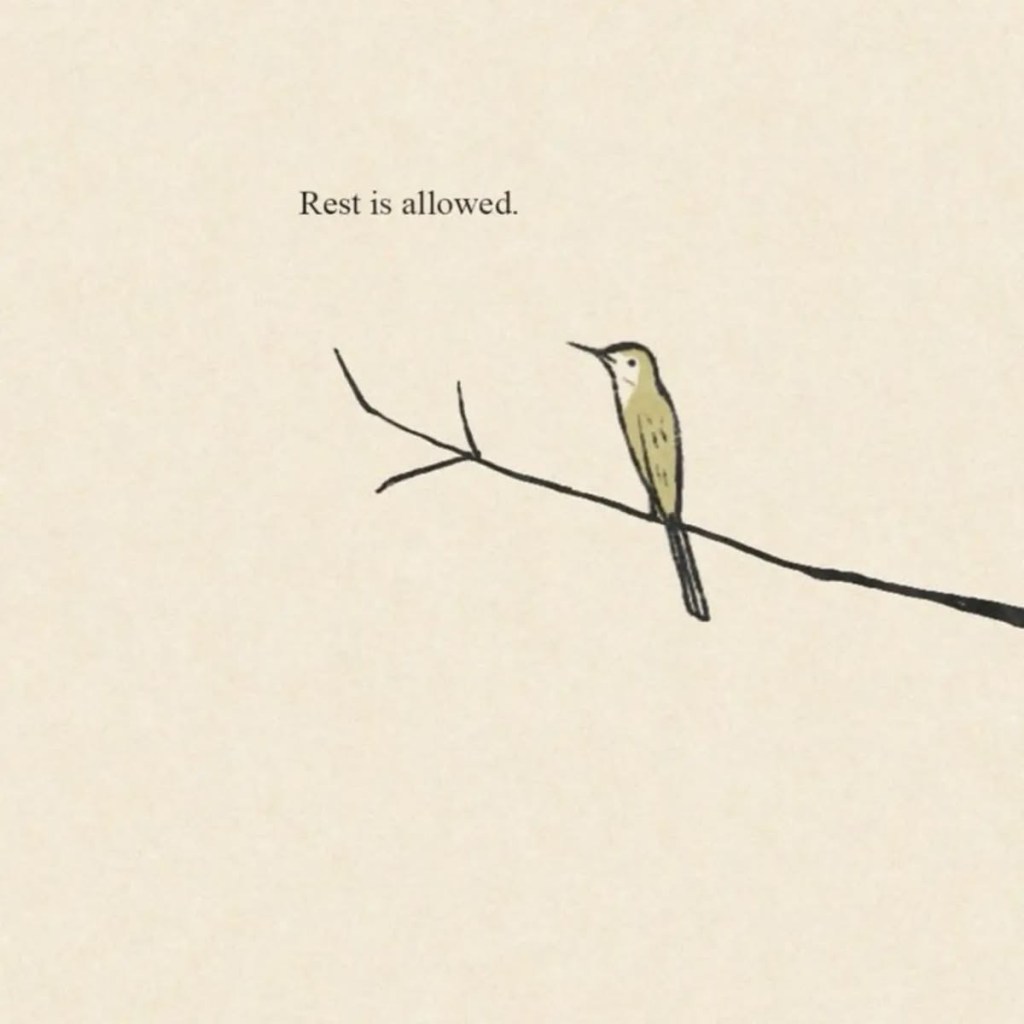
Rest is also receiving a significant upgrade. Under the previous policy, rest was generally approved only after everything had been completed, everyone had been helped, the house was sorted, every message answered and no possible task remained anywhere in the known universe. Unsurprisingly, rest had an appalling attendance record. Tiredness was treated as information rather than instruction. If I could still function, I assumed I should continue, which is roughly the human equivalent of ignoring the low-battery warning because the phone has not died yet.
I am trying to stop waiting until my body sends a strongly worded letter. Rest should not require collapse as supporting evidence. Sometimes being tired is enough. Sometimes stopping early is wiser than pushing until everything hurts, patience disappears and an innocent household question begins to sound like a personal attack. I still have responsibilities. There will still be busy weeks and long shifts. I am not proposing a year spent horizontally beneath a blanket, although several mornings have presented compelling arguments. I simply no longer want exhaustion to be proof that I used the day correctly.
Ambition, however, remains fully funded. I am not interested in becoming so devoted to peace that I accidentally remove everything difficult, challenging or worthwhile from my life. I still want to learn, work, write, travel, build things and become better at what I do. I like goals. I like progress. I like having something to work towards. I am simply less interested in achievements that require me to disappear in the process. A full calendar is not automatically a full life, and being busy is not a personality, despite the evidence some of us have spent years trying to submit.
There was a period when being needed felt dangerously similar to being valuable. If I was helping, fixing, organising, carrying responsibility or solving something, I felt useful, and usefulness is very easy to confuse with worth. The problem appears when you stop. Sit down for twenty minutes and suddenly the brain starts suggesting that perhaps this would be an excellent time to reorganise a cupboard. Under the new policy, I am allowed to exist without producing anything impressive. This clause remains under active testing.
I am also introducing a mandatory delay before certain responses. Not every message requires an immediate answer. Not every irritation deserves same-day delivery. Not every disagreement improves when addressed at peak annoyance. Emotional urgency can be extremely persuasive. It tells you that you must respond now because waiting might somehow weaken your position. Experience has taught me that waiting often improves the position considerably, mostly because twenty minutes later I am less tempted to begin a message with “With all due respect,” which rarely means anything peaceful is about to follow.
There is real value in letting a thought sit before acting on it. Some things are genuinely urgent. Most things are simply loud. I want to get better at knowing the difference. A pause can prevent a yes I will resent, a response I will regret, or an explanation nobody asked for in the first place. Sometimes the wisest thing I can do is allow my first reaction to expire before giving it access to the keyboard.
Another amendment concerns public opinion. Not every opinion about me requires internal distribution. People are allowed to misunderstand me. They are allowed to dislike a decision, interpret something differently or form an opinion using only a fraction of the available information. I am responsible for how I behave. I am responsible for correcting myself when I have been unfair, careless or wrong. I am not responsible for personally editing every version of me that exists inside another person’s head.
This sounds wonderfully mature until somebody actually misunderstands me and I immediately want to submit clarifying documentation. The policy is new.
I also want enough self-awareness to prevent boundaries from becoming an excuse for becoming impossible. There is a version of “protecting my peace” that can become suspiciously convenient if every disagreement is labelled toxic and every inconvenience becomes a violation. Sometimes another person is unreasonable. Sometimes I am tired. Sometimes nobody is toxic and two adults simply disagree. Occasionally I am the one who needs to apologise. A boundary is not diplomatic immunity.
Kindness stays in the system too. I simply no longer want kindness to mean automatic access, unlimited availability or agreeing to things while quietly resenting everybody involved. A reluctant yes is not necessarily more loving than an honest no. Sometimes clarity is kinder because at least nobody has to decode my mood three hours later and wonder why I am aggressively washing a mug.
Faith remains part of the policy as well, because if I am reducing my attempts to control other people, I should probably extend that courtesy to the future. I like plans. I like knowing what happens next. Prayer would be considerably easier if it came with an order-tracking page: Request received. Currently processing. Estimated delivery: Thursday. Unfortunately, this feature does not appear to be available.
So part of this year is accepting that I can make careful decisions without controlling the outcome. I can work towards something and still accept that it may unfold differently. I can protect my time without knowing whether everyone will approve. I can ask God for what I want without behaving as though faith is a contractual arrangement in which I submitted the correct form and am now waiting for dispatch.
I am not expecting to perform any of this perfectly. That would immediately turn the whole exercise into another exhausting project. I will still overthink trivial things. I will probably say yes too quickly at least once and regret it later. I will explain myself long after the point has already been understood. I may spend forty-five minutes mentally replying to someone who is happily going about their day with no idea they are currently involved in an argument.
Progress, for me, is noticing sooner. Maybe I catch myself after ten minutes instead of three days. Maybe I say, “Actually, I need to reconsider that,” instead of keeping a commitment I accepted out of guilt. Maybe I apologise without attaching an autobiography. Maybe I recognise that I am tired before my personality becomes noticeably less charitable. That is enough. I am no longer interested in making perfection the admission fee for growth.
So this is the updated operating policy. Availability is no longer guaranteed. Silent expectations have been discontinued due to repeated operational failure. Rest no longer requires evidence of total exhaustion. Over-explanations will be issued only where genuinely necessary. External opinions may be reviewed but will not be automatically adopted. Ambition remains active, although burnout has been removed from the performance indicators. Faith continues to handle matters beyond my department.
Most importantly, guilt has lost voting rights.
It may still attend meetings. I am realistic enough to know it will. It will clear its throat whenever I disappoint somebody. It will slide documents across the table and remind me how much easier everything would be if I simply said yes. It will probably attempt several procedural challenges and occasionally join forces with Overthinking after hours.
But it no longer gets the final decision.
I want to be generous without becoming depleted, helpful without becoming permanently available, ambitious without turning every year into a performance review, and kind without treating my own needs as an administrative inconvenience. I want to build a life that includes other people generously without constructing one in which everybody else is comfortable and I am somehow missing from it.
Will the new policy work perfectly? Absolutely not. Someone will ask me for something at an inconvenient time and old management will immediately attempt a hostile takeover. I will probably recognise the takeover halfway through explaining why I am “so sorry” for having a perfectly reasonable limit. But at least now I know who is supposed to be running the meeting. New management is still learning. Guilt may submit its objections in writing.
Objections may be submitted in writing,
Anj 🖤










































Leave a comment