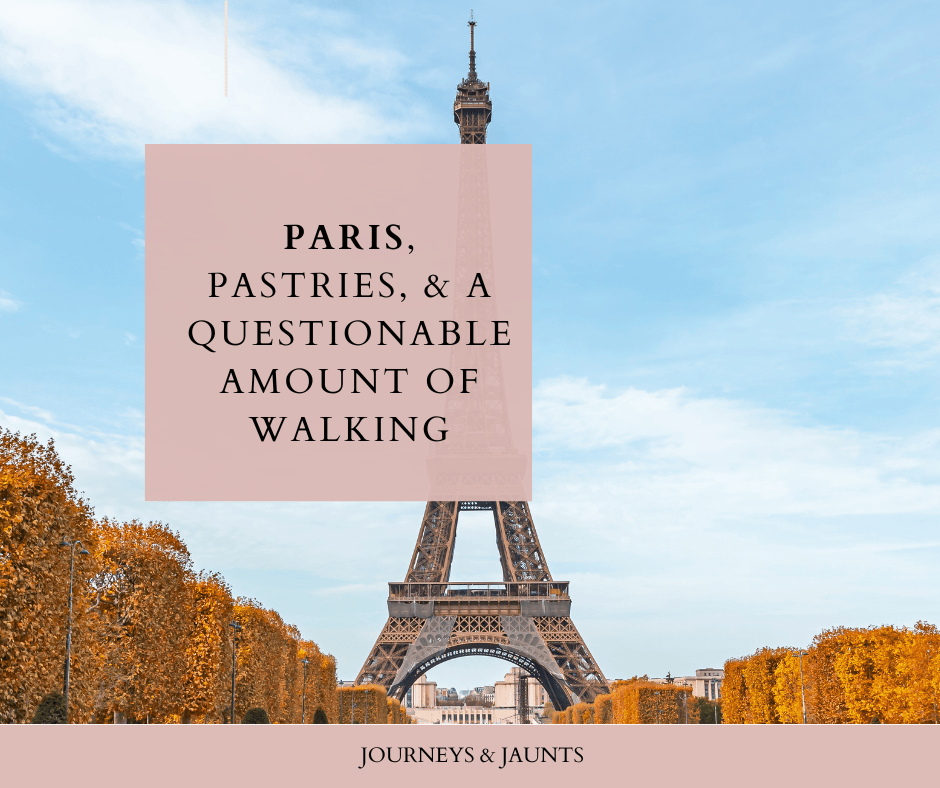
October 2026 | An Old Dream, Four Travellers, One Missing Handbag, and 30,000 Steps That My Legs Have Yet to Forgive
I have a rather embarrassing habit of making promises to my younger self without consulting the older version who will eventually be responsible for fulfilling them. Somewhere in an old diary, among handwritten ambitions, sentimental declarations, and a few thoughts I would now prefer to keep away from public scrutiny, I once wrote about wanting to visit Paris. I cannot remember what inspired the entry. Perhaps it was a photograph of the Eiffel Tower, a film that made French streets appear impossibly romantic, or simply the extravagant imagination of a Filipina girl who had not yet travelled very far but was already mentally decorating her future with foreign destinations. Whatever the reason, Paris found its way onto my list of dreams, where it remained for years while I occupied myself with nursing school, employment, adulthood, and the other responsibilities that have a habit of arriving without asking whether one has finished making plans.
Years later, I found myself preparing to visit the very city I had once admired from the opposite side of the world. I had imagined this moment often enough to develop a rather elaborate picture of how it would unfold. There would be beautiful architecture, leisurely walks along elegant boulevards, charming little cafés spilling onto the pavements, and perhaps an effortlessly sophisticated version of myself who could say bonjour without immediately revealing that French was not among her linguistic accomplishments. I imagined croissants, the Seine, the Louvre, and the Eiffel Tower rising above a city that seemed to have mastered the art of making ordinary buildings look unnecessarily beautiful. In my head, everything unfolded with the graceful pacing of a European film. Nobody was rushing, nobody was confused about directions, and nobody’s calf muscles were considering industrial action.
Reality, as it turned out, had apparently been written by somebody with a considerably more mischievous sense of humour. We had decided to explore as much of Paris as possible in a single sightseeing day, stay overnight, and return to the United Kingdom the following day. It seemed like a perfectly reasonable arrangement while discussing it from the comfort of home, where every attraction on Google Maps appears conveniently close and walking distances are merely numbers rather than actual physical suffering. Jan and I were visiting Paris for the first time, while our friends Marj and Ninin had already been there. This gave them the advantage of familiarity and us the disadvantage of having far too many things to ask. I was especially excited, which meant that almost every interesting building, street corner, and unfamiliar sign threatened to produce another question. Marj would eventually discover that travelling with me was rather like accompanying an enthusiastic documentary presenter who had forgotten to bring a research team.
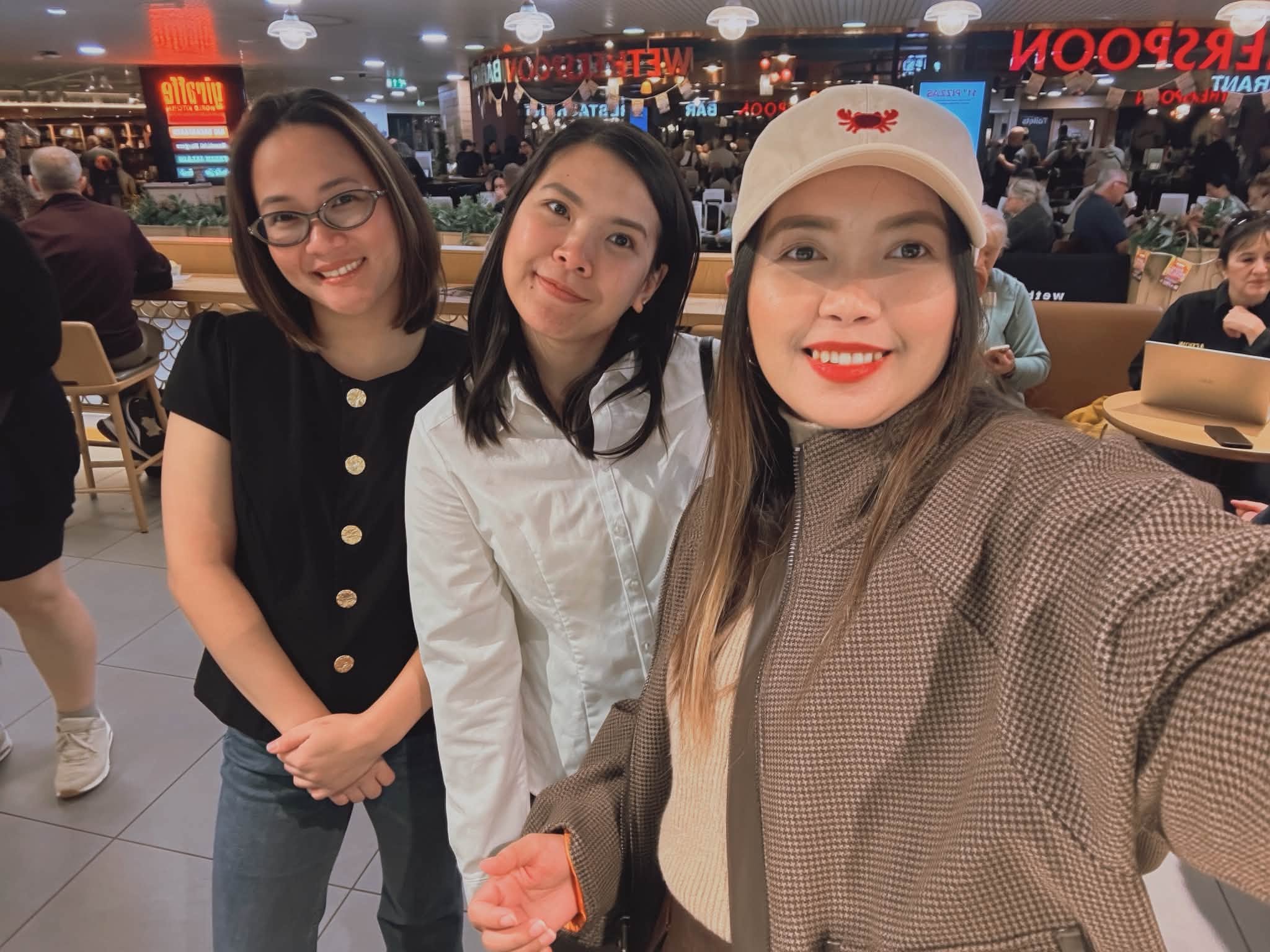
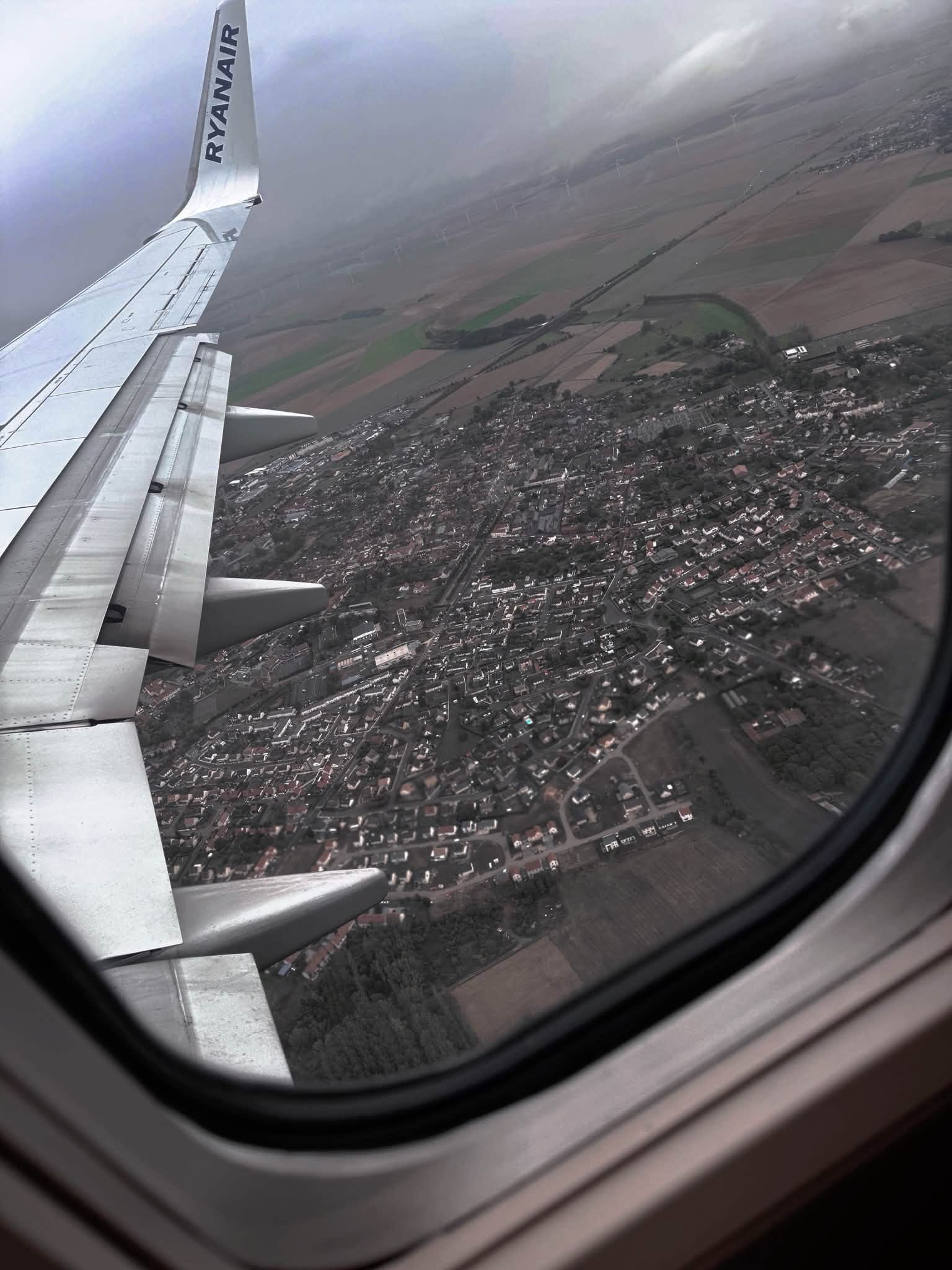
Before Paris could introduce us to its architecture, cuisine, and cultural sophistication, however, Birmingham Airport decided to contribute the first major plot twist. We were still preparing for departure when Ninin realised she had accidentally left her handbag inside the airport toilet. By the time the unfortunate discovery was made, the bag was genuinely lost. Not temporarily misplaced in another compartment, not quietly waiting beside a chair, and certainly not enjoying a leisurely holiday of its own. It was gone. We had not even reached France, and already one member of our travelling party had suffered a personal loss that seemed rather excessive for the opening chapter of a European adventure.
I can only imagine how distressing the situation was for her. Losing a handbag is unpleasant under ordinary circumstances, but losing one at an airport before an international flight adds an entirely different level of concern. The immediate relief was that Ninin still had her passport. Thank goodness for that, because an absent handbag was already unfortunate enough without adding the complication of a missing travel document. I felt genuinely sorry for her, although once we knew she could still continue the journey, I also recognised that this incident would occupy a permanent place in our group’s collection of affectionate jokes. Of all the souvenirs one could leave behind during a trip to France, Ninin had somehow managed to leave something before reaching the country.
I suppose every group has somebody who contributes an unexpected story to a holiday. Some people forget their chargers, some leave belongings in hotel rooms, and others accidentally travel in the wrong direction. Ninin had apparently decided to make her contribution before the aircraft had even departed. There was something almost impressively efficient about it, although I doubt she appreciated the achievement at the time. Her handbag never made it to Paris, but fortunately she did, passport intact and accompanied by friends who were sympathetic enough to worry and familiar enough to find humour in the situation once the immediate concern had passed. Somewhere in Birmingham Airport, a handbag had reached the final destination of its journey while its owner continued towards considerably more glamorous surroundings.
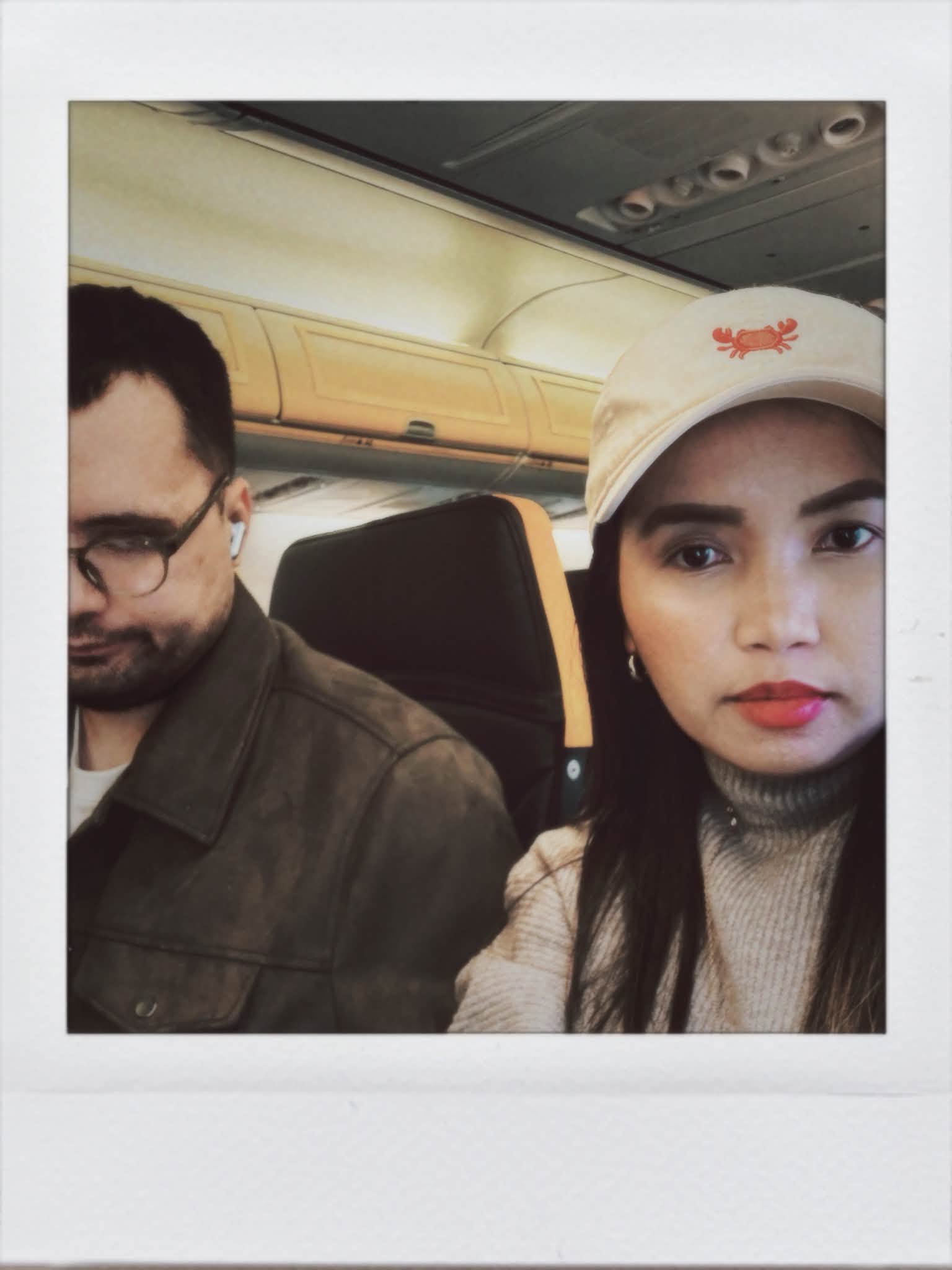
This is one of the reasons I enjoy travelling with close friends. We know one another well enough to recognise the difference between genuine concern and affectionate teasing. Nobody needs to maintain a perfectly polished personality throughout the trip, and moments of annoyance or embarrassment do not automatically require an emergency meeting about the future of our friendship. We can laugh at one another’s little misfortunes, complain when circumstances become difficult, and still understand that beneath the sarcasm is considerable affection. I have always valued friendships that allow people to be themselves, including the less graceful versions who emerge after insufficient sleep, unexpected travel complications, or an unreasonable amount of walking.
Once we finally reached Paris, my excitement returned with considerable enthusiasm. I was actually there, standing in a city I had wanted to visit for years, hearing unfamiliar conversations and recognising little details I had previously encountered only through photographs. It felt strangely surreal, as though a location from an old diary had suddenly become accessible through an actual transport network. I wanted to notice everything: the streets, the buildings, the signs, the cafés, and the ordinary rhythm of people going about their day. For Jan and me, this was our first opportunity to experience the French capital in person. Marj and Ninin had already visited, so they were approaching familiar surroundings with considerably more composure than I was capable of demonstrating.
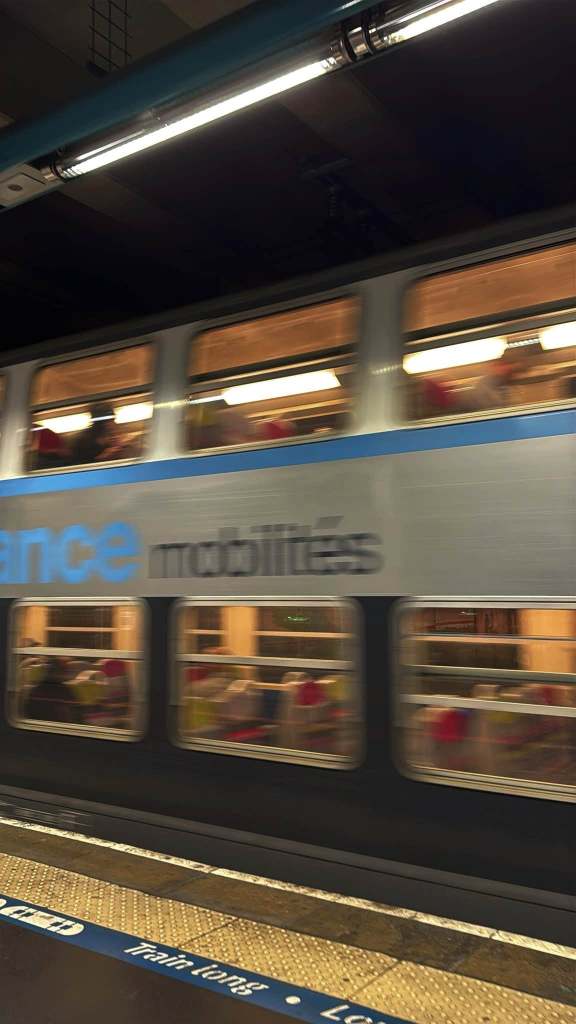
Paris, unfortunately, decided that my first experience of its public transport system required another unexpected incident. As I passed through a Métro ticket barrier, somebody followed so closely behind me that they managed to enter without paying. I had barely begun navigating the city’s transport arrangements when a complete stranger apparently decided that my valid ticket included complimentary admission for an additional passenger. Excusez-moi, but I was fairly certain I had purchased transport for one person, not a family package with an unknown beneficiary. The sudden proximity startled me, and I was annoyed that someone had used my passage through the barrier in that way. It was not the particularly elegant introduction to Parisian public transport I had imagined, but it certainly reminded me to remain attentive in busy stations.
I tried not to allow the experience to influence my impression of the city. Every major destination has its inconveniences, and the behaviour of one inconsiderate stranger hardly deserves to represent an entire population. Still, I could not help finding the situation absurd. We had travelled to Paris with the intention of experiencing famous landmarks and French culture, and I had already become an unwilling participant in someone else’s fare-evasion strategy. The city was apparently determined to ensure that our visit would contain more than beautiful photographs and predictable tourist activities. At this rate, I thought, we might return home with enough material for an entire collection of travel mishaps before we had even reached the Eiffel Tower.
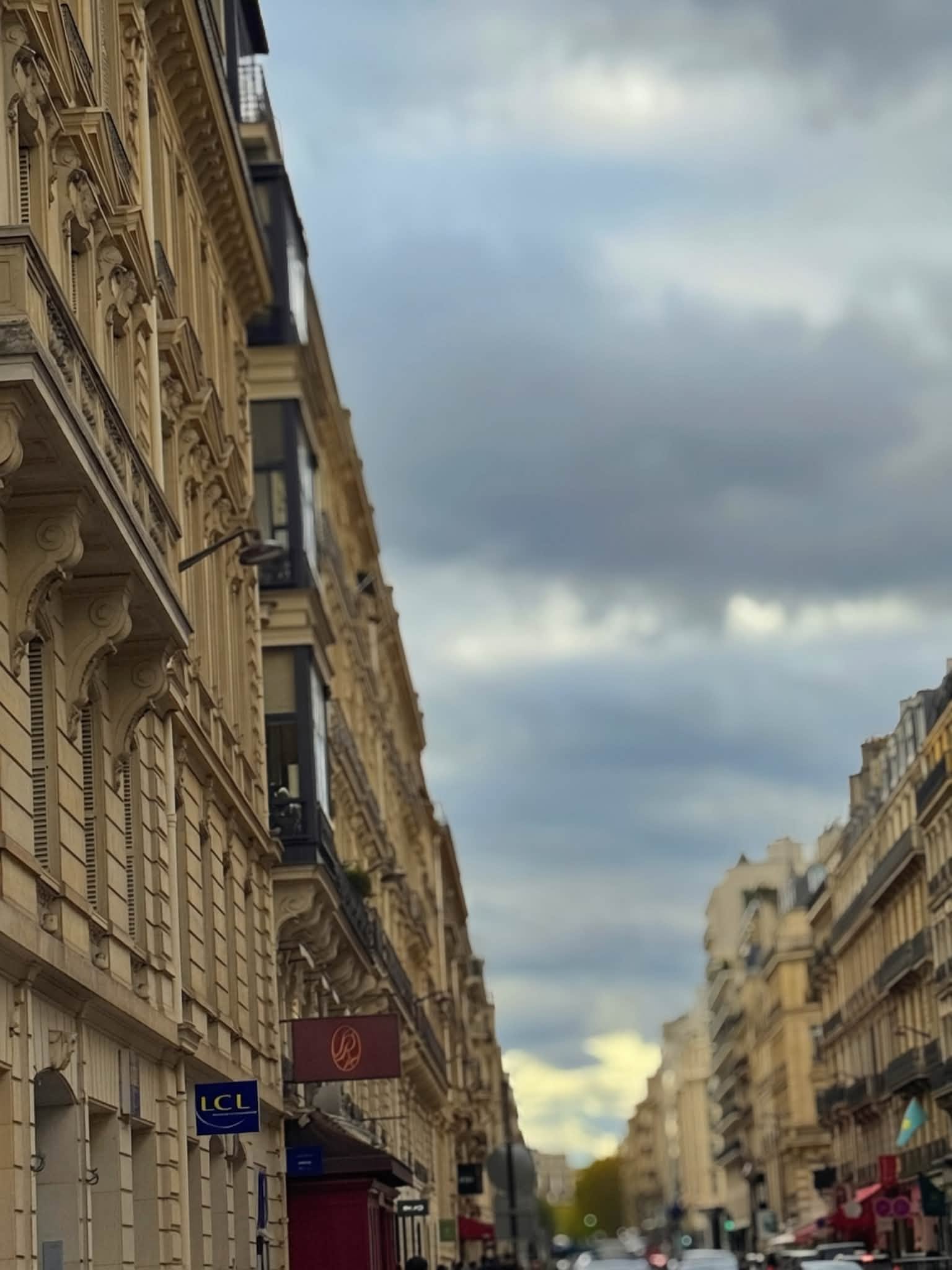
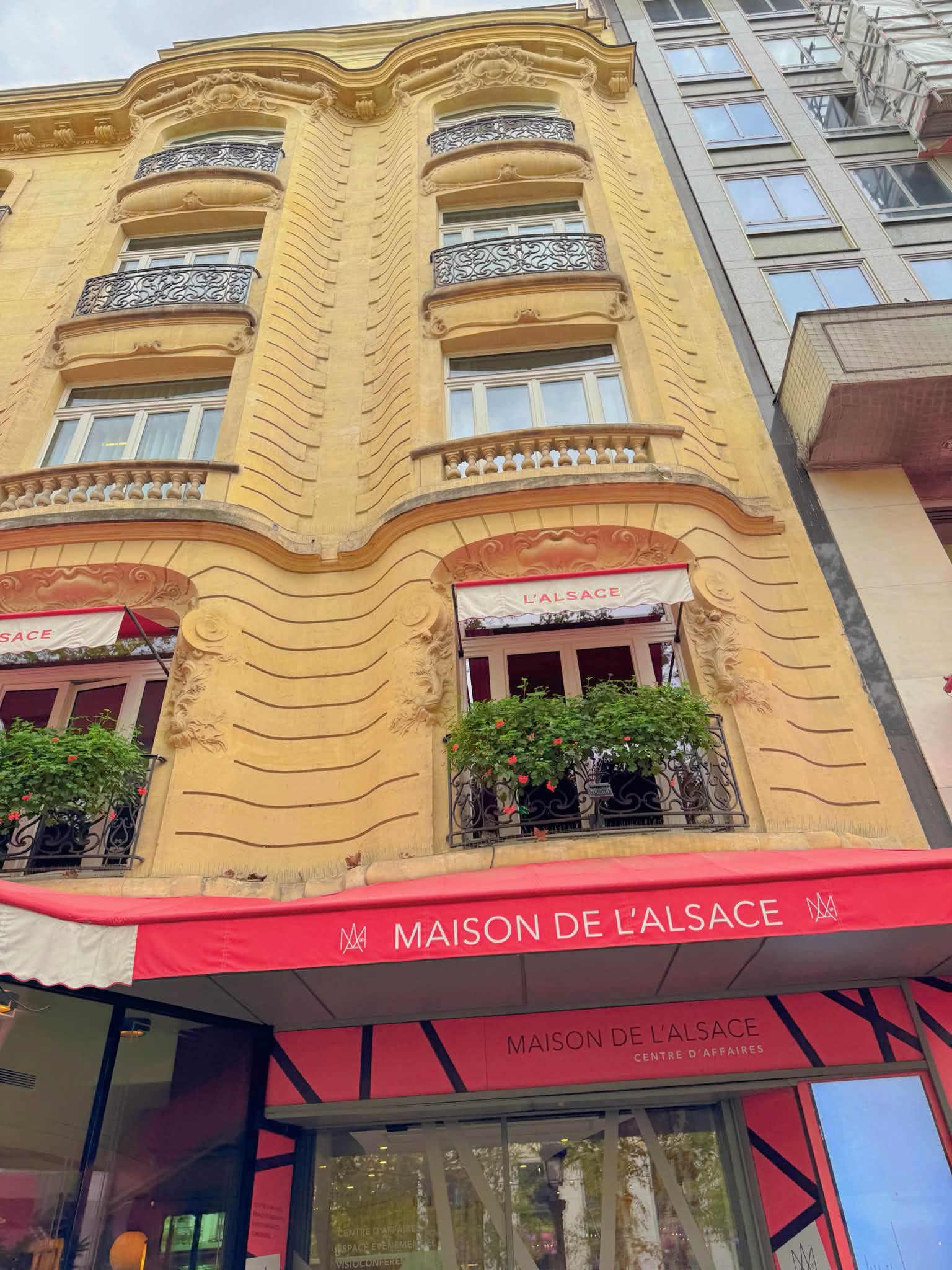
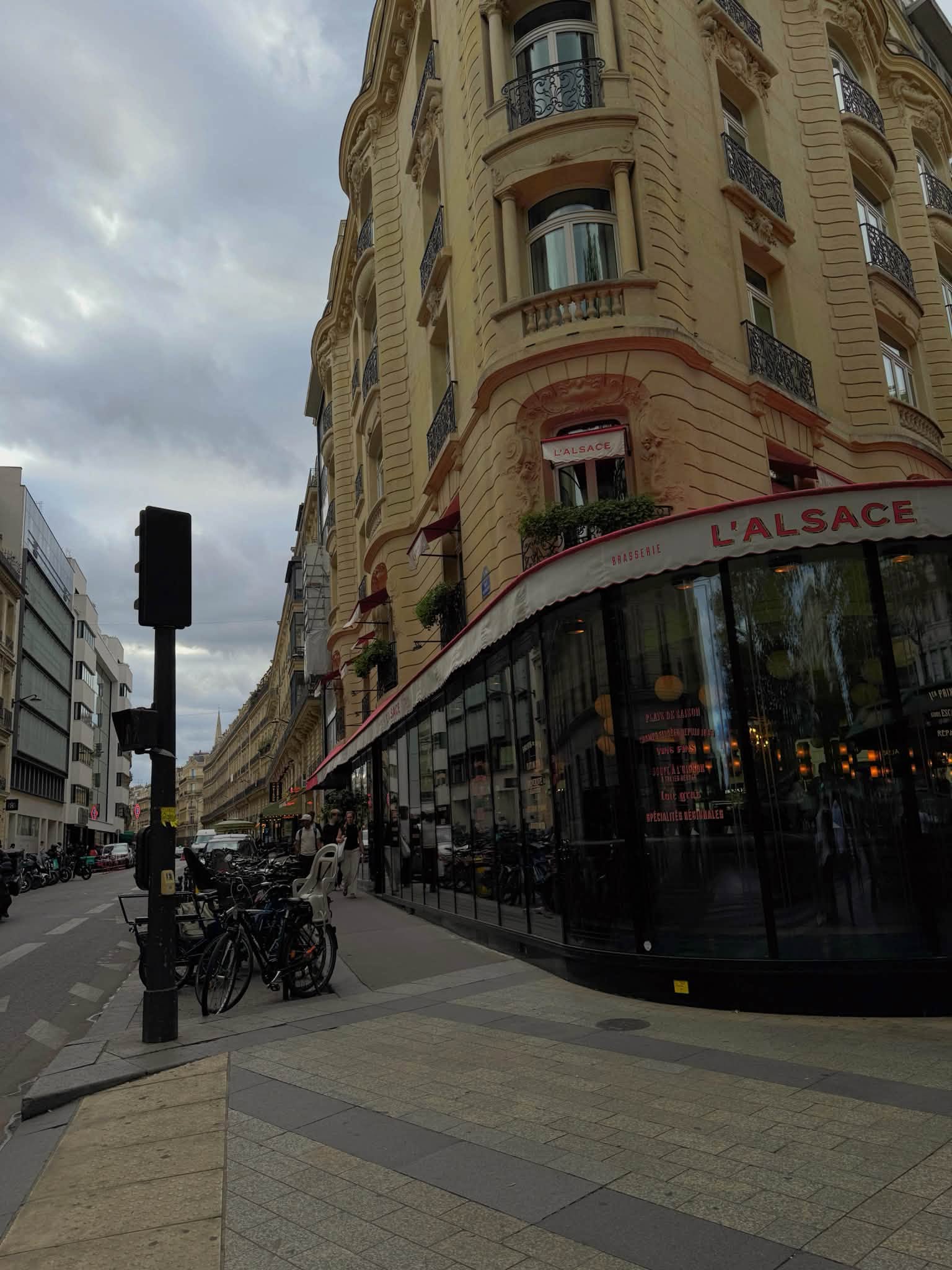
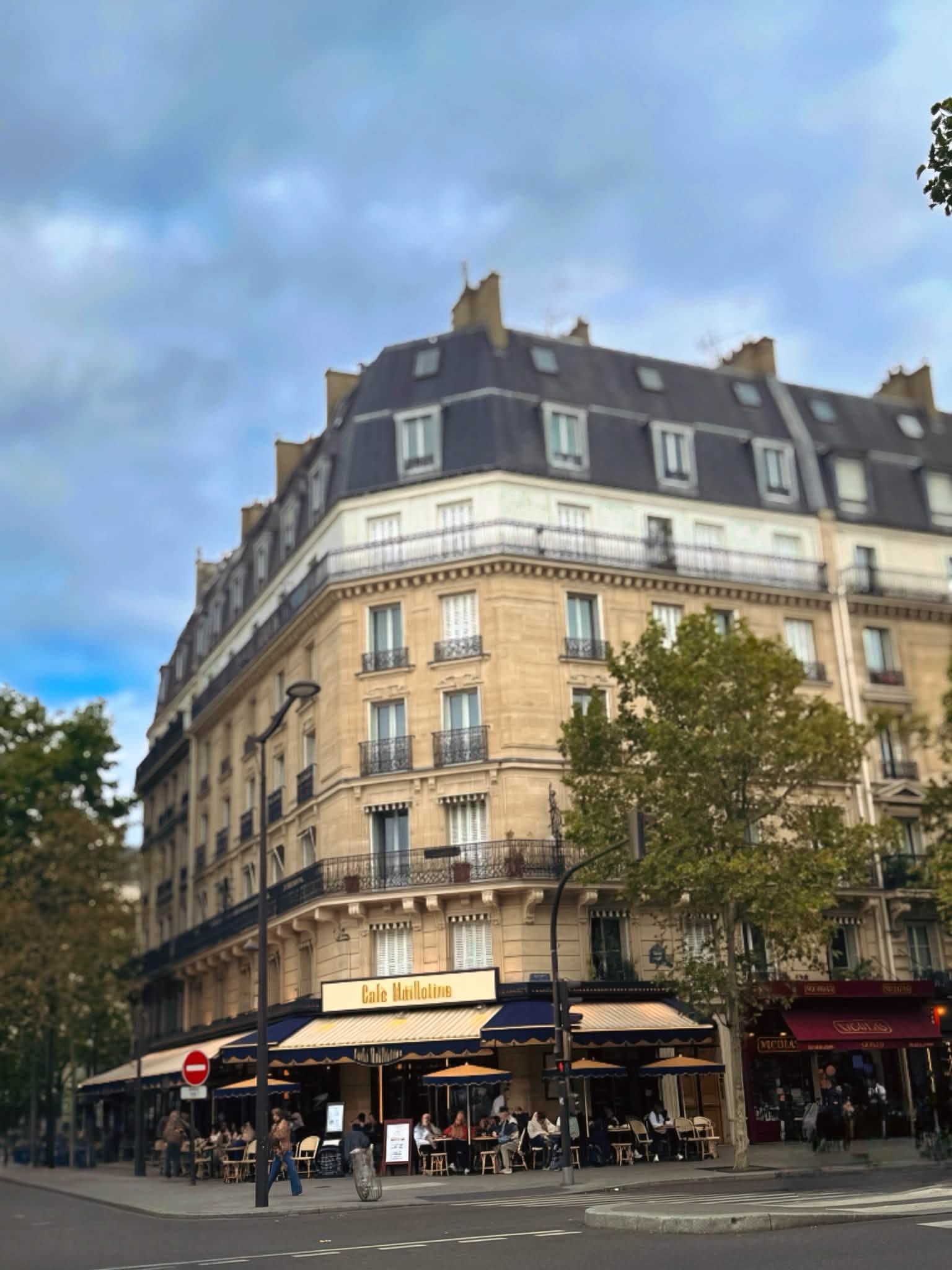
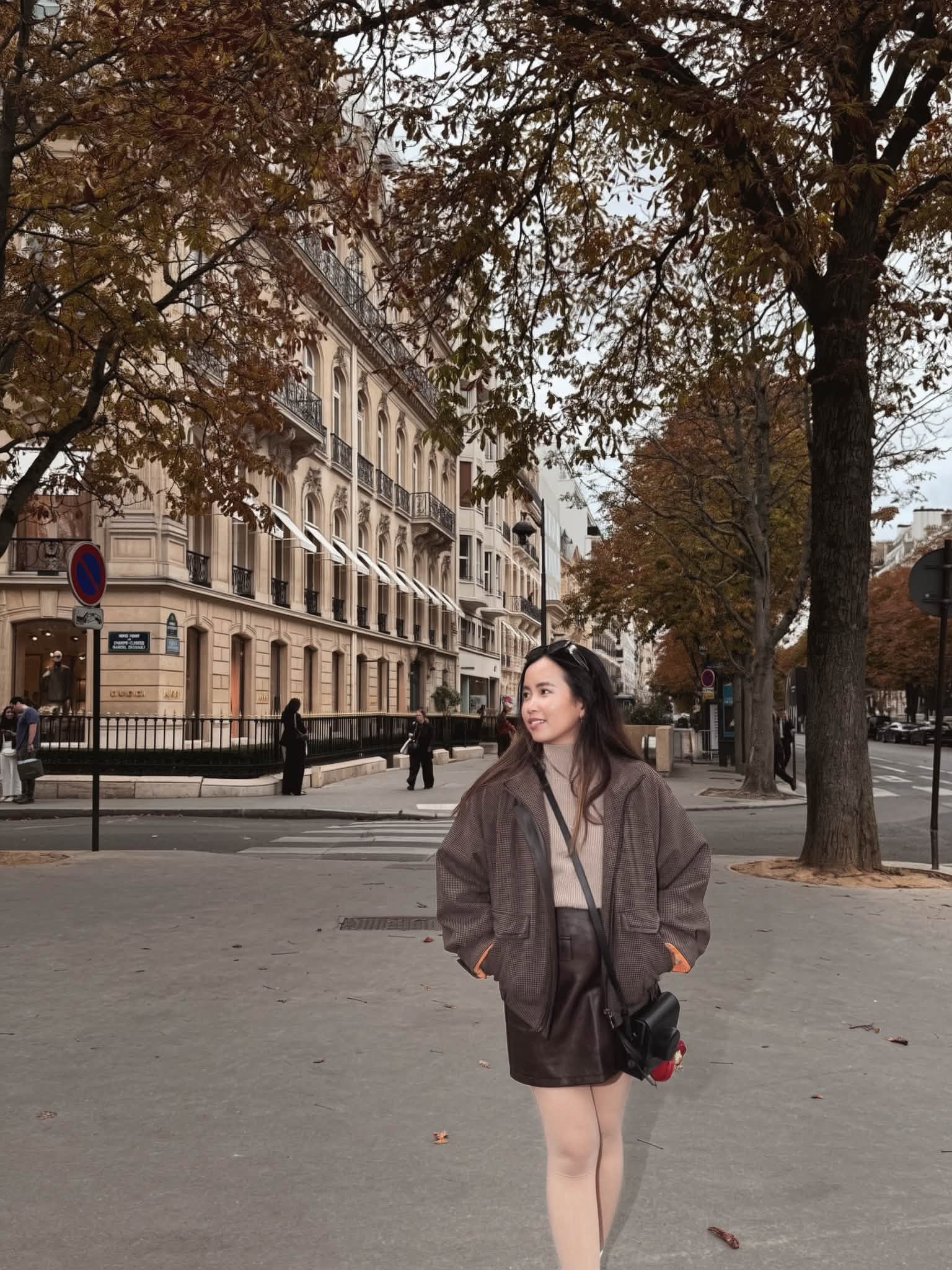
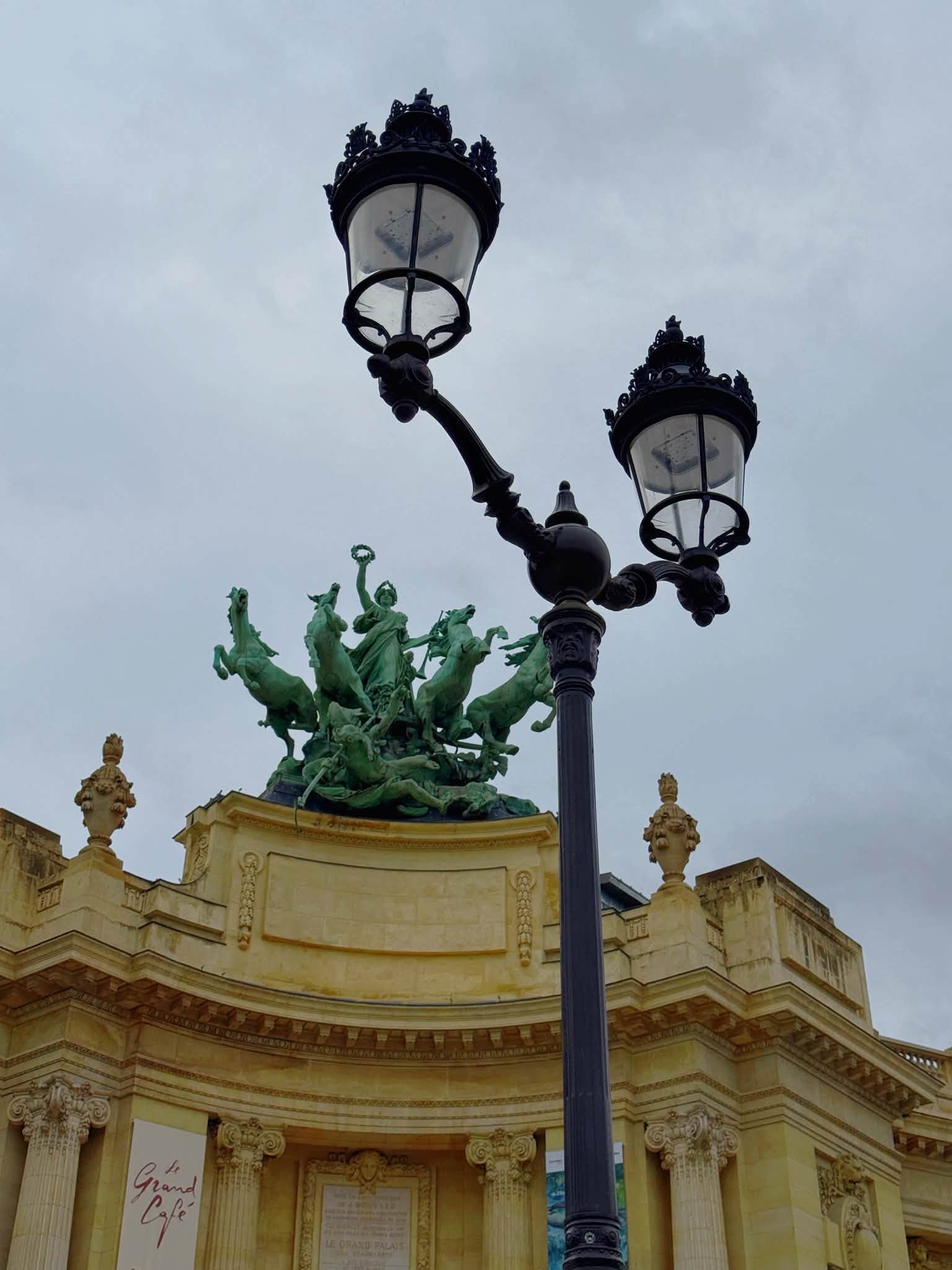
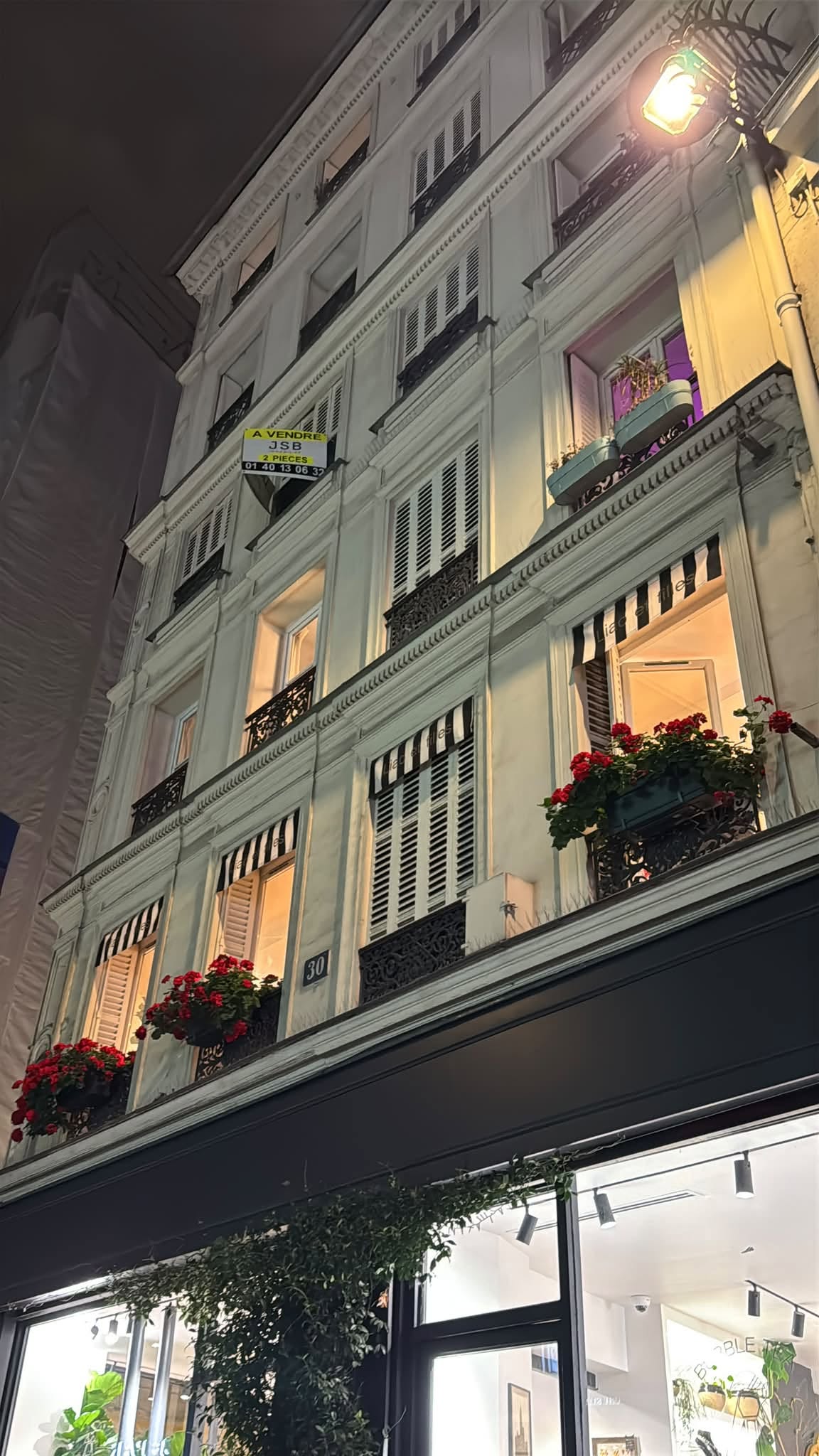
Once we emerged into the streets, however, Paris began redeeming itself spectacularly. I have always loved architecture, particularly buildings that reveal something of the artistic preferences and ambitions of earlier generations. Paris seemed to have an extraordinary abundance of them. Pale stone façades, tall windows, wrought-iron balconies, elaborate carvings, and elegant rooflines appeared in almost every direction. Some buildings looked so beautifully arranged that I wondered whether the city had developed a formal objection to architectural simplicity. Even ordinary streets seemed worthy of admiration, and I repeatedly found myself looking upwards instead of concentrating upon where we were walking.
This was when my questioning began to develop into what I suspect Marj considered an occupational hazard. I wanted to know what certain buildings were, where particular roads led, whether famous landmarks were nearby, how much farther we needed to walk, and why some places looked familiar. Occasionally I asked questions because I was genuinely curious about French history or architecture. Other times I wanted reassurance that our route made sense. And sometimes, if I am being fair, I probably asked simply because a thought had entered my head and I saw no compelling reason to keep it there. Marj, unfortunately, was frequently within hearing distance.
I could tell that my questions sometimes annoyed her. She had already been to Paris and was probably hoping to enjoy the city without being subjected to a continuous examination in European geography. Meanwhile, I was behaving like a tourist who had mistaken her friend for a fully staffed information centre. There were moments when her exasperation became obvious, and I found the situation rather funny because I knew she was not genuinely offended. That is simply how our friendship works. We can irritate one another, respond with sarcasm, and continue enjoying the day without interpreting every minor annoyance as a serious interpersonal crisis. Sometimes she becomes maldita, sometimes I become insufferably curious, and occasionally both conditions occur simultaneously. Somehow, the friendship survives.
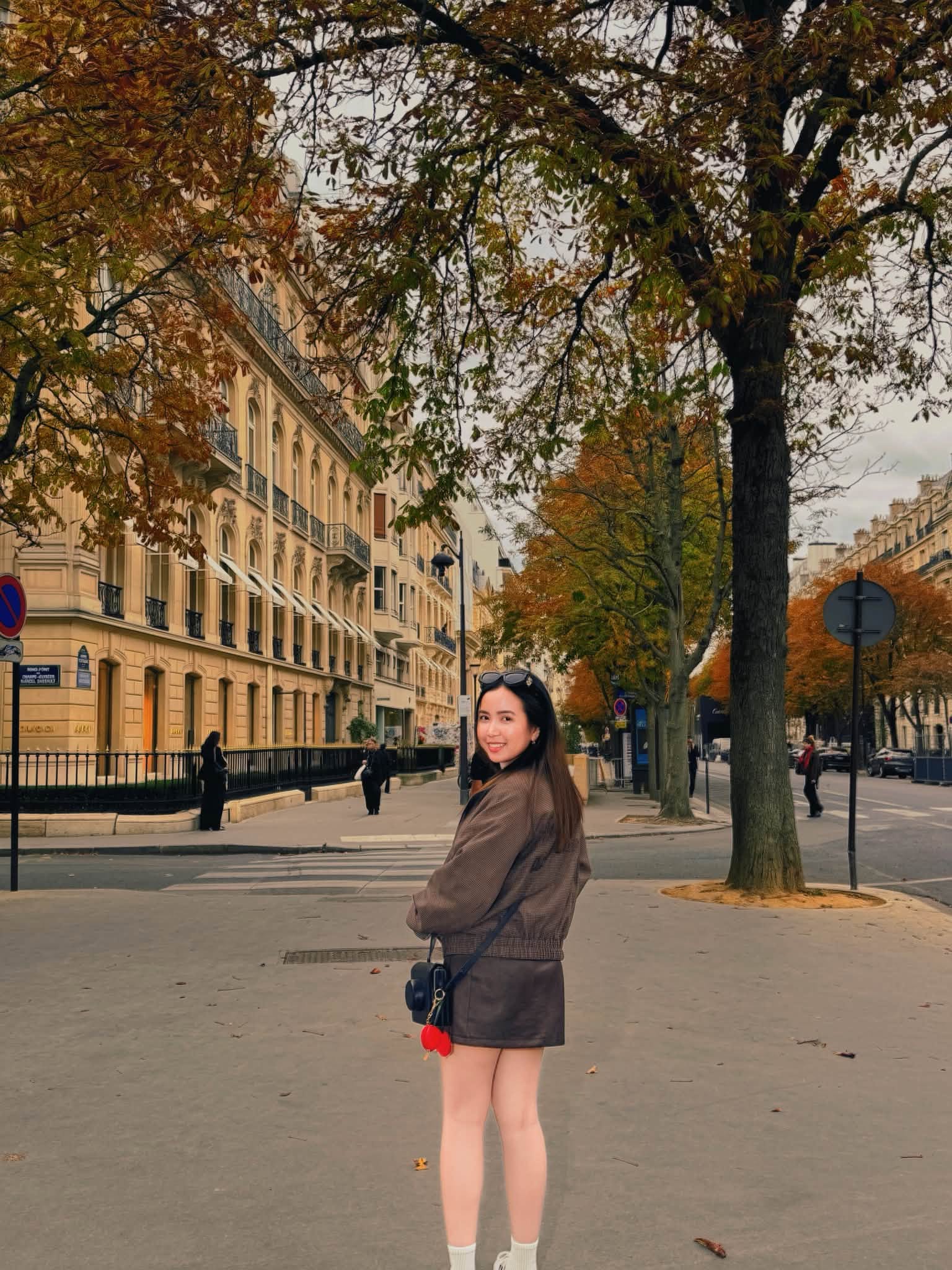
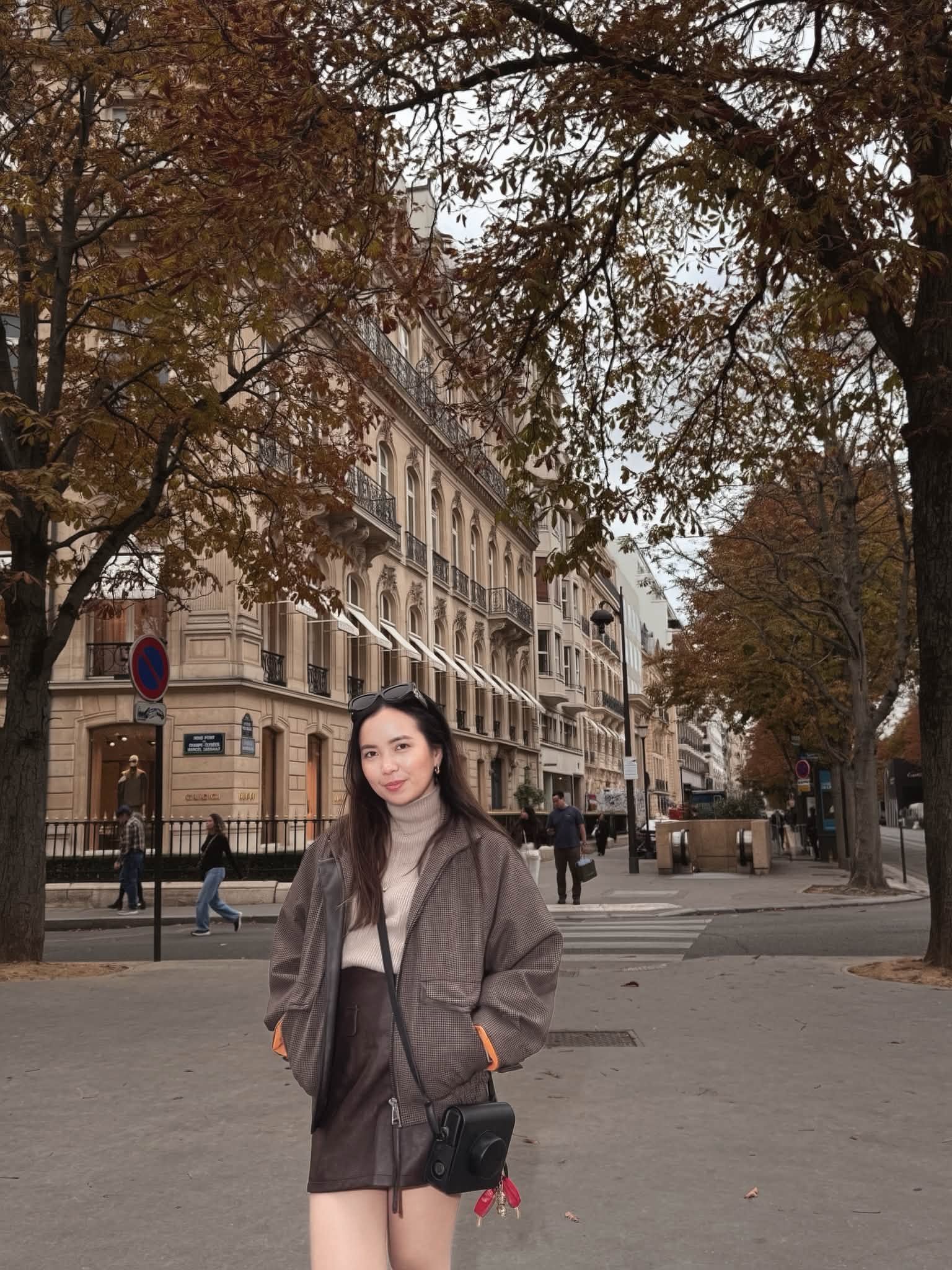
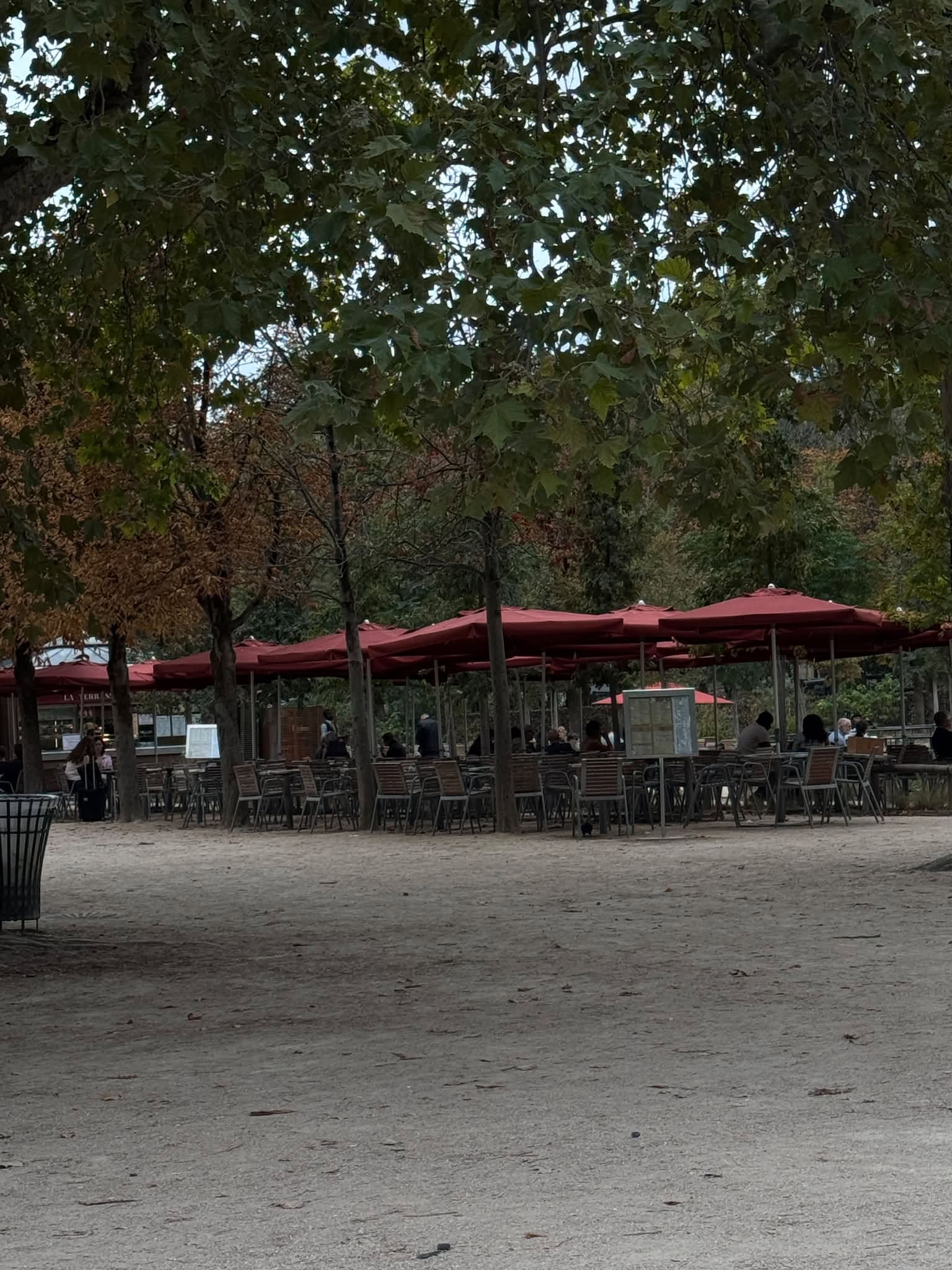
I suspect travelling with me can be rather demanding when I am visiting somewhere for the first time. I become interested in details that other people might consider insignificant. An attractive doorway deserves attention. A street sign becomes something to examine. A café with beautifully arranged chairs suddenly warrants a photograph, as though France has invented the concept of sitting outside. I find myself asking questions about buildings that may not even have particularly interesting answers, simply because their appearance makes me curious. Marj must have wondered whether she was accompanying a friend or supervising a student who had arrived without completing the preliminary reading.
But I am grateful that our friendship is comfortable enough to accommodate those little irritations. There is something reassuring about travelling with people who do not expect you to behave perfectly throughout the journey. We can become tired, disagree about directions, laugh at one another’s mistakes, and occasionally exchange remarks that would sound far more alarming to somebody who did not know us. I appreciate that we can be ourselves without requiring every conversation to be diplomatic. Of course, I should probably try to ask fewer questions during future trips. I make no legally binding promises about that, particularly when visiting somewhere as architecturally fascinating as Paris.
Our itinerary was ambitious enough to deserve its own warning label. We wanted to see the Eiffel Tower, the Louvre, the Arc de Triomphe, beautiful bridges, attractive streets, and several other places that had appeared on our list. We also wanted proper French food, plenty of photographs, and the opportunity to see Paris after dark. All within one sightseeing day. I have no idea why we believed this was an entirely reasonable undertaking, but enthusiasm has a remarkable ability to disguise practical limitations. On a map, famous landmarks appear as convenient little symbols separated by manageable distances. In reality, those distances are occupied by roads, crowds, stations, staircases, and the gradually diminishing patience of human legs.
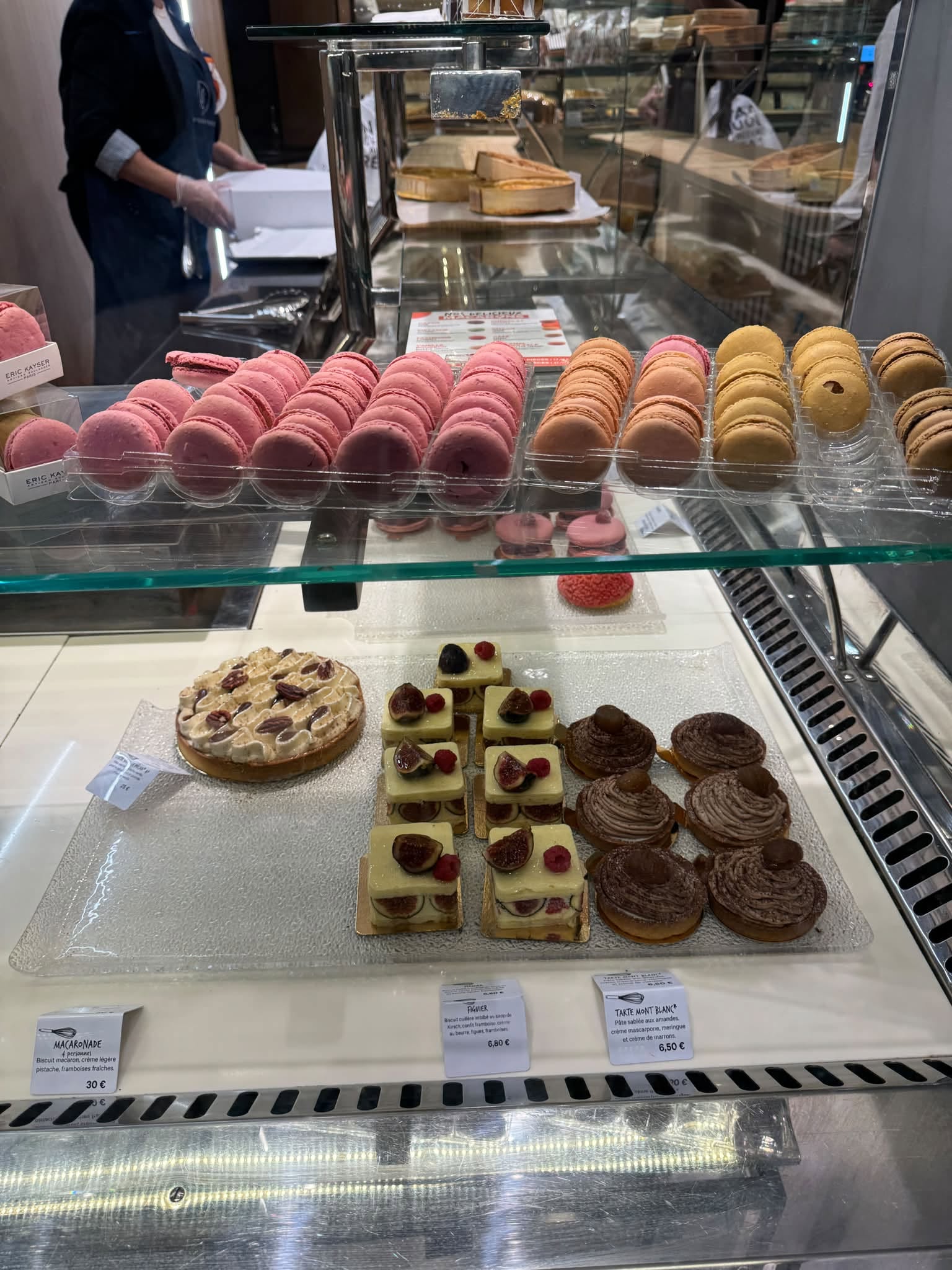
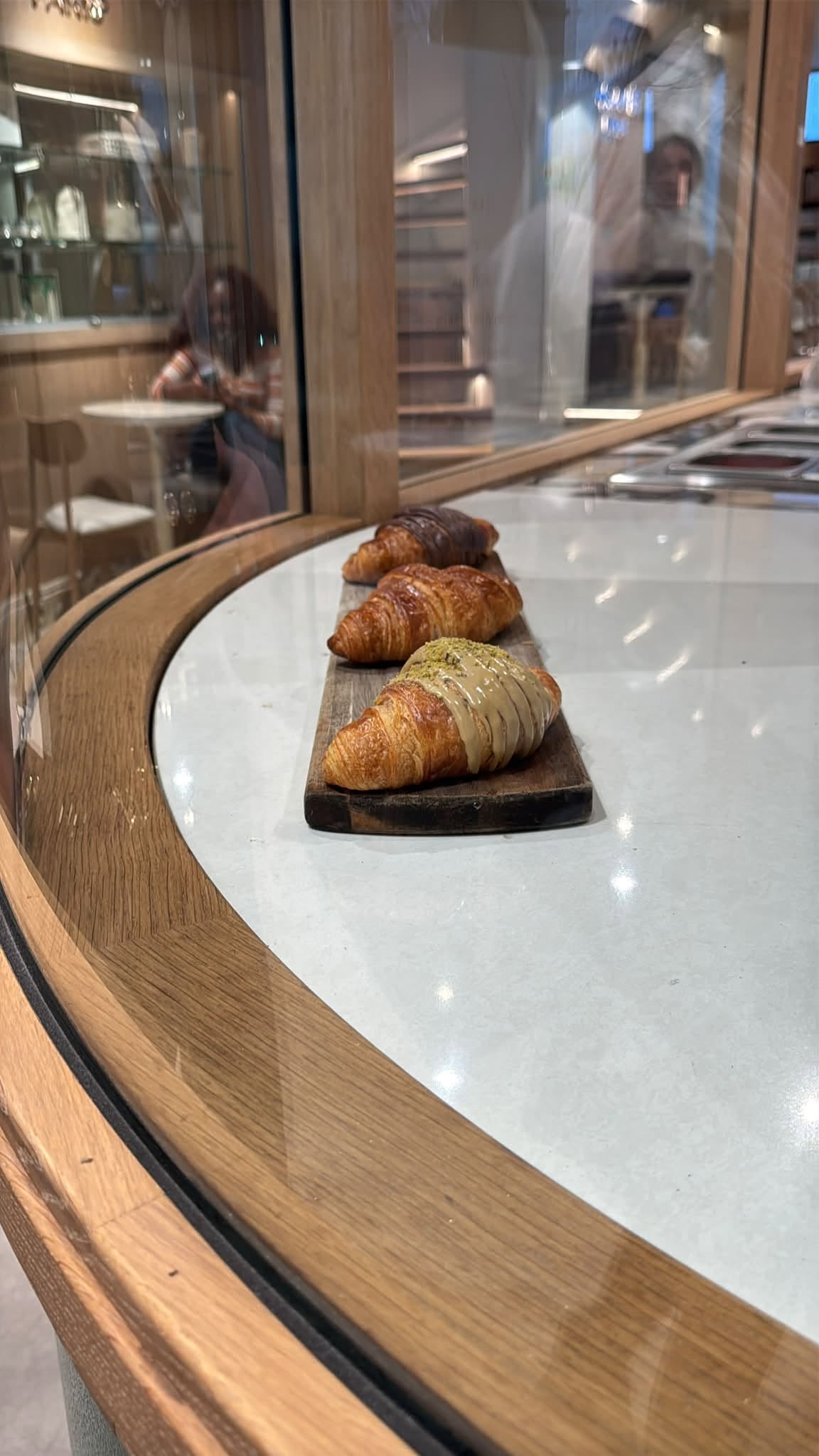
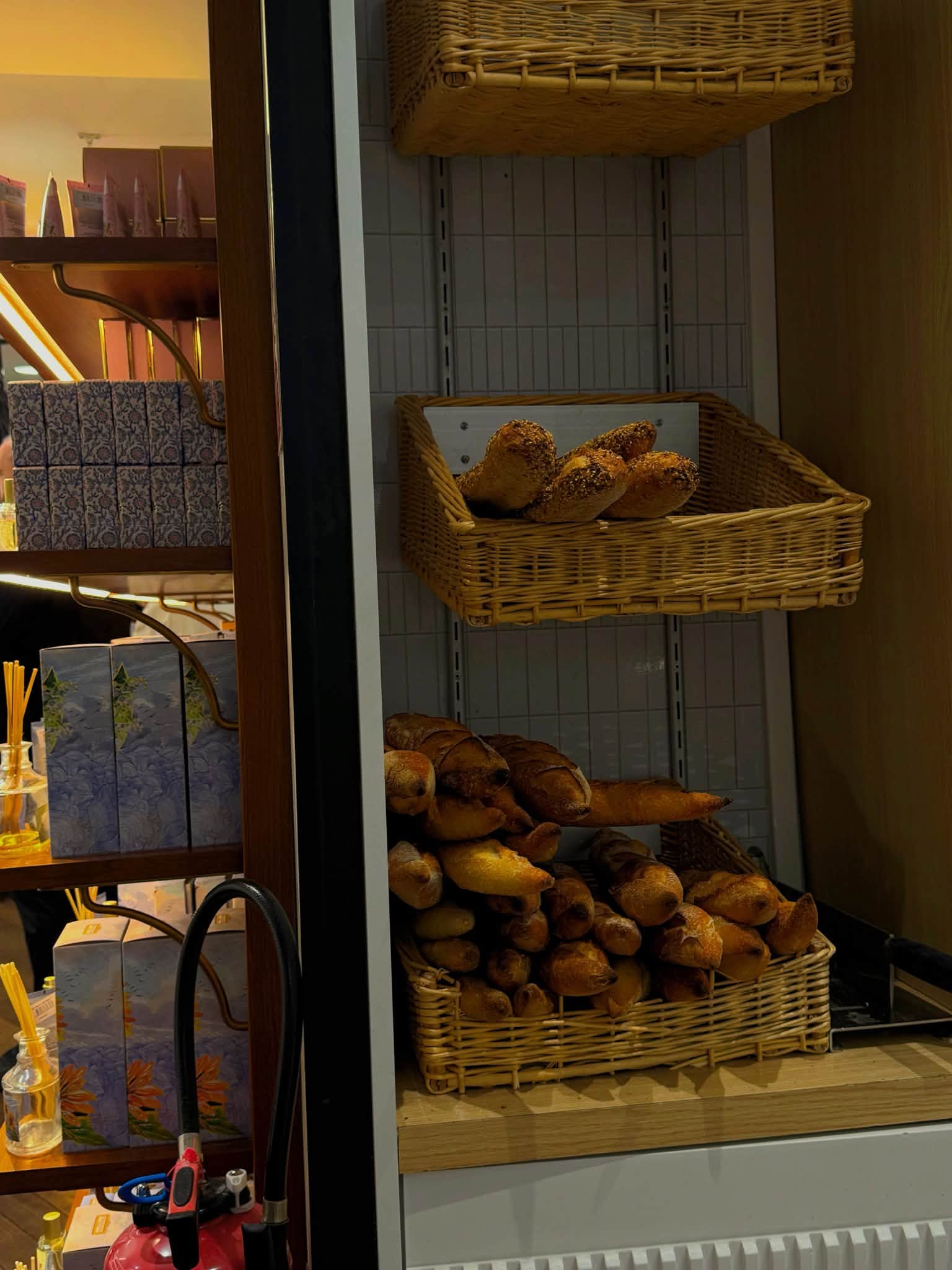
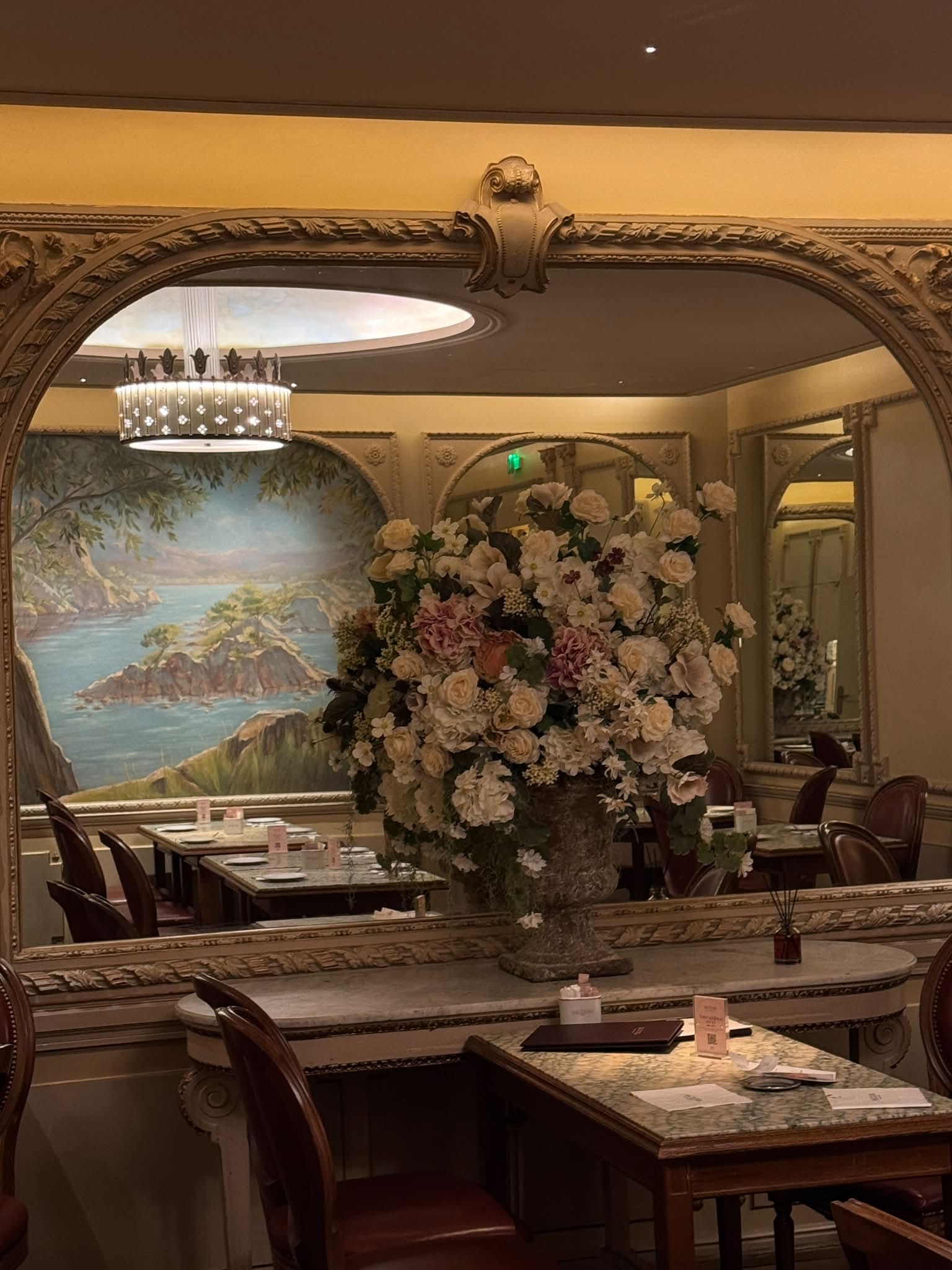
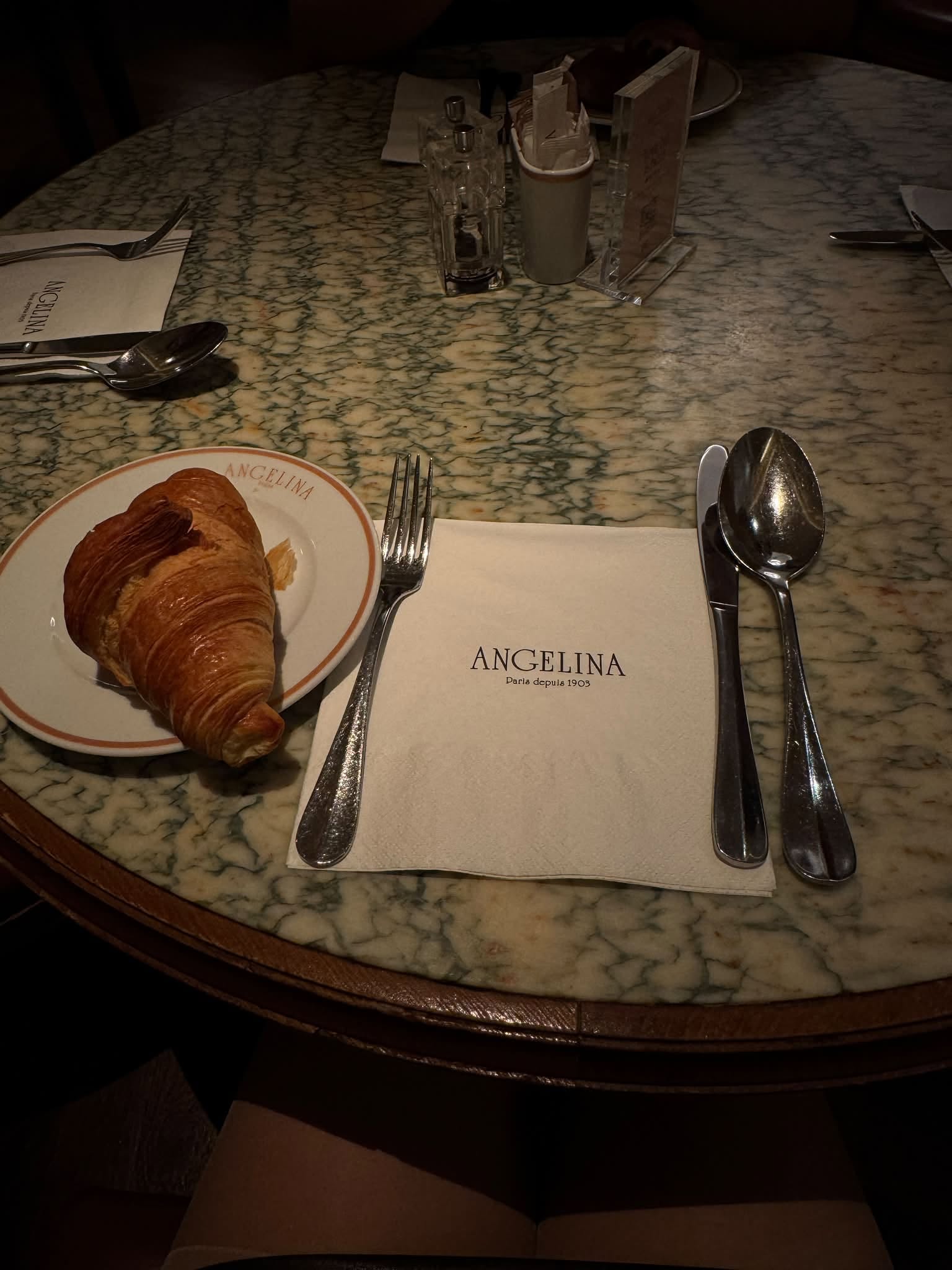
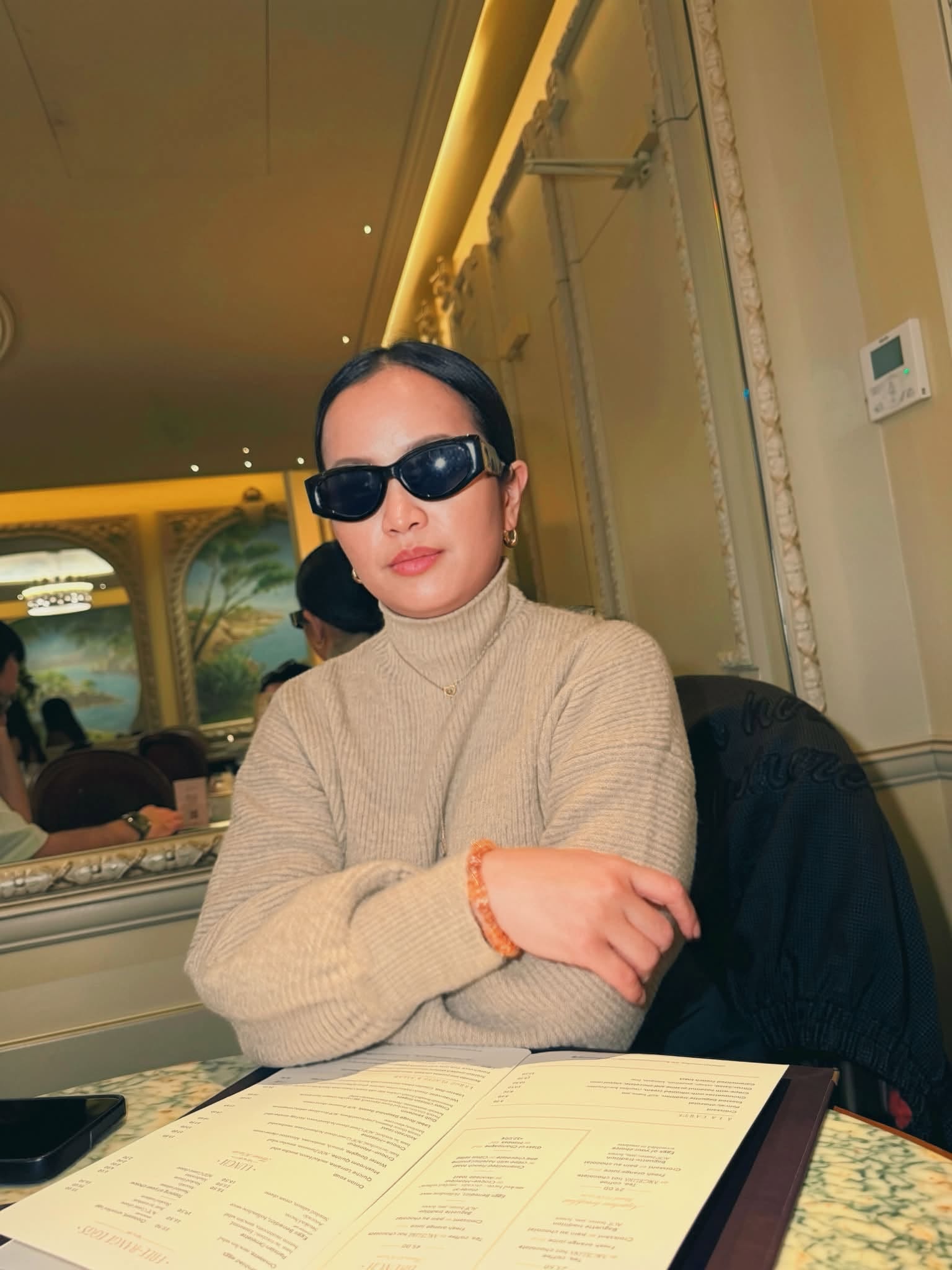
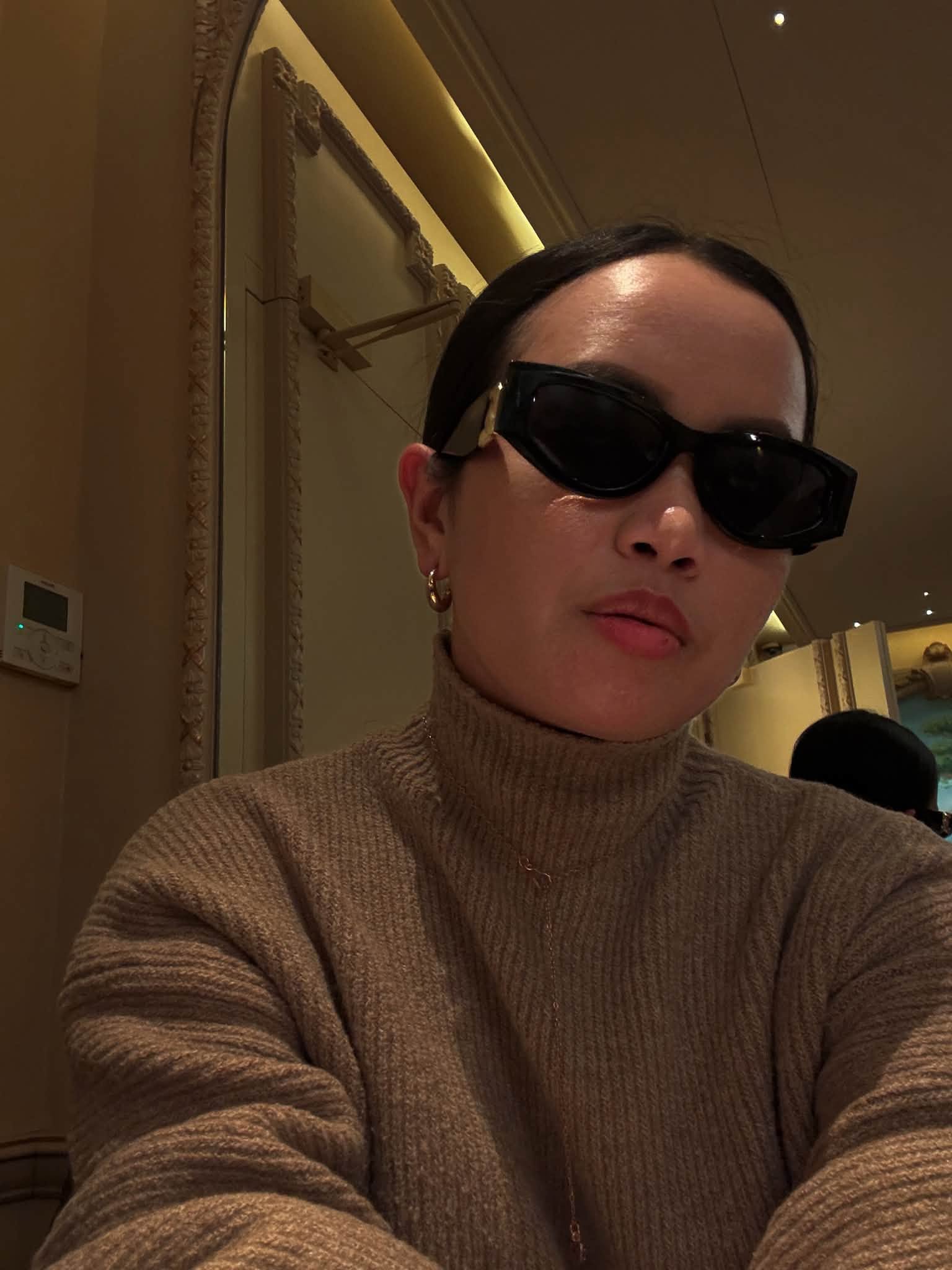
One of the most delightful parts of our visit was the opportunity to experience Parisian food, particularly the pastries that have made the city internationally famous. Our stop at Angelina was among the highlights of the day. I had seen photographs of its beautiful desserts and rich hot chocolate, and I was eager to experience the place for myself. There was something wonderfully satisfying about finally sitting inside a historic Parisian tearoom whose name I had previously encountered through travel recommendations and photographs. The elegant setting, marble-topped tables, and carefully presented food gave the occasion a sense of indulgence that felt entirely appropriate for a long-awaited trip.
Angelina
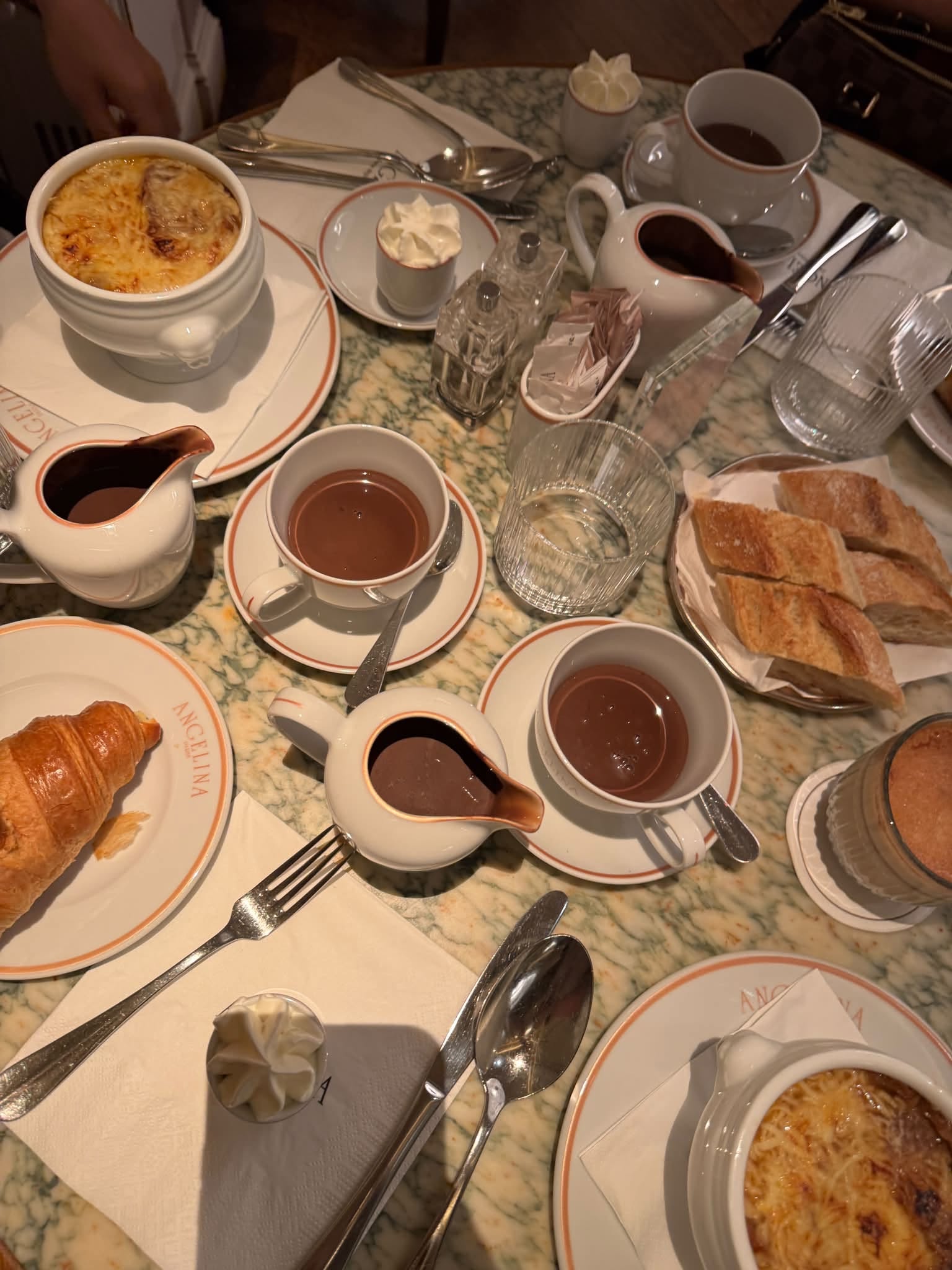
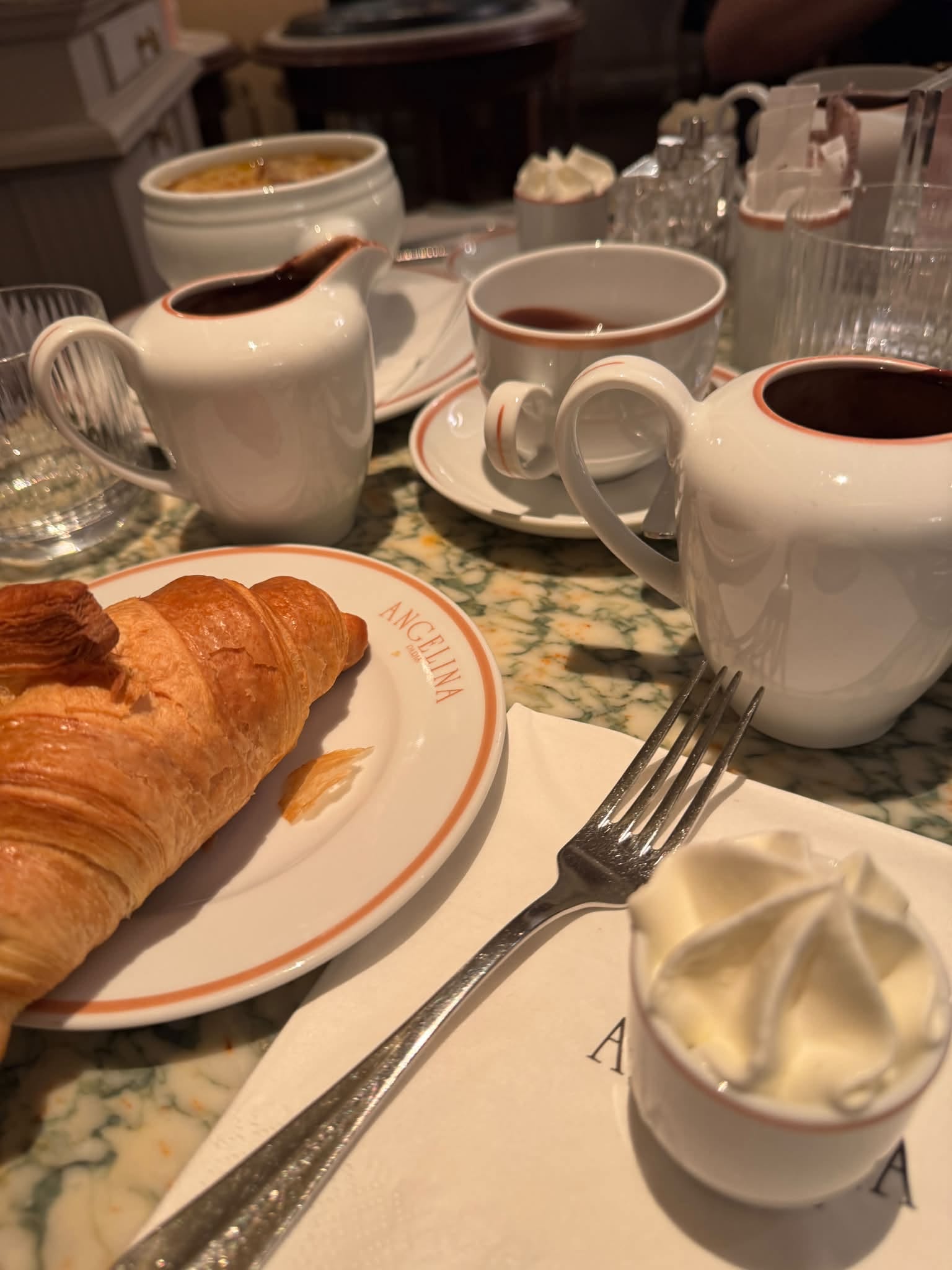
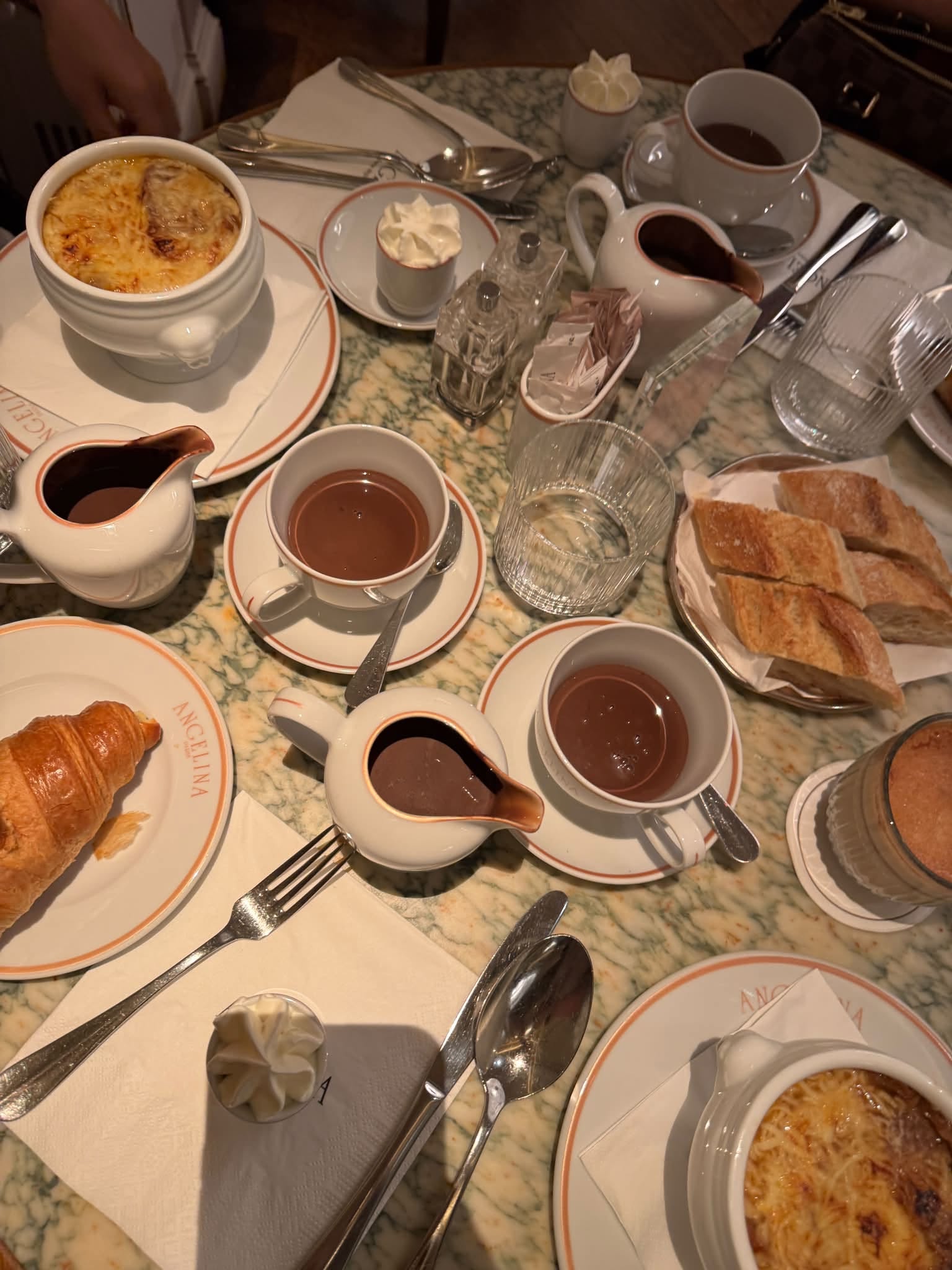
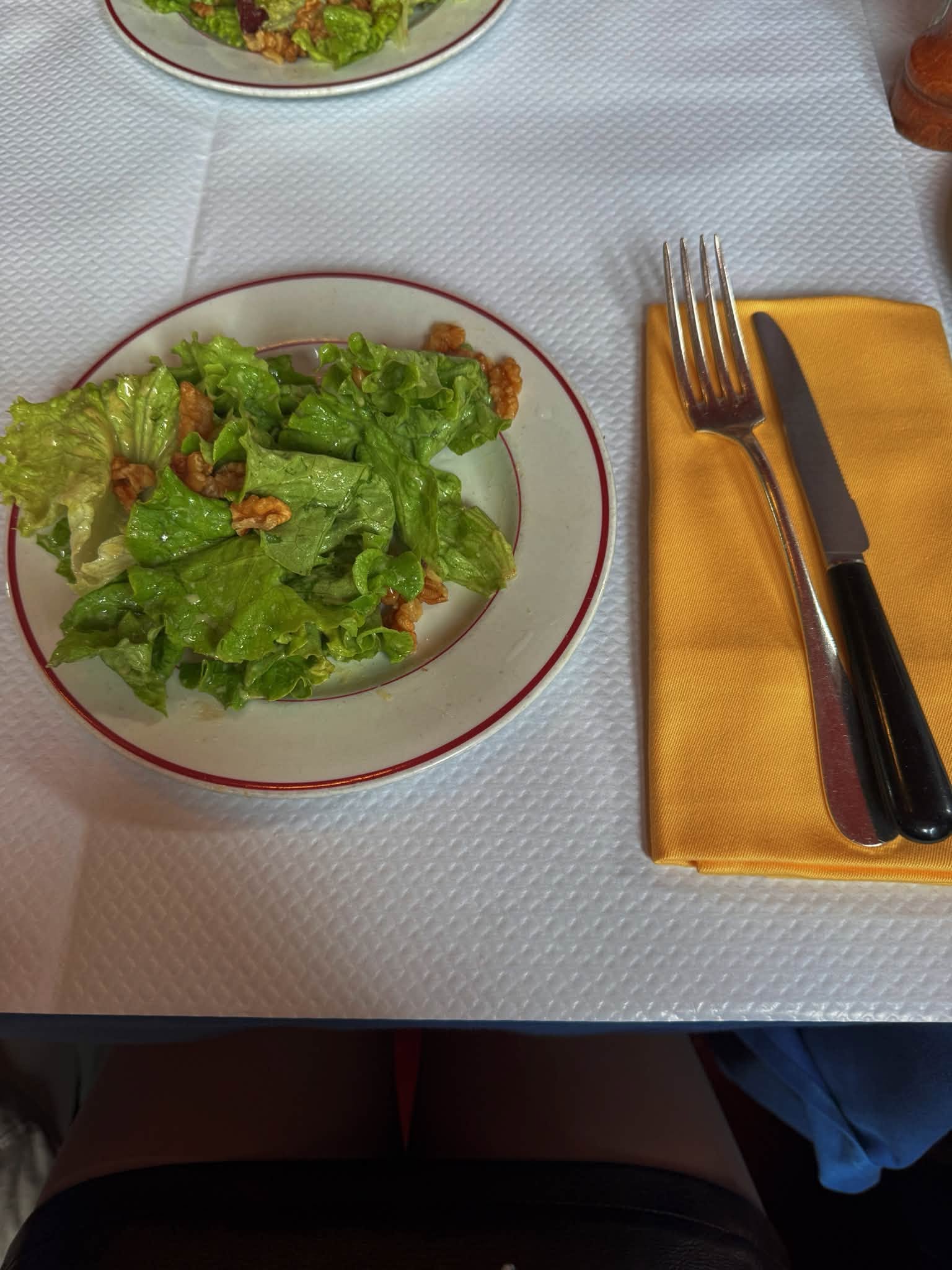
Naturally, I photographed the table before concentrating properly on the meal. I have apparently reached the stage of travelling where even a restaurant napkin can become an important documentary subject. Angelina’s name was printed on the tableware alongside the words Paris depuis 1903, and I found myself admiring this small detail as though it were an exhibit. The arrangement included croissants, bread, savoury dishes, pastries, and cups of rich hot chocolate accompanied by little pitchers of additional chocolate. It looked magnificent, although I suspect somebody unfamiliar with our group might have wondered whether we were preparing breakfast or conducting an extensive research project into French confectionery.
The hot chocolate deserves particular recognition. It was thick, dark, rich, and entirely uninterested in behaving like the ordinary powdered drinks I sometimes prepare at home. This was not a beverage one could casually consume while checking emails. It demanded attention and, quite possibly, a moment of silence to appreciate its commitment to chocolate. The consistency was closer to melted indulgence than the conventional hot chocolate I was accustomed to, and I thoroughly enjoyed it. I have always loved good food, but Paris seemed determined to demonstrate that even familiar treats could be elevated into something considerably more extravagant.
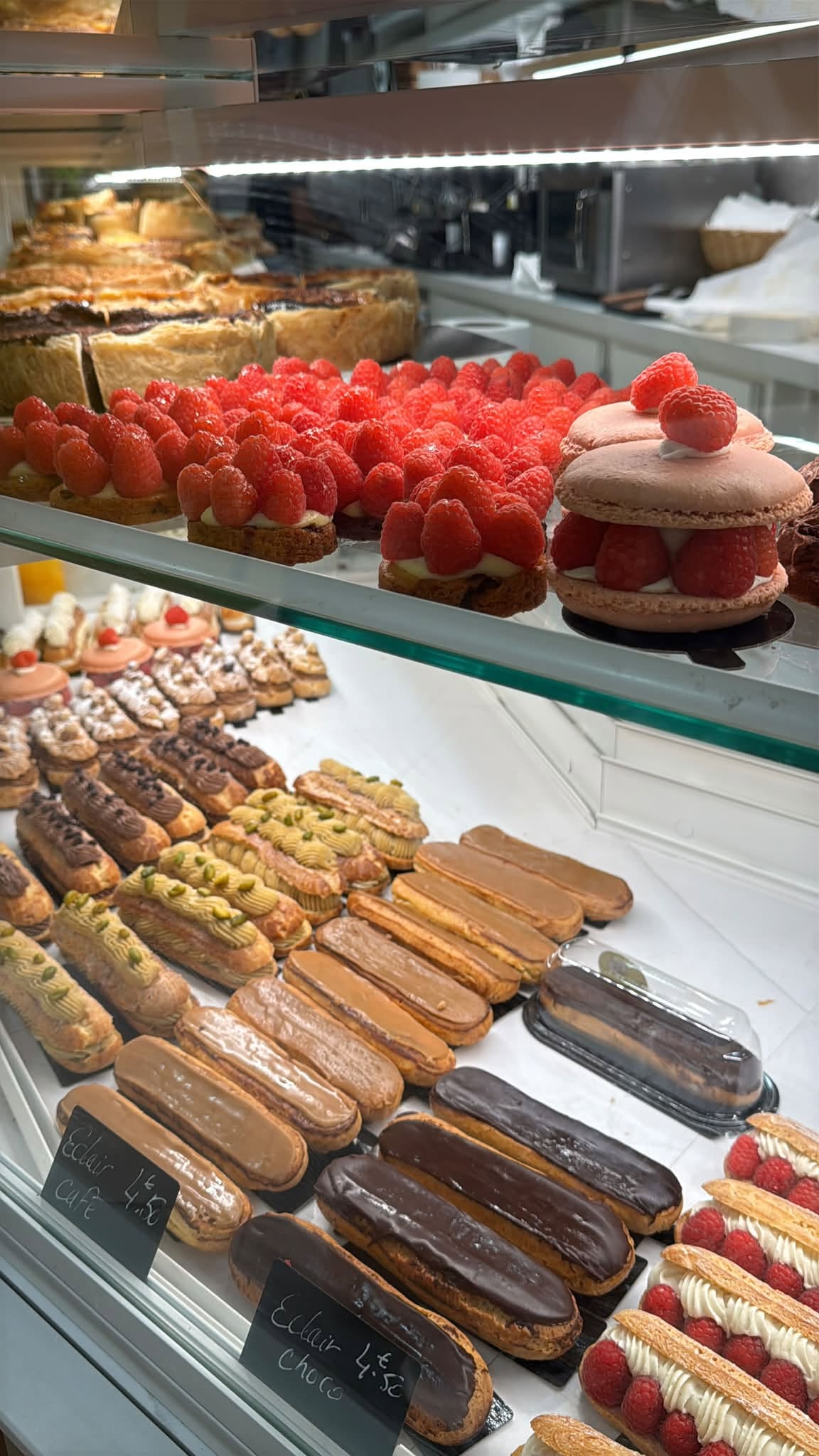
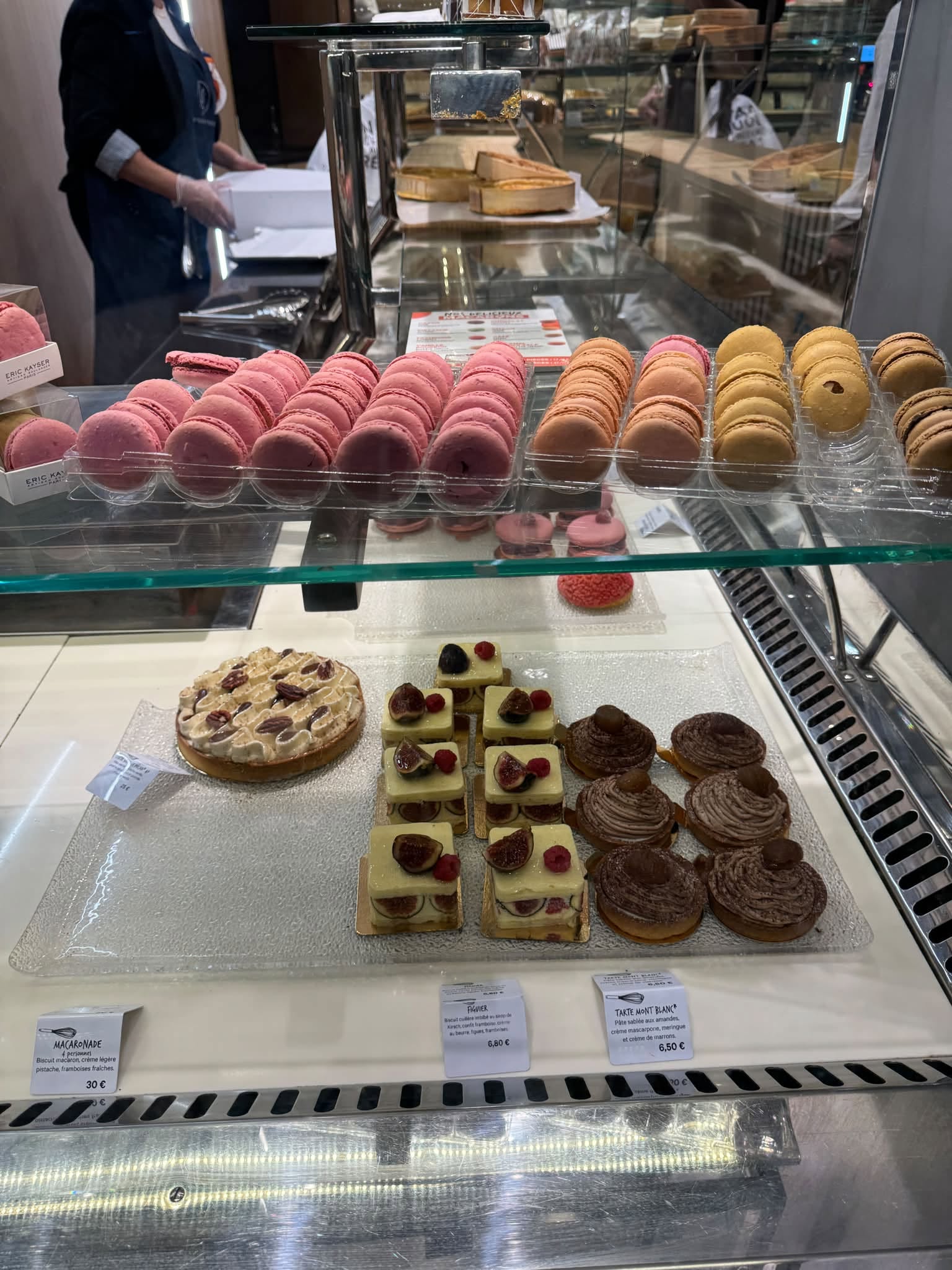
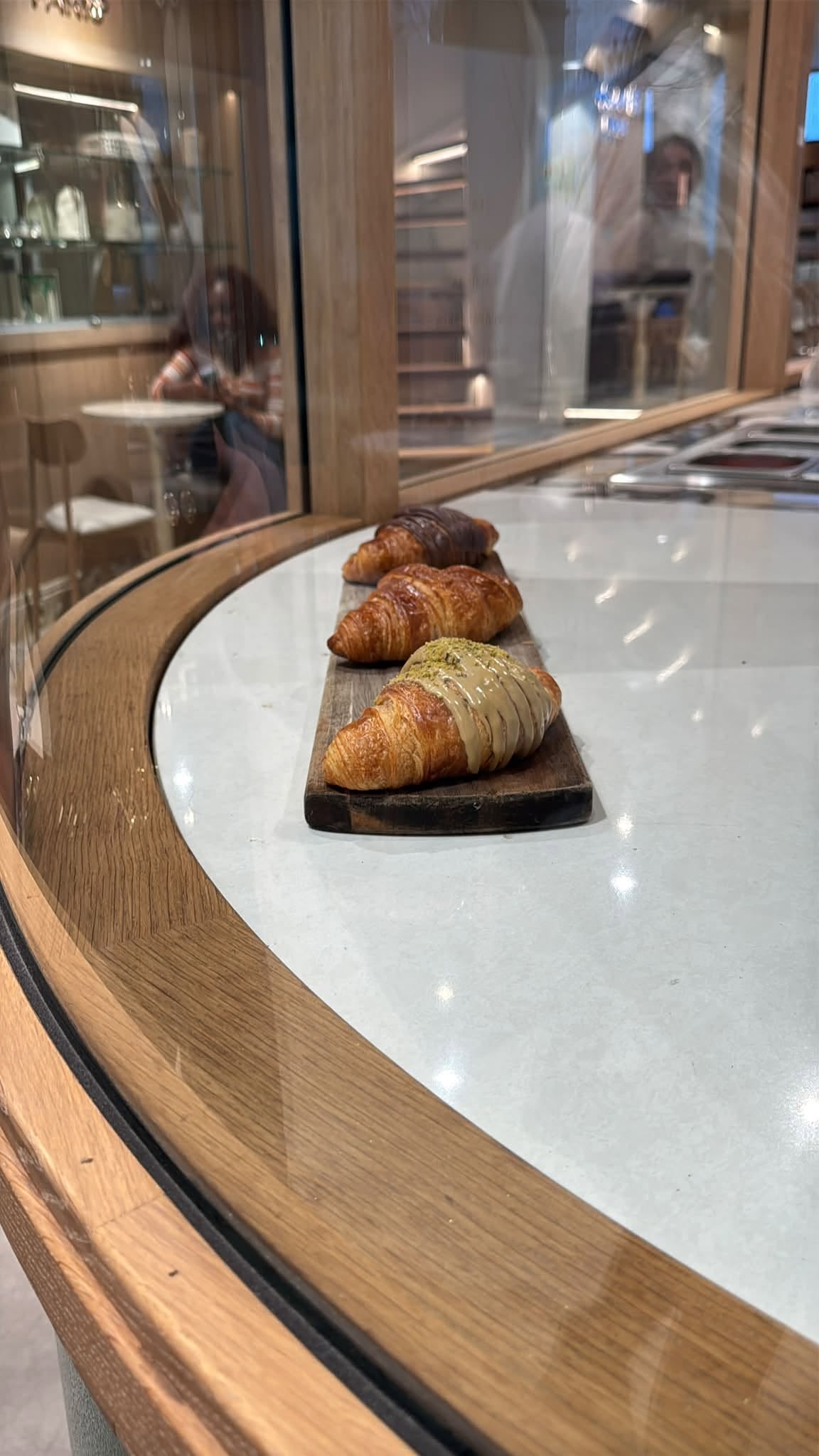
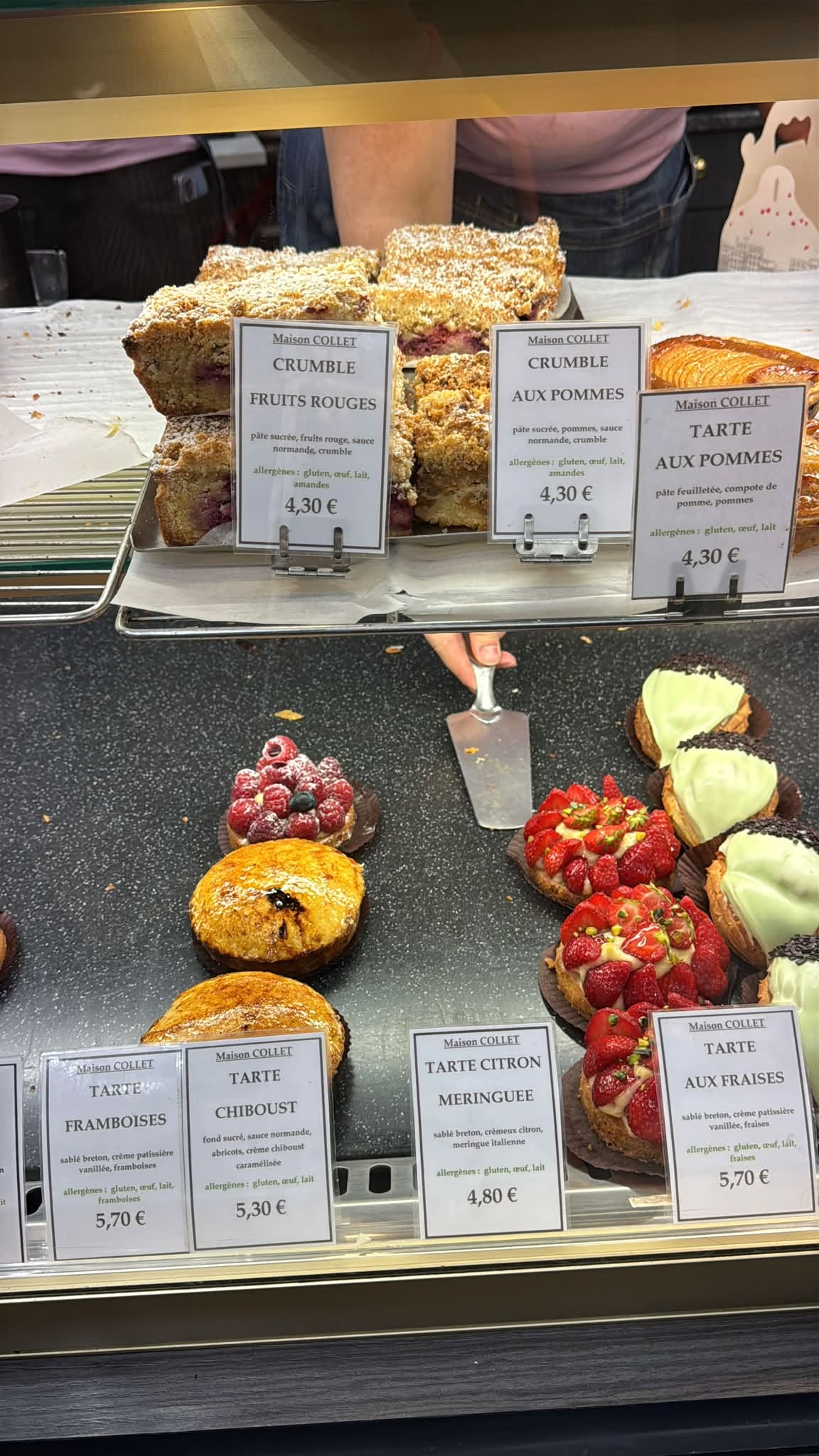
The pastry displays were equally beautiful. Rows of glossy éclairs appeared in different varieties, including chocolate, coffee, and pistachio, while raspberry pastries were arranged with almost architectural precision. There were large raspberry macarons that looked impressive enough to qualify as individual works of art. I stood admiring the colours, the fillings, and the careful presentation, wondering how pastry chefs managed to make desserts appear so perfectly composed. There is something mildly unfair about creating food that looks almost too beautiful to eat. One wants to appreciate the craftsmanship, but the entire purpose of the arrangement is eventually to destroy it with a fork.
I noticed éclairs priced around €4.50, which provided a useful reminder that Parisian sophistication occasionally comes with a financial consequence. Nevertheless, I enjoyed examining the displays and taking photographs of the different pastries. I have always considered food an important part of travelling because local cuisine offers another way of understanding a place. Of course, I am also perfectly capable of appreciating food without developing an elaborate cultural explanation for my appetite. Sometimes a beautiful pastry is simply a beautiful pastry, and the most important question is whether one should order another.
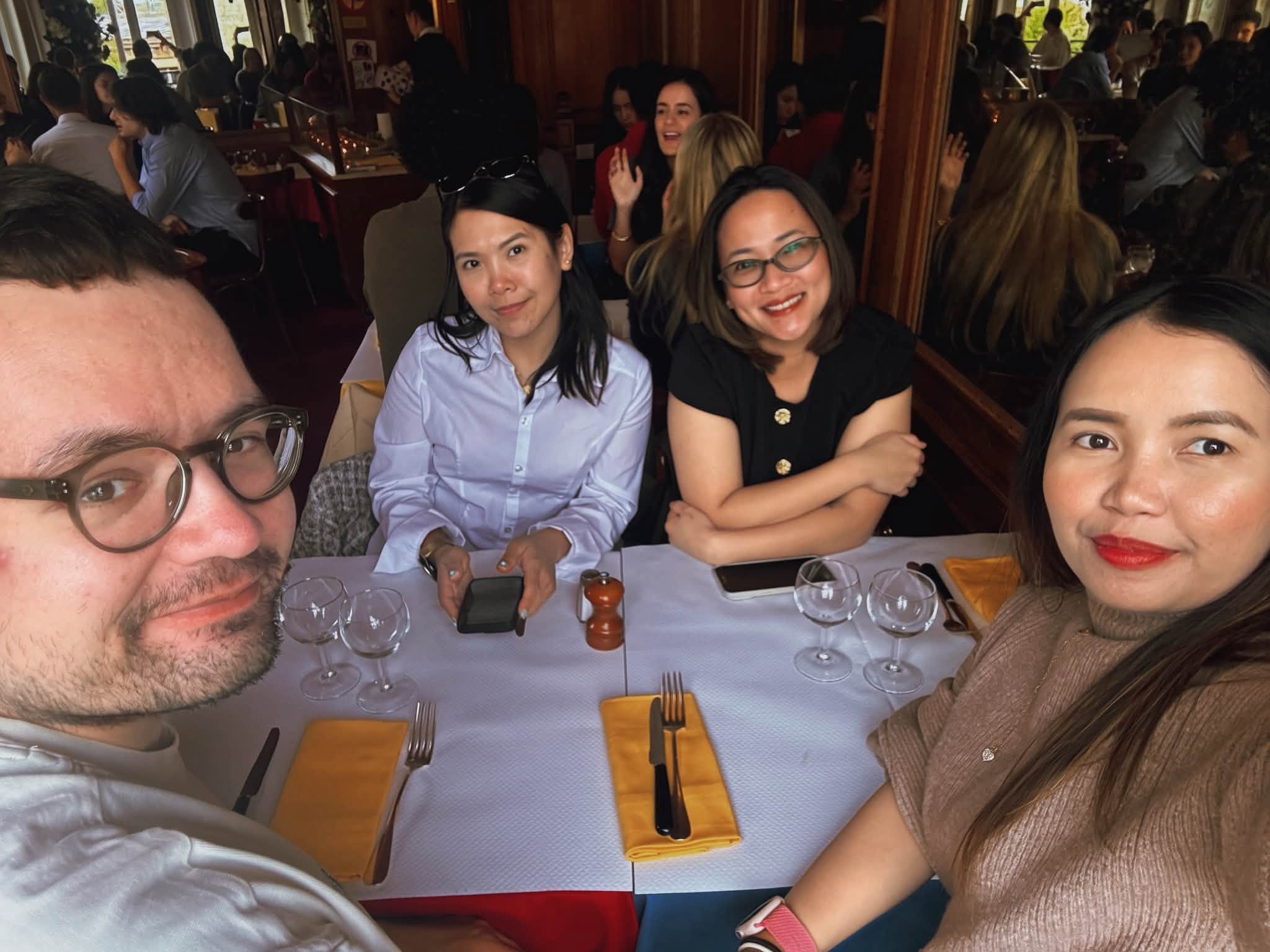
One of my favourite details from Angelina was the simple pleasure of sitting around the table together. There were cups, plates, glasses, pastries, and the comfortable disorder of people sharing a meal. For a little while, we were not rushing towards another landmark or trying to calculate whether we could fit one more attraction into the remaining daylight. We could enjoy our food and appreciate the moment. I particularly liked the contrast between the elegance of the surroundings and our ordinary conversations. Paris might have possessed an internationally celebrated reputation for refinement, but we were still the same group of friends, capable of laughing about airport mishaps and exchanging remarks that would never appear in a respectable French etiquette manual.
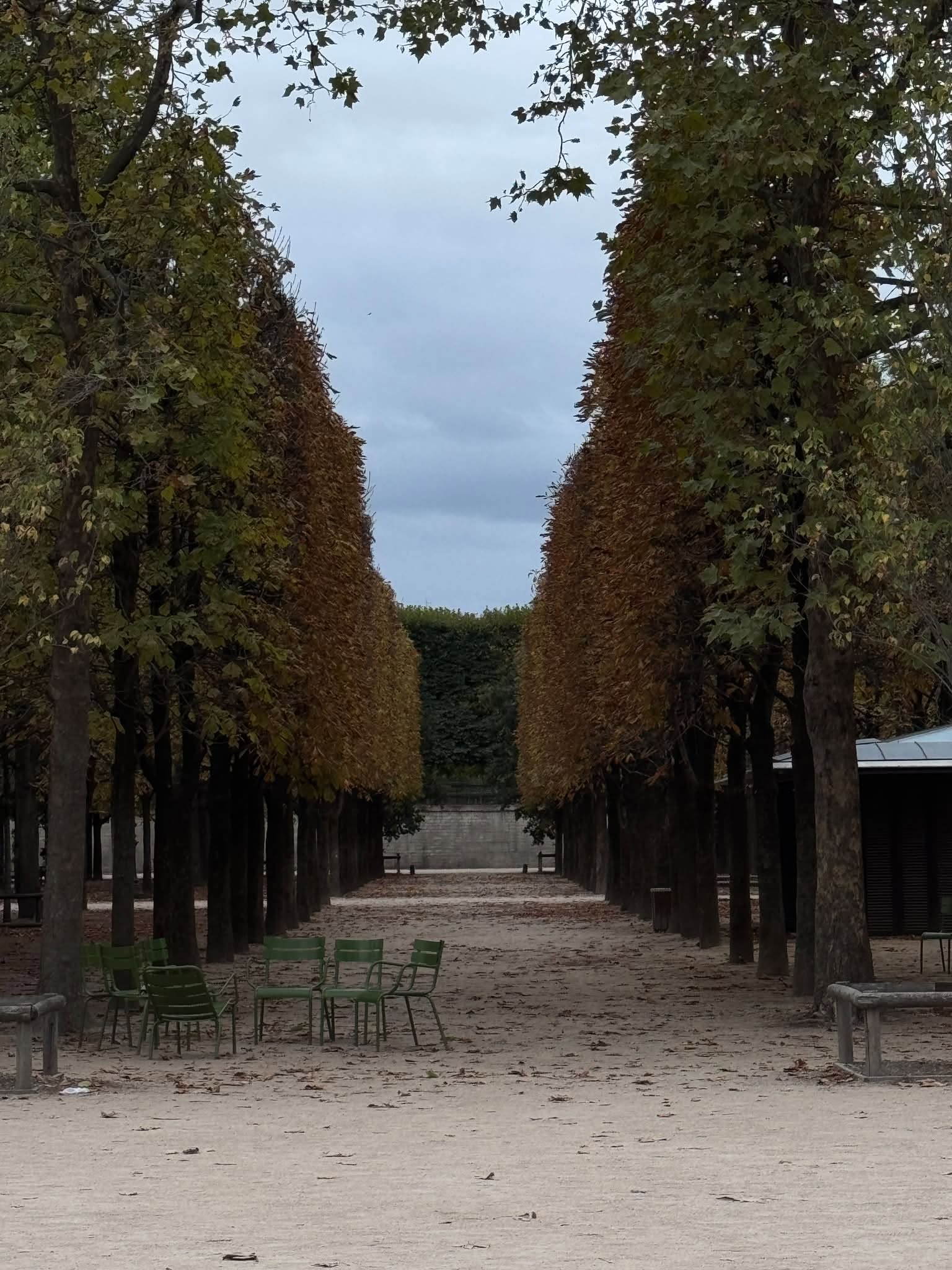
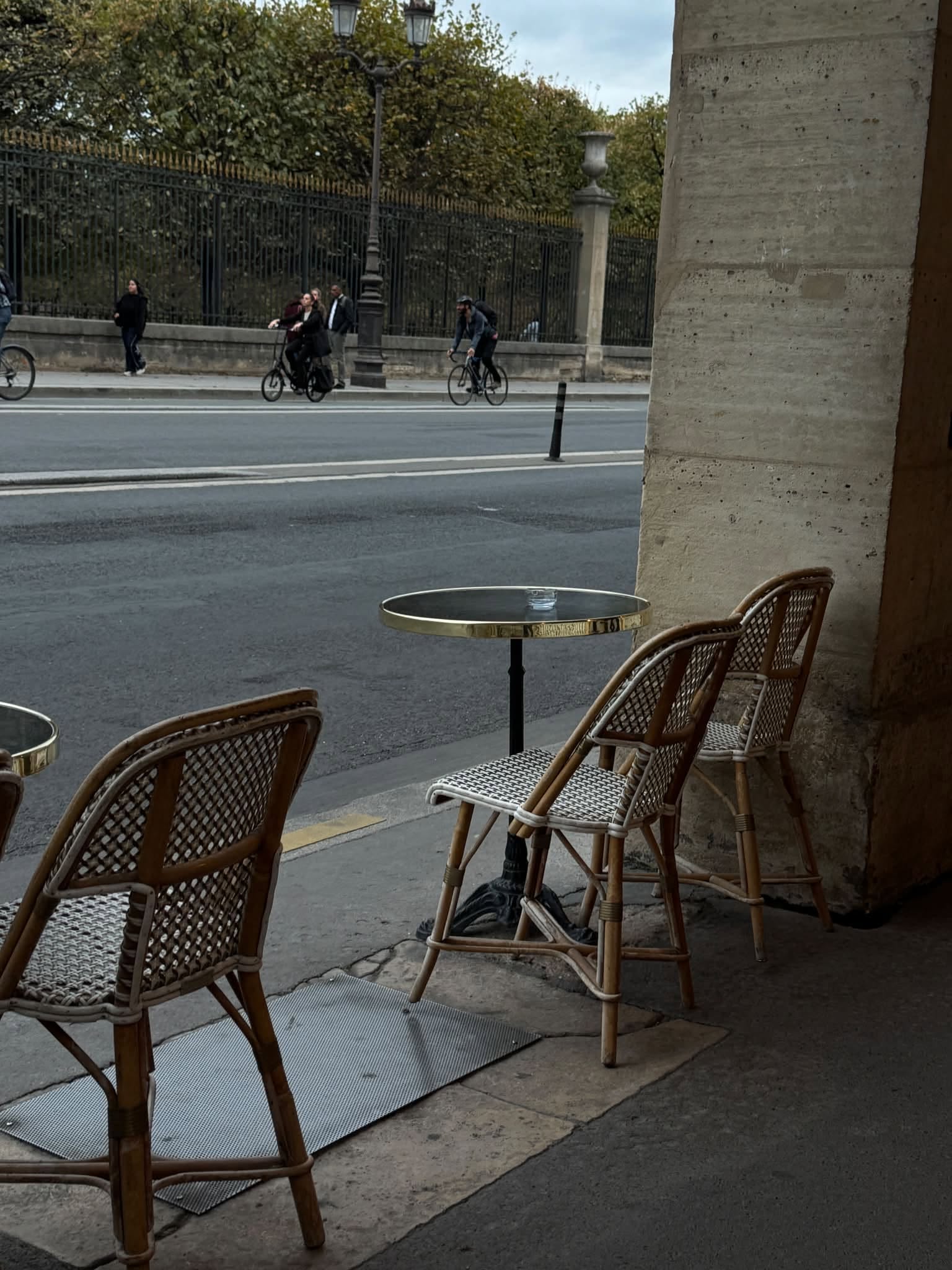
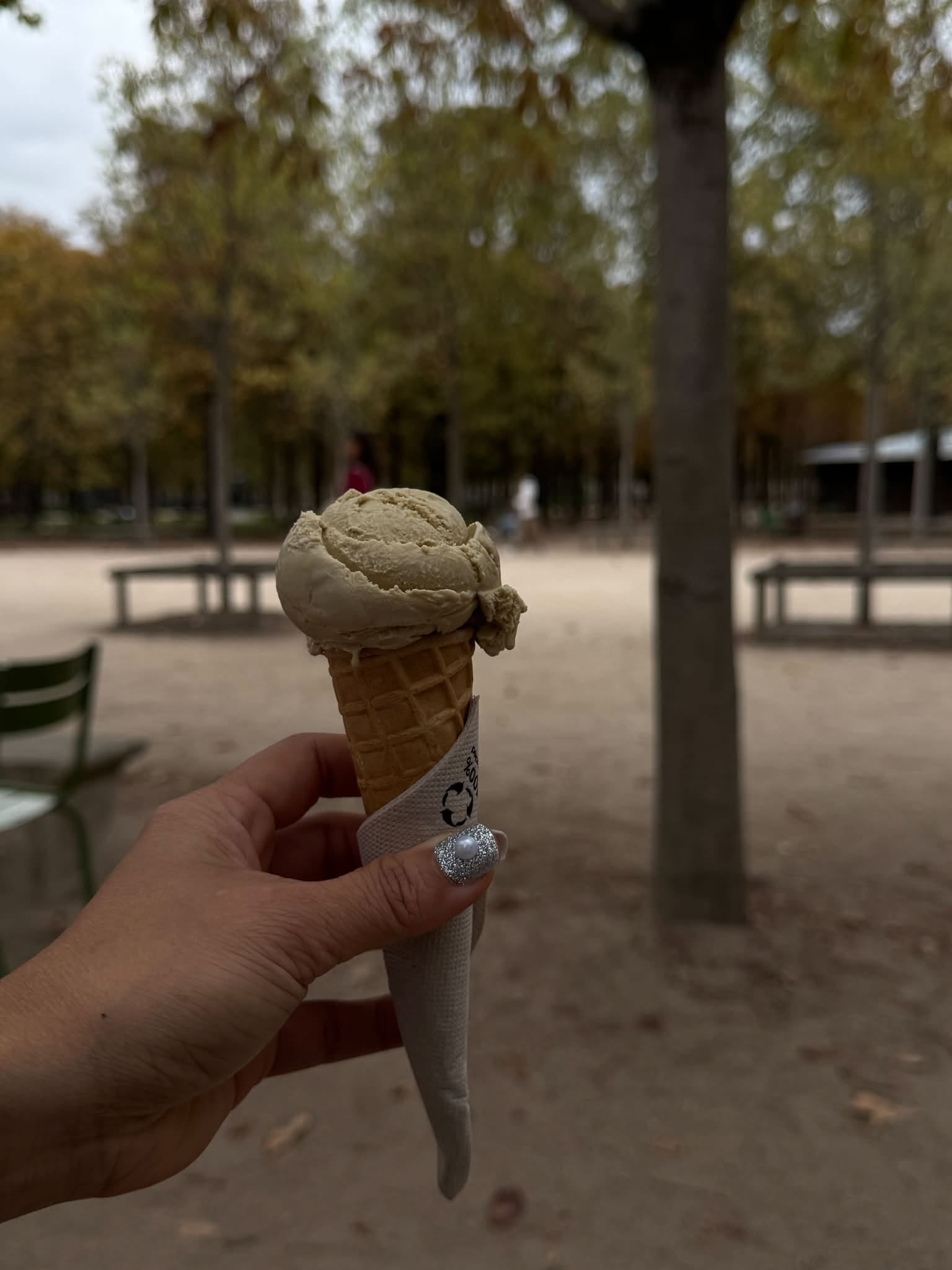
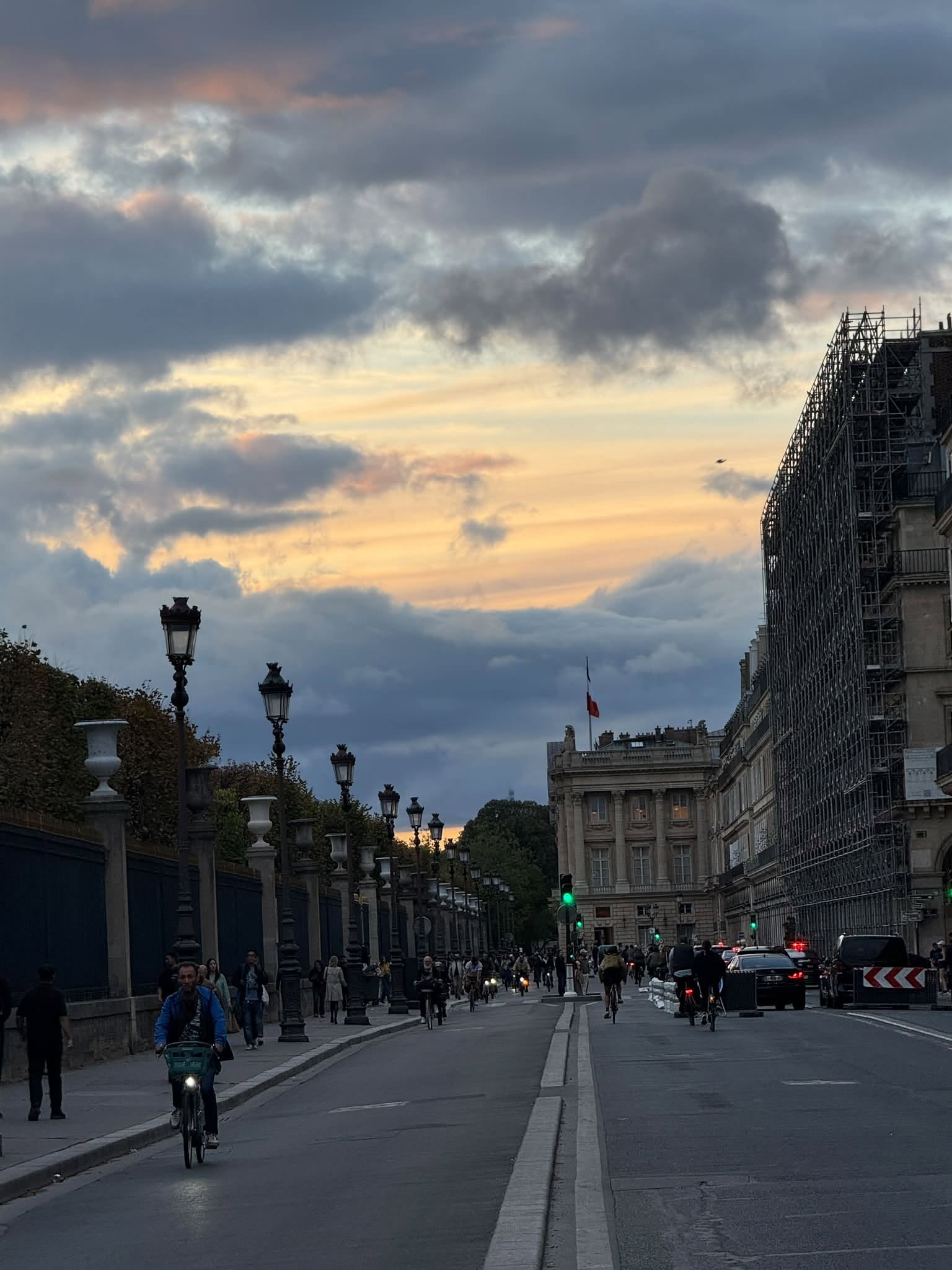
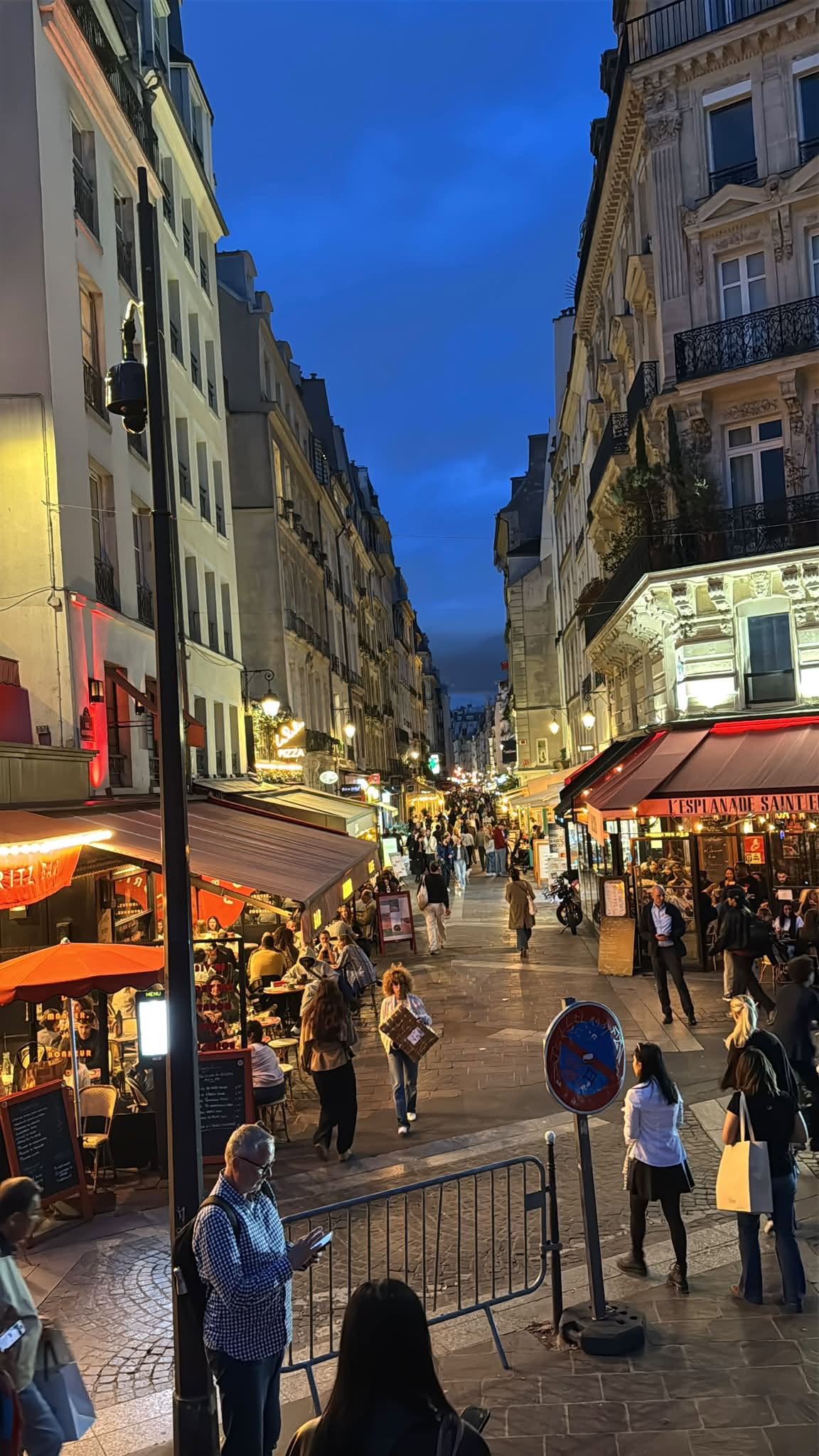
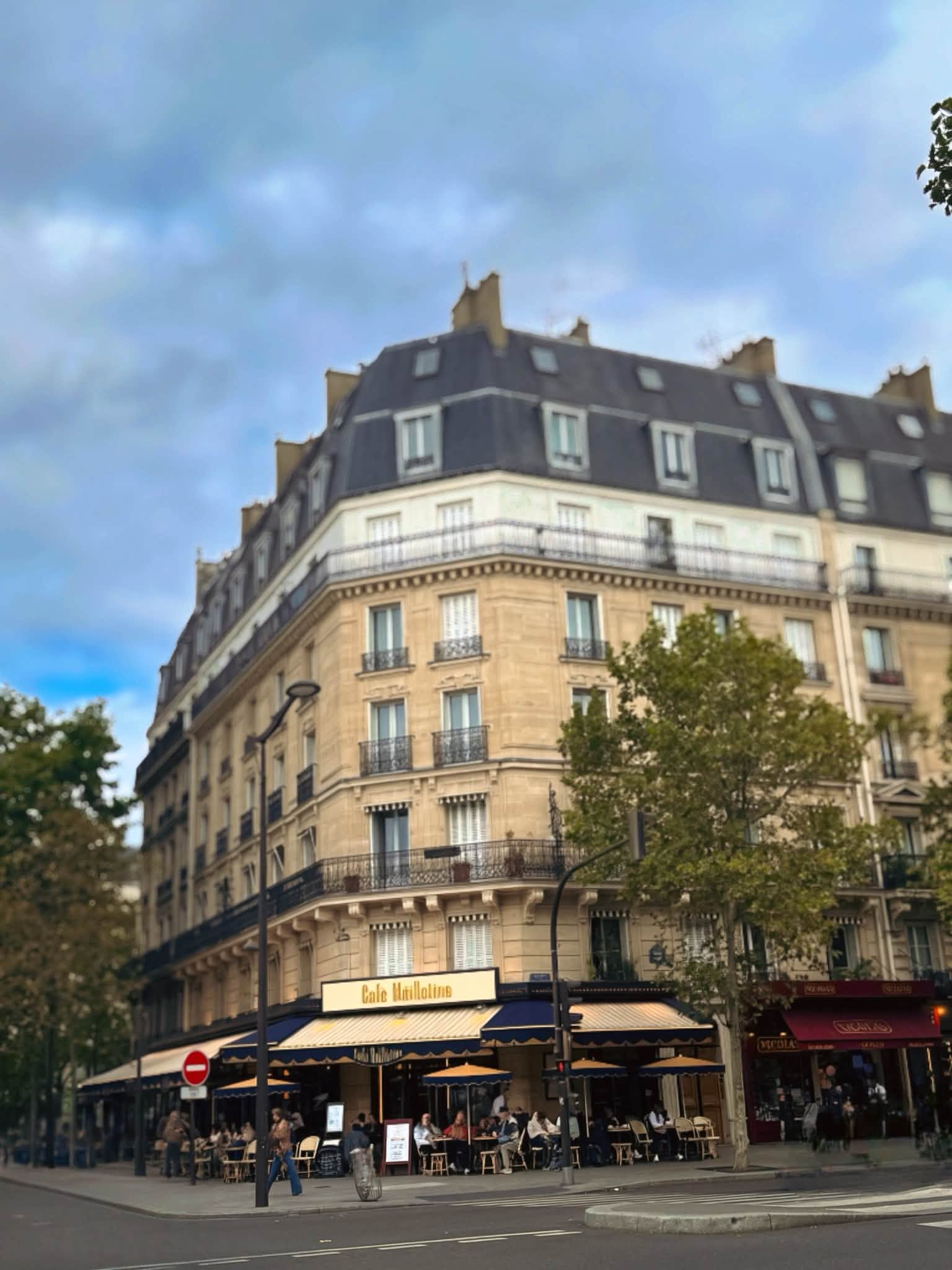
Afterwards, we continued exploring the city, and I found myself increasingly fascinated by its streets. There was something particularly beautiful about Paris in autumn. The cooler weather, pale stone buildings, and occasional overcast sky gave the surroundings a softness that suited the historic architecture. I admired the façades, the balconies, and the little details decorating buildings that might otherwise have been overlooked. Even the chairs arranged outside cafés seemed unusually photogenic. I know perfectly well that chairs exist in other countries, but apparently Paris possesses the ability to make ordinary furniture look as though it belongs in an editorial photograph.
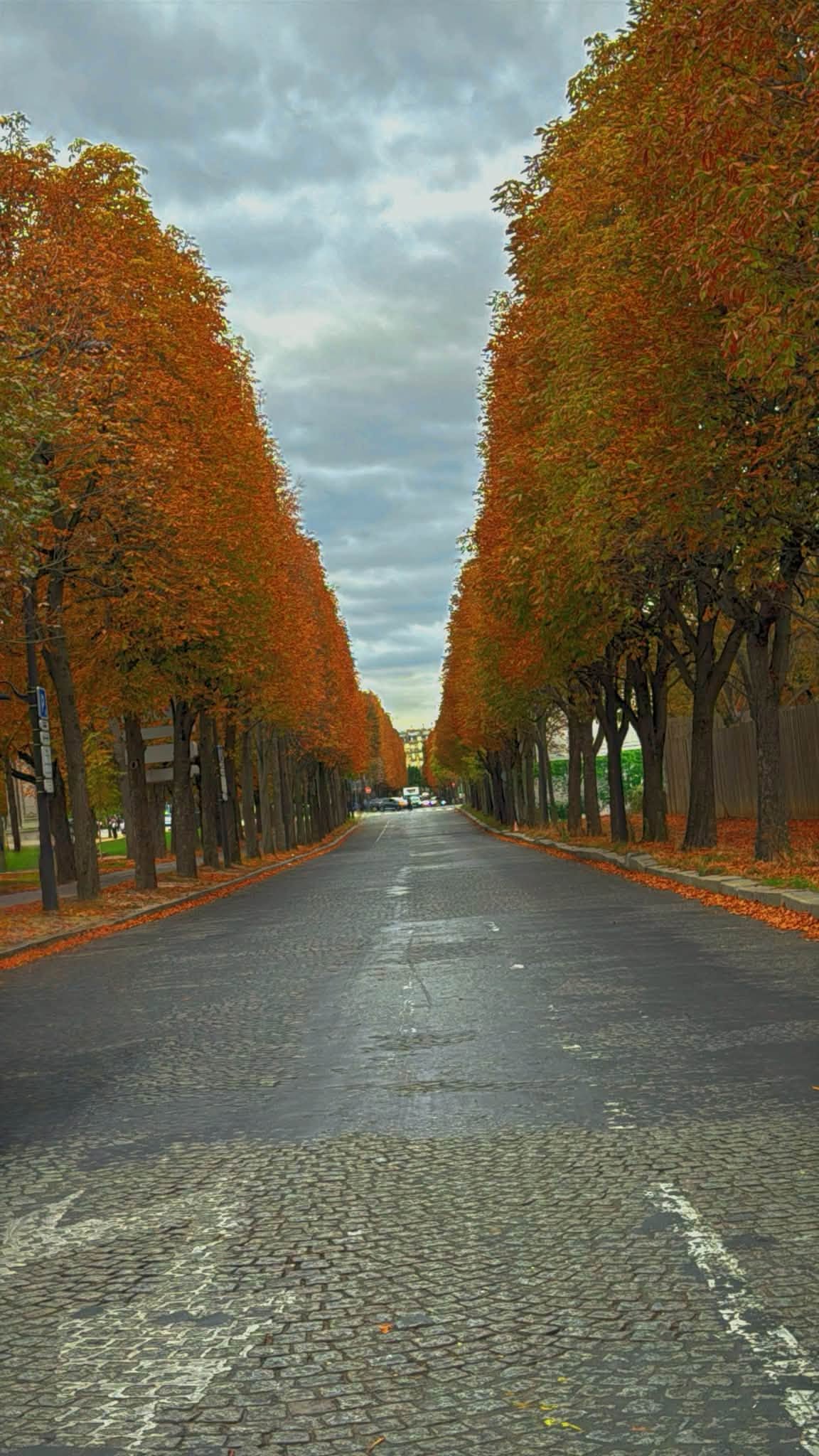
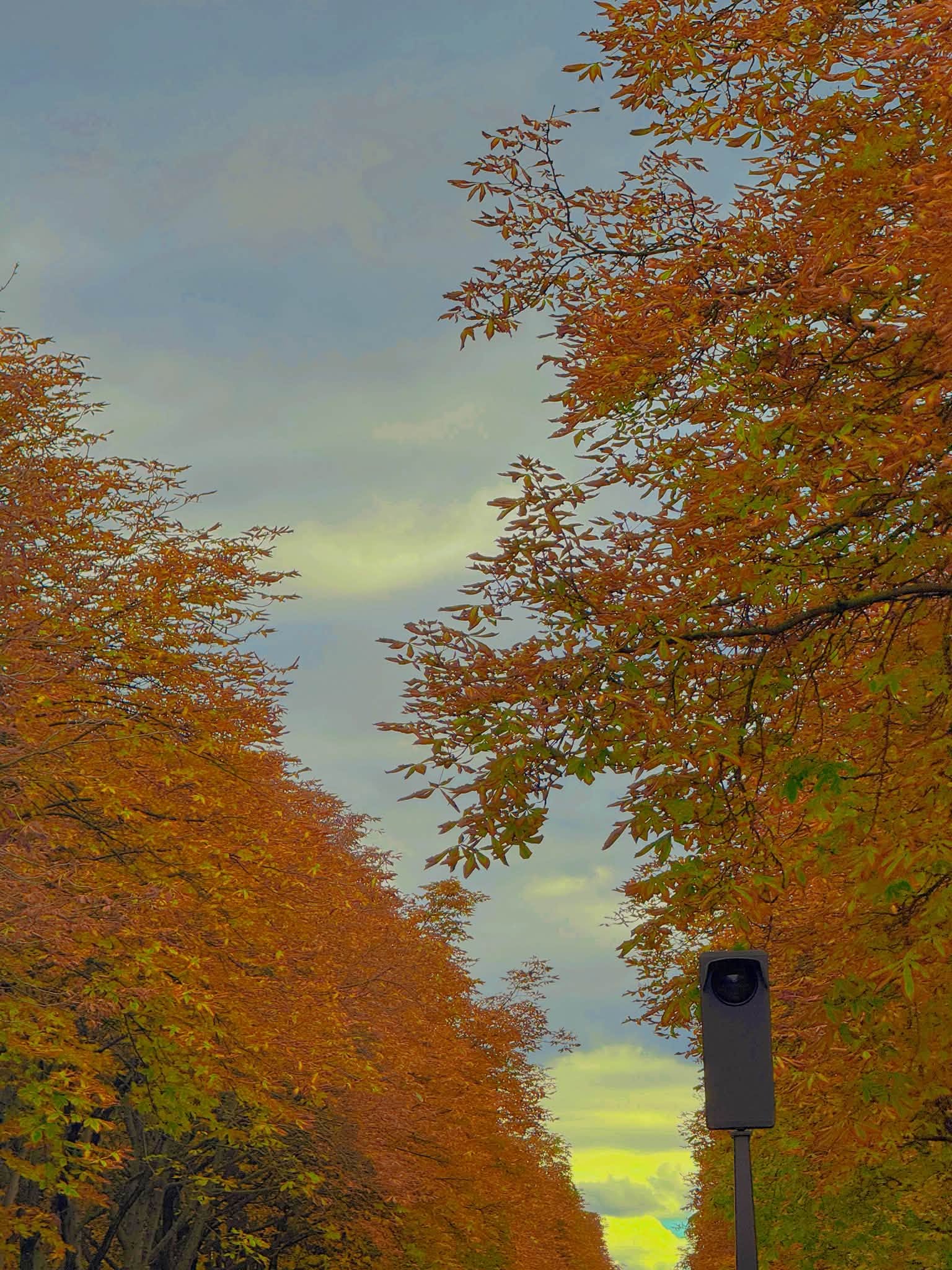
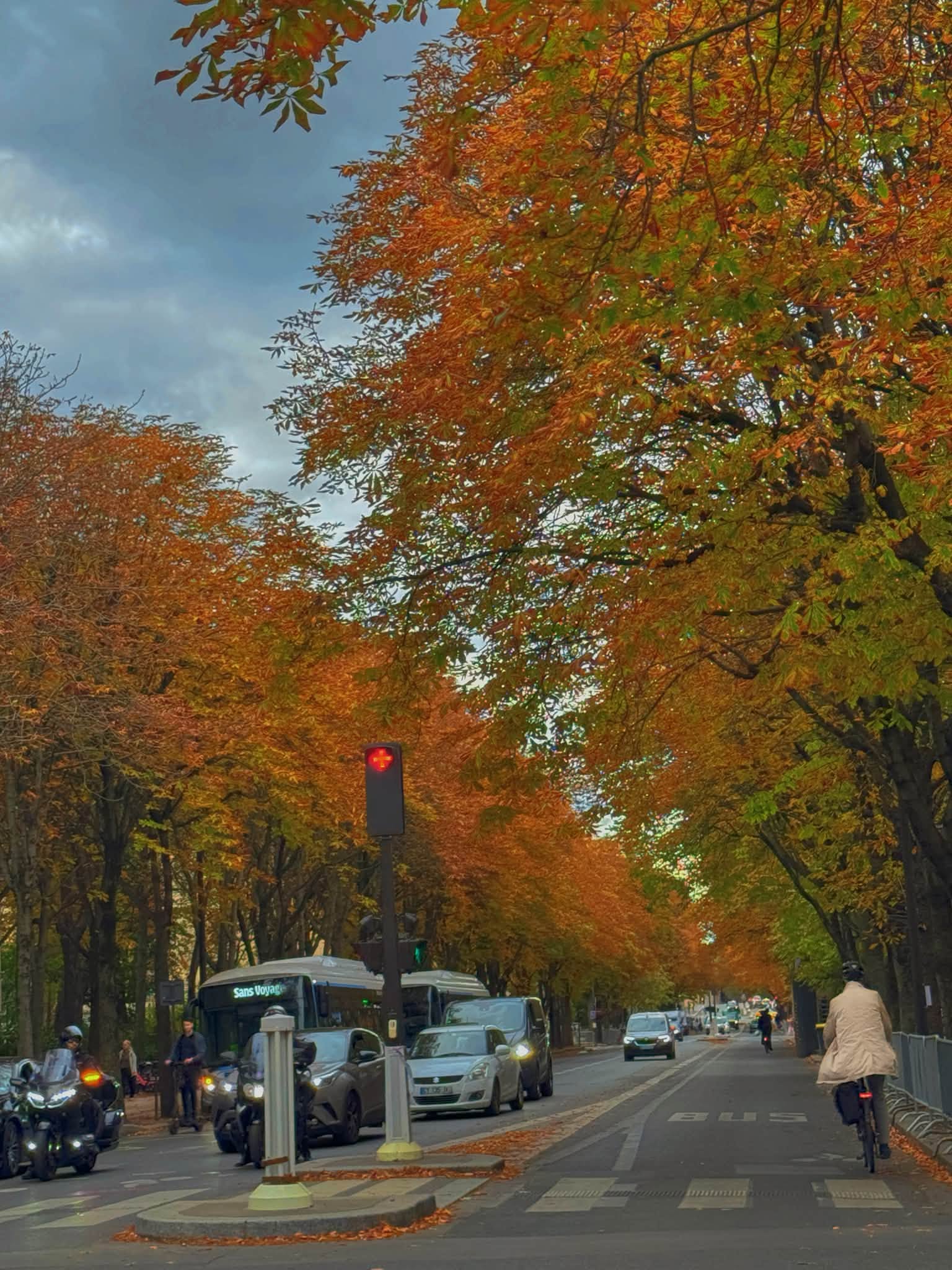
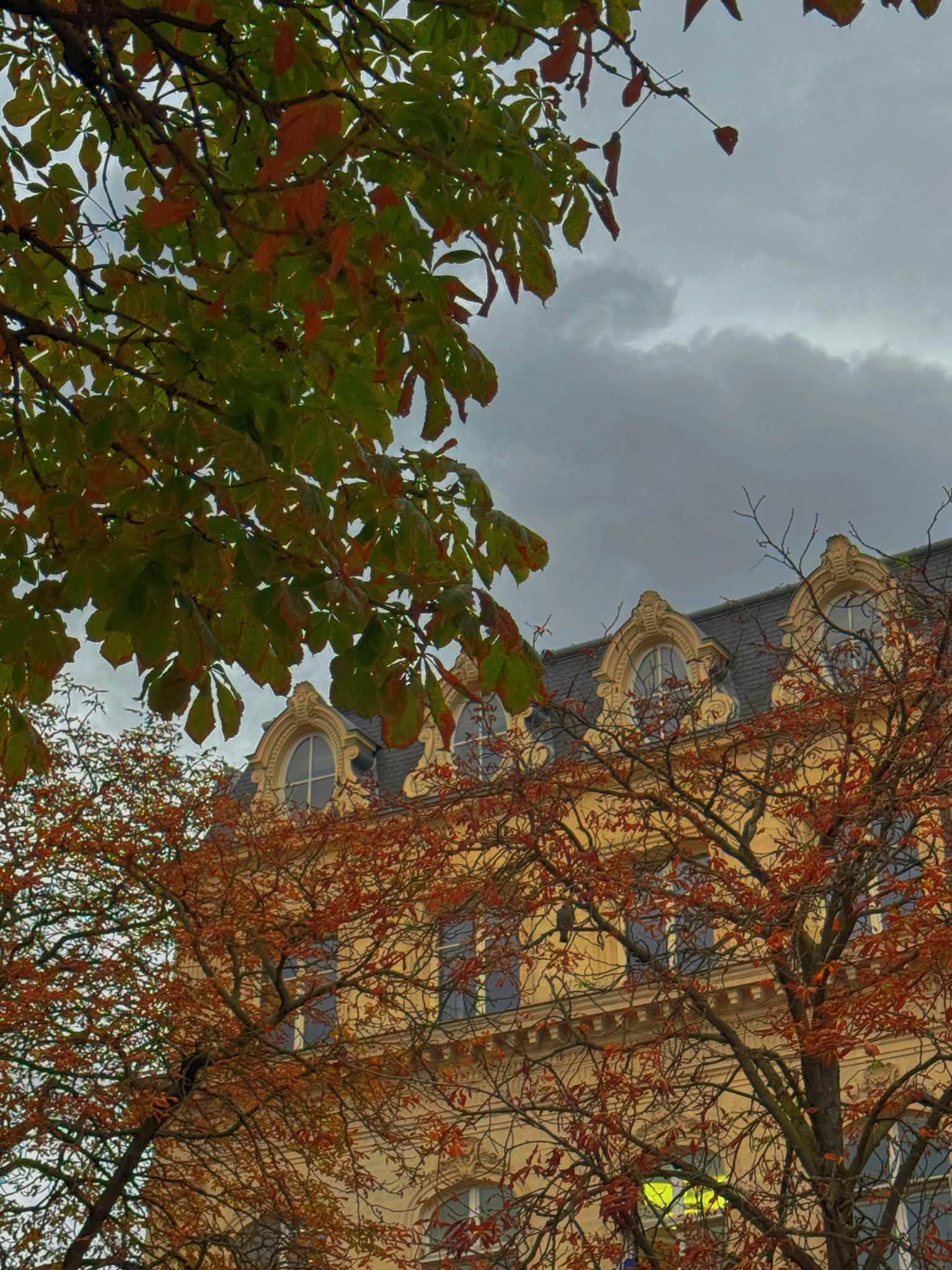
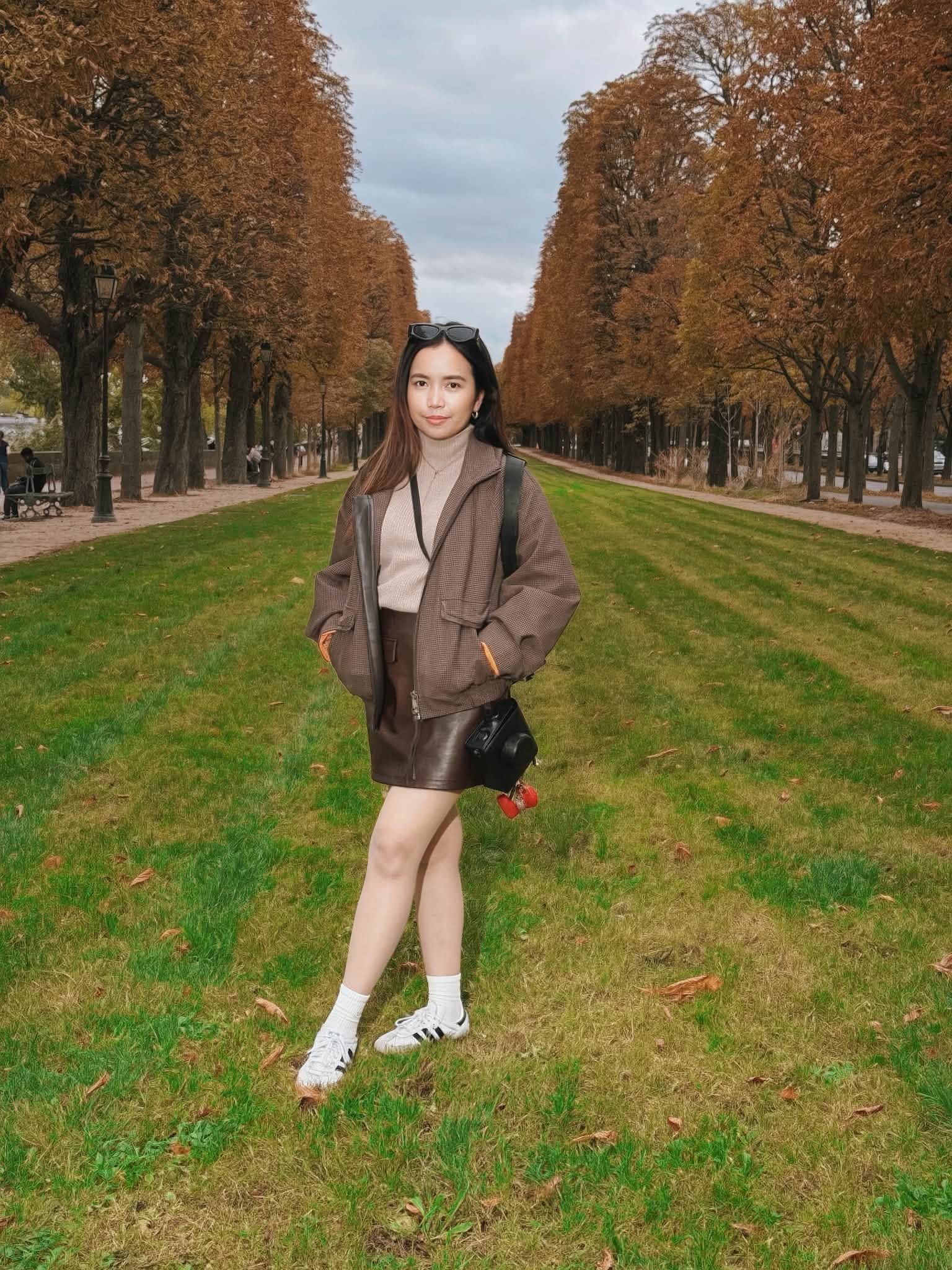
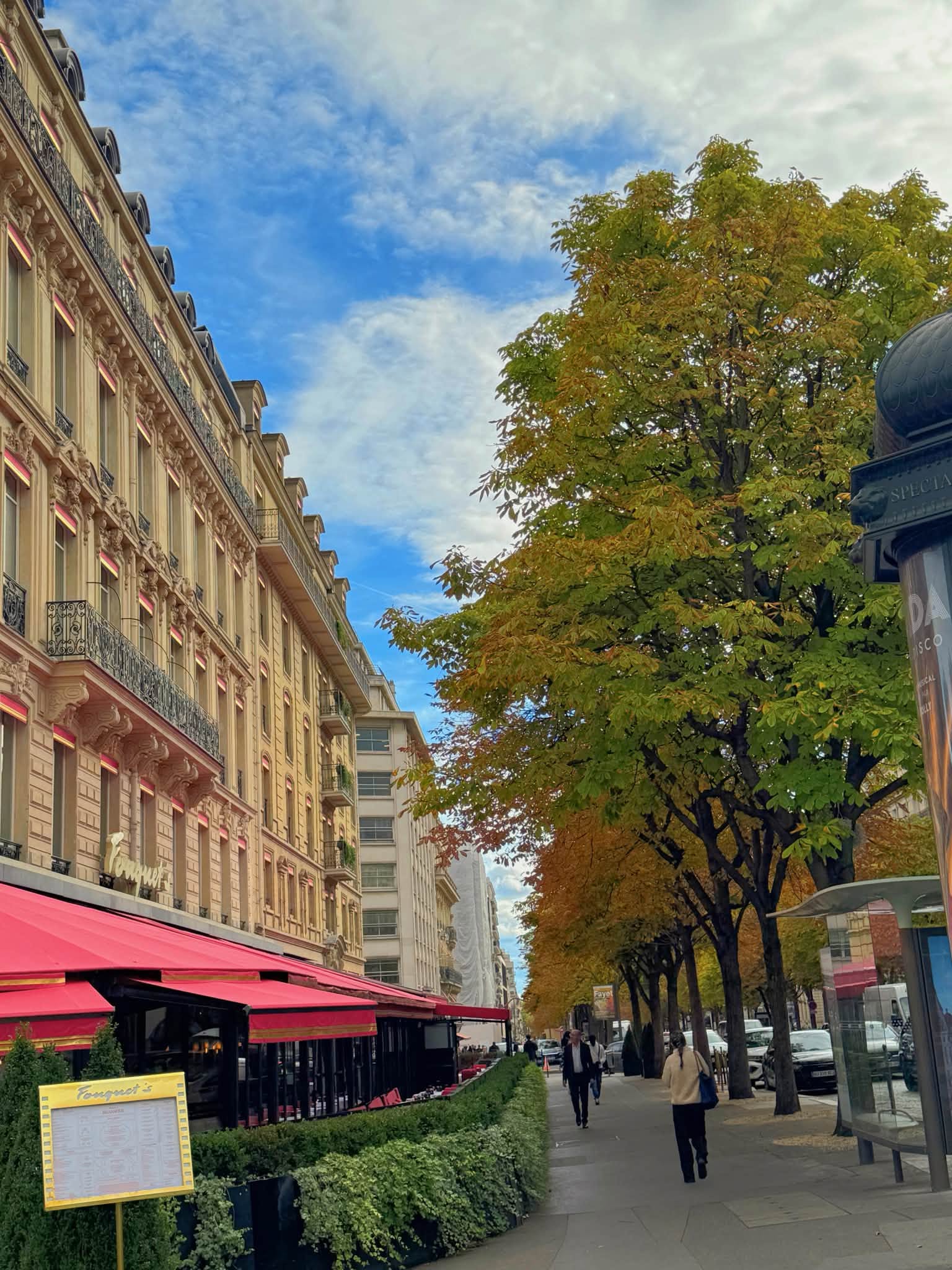
Paris in autumn
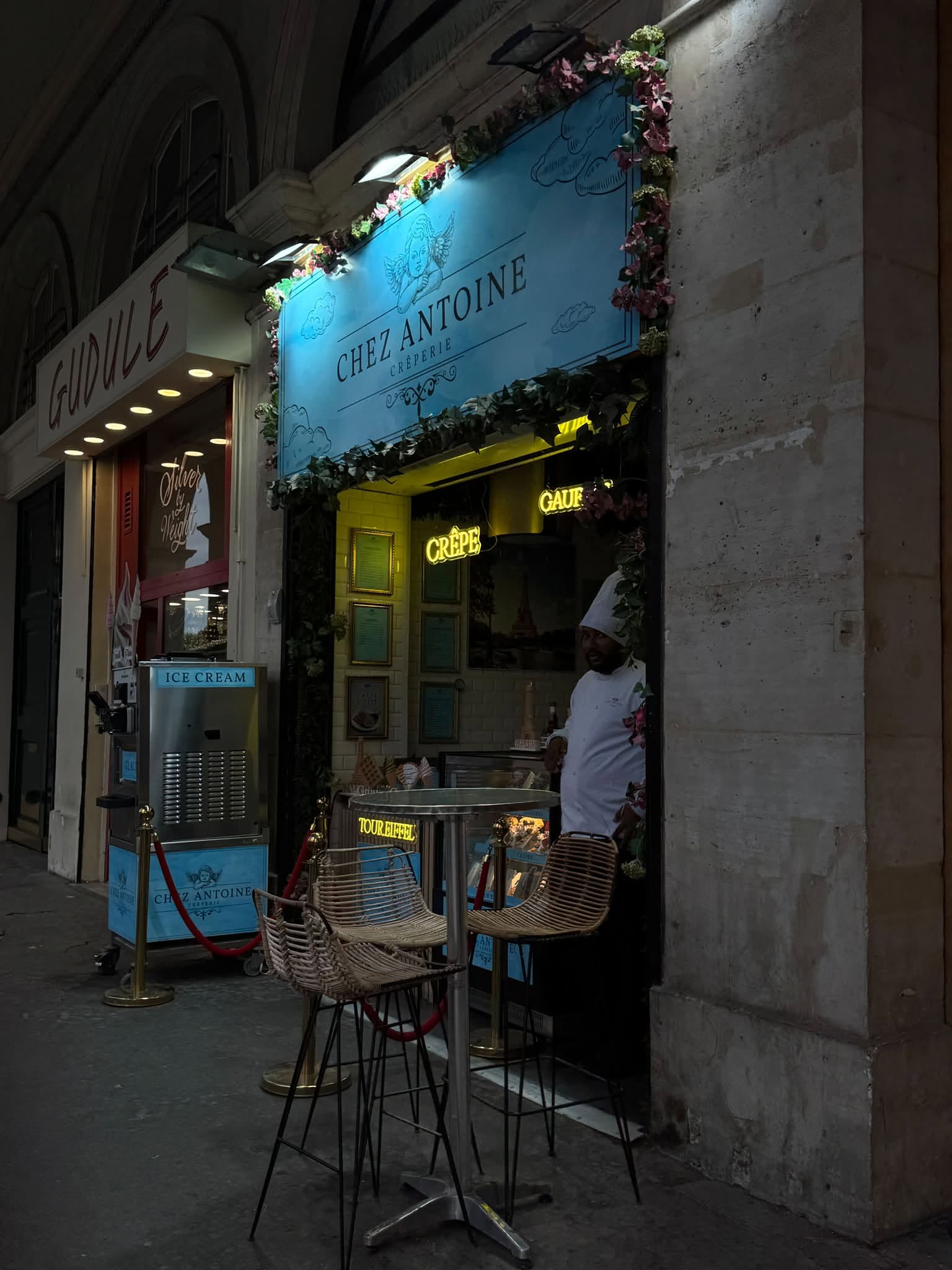
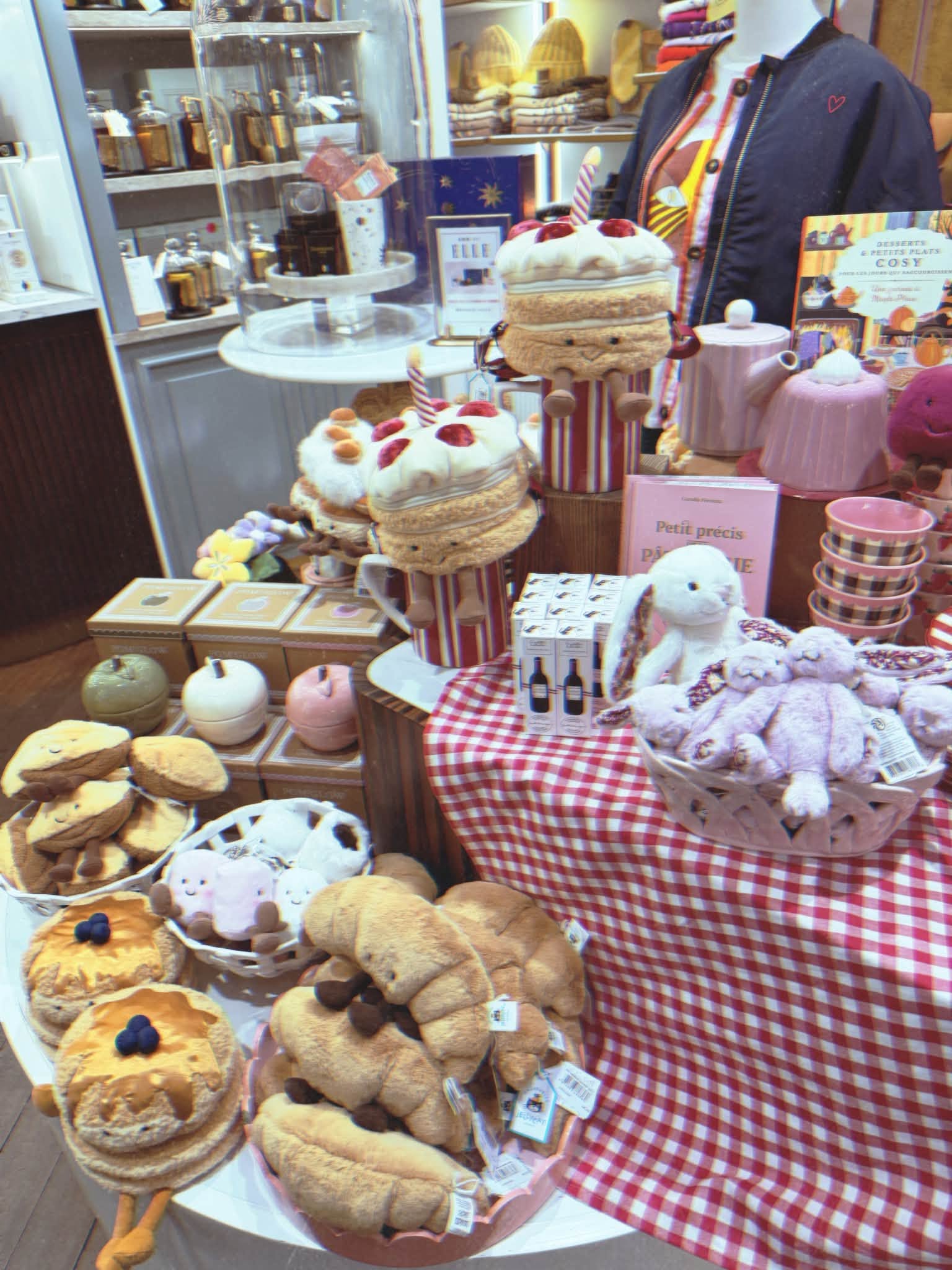
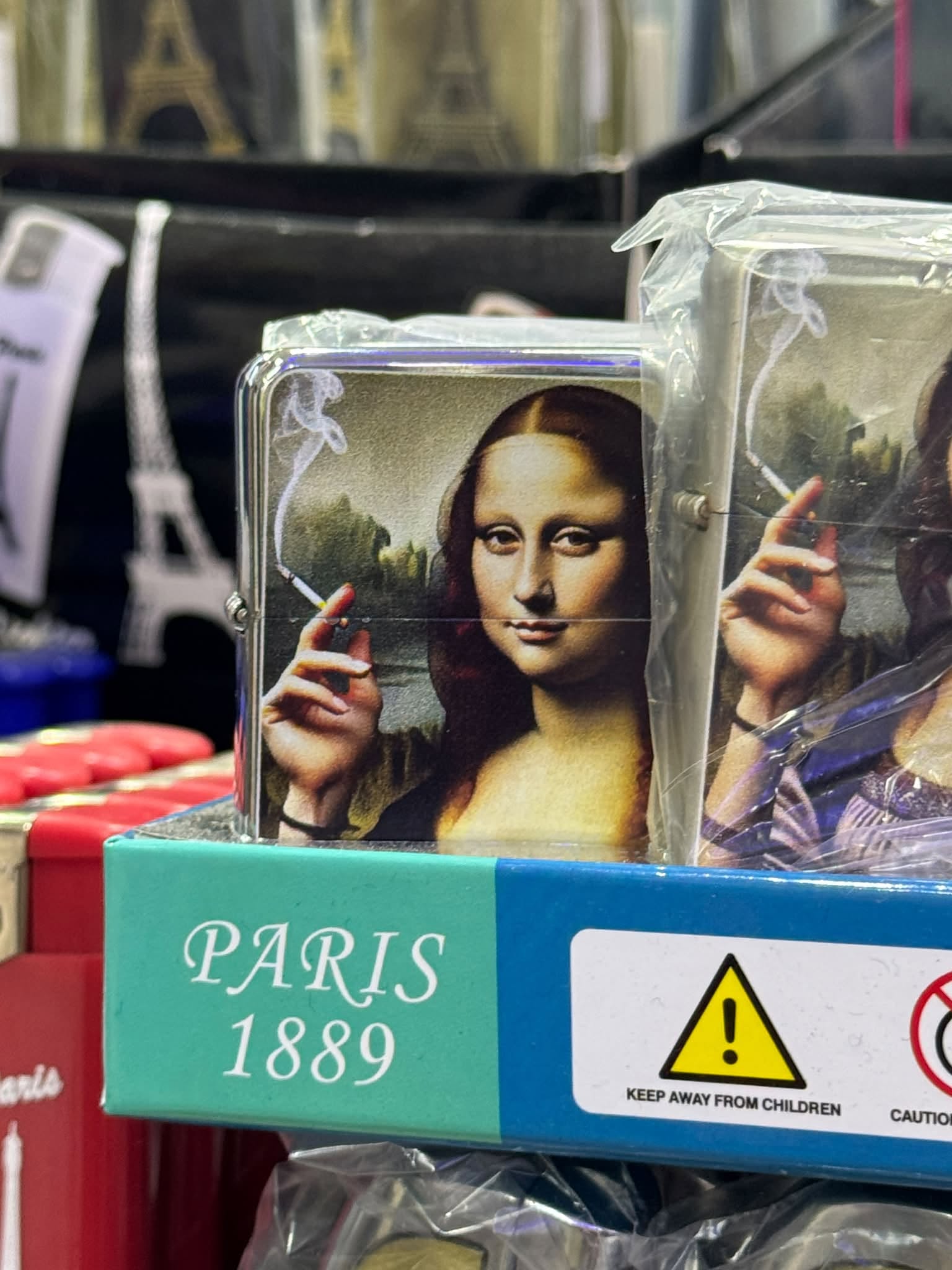
I also enjoyed noticing the souvenir shops. Miniature Eiffel Towers appeared in different sizes, alongside postcards, magnets, keyrings, and all manner of objects designed to reassure visitors that they had indeed been to Paris. There is something amusing about travelling to see a magnificent structure several hundred metres tall and then considering whether to purchase a version small enough to fit in a pocket. I understand the appeal, of course. Souvenirs give us something tangible to associate with our experiences, and I enjoy collecting little reminders of the places I visit. But I suspect my enthusiasm for photographing souvenirs occasionally made it appear as though I was conducting a detailed market survey rather than enjoying a holiday.
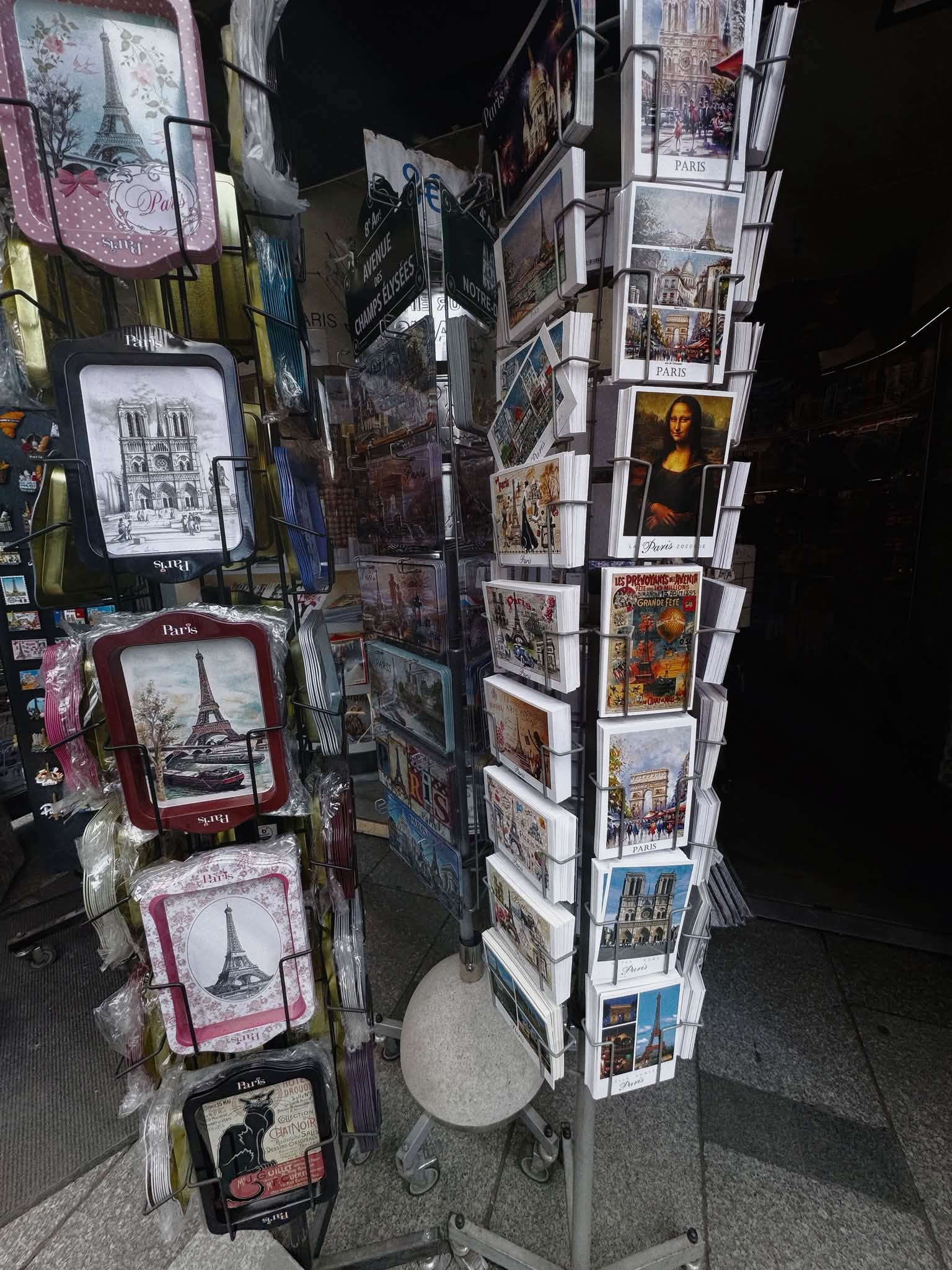
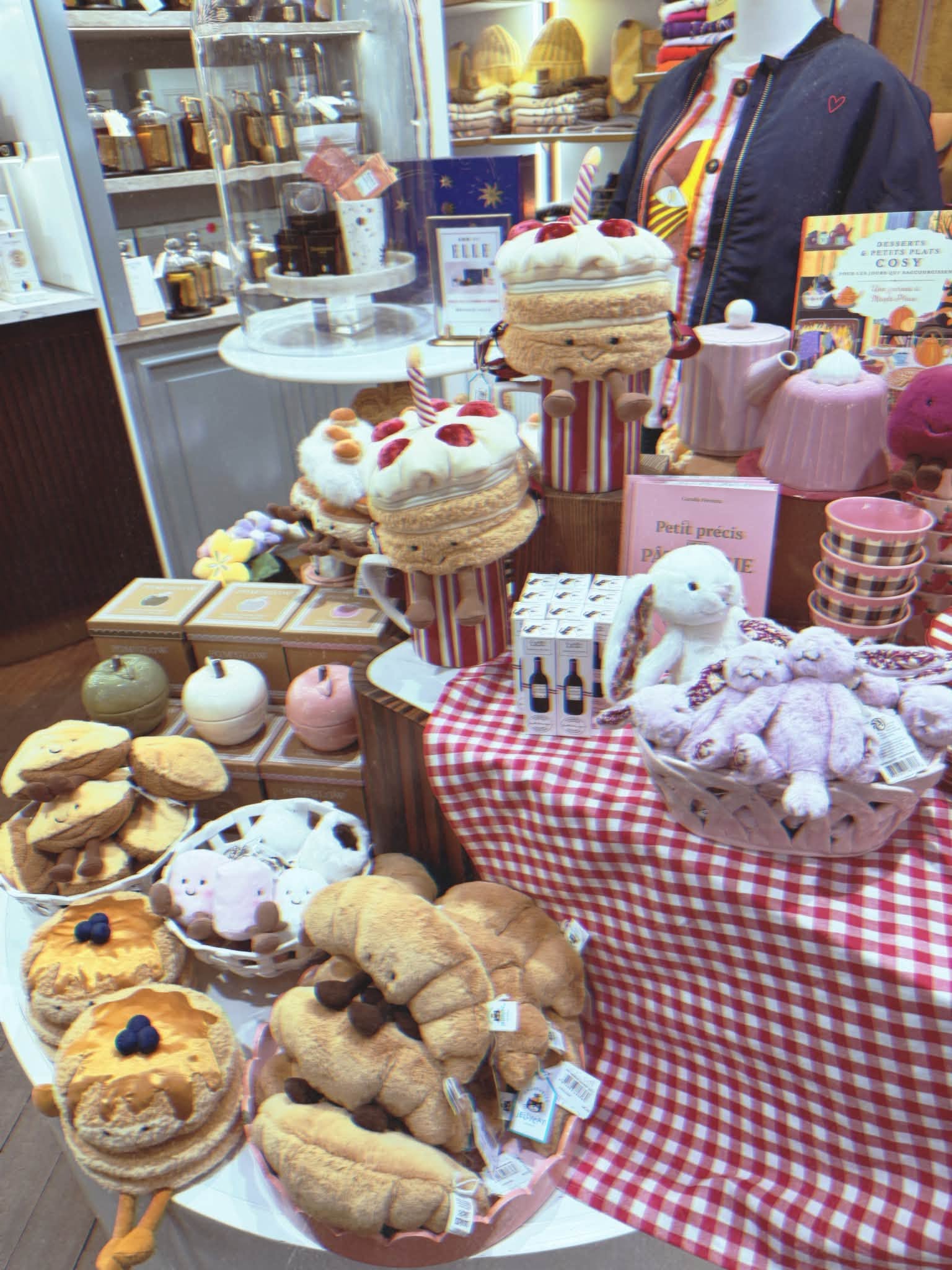
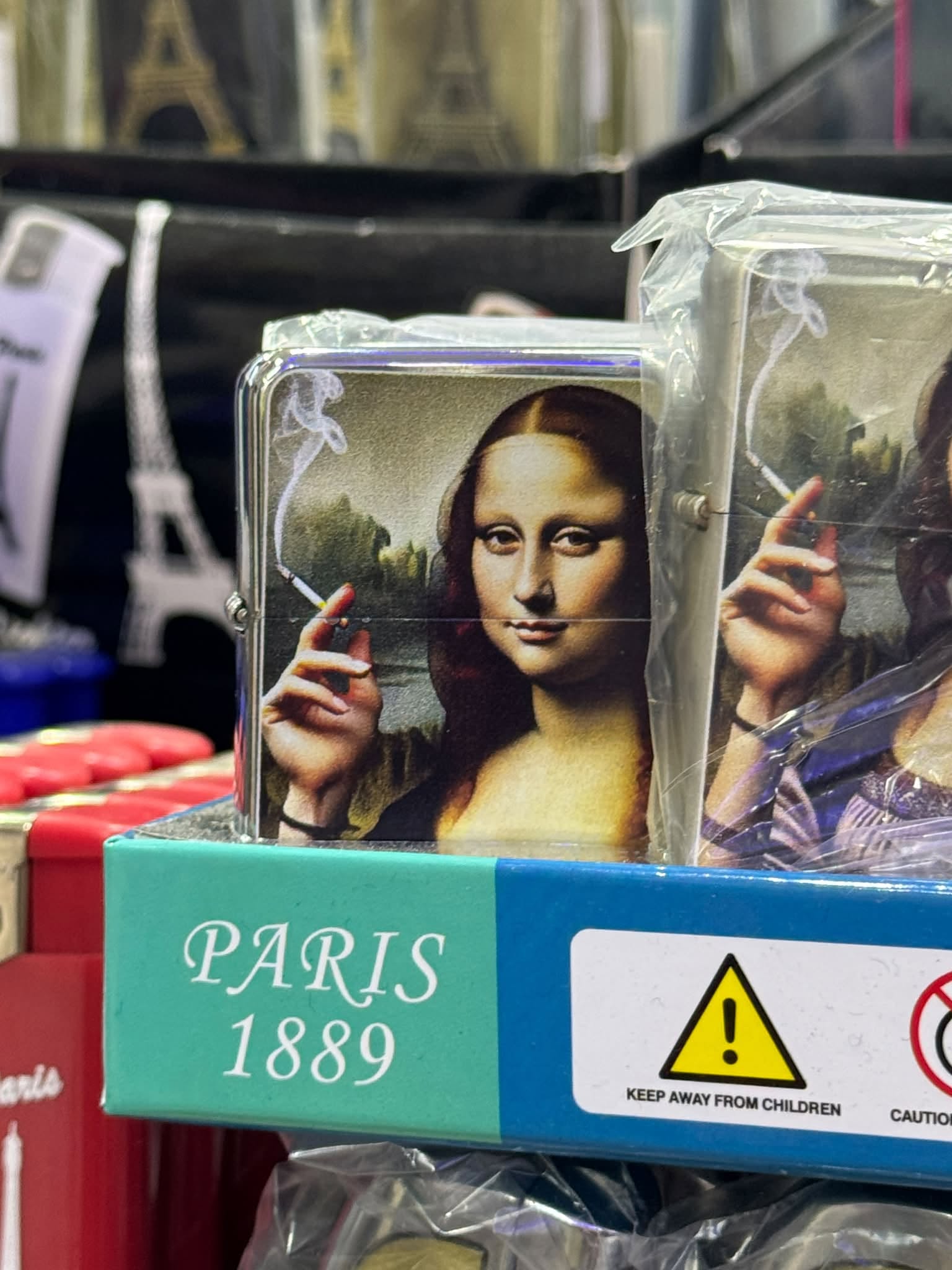
souvenir shops
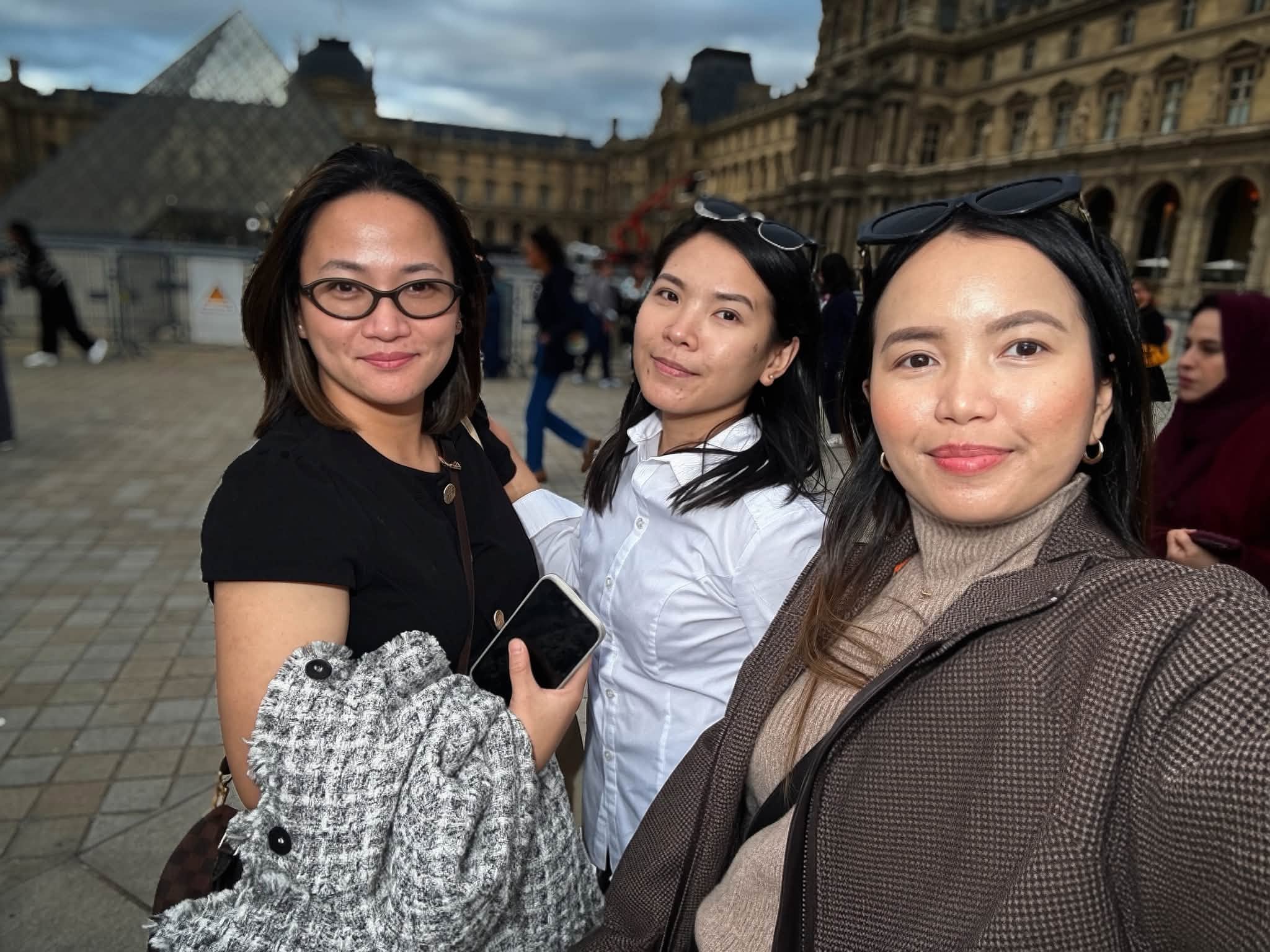
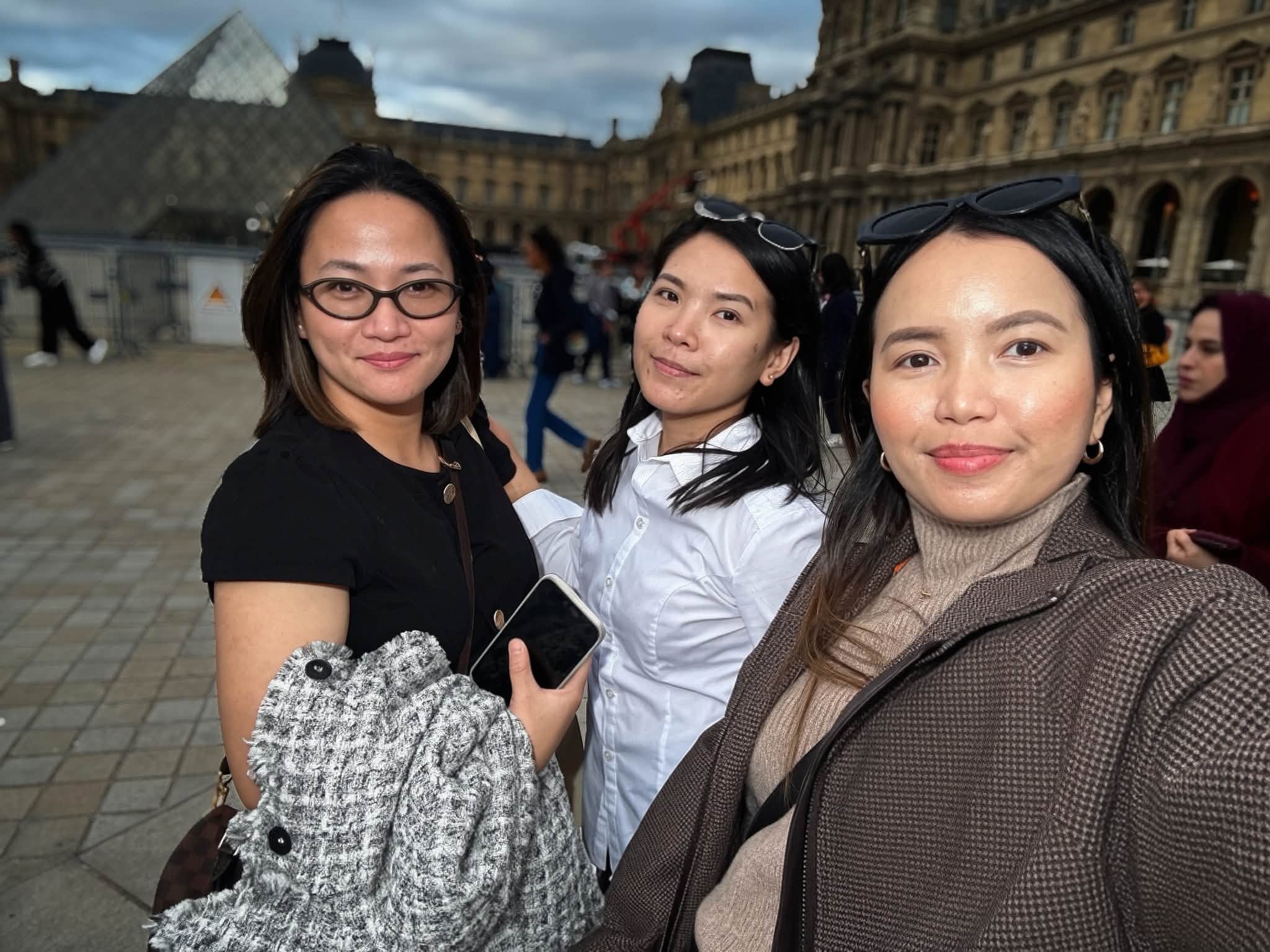
Then came the Louvre, one of the attractions I had been particularly eager to see. Its enormous palace complex, ornate stone façades, and famous glass pyramid were immediately impressive. I had seen countless photographs of the Louvre, yet standing in its courtyard provided a completely different appreciation of the architecture. The combination of historic buildings and modern glass was fascinating, particularly because the contrasting styles somehow worked together to create one of the most recognisable scenes in Paris. I admired the long façades, sculptural details, and remarkable scale of the place, delighted that something I had previously encountered only through books and images was now standing directly in front of me.
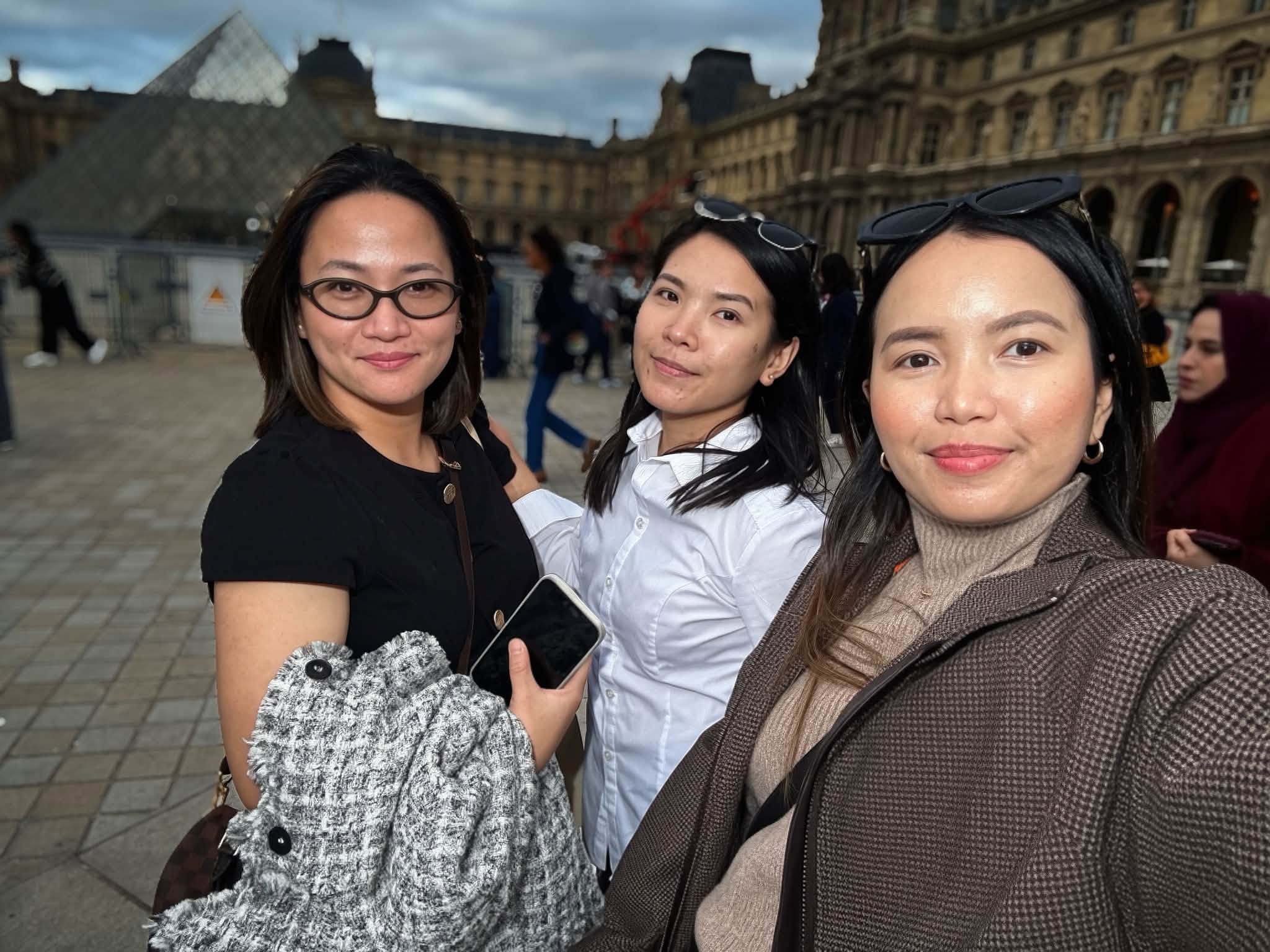
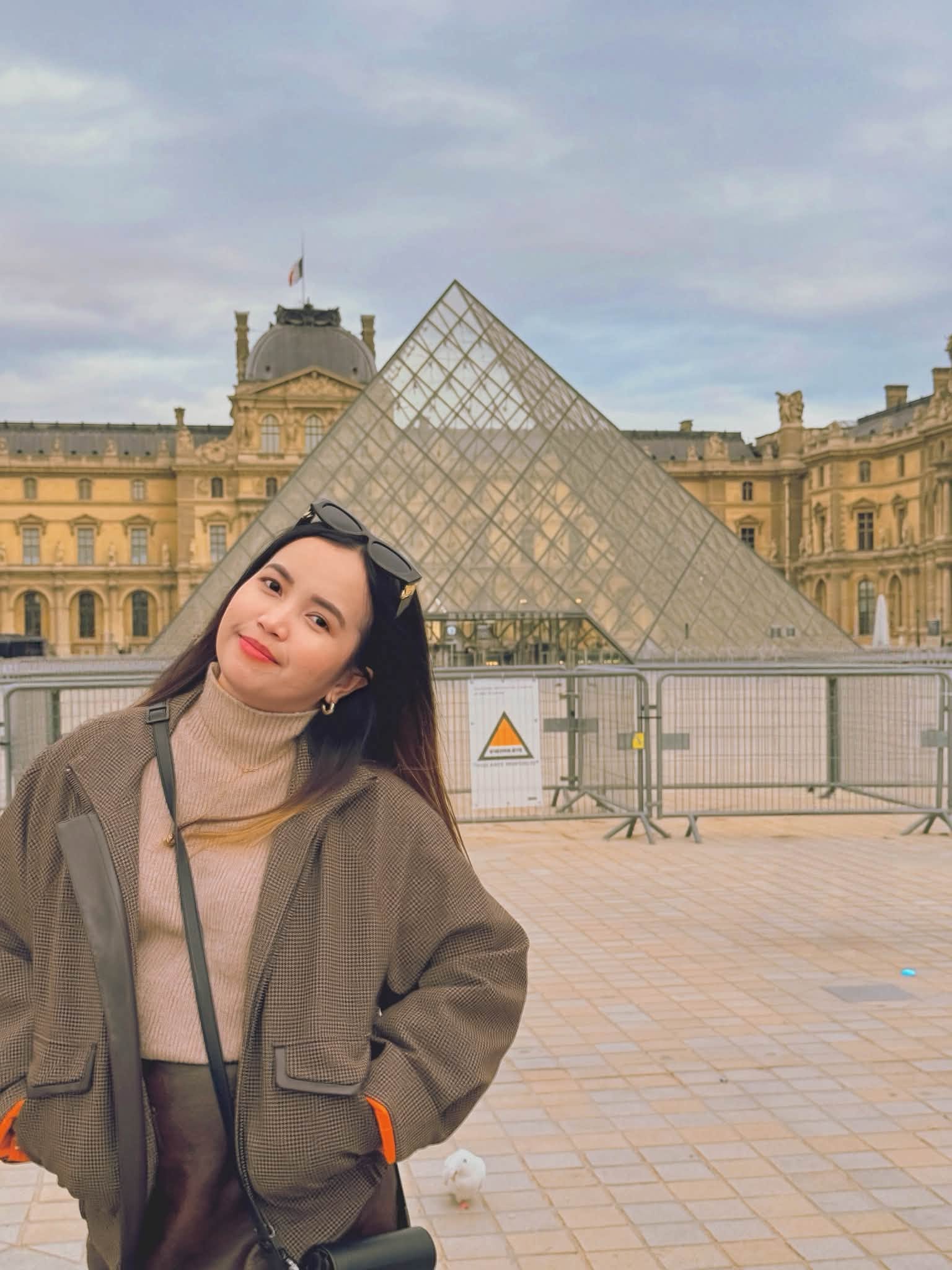
Louvre
Naturally, I wanted photographs. Several photographs, actually, because one must account for lighting, angles, background distractions, and the possibility that a perfectly good picture could be improved by standing approximately two steps to the left. My photographs in front of the Louvre’s pyramid look wonderfully composed, which is one of the great advantages of travel photography. The camera captures the outfit, the beautiful architecture, and the pleasant expression. It does not reveal the conversations about where to stand or the growing awareness that we still had several places to visit before the day was over. I would have loved to explore the museum’s galleries properly, but our one-day schedule made that impractical. The Louvre therefore became another place I was grateful to see and another reason to return.
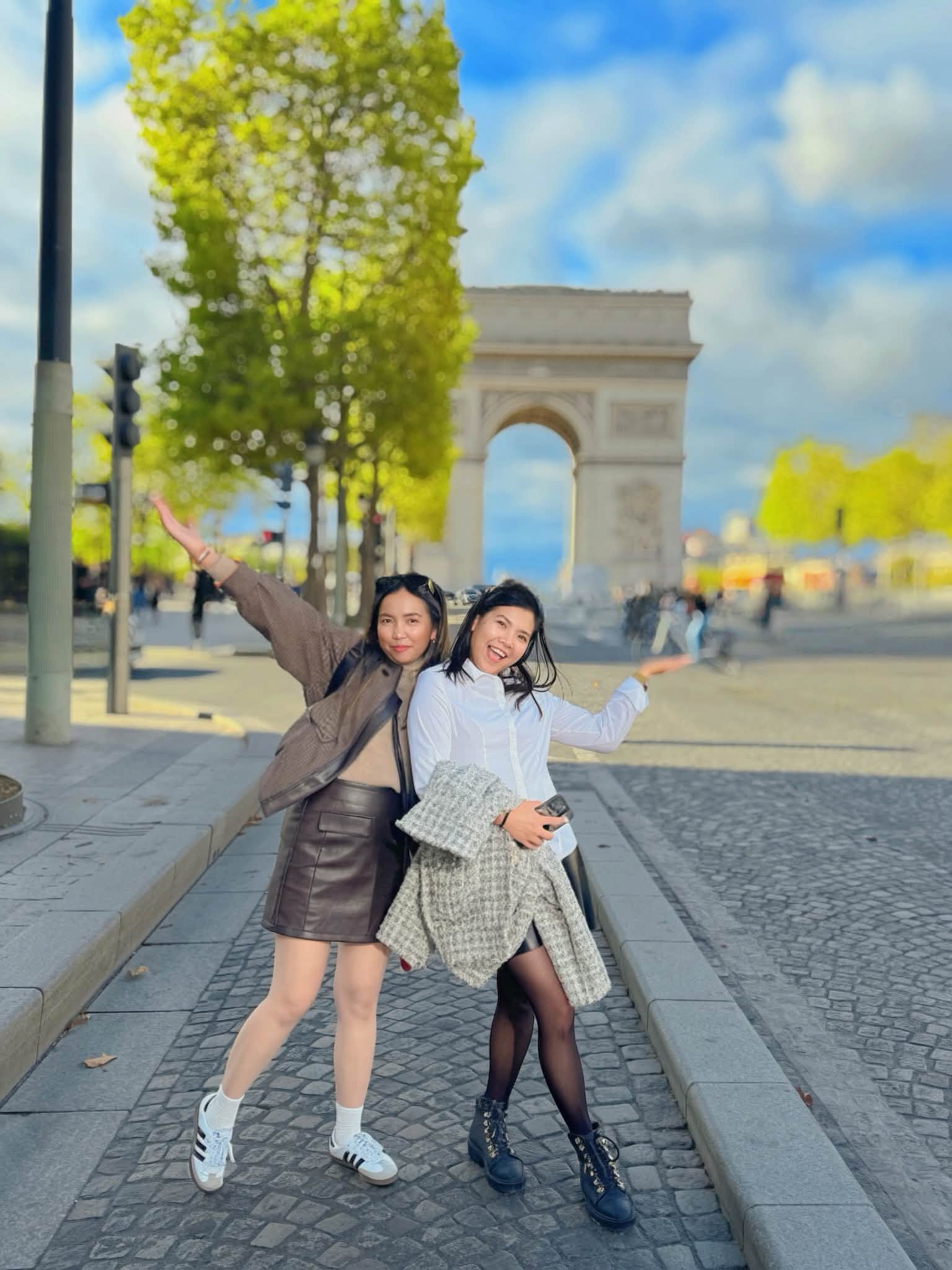
The Arc de Triomphe was magnificent in an entirely different way. Its monumental proportions, elaborate sculptural reliefs, and imposing presence were impressive even before I began examining the details. I have always enjoyed visiting places associated with history because they encourage me to imagine the generations who have passed through the same surroundings. Standing near the Arc, I was struck by its enormous scale and the craftsmanship visible in its carved surfaces. It is one of those structures that looks familiar in photographs but becomes considerably more commanding when seen in person. Naturally, I felt another collection of questions forming, although I suspect Marj would have preferred that I concentrate on admiring the monument in dignified silence.
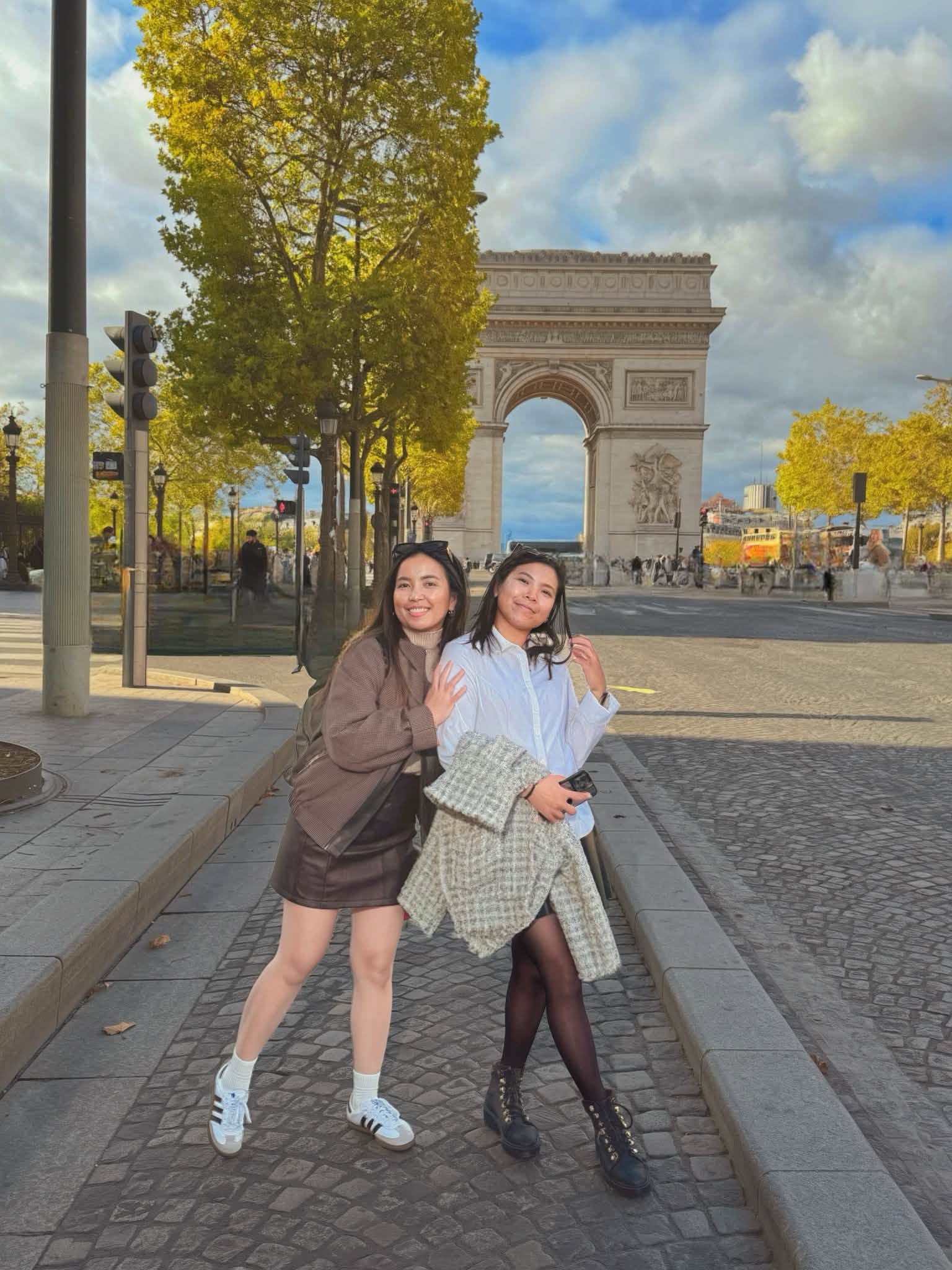
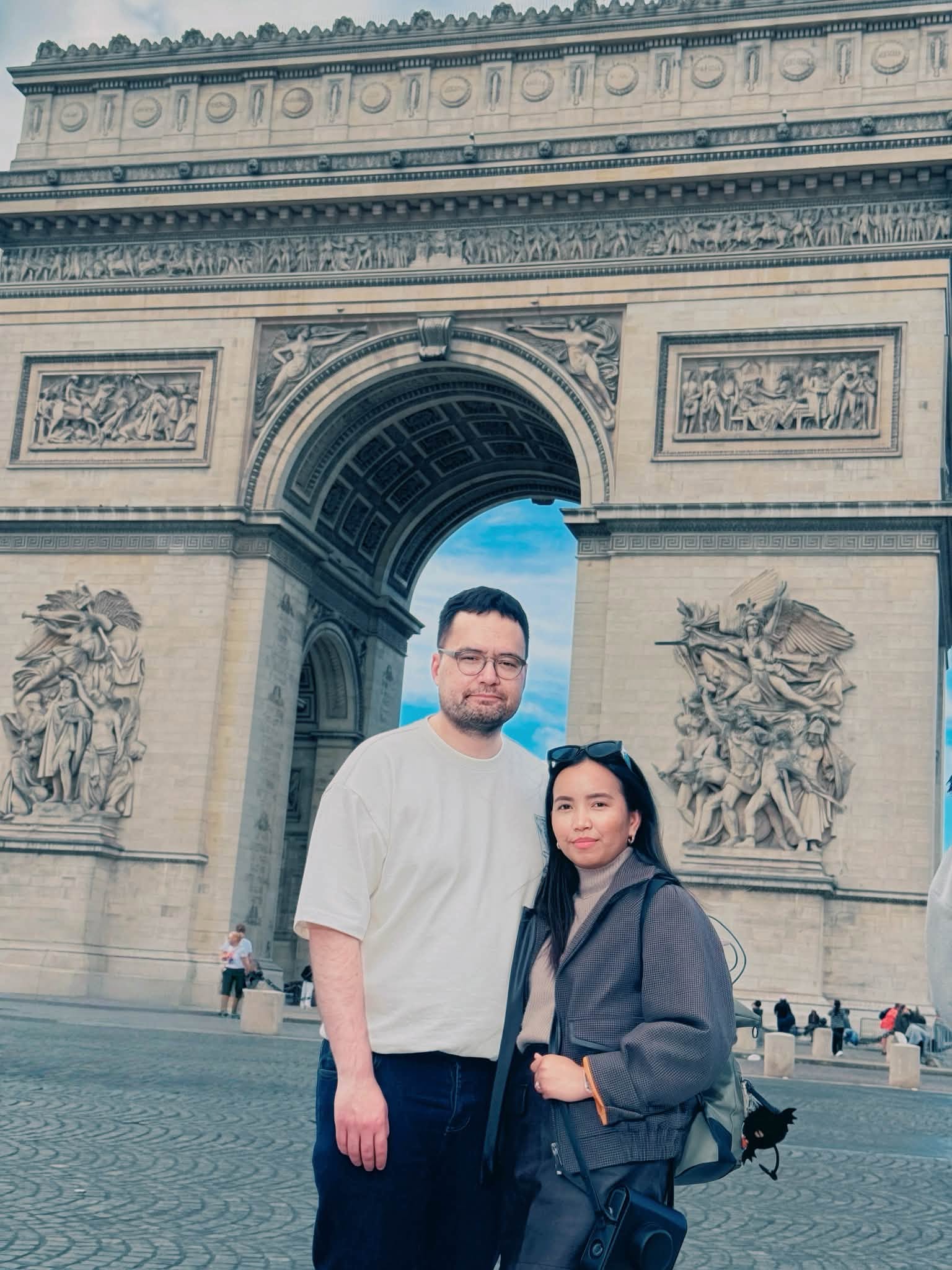
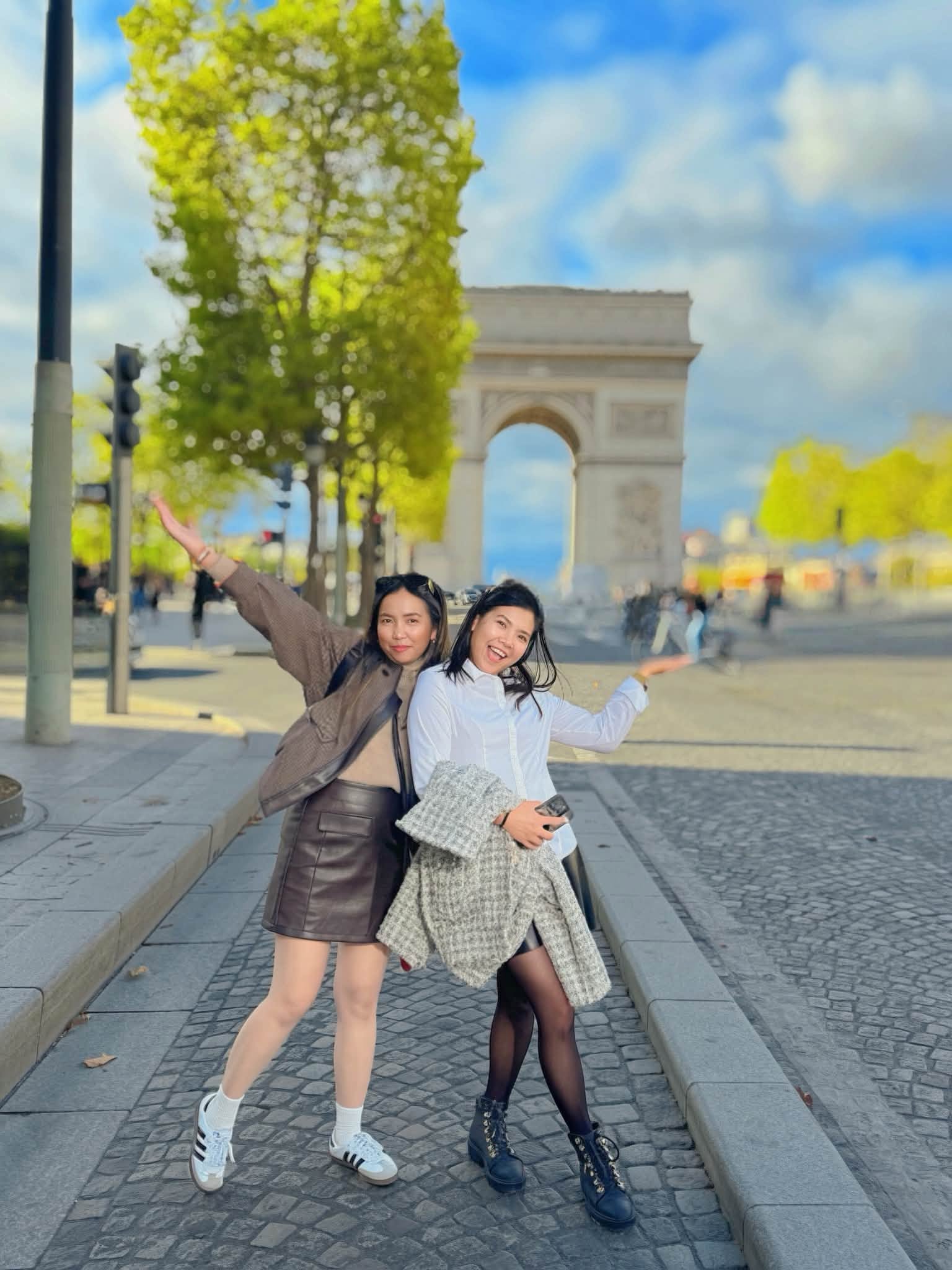
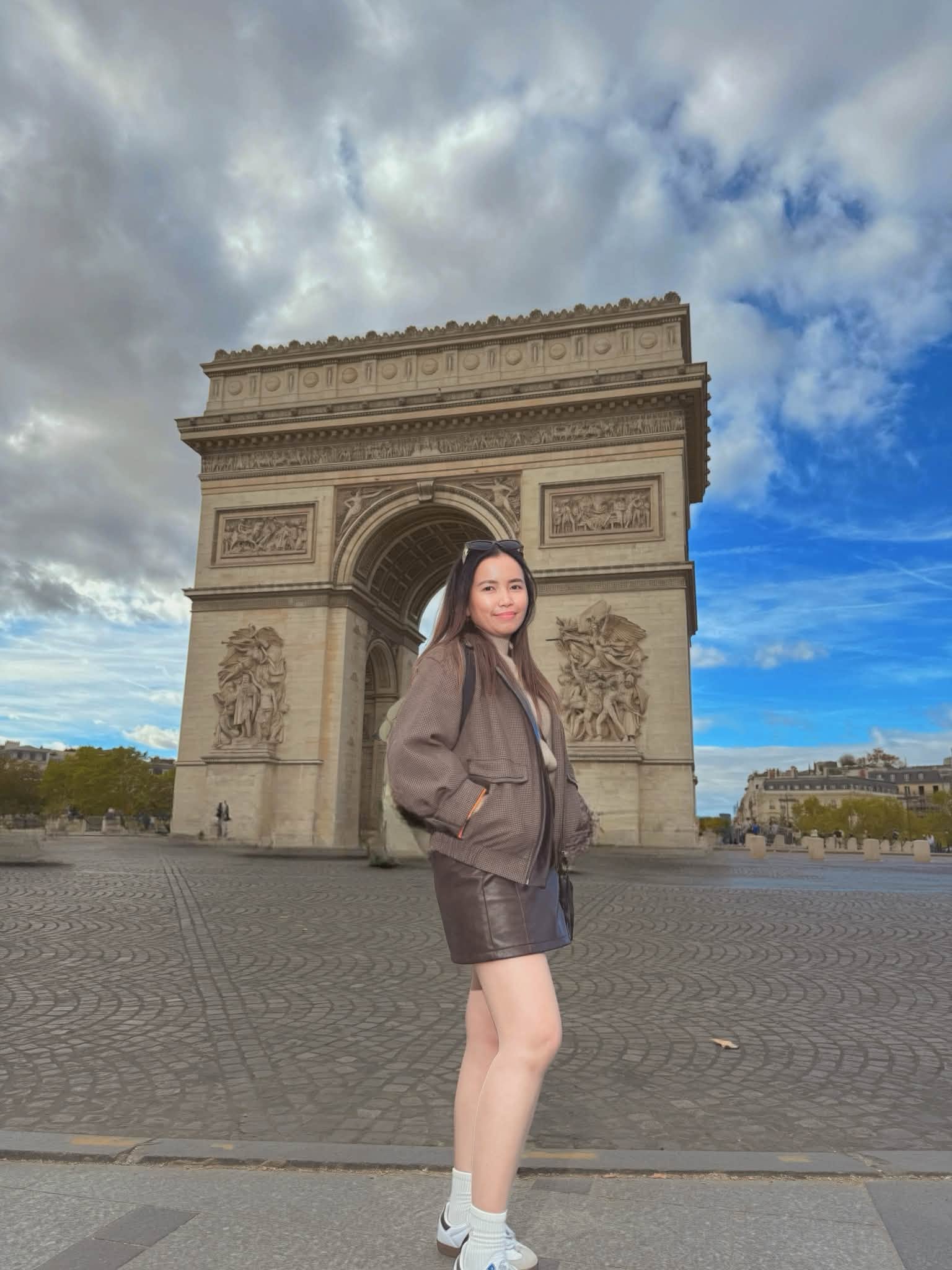
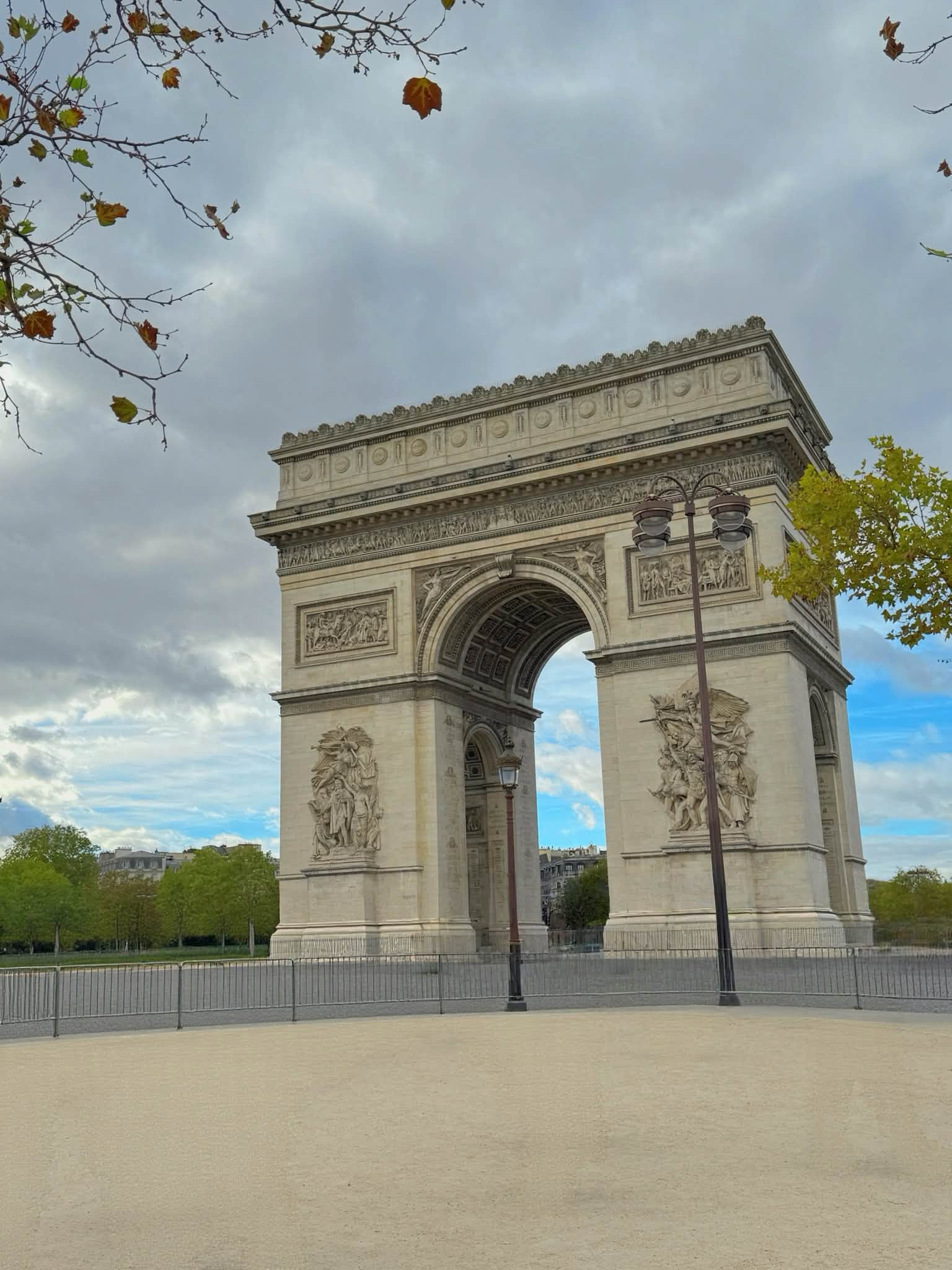
Arc de Triomphe
Jan and I had photographs taken with the Arc behind us, and I am particularly fond of them because they capture our first experience of Paris together. There is something lovely about visiting somewhere new with a person who shares your excitement. Neither of us had been there before, so we could enjoy recognising the landmarks, discovering their actual scale, and appreciating the city without pretending to possess extensive firsthand knowledge. Meanwhile, Marj and Ninin had the advantage of previous visits, although I suspect the responsibility of accompanying two enthusiastic first-timers occasionally made the experience feel less like a relaxing holiday and more like an unusually informal educational excursion.
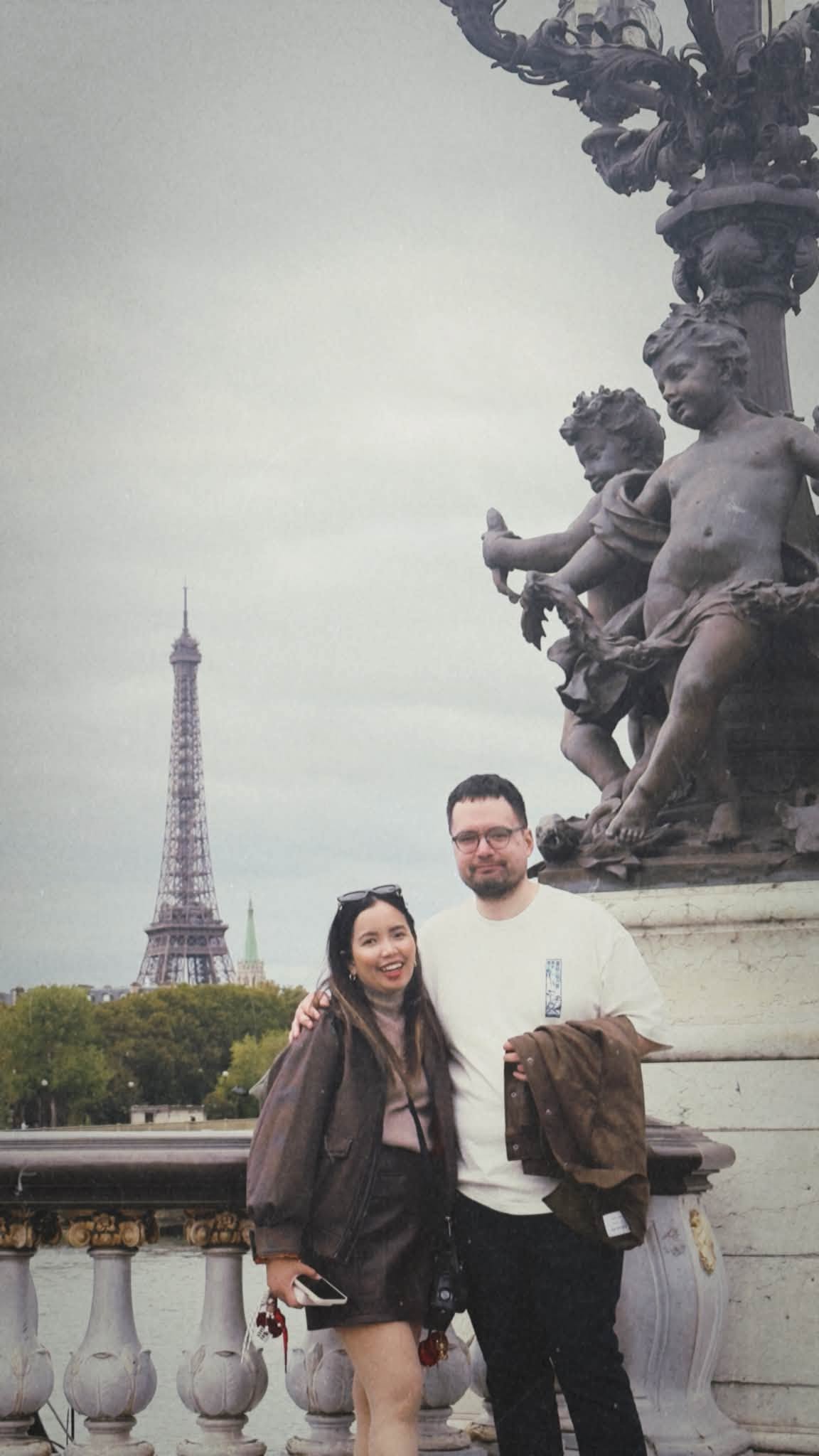
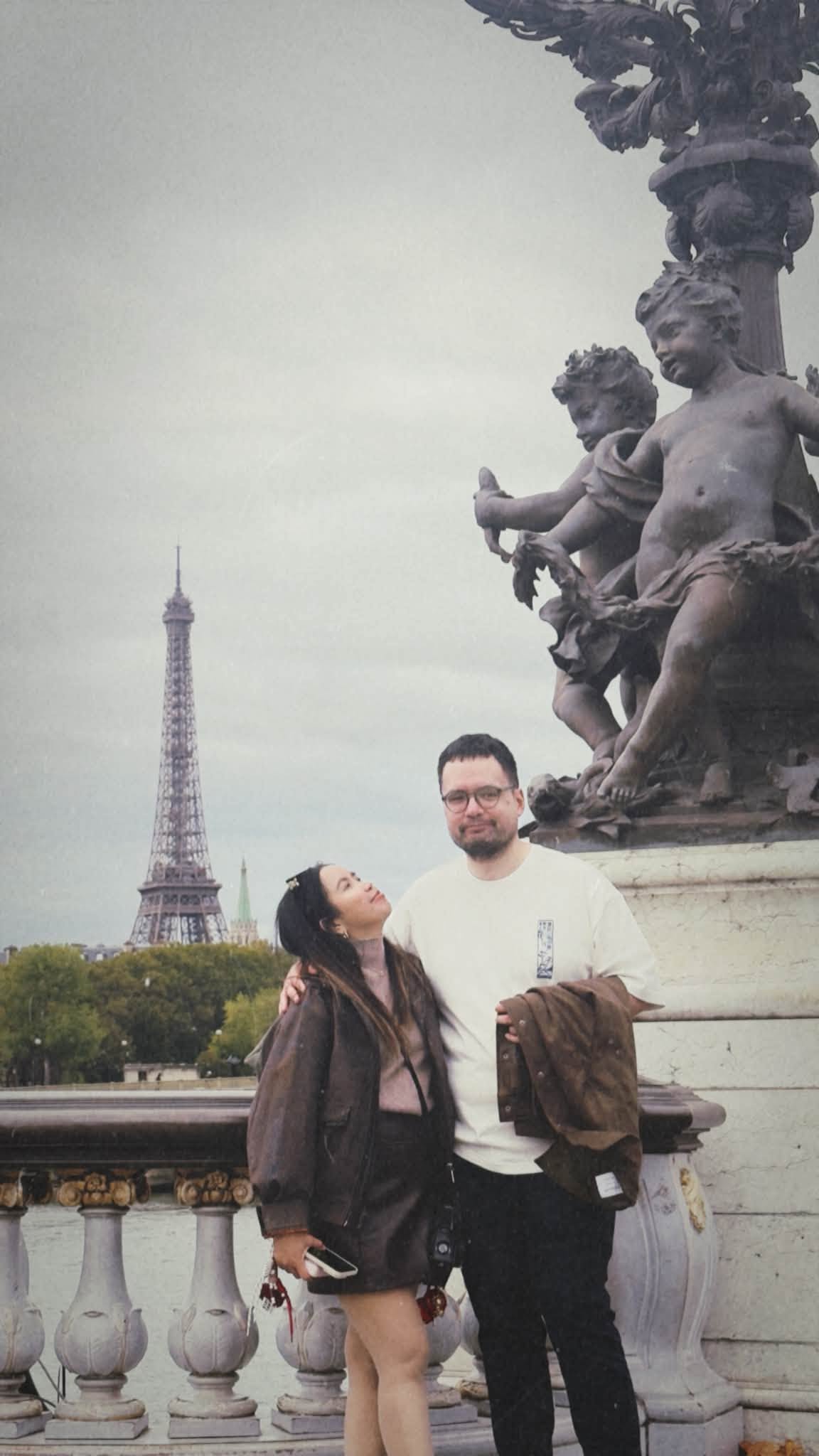
Another beautiful stop was Pont Alexandre III, whose ornate sculptures and decorative stonework made it one of my favourite architectural settings of the day. There is something wonderfully excessive about a bridge that refuses to settle for the simple responsibility of helping people cross a river. Instead, it displays elaborate figures, decorative details, and a sense of grandeur that seems determined to impress anyone passing through. I admired the sculptures and the views along the Seine, especially when the Eiffel Tower appeared in the distance. The whole setting was so beautiful that I found myself wanting photographs from several angles, which was perhaps another unfortunate development for anyone hoping to keep the itinerary moving efficiently.
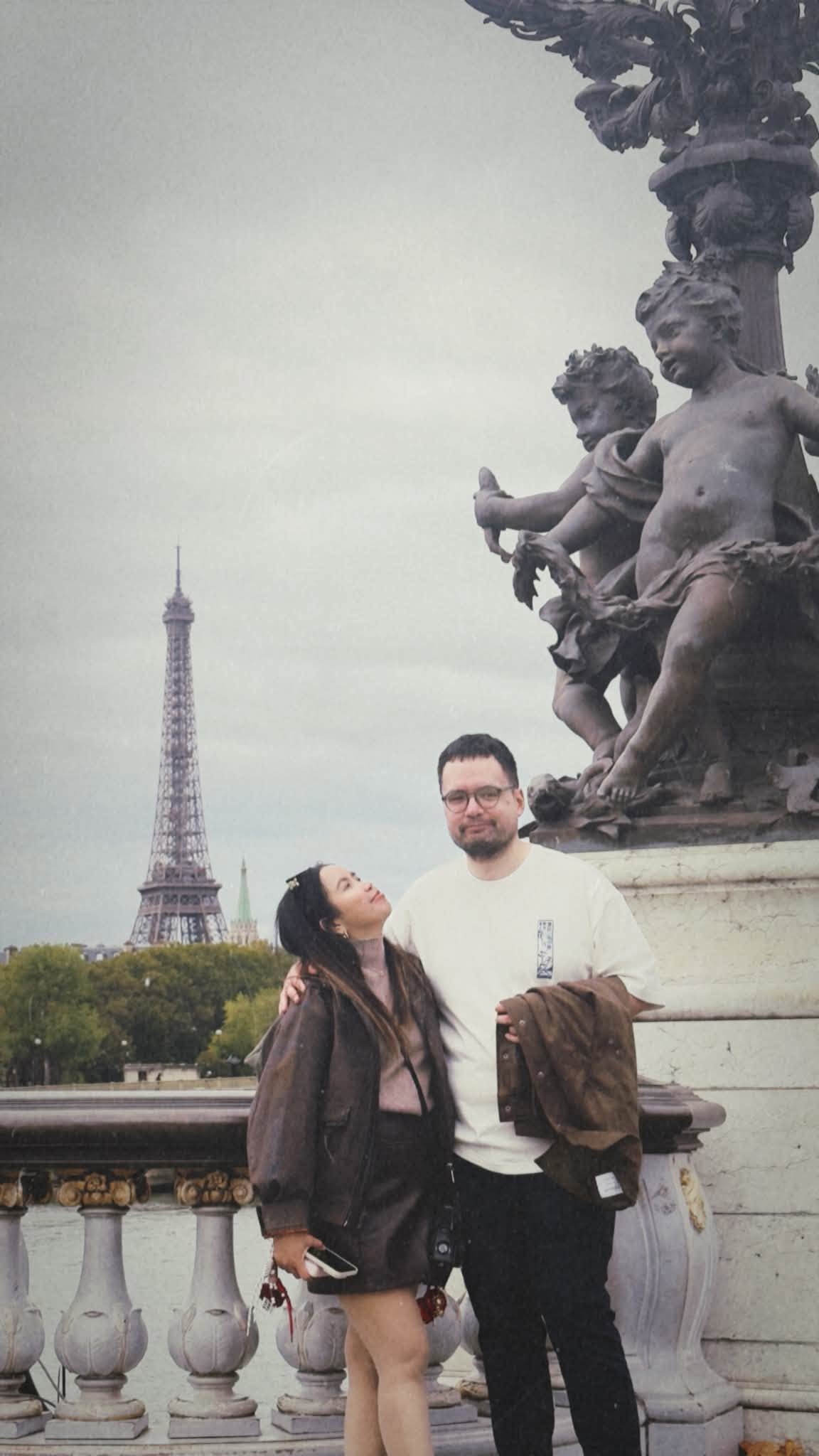
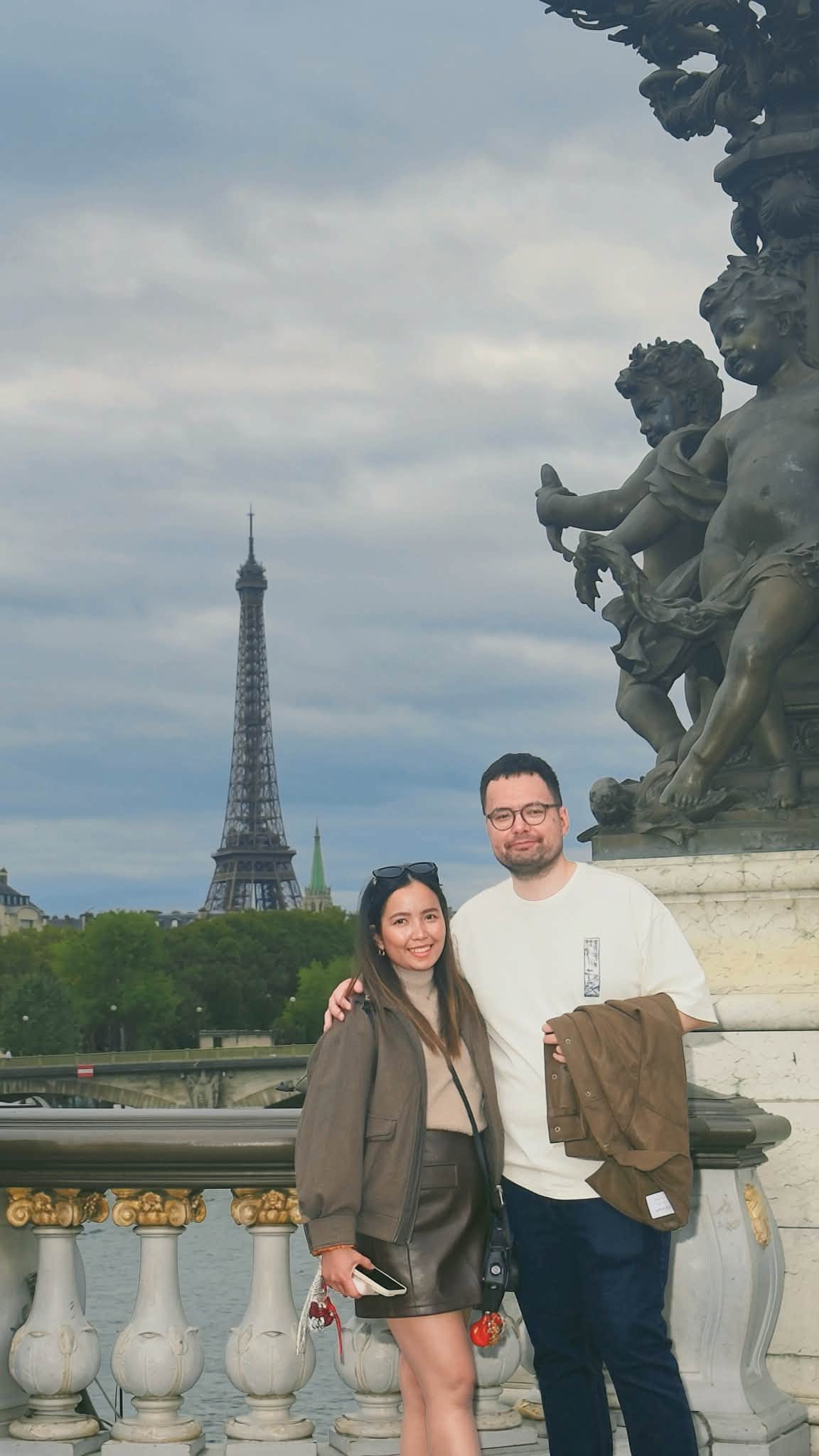
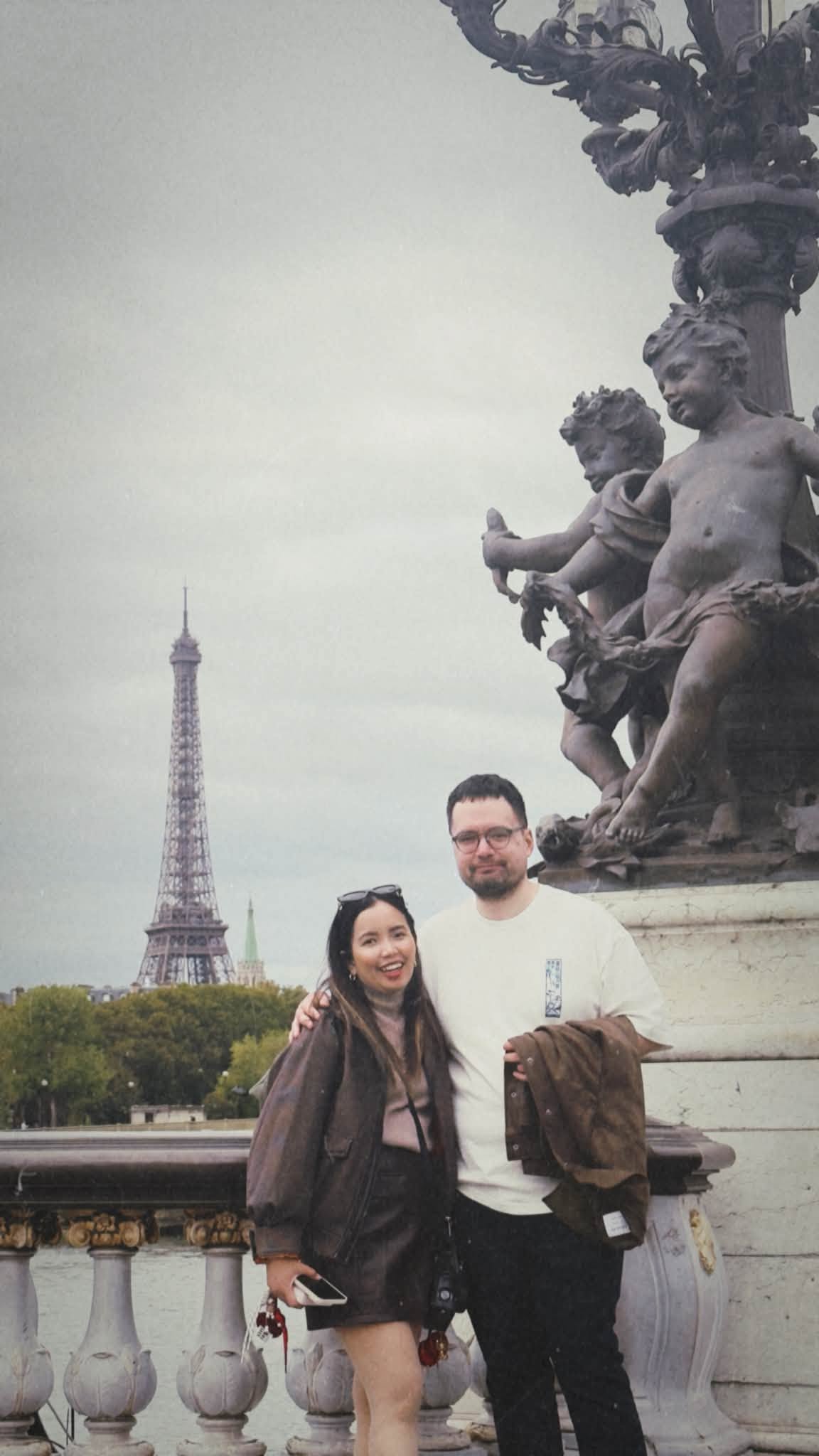
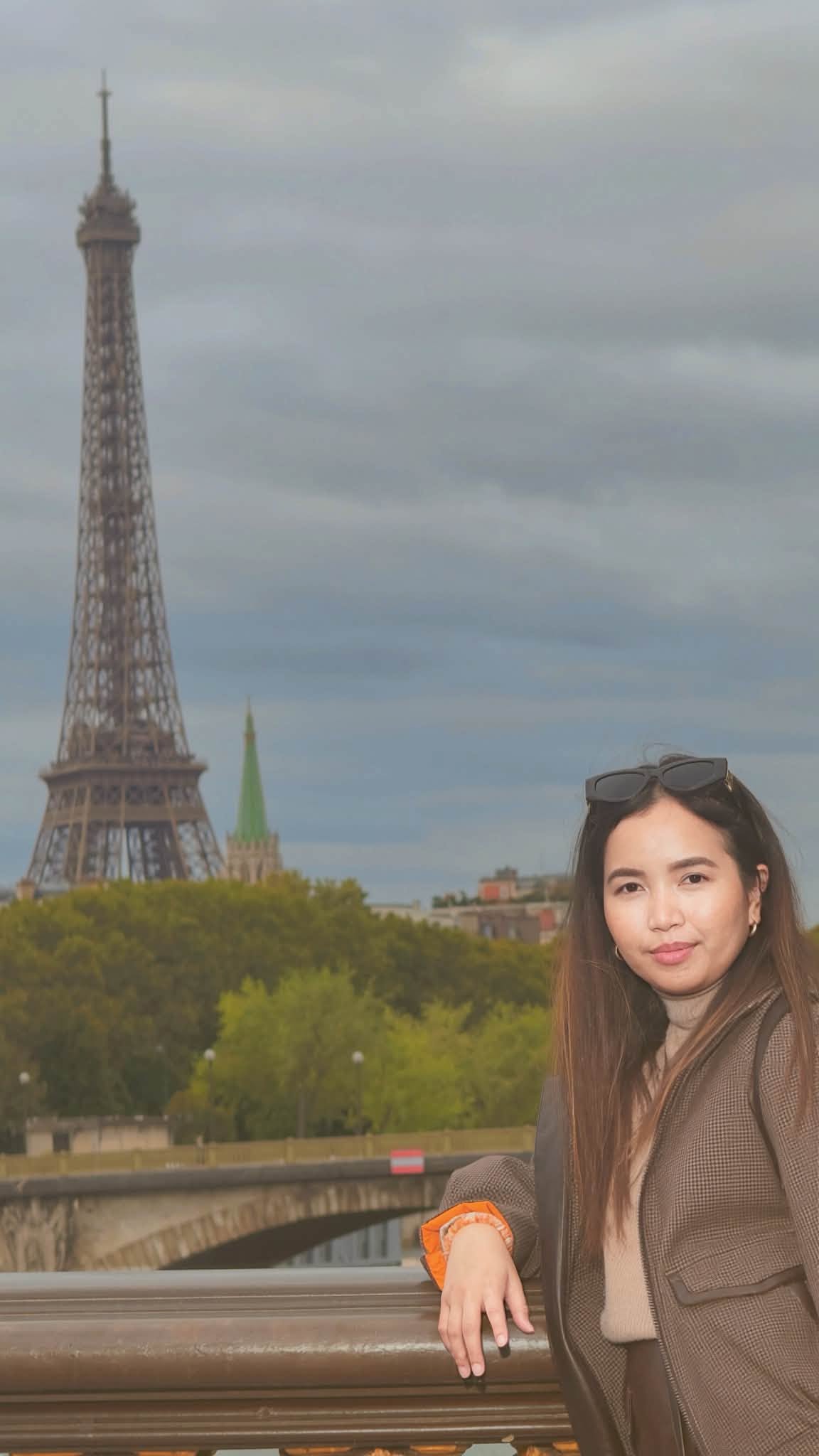
Eiffel Tower
I particularly love our photographs with the Eiffel Tower visible beyond the bridge. The composition captures several aspects of Paris at once: the historical elegance of the bridge, the architecture surrounding the river, and the famous iron landmark rising in the background. Jan and I posed together, and I found myself appreciating how much more meaningful travel photographs become when they include the people who shared the experience. I enjoy taking pictures of beautiful places, but I also want to remember who was standing beside me when I saw them. Years from now, I suspect these images will remind me not only of Paris but also of our laughter, conversations, and the increasingly ambitious determination to finish everything on our itinerary.
Of course, the Eiffel Tower remained the principal attraction for me. I had imagined seeing it for years, and there was something almost surreal about finally standing in the same city as a structure I had encountered countless times through photographs. The tower looked familiar and extraordinary at the same time. Its intricate ironwork, enormous height, and unmistakable silhouette made it every bit as impressive as I had hoped. I stood looking at it with the satisfaction of someone who had finally reached a place that once seemed far beyond her ordinary circumstances. Somewhere in my old diary, a younger version of myself had written down this dream without knowing how many years would pass before it became possible.
There is a peculiar feeling that accompanies the fulfilment of a long-held wish. We tend to imagine that the moment will arrive with a dramatic soundtrack, perhaps accompanied by an overwhelming sense that everything has finally fallen into place. In reality, I was simply standing in Paris, looking at the Eiffel Tower while the city continued its ordinary business. Nobody announced that an old dream had been accomplished. There were other tourists taking photographs, people walking past, and the familiar sounds of a busy destination. Yet the experience mattered enormously to me. It was a reminder of how far life had taken me from the younger Filipina who once wrote about Paris as something she hoped to see someday.
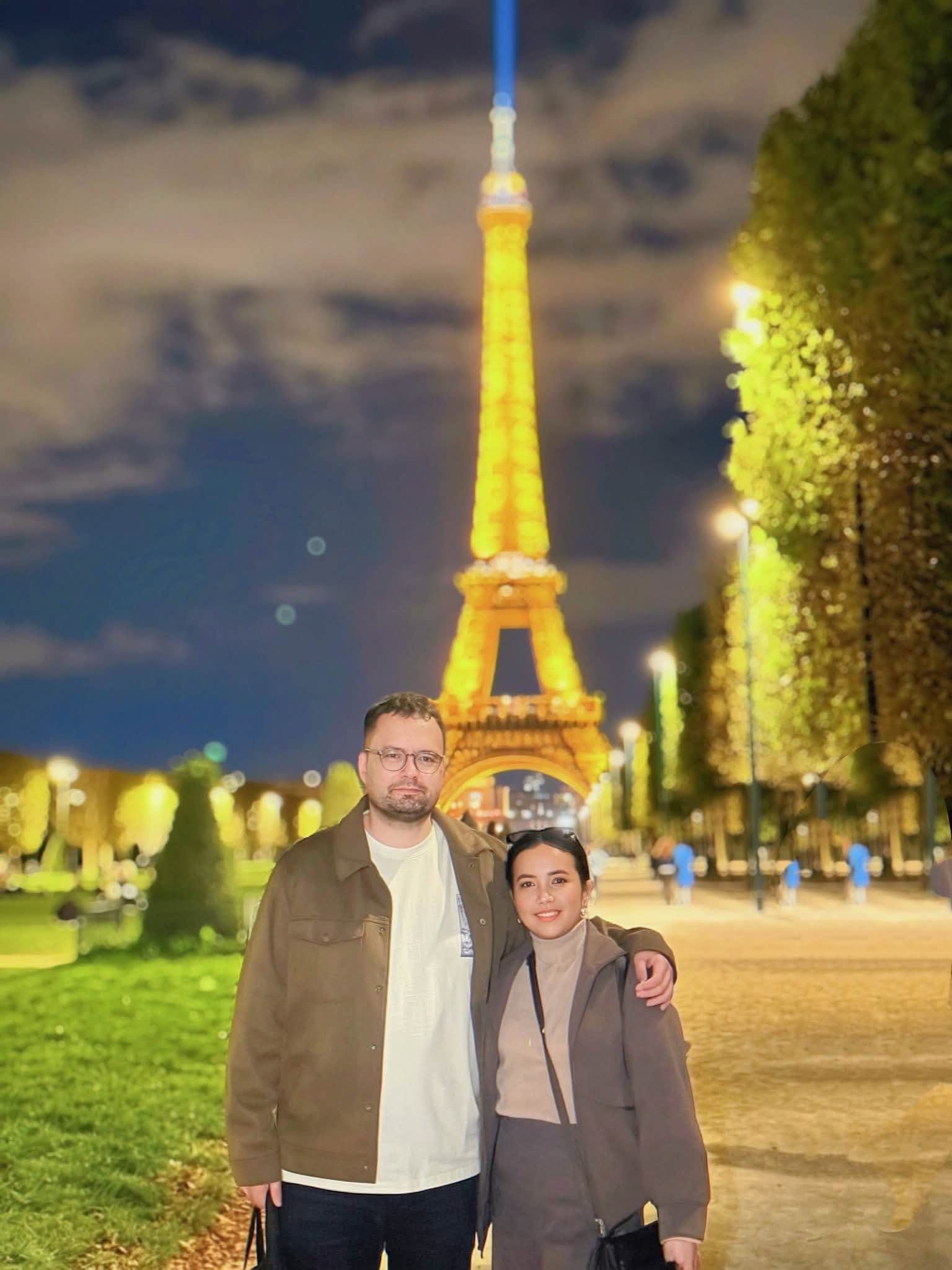
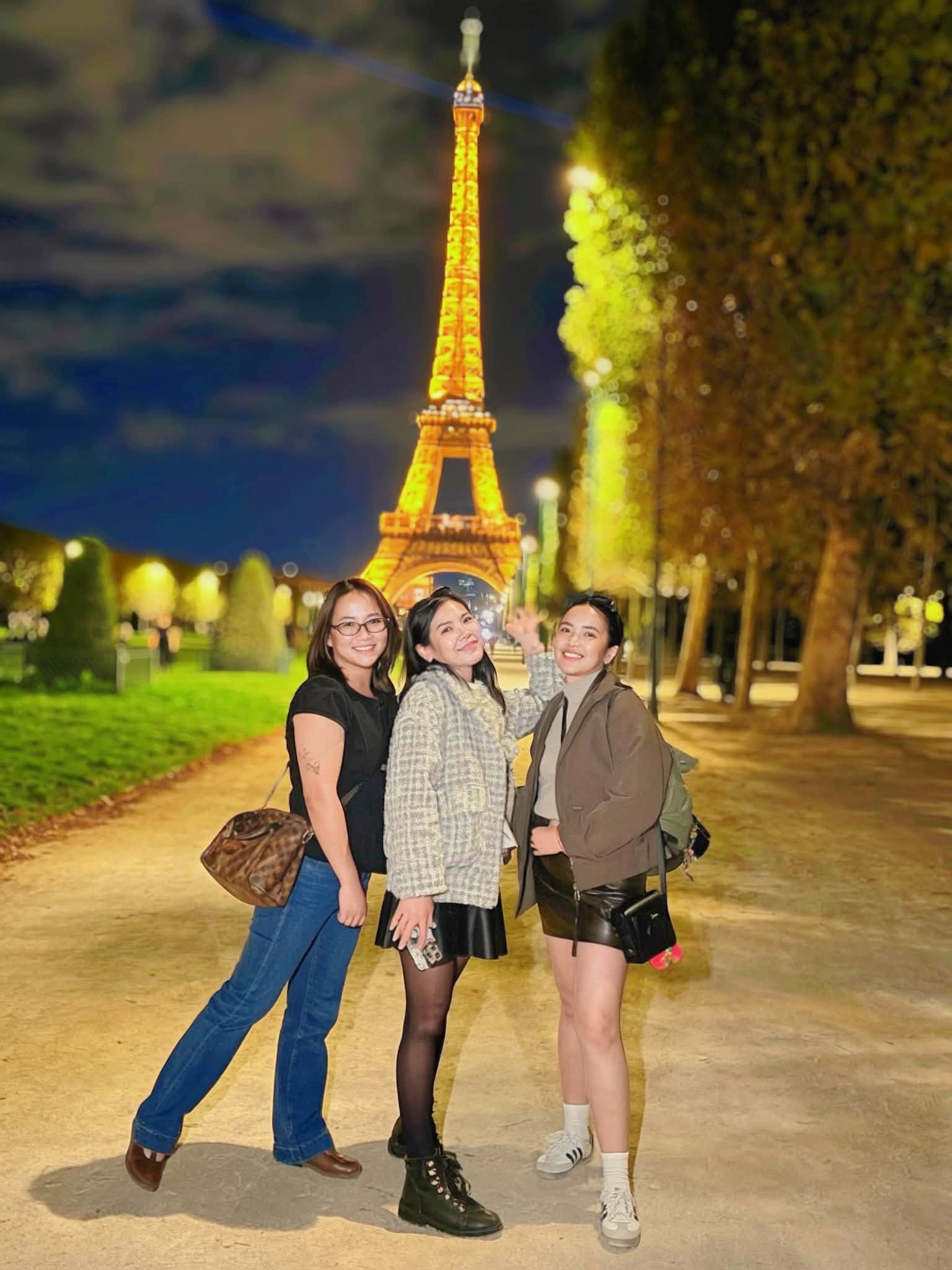
As daylight gradually disappeared, the city began changing character. Paris after dark possessed a different atmosphere from the version we had explored during the day. Illuminated buildings, glowing streetlights, and the beautiful evening skyline gave familiar structures an almost theatrical quality. I had been especially excited to see the Eiffel Tower illuminated, and the experience did not disappoint. Its golden lights transformed the enormous iron structure into something spectacular against the dark sky. After years of seeing photographs, I was finally witnessing the scene with my own eyes, and I could not have been happier.
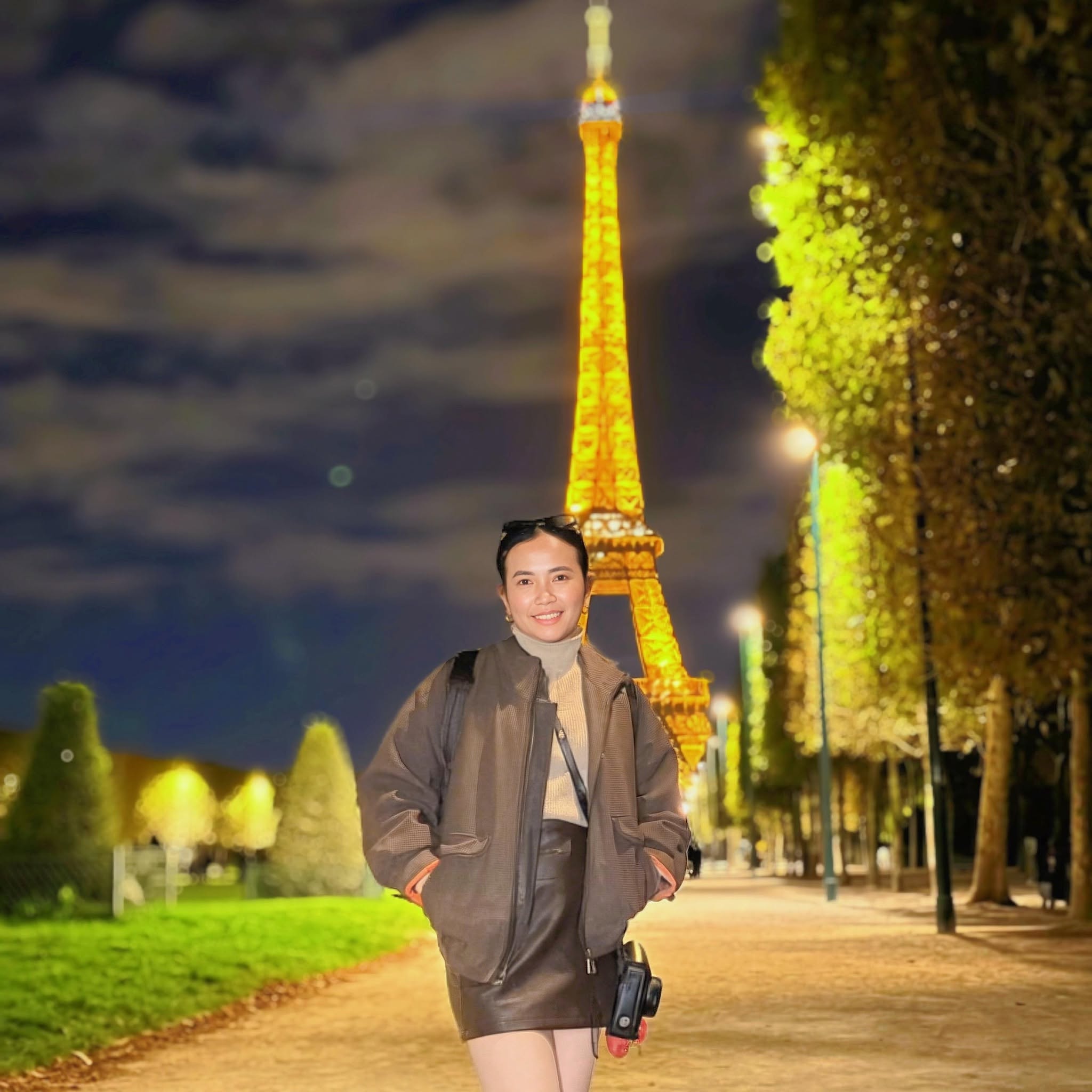
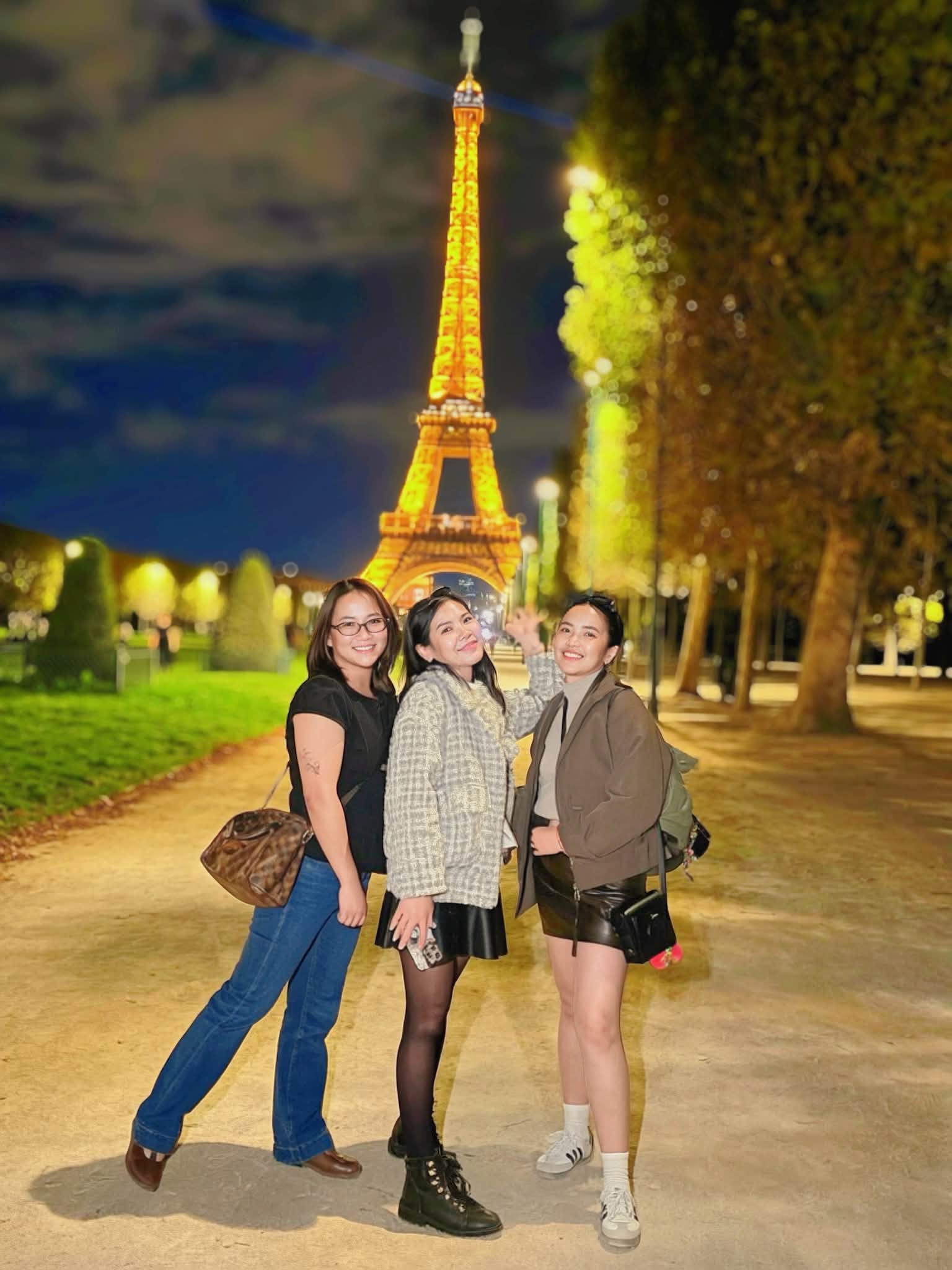
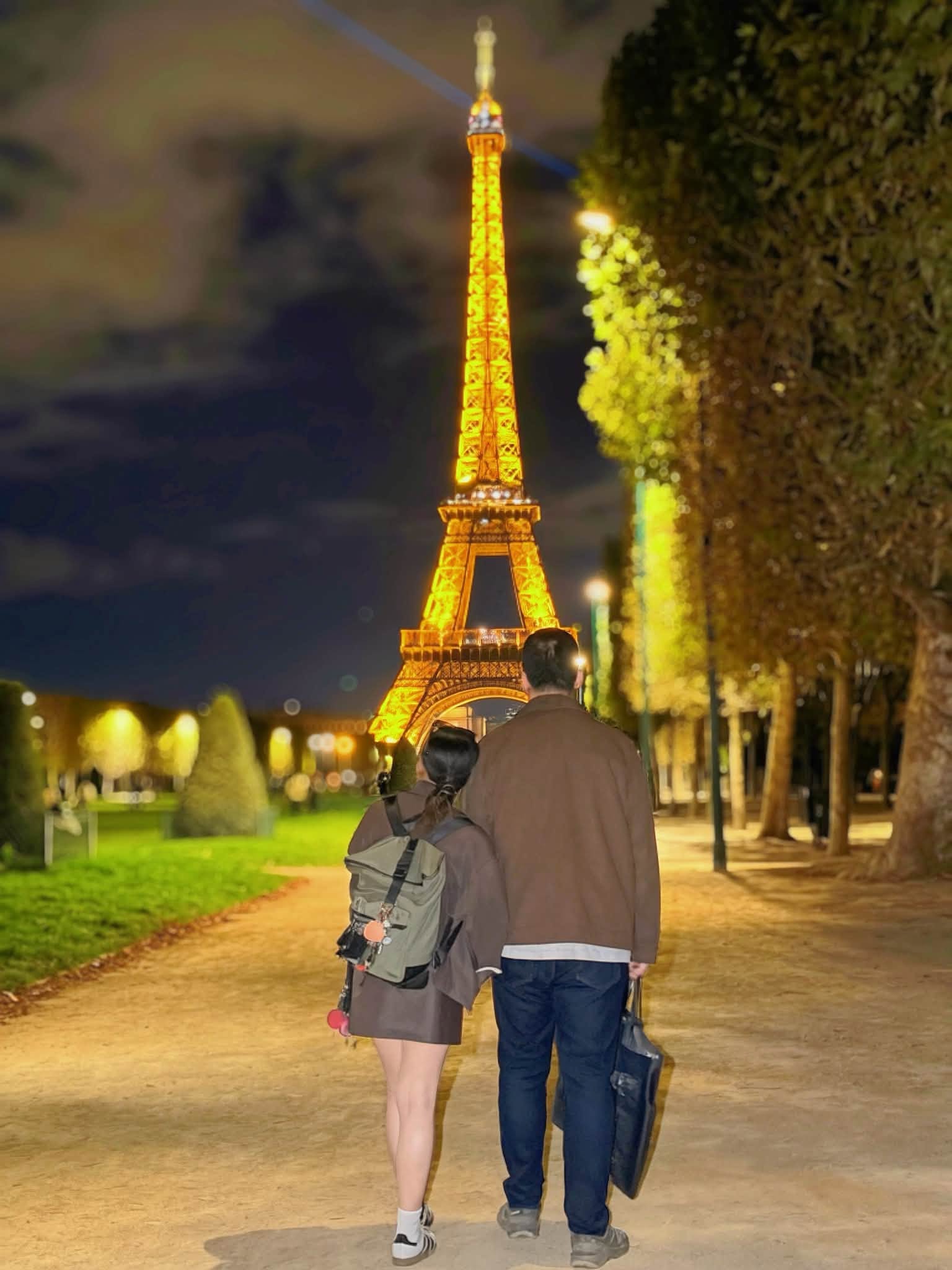
We took photographs around the Champ de Mars, where the illuminated tower provided a beautiful backdrop. Jan and I had pictures together, and we also captured photographs with Marj and Ninin. Looking at them now, I am impressed by how cheerful and composed we appear, considering what our legs were experiencing by that stage. The photographs suggest four travellers enjoying an elegant evening in the French capital, entirely untroubled by the physical consequences of their ambitious itinerary. The camera, unfortunately, has a remarkable talent for omitting inconvenient truths. It captures smiles, beautiful lighting, and famous landmarks while providing absolutely no evidence of the increasingly desperate desire to sit down.
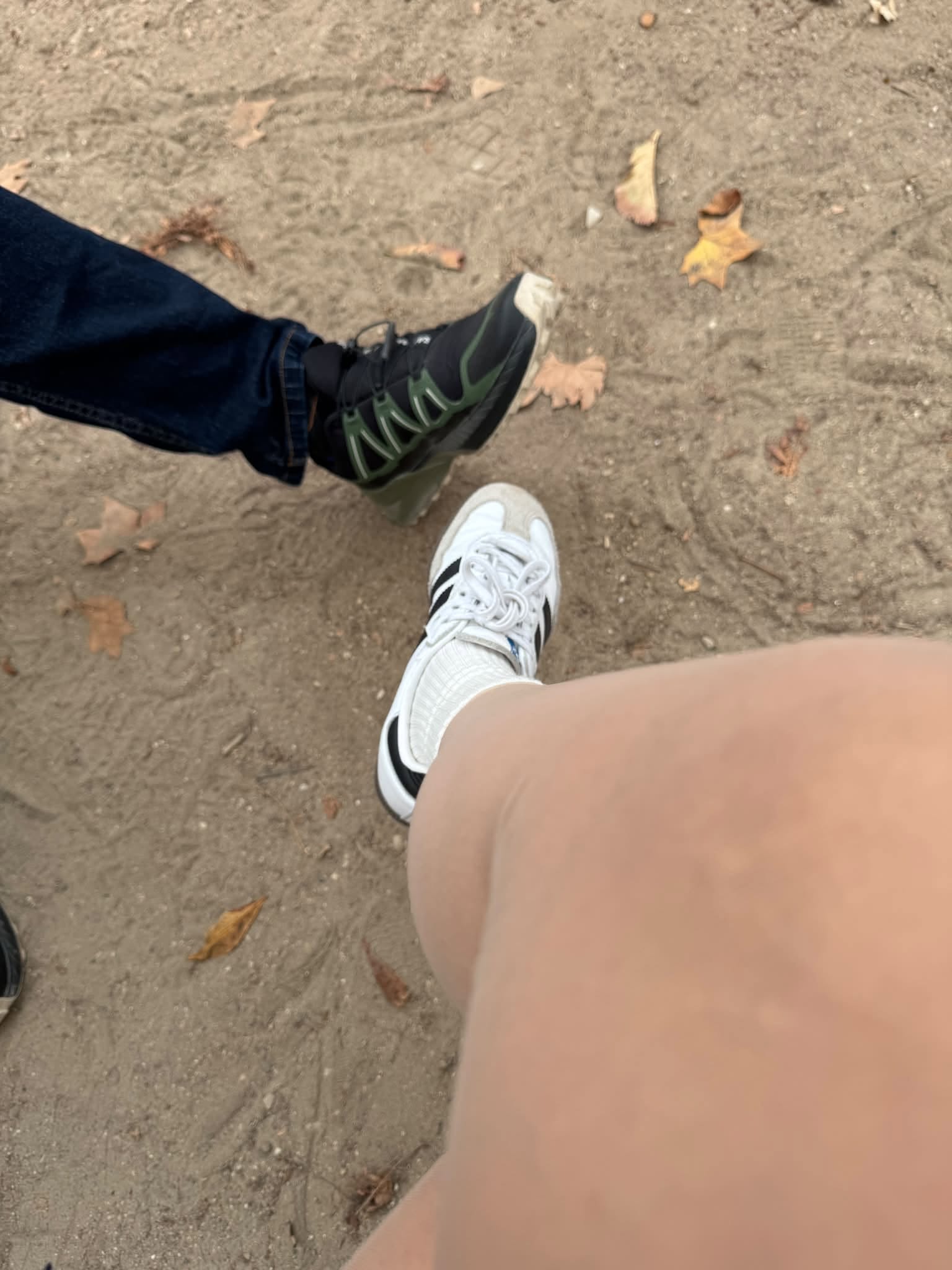
By the time we finished sightseeing, we had accumulated approximately thirty thousand steps. Thirty thousand. I would like that number to receive the attention it deserves because it represents an extraordinary amount of cooperation from two legs that had never formally agreed to such an arrangement. At the beginning of the day, walking had been a pleasant way of discovering Paris. We moved enthusiastically between attractions, stopped to admire buildings, and treated every additional kilometre as a reasonable contribution to the adventure. Towards the end, however, my calves had begun reconsidering their professional relationship with the rest of my body. Every staircase looked unnecessarily ambitious, every additional walk felt personally offensive, and the sight of an empty chair became more emotionally significant than certain historic monuments.
I have worked enough twelve-hour nursing shifts to appreciate how exhausting prolonged periods on one’s feet can be, but our Paris adventure introduced a different category of physical suffering. At work, at least there is a professional reason for moving constantly between responsibilities. In Paris, we had voluntarily undertaken the challenge because we wanted to see beautiful buildings and eat pastries. I could hardly complain about the circumstances without acknowledging that we had enthusiastically created them ourselves. The tourist in me had repeatedly insisted that we could manage another stop, while the healthcare professional had apparently decided to remain silent until the consequences became unavoidable.
There comes a point during an exhausting journey when your priorities change dramatically. Earlier in the day, I had been interested in architecture, history, photography, and the cultural importance of the places we were visiting. Later, my attention began shifting towards practical questions such as whether there was somewhere nearby to sit and how many more steps would be required before we could finally rest. I became increasingly appreciative of benches, chairs, and any architectural development designed specifically to accommodate the human backside. I suspect the French would have preferred that I continue admiring their beautiful monuments, but at that stage, a comfortable seat was beginning to look like one of civilisation’s finest achievements.
Fortunately, we were staying overnight in Paris rather than attempting to travel home immediately after our sightseeing marathon. This gave us the opportunity to rest after the day’s activities, although I suspect one night was insufficient compensation for the amount of walking we had accomplished. I had imagined that spending a night in the French capital might involve something glamorous, perhaps looking out at the city and reflecting upon the romantic beauty of our surroundings. In reality, my principal concern was finding a comfortable position for my aching legs. The Eiffel Tower had been magnificent, Angelina’s pastries had been delicious, and the architecture had exceeded my expectations, but my calves were now requesting immediate attention with an urgency that seemed disproportionate to their usual contribution to my daily life.
I thought about Salonpas and warm patches with the enthusiasm normally reserved for exciting travel discoveries. After spending the day admiring historic structures and internationally celebrated works of architecture, I had apparently reached the stage where the most desirable souvenir would have been something capable of comforting my exhausted muscles. There was nothing particularly Parisian about this development, although I suppose it added another layer of authenticity to our adventure. We had travelled to France to experience its culture and history, and by bedtime, I was considering the practical benefits of remaining horizontal for an extended period. It was not quite the romantic European evening I had imagined, but it was certainly memorable.
The following day, it was already time to leave Paris. Our stay had been brief: one sightseeing day, one night, and then departure. I found that slightly disappointing because there were still so many places I would have loved to explore properly. The city had given us a beautiful introduction, but it was impossible to appreciate everything in such a limited period. At the same time, my feet seemed rather relieved that we were not attempting another equally ambitious itinerary. I suspect they would have refused further cooperation if informed that we were about to spend another day walking between famous landmarks.
Leaving with aching feet was a peculiar contrast to the excitement I had felt upon arrival. I had entered Paris imagining elegant boulevards, beautiful architecture, and leisurely moments in charming cafés. I was departing with those memories, certainly, but also with the unmistakable physical consequences of our determination to accomplish everything in one day. Every step reminded me of the distance we had covered. We were returning home with photographs, stories, and tired muscles that would probably require more recovery than the actual length of our holiday suggested. It was a remarkably successful trip, provided success was measured through experiences rather than the ability to walk normally afterwards.
I also realised that the real Paris was considerably more interesting than the perfectly arranged version I had carried in my imagination. Before travelling, I had pictured the famous landmarks, elegant streets, beautiful pastries, and perhaps a little effortless sophistication. I had not anticipated Ninin’s handbag disappearing at Birmingham Airport, somebody tailgating me through a Métro barrier, or Marj reaching the limits of her patience with my continuous questions. I certainly had not imagined returning to the United Kingdom with calves that seemed personally offended by the concept of tourism. Yet these imperfect details had become part of what made the trip so entertaining.
Perhaps that is why I enjoy travelling with friends rather than treating every destination as a carefully organised photographic assignment. Beautiful landmarks can be admired by anyone who visits them, but the stories that develop around a particular journey belong to the people who experienced it together. Our trip was shaped by our personalities, our reactions, and the little incidents that nobody could have planned. Marj’s occasional irritation, my relentless curiosity, Ninin’s unfortunate airport mishap, and Jan’s shared excitement as a first-time visitor all contributed something to the experience. We were not simply collecting pictures of Paris. We were creating memories that would remain connected to the people who accompanied us.
I suspect Marj deserves an award for surviving my questions. There were moments when I became genuinely curious about something and immediately directed the enquiry towards her, without considering that she might prefer to enjoy the surroundings rather than provide an impromptu historical explanation. I understand why she occasionally became annoyed, although I must admit her reactions only made the situation funnier to me. That is the wonderful thing about our friendship. We can express irritation, exchange sarcastic remarks, and carry on without needing to analyse the emotional significance of every conversation. I know she loves me, even when my questions suggest that I am determined to test the limits of that affection.
If we return to Paris together someday, I intend to be a more considerate travelling companion. Perhaps I could prepare my questions in advance and organise them according to subject: architecture, history, geography, transport, and miscellaneous matters requiring immediate attention. On second thought, that might make the situation considerably worse. Marj would probably prefer that I learn to use a map and allow her to enjoy her holiday in peace. I shall consider the matter carefully, although I suspect my curiosity will continue operating at approximately the same level whenever I visit somewhere new.
As for Ninin, I hope our future travels begin without the disappearance of important belongings. I genuinely wish she had not lost her bag, especially before departure, because it was an unfortunate and stressful experience. But I am relieved that her passport remained safe and that she was still able to continue with us. The incident has become one of those travel stories we will probably remember whenever somebody mentions Birmingham Airport or reminds the group to check their belongings. There is something amusing about the fact that our Paris adventure began with a mishap in England and concluded with physical exhaustion in France. We had managed to experience two entirely different categories of travel inconvenience within a remarkably short period.
Jan and I, meanwhile, can finally say that we have visited Paris together. It sounds like such a simple statement, but it represents a dream I had carried for years. We saw some of the city’s most recognisable landmarks, enjoyed beautiful surroundings, and experienced the Eiffel Tower during both daylight and evening. I am grateful that we shared those first impressions because there is something especially enjoyable about discovering a place with somebody who is experiencing it for the first time too. We may not have seen everything, but we certainly made an enthusiastic attempt, and I suspect our photographs will remain among my favourites for a long time.
Looking through our camera roll, I find myself smiling at how carefully photographs preserve the attractive parts of an experience. The Louvre’s pyramid looks elegant, the Arc de Triomphe appears magnificent, and the Eiffel Tower glows beautifully behind our smiling faces. Angelina’s pastries look exquisite, the streets appear charming, and our group seems entirely capable of enjoying a sophisticated European holiday. There is no visible evidence of the missing handbag, the opportunistic passenger at the Métro barrier, or the ongoing negotiations between my questions and Marj’s patience. The photographs also fail to record how my legs felt on the morning of our departure, which I consider an act of extraordinary mercy.
See more moments from our trip here.
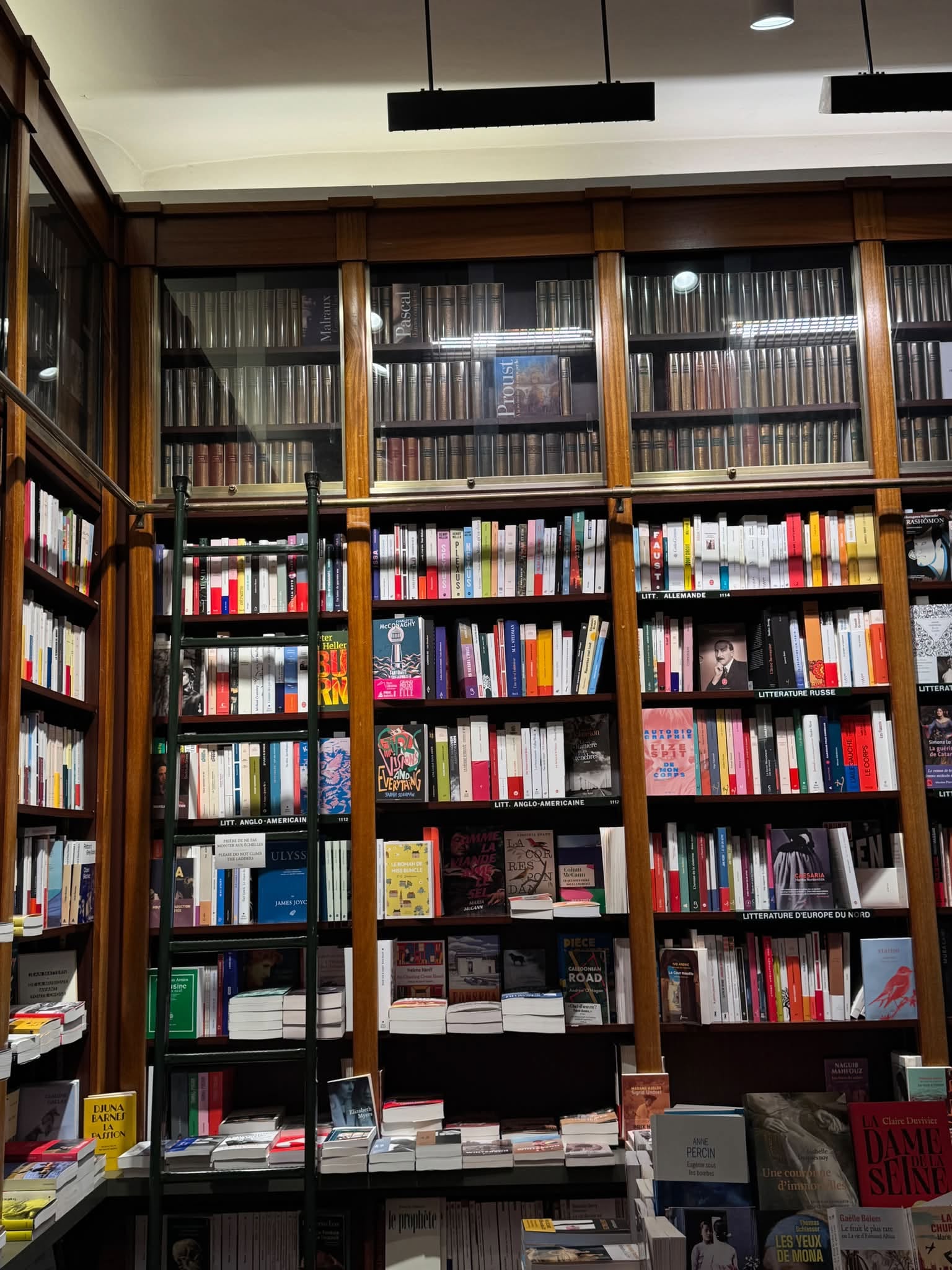
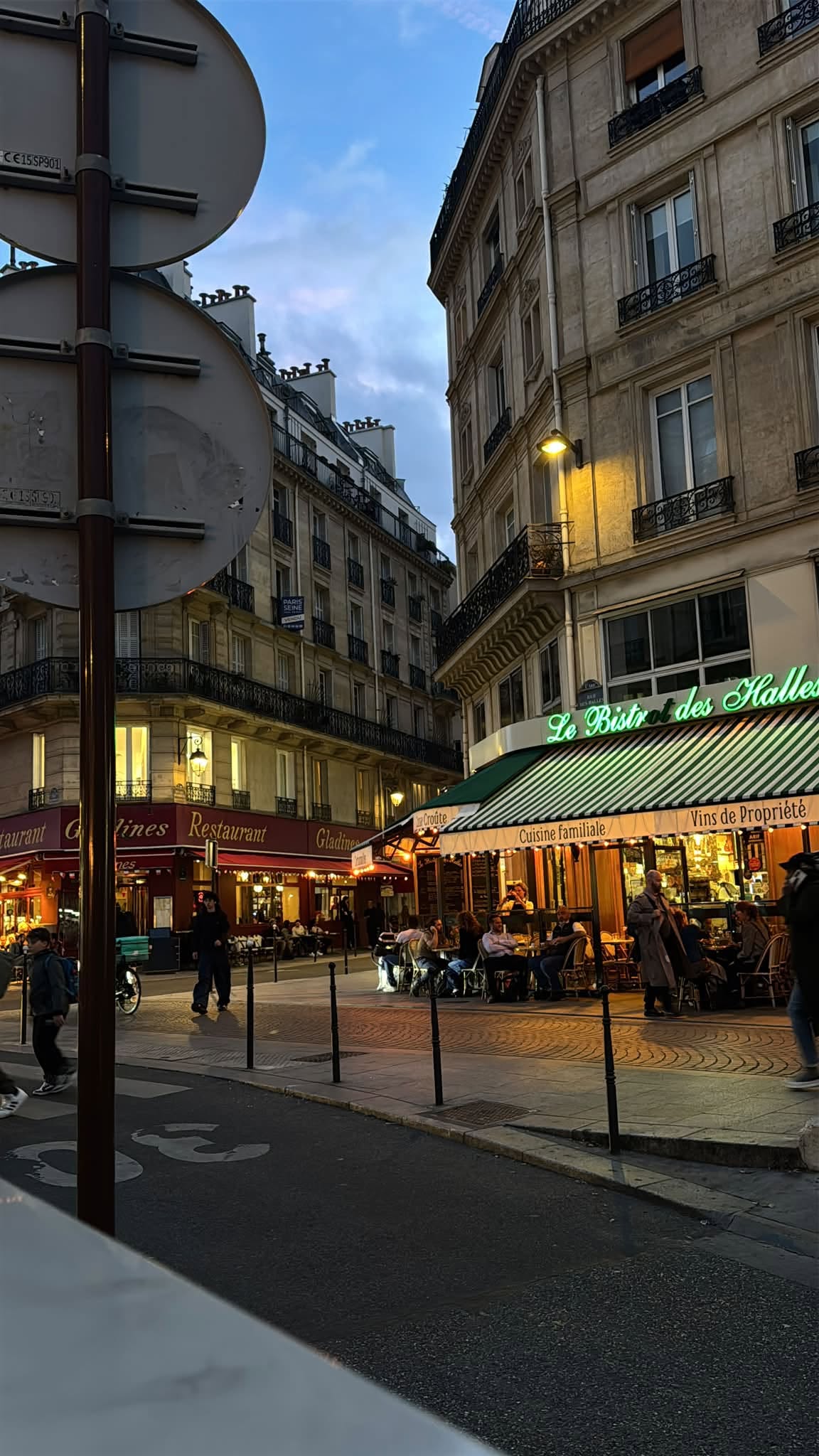
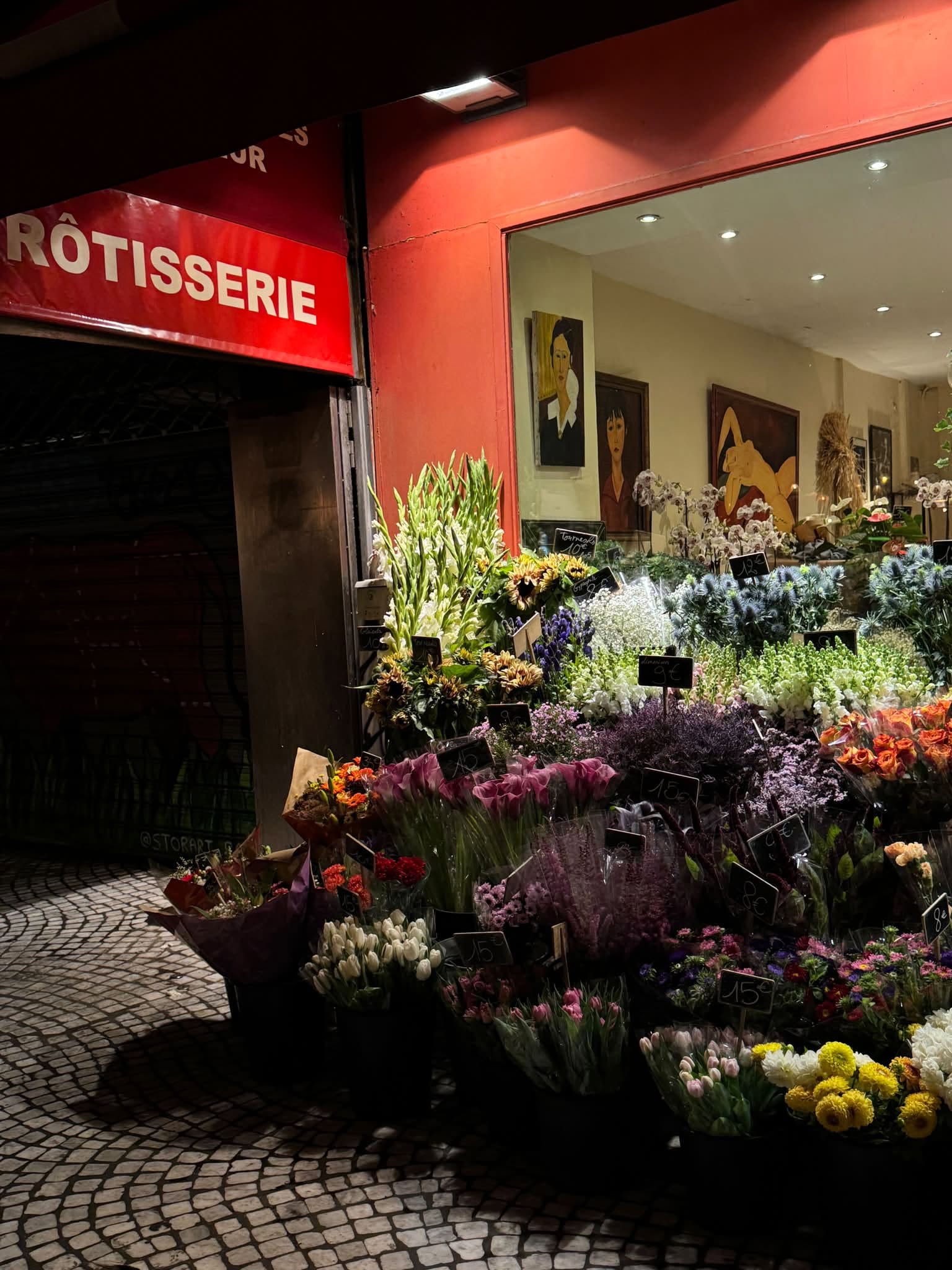
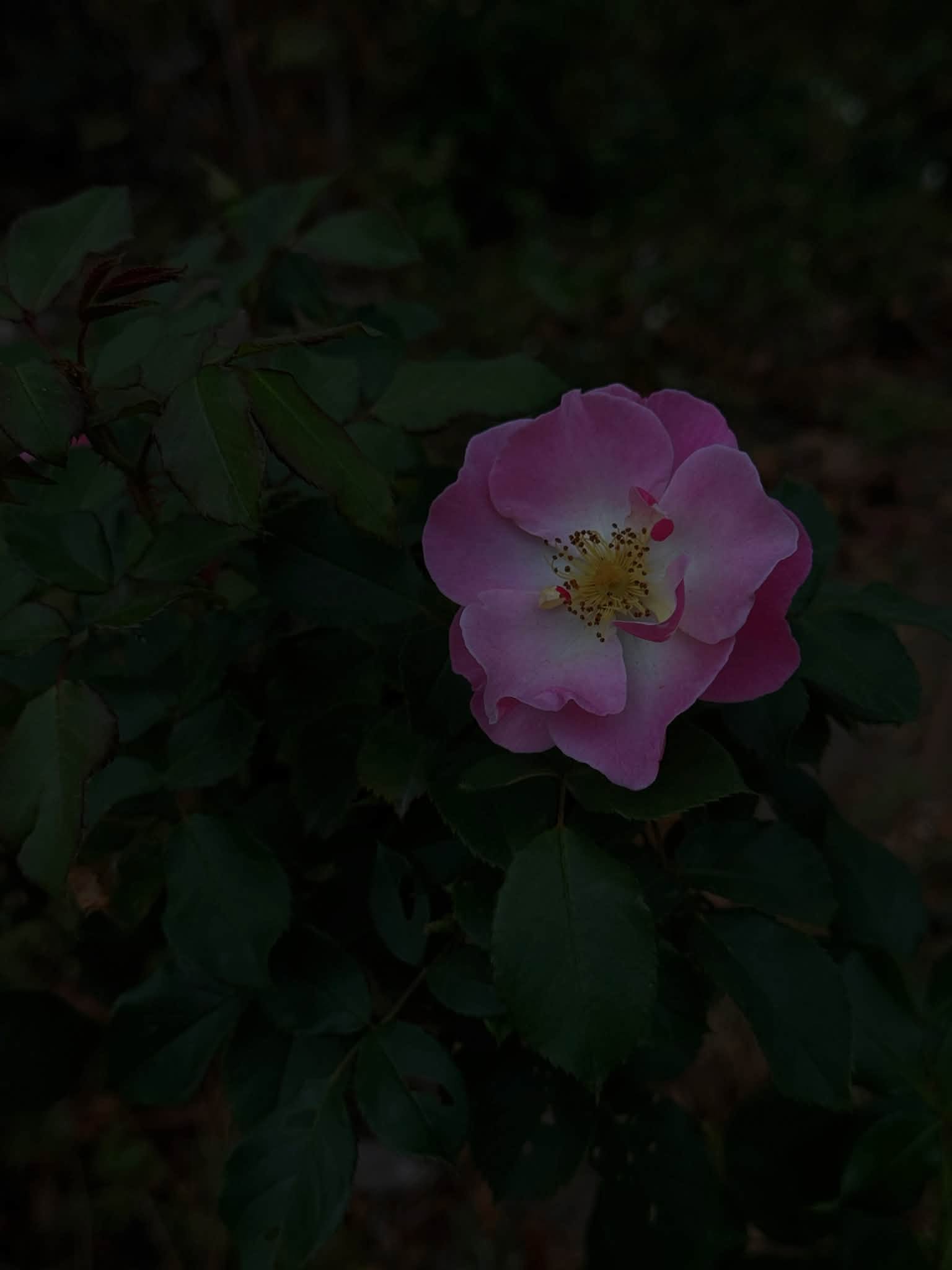
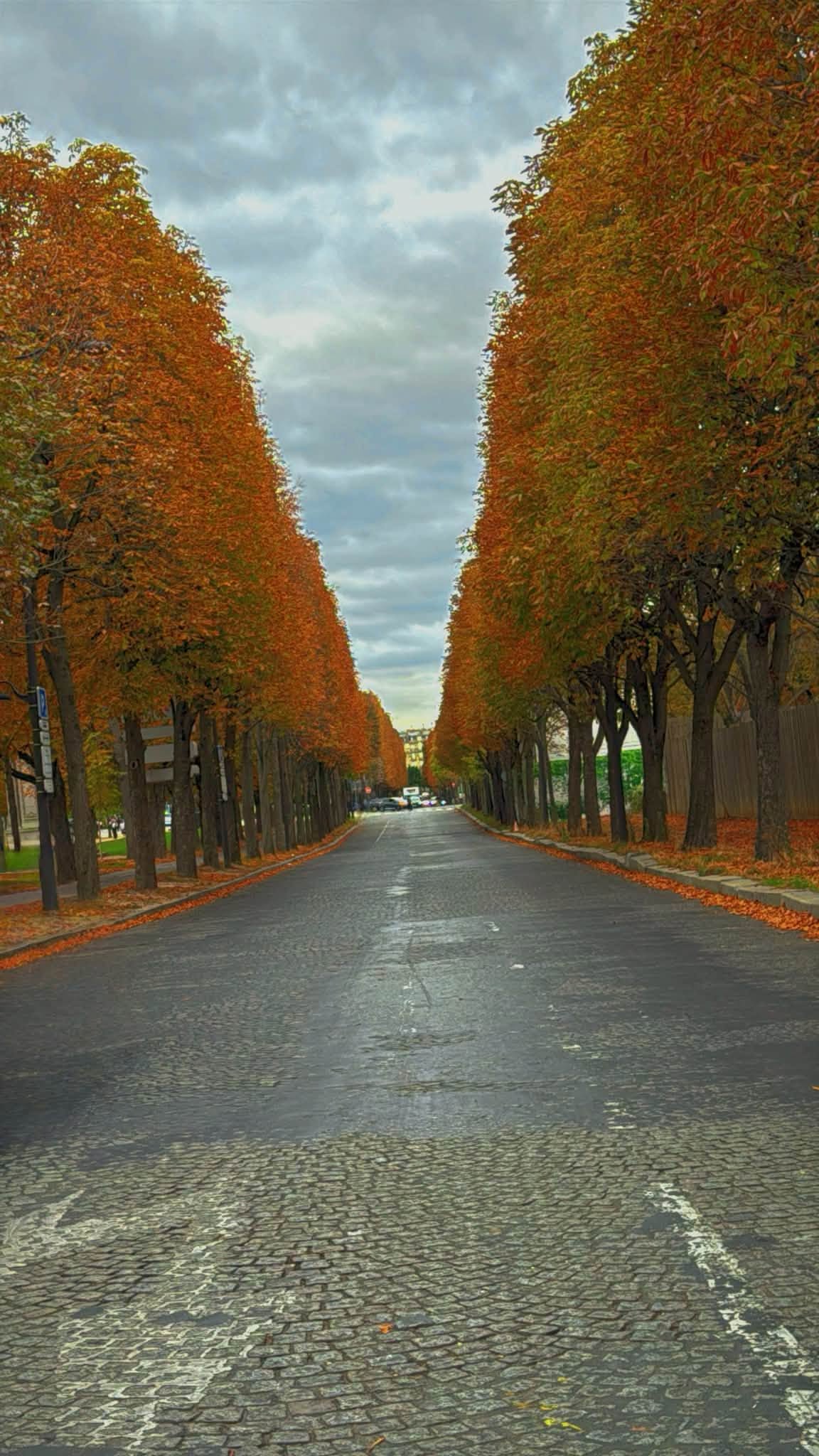
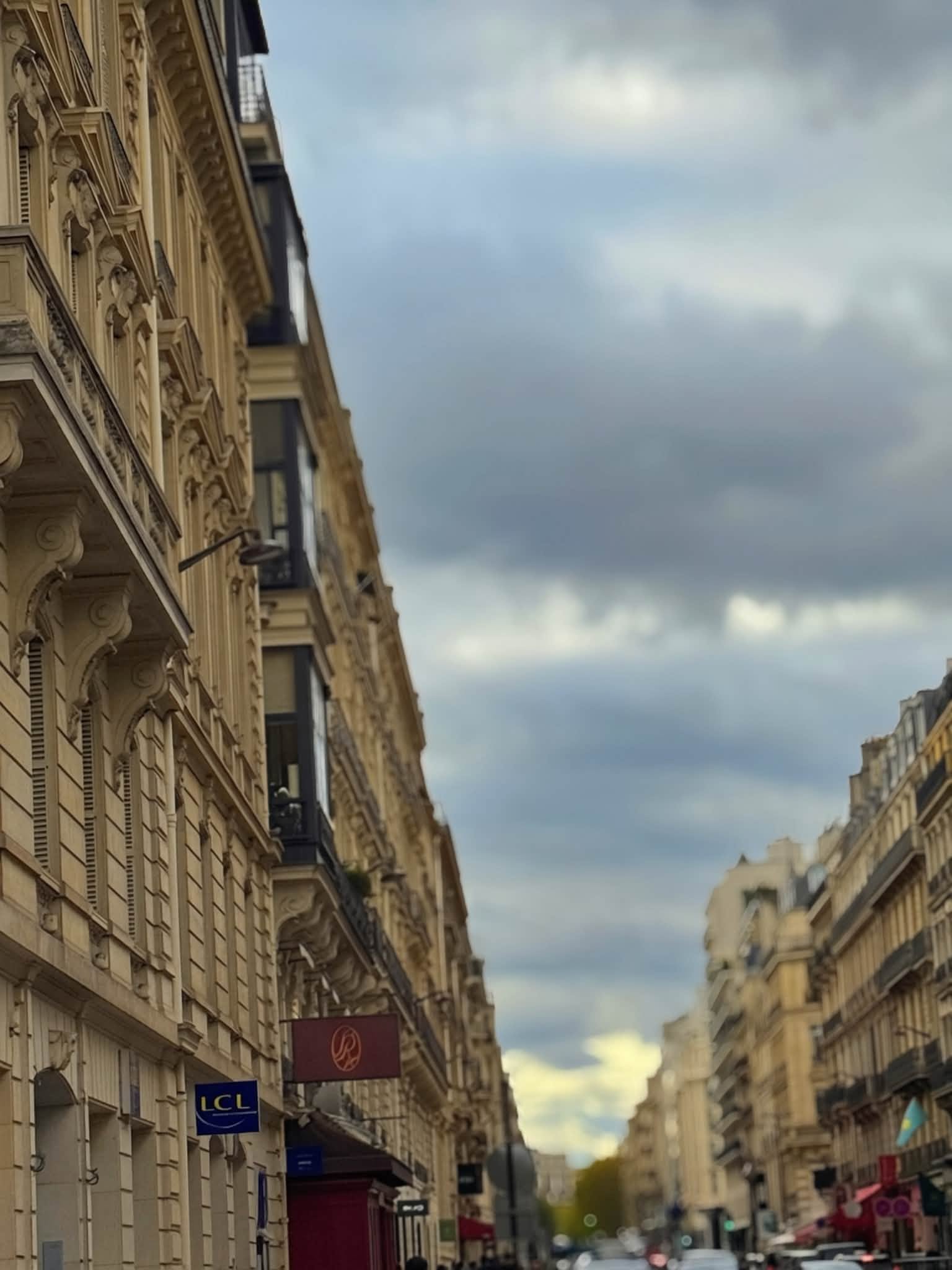
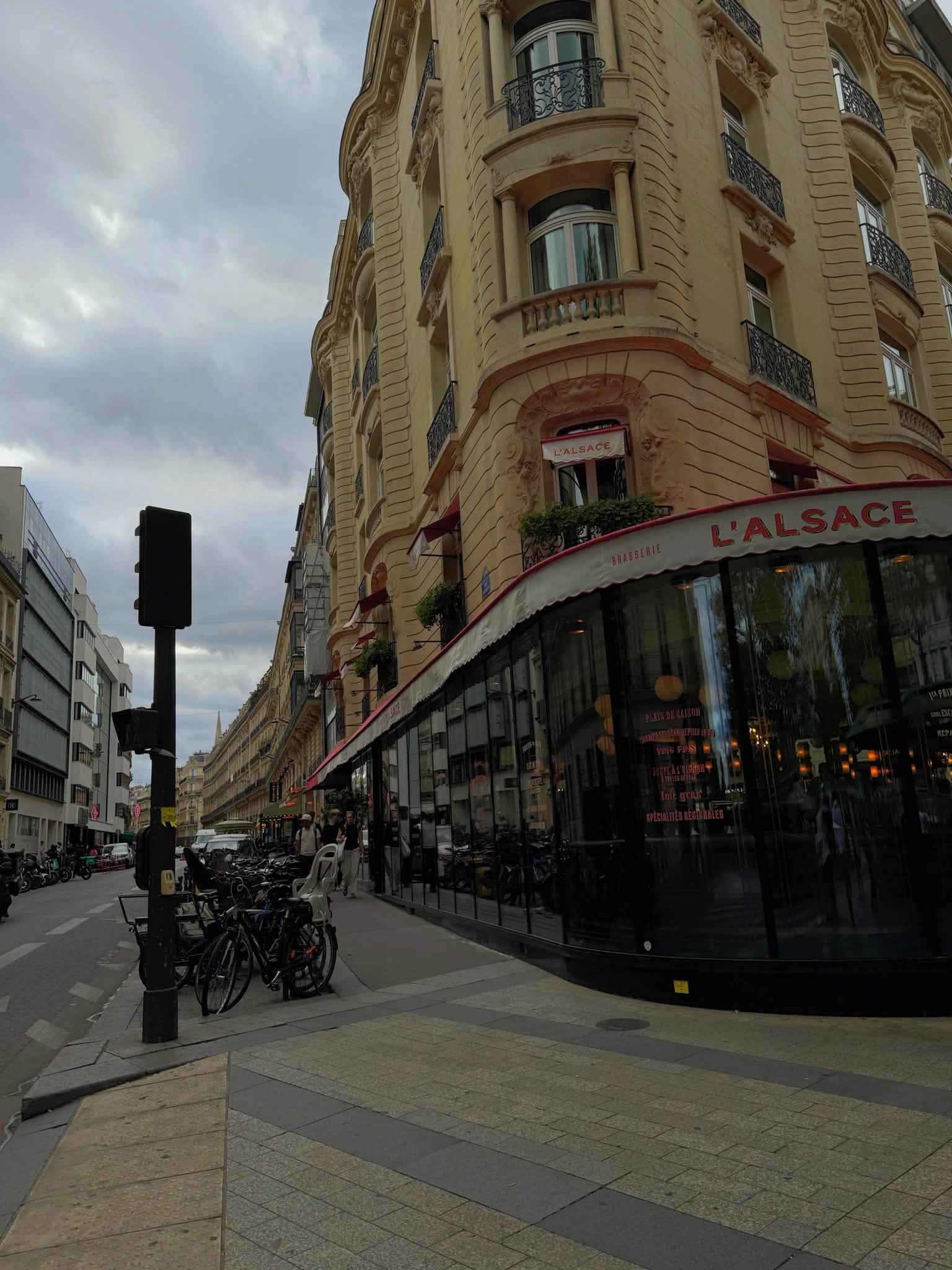
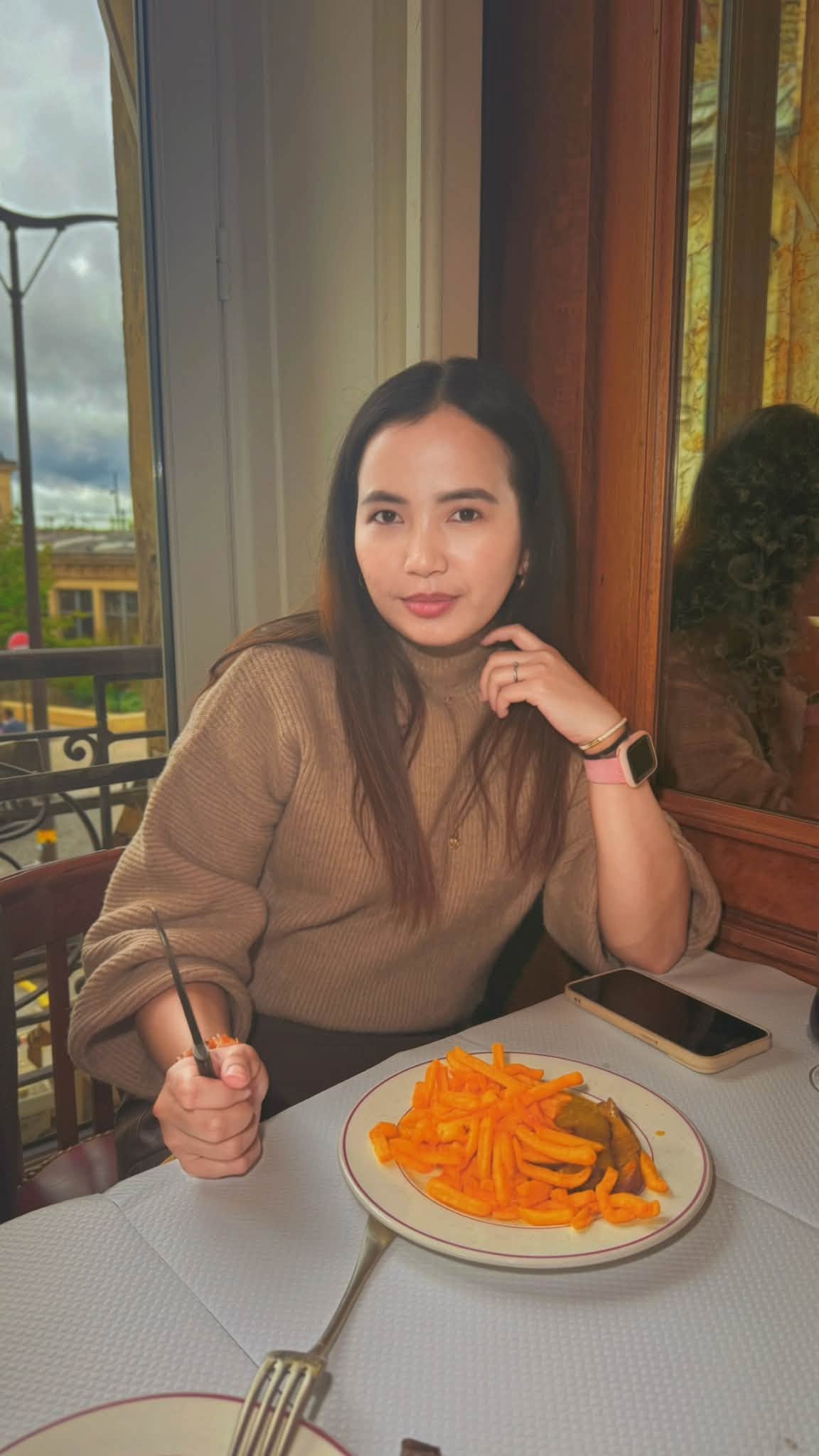
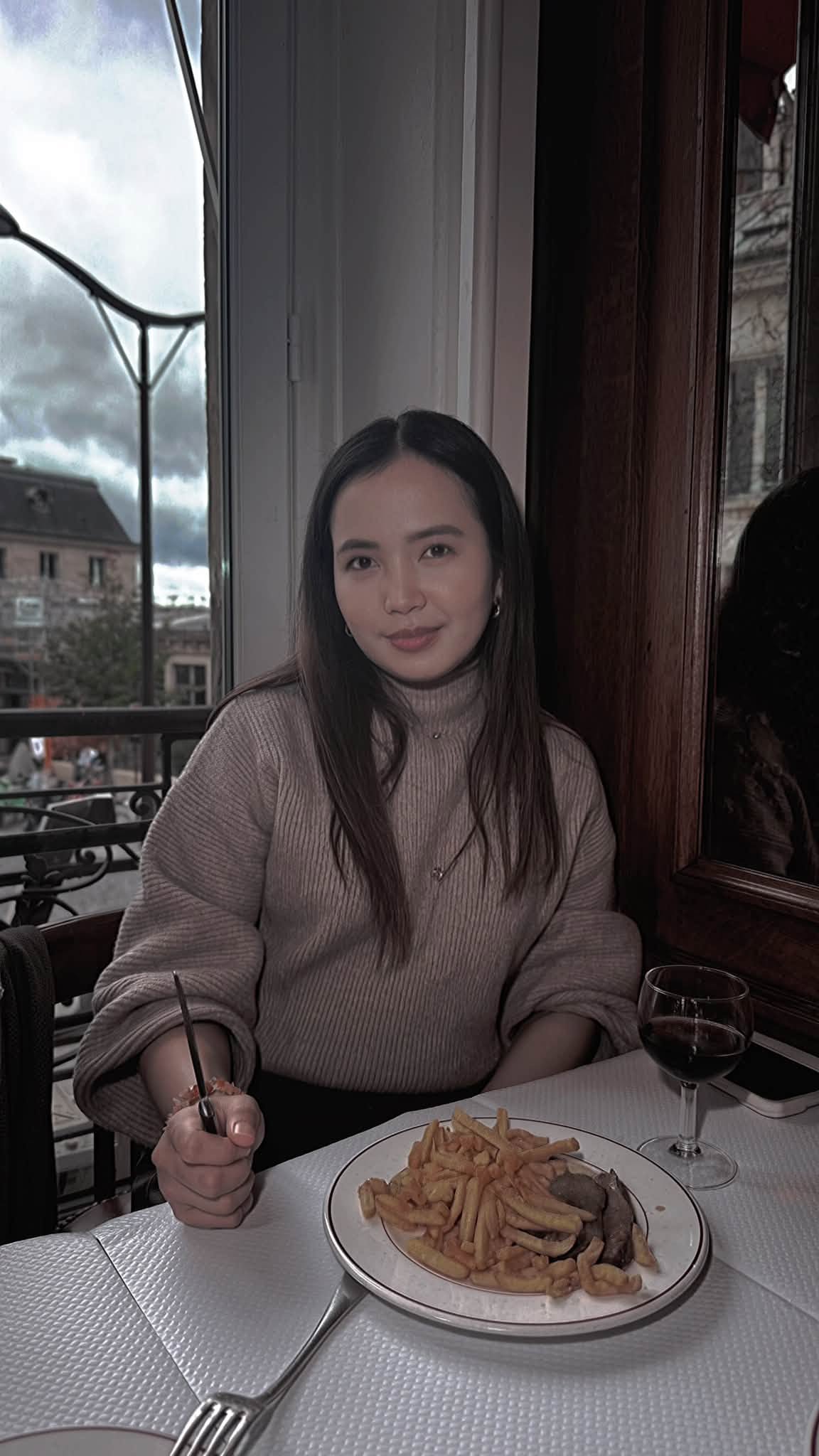
But I wanted this blog entry to preserve the details that photographs cannot explain. Years from now, I do not want to remember Paris only as a collection of famous landmarks. I want to remember the ridiculous beginning, the little inconveniences, the laughter, and the familiar people who made the experience unmistakably ours. I want to remember how excited Jan and I were to see the city for the first time, how Marj tolerated an impressive number of questions, and how Ninin continued the adventure despite losing her bag before departure. These details may not belong in an official travel brochure, but they are the parts of the story that will make us laugh when we look back.
I have always believed that travel changes the meaning of places we once knew only through imagination. Before visiting, Paris was a dream, a destination I associated with photographs, architecture, and the possibility of someday standing beneath the Eiffel Tower. Afterwards, it became a real place connected to actual experiences: the smell of pastries, the richness of Angelina’s chocolate, the grandeur of historic monuments, the noise of busy stations, and the physical exhaustion of walking through unfamiliar streets. It also became connected to our friendship, the conversations we shared, and the amusing complications that accompanied our little adventure.
There are places I have visited and appreciated without necessarily developing a desire to return immediately. Paris, however, has left me wanting more. I would love to spend several days exploring its museums, neighbourhoods, cafés, and historic streets without the pressure of fitting everything into a single itinerary. I want to visit the Louvre properly, discover quieter corners of the city, and appreciate the architecture without constantly wondering whether we have enough time to reach another attraction. I would also like to experience Paris at a more leisurely pace, preferably with comfortable footwear and a schedule that acknowledges the existence of human physical limitations.
There is something satisfying about knowing that a dream can finally become a memory without losing its significance. I had wanted to visit Paris for so long that the destination had almost become a permanent fixture in my imagination. I used to wonder when I would have the opportunity, whether circumstances would allow it, and what the experience might be like. Now those questions have been replaced by photographs and stories. I no longer need to imagine what it feels like to stand near the Eiffel Tower, admire the Louvre, or enjoy pastries in a Parisian tearoom. I have done those things, and the actual experience was wonderfully different from the perfectly arranged version I had anticipated.
Perhaps the younger version of myself who once wrote about Paris would find our trip slightly ridiculous. She imagined beautiful streets and elegant cafés, not airport mishaps and muscle complaints. She probably expected the fulfilment of a dream to involve something more dignified than a frantic appreciation for warm patches. But I think she would be delighted to discover that the destination had finally become possible. She might also be amused that her older self remained just as curious, occasionally impatient, and thoroughly enthusiastic about taking photographs of almost everything.
I began this journey carrying the expectations of a girl who had once imagined Paris from the Philippines. I left the following day as a woman who had finally experienced the city, accompanied by Jan and friends whose personalities made the adventure far more entertaining than any carefully arranged itinerary could have promised. The dream had become real, but it had also acquired the wonderfully ordinary complications of travel. There was the beauty of the Eiffel Tower and the inconvenience of a lost handbag, the elegance of French pastries and the unmistakably inelegant way I wanted to sit down after thirty thousand steps. I think that contrast is what makes the experience so memorable.
If I could offer one piece of advice to anyone planning a similar adventure, it would be to remain realistic about how much of Paris can be explored comfortably in a single day. It is tempting to fill an itinerary with every famous attraction, particularly when time is limited and enthusiasm is abundant. But the city deserves opportunities to slow down and appreciate its details, and so do the people visiting it. A beautiful destination should be enjoyed rather than treated entirely as a list of tasks requiring completion. Of course, I recognise the irony of offering this advice immediately after doing precisely the opposite. Apparently, experience is an excellent teacher, although mine occasionally charges its tuition fees directly to my calves.
I also recommend travelling with people who can laugh through the little inconveniences. No journey unfolds perfectly, and even the most carefully prepared arrangements can be interrupted by circumstances nobody anticipated. Our trip certainly demonstrated that. Yet I am grateful that we managed to enjoy ourselves despite the complications, and I suspect the memories will become even funnier as the years pass. Perhaps that is the real advantage of travelling with familiar friends: we return home not only with photographs of beautiful places, but also with stories that continue entertaining us long after the actual journey has ended.
On the morning we left Paris, my feet were still aching, and the city had already become a place I wanted to revisit. I found that rather amusing. A destination had exhausted me so thoroughly that I was considering the therapeutic value of remaining seated, yet I was already imagining what I might do differently on another visit. Perhaps that is how I know I enjoyed it. The physical discomfort was temporary, but the experience had given me something I had wanted for years, and I was unwilling to let thirty thousand steps become the final word on the matter.
I hope that someday I will return with more time, a less ambitious schedule, and a slightly more sophisticated understanding of the Paris Métro. Perhaps Jan and I will explore the museums properly, enjoy a longer meal, and wander through neighbourhoods without feeling obligated to see every famous landmark before sunset. Perhaps Marj will agree to accompany us again, provided my questions are kept within a reasonable daily allowance. And perhaps Ninin will arrive with every handbag accounted for, sparing us a sequel to the Birmingham Airport incident.
For now, however, I am content with the little adventure we shared. It was short, chaotic, beautiful, exhausting, and wonderfully memorable. We had only one sightseeing day and one night, but somehow managed to fit enough experiences into that brief visit to make it feel much longer. There were moments of excitement, amusement, irritation, admiration, and sheer physical exhaustion, all contributing to a trip that felt genuinely ours. I would not exchange it for a perfectly arranged holiday without the little complications, although I would certainly appreciate keeping all personal belongings and reducing the walking distance next time.
And somewhere in an old diary, there is a younger version of me who once wrote Paris without knowing that years later she would finally arrive there. She imagined the Eiffel Tower, elegant boulevards, charming cafés, and beautiful photographs. She had no way of knowing that the trip would begin with a lost handbag at Birmingham Airport, continue with an uninvited companion at a Métro barrier, and include a friend whose patience would be subjected to more questions than any reasonable person should be expected to answer during a holiday. She certainly did not imagine departing the following morning with legs that seemed to have developed a personal grievance against the entire concept of sightseeing.
But I think she would have loved every minute of it anyway. I certainly did, even if my feet would prefer to submit a different account of the experience.
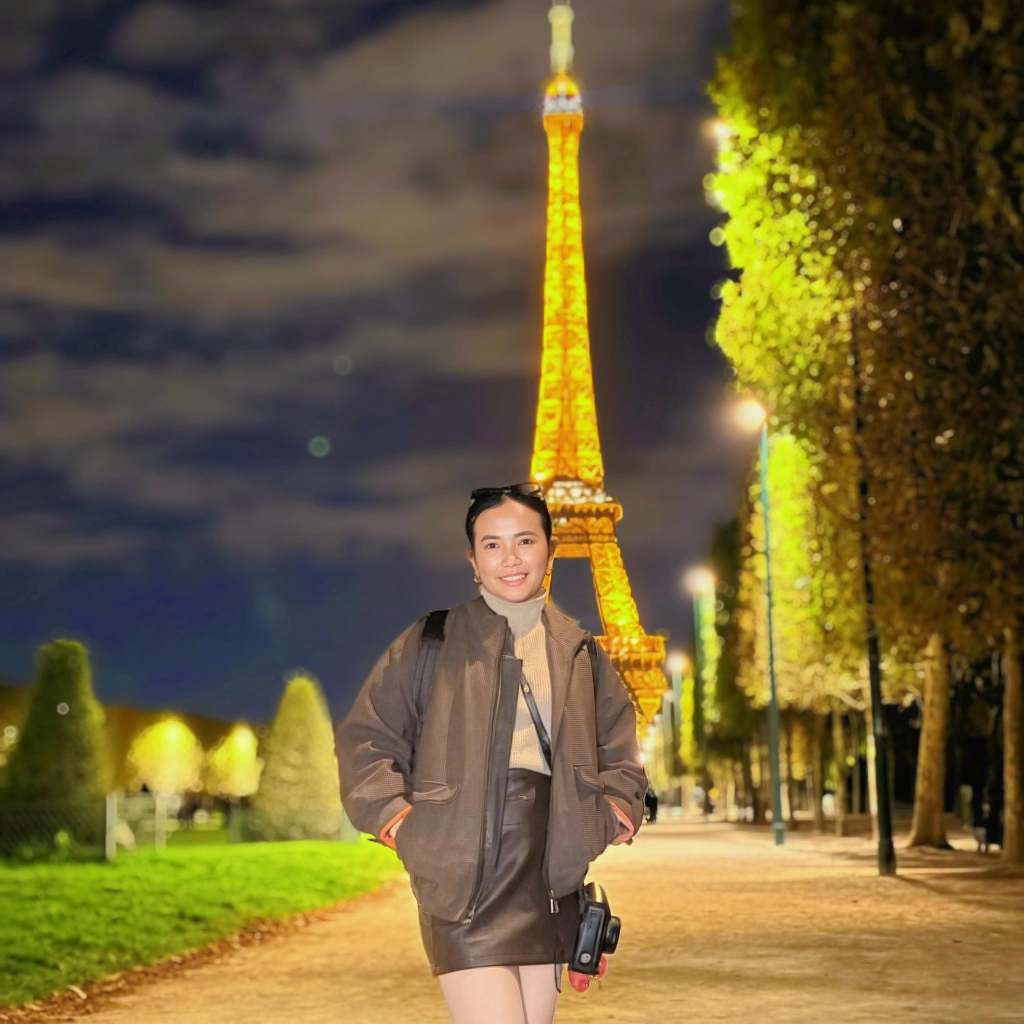
Au revoir, Paris. You were absolutely Louvre-ly, and I Eiffel in love. My legs, however, have requested that our next visit include fewer kilometres, more café breaks, and a considerably longer recovery period.
P.S. Your old diary might contain a few embarrassing entries, questionable decisions, and surprisingly accurate predictions about your future. Keep dreaming. Just remember to pack comfortable shoes when those dreams finally come true.
— Anj, first-time Paris visitor, enthusiastic question-asker, occasional threat to Marj’s patience, and proud survivor of a one-day sightseeing marathon that probably deserved its own medal.

































Leave a Reply