On childhood, small acts of generosity, and the uncomfortable distance between noticing poverty and understanding it.
A boarding house is hardly the sort of place one expects to encounter a lesson about social responsibility. Most of the time, it is simply a temporary arrangement between a roof, a limited budget, and several people trying to get on with their lives. There are clothes waiting to be washed, belongings competing for space, and the ordinary inconveniences of sharing a place that does not quite feel like home. In Cebu, where the streets carry an endless procession of people going somewhere, it is easy to become absorbed in one’s own concerns. Everybody seems to have a destination. Everybody is busy. And when you are occupied with your own responsibilities, you can become remarkably skilled at looking past things that do not demand your immediate attention.
One day, however, two children appeared at our boarding house, and I found myself thinking about something that had been there all along.
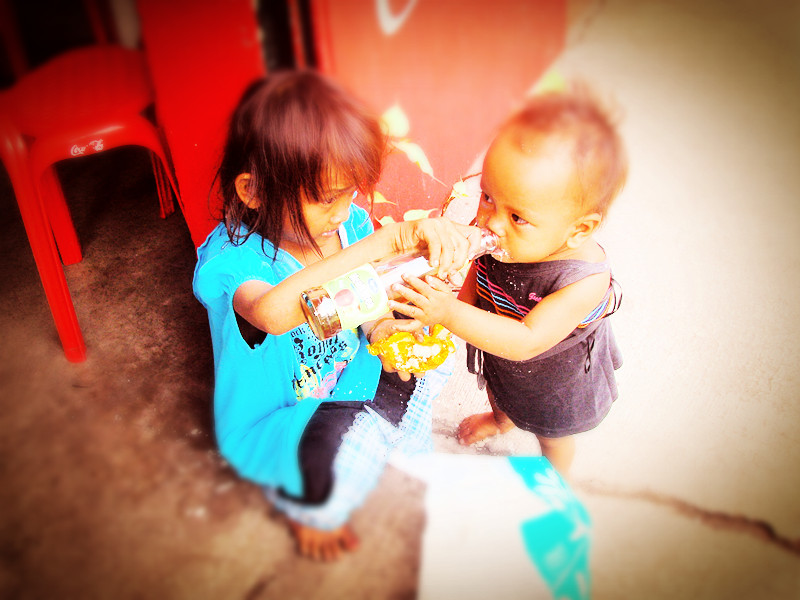
They were a little girl and her younger brother, two children who spent time on the streets of Cebu. I cannot pretend to know the full circumstances of their lives, and I would be doing them an injustice if I attempted to invent a story about where they slept, what their family experienced, or how they came to be there. What I knew was much simpler. They were children, and their presence made me conscious of a reality that people living in a busy city can become accustomed to seeing without necessarily stopping to consider.
I looked at them and thought about the peculiar unfairness of childhood.
For some children, an ordinary day involves school, homework, meals prepared at home, and arguments about whether they have spent too much time playing. Their concerns may be wonderfully small, at least from an adult’s perspective. They worry about losing a favourite toy, being scolded for misbehaving, or whether somebody will let them have another helping of dessert. Other children grow up facing difficulties that no child should have to manage without proper support.
The difference is rarely something they have chosen.
In Cebu, street-involved children are part of a much larger social concern involving poverty, family circumstances, education, housing, and access to basic services. These are complicated matters, and I have never believed that a single act of charity can resolve them. A child does not become secure merely because somebody gives them a meal, a shirt, or a few pesos. Their needs extend beyond what a stranger can offer during a brief encounter.
But recognising the size of a problem should never become an excuse for ignoring the people affected by it.
At the time, I did not possess much money or influence. I certainly had no extraordinary resources to distribute, nor did I imagine that I could solve childhood poverty through enthusiasm alone. I was still trying to establish my own place in the world, and my circumstances imposed practical limits on what I could do.
What I did have, however, was a willingness to help in whatever reasonable way I could.
I began collecting used clothes from friends who were generous enough to contribute. These were ordinary belongings, pieces of clothing that might no longer have been needed by their previous owners but could still be useful to someone else. There was nothing particularly elaborate about the arrangement. I asked, people responded, and together we gathered what we could.
I remember feeling grateful for their willingness to participate. It would have been easy for anyone to decline or postpone helping until a more convenient occasion. We all have our own expenses, responsibilities, and concerns. Yet my friends chose to share something they already possessed, and their contributions made the effort possible.
It was a small example of what can happen when generosity becomes a shared responsibility rather than an individual ambition.
I also began to think about the way we sometimes understand charity. There is a temptation to measure kindness according to the monetary value of what we give, as though compassion must be accompanied by a sufficiently impressive receipt. Donations become amounts, projects become statistics, and acts of generosity are sometimes judged by how much attention they receive.
But kindness is not always financially impressive.
Sometimes it involves looking through one’s belongings and recognising that something unused might still have a purpose. Sometimes it means giving time to an effort that offers no personal advantage. Sometimes it requires listening before deciding what assistance might actually be useful.
And sometimes it begins with acknowledging that another person deserves more than our passing sympathy.
Those two children reminded me that childhood should never be treated as a lesser version of adulthood. Children are not simply future workers, future professionals, or future contributors to society. They are already people, with their own personalities, interests, needs, and rights. Their lives deserve attention now, rather than only when they become old enough to prove their usefulness to the world.
I have often wondered why society finds it so easy to speak affectionately about children in general while remaining uncomfortable with the realities facing particular children in difficult circumstances. We celebrate childhood innocence, share photographs of smiling faces, and repeat familiar statements about children being the hope of the future. Yet the children whose circumstances are most challenging can become strangely invisible in the middle of everyday life.
Perhaps it is because their presence asks difficult questions.
Why should one child have access to education, security, and reliable support while another struggles to obtain the same things? How much responsibility belongs to families, communities, institutions, and government? What kind of society allows certain disadvantages to pass so easily from one generation to another?
These are not questions I can answer simply by distributing clothes.
Nor should I pretend otherwise.
I have learned that generosity and understanding are related, but they are not identical. We can sincerely want to help someone while knowing very little about the circumstances that shape their life. Good intentions matter, but so does the willingness to listen, respect boundaries, and recognise that the people receiving assistance are individuals rather than illustrations of somebody else’s kindness.
The little girl and her younger brother did not need to become characters in an inspirational story to deserve consideration. Their circumstances were not there to make me feel grateful for my own life or to provide a convenient lesson about appreciating what I possessed. They were children who deserved dignity, safety, and opportunities, regardless of whether anybody chose to write about them.
That is an important distinction.
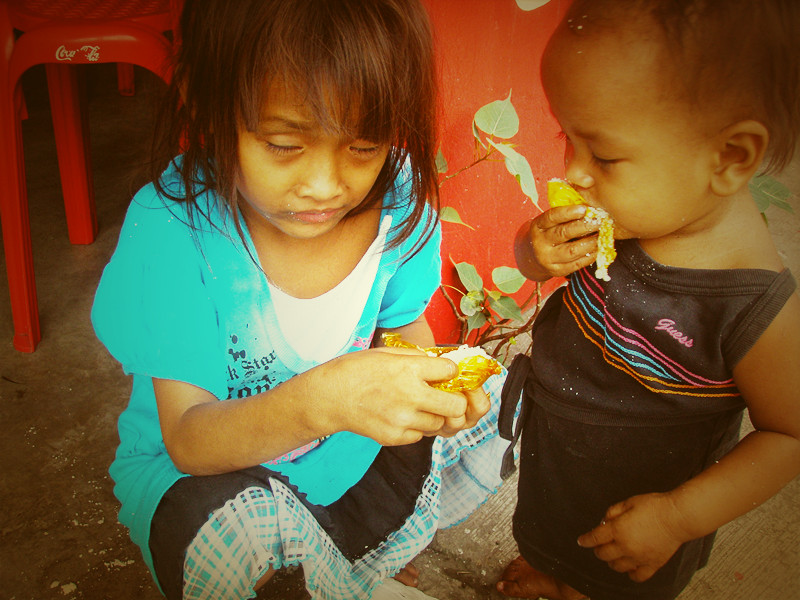
I am sharing these photographs because they belong to a memory that mattered to me, but I also recognise that children experiencing hardship deserve privacy and respect. A photograph may preserve an encounter, yet it cannot explain the full life of the person pictured. Nor does it give the viewer permission to make assumptions about that person’s family, character, or future.
What I remember most about the experience is the ordinary possibility of doing something useful with what was available.
My friends had clothes they could share. I had the opportunity to help organise their contributions. The children had practical needs that deserved attention. Nobody involved had to be wealthy or particularly influential for the gesture to become possible.
That simplicity appealed to me.
There are many reasons people hesitate to help others. We may believe that our contribution is too small, that the problem is too complicated, or that somebody with greater authority should take responsibility instead. Sometimes those concerns are reasonable. Serious social problems do require organised programmes, adequate funding, professional expertise, and long-term public commitment.
But there is a difference between recognising the limitations of individual charity and deciding that individual kindness has no value.
A donated shirt will not resolve poverty. A conversation will not guarantee a child’s access to education. A brief encounter cannot replace the protection and support that every child should receive.
Still, those limitations do not make the gesture meaningless.
The clothes we collected were a practical contribution, however modest. My friends’ willingness to participate demonstrated that helping others did not have to begin with extraordinary resources. And the experience encouraged me to become more attentive to the needs of people whose circumstances differed from my own.
It also made me think about the importance of time.
When we encounter children in difficult circumstances, our instinct may be to offer something material, particularly when their immediate needs are visible. Food, clothing, and other necessities can be important, and appropriate support should never be dismissed in favour of pleasant conversation alone. But children also deserve to be treated as people worth listening to.
Asking about their interests, respecting their responses, and allowing them to participate in ordinary conversation can acknowledge something that poverty does not erase: their individuality.
A child should not have to impress us with a tragic story before we consider them worthy of attention.
Nor should their circumstances become an invitation for strangers to question them about private matters they may not wish to discuss.
Sometimes the more thoughtful approach is simply to be kind without demanding anything in return.
I think about that whenever I look back at this experience. At the time, I was pleased that my friends and I had been able to gather clothes and offer a little assistance. I still appreciate what we did. But I also recognise that there is much more to understand about poverty than I knew during that particular chapter of my life.
Street-involved children are not a single, uniform group. Their experiences, family relationships, needs, and circumstances can differ considerably. Meaningful support requires understanding those differences and ensuring that children have access to appropriate services, education, healthcare, protection, and opportunities.
It requires listening to people who work closely with affected communities and, where appropriate, supporting organisations equipped to provide consistent assistance.
Most importantly, it requires remembering that children should never have to depend entirely on occasional generosity for their basic wellbeing.
I am grateful to the friends who donated their clothes. Their kindness made this little effort possible, and I hope they understand how much I appreciated their participation. We were not changing the entire city of Cebu. We were not creating a grand charitable foundation or launching a programme capable of reaching thousands.
We were simply making use of what we had.
There is an old saying often attributed to Dr Loretta Scott about how, although nobody can assist every person, each of us can still make a difference to somebody. I have always appreciated the sentiment, particularly because it challenges the convenient belief that generosity must wait until we have become successful, wealthy, or powerful.
If everyone postponed helping until they possessed unlimited resources, I suspect very little would ever be done.
But I would add something to that thought. Helping should also involve humility. We ought to consider whether our actions are useful, whether they respect the people receiving assistance, and whether there are better ways to contribute. Kindness becomes more meaningful when it is willing to learn.
Looking at the photographs from our boarding house, I see clothes gathered through the generosity of friends and two young visitors whose lives extended far beyond the brief encounter we shared. I cannot know what became of them afterwards, and I will not invent a comforting ending simply because stories tend to sound more satisfying when every difficulty is neatly resolved.
I hope they were given opportunities to grow up safely, pursue an education, and experience the ordinary pleasures of childhood. I hope there were people and institutions able to offer the lasting support that a few donated clothes could never provide.
And I hope that, wherever life has taken them, they have been treated with the consideration every child deserves.
I began this memory with a boarding house, a place where people ordinarily come and go without leaving much of a record. Residents move out, belongings are packed, and rooms eventually accommodate somebody else’s life. Even the objects we consider permanent have a curious habit of disappearing whenever we relocate.
Yet one afternoon at that boarding house has remained with me.
Not because I did anything extraordinary, but because it reminded me how easily another person’s circumstances can remain outside our attention until they appear directly in front of us.
Cebu is a city of countless doors. Behind some are comfortable homes, busy families, and children preparing for school. Behind others are worries that strangers passing along the street may never fully understand.
I cannot open every door, and I cannot pretend to know what lies behind each one.
But when two children appeared at ours, I was reminded that sometimes the first responsibility of kindness is simply to notice who is standing there.
For the children who deserve opportunities beyond the circumstances they were born into, and for the friends who reminded me that generosity is something we can practise with what we already have.
— Just Anj


































Leave a Reply