Review Days Adventure | Part III: Two December Mornings, One Nursing Dream, and an Extraordinary Amount of Faith
There are certain dates on a calendar that behave less like ordinary dates and more like threats written in perfectly innocent numbers. December 18 and 19, 2011, were two of them. To the rest of the Philippines, they were simply another pair of days in December, when Christmas decorations were already appearing everywhere, shopping malls were becoming increasingly crowded, and people were making plans for the holidays. To thousands of aspiring nurses, however, those dates represented something considerably less festive. Four years of lectures, clinical rotations, nursing care plans, sleepless nights, and questionable amounts of caffeine were about to be condensed into five hundred multiple-choice questions. Apparently, the authorities had decided that the most appropriate way to determine our readiness for the nursing profession was to make us question everything we had ever learned over two consecutive days. How thoughtful of them.
I had spent months preparing for the Philippine Nursing Licensure Examination, and by December, my relationship with nursing textbooks had become uncomfortably intimate. I had read, highlighted, memorised, forgotten, reviewed, and occasionally stared at the same paragraph long enough to convince myself that the words were rearranging themselves out of spite. There were subjects I understood, subjects I thought I understood, and subjects that seemed perfectly determined to remain a mystery regardless of how many times I revisited them.
Still, there was no turning back. The examination was approaching, and so was the possibility of finally placing those two long-awaited letters after my name: RN.
It is strange how two letters can carry so much expectation. They look terribly modest on paper, occupying less space than most ordinary abbreviations, yet behind them were years of sacrifice, financial responsibilities, family encouragement, and the stubborn determination of a young woman who had decided that nursing was the profession she wanted to pursue. I had spent four years being introduced as a student nurse. I wanted to know what it would feel like to finally remove the word student.
But first, there was the rather inconvenient matter of passing the board examination.
Two days before the examination, we were finally allowed to use our laptops and other gadgets after our period of restricted access during the in-house review. It was supposed to be an opportunity to relax, reconnect with the outside world, and perhaps enjoy the astonishing discovery that civilisation had continued functioning while we were occupied with nursing rationales.
Naturally, I used the opportunity to search for more examination advice.
I know. Rather ridiculous.
After weeks of reviewing and twenty days devoted almost entirely to preparing for the NLE, any reasonable person might have welcomed the chance to think about something unrelated to nursing. Perhaps music, photographs, messages from friends, or even the weather. Instead, I found myself on the internet, searching for anything that might improve my chances of surviving the next forty-eight hours.
Old habits, especially academically anxious ones, are remarkably difficult to abandon.
That was how I came across an article by Maria Kristina Siuagan explaining strategies for preparing for the nursing board examination. Its memorable acronym, B.O.A.R.D. E.X.A.M., caught my attention because it addressed many of the concerns that had occupied my thoughts throughout our review.
The advice was straightforward. The examination covered a broad range of subjects, so relying exclusively on familiar topics could leave important gaps in our preparation. Confidence was useful, but overconfidence could prevent us from recognising what we still needed to learn. We were encouraged to strengthen our motivation, seek support from family and friends, prepare ourselves physically and emotionally, maintain our faith, and remain focused on our goal.
There were also practical reminders about reviewing previous notes, checking our examination venue, avoiding unnecessary distractions, and getting adequate rest.
I found the suggestions reassuring, perhaps because they reminded me that preparation involved more than memorising information. We had spent so much time worrying about what might appear on the examination that it was easy to neglect the ordinary things that helped us function properly.
After all, possessing an impressive collection of nursing knowledge would be of limited benefit if I arrived at the examination venue exhausted, confused, or accidentally sitting in somebody else’s assigned room.
That last possibility was particularly horrifying.
By then, however, there was only so much additional information I could reasonably force into my head. The remaining days were becoming less about learning everything from the beginning and more about trusting the preparation we had already completed.
I wish I could say I immediately embraced that wisdom, closed my laptop, and enjoyed a peaceful evening.
I probably still entertained a few additional nursing questions.
Just in case.
The day before the examination, we were allowed to visit our assigned testing venue at the University of Cebu, Lapu-Lapu–Mandaue Campus. There was something unexpectedly significant about that visit. Until then, the board examination had existed mainly through our reviewers, discussions, schedules, and anxious predictions about possible questions. We talked about it constantly, but it remained an event somewhere ahead of us.

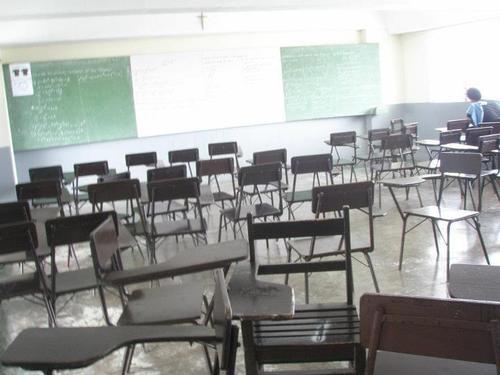
Seeing the actual venue changed everything.
There were rooms, assigned seats, posted information, and names belonging to people who would soon be sitting for the same examination. Among those names was mine.
I remember looking at my room assignment with a mixture of excitement and disbelief. There was something almost ceremonial about finding my name on that list. It was an ordinary administrative arrangement, of course, intended to tell examinees where they were supposed to sit. But to me, it felt like a tangible acknowledgement of everything I had worked towards.
I was really going to take the Nursing Licensure Examination.
No more imagining what the experience might be like. No more referring to it as something that would happen eventually. The date had arrived on the calendar, my name had appeared on the assignment list, and there was now an actual room waiting for me.
Naturally, I took photographs.
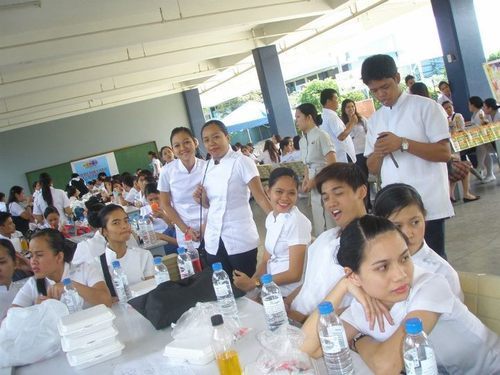
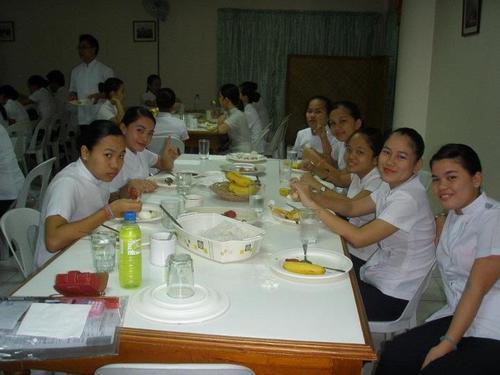
I have always believed that significant occasions deserve photographic evidence, particularly when my future self might require proof that I had once been young, ambitious, and capable of becoming emotional over a room number.
The photographs were hardly glamorous. There were no elaborate decorations, no extraordinary scenery, and certainly nothing resembling the dramatic setting of a film. Yet I was strangely pleased to have them. I wanted to remember the place where I stood on the edge of something I had spent years working towards.
Looking at my examination assignment, I felt both smaller and more determined.
I was one applicant among thousands, another name on a list, another hopeful nursing graduate preparing to sit for the same professional examination. Yet behind that ordinary printed name was an entire personal history. My family, my instructors, my classmates, my clinical experiences, and the many difficult days of nursing school had all contributed to bringing me here.
And suddenly, the examination was no longer an abstract challenge.
It had an address.
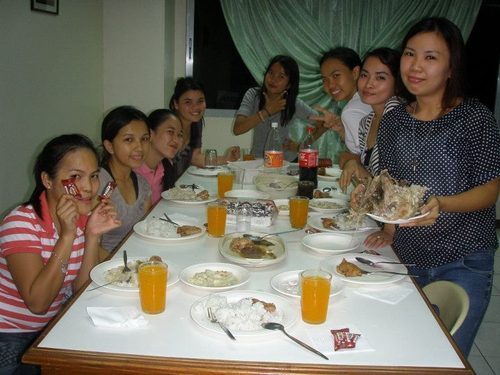
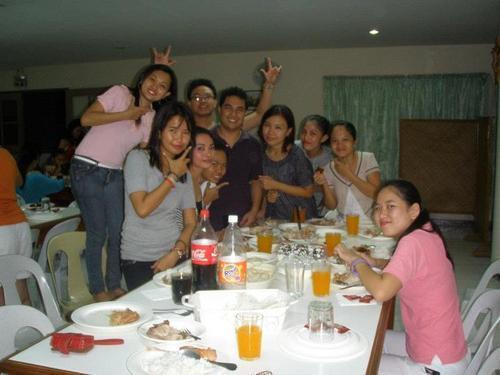
That evening, our Clinical Instructors, review coordinators, mentors, and staff from the review centre gathered with us. They prepared food, offered encouragement, and helped create an atmosphere that was far more comforting than another lengthy discussion about nursing concepts would have been.
Some of the successful examinees from the July 2011 board examination were also there, sharing their experiences and offering advice.
I remember appreciating their presence. There was something encouraging about listening to people who had recently been in our position and had already crossed the particular bridge we were approaching. They understood the pressure because they had experienced it themselves. They knew what it meant to study for months, worry about unfamiliar questions, and hope that their efforts would be enough.
For once, the gathering was about more than examination techniques.
It was about encouragement.
Our instructors and mentors had spent so much time correcting our mistakes, challenging our understanding, and reminding us of the standards expected of future nurses. Some had probably witnessed us at our most academically confused. Yet here they were, taking time to prepare food, reassure us, and remind us that they believed in our ability to succeed.
I found that deeply touching.
There is something about being encouraged by people who have seen your struggles that makes their words particularly meaningful. They were not offering confidence based on an imaginary version of us who never made mistakes. They knew how hard we had worked, how often we had needed guidance, and how much preparation had gone into reaching this point.
And still, they believed in us.
I carried that thought into the night.
I would like to report that I slept peacefully, completely free from worry, and woke the following morning feeling exceptionally refreshed. Unfortunately, I cannot claim to remember achieving such impressive composure. There were too many things competing for space inside my head: examination instructions, nursing concepts, prayers, reminders, and the entirely unreasonable possibility that I might somehow forget something as fundamental as my own name.
Then came December 18.
At three o’clock in the morning, my bedmate, Pearl, woke me.
“It’s time.”
Two words.
That was all it took.
I sometimes wonder whether Pearl realised how significant that little announcement would become in my memory. She was simply waking me for the examination, but the words seemed to draw a line between everything we had done to prepare and everything we were now about to face.
It’s time.
I had heard those words in different circumstances before, but never with quite the same meaning. There would be no more postponing the inevitable, no more promising myself that I would feel completely ready after reviewing one final chapter. The examination had finally arrived, with or without my permission.
The world outside was still dark when we began preparing for the day.
There is something particularly strange about waking at three in the morning for an important occasion. At that hour, the body is understandably unconvinced that anything could possibly justify abandoning a perfectly comfortable bed. My ambitions, however, were already awake, and apparently they had no intention of negotiating with my sleep schedule.
By five o’clock, our group had gathered for prayer before leaving for the examination venue.
It was a familiar practice by then. Throughout our review days, prayer had become an important part of how we approached the uncertainties ahead. We had studied extensively, attended our review sessions, completed our pilgrimage, and tried to prepare ourselves as thoroughly as possible.
Now, with the examination only hours away, there was something reassuring about standing together and entrusting our worries to God.
I prayed for clarity, concentration, wisdom, and the ability to remember what I had learned. I prayed that I would read the questions carefully, think before answering, and avoid allowing nervousness to interfere with my judgement.
I also thanked God for bringing me this far.
For the opportunities, the people who supported me, and the strength to continue through the more difficult parts of nursing school.
I cannot explain precisely what changed inside me during that prayer, but I remember feeling calmer afterwards. The examination was still important, and I was certainly not immune to concern, yet the overwhelming nervousness I had expected did not follow me into the testing room.
Instead, I felt ready to begin.
There is a particular silence inside an examination room before a major professional test. People are physically close to one another, yet everybody seems occupied with their own private concerns. Some may be mentally reviewing information. Others might be praying. A few probably appear wonderfully composed, although I have learned never to trust the facial expressions of examinees. Some people can look perfectly relaxed while conducting an entire emergency conference inside their minds.
I sat in my assigned chair, aware that the moment I had spent months anticipating was finally happening.
This was it.
The questions were no longer hypothetical examples from our review sessions. They were the actual examination, and each answer represented a decision I had to make using the knowledge and judgement I had developed throughout my nursing education.
Five hundred questions awaited us across the two examination days.
Five hundred opportunities to demonstrate what we knew.
And, I sincerely hoped, considerably fewer opportunities to discover what we had forgotten.
I remember approaching the questions with determination. Some felt familiar, allowing me to draw upon what we had studied. Others required careful consideration, and I had to remind myself not to become unsettled whenever an answer was less obvious than I would have preferred.
That was one of the lessons our review sessions had repeatedly taught us. An unfamiliar question did not automatically mean we were incapable of answering it. We needed to understand what was being asked, consider the available information, and apply our nursing knowledge as sensibly as possible.
I tried to do exactly that.
And somewhere between all those questions, I discovered that answering a major examination could make a person extraordinarily thirsty.
I drank plenty of water. Apparently, concentrating intensely on nursing questions had convinced my body that it was undertaking a physically demanding expedition rather than sitting in a chair with an examination paper.
I found the situation rather amusing.
After years of practising clinical assessments, I was now monitoring my own needs with unusual enthusiasm.
The first examination day eventually came to an end, but the experience was not yet finished. December 19 still awaited us, bringing another opportunity to answer questions, make decisions, and continue the process we had begun.
There was no immediate certainty about how well I had performed. That is one of the peculiar frustrations of professional examinations. You can spend hours concentrating on the questions, complete the paper, and walk out knowing that the final result remains beyond your immediate reach.
There were still answers I wondered about and questions I could have continued analysing if given sufficient encouragement. But I had another examination day to face, and I needed to direct my attention towards that responsibility rather than spending the remaining hours negotiating with answers I could no longer change.
The following day, I returned to complete the examination.
By then, the unfamiliarity of the first morning had diminished. I knew what it felt like to sit in that room, follow the instructions, and work through the questions. There was still pressure, naturally, but I had already crossed the threshold that had seemed so intimidating during our review.
I continued answering as carefully as I could.
At some point, the final question was answered, the examination period came to an end, and the two dates that had occupied so much of my attention became part of the past.
December 18 and 19, 2011.
Finished.
I wish I could describe the exact moment with the dramatic precision of a film director. Perhaps there should have been music, a perfectly timed camera angle, or a slow-motion scene of aspiring nurses emerging from the examination venue with expressions of triumph.
But real life rarely provides such thoughtful production arrangements.
What I remember most is the significance of having reached that point.
We had done it. We had completed the examination we had spent months preparing for, and there was nothing more we could add to those answer sheets.
For the first time in what felt like an extraordinarily long period, the next stage of the process no longer depended on how many pages I could review or how many nursing concepts I could memorise before going to sleep.
Our papers had been submitted.
Our responsibilities as examinees, for those two days at least, were complete.
And now we had to wait.
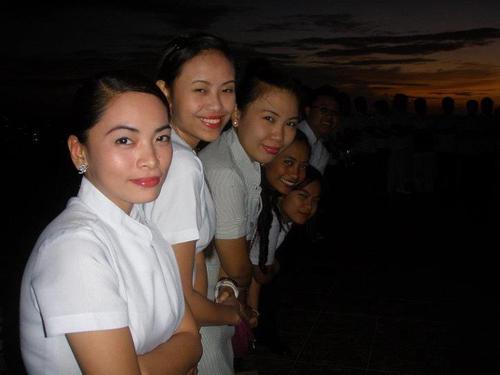
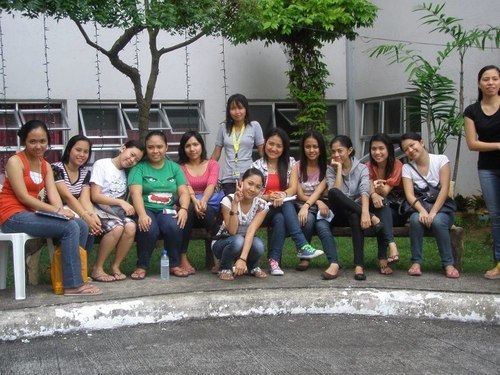
I thought about our twenty days at Talavera House of Prayer, the early mornings overlooking Cebu, the ridiculous photographs with my reviewmates, the lectures, the practice questions, and the prayers we had offered throughout our preparation.
I thought about my mother and the advice she had repeatedly given me about making time for God. I remembered the pilgrimage, the encouragement from our instructors, and the people who had helped us believe that passing the examination was possible.
All those ordinary moments had gradually led towards these two December mornings.
It would be tempting to write that the experience had transformed me into a completely different person, but I doubt that would be true. I was still the same young woman who worried about difficult questions, laughed at her own mistakes, and occasionally needed someone to remind her that she knew more than she thought.
What had changed was my experience.
I had faced something that once seemed impossibly intimidating and discovered that I could approach it with preparation, concentration, and faith. I had learned that nervousness did not necessarily prevent me from functioning well, and that confidence could come from recognising how much effort I had already invested.
More importantly, I began to appreciate the people who had accompanied me throughout the journey.
No examination result could adequately express the contribution of my family, instructors, mentors, classmates, and reviewmates. They had each played a part in helping me reach that room, even though I had been the person responsible for answering the questions.
Perhaps that is one of the curious things about personal achievement. We often imagine success as something belonging entirely to the individual whose name eventually appears on a certificate. Yet behind most achievements are conversations, sacrifices, corrections, encouragement, and acts of generosity that rarely receive formal recognition.
I could never have reached that examination room entirely on my own.
And now, as I look through the photographs from those days, I find myself smiling at the younger version of me who considered December 18 and 19 almost impossibly important.
She had every reason to take them seriously.
She had spent years working towards them.
But I wish she could have known that the two dates were never going to contain the entirety of her future. They were an important milestone, certainly, but nursing would eventually ask far more of her than selecting the correct answer from four possible choices.
Real patients would not present themselves with neatly arranged options A, B, C, and D. Their situations would involve uncertainty, individual circumstances, changing clinical conditions, and decisions requiring both knowledge and sound judgement.
There would be far more to learn.
But that was a concern for the future.
For now, the examination had ended, the answer sheets had been submitted, and the calendar could finally continue towards Christmas without looking quite so threatening.
I had entered December carrying years of preparation and an almost unreasonable number of worries. I was leaving those two examination days with a different responsibility: learning how to be patient while waiting for something that mattered enormously to me.
Somewhere, my answers would be checked. Somewhere, a result would eventually be released. And somewhere in that future announcement would be the answer to the question that had accompanied me throughout my nursing school years.
Would I finally become a Registered Nurse?
I did not know yet.
But I had given the examination everything I reasonably could.
And when I remember Pearl waking me at three o’clock that first morning, I still think about how perfectly those two words captured the moment.
“It’s time.”
At three in the morning, they meant getting out of bed.
By the end of December 19, they meant something rather different.
It was time to leave the questions behind, trust what I had done, and let the next chapter find me.
After all, five hundred questions were quite enough for one young woman’s December.
To be continued: Waiting for the Results — NLE 2011.
From my Review Days Adventure archives, with gratitude to my family, Clinical Instructors, PRN-Cebu mentors, reviewmates, and everyone who helped make those two unforgettable December mornings possible.
— Just Anj

































Leave a Reply