Nursing Memoirs | Psychiatric Nursing, Role-Playing, and the Fine Art of Taking Ourselves Too Seriously
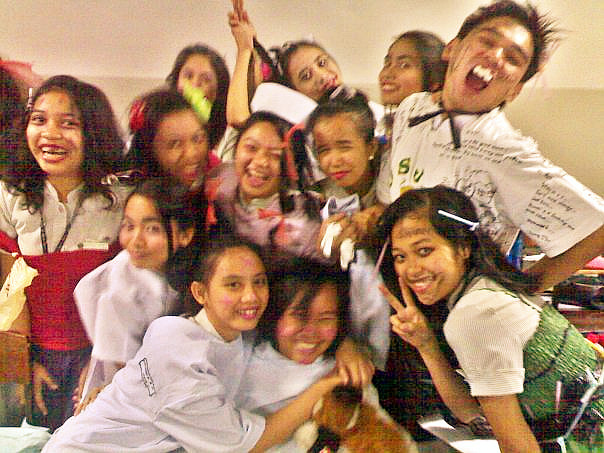
There are photographs from college that deserve to be framed, photographs that deserve to be forgotten, and photographs that make you wonder whether your parents were entirely aware of what their tuition fees were financing. Somewhere in my collection of nursing school memories lies a particularly entertaining example of the third category. There we were, a group of supposedly sensible student nurses, performing with such extraordinary enthusiasm that anybody unfamiliar with the circumstances might reasonably have questioned whether we had mistaken our classroom for a theatrical audition. We had costumes, expressions, and enough dramatic commitment to embarrass our future selves. And all of this, I assure you, was for educational purposes. At least that was our explanation.
Welcome to Psychiatric Nursing, where our classroom briefly became a stage and our academic requirements gave us a perfectly legitimate excuse to behave like aspiring actors.
One of my most unforgettable college experiences was our psychiatric nursing role-playing activity. As part of our learning, we were asked to portray patients experiencing different psychiatric conditions, an exercise intended to help us understand clinical presentations, communication, and the challenges associated with mental health care. In theory, it sounded like a perfectly respectable educational undertaking. We would apply our knowledge, demonstrate our understanding, and perhaps develop a greater appreciation of the complexities involved in psychiatric nursing. In practice, we also discovered that nursing students, when given an opportunity to perform in front of their classmates, can become alarmingly enthusiastic.
I still laugh whenever I look at our photograph.
Seriously, what were we thinking?
I cannot remember every detail of our presentation, nor would I trust myself to reconstruct the exact dialogue after all these years. What I remember is the amusement of seeing my classmates take on their assigned roles, the peculiar mixture of embarrassment and excitement that accompanied our performance, and the way everybody seemed determined to make the activity memorable. Some of us appeared considerably more comfortable performing than others. I suspect a few discovered previously unsuspected theatrical ambitions, although whether the entertainment industry would have welcomed those talents remains a separate question.
As for me, I was probably more concerned about getting through the activity without forgetting what I was supposed to do or laughing at precisely the wrong moment. There is a special kind of difficulty in maintaining a serious expression when your friends are performing directly in front of you. The more you remind yourself to behave professionally, the more your face seems determined to betray you. One unexpected glance can be enough to dismantle an entire performance.
And naturally, we had to take a photograph afterwards.
Because what is a college memory without visual evidence that can be used against you several years later?
Psychiatric Nursing role-playing with my classmates. We took our academic requirements seriously. Our appearances, apparently, were another matter entirely. Kfine.dot. Hahaha!
Beneath the laughter, however, psychiatric nursing introduced us to an aspect of healthcare that required a different kind of understanding. Mental health conditions cannot always be recognised through the familiar physical observations we had practised during our other clinical rotations. A person may be experiencing significant psychological distress without showing an obvious physical sign. Their behaviour, speech, thoughts, emotions, and responses to their surroundings can provide important information, but understanding these experiences requires careful assessment rather than assumptions based on appearance alone.
Our lectures introduced us to psychiatric disorders, therapeutic communication, behavioural observations, and the responsibilities involved in caring for people experiencing mental health difficulties. It was fascinating to learn how thoughts, emotions, and behaviour could influence a person’s daily life and relationships. It was also a reminder that the human mind is considerably more complicated than the tidy explanations we sometimes encounter in textbooks.
I began to appreciate that psychiatric nursing requires patience, observation, empathy, and excellent communication skills. It is not enough to know the clinical characteristics of a condition. Nurses must also consider how patients experience their symptoms, what support they need, and how to establish a therapeutic relationship while maintaining dignity and professional boundaries. The objective is to understand the person, not simply identify a collection of symptoms.
Of course, a classroom performance could only introduce us to certain aspects of that responsibility. Pretending to experience a psychiatric condition for a role-playing activity is very different from living with one. Our exaggerated expressions and theatrical enthusiasm might have made the exercise memorable, but real mental illness is neither a costume nor a source of entertainment. Looking back, I can appreciate the humour of our youthful performance while also recognising that psychiatric conditions deserve accurate representation and respectful understanding.
Perhaps that is another interesting aspect of revisiting old college memories. We sometimes remember an experience for one reason when we are young and understand its significance differently as we grow older. Back then, I was mostly delighted by the opportunity to do something unusual with my classmates. We were nursing students, after all, and any activity that temporarily relieved us from the routine of lectures, written examinations, and nursing care plans was bound to attract considerable enthusiasm.
Now, I find myself appreciating the educational intention behind the exercise.
Role-playing can be useful when it encourages students to practise communication, consider different perspectives, and reflect on their responses in challenging situations. It also creates opportunities to make mistakes in a supervised learning environment, where misunderstandings can be discussed and corrected before students encounter similar issues in clinical practice. The quality of the learning depends on how thoughtfully the activity is designed and evaluated, but the principle is valuable.
We were being encouraged to look beyond the textbook and consider how psychiatric nursing might involve interactions that cannot be managed through memorised definitions alone.
And perhaps that was the lesson worth remembering.
Still, I refuse to pretend that our entire performance was an exercise in profound intellectual discovery. We were young, we were surrounded by friends, and we were occasionally ridiculous. That was part of the experience, too. Nursing school demanded enough seriousness from us throughout the year. There were examinations to pass, clinical requirements to complete, and instructors whose questions could reduce even the most confident student to an uncomfortable silence. Sometimes laughter was simply the most natural response to an unusually entertaining afternoon.
I miss that particular freedom of college life. The ability to participate wholeheartedly in something silly, laugh at ourselves afterwards, and continue with our day without worrying excessively about whether we appeared sophisticated. We were still discovering our personalities, abilities, interests, and professional identities. Some activities revealed strengths we had not recognised. Others revealed that perhaps we should not abandon nursing for a career in theatre.
Our psychiatric nursing performance may belong firmly in the second category.
But I am glad we did it.
Years later, the photograph remains a reminder of the people who shared those classrooms with me, the unusual assignments that interrupted our ordinary routines, and the moments when learning became unexpectedly entertaining. I cannot recall every lecture from that semester, and I certainly cannot guarantee that I remember every line of our performance. What I remember is the laughter, the company, and the pleasure of being part of a group that could turn an academic requirement into a story worth telling.
Perhaps that is why college photographs become more interesting with age. When they are first taken, we are usually concerned with how we look. We examine our faces, complain about unfortunate angles, and wonder why somebody insisted on pressing the camera shutter at the least flattering moment imaginable. Years later, those concerns seem wonderfully unimportant. We become more interested in who was standing beside us, what we were doing together, and how it felt to belong to that particular moment.
The photograph from our psychiatric nursing activity is hardly the sort of image I would select for a professional portfolio. I doubt it would inspire tremendous confidence if attached to a formal job application.
Imagine presenting it during a nursing interview.
“So, tell us about your clinical experience.”
“Certainly. Here is photographic evidence of my extraordinary commitment to psychiatric role-playing.”
I suspect the interview panel would require further explanation.
But I would not exchange that memory for a more respectable photograph. There is something endearing about our willingness to participate, however awkwardly, in an activity that made us laugh while introducing us to an important area of nursing.
We were learning. We were occasionally making fools of ourselves. And somewhere between those two activities, we were collecting memories that would survive long after the semester ended.
So here is to my classmates, our ambitious little production, and the unforgettable afternoon when psychiatric nursing briefly turned us into performers.
We may not have deserved an acting award, but we certainly earned a place in my college memory box.
And if anybody happens to discover this photograph in the future, I would like to make one thing perfectly clear: we were completing an academic requirement.
The questionable acting was entirely our own contribution.
Kfine.dot. Hahaha! All is well. :3
From my nursing school archives, with affection for my wonderfully theatrical classmates and appreciation for the lessons that accompanied our laughter.
— Just Anj


































Leave a Reply