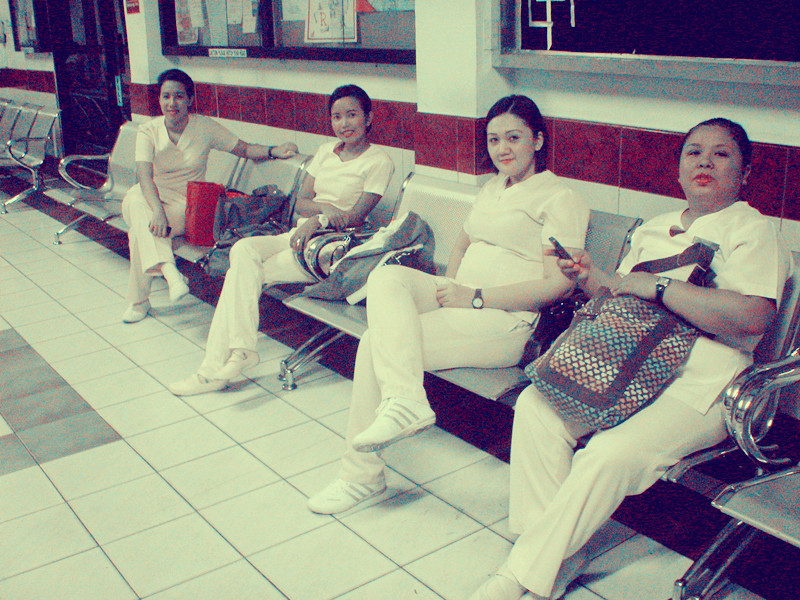
July 1–2, 2013 | First Duty Days, New Beginnings, and the Conversations No Textbook Could Prepare Me For
There is something rather peculiar about returning to a profession you spent four years preparing for, only to discover that eighteen months away can make even the familiar feel like a first encounter. My white uniform, for instance, seemed to recognise me immediately. I wish I could say the same about my professional confidence. There it was, hanging neatly and looking every bit as respectable as I remembered, while I stood contemplating whether my brain had retained enough nursing knowledge to justify wearing it again. I had passed the board examination, earned my licence, and acquired the two letters I once dreamed of placing after my name. Yet somehow, putting on that uniform again brought back the same nervous excitement I used to feel before reporting for clinical duty as a student. Apparently, becoming a Registered Nurse does not automatically eliminate the butterflies. It merely gives them a professional registration.
July 1, 2013, marked my return to nursing duty after approximately a year and a half away from regular clinical practice. I had been looking forward to this moment, although I must admit that anticipation and nervousness make rather persistent companions. During the months away, nursing remained part of my identity, even when I was not actively working in a clinical environment. I had studied for the profession, completed my training, passed the licensure examination, and imagined the future that might follow. But imagination, as I was beginning to discover, is much more accommodating than reality. In my imagination, I walked through hospital corridors looking capable and composed. In reality, I was entering an unfamiliar workplace, trying to remember everything I needed to do while hoping that my enthusiasm would compensate for whatever confidence had temporarily gone missing.
Still, it felt wonderful to be back.
There was something reassuring about wearing white again. The uniform brought back memories of nursing school, when my classmates and I spent considerable time worrying about grooming regulations, complete duty equipment, and the terrifying possibility of being questioned by a Clinical Instructor before breakfast. Back then, we wore our uniforms with a mixture of pride and apprehension. We were still learning, still making mistakes under supervision, and still dreaming about the day when we would finally become licensed professionals. Now that day had already come, yet I found myself experiencing a familiar sense of anticipation.
The difference was that I could no longer introduce myself as merely a student nurse.
That thought was both exciting and mildly alarming.
During our four-day hospital orientation in June, I had already become acquainted with the different departments, admired the facilities, and developed a particular interest in intensive care and haemodialysis nursing. I had also discovered the hospital’s rather determined commitment to vegetarian food, which I suspected might eventually test my loyalty to certain Filipino dishes. But an orientation, however informative, remains an introduction. You observe the environment, listen to explanations, become familiar with expectations, and imagine how the routines might unfold.
Actual duty is another matter.
On July 1, I began meeting the people who would form part of this new chapter of my professional life. There were fellow nurses from different parts of the Philippines, each bringing their own experiences, personalities, and reasons for choosing the profession. I have always found it interesting how nursing can bring together people who might otherwise never have crossed paths. We may come from different provinces, speak different local languages, and have grown up with different customs, yet somehow we find ourselves wearing similar uniforms and working towards the same responsibility: providing safe and compassionate care to our patients.
Meeting new colleagues was one of the most enjoyable parts of returning to duty. There was the usual business of introductions, learning names, recognising faces, and gradually becoming comfortable enough to engage in ordinary conversations. I was beginning to appreciate how much difference a friendly workplace could make, particularly when everything around you was unfamiliar. A welcoming smile, a helpful explanation, or a colleague willing to answer a question could make the first day considerably less intimidating.
Naturally, I also met new doctors and medical technologists.
And yes, I was rather pleased about that. Hahaha!
There is something entertaining about entering a new hospital and discovering an entirely new collection of professional personalities. Every department has its own rhythm, and every member of the healthcare team contributes something different to patient care. Doctors, nurses, medical technologists, and other healthcare professionals work together, often under considerable pressure, and effective communication becomes essential to making those responsibilities manageable. As someone still becoming familiar with the workplace, I was interested in learning how the different teams interacted and how I would gradually find my place among them.
Of course, the first few days involved more than meeting people.
There were routines to understand, responsibilities to remember, and patients whose needs required attention regardless of whether I was still adjusting to my new surroundings. Hospitals do not suspend their ordinary activities simply because a nurse is experiencing her first day. Patients still require assessments, medications, observations, assistance, and explanations. The work continues, and those of us who are new must learn to become part of it.
I remember feeling the weight of that responsibility.
During nursing school, I had been accustomed to working under the guidance of Clinical Instructors and experienced staff nurses. My clinical placements introduced me to different departments, patient conditions, and nursing procedures, but the purpose of those rotations was education. Now I was beginning to approach the hospital environment as a registered professional, conscious that my responsibilities would require greater independence as my experience developed.
I wanted to do well.
Not because I expected myself to become an expert immediately, but because I understood that patients deserved competent, attentive care. I wanted to become familiar with the hospital’s procedures, develop confidence in my clinical judgement, and learn from the experienced professionals around me. I knew that the months away from regular clinical practice meant I would need to refresh certain skills and information, but I was willing to make the effort.
After all, I had not spent years pursuing nursing simply to abandon my ambition at the first sign of uncertainty.
Then came my second duty day.
July 2 was memorable for a reason I had not anticipated. It was not an extraordinary clinical procedure, a complicated medical case, or an encounter with sophisticated hospital equipment that stayed with me afterwards. Instead, it was a conversation with one of my patients.
I remember finding the exchange unexpectedly heartwarming.
I will not pretend to recall every word we shared, and I believe some conversations deserve to remain private, particularly when they involve people receiving healthcare. But I remember the feeling of being reminded that the person occupying a hospital bed had experiences, concerns, and thoughts extending far beyond the condition that had brought them there.
In nursing school, we were repeatedly taught about holistic care. We learned that patients should be considered as individuals with physical, psychological, social, and spiritual needs, rather than simply as medical diagnoses requiring treatment. It was a familiar concept, one we discussed during lectures and included in our nursing care plans.
But concepts can sound remarkably different when they are spoken about in a classroom rather than experienced in front of a patient.
During that conversation, I found myself appreciating how much it mattered simply to listen.
Not every interaction requires an immediate explanation or solution. Sometimes a patient wants to express a concern, share an experience, or speak to someone who is willing to give them attention without making them feel hurried. As nurses, we are often occupied with practical responsibilities, and there are legitimate reasons why our time must be carefully managed. Yet communication is itself part of care, and the way we listen can influence whether patients feel comfortable sharing information about their needs.
I think this was what struck me most during that second day.
For so long, I had associated becoming a competent nurse with developing clinical knowledge and mastering practical skills. I wanted to understand disease processes, recognise abnormalities, administer prescribed treatments safely, and respond appropriately when a patient’s condition changed. Those abilities remain essential, and I would never suggest that kindness can replace professional competence.
But nursing also involves knowing when to stop talking and allow another person to speak.
That sounds embarrassingly simple, considering how much time and money we spend completing a nursing degree.
Four years of studying, countless examinations, and an entire national licensure process, only to rediscover that listening is important.
Yet perhaps simple things are not always easy things.
We live in a world where conversations can become competitions to determine who has the most interesting story, the most convincing opinion, or the quickest answer. People interrupt one another, offer advice before fully understanding the problem, and occasionally become so concerned with preparing their own response that they forget to pay attention to what is actually being said.
I have probably been guilty of this myself.
There are times when I become eager to help and immediately begin thinking about possible solutions. Someone shares a concern, and my mind starts arranging explanations, suggestions, and practical advice. The intention may be sincere, but sometimes the person speaking has not yet finished explaining what matters to them.
During my conversation with that patient, I was reminded that listening requires more than remaining silent until it is our turn to speak.
It involves paying attention, asking appropriate questions, recognising emotions, and allowing someone to express themselves without immediately turning the discussion towards our own assumptions.
For a patient, that opportunity can matter considerably.
Hospitalisation can interrupt ordinary routines and place people in unfamiliar circumstances. They may be worried about their health, their family, their responsibilities, or what will happen after they leave the hospital. Clinical information is important, but so is recognising how illness affects the person experiencing it.
A diagnosis may explain why somebody needs treatment, but it cannot tell us everything about what that person is feeling.
And sometimes, the most useful question is simply an invitation to share what is concerning them.
I wonder whether my younger self, the student nurse who once became anxious about performing basic observations in front of an instructor, would have anticipated finding such meaning in an ordinary patient conversation. She was so concerned with remembering procedures and avoiding mistakes that she might have overlooked how much of nursing takes place through everyday interactions.
I do not mean to suggest that a few kind words can resolve every difficulty. Patients need appropriate clinical care, accurate assessment, timely treatment, and safe nursing practice. Listening does not replace those responsibilities.
It complements them.
A patient who feels listened to may be more comfortable expressing concerns, asking questions, or sharing information relevant to their care. Good communication can help us understand what matters to them and support more individualised decisions.
It also reminds us that patients are not simply occupants of hospital beds.
They are people whose lives continue beyond the walls of the ward.
As I reflected on those first two days, I realised how much I had missed being part of the clinical environment. I had missed the familiar routines, the opportunity to apply my knowledge, and the sense of purpose that came from having responsibilities connected to patient care. I had missed meeting people, learning from colleagues, and discovering something new through the ordinary course of a duty.
But perhaps what I had missed most was the opportunity to understand people through the work I had chosen.
There is something meaningful about a profession that introduces us to individuals we might never encounter under ordinary circumstances. Patients arrive with different personalities, experiences, occupations, beliefs, and concerns. Some are naturally talkative, while others prefer privacy. Some ask numerous questions, and others need encouragement before they feel comfortable explaining what is troubling them.
As nurses, we have to learn how to approach those differences with respect.
We cannot assume that every patient wants the same kind of conversation or that everybody expresses discomfort in the same way. Nor should we expect gratitude simply because we have fulfilled our professional responsibilities. Patients may be tired, frightened, frustrated, or preoccupied with matters we do not fully understand.
Our role is to provide care with professionalism and consideration regardless of whether an interaction becomes particularly memorable.
And yet, when a conversation does become meaningful, it can remind us why the human side of nursing deserves so much attention.
That was the unexpected gift of my second duty day.
I had returned to the hospital hoping to refresh my clinical knowledge and develop professional confidence. I wanted to familiarise myself with the environment, work alongside new colleagues, and become comfortable with the responsibilities of nursing practice again.
Instead, one of the earliest lessons of this new beginning was about listening.
How wonderfully appropriate.
After spending so much time away from regular clinical duty, I had imagined that returning would involve confronting everything I might have forgotten. I worried about skills that needed refreshing, procedures that might feel unfamiliar, and the possibility of discovering how much my confidence had changed during those eighteen months.
I had not considered that some of the most meaningful aspects of nursing would still feel familiar.
The desire to help someone. The importance of treating patients with dignity. The satisfaction of understanding another person’s concerns. The simple privilege of being present during a moment when someone needs professional care and human consideration.
Those things had remained part of why I wanted to become a nurse.
Of course, I am not going to pretend that two days of duty have transformed me into a remarkably experienced professional. I still have much to learn, and I suspect the coming weeks will introduce responsibilities that challenge my confidence in entirely new ways. There will be unfamiliar situations, questions requiring guidance, and days when I will return home feeling considerably more exhausted than I expected.
I am prepared for the possibility that the profession I love will occasionally test my patience.
Nursing school has already provided plenty of evidence that this is likely.
But for now, I am enjoying the experience of being back.
I have met new colleagues from different parts of the Philippines, become acquainted with doctors and medical technologists, and begun building familiarity with the patients and routines of a new hospital. I have put on my white uniform again and discovered that, despite the time away, the profession still holds the same attraction that encouraged me to pursue it in the first place.
Perhaps there is something especially satisfying about returning to a place where we once imagined our future.
Years ago, I wore my student-nurse uniform and dreamed about the day when I could finally call myself a Registered Nurse. Now I have returned to clinical duty with that title, carrying both the knowledge I acquired and the awareness that professional competence requires continuing education and experience.
I am no longer the student who once worried about completing every RLE requirement.
But I am still learning.
And perhaps I always will be.
As I finish writing about July 1 and 2, I find myself smiling at how different the two days were from what I had imagined. I expected the excitement of returning to work, the uncertainty of meeting unfamiliar colleagues, and the challenge of adjusting to new routines.
All of those things happened.
But the memory I find myself wanting to preserve is a conversation.
No elaborate procedure. No extraordinary event. Just a patient who spoke and a nurse who was reminded of the importance of listening.
I spent a year and a half away from regular clinical practice wondering what it would feel like to return.
Perhaps I expected the white uniform to provide the answer.
Instead, it came during my second day, in the middle of an ordinary conversation, when I realised that nursing had always involved more than the things we could measure, document, and demonstrate during an examination.
I had returned to the hospital eager to prove that I could still perform the responsibilities of a nurse.
And one of my first reminders was that sometimes the most valuable thing I could offer was my attention.
Not a bad lesson for the second day, I think.
As for the white uniform, it seems we have finally been reunited.
I do hope it intends to cooperate this time.
After all, we have quite a few duty days ahead of us.
From my early nursing career archives, July 1–2, 2013 — with appreciation for new colleagues, unfamiliar beginnings, and the patient who reminded me that listening is an essential part of caring.
— Just Anj, RN



































Leave a Reply