November 4, 2013 | Saints & Souls — A Filipino Undas, Family Traditions, and Three Days Borrowed from Sleep
I am beginning to suspect that the dead receive more visitors during Undas than some of the living receive throughout the entire year. Every November, cemeteries suddenly become astonishingly busy places. Flowers appear in every imaginable arrangement, candles illuminate familiar graves, relatives gather from different towns, and people who have not seen one another for months find themselves exchanging family updates beside the resting places of their ancestors. There is food, conversation, prayer, and the occasional complicated discussion about who is related to whom. Meanwhile, somewhere at a bus terminal, an exhausted nurse who has just survived a night shift is attempting to squeeze herself into the annual migration of Filipinos determined to get home. This year, unfortunately, that nurse was me.
After a particularly exhausting night shift on October 31, I found myself facing another challenge that required almost as much determination as hospital duty: getting home to Toledo in time for our family’s Undas celebration. I had been looking forward to spending All Saints’ Day and All Souls’ Day with my relatives, but my work schedule had made the possibility rather uncertain. Nursing is not a profession that conveniently suspends its responsibilities whenever a family occasion appears on the calendar. Patients still need care, duty schedules must be followed, and the fact that everybody else seems to be travelling home does not automatically guarantee that you can join them. For a while, I genuinely wondered whether I would be able to make the trip.
But somehow, I managed it. Thank God!
Of course, reaching that happy conclusion required surviving the terminal first. Apparently, half the population had developed exactly the same idea at exactly the same time. There were passengers everywhere, all hoping to reach their hometowns for the holiday. Some were carrying bags, others were travelling with relatives, and practically everyone seemed to possess the determination of somebody who had already decided that no amount of inconvenience would prevent them from going home. I had just come from a tiring night duty and was functioning on whatever remained of my energy, which was not particularly impressive. I suspect I looked like a respectable member of the walking dead, except that my primary interest was finding a seat rather than frightening innocent civilians.
The expression zombie mode has never felt more appropriate. My body wanted sleep, my mind wanted home, and the bus terminal seemed interested in accommodating neither request. I remember wondering whether I had overestimated my ability to travel after a night shift. There is a special kind of exhaustion that follows working while most of the world is asleep. It settles into your shoulders, makes your eyelids suspiciously heavy, and turns the prospect of a comfortable bed into something almost romantic. Yet there I was, choosing a crowded journey over immediate rest because I did not want to miss an occasion that mattered to my family.
Perhaps that is one of the peculiar things about being Filipino. We can complain about traffic, long queues, crowded terminals, and the inconvenience of travelling during holidays, yet we continue making the same journeys because the people waiting at the other end make the trouble worthwhile. We grumble about the journey while preparing our bags, question our decisions while waiting for transportation, and then feel rather pleased with ourselves once we arrive. It is an annual exercise in inconvenience undertaken in the name of family, tradition, and the comforting knowledge that someone at home will probably ask whether we have eaten.
When I finally arrived in Toledo, the tiredness did not disappear, but it became easier to ignore for a little while. There is something wonderfully familiar about returning to your hometown during an occasion that has been part of your life since childhood. The people, the traditions, and the ordinary arrangements seem to welcome you into a rhythm you already understand. I had been occupied with hospital responsibilities and the demands of developing my nursing career, so being able to participate in our family’s Undas celebration felt particularly meaningful. It was a chance to spend time with relatives and return to something that had existed long before duty schedules began controlling my calendar.
In the Philippines, Undas is more than a date set aside for visiting cemeteries. It is woven into our culture, particularly in families where the remembrance of departed loved ones remains an important tradition. November 1 is All Saints’ Day, while November 2 is All Souls’ Day, and together they bring families into a period of prayer, remembrance, and reunion. Some people travel considerable distances to visit the graves of relatives, clean and decorate their resting places, offer flowers, and light candles. Others gather at home for prayers and family meals. Practices vary between communities, but the intention often remains the same: to remember those who have died and maintain the connections that continue to matter to the people they left behind.
I have always found our Filipino way of commemorating the departed particularly interesting because it combines solemnity with ordinary family life. We visit cemeteries to pray, yet we also meet relatives, exchange stories, and sometimes laugh about memories involving the very people we have come to remember. To somebody unfamiliar with the tradition, the atmosphere may seem unusual. How can a place associated with death become a setting for conversation, reunion, and even moments of happiness? But perhaps that is precisely what makes Undas meaningful. We do not remember our loved ones only through sadness. We also remember the lives they lived, the relationships they formed, and the experiences that continue to connect us to them.
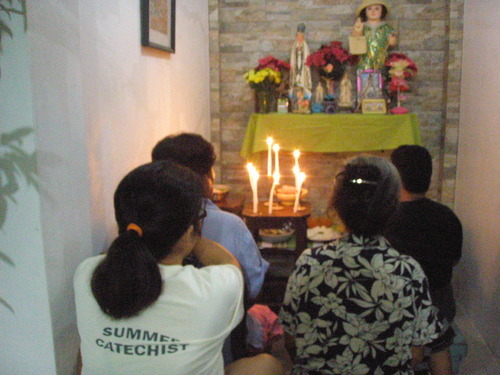
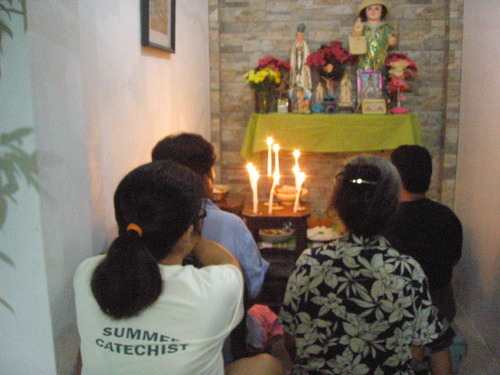
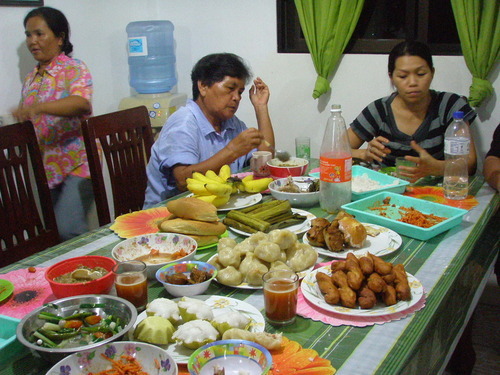
On November 1, our family continued a tradition that has been familiar to us for years. We gathered to offer prayers for the saints and the souls of our departed loved ones, and food was placed before the family altar as part of our customary observance. Afterwards, the food was brought to the table for everyone to share. I have always appreciated the way Filipino traditions bring prayer and food into the same occasion. We may approach the altar with solemn intentions, but it is only a matter of time before somebody begins organising the meal and making sure everybody has something to eat. In our household, even remembrance eventually involves the practical responsibilities of feeding the living.
There is something deeply comforting about these familiar rituals. The arrangement of the altar, the presence of food, and the gathering of relatives remind me of earlier years when I participated in the same traditions without considering their significance quite so carefully. As children, we often accept family customs simply because they are what everyone does. We follow the adults, join the prayers, and look forward to the familiar activities that accompany the occasion. Only later do we begin to appreciate how such practices preserve family identity and help younger generations remain connected to their history.
I sometimes wonder how many stories are carried within these ordinary traditions. A photograph displayed near an altar may represent a person whose life younger relatives know only through family conversations. A particular prayer may have been taught by a grandparent who learned it from someone before them. Even the act of gathering together becomes a way of maintaining continuity between generations. We may not remember every explanation given to us as children, but we remember how the occasion felt, who was present, and the familiar sense that our family was participating in something important.
I also think about the people we remember during Undas. Every family has its own collection of stories about those who are no longer with us. Some memories are cheerful, others bring sadness, and a few may involve the kind of amusing incidents that relatives enjoy retelling whenever everyone gathers. A person may be remembered for their kindness, their cooking, their humour, or an ordinary habit that became part of the family’s shared memory. Death changes the way we can be present with someone, but it does not immediately remove the place that person occupies in our thoughts and conversations.
Perhaps that is why I appreciate the custom of visiting graves and offering prayers. It gives us a deliberate opportunity to remember people whose absence might otherwise become lost among the responsibilities of everyday life. We become busy with work, studies, and personal concerns, and sometimes weeks pass without our consciously recalling a particular memory. Then Undas arrives, and families make time to gather, visit familiar places, and acknowledge the people who were once part of their ordinary days.
On the evening of November 1, we went to the cemetery and stayed through the night until the morning of November 2. Yes, an entire night! Apparently, completing a demanding hospital night shift was not enough excitement for my body, so I decided to participate in another overnight activity almost immediately afterwards. I suspect my internal body clock has already submitted its resignation letter. Nevertheless, spending the night at the cemetery is part of the way our family observes Undas, and I was glad to be there with my relatives despite my increasing need for sleep.
There is an atmosphere during Undas that is difficult to compare with an ordinary visit to a cemetery. Families arrive carrying flowers, candles, and the things they need for their stay. Familiar pathways become busy with visitors, and graves that may have been quiet on other days receive renewed attention. People pray, sit together, talk, and spend time in the company of relatives who have gathered for the occasion. At night, the glow of candles creates a different appearance, as though countless small lights have been placed among the graves to accompany the prayers being offered.
I find that sight particularly moving. Each light represents somebody’s act of remembrance, even if we know nothing about the family who placed it there. Some may be honouring parents or grandparents, others siblings, children, friends, or relatives they never had the opportunity to know personally. The stories are different, but the gestures create a shared atmosphere of remembrance. We are surrounded by evidence that countless lives have mattered deeply to someone, and that the desire to remember them continues long after they are gone.
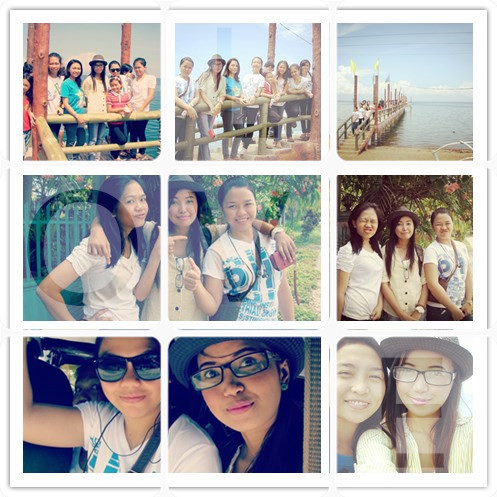
Being with my cousins made the experience especially memorable. Family gatherings often bring together people whose everyday routines keep them occupied elsewhere, and Undas provides another opportunity to spend time with one another. We may have come primarily to offer prayers and flowers for our departed loved ones, but the occasion also allowed us to enjoy being together. I appreciate having photographs of those moments, because I know how quickly ordinary family gatherings can become memories we wish we had documented more carefully.
We took pictures on November 1 and 2, preserving some of the moments we shared during our visit. I have always enjoyed taking photographs, even when the subjects are entirely ordinary. A picture of cousins gathered together may not seem particularly extraordinary today, but years from now it may remind us of an occasion when everyone was able to meet in the same place. Our appearances will change, our responsibilities will become different, and perhaps some of us will eventually live far from our hometown. The photographs will remain little pieces of evidence that, on those particular days in November 2013, we were all part of the same family gathering.
I suppose there is something rather interesting about taking photographs in a cemetery. We are surrounded by reminders of people who have died, yet we are also documenting the lives and relationships continuing among those who remain. It creates an unusual meeting of generations. We remember the people who came before us while preserving memories for those who may one day look back upon our own photographs. Perhaps that is one of the quiet meanings of Undas: we acknowledge that families are made up of both those who are present and those whose influence continues through the people they loved.
Of course, I cannot write about this particular homecoming without discussing the astonishing absence of sleep. From November 1 until November 3, I managed approximately two hours of sleep a day. Two hours! I am not entirely certain how my body tolerated such an arrangement, particularly after the exhausting night shift that preceded the journey. I was determined to make the most of my time at home, but determination has a habit of behaving as though physical limitations are merely suggestions. My mind wanted to enjoy the family gathering, while the rest of my body appeared to be conducting urgent negotiations with the nearest available pillow.
There is a strange feeling that comes with being extremely tired while surrounded by people and activities you do not want to miss. You recognise that rest would be sensible, yet you also know that the opportunity to be together may not happen again immediately. I suppose I was reluctant to spend too much of my short visit sleeping, particularly after making the effort to travel home despite my duty schedule. Still, by the end of those three days, there was no denying that I had pushed myself beyond what was comfortable. My enthusiasm had been admirable, but my sleeping arrangements were an absolute disaster.
I would not recommend two hours of sleep a day as a practical lifestyle choice, especially for someone working in healthcare. Adequate rest matters for our physical wellbeing, concentration, and ability to carry out responsibilities safely. I understand that perfectly well, which makes my own behaviour slightly embarrassing. Apparently, knowing the importance of sleep and actually arranging enough of it are two entirely different accomplishments. I suspect my nursing textbooks would have some fairly strong opinions about my decision-making during those three days.
But I am grateful I managed to return home.
There were moments when I thought my work schedule would prevent me from joining the celebration, and I would have been disappointed to miss another opportunity to spend Undas with my family. I know that nursing involves working during occasions when other people are enjoying holidays or spending time with relatives. That is part of the profession, and I accept the responsibility. Yet I am beginning to appreciate how important it is to make use of opportunities to be with the people we love whenever circumstances reasonably allow.
Our lives become increasingly complicated as we grow older. We develop careers, accept responsibilities, and arrange our schedules around obligations that did not concern us during childhood. Sometimes family occasions become difficult to attend, and we find ourselves choosing between competing demands. I suppose this is one of the less entertaining discoveries of adulthood. We spend years imagining the freedom that comes with growing older, only to discover that the freedom apparently arrives accompanied by schedules, deadlines, and the occasional night shift.
There are days when I miss the simplicity of childhood, when participating in a family gathering required very little consideration beyond whether we were ready to leave the house. Now, I must think about duty schedules, travel arrangements, rest, and how much time I can realistically spend away before returning to work. The journey home has become something that requires planning rather than an ordinary part of my routine.
Perhaps that is why occasions like Undas have begun to feel more meaningful.
I understand that the opportunity to gather is not something we should automatically take for granted. Relatives become occupied with their own lives, circumstances change, and the people who were once present at every family occasion may not always be able to attend. Traditions can continue, but the arrangement of faces around the table gradually changes over the years. That thought makes me appreciate the people who are here today, even as we gather to remember those who have already passed away.
There is a kind of continuity in that experience. We visit the graves of our departed loved ones, offer prayers, and share stories about them. Afterwards, we return to the company of our living relatives, eat together, take photographs, and create memories of our own. The rituals remind us of those who came before us, while the ordinary conversations and laughter allow us to appreciate the relationships that remain part of our present lives.
I think this is why Filipino Undas can feel both solemn and lively. We do not gather simply to mourn. We come together to remember, to pray, and to maintain family connections through customs that have accompanied us for generations. There may be moments of sadness, especially when remembering someone whose absence is deeply felt. But there can also be warmth, humour, and the comfort of knowing that remembrance does not require us to abandon the ordinary happiness of being together.
I find that deeply reassuring.
My faith has always influenced the way I understand these traditions. As a Catholic, I appreciate the opportunity to pray for departed loved ones and reflect upon the communion of saints and the hope of eternal life. All Saints’ Day reminds us of the faithful who have gone before us, while All Souls’ Day provides a particular occasion to remember and pray for those who have died. These beliefs give religious meaning to customs that are also closely connected to our family and cultural identity.
But I think the experience is meaningful on another level as well. Taking time to remember the departed encourages us to consider how we treat the people still present in our lives. We may bring flowers to graves, light candles, and offer prayers for those who have passed away, but perhaps we should also remember to show consideration to the relatives and friends who are still here. A family gathering is an opportunity to listen, reconnect, and appreciate people whose company we may not always have the chance to enjoy.
Sometimes I wonder whether we spend too much time postponing simple expressions of affection. We assume there will always be another birthday, another holiday, or another convenient occasion to visit someone. We become busy and tell ourselves that we will make time when our responsibilities become less demanding. But life has never promised to organise itself according to our preferred schedule. Perhaps one of the practical lessons of remembering those who have died is recognising the importance of giving attention to the people who are still part of our everyday lives.
I do not want to turn Undas into a gloomy reminder that every happy occasion must be accompanied by thoughts about life’s uncertainty. I would much rather enjoy my relatives’ company, appreciate the familiar traditions, and laugh at the extraordinary lengths I went to simply to attend this year’s gathering. But perhaps a little reflection is appropriate when the occasion itself encourages us to think about family history and remembrance.
After all, the people we honour during Undas once had ordinary days just like ours. They worried about responsibilities, enjoyed familiar meals, made plans, and spent time with the people they loved. They probably never imagined that certain habits, stories, or photographs would eventually become the things their families remembered most. We may not be able to preserve every detail of someone’s life, but the memories shared by relatives help keep parts of their story familiar to younger generations.
I wonder what stories our family will tell about these Undas celebrations years from now. Perhaps somebody will remember the familiar gatherings, the food prepared for the altar, the prayers offered at the cemetery, or the conversations shared throughout the night. Perhaps my cousins and I will laugh at our photographs and recall how we spent the holiday together in 2013. And perhaps somebody will mention that one particularly stubborn nurse arrived home after an exhausting night shift, slept approximately two hours a day, and somehow continued behaving as though she had an unlimited supply of energy.
I hope they remember that part kindly.
As I write this on November 4, I have finally managed to enjoy a proper rest after the past few days. Yesterday, exhaustion caught up with me, and I surrendered to the sleep my body had been requesting since October 31. Today is my day off, which feels like a rather generous gift after everything that has happened. Tomorrow morning, I will return to hospital duty, put on my white uniform, and resume the ordinary responsibilities of nursing. The family gatherings will be over, the travel arrangements completed, and the familiar routines of work will once again occupy my attention.
But I am pleased that I made the journey.
I began this Undas feeling tired, uncertain whether I could manage the trip, and slightly overwhelmed by the number of passengers attempting to leave the terminal. I was operating on insufficient sleep and a considerable amount of determination. Yet I reached home, spent time with my family, participated in our traditions, and shared another meaningful occasion with my cousins and relatives. I offered prayers for our departed loved ones and had the opportunity to appreciate the company of those still with us.
It was exhausting, certainly.
But it was worth remembering.
Perhaps that is what I find most interesting about family traditions. They ask us to return, sometimes at inconvenient times and under less-than-ideal circumstances, to places and practices that remind us where we come from. We may complain about the journey, the crowded terminals, the disrupted sleep, or the complicated arrangements required to attend. Yet once we are home, those inconveniences often become part of the story rather than the reason we regret going.
I imagine that next year will bring another Undas, another gathering of relatives, and perhaps another complicated negotiation with my nursing schedule. I cannot know whether I will be able to attend or what circumstances may have changed by then. But I hope that whenever possible, I will continue taking part in the traditions that connect me to my family and hometown.
For now, I have photographs to keep, memories to treasure, and an enormous amount of gratitude for being able to spend these days with the people I love. I am thankful for the prayers we offered, the traditions we continued, and the simple opportunity to return to Toledo despite the demands of work.
There is one final thing I have learned from this year’s Undas, although it is considerably less philosophical than everything I have written so far. If you decide to travel after a hospital night shift, survive a crowded terminal, spend the night at a cemetery, and manage approximately two hours of sleep a day for three consecutive days, your body will eventually demand payment. And unlike certain generous relatives, it does not appear interested in negotiating the amount owed.
So tonight, I intend to cooperate with my pillow.
The living have obligations, the departed have our prayers, and this exhausted nurse has an early duty tomorrow.
I think everybody deserves a little rest.
November 4, 2013 — for the family traditions that bring us home, the people whose memories we continue to honour, and the cousins who make even the most exhausting journeys worthwhile.
— Just Anj, RN, temporarily retired from zombie mode until the next night shift.


































Leave a Reply