November 2013 | Super Typhoon Yolanda, the Grief of a Nation, and the Faith We Carry Through Life’s Worst Storms
There are storms we prepare for by closing the windows, bringing the laundry indoors, and checking whether the candles are still hiding in the kitchen drawer. In the Philippines, we have become rather familiar with the peculiar rituals that accompany an approaching typhoon. Somebody checks the weather forecast, another person reminds everyone to charge their mobile phones, and mothers begin issuing instructions with the authority of an entire disaster management committee. We have grown up knowing that strong winds and heavy rain occasionally visit our islands, sometimes with a persistence that makes us wonder what exactly we have done to offend the atmosphere. Yet there are storms that arrive with a force beyond anything our ordinary preparations can accommodate. They take familiar streets, homes, and landscapes and leave communities struggling to recognise the places where their lives unfolded. On November 8, 2013, Super Typhoon Yolanda became one of those storms, and the Philippines was confronted with a tragedy whose magnitude I am still struggling to comprehend.
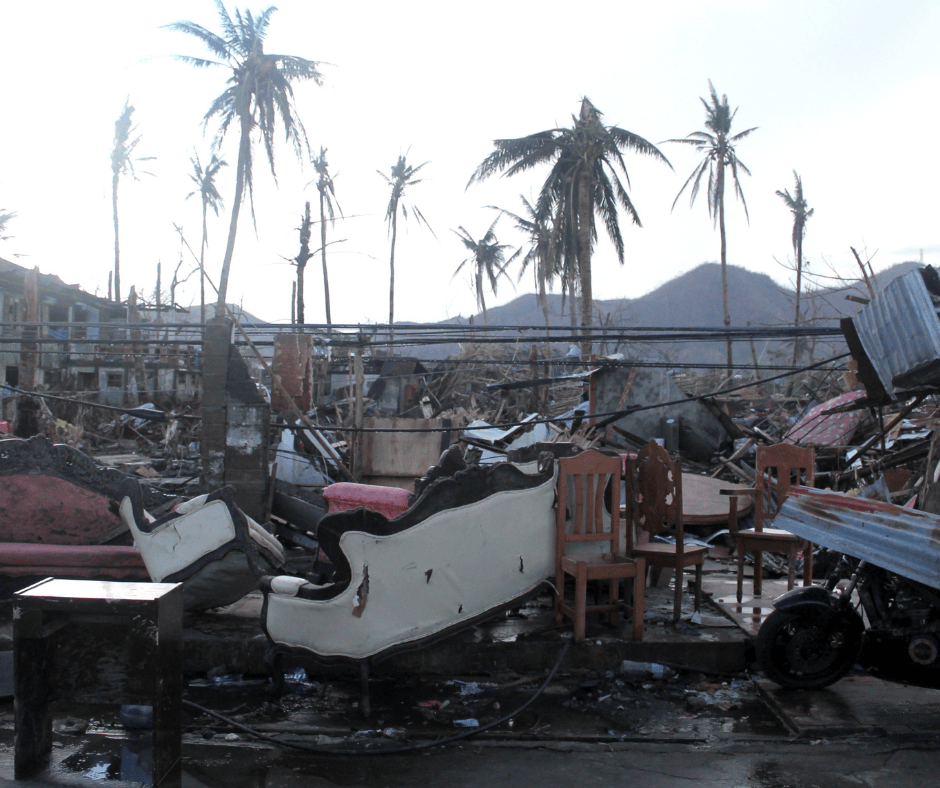
I have been following the news, looking at the photographs, and listening to reports about the devastation across parts of the Visayas. Yolanda, internationally known as Haiyan, struck with extraordinary force, bringing destructive winds and a powerful storm surge that devastated coastal communities, particularly in Leyte and Samar. The images from Tacloban are especially heartbreaking. Places that should have been filled with ordinary morning activities have become scenes of destruction, and countless families are facing circumstances that no amount of preparation could have made emotionally bearable. Houses have been damaged or swept away, roads are obstructed, and many communities are struggling with the loss of basic necessities. The reports of casualties continue to emerge, and I find myself wishing that every new update could somehow bring more reassuring news instead of another reminder of how much has been lost.
There are moments when I want to stop looking at the photographs because the sadness becomes difficult to contain. Yet I continue reading because these are my fellow Filipinos, people whose lives have been interrupted by something they did not choose and could not control. I may not know their names, their families, or the particular circumstances they were facing before the typhoon arrived, but I know that they had ordinary lives before all this happened. They had routines, responsibilities, ambitions, and people they loved. There were children who should have been concerned with schoolwork, parents thinking about how to provide for their families, and elderly people accustomed to the comfort of familiar homes. Then the storm came, and the ordinary arrangements of their lives were changed in ways that photographs can only begin to communicate.
What troubles me most is knowing that the destruction extends far beyond the houses and buildings shown in the news. A home is more than a structure made of concrete, wood, or metal roofing. It is where families share meals, children grow up, and ordinary memories quietly accumulate over the years. Within its walls are photographs, letters, clothing, schoolbooks, and little possessions that may have very little monetary value but carry enormous personal significance. When a family loses its home, the loss cannot be measured simply by calculating the cost of reconstruction. There is also the difficulty of recovering a sense of familiarity, privacy, and security that had once been part of everyday life.
I think about the mothers and fathers who must now decide how to care for their families when their circumstances have changed so dramatically. I think about children who may not fully understand what has happened but can recognise the fear and uncertainty surrounding them. I think about people trying to contact relatives, hoping for reassuring news while communication remains difficult in affected areas. The uncertainty itself must be exhausting. Not knowing whether someone is safe, where to obtain assistance, or what tomorrow might require can place an enormous burden upon people who are already dealing with considerable loss.
And here I am, looking at these reports, feeling deeply concerned but unable to do nearly as much as I wish I could.
It is a frustrating kind of helplessness. When I see somebody suffering, my instinct is to wonder what can be done to make the situation better. Perhaps that is one of the reasons I chose nursing. I wanted a profession in which knowledge and practical skills could become useful to people who needed care. During hospital duty, there are responsibilities I can carry out, observations I can make, and colleagues I can work alongside to address a patient’s needs. But a disaster affecting entire communities is something much larger than any individual person’s ability to resolve. I cannot simply reach through a television screen and provide everything those families require, no matter how desperately I wish the distance between concern and assistance were easier to overcome.
Perhaps this is why the importance of collective responsibility becomes so clear during disasters. Families need food, safe drinking water, shelter, medical attention, communication, and the many practical necessities that allow everyday life to continue. Healthcare workers, emergency responders, relief organisations, volunteers, and communities all have important roles in responding to those needs. Prayer can be a source of comfort and encouragement, but the people affected also require tangible assistance. I hope that those of us who are fortunate enough to be safe will remember that sympathy becomes more meaningful when it encourages us to contribute whatever reasonable help we can provide.
There is something deeply moving about the Filipino tradition of bayanihan, particularly during circumstances that demand cooperation. We often speak proudly about our willingness to help one another, and I believe that generosity is one of the qualities worth preserving in our culture. But disasters also remind us that goodwill must be accompanied by organisation, resources, and sustained commitment. The immediate response matters enormously, yet rebuilding homes, restoring essential services, and supporting families will require attention long after the typhoon disappears from the daily headlines. I hope we do not forget the people affected simply because the news eventually moves towards another subject.
What makes this tragedy even more painful is that the Visayas has barely had time to absorb the devastation caused by the earthquake last October 15. Only a few weeks ago, Cebu and Bohol were shaken by a powerful earthquake that damaged homes, infrastructure, and historic churches. I remember being on hospital duty when it happened, and I remember how deeply affected I was by the destruction of places that had stood for generations. Seeing the damaged churches made me reflect upon the vulnerability of things we had assumed would remain familiar and permanent. Now, before those memories have even settled, another calamity has struck our islands, bringing suffering on an even wider scale.
I cannot help asking why so many difficult things seem to be happening so close together. It is a question that comes naturally when we hear one distressing report after another. We look at the earthquake, then at the typhoon, and wonder how much more the affected communities will have to endure. There is something especially painful about knowing that people who were already facing hardship must now confront additional uncertainty. I find myself thinking about the emotional exhaustion that follows such events, not only for those directly affected but also for families, healthcare professionals, responders, and volunteers who are trying to help.
As a Christian, I turn to prayer during circumstances like these. My faith has been an important part of my life, especially when I encounter situations that leave me worried or unsure of what to do. I believe in God’s compassion, and I find comfort in bringing my concerns before Him, even when I do not possess the words necessary to explain everything I am feeling. But I must admit that disasters raise questions that are not easily answered through the familiar expressions we use during ordinary difficulties. How do we understand suffering on such a tremendous scale? What can we say to someone who has lost a loved one? How do we speak about hope without making another person’s grief seem smaller than it really is?
I have no intention of pretending that I know why these tragedies happen. I do not believe the people of Leyte, Samar, Bohol, or any other affected community have been singled out for punishment or that their suffering should be interpreted as evidence of insufficient faith. Natural disasters can affect people regardless of their goodness, beliefs, or circumstances. Those who have experienced loss deserve practical support, respect, and the opportunity to grieve without being told that their pain must serve some grand purpose. There are moments when the most compassionate response is to acknowledge that something terrible has happened and allow the people affected to express what they are experiencing.
Still, I understand why we reach for words of hope when the news becomes overwhelming. We want to believe that suffering will not occupy every remaining chapter of someone’s life. We want families to find safety, communities to rebuild, and people to encounter kindness when they have lost so much. Those hopes do not guarantee an easy recovery, nor do they diminish the seriousness of the present circumstances. But they remind us that the work of helping people must continue even when the scale of the need seems enormous.
I keep returning to a passage from the Bible, 1 Peter 5:10, which speaks about God’s grace and the promise of strength and restoration following suffering. I find comfort in those words, particularly because they acknowledge that hardship exists rather than pretending faithful people will never experience it. To me, the passage is an invitation to trust God while recognising that our understanding of suffering remains limited. It does not provide a timetable for when every difficulty will end, and I would never use it to promise someone that their losses will soon be repaired. But it reminds me that faith can remain meaningful even when circumstances are deeply uncertain.
Perhaps what I appreciate most about that passage is the idea of strength. Not the sort of strength that demands people stop crying, smile immediately, or behave as though nothing terrible has happened. I do not think that is what genuine courage should require. Families who have lost loved ones deserve time to grieve. People who have been displaced deserve understanding when they feel frightened or exhausted. Communities facing enormous challenges should not have to perform optimism for the comfort of those watching from safer places. Sometimes strength may involve asking for help, accepting assistance, or simply finding enough support to manage the responsibilities immediately in front of them.
I have heard people praise Filipinos for being resilient, and I understand the admiration behind the description. We have witnessed communities helping one another through disasters, families sharing limited resources, and individuals making remarkable efforts to support their neighbours. There is much to respect in such actions. But I also hope that calling Filipinos resilient never becomes an excuse for expecting them to endure hardship without sufficient assistance. Our people deserve more than compliments about their ability to survive. They deserve safe communities, reliable support, effective disaster preparedness, and opportunities to rebuild their lives with dignity.
A person should not have to prove extraordinary strength simply because they were unfortunate enough to experience a disaster.
Perhaps that is something we should remember whenever we speak proudly about the Filipino spirit. Our capacity for compassion and cooperation is valuable, but it should encourage us to protect and support one another rather than accept suffering as an unavoidable national tradition. We can admire those who help their neighbours while also recognising the importance of improving the systems upon which communities depend. We can pray for those affected while supporting the practical work necessary to address their immediate and longer-term needs.
As I continue looking at the news, I am reminded of the patients I have encountered during my nursing experience. Every person arrives with circumstances extending beyond what we can observe during a brief interaction. Their worries may involve family members, financial responsibilities, or the uncertainty of an illness they did not expect. Nursing has taught me to become more attentive to those individual experiences and to recognise that clinical care should be accompanied by dignity and compassion. Watching the aftermath of Yolanda makes me think about how many people now require that same consideration, although their needs extend far beyond what a single hospital or community can provide.
I wish I could tell every affected family that everything will be all right, but such a promise would be unfair when the situation remains so uncertain. Some losses cannot be reversed, and recovery may take far longer than anyone would prefer. What I can hope is that people receive the support necessary to face the difficult days ahead. I hope those separated from their loved ones find the information they need, that the injured receive appropriate care, and that displaced families are provided with safe places to stay. I hope children are surrounded by responsible adults who can offer reassurance, and that communities are not left struggling alone once the immediate attention begins to fade.
I also hope that the rest of us remember how fortunate we are when ordinary life continues without such devastating interruption. It is easy to complain about inconveniences when we are occupied with work, school, and household responsibilities. I certainly have my share of complaints, particularly after exhausting hospital shifts. There are days when I grumble about waking up early, missing a proper meal, or having too many things to accomplish. Those concerns do not become meaningless simply because somebody else is experiencing something more serious, but the news has encouraged me to reconsider how much of my daily comfort I have come to regard as automatic.
A bed to sleep in, a familiar home to return to, a meal shared with family, and the ability to contact someone we love are ordinary things we rarely celebrate. Yet for many families affected by Yolanda, these familiar parts of life have suddenly become difficult to access. I think about how much we associate happiness with extraordinary achievements, expensive possessions, and distant ambitions, when so much of our everyday wellbeing depends upon circumstances we scarcely notice until they are disrupted.
Perhaps gratitude should involve recognising those ordinary privileges without allowing that recognition to become guilt. I can appreciate the safety and comfort available to me while understanding that other people require assistance. The purpose of gratitude should not be to make us feel ashamed of what we have, but to encourage us to become more thoughtful about how we use it and how we respond when others are experiencing hardship.
I have also been thinking about the word storm and the way we use it to describe difficult periods in our personal lives. We speak about emotional storms, professional challenges, disappointments, and circumstances that make the future uncertain. It is an understandable metaphor, especially in a country where typhoons are part of our collective experience. But after seeing the destruction caused by Yolanda, I find myself more cautious about comparing every ordinary difficulty with the devastation of a natural disaster. There is a difference between a disappointing day and an event that changes entire communities.
Still, the idea that circumstances can change remains meaningful to me. Difficult periods may alter our plans and require more patience than we believed we possessed. Some leave lasting consequences that must be acknowledged rather than forgotten. But with sufficient care, support, and opportunity, people and communities can begin creating new routines and possibilities. That process deserves time and practical assistance, not merely encouraging words from those who are fortunate enough to observe from a distance.
I suppose that is the kind of hope I want to hold on to tonight.
Not the expectation that everything lost will be restored exactly as it was, because I know some losses cannot be undone. Rather, I hope for the possibility of people receiving the resources, compassion, and continued support they need to rebuild what can be rebuilt. I hope for safer homes, functioning schools and hospitals, restored communities, and families who are given enough assistance to begin thinking about the future again.
I think about the children who have experienced this disaster and wonder how the coming months will affect their understanding of the world. They deserve opportunities to return to school, play, learn, and feel safe. I hope that their experiences will be met with sensitivity and that the adults around them will recognise the importance of emotional support alongside practical necessities. Childhood should contain room for curiosity, laughter, and ordinary worries, even when circumstances have made those things difficult for a time.
As for the adults, I hope they are given permission to acknowledge their exhaustion without being judged for it. There may be parents who feel overwhelmed by the responsibilities ahead, elderly people worried about their living arrangements, and individuals who are uncertain how to begin again. They should not have to demonstrate constant courage to receive help. Sometimes compassion means recognising that a person has already endured more than enough and offering assistance without demanding a cheerful expression in return.
When I think about the devastation in the Visayas, I am reminded that the Philippines is not merely a collection of islands on a map. It is home to people whose lives are connected through language, culture, history, and shared experiences. We may come from different provinces, speak different dialects, and possess different traditions, but there is a familiar sense of belonging in recognising another Filipino’s experience. The suffering of people in Leyte and Samar matters to me because they are human beings deserving of compassion, and because their communities form part of the country I call home.
I do not want the coming weeks to be remembered only through images of destruction. I hope there will also be stories of responsible assistance, communities receiving the supplies they need, and people working together to restore essential services. I hope organisations and authorities involved in the response will be able to reach those who remain in difficult circumstances. Above all, I hope the people affected will not become forgotten once the immediate shock of the disaster has passed.
I have been thinking about the earthquake in October and now this devastating typhoon in November. In less than a month, our islands have witnessed tragedies that have challenged familiar assumptions about safety and stability. It is difficult to witness so much suffering in such a short period, and I find myself praying for a measure of peace for communities that have already faced extraordinary uncertainty.
Lord, I do not understand everything that has happened, and I do not know what the coming days will bring for the families affected by Yolanda. But I pray that those who are grieving will receive comfort, that the injured and vulnerable will receive appropriate care, and that people who have lost their homes will find safety and support. Please guide those providing emergency assistance, give wisdom to the people responsible for coordinating relief, and encourage us to remain compassionate long after the headlines have changed. Help us recognise opportunities to contribute meaningfully, even when our individual efforts seem small compared with the enormous needs before us.
I also pray that our faith will encourage us to be more considerate towards one another. May we resist the temptation to judge those who are struggling, and may we remember that rebuilding requires more than encouraging people to be strong. Help us become willing to share what we can, listen when somebody needs understanding, and treat those affected with dignity rather than reducing their experiences to another tragic story on the evening news.
As I finish writing, I find myself looking again at the photographs and remembering how casually we sometimes speak about the weather. On ordinary days, we complain about rain because it interrupts our plans or makes travelling inconvenient. We admire beautiful skies and hope that storms will pass before we have to leave the house. We treat weather as a familiar part of everyday conversation, forgetting that the same natural forces can become devastating under circumstances far beyond our control.
I began this reflection thinking about the storm itself, the power of its winds and the destruction left behind. But the more I consider the people affected, the more I realise that the most important part of this story cannot be understood through measurements of wind speed or photographs of damaged buildings alone. It lies in the lives interrupted, the families grieving, and the long responsibility of helping communities recover.
Yolanda has passed through our islands, but its consequences remain. The skies may eventually clear, and the winds may cease, yet for many Filipinos the difficult work of rebuilding is only beginning. We must not confuse the end of the weather event with the end of the suffering it caused.
And perhaps that is the thought I want to leave here tonight. I pray that the people affected will find strength, comfort, and the help they need in the days ahead. I pray that the rest of us will continue remembering them, not merely through sympathetic words but through whatever useful assistance lies within our ability.
Our country has endured an earthquake and now a devastating typhoon, and I know many people are asking how much more hardship our communities must face. I cannot answer that question, and I would rather not pretend that faith grants me knowledge of what tomorrow will bring.
But I can continue praying, continue caring, and continue believing that the people of our country deserve a future shaped by more than the disasters they have survived.
The storm has passed across the islands. May our compassion remain long after the winds have gone.
For the families affected by Super Typhoon Yolanda, for those facing unimaginable loss, and for every Filipino working to help our communities through these difficult days. You remain in my prayers.
— Just Anj, RN | November 2013


































Leave a Reply