February 8, 2014 | Wrapping It Up — Two Weeks Without a Day Off, the Art of Surviving Hospital Duty, and the Strange Satisfaction of Being a Nurse
I have begun to suspect that my hospital and my bed are involved in a custody dispute, and unfortunately, the hospital appears to be winning. For the past two weeks, I have been moving between the two with the efficiency of a person whose entire existence has been reduced to working, travelling home, sleeping, and returning to work again. My bed and I barely have enough time to exchange pleasantries before the alarm clock announces that visiting hours are over. Even my Tumblr account has probably started wondering whether its owner has abandoned it in favour of a more demanding relationship. I wish I could explain to everyone, including my increasingly neglected blog, that I have simply been busy. But busy seems rather an inadequate description for the extraordinary arrangement my working life has recently become. At this point, I am beginning to think I should have my mail redirected to the nurses’ station.
Hello, Tumblr! Remember me?
I certainly remember you, although finding enough time to sit down and write has become an accomplishment worthy of its own certificate. These past two weeks have been particularly demanding because our hospital has been experiencing staff shortages, and the additional responsibilities have left very little room for proper rest days. I have been working continuously, adjusting to the demands of the ward, and trying to maintain enough energy to carry out my responsibilities safely. There are moments when the physical and mental pressure becomes difficult, and I find myself wondering when I last enjoyed a full day without having to think about the next duty. Yet despite the exhaustion, I still feel a genuine sense of satisfaction in the work I do.
It is a rather inconvenient contradiction, loving a profession that occasionally makes you question whether your legs were designed for this much standing.
When I was a nursing student, I imagined that becoming a Registered Nurse would bring a wonderful sense of accomplishment. I pictured myself wearing my white uniform, caring for patients, and finally applying the knowledge I had spent years acquiring. I knew that hospital work could be demanding, of course. We had completed clinical rotations, observed experienced nurses, and listened to countless reminders about professional responsibility. But student experience and regular employment are not quite the same thing. During college, our clinical duties were structured around learning requirements and supervision. Now, the responsibilities are part of my ordinary working life, and the patients depending upon our care cannot be expected to arrange their needs according to how much sleep I managed the previous night.
The past fortnight has made that reality particularly clear.
My daily routine has revolved around hospital corridors, patient rooms, nursing responsibilities, and the constant awareness of how much remains to be done before the shift ends. There are observations to complete, medications to administer, patients requiring assistance, documentation demanding attention, and colleagues coordinating the work necessary to keep the ward functioning. Some shifts seem to pass quickly because there is barely enough time to notice the clock. Others feel considerably longer, particularly when fatigue begins settling into my shoulders and feet. Either way, by the time I arrive home, my enthusiasm for activities requiring concentration has usually been reduced to almost nothing.
I have heard people describe nursing as a calling, and I understand the affection behind that expression. There is something meaningful about choosing a profession centred on caring for people during illness and uncertainty. But I am beginning to appreciate that a calling still involves a human being who requires food, sleep, and the occasional opportunity to sit somewhere that is not a hospital chair. Professional dedication does not magically eliminate physical limitations, no matter how sincerely we love the work.
Some days, I feel as though I have spent the entire shift walking between patient rooms. If the hospital decided to issue certificates based on the number of corridors travelled, I suspect the nursing staff would collect an impressive assortment of awards. We move from one responsibility to another, often discovering that the next task is already waiting before the previous one has been fully completed. There is very little glamour in this part of nursing. No dramatic soundtrack accompanies the medication round, and nobody announces our arrival whenever we enter a patient’s room. Most of the time, we are simply doing our jobs, concentrating on the things that need attention and hoping that the shift proceeds without unnecessary complications.
Yet there is a particular satisfaction in knowing that those ordinary responsibilities matter.
During these past two weeks, my patient load has often involved approximately eight or nine patients during a shift. Caring for that number of people requires more than moving efficiently between beds. Each patient has individual needs, prescribed treatments, clinical observations, and circumstances that require attention. Some need more assistance than others, and priorities may change according to their condition. The challenge is not simply completing a collection of tasks but ensuring that the care provided remains safe, appropriate, and attentive to the person receiving it.
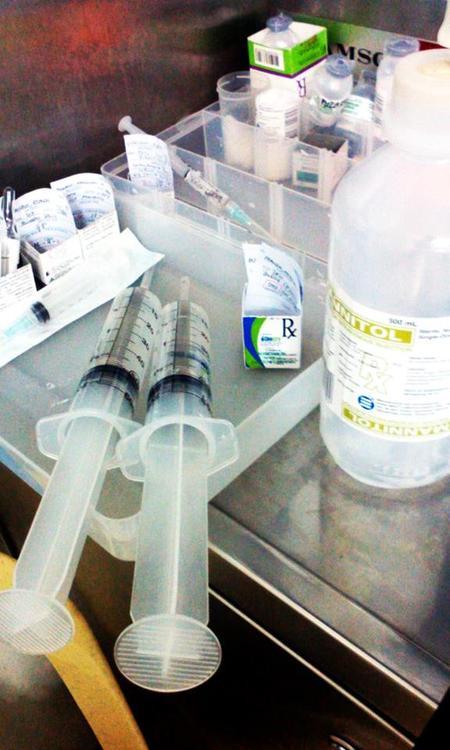
Medication administration has been one of the responsibilities requiring particular concentration. When several patients have medications prescribed at different times, including treatments administered through intravenous infusion, organisation becomes essential. It is not as simple as picking up a medication and delivering it to the next available person. Each administration requires appropriate checks, attention to the prescription, awareness of the patient’s condition, and adherence to the established medication-safety procedures. The responsibility becomes especially important when the ward is busy and several competing demands are attempting to claim our attention at once.
I remember learning the rights of medication administration during nursing school. They appeared repeatedly in lectures, examinations, and clinical demonstrations, and our instructors made sure we understood their importance. Back then, I was primarily concerned with remembering the principles correctly and avoiding mistakes during supervised practice. Now, those same principles have become part of responsibilities that directly affect patient safety. It is one thing to recite medication rights in front of a Clinical Instructor and another to apply them consistently during a demanding shift when interruptions, unfamiliar situations, and time pressures can make concentration more difficult.
I have discovered that Mr Time Management is a gentleman every nurse ought to become acquainted with, although he can be remarkably difficult to locate when the ward becomes busy.
There are moments when I imagine him standing somewhere with a clipboard, calmly explaining how I should organise my responsibilities while I attempt to understand why the clock seems to be moving at twice its normal speed. I wish he would occasionally offer practical assistance instead of remaining an abstract concept discussed during lectures. Unfortunately, time management does not arrive wearing a uniform and volunteer to complete my medication round. It requires planning, prioritisation, teamwork, and the ability to recognise when clinical needs demand a change in the original schedule.
And sometimes, even the most carefully arranged plan requires adjustment.
I am learning that nursing efficiency should never become confused with simply rushing through responsibilities. When the workload is demanding, the temptation to move quickly can be strong, especially when there are several patients waiting and the shift seems determined to end before every task has been completed. But safe nursing care depends upon careful assessment, appropriate checks, clear communication, and the willingness to seek assistance when the workload exceeds what can reasonably be managed. I would rather ask for clarification or support than allow the pressure of a busy shift to influence a decision that requires proper attention.
Perhaps that is one of the most important lessons I am learning as a relatively new nurse. Responsibility does not mean pretending that every demand can be managed independently. It also involves understanding our limits, communicating concerns, and recognising when staffing pressures may affect the ability to provide timely care. I know that hospitals sometimes experience difficult staffing situations, but I am becoming increasingly aware that exhaustion should not be treated as an ordinary measure of professional commitment.
After all, a nurse who has been working without adequate rest still needs to make sound clinical decisions.
I have felt the effects of these demanding days. There are moments when my body seems determined to remind me of every hour I have spent on my feet, and occasions when my mind feels crowded with everything I have been trying to remember. I find myself longing for a day when I can wake up without an alarm, enjoy breakfast without calculating the time remaining before duty, and spend an afternoon doing something that has absolutely nothing to do with hospital routines.
Perhaps I could even write a proper Tumblr post without falling asleep halfway through a sentence.
What an extraordinary luxury that would be.
There have also been moments when a small, exhausted part of me has questioned whether I can continue managing this pace. I think that is something people do not always understand about enjoying their profession. We can genuinely love our work and still struggle with the conditions under which we are doing it. We can appreciate the responsibility of caring for patients while recognising that repeated demanding shifts take a physical and mental toll. Feeling exhausted does not automatically mean we have chosen the wrong career, but neither should professional enthusiasm become a reason to ignore the importance of rest and reasonable working conditions.
I am beginning to understand that distinction more clearly.
When I think about the nurses I admired during my student years, I remember their clinical confidence, practical knowledge, and ability to remain composed while managing several responsibilities. I wanted to become like them, and that ambition remains important to me. But now I also appreciate the things that may be less visible to someone observing from the outside: the concentration required throughout a shift, the physical demands of the work, the difficult decisions about priorities, and the importance of supporting colleagues when the ward becomes particularly busy.
Nursing involves far more than the moments patients and visitors happen to see.
There are countless small responsibilities that contribute to safe care, many of which may never be remembered by the people receiving them. A medication is checked carefully, a change in condition is communicated, a patient’s concerns are documented, or a colleague provides assistance when someone needs another pair of hands. These actions may appear ordinary because they are repeated throughout the day, yet their significance lies in being performed properly and consistently.
And somewhere among those responsibilities, there are moments that remind me why I still enjoy nursing so much.
I sometimes find it difficult to explain the feeling I experience when I know I have cared for a patient well. It is not exactly excitement, although there is certainly satisfaction involved. Nor is it simply pride in completing my duties. It is something more personal, a quiet recognition that the knowledge and skills I worked so hard to acquire have become useful in another person’s life. There are occasions when a patient expresses appreciation, asks a question I can help answer, or seems reassured because somebody has taken the time to listen. Those moments do not erase the exhaustion of the shift, but they remind me why the responsibilities matter.
I have always believed that nursing should involve holistic care, yet I am discovering how challenging it can be to maintain that approach when the workload becomes demanding. Patients have physical needs, certainly, but they also experience emotions, worries, and personal circumstances that influence how they respond to illness. A person may be frightened about a diagnosis, concerned about family responsibilities, or simply uncomfortable in an unfamiliar environment. We cannot necessarily resolve every difficulty, but we can communicate respectfully, listen when appropriate, and remember that the individual receiving care is more than the next task on our list.
Sometimes that requires a deliberate effort to slow our thinking even when the day itself feels rushed.
I have noticed how easily a busy shift can encourage us to focus entirely on what must be completed next. The medication round, the observations, the documentation, and the other responsibilities begin arranging themselves into an endless sequence. Before long, it becomes tempting to measure success solely through the number of tasks finished. But I do not want to become the kind of nurse who is so occupied with completing the work that she forgets the people for whom the work exists.
Of course, I also recognise that compassion cannot replace clinical competence. Patients need their medications administered safely, their conditions assessed appropriately, and their care coordinated effectively. A pleasant conversation is meaningful, but it does not compensate for responsibilities that have been overlooked. Perhaps the real challenge is learning how to combine efficiency, clinical judgement, and consideration for patients within the demands of an actual hospital environment.
I suspect that will remain part of my professional development for many years.
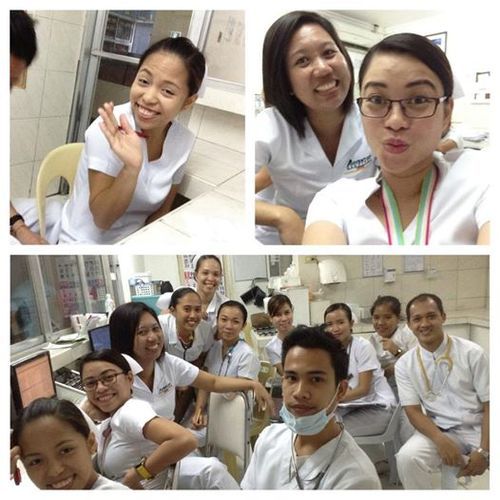
Another thing that has helped me through these demanding weeks is the company of my workmates. I am particularly grateful for the colleagues who have been supportive, cooperative, and willing to make the workload feel more manageable through teamwork. There is an enormous difference between working in a busy environment where everybody feels isolated and working alongside people who communicate well and recognise when someone needs assistance. Even the most demanding shift can become easier to navigate when the people around you are willing to help one another.
I am fortunate that we get along.
Buyag!
I must say that quickly before the universe decides I have become far too enthusiastic about our workplace harmony and arranges an unnecessary disagreement to restore balance. Filipino superstitions aside, I genuinely appreciate having colleagues whose company makes hospital duty more enjoyable. We may have different personalities and approaches to work, but there is something reassuring about being part of a team where people can share responsibilities, ask questions, and occasionally laugh together after a particularly exhausting period.
Laughter has become a rather useful companion during these shifts. It does not make the workload disappear, and I would never want humour to interfere with patient care. But there are moments when a small joke or a familiar conversation helps everyone feel a little less overwhelmed. Perhaps it is simply reassuring to know that the person working beside you understands why your feet are aching and why the prospect of going home has become increasingly attractive.
There is also the occasional unexpected kindness from patients.
Some patients, particularly when preparing for discharge, have offered food to the nursing staff as a gesture of appreciation. I must admit that these moments make me smile, although I understand that patients should never feel obliged to give anything beyond the trust and cooperation involved in their care. Any gifts must be handled according to the hospital’s professional rules, and the quality of nursing care should never depend upon whether somebody offers us something in return.
Still, the thoughtfulness behind those gestures can be touching.
And because I am Filipino, I would be pretending to possess extraordinary self-control if I claimed that food never attracts my attention.
Hahaha!
There is something rather lovely about people expressing appreciation in familiar, ordinary ways. A patient may offer kind words, a family member may thank the staff, or someone may simply acknowledge the work that has been done during their stay. Those moments remind us that even when the nursing responsibilities feel repetitive, the experience of being cared for may have considerable significance to the person receiving treatment.
At the same time, I do not expect every patient to express gratitude. People who are unwell may be frightened, uncomfortable, exhausted, or preoccupied with their concerns. They may have difficult personalities or respond to illness in ways that challenge our patience. Our responsibility is to provide appropriate care regardless of whether the person is cheerful, cooperative, or particularly appreciative of our efforts.
Perhaps that is another lesson of working with people.
We cannot choose every personality we encounter, but we can continue learning how to communicate professionally and treat individuals with dignity.
I have been thinking about how much my understanding of nursing has changed since I returned to clinical practice last year. In July 2013, I was excited simply to be wearing my white uniform again. I had spent approximately eighteen months away from regular hospital duty, and the opportunity to practise my profession felt like an important new beginning. I remember the excitement of meeting colleagues, the curiosity of exploring different departments, and the satisfaction of receiving my professional nameplate.
Everything felt new, including the responsibilities that now occupy so much of my ordinary life.
Since then, I have experienced different clinical environments, observed unfamiliar procedures, and learned from situations that challenged both my knowledge and confidence. I have appreciated the opportunities to develop professionally, but I have also discovered that the work can be physically demanding and emotionally complicated. Some days have left me feeling enthusiastic, while others have required considerably more patience than I expected.
And now, several months later, I find myself navigating the ordinary realities of a busy ward.
It is interesting how quickly something we once dreamed about can become part of our routine. I wanted to become a Registered Nurse, and now I am one. I wanted opportunities to care for patients, and now those opportunities fill my working days. I wanted to develop my skills, and now every demanding shift reminds me how much I still need to learn.
Perhaps that is what professional growth looks like when stripped of its more glamorous expectations.
It involves showing up, taking responsibility, asking questions, reflecting on mistakes, and gradually becoming more capable through experience. There may be achievements worth celebrating, but much of the progress happens during ordinary days when nobody is taking photographs or announcing how much we have improved.
Sometimes the only evidence of development is recognising that a situation which once seemed overwhelming has become a little easier to understand.
Other times, it is the humility to realise that something remains beyond our current competence and that we need guidance.
I am grateful for both kinds of learning.
But I am also beginning to recognise that dedication must be sustainable. The past two weeks have tested my ability to manage fatigue, and I do not want to interpret surviving an exhausting schedule as evidence that such conditions should become normal. Rest matters. Safe staffing matters. The physical and mental wellbeing of healthcare professionals matters, not only for our own sake but also because patients depend upon us being able to carry out our responsibilities competently.
I hope that as I become more experienced, I will learn how to advocate appropriately for myself and my colleagues while continuing to fulfil my professional duties. There is no contradiction between being committed to patient care and recognising that nurses need reasonable support to provide it safely.
Perhaps that is one of the less obvious lessons I am taking from these past two weeks.
I can be proud of the work completed without pretending that the exhaustion was ideal.
And I can appreciate my colleagues’ efforts while hoping that staffing circumstances become more manageable.
As I write this, I am relieved to have completed my morning and afternoon shifts without any absences. It has been an exhausting fortnight, but I am pleased that I managed the responsibilities placed before me and gained further experience along the way. I have learned more about organising patient care, managing medication rounds, working with colleagues, and recognising the importance of maintaining professional standards even when the workload becomes demanding.
There is a certain satisfaction in reaching the end of a difficult period and realising how much it has taught you.
Although, if I am being perfectly reasonable, I would have preferred some of those lessons to arrive accompanied by more rest days.
Tomorrow brings another change to my schedule.
The night shift.
Yes, after finally completing the morning and afternoon rotations, I shall be returning to the familiar world of NOC duty, where ordinary sleeping arrangements become theoretical concepts and the clock appears to operate according to an entirely different civilisation. I have worked nights before, so I know that the adjustment can be challenging. The hospital continues functioning while much of the outside world is asleep, and the responsibilities of patient care remain just as important regardless of the hour.
I am hoping that I will manage the change reasonably well, although my body may have a few objections to the rearrangement.
It has barely recovered from the past two weeks, and now I am asking it to reconsider when nighttime is supposed to occur.
Poor thing.
Perhaps I should offer it a formal apology.
Still, there is something about nursing that continues drawing me back with genuine interest, even when I have spent an entire day complaining about fatigue. I think it is the awareness that the work matters beyond my own ambitions. Patients depend upon us for appropriate care, families place their trust in healthcare professionals, and every shift provides opportunities to develop knowledge and skills that can make a meaningful contribution.
I do not always have the words to explain why that responsibility gives me such satisfaction.
Sometimes I return home exhausted, with my feet aching and my mind still occupied by the events of the day. Yet beneath the tiredness is a sense that I have spent my time doing something worthwhile. I may not have changed the world, and I certainly have not accomplished every responsibility perfectly, but I have contributed to the care of people who needed professional attention.
Perhaps that is enough to remind me why I began this journey.
I also think about how much my life has changed since the days when I was still hoping to become a nurse. Back then, I worried about examinations, clinical requirements, and whether I would ever reach the stage where I could practise the profession independently. Now, my concerns are more practical: completing medication rounds safely, understanding the needs of several patients, managing time effectively, and finding enough energy to return for another duty.
It is not quite the glamorous future I might have imagined while studying.
But it is real, and I am grateful for the opportunity.
I began this entry wondering whether my Tumblr account had forgotten me during my absence. Perhaps it has been waiting patiently while I hurried between hospital corridors and my increasingly neglected bed. I have missed writing, particularly because it gives me a chance to consider the experiences that become difficult to understand when I am constantly moving from one responsibility to another.
There is something reassuring about sitting down and arranging my thoughts into sentences after a period of demanding work. It allows me to recognise what I have learned, acknowledge what has been difficult, and appreciate the people who have made the experience more manageable.
And perhaps, years from now, I will return to this entry and laugh at the young nurse who seemed convinced that completing two weeks of continuous duty was an extraordinary achievement.
I hope she will have become more experienced, more confident, and considerably better at maintaining a sensible relationship with sleep.
I also hope she remembers the enthusiasm that encouraged her to keep learning, the colleagues who made difficult shifts more bearable, and the satisfaction she found in caring for patients despite the demands of the work.
Because I do not want to forget this particular stage of my life, even if I am currently too tired to appreciate every detail of it.
These are the years when I am learning what my profession requires beyond textbooks, examinations, and the excitement of finally obtaining a licence. I am discovering its routines, responsibilities, frustrations, and moments of unexpected satisfaction. I am meeting people who contribute to my professional development and encountering circumstances that challenge my judgement.
I am also discovering that being a good nurse requires more than determination.
It requires knowledge, compassion, teamwork, appropriate support, and the ability to recognise our limits.
As tomorrow’s NOC duty approaches, I think I shall leave my future concerns for another day. I have already spent enough time worrying about schedules, medication rounds, and the ordinary complications of hospital life. Tonight, I intend to appreciate the fact that I have completed another demanding period of work and finally found a little time to return to writing.
My white uniform will be ready for another shift. The patients will have their own needs, the ward will continue operating, and Mr Time Management will undoubtedly return to test my organisational abilities.
But for now, I would like to concentrate on something considerably simpler.
Rest.
After two weeks of moving between hospital corridors and a bed I barely had time to appreciate, I think I have finally earned the opportunity to become reacquainted with my pillow.
And if anybody from the hospital happens to be looking for me during my sleeping hours, please understand that I shall be conducting an important personal assessment.
The patient is myself.
The presenting complaint is exhaustion.
And the immediate care plan involves a generous amount of uninterrupted sleep.
Goodbye, AM and PM shifts. Hello, NOC duty. Lord, please grant me patience, wisdom, and a body clock willing to cooperate.
February 8, 2014 — two demanding weeks, eight or nine patients per shift, supportive colleagues, and another reminder that nursing is both a profession I love and a responsibility I must learn to carry wisely.
— Just Anj, RN, whose Tumblr account and pillow have both been terribly neglected.


































Leave a Reply