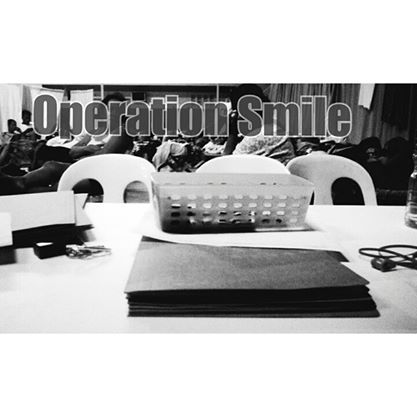
June 16, 2014 | Mission Accomplished — Operation Smile Cebu, Forty Patients a Day, and an Unexpected Answer to a Prayer
There is something suspicious about the way life behaves whenever I finally have an empty schedule. For months, I have been complaining about exhausting hospital duties, insufficient sleep, and the astonishing ability of a twelve-hour shift to make every bone in my body request early retirement. Then, just when my calendar becomes wonderfully spacious, I discover that I have absolutely no idea what to do with all the available hours. Apparently, I am the sort of person who complains about being too busy and becomes restless the moment I am allowed to rest. If inconsistency were a recognised profession, I suspect I would already be eligible for promotion.
Recently, I submitted my resignation letter at Adventist Hospital Cebu. It was not a decision I made without thinking about my future, and I had already begun looking towards another employment opportunity. While waiting for the result of my job application, however, I found myself in that peculiar interval between one chapter and the next. My schedule was unusually clear, my professional plans remained uncertain, and I was trying to be patient while circumstances unfolded beyond my control. Patience has never been my most effortless achievement. I am quite capable of advising other people to trust the process, but when the process involves my own future, I suddenly become very interested in knowing precisely what is happening behind the scenes.
I prayed about it. I asked God to guide my decisions and hoped that I might find something meaningful to occupy my time while waiting for news about my application. I did not necessarily expect an extraordinary opportunity. I simply wanted to remain useful, continue learning, and perhaps avoid spending every afternoon examining my telephone as though staring at it intensely enough might persuade somebody to call. A little professional activity would be welcome, I thought, particularly if it involved the work I had trained so hard to do.
Then my former hospital called.
Despite having submitted my resignation, I was asked whether I would be available to volunteer for an upcoming medical mission. As luck would have it, my schedule was completely free. There were no competing duties, no complicated arrangements to negotiate, and no desperate attempt to squeeze another responsibility between two already exhausting shifts. For once, the calendar that had caused me so much frustration seemed perfectly willing to cooperate. I accepted the opportunity, grateful that I could still contribute to something meaningful while waiting for the next stage of my nursing career.
The mission was Operation Smile.
I had heard about charitable medical programmes before, but being given an opportunity to participate offered an entirely different perspective. Operation Smile provides surgical care for people born with cleft conditions, including cleft lip and cleft palate, who may otherwise face considerable barriers to obtaining treatment. In Cebu, the organisation has worked with the Mariquita Salimbangon-Yeung Charitable Foundation, Inc. to help children and families access surgical services. The programme had already been serving communities for many years, and I was grateful that our hospital was involved in supporting the medical mission.
What interested me most was the purpose behind the activity. For families who cannot easily afford specialised treatment, a charitable surgical programme can provide access to care that might otherwise remain financially or geographically difficult to obtain. Surgery is not simply a matter of arranging a procedure. Families may also need information, assessment, preparation, follow-up, and support throughout the process. A well-organised medical mission brings together professionals with different responsibilities, all contributing towards a shared objective.
I was pleased to discover that my role would involve preoperative care.
After spending several months developing my nursing skills in different hospital departments, I welcomed the opportunity to participate in a setting where preparation and careful communication were especially important. I had previously experienced the demanding environment of the Operating Room, including the unforgettable occasion when a heavy protective apron taught my shoulders an entirely new definition of suffering. This time, however, I would be working with patients before their scheduled procedures, helping prepare them for the next stage of their care.
My assignment involved receiving patients, assisting with the required preoperative preparations and assessments within our assigned responsibilities, helping with documentation, and reinforcing instructions provided by the medical team. We also reminded patients and their families about fasting requirements before surgery, including the specific instructions concerning when food and drinks should be stopped. Such instructions may seem straightforward when written on a chart, but they require careful explanation because preparation for anaesthesia and surgery depends upon following the individual plan given by the clinical team.
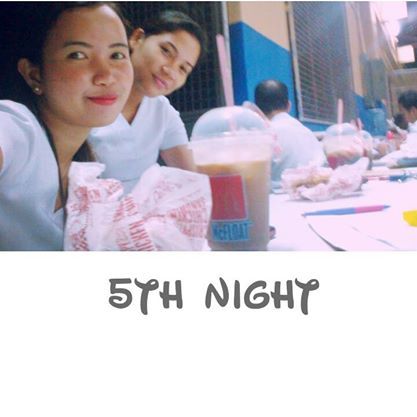
The work reminded me that preoperative nursing involves more than completing paperwork. Patients and their families need to understand what is expected of them, and healthcare professionals must communicate information accurately while remaining attentive to questions or concerns. Some patients may be unfamiliar with hospital procedures, and parents accompanying children may understandably have questions about what will happen. Even when our workload is demanding, those concerns deserve respectful answers and appropriate guidance.
Of course, the paperwork itself was not particularly sympathetic towards our fingers.
We were receiving approximately forty patients a day.
Forty!
I have always believed that the human hand is a remarkable piece of engineering, but during that mission, I began to suspect mine had been designed without sufficient consideration for the demands of nursing documentation. There were charts to prepare, details to record, and numerous tasks requiring concentration and accuracy. By the time we had spent hours writing, my fingers were beginning to express their disapproval of the entire arrangement. I imagined them organising a little protest, complete with placards demanding improved working conditions and perhaps a permanent reduction in the number of forms requiring handwritten information.
Unfortunately, the charts were not going to complete themselves.
We continued working, organising the necessary information and making sure the documentation received proper attention. A busy clinical environment can create pressure to work quickly, but I knew that accuracy remained important. Patient identification, clinical information, preoperative instructions, and relevant records all contribute to safe preparation. There is no benefit in completing a chart quickly if essential details have been overlooked. As a nurse, I was learning that efficient documentation requires both organisation and a willingness to remain attentive even when the work becomes repetitive.
I also began to appreciate the coordination involved in a medical mission of this size. From the outside, people may understandably focus upon the surgical procedures and the visible results of treatment. But before a patient reaches the operating room, many practical responsibilities must be addressed. Clinical teams assess suitability, prepare the necessary information, explain requirements, and coordinate the different stages of care. Nurses, doctors, administrative personnel, volunteers, and other staff each contribute to making the process function.
Our work in preoperation was only one part of that larger effort, but it was a part worth doing properly.
The long hours, however, were beginning to affect our energy. There were periods when tiredness became difficult to ignore, especially after spending so much time concentrating on patient preparations and documentation. Fortunately, we had discovered the familiar assistance of coffee. I would hesitate to call it a miracle, particularly because caffeine cannot replace proper sleep, but I must admit that a cup of coffee becomes remarkably attractive when your eyelids are considering their own independent schedule.
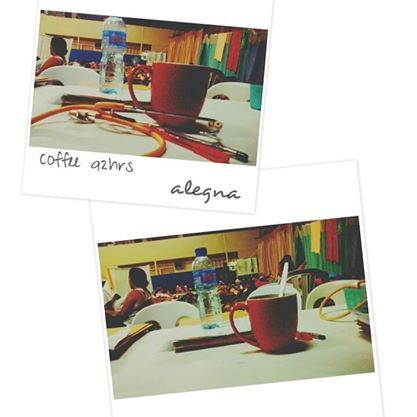
Coffee has been a faithful companion throughout my nursing experience. It has accompanied early mornings, demanding shifts, and occasions when I needed to remain attentive despite feeling tired. During the mission, it made another appearance, offering a welcome opportunity to refresh ourselves before returning to our responsibilities. I suspect many healthcare professionals have developed complicated relationships with coffee, involving considerable appreciation and the occasional awareness that relying upon it too enthusiastically is probably not a sensible long-term strategy.
But we also found another rather unconventional method of entertaining ourselves during our breaks.
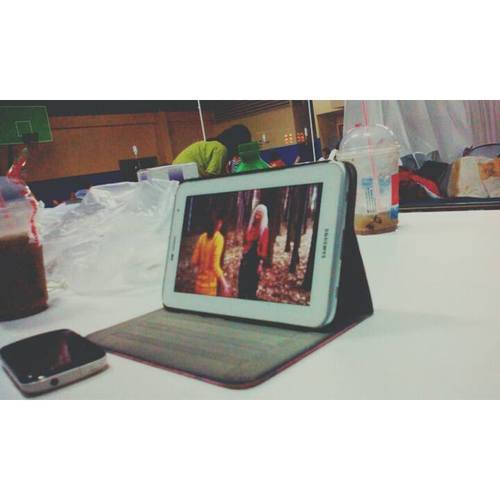
One of my workmates had downloaded Wrong Turn 5, a horror film that proved extraordinarily effective at keeping us alert. I cannot entirely explain why a group of already exhausted hospital workers would choose frightening entertainment as a recreational activity. One might imagine that after spending hours completing clinical responsibilities, we would prefer something relaxing, perhaps a comedy or a programme involving people peacefully preparing food. Instead, we apparently decided that the most sensible way to avoid drowsiness was to watch a film designed to make viewers question their decision to remain awake.
Our logic was questionable, but I must admit that it worked as a distraction.
There is something amusing about the strange forms of entertainment people choose when they have spent too much time working together. A film that might ordinarily be watched for enjoyment suddenly becomes part of the shared history of a group of colleagues. We laugh at our reactions, comment on the absurdity of certain situations, and find ourselves entertained as much by one another as by the film itself. I suspect that years from now, I will remember the fact that we watched a horror movie during our breaks more clearly than I will remember many of the ordinary details of those long working hours.
Perhaps that is one of the reasons I enjoy working with supportive colleagues. The responsibilities remain demanding, but familiar company can make the experience more manageable. We understand why one another is tired, recognise the pressure of the workload, and occasionally find reasons to laugh without losing sight of our professional duties. Teamwork does not eliminate the need for rest or sensible working conditions, but it can make a considerable difference to the atmosphere in which people carry out their responsibilities.
There were also moments during the mission that reminded me how much I appreciate seeing families care for one another.
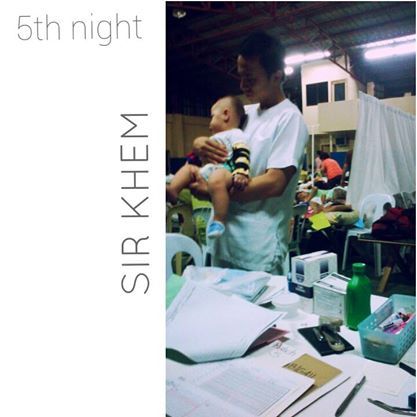
I remember noticing Sir K carrying a baby and feeling compelled to take a photograph. I have always found such scenes rather touching. There is something lovely about watching a parent or caregiver attend to a young child with patience and familiarity. Perhaps it catches my attention because we sometimes overlook the quieter responsibilities involved in caring for children, particularly when we focus so heavily on the dramatic or sentimental images of parenthood. A person carrying a child may be doing something entirely ordinary, but that ordinary act represents attention, responsibility, and the practical work of caring for someone who depends upon an adult.
In the context of the medical mission, such moments carried additional meaning for me. Many families were present because they wanted their children to receive appropriate medical care. Their participation involved practical arrangements, cooperation with the healthcare team, and trust in the professionals involved. I could not know the personal circumstances of every family, and I would not want to invent stories about them based upon brief observations. But seeing parents and caregivers accompanying children reminded me that medical treatment affects families as well as individual patients.
It also reminded me of the importance of treating people with dignity and protecting their privacy, particularly when children are involved. Photographs may preserve meaningful memories of a charitable activity, but patients and their families deserve control over how their images and personal experiences are shared. Looking back, I appreciate that respect and appropriate permission should guide the way we document such occasions.
As the mission continued, I found myself becoming increasingly grateful that I had accepted the invitation. The experience allowed me to participate in clinical work while my own employment plans remained uncertain. I gained further exposure to preoperative preparation and the organisation of a charitable surgical programme, and I had the opportunity to work alongside people whose professional experiences differed from mine.
I have always believed that nurses should remain willing to learn, regardless of how long they have been practising. There are procedures to review, skills to develop, and unfamiliar clinical situations that can teach us something useful. During the mission, I was reminded that learning does not belong exclusively to formal courses or scheduled hospital duties. Sometimes an unexpected invitation can introduce us to an environment that broadens our understanding of the profession.
Of course, no account of this particular experience would be complete without discussing the extraordinary events surrounding our last day.
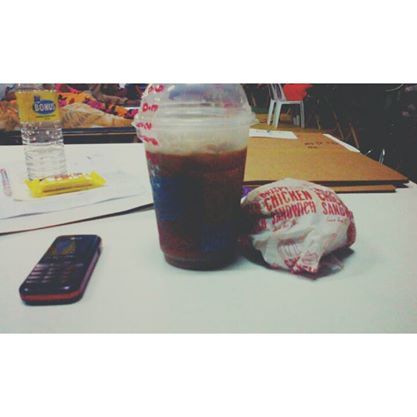
And by extraordinary, I mean McDonald’s.
I realise that a charitable medical mission involving important surgical care might seem an unusual setting for a story about fast food. But I have always believed that some of life’s most memorable encounters begin with completely ordinary conversations, particularly when one of the people involved happens to be hungry.
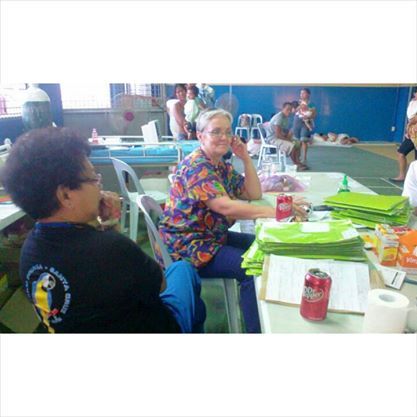
During the mission, I met Ms Tena, a nurse from Las Vegas. She was among the people involved in the programme, and I remember her particularly because of a conversation that began with an apparently harmless question about my jacket. She noticed that I was wearing one even though the surroundings did not seem particularly cold and asked why.
Now, I would like to claim that I responded with an exceptionally intelligent explanation, perhaps involving temperature regulation, personal comfort, and an impressive vocabulary acquired through years of education.
Unfortunately, my actual answer was considerably less sophisticated.
I told her that it had been cold an hour earlier.
That was it.
A perfectly sincere statement, delivered with the confidence of somebody who had apparently forgotten that weather conditions can change. She laughed, and I suddenly became aware that I had contributed an unexpectedly amusing answer to what should have been an ordinary question. To make matters more entertaining, I was having difficulty following some of her expressions because of her American accent and unfamiliar slang.
My English had survived nursing school, professional conversations, and countless written examinations, yet there I was, struggling to keep up with an informal exchange about a jacket.
I suppose language has a habit of becoming more complicated when one is tired, hungry, and unexpectedly required to explain a decision that had seemed entirely reasonable until somebody questioned it.
I began feeling slightly awkward, particularly because I did not want to prolong a conversation in which my contributions were becoming progressively less impressive. I decided that the most sensible solution would be to excuse myself politely and go downstairs to find something to eat.
Noodles, preferably.
After all, hunger seemed far more manageable than another attempt to explain my relationship with the temperature.
But before I could proceed with my culinary mission, Ms Tena surprised us by offering to treat the group to a snack. I had not expected the invitation, and I was delighted by her thoughtfulness. When she asked what we would like to eat, I decided that after my previous conversation about the jacket, there was very little benefit in pretending to be unusually mysterious or difficult to understand.
So I answered honestly.
I was hungry.
And so were my workmates.
I suspect the directness of that statement may have been the most effective communication I managed during our entire conversation.
There is something wonderfully uncomplicated about admitting that you need food after a long day. No elaborate explanation is required, no impressive vocabulary is necessary, and most people seem capable of understanding the universal language of an empty stomach. The conversation soon turned towards what was available, and because it was late, our options were limited.
Then came the answer to our collective hunger.
McDonald’s.
Apparently, it was the only fast-food establishment still open at that time, which made the decision wonderfully straightforward. There would be no complicated debate over restaurant preferences, no need to examine several menus, and certainly no additional opportunity for me to embarrass myself while trying to understand unfamiliar expressions.
McDonald’s it was.
I cannot fully explain why this particular incident amused me so much. Perhaps it was the unexpected kindness, the absurdity of my jacket explanation, or the delightful discovery that a conversation I had been trying to escape had somehow resulted in free food for our group. Whatever the reason, it became one of the moments I remember most fondly from the mission.
Thank you, Ms Tena!
I appreciated the snack, of course, but I also appreciated the generosity behind it. She had no obligation to treat us, and the offer came as a pleasant surprise at the end of a demanding day. It reminded me that thoughtful gestures do not always need to be extraordinary to become memorable. Sometimes a small kindness, offered at just the right moment, can make people feel appreciated.
There was also something reassuring about meeting a nurse from another country and recognising how easily professional experiences can bring people together. We may have different backgrounds, accents, and ways of expressing ourselves, but we share responsibilities and interests connected to the care of patients. I enjoyed the opportunity to meet people whose experiences extended beyond the hospital environment I was familiar with, even if my conversational abilities occasionally required assistance from laughter and an emergency supply of noodles.
I hope that as I continue developing my nursing career, I will encounter more opportunities to learn from professionals working in different settings. There is so much I have yet to understand about the profession, and I am curious about the experiences that may eventually shape my own practice.
For now, however, I am grateful for the little things this mission has already taught me.
I learned more about the practical demands of organising preoperative care for a busy charitable surgical programme. I saw how important documentation and clear instructions were in preparing patients safely. I appreciated the coordination among healthcare professionals and volunteers, and I recognised how a medical mission can help families access services that might otherwise be difficult to obtain.
I also learned that forty charts a day can make my fingers question their continued participation in nursing.
I learned that coffee remains a popular companion among tired healthcare workers, although it should not be mistaken for a substitute for proper rest.
I learned that a horror movie can provide rather questionable entertainment during a break.
And I learned that wearing a jacket in warm weather may eventually lead to a conversation with a generous nurse from Las Vegas and an unexpected meal from McDonald’s.
I suppose no nursing textbook could have prepared me for that particular combination.
As I think about the children and families who attended the mission, however, I am reminded that our amusing experiences were only a small part of a much more significant undertaking. The purpose of Operation Smile was to provide appropriate surgical care to people who needed it, and I was grateful to contribute to the preparation involved. It is important to remember that children born with cleft conditions are not defined by their appearance or diagnosis. They are individuals with their own personalities, abilities, interests, and futures. Surgical care may address particular functional or anatomical needs, but their dignity and value are not dependent upon undergoing a procedure.
I hope that the families involved received the information and support necessary to make informed decisions about care. I hope those requiring follow-up services can access them appropriately, and that the mission’s work continues to contribute positively to the communities it serves.
I do not know the individual outcomes of every patient we helped prepare, and I would never claim that our participation guaranteed a particular result. Surgical programmes involve assessment, clinical decisions, and ongoing responsibilities that extend beyond the work of a preoperative volunteer. But I am grateful to have contributed to one part of that process.
Perhaps that is what I find most meaningful about the experience.
I came because my schedule happened to be free and because I wanted to remain useful while waiting for news about my job application. I did not expect to gain such a memorable collection of professional and personal experiences. Yet the invitation introduced me to a charitable programme, allowed me to work with colleagues and visiting healthcare professionals, and gave me an opportunity to continue practising skills connected to my profession.
I had been worried about what I would do while waiting for the next stage of my career.
And then something worthwhile presented itself.
As a Christian, I cannot help seeing that timing as an answer to prayer. I had asked God for guidance and an opportunity to do something useful, and the hospital contacted me when I happened to be available. I do not pretend to understand every circumstance or believe that an unexpected opportunity automatically explains God’s intentions. But I am grateful for the way events unfolded, and I choose to recognise the experience as one of the blessings that arrived during an uncertain period.
Sometimes we become so concerned about the opportunities we are waiting for that we fail to appreciate those already available.
I know I am guilty of that.
I have been thinking about my job application, wondering what the result will be and how it might influence my professional plans. I have already submitted my resignation, so the uncertainty feels particularly personal. There are questions about where I will work next, what responsibilities I may encounter, and whether the decisions I have made will lead towards the future I hope to build.
I do not have all the answers yet.
But perhaps waiting does not mean that everything else must remain suspended.
The mission reminded me that I can continue learning and contributing while the next opportunity remains undecided. I do not need to know the entire direction of my career before appreciating the work available to me today.
There is a certain freedom in that thought.
I have always been ambitious about becoming a better nurse, but ambition can sometimes make me impatient. I begin thinking about future goals, imagining where I would like to be, and wondering whether I am progressing quickly enough. Then something unexpected happens, and I discover that an experience I had not included in my plans can teach me something valuable.
Perhaps I should leave a little more room in my schedule for surprises.
Although, if the surprises involve forty charts a day, I would appreciate advance notice so my fingers can prepare their formal objections.
I am also reminded of how much I have changed since beginning my professional journey. Last year, I was excited about returning to hospital practice after a period away from regular clinical duties. I entered orientation with curiosity, enthusiasm, and a considerable number of questions about the departments I would be assigned to. I met new colleagues, experienced different hospital areas, and gradually became more confident in carrying out nursing responsibilities.
Since then, I have encountered demanding shifts, challenging situations, and opportunities that have encouraged me to reconsider what professional development involves.
Now, another chapter is beginning to take shape.
I have resigned from my previous position, applied for another opportunity, and am waiting to discover what happens next. I feel excited about the possibilities, but I also recognise the uncertainty involved. I cannot predict exactly where the coming months will take me.
Yet participating in Operation Smile has reminded me that the experiences which influence our lives do not always appear in the order we expect.
I had imagined that my period between jobs might involve little more than waiting and thinking about the future. Instead, it included a medical mission, a new professional experience, unfamiliar colleagues, and a collection of memories involving coffee, charts, children, and an unexpectedly generous nurse.
Perhaps the most interesting chapters are sometimes the ones that begin without our permission.
As the mission came to an end, I felt grateful that I had accepted the invitation. I was tired, certainly, and I had gained renewed respect for anyone whose work involves extensive handwritten documentation. But beneath the exhaustion was the satisfaction of having contributed to a meaningful programme and the pleasure of knowing that the time I might otherwise have spent worrying about my application had been used constructively.
I hope I will have opportunities to volunteer again.
There is something valuable about working alongside people who share an interest in providing care beyond the ordinary boundaries of their daily employment. Medical missions require considerable preparation, resources, and coordination, and their success depends upon the efforts of many individuals. Being part of that environment has broadened my appreciation for the different ways healthcare professionals can contribute to their communities.
I also hope that I will remember the importance of being approachable and considerate towards colleagues, particularly those who are still developing their confidence. A kind word, a little guidance, or an unexpected gesture of generosity can make a demanding day more pleasant. Ms Tena probably regarded our conversation as a perfectly ordinary interaction, but I shall remember it with considerable affection, partly because of the laughter and partly because of the thoughtfulness she showed our group.
And because McDonald’s was involved.
I must be honest about that.
There are experiences we remember because they are professionally significant, and there are others that remain in our minds because something delightfully ridiculous happened at the right moment. This mission managed to provide both. I learned from the clinical responsibilities, appreciated the opportunity to contribute, and collected a handful of amusing memories that I shall probably continue retelling whenever the subject arises.
I suspect my workmates will remember the jacket incident for quite some time.
I may never entirely escape it.
But perhaps that is the price one pays for answering an ordinary question with an explanation that becomes less convincing the longer one considers it.
As I finish writing this entry, I find myself returning to the prayer I offered before the hospital contacted me. I had been uncertain about my employment situation, hoping that something useful would occupy my time while I waited. I did not know that the opportunity would involve a medical mission, nor could I have anticipated the experiences it would bring.
I simply wanted something meaningful to do.
And I was given an opportunity to serve.
For that, I am grateful.
I do not know whether my job application will be successful, what decisions I will eventually need to make, or which hospital corridors I may find myself walking through in the coming months. But I hope that wherever I go, I will remain willing to learn, accept opportunities to contribute, and recognise the value of working alongside people whose experiences differ from mine.
I also hope I never become so preoccupied with the next achievement that I fail to appreciate the ordinary blessings surrounding the present.
Perhaps that is why the title Mission Accomplished feels appropriate.
Not because I have completed every ambition or resolved every uncertainty in my life. Certainly not because I can claim responsibility for the entire medical mission. The programme involved a dedicated team of professionals and volunteers, and my role was only one part of their collective work.
But I accepted an opportunity, fulfilled my assigned responsibilities, learned something useful, and returned home grateful for the experience.
For now, that is an accomplishment worth remembering.
And should I ever begin worrying again that God has forgotten my prayers, perhaps I will return to this entry and remember the remarkable sequence of events that followed an ordinary request for something meaningful to do.
A telephone call from the hospital.
A medical mission.
Forty patients a day.
A collection of thoroughly exhausted fingers.
A nurse from Las Vegas who questioned my jacket.
And a late-night meal from McDonald’s.
It would be difficult to invent a more unexpected answer.
June 16, 2014 — with gratitude to Adventist Hospital Cebu, Operation Smile, the medical mission team, my supportive workmates, and Ms Tena for the kindness I will remember long after the paperwork has been filed away.
— Just Anj, RN, currently awaiting her next professional assignment with grateful memories and fingers requesting a well-deserved holiday.


































Leave a Reply