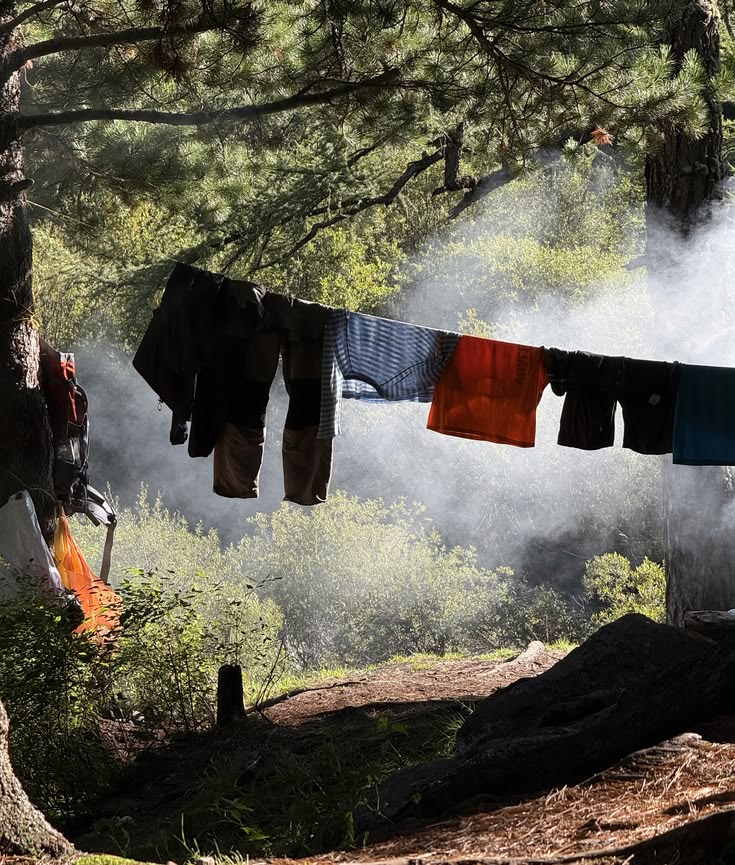
The smoke arrived before breakfast. I had just finished hanging a few freshly washed clothes outside, having performed the usual domestic negotiation with a clothesline considerably shorter than my ambitions. The morning looked promising: sunlight, a little wind and the reassuring possibility that the laundry might actually dry before the sky changed its mind. Then a peculiar smell drifted over the fence.
At first, I assumed somebody was cooking. That was not unreasonable because a Filipino morning can carry an impressive mixture of smells: garlic hitting hot oil, dried fish, coffee, damp soil and occasionally something so thoroughly cooked that identifying the original ingredients would require forensic assistance. But this was different. Somebody nearby was burning dried leaves, and the smoke rose into the air, considered its options and travelled directly towards my laundry.
I stood beneath the clothesline watching the situation unfold with the particular irritation reserved for problems that technically belong to somebody else but have somehow arrived in your own morning. The shirts swayed, the smoke settled and my freshly washed clothes became unwilling participants in the neighbour’s gardening arrangements. There are few things more personally insulting than doing laundry only to have somebody else immediately provide it with a completely new fragrance.
I considered complaining, then immediately imagined the conversation. I would say, “Your smoke is reaching our clothes,” and the neighbour might reasonably reply, “But I am burning leaves in my own yard.” Both statements would be true, which was exactly the problem. The leaves belonged to the neighbour, the yard belonged to the neighbour and presumably the decision about what happened inside that property belonged to the neighbour too. The air, unfortunately, had never agreed to respect property boundaries.
It travelled over the fence, entered another household’s space and carried the consequences of one person’s decision into somebody else’s morning. I looked at the fence, which remained a perfectly respectable structure and completely useless against smoke. That was when I began wondering whether our understanding of ownership sometimes ends precisely where responsibility should begin.
We are accustomed to dividing the world into things that belong to us and things that belong to other people. My house, your garden, their land, our belongings and someone else’s property are useful distinctions because ownership allows us to organise responsibilities, establish boundaries and make decisions about things we legitimately possess. Without those rules, ordinary life would quickly become a prolonged disagreement over who was entitled to use the same chair.
But ownership cannot explain every obligation we have towards one another because much of what makes ordinary life possible is shared. Air, water, roads, public spaces, neighbourhood quiet and the wider environment do not fit neatly into the categories of mine and yours. We may not own them individually, yet our decisions can still improve or damage them.
Personal freedom becomes more complicated for the same reason. I should be able to make decisions inside my home, spend my money, arrange my possessions and live without asking the entire neighbourhood for permission. But freedom changes character when the effects of my decision extend beyond me.
A neighbour plays music loudly enough to fill several houses. A motorist parks across a walkway. Someone drops rubbish in a public place. A business disposes of waste carelessly. Each person may have reasons for what they are doing, but those reasons do not eliminate the inconvenience transferred to other people.
The difficult question is not whether people should have freedom, because they should. The question is what freedom requires when several people must occupy the same environment at the same time.
Filipino karaoke offers an excellent demonstration. There is something wonderfully optimistic about a machine that allows any ordinary citizen to become the lead performer at an imaginary concert. Talent is optional, confidence is essential and occasionally the singer’s determination exceeds the neighbourhood’s willingness to participate.
A birthday begins, the speakers switch on and everybody enjoys themselves. Eventually, the music becomes loud enough that neighbouring households can identify the song without leaving their bedrooms. Meanwhile, someone next door may be studying for an examination, another person may be sleeping after work and somebody else may be trying to settle a young child.
Nobody has necessarily done anything malicious. One household wants to celebrate, while another needs quiet. Neither interest is ridiculous. The challenge lies in allowing both to exist with reasonable consideration.
I do not think the solution is to abolish karaoke or treat celebration like a civic offence. That would make life unnecessarily miserable. But volume, timing, duration and communication matter because living in a community means recognising that other people’s lives continue even when we are enjoying ours.
What interests me is how obvious this becomes when we are the ones being inconvenienced. If somebody else creates noise, we immediately understand why consideration matters. When we create it, however, we suddenly possess excellent explanations. It is a special occasion, it will only last a while, everyone does it and people should understand.
Sometimes those explanations are reasonable. But perhaps the same courtesy we expect from others should influence the standards we apply to ourselves.
There is a useful economic idea hidden inside these ordinary disputes. Economists use the term externality for costs or benefits that fall on people who were not directly involved in a decision. The term sounds technical, but the experience is extremely familiar.
Someone enjoys the convenience of leaving rubbish somewhere inappropriate, while everyone else gets the uglier surroundings. A driver enjoys convenient parking, while pedestrians are forced to move around the vehicle. A household avoids dealing properly with waste, while neighbours receive the smoke or smell.
The person making the decision receives the immediate benefit, while part of the cost lands elsewhere. Because that cost is distributed among other people, the person responsible may feel less pressure to prevent it.
One wrapper seems insignificant. One cigarette butt, one blocked walkway, one noisy household or one piece of rubbish beside the road appears small. But communities are built from repeated small decisions, and the same is true of community problems.
A road becomes dirty through many individual acts. Drainage becomes obstructed through accumulated waste. Public spaces deteriorate not because one person destroyed them dramatically but because enough people decided that their own contribution was too small to matter.
That contradiction fascinates me because we complain about dirty surroundings while tolerating behaviours that create them. We want peaceful neighbourhoods yet occasionally grant ourselves exemptions from the rules that would produce one. We want clean waterways while assuming our own discarded rubbish will somehow become somebody else’s issue.
“One small thing cannot matter” sounds convincing until thousands of people use exactly the same sentence.
One action may be minor. A million versions of it are not.
This connects with the idea commonly called the tragedy of the commons, where people using a shared resource may each have incentives to maximise their own benefit while the collective resource gradually deteriorates. The classic example involves shared grazing land: each person benefits from adding another animal, but if everyone continues increasing use without considering the pasture’s limits, eventually the pasture itself suffers.
The principle can apply to fisheries, water supplies, public spaces and environmental systems, but it should not be misunderstood as proof that shared resources are doomed. Communities can and do create rules, traditions, expectations and institutions that allow people to cooperate effectively.
That point matters because the problem is not simply that humans are selfish. Cooperation often requires structure. Clear rules matter, fairness matters, trust matters and people are generally more willing to contribute when they believe others will contribute too.
Imagine a shared water source. Everyone benefits from it remaining clean and functional, but maintenance still requires somebody to notice problems, organise repairs, contribute money or labour and discourage misuse. If a small group carries all of that responsibility while everyone else enjoys the benefits, resentment eventually becomes predictable.
Shared use therefore requires some form of shared responsibility. Common resources do not maintain themselves merely because everybody agrees they are useful.
I think about public waiting areas for the same reason. Someone arrives, finds a clean bench, eats a snack and leaves the wrapper behind. The next person finds the space slightly less pleasant, while a cleaner later has additional work because somebody decided that carrying one wrapper to a bin was more inconvenient than leaving the problem for someone else.
The action takes seconds. The consequence continues after the person has gone.
Perhaps respect for public spaces reveals something about how we understand strangers. At home, we recognise responsibility because we live with the results. We clean, maintain things and protect belongings because neglect eventually returns to us personally.
Public spaces create distance from the consequences. Someone else will clean, repair or manage the problem. I sometimes think someone else may be one of the most dangerous phrases in civic life because it transforms a real person into an imaginary public service creature whose entire purpose is to absorb responsibilities we find inconvenient.
That “someone else” is usually a cleaner, maintenance worker, neighbour, volunteer or local employee. The work does not disappear when we ignore it. It simply moves into somebody else’s hands.
This is where I think bayanihan deserves a broader interpretation. We often celebrate it when communities come together during emergencies, and rightly so. People donate money, provide food, help rebuild or respond when someone is struggling.
But there is also a much less dramatic form of bayanihan in prevention. It looks like disposing of rubbish properly, respecting common facilities, following reasonable community rules, reducing unnecessary disturbances and contributing fairly to maintenance.
Nobody takes photographs of a person throwing a wrapper into the correct bin. No certificates are awarded for leaving a pavement unobstructed. Yet communities may depend more heavily on those ordinary acts of consideration than on occasional heroic interventions.
A pleasant neighbourhood is often built through accumulated thoughtfulness. An unpleasant one can be built through accumulated disregard.
That is one reason I think citizenship should mean more than nationality, passports and formal rights. Those things matter, but citizenship also involves participating in shared life. Do we understand that our decisions affect people we may never meet? Do we use common resources with reasonable care? Do we expect standards from others that we routinely ignore ourselves?
These may look like small questions compared with large debates about national development, but wider problems often interact with ordinary habits. Good institutions matter enormously, and individual courtesy cannot replace functioning government. At the same time, responsible citizens and functioning institutions should support rather than excuse one another.
A drainage system must be properly designed and maintained, while residents should also avoid blocking it with rubbish. Roads require planning and regulation, while drivers still need to use them responsibly. Public spaces require investment, while users need to treat them as though they are worth preserving.
Institutional failure should not be blamed entirely on ordinary people, and personal responsibility should not disappear simply because government has obligations too.
Fairness also requires recognising that responsibility is not always equal. A large industrial source of pollution cannot reasonably be treated as equivalent to one household’s small contribution. A family without reliable waste collection does not face the same circumstances as someone with easy access to proper disposal who simply cannot be bothered.
Responsibility should reflect power, resources, alternatives and the scale of consequences. Telling everybody to behave better is easy. A more serious approach asks whether people have realistic opportunities to do so.
The question becomes even larger when future generations enter the picture. A river may serve people today and people who have not yet been born. Trees planted now may provide shade long after the planter is gone, while pollution created today may remain after the person responsible has moved elsewhere.
Future generations cannot participate in our decisions. They cannot object to damaged ecosystems or vote against choices whose consequences they will inherit. Yet their lives may be shaped by what we leave behind.
That creates a responsibility that looks a little like stewardship. We inherit environments, infrastructure and resources shaped by earlier generations, use them during our own lives and eventually pass whatever condition remains to others.
Not every inheritance has a title deed.
Clean water is an inheritance. A functioning drainage system is an inheritance. Trees that continue providing shade and public spaces that remain usable are forms of wealth even when nobody can put them inside a bank account.
Filipino families understand this instinctively in other contexts. Parents save, maintain property, invest in education and make decisions intended to improve the lives of children who may not yet understand the sacrifice involved. Environmental responsibility may belong to the same moral family.
Thinking at that scale can feel overwhelming because environmental problems are enormous. Pollution, resource depletion and climate change involve political, scientific and economic systems that no single household can solve.
That limitation is real.
One person recycling carefully will not repair an entire environmental system, just as one person littering does not explain every national problem. But the inadequacy of individual action alone should lead us towards coordinated responsibility, not towards pretending individual conduct is irrelevant.
Personal habits, community initiatives, public policy and institutional regulation operate at different scales. None should be expected to replace all the others.
I find this easiest to understand through a shared household. Imagine several people using the same kitchen. Everyone benefits from clean surroundings and everyone contributes some degree of mess. If one person announces that their share of the total disorder is too small to matter and therefore they no longer need to wash dishes, the argument may sound technically sophisticated.
It will also make them extremely unpopular.
If everybody adopts the same principle, the kitchen becomes impossible to maintain. Cooperation depends on recognising that small responsibilities remain meaningful when many people share the same space.
A neighbourhood is simply a larger version of the problem, a city larger still and perhaps the planet the largest shared household we possess. Unfortunately, it has a notable shortage of alternative accommodation.
Environmental responsibility is therefore not merely about preserving attractive scenery. A clean river, shaded road or rubbish-free beach certainly makes life more pleasant, but the environment also supports health, food, water, transport, housing and livelihoods.
When shared resources deteriorate, the consequences are often unequal. Wealthier people may have alternatives. They can relocate, purchase private services or avoid certain spaces. People with fewer resources may have no such options.
Neglecting shared resources can therefore deepen existing inequalities because those with the least choice often bear the greatest inconvenience.
That turns environmental responsibility into a question of fairness rather than simply tidiness.
Eventually, I return to the smoke drifting towards my clothesline. The neighbour may have considered burning leaves an ordinary way to clear the yard. Perhaps they assumed the smoke would disperse quickly or simply had not thought about neighbouring laundry.
I cannot know their reasoning.
The smoke reached the clothes anyway.
That may be one of the most important things about shared environments: consequences do not always respect intention. The smoke does not become less irritating because the person responsible had a practical reason. Noise does not disappear because the celebration was important, and rubbish does not become harmless because the person who dropped it was in a hurry.
Intentions can help us understand behaviour, but they do not erase every effect.
Responsible freedom, then, may require thinking beyond what we are technically allowed to do and considering where the consequences travel. That does not mean eliminating every inconvenience we create because such a standard would be impossible. Children make noise, families celebrate, vehicles travel, homes require maintenance and everybody occasionally inconveniences someone.
A community without disturbance would probably be a community without much life.
Consideration means distinguishing unavoidable inconvenience from unnecessary disregard. We can communicate, adjust timing, reduce excessive impact and listen when somebody tells us our choices are affecting them.
There is something deeply civilised about that ordinary willingness to consider people beyond ourselves. It does not require extraordinary generosity, only the recognition that some private decisions produce public consequences.
The morning eventually improved. The smoke thinned, the sun continued working and I inspected the laundry with the cautious optimism of someone examining the aftermath of a minor domestic disaster. Most of the clothes were fine, although one shirt had acquired the faint aroma of having spent the morning socialising with a bonfire.
I considered washing it again, which felt deeply unfair considering I had already completed the task once. The neighbour’s yard was now clear. My laundry, less so.
Standing beside the clothesline, I began thinking about the strange limitations of fences. We build them to mark property, walls to create privacy and gates to control access. These boundaries are useful because they allow us to organise our lives.
But some of the most important things surrounding us refuse to recognise them.
Air moves, water flows, sound travels and pollution spreads. The consequences of ordinary choices often extend far beyond the place where the choice was made.
Perhaps responsibility therefore cannot always stop at the property line. We may own the garden, house, clothesline or trees growing beside them, but we do not own the atmosphere into which our actions travel. Nor can we assume that whoever happens to live beyond our fence should quietly accept whatever reaches them.
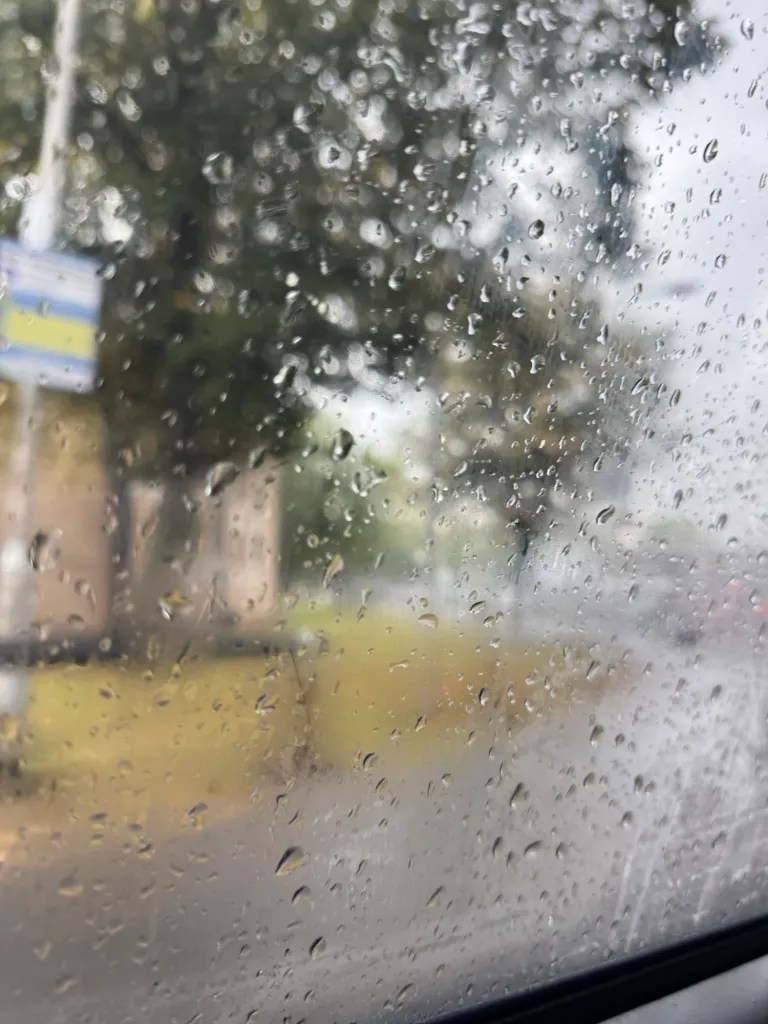
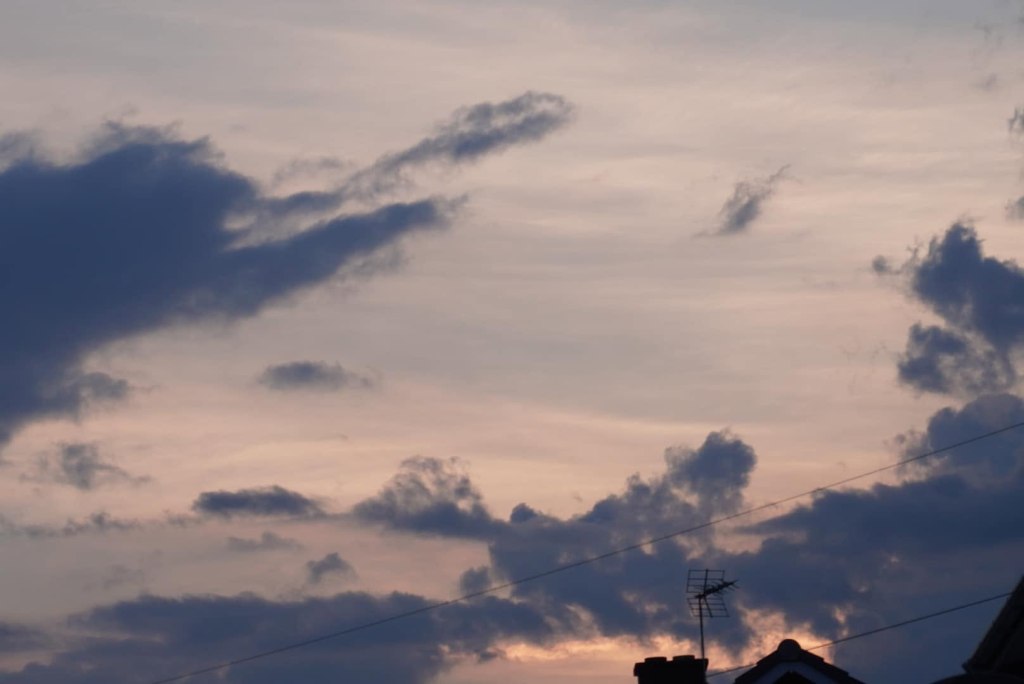
I looked towards the sky and noticed clouds gathering in the distance. Soon the rain might return, falling on our roof and the neighbour’s roof without consulting either household. It would move through the street, enter the drains and eventually join systems no single person could reasonably claim as their own.
I wondered how different communities might look if we treated shared things with the same care we give things we personally purchase. Perhaps we would begin seeing freedom and responsibility less as opposing ideas and more as parts of the same arrangement that makes living beside other people possible.
As for the shirt, I took it down and accepted that it would probably need washing again. It was a small inconvenience, an ordinary morning and a surprisingly effective reminder that the world is far less divided than our fences suggest.
I folded the clothesline away and glanced once more towards the neighbouring yard. Perhaps I would have the conversation after all, politely and preferably when nobody was burning anything. Because the important question was never simply who owned the leaves or who had the right to use the garden.
The better question was whether we understood that what we release into the world may eventually become someone else’s problem. And if it travels beyond our own gate, perhaps our responsibility should be willing to travel with it.
Still looking beyond the fence,
Anj
featured photo source:Таня
























Leave a Reply