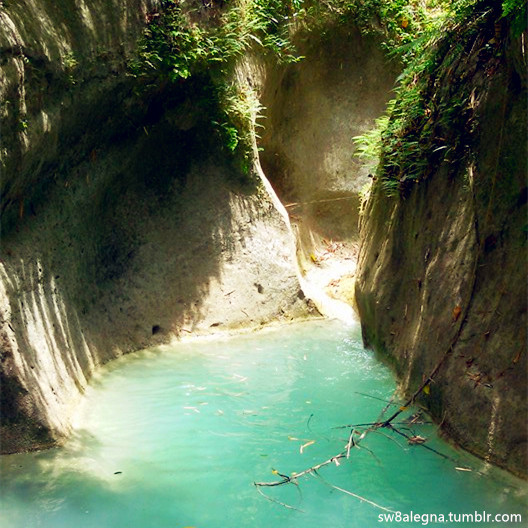
Episode 2 | April 2016 — Dau Falls, Samboan, Cebu, Where the Road Ended, the Complaints Began, and Nature Had the Last Laugh
I have a growing suspicion that waterfalls possess a rather peculiar sense of humour. They appear in travel photographs looking wonderfully innocent, surrounded by magnificent greenery, with water cascading gracefully over rocks as though their only purpose in life were to provide humanity with a beautiful place to admire. What the photographs rarely mention is that some waterfalls seem to consider themselves exclusive establishments, accessible only to visitors willing to surrender a considerable amount of energy, patience, and whatever dignity remains after an hour of walking beneath the Philippine sun. Had I known that our second destination in southern Cebu intended to conduct a practical examination of my physical endurance, I might have negotiated the terms of our adventure more carefully. Unfortunately, my cousins and I had already embraced the title of waterfall chasers, and apparently, once you have publicly declared yourself an adventurer, requesting a comfortable chair halfway through the expedition becomes a little embarrassing.
Our first stop at Aguinid Falls had been a wonderful introduction to the natural attractions of Samboan. Its multi-tiered cascades, beautiful rock formations, and surrounding greenery had given us plenty of reasons to appreciate southern Cebu. Naturally, after completing that experience, a group of sensible people might have decided to rest, enjoy a good meal, and spend the remainder of the day admiring photographs of other waterfalls from a safe and comfortable distance. My cousins and I, however, had already developed an unfortunate enthusiasm for exploring. With the confidence of people who had not yet fully considered the consequences, we proceeded towards our second destination, Dau Falls.
Located in the mountain barangay of Suba, in the more remote area around Mount Bartolina, Dau Falls offered a different experience from Aguinid. Whereas our first destination had introduced us to a series of waterfall levels along the Tangbo River, Dau required a longer journey into a less accessible landscape. There was something appealing about the idea of discovering a waterfall tucked away in the mountains, removed from the familiar roads and more developed surroundings. I imagined a beautiful natural setting, refreshing water, and the satisfaction of reaching somewhere that felt wonderfully secluded. What I had not properly imagined was the amount of walking required before any of those rewards became available.
The late-morning sun was already performing its duties with considerable enthusiasm when we began our trek. Anyone who has experienced summer in Cebu will understand that the heat can become remarkably persuasive, especially when one is walking through open terrain without much protection from the sunlight. There are temperatures that encourage people to seek shade, cold drinks, and the nearest electric fan. Then there is the sort of heat that makes you question why you voluntarily left a perfectly acceptable indoor environment. Unfortunately, the landscape surrounding Mount Bartolina seemed entirely uninterested in accommodating our preference for cooler weather, and we continued along the route with the growing realisation that our second waterfall adventure would demand considerably more effort than we had anticipated.
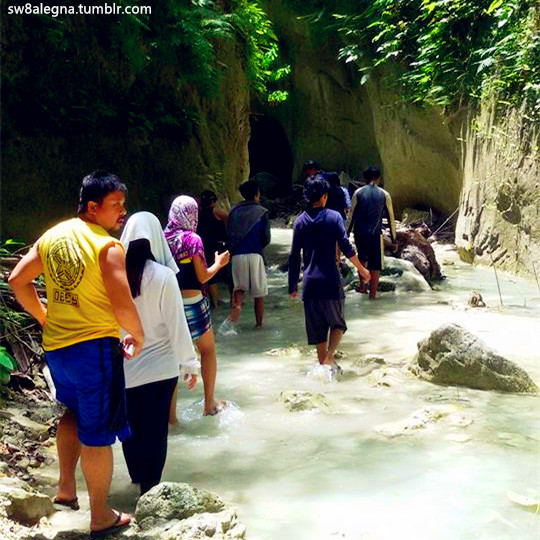
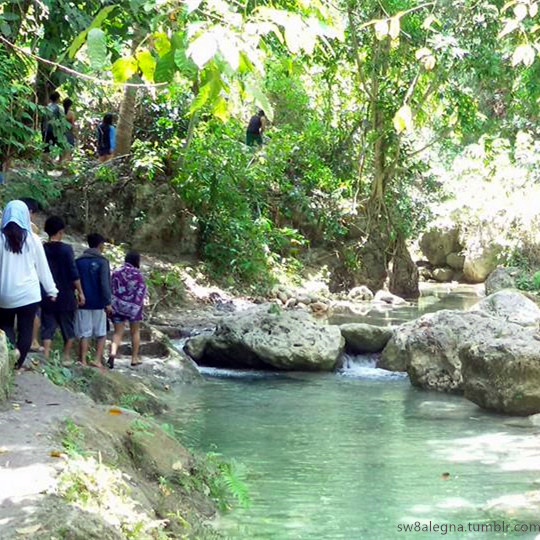
After walking for some time, I began entertaining the possibility that Dau Falls had deliberately concealed itself somewhere beyond the limits of reasonable human enthusiasm. We had been trekking for more than an hour, yet our destination remained out of sight. The surroundings were beautiful, certainly, but beauty becomes a slightly more complicated subject when your body is concentrating on the practical business of continuing forward. My appreciation for nature remained intact, although it was occasionally interrupted by an urgent desire to know how much farther we needed to travel. I suspect the phrase hapit na ta? becomes increasingly philosophical when repeated during a long trek, because the answer depends entirely upon what the person responding considers a reasonable definition of near.
There is a particular kind of optimism that accompanies the beginning of an outdoor adventure. During the first few minutes, everybody seems enthusiastic, conversations flow easily, and even the warm weather can be interpreted as part of the summer atmosphere. After enough walking, however, the human body begins expressing opinions that were not included in the original itinerary. Feet become more noticeable, the sun develops an increasingly personal relationship with one’s forehead, and the prospect of encountering a comfortable place to rest begins to sound almost luxurious. I cannot claim that we maintained the composure of professional mountaineers throughout the expedition, but I can say that the journey certainly gave us an opportunity to discover how much determination we possessed when the promised waterfall remained somewhere beyond the next stretch of trail.
Despite the physical demands, I found myself appreciating the remoteness of the surroundings. The farther we travelled, the more the ordinary distractions of town life seemed to recede. There were no shopping centres, no familiar city traffic, and no convenient establishments announcing the availability of refreshments every few metres. The landscape required us to pay attention to the route, the terrain, and the guidance available to us. In a way, that made the experience more memorable. We were visiting a natural attraction that had not been arranged entirely around the convenience of travellers, and reaching it meant acknowledging the character of the environment rather than expecting the environment to adjust itself according to our preferences.
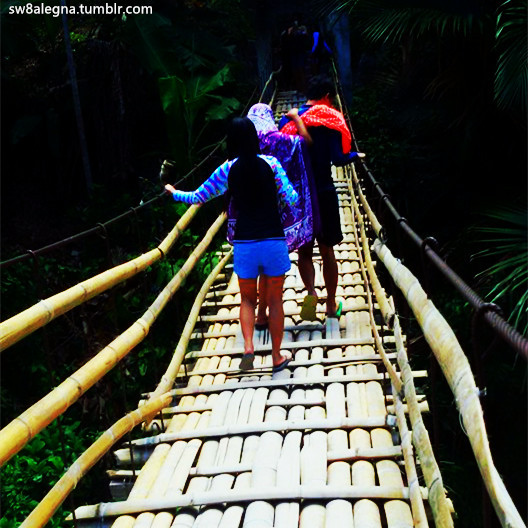
One of the most interesting features along the route was a bamboo bridge crossing the river. I have always found bridges fascinating because they represent such a practical response to a simple human problem: how do we reach the other side without making an unnecessarily complicated journey? This particular bridge was especially interesting because of what our local guide told us about its history. According to him, it had originally been constructed to make crossing easier for farmers and schoolchildren travelling between neighbouring barangays, sparing them the need to wade through the river below. Suddenly, what might have appeared to a visitor as an attractive feature of the trekking route became something far more meaningful.
I began thinking about how differently people can experience the same structure. To us, the bamboo bridge was an interesting part of a summer adventure, something worth admiring and perhaps photographing before continuing towards the falls. But for the people who depended upon that crossing in their ordinary routines, its purpose was much more practical. It offered a way to move between communities, reach destinations, and carry out responsibilities without having to cross directly through the water. Farmers and schoolchildren were not using it because they wanted an unusual travel photograph. They had places to reach, work to accomplish, and everyday journeys that deserved to be made safer and more convenient.
Working in community development has made me more attentive to details like that. As a Community Empowerment Facilitator with DSWD’s KALAHI-CIDSS programme, I have been learning how important local infrastructure and community participation can be in people’s daily lives. Something that appears modest to a visitor may have considerable value to those who use it regularly. A bridge does not need to be enormous or architecturally extravagant to matter. Its usefulness may be measured in journeys made easier, opportunities reached, and the ordinary difficulties it helps people avoid. Hearing our guide explain the bamboo bridge reminded me that travelling provides opportunities to understand places beyond their attractiveness as tourist destinations.
I thought about the schoolchildren using the crossing and how easily those of us who live closer to familiar facilities can overlook the effort involved in reaching school or carrying out everyday responsibilities in more remote communities. A route that becomes part of our recreational adventure may be somebody else’s ordinary journey. We were walking towards a waterfall because we wanted an enjoyable summer experience, but residents of the area had their own reasons for travelling through the landscape. That distinction stayed with me because it revealed something important about the places we visit. Their value extends beyond the memories tourists take home, and their features often possess histories connected to the practical needs of the communities surrounding them.
Of course, my admiration for the bridge did not eliminate the challenge of continuing our trek. There were still slippery sections to negotiate and difficult parts of the route demanding attention. As we made our way towards the falls, the terrain became a reminder that the beauty of a natural environment should never make visitors careless about their surroundings. Wet surfaces and steep sections require appropriate caution, particularly when the route includes uneven footing and challenging steps. I was grateful to have local guidance, and I became increasingly convinced that the most sensible travellers are those who respect their limitations rather than allowing enthusiasm for photographs to persuade them into unnecessary risks.
The route eventually involved descending a slippery pathway and negotiating steps that felt remarkably steep. I remember being aware of the concentration required to move through those sections, particularly after the effort of the long walk beneath the sun. It was the sort of experience that encouraged me to focus upon the immediate task rather than entertain elaborate thoughts about everything else happening in my life. During ordinary days, I am capable of worrying about work, responsibilities, and future plans simultaneously. On a challenging trail, however, the mind becomes wonderfully practical. There is a place to put your foot, a surface to assess, and a good reason to avoid becoming distracted by unnecessary concerns. Apparently, nature had discovered an effective way to interrupt my overthinking, although I would have appreciated a method involving slightly less physical effort.
Then, after all that walking, the landscape finally revealed what we had travelled so far to see.
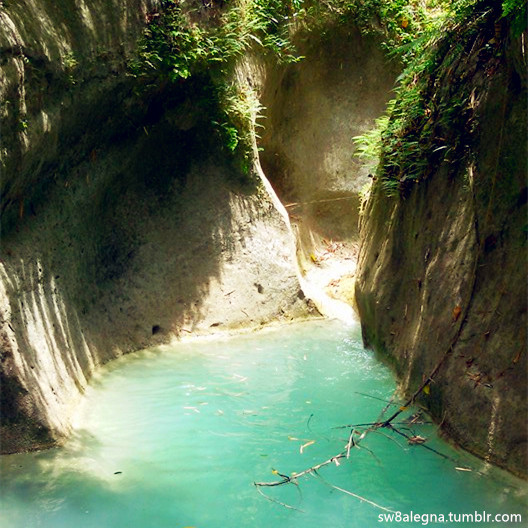
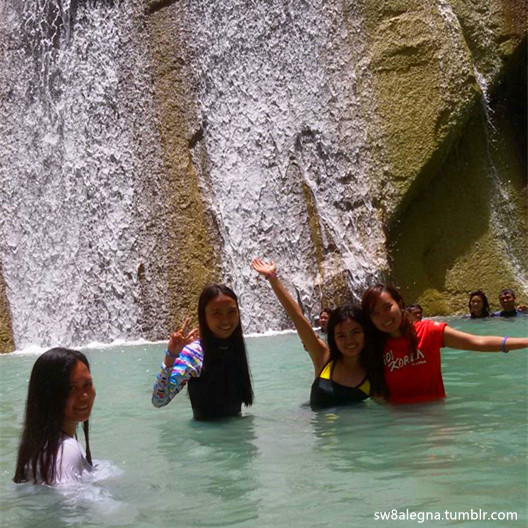
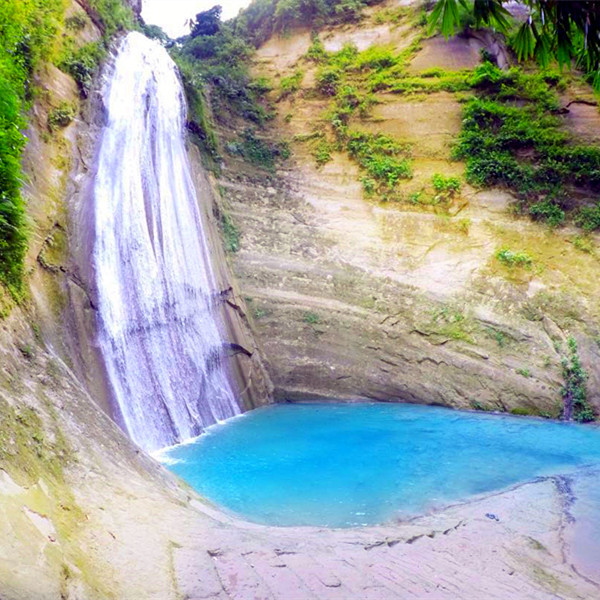
Dau Falls was magnificent. The sight of the waterfall, framed by the surrounding natural environment, made me understand why people were willing to undertake such a demanding journey. Water descended through the rock formations into the beautiful landscape below, creating a scene that seemed almost unreal after the long approach. There was something particularly striking about seeing the falls from a vantage point that allowed us to appreciate their scale and surroundings. The journey had gradually taken us farther from the familiar environment of the road, and now we were looking at a waterfall whose beauty seemed entirely at home within the remote landscape.
I remember feeling that wonderful mixture of amazement and relief that follows a demanding journey. I was impressed by the scenery, pleased that we had finally arrived, and grateful that the destination justified the effort required to reach it. There is a particular satisfaction in seeing somewhere beautiful after travelling a considerable distance on foot. The view becomes associated with the experience of getting there, and the memories of the journey give it a personal significance that a photograph alone might not convey. Had we been able to arrive effortlessly beside the waterfall, I am sure we would still have admired it. But reaching it after more than an hour of trekking gave the moment an entirely different character.
The waterfall seemed almost indifferent to our arrival, which I suppose is one of nature’s more admirable qualities. We had spent considerable energy reaching the place, yet the water continued flowing as it always had, entirely unconcerned about the dramatic relationship developing between my legs and the surrounding terrain. There is something humbling about observing a natural attraction that exists independently of our enthusiasm. We may travel a long distance, admire its beauty, take photographs, and eventually return home, but the waterfall continues its ordinary movement long after we have disappeared from view. Our visit becomes a brief moment within a much larger landscape, and perhaps that is part of what makes the experience so extraordinary.
Looking around, I could understand why Dau Falls deserved its reputation as one of Samboan’s beautiful natural attractions. The remote setting contributed to its character, and the surrounding environment made the waterfall feel like part of a larger natural composition. I have always admired places where the scenery appears to unfold without excessive human intervention, allowing the landscape itself to become the centre of attention. The flowing water, rock formations, and vegetation created an atmosphere that was both refreshing and impressive. After the heat of the trek, even the sight of the water seemed particularly welcome.
I am often amazed by the variety of natural landscapes within Cebu. Our province contains coastal scenery, mountains, rivers, caves, and waterfalls, each offering a different way of appreciating the environment. Yet many of us spend so much time occupied with work and responsibilities that we rarely explore the places waiting within travelling distance. We become familiar with the names of attractions through photographs and recommendations, but there is a difference between knowing a place exists and making the effort to experience it. Our journey to Dau reminded me that the latter sometimes requires patience, planning, and a willingness to leave familiar routines behind.
I also began appreciating how different our first and second waterfall destinations were, despite both being located in Samboan. Aguinid had impressed us with its sequence of cascades and the experience of exploring a multi-level river system. Dau, on the other hand, was memorable partly because of its remote location and the longer trek required to reach the falls. Each offered its own character, and visiting them during the same summer adventure allowed us to experience different aspects of southern Cebu’s natural beauty. I found it interesting that two waterfalls within the same municipality could provide such different memories. One encouraged us to appreciate the changing formations along the river, while the other demanded a longer journey before revealing its impressive view.
There was also something satisfying about sharing the experience with my cousins. A long trek becomes a different sort of adventure when accompanied by people who know exactly how to turn physical inconvenience into family entertainment. I suspect that if I had travelled alone, I might have spent more time quietly contemplating the distance and wondering whether I had underestimated the route. With my cousins, however, there was companionship, conversation, and the familiar possibility that somebody would make an entirely unnecessary joke at precisely the moment when everybody else was concentrating on continuing forward. I appreciate that about our family adventures. Even when the activity becomes demanding, the company gives us reasons to enjoy the journey beyond the destination itself.
I think families develop their own particular language of humour, built from shared experiences and the ability to recognise when somebody is taking themselves far too seriously. My cousins have known me long enough to understand that my enthusiasm for travelling occasionally competes with my desire for comfort. I love beautiful landscapes, but I also appreciate good food, proper rest, and journeys that do not require me to question whether I have accidentally enrolled in a physical endurance programme. Fortunately, they seem willing to tolerate these contradictions, perhaps because they possess a few of their own. A Cousinventure would probably be terribly dull if everybody behaved like a perfectly organised travel professional throughout the day.
As we enjoyed the scenery, I found myself thinking about how the most memorable journeys are not always the easiest ones. We often imagine that a successful holiday should involve complete comfort, convenient arrangements, and the absence of complications. Those things are certainly pleasant, and I have no intention of pretending that unnecessary difficulty automatically makes an experience better. But there are occasions when overcoming reasonable challenges adds another dimension to a journey. Reaching Dau required more time and effort than we had anticipated, yet the experience left us with a vivid memory of the route as well as the destination.
I would not go so far as to suggest that every worthwhile achievement must involve suffering. That would be a rather unfortunate philosophy, especially for someone whose working days already contain enough responsibilities to be tiring. But I do think the experience reminded me that patience can be useful when something meaningful requires more effort than expected. We had chosen to visit Dau, and the long trek formed part of the journey we needed to manage responsibly. The view at the end did not erase the physical demands of getting there, but it gave us another reason to appreciate what we had accomplished together.
The bamboo bridge returned to my thoughts as I considered the experience. We had crossed it as visitors, admiring its construction and listening to our guide explain its practical purpose. But the more I thought about it, the more I appreciated how it represented an entirely different relationship with the landscape. For the people who relied upon that crossing, its importance was connected to ordinary journeys rather than extraordinary adventures. It reminded me that the same environment can present different challenges depending upon why someone is travelling through it. What we consider an exciting trek may be part of another person’s everyday surroundings, and responsible visitors should remember that distinction.
I hope that as tourism continues developing in places such as Samboan, the natural environment and the interests of local communities remain important considerations. Beautiful attractions deserve care, and visitors have a responsibility to respect the surroundings rather than treating them as disposable backgrounds for photographs. I have always believed that travelling should encourage appreciation, curiosity, and a willingness to learn about places beyond their appearance. Dau Falls offered a beautiful view, but the journey also introduced us to a community landscape where practical structures, local knowledge, and everyday experiences formed part of the story.
At the time of our visit, the registration fee for Dau Falls was ₱20 per person. I am including that detail because I remember how useful practical information can be when planning an outing, although fees and visitor arrangements may change over time. A travel diary is wonderful for preserving memories, but it is considerably less reliable as an eternal price list. Anyone planning to visit in the future should confirm the current arrangements, particularly because natural attractions may introduce different requirements concerning access, guides, and environmental protection. Our April 2016 experience belongs to a particular time, and I would rather describe it accurately than pretend every detail will remain unchanged.
As I reflect upon the day, I realise that the trek gave me a different understanding of what it means to appreciate a destination. I had initially been excited about seeing another waterfall, but the journey introduced experiences that became meaningful in their own right. The heat reminded me to respect the demands of the environment, the difficult sections of the trail required concentration, and the bamboo bridge encouraged me to consider the practical needs of the people living nearby. By the time we reached the falls, I was appreciating far more than the view itself. The destination had become connected to the effort of reaching it and the little observations gathered along the way.
Perhaps that is one reason I enjoy keeping a travel diary. Photographs can preserve the appearance of a place, but writing allows me to remember the thoughts and experiences surrounding the images. A photograph of Dau Falls may show its beautiful cascade and natural surroundings, yet it cannot explain how long we walked beneath the sun or how relieved I felt when the destination finally came into view. It cannot preserve every conversation with my cousins or the significance of hearing our guide explain the bamboo bridge. These details may seem ordinary when considered individually, but together they form the experience I want to remember.
I suspect that years from now, when I revisit photographs from our Cousinventure, I will be more amused by the journey than by my present complaints about the physical effort. The heat will probably seem less offensive in retrospect, the long trek may become a source of family humour, and I may even develop the completely unreasonable desire to repeat the adventure. Memory has a remarkable ability to preserve the beautiful parts of an experience while gradually reducing the intensity of ordinary discomfort. I imagine my future self examining the pictures and enthusiastically announcing that we should visit Dau again, conveniently forgetting how strongly I once supported the invention of comfortable transportation.
But perhaps that is perfectly acceptable. The purpose of travelling is not to eliminate every inconvenience from life. It is to experience places, appreciate different surroundings, and make memories that remain meaningful after we have returned to our routines. Our visit to Dau certainly provided those things, and I am glad we continued towards the falls despite the demanding route. We had travelled south to discover more of Cebu, and this destination gave us another reason to admire the province’s natural beauty.
I also hope we continue finding opportunities for adventures like this as we grow older. Family outings become increasingly difficult to arrange when work schedules and personal responsibilities begin occupying different parts of our lives. There may come a time when gathering everybody for an entire day requires more preparation than the trip itself. For now, I am grateful that we were able to share this experience, particularly because the little adventures we undertake together become part of our family’s collection of stories. Years from now, we may remember the beautiful waterfall, but I suspect we will also remember the effort of reaching it and the amusement of discovering just how ambitious our summer plans had become.
I began this entry suggesting that waterfalls possess a peculiar sense of humour because they appear effortlessly beautiful while occasionally demanding considerable effort from anyone hoping to see them. After visiting Dau, I remain convinced that this particular waterfall was exceptionally committed to making visitors appreciate the journey. The long trek, the heat, the bamboo bridge, and the challenging sections of the pathway all formed part of an experience that made the final view especially memorable. Nature had provided something magnificent, but it had apparently decided that reaching it should require more than the ability to point a camera in the correct direction.
As for my cousins and me, I think we managed reasonably well. We had already explored Aguinid Falls, and Dau introduced an entirely different kind of adventure. The first stop had made us enthusiastic about waterfall chasing; the second made us reconsider the precise physical qualifications required for the title. Nevertheless, I would happily include Dau among the memorable places we discovered during our southern Cebu journey. Its remote setting, impressive cascade, and the experiences along the route gave us another story worth preserving, even if some of its less glamorous details were unlikely to appear in the photographs.
There is a special satisfaction in reaching a beautiful destination after a demanding journey, particularly when the experience is shared with people who make the effort worthwhile. Dau Falls reminded me that the places we admire often have stories extending beyond their most picturesque viewpoints. The bamboo bridge, the surrounding community, and the landscape we travelled through all contributed to the experience. I returned with a greater appreciation for the natural attractions of Samboan and another reminder that travelling can teach us something about the places we visit if we are willing to pay attention.
I suppose the lesson from our second Cousinventure episode is that a beautiful view can be a wonderful reward, but the journey deserves a little appreciation of its own. We may remember the waterfall most vividly, yet the experience would have been different without the long trek, the remarkable surroundings, and the company of my cousins. I am glad we made the effort, although I reserve the right to complain affectionately about it whenever somebody suggests another expedition involving an hour of walking beneath the summer sun.
For now, I shall consider our visit to Dau Falls another successful entry in the growing history of Cousinventures. We travelled to the mountain barangay of Suba, crossed a bamboo bridge with an interesting local purpose, navigated the demanding pathway, and finally admired one of Samboan’s beautiful waterfalls. It was an adventure that offered far more than a collection of photographs, and I hope that when I look back upon this particular summer, I will remember how fortunate we were to experience it together. If our next destination requires another exhausting trek, however, I shall be asking a few more questions during the planning stage. My enthusiasm for natural beauty remains considerable, but I believe my legs deserve representation in important family decisions.
— Just Anj, aspiring waterfall chaser, thoroughly impressed by Dau Falls, and increasingly suspicious of anyone who describes a mountain trek as a little walk.


































Leave a Reply