
The calculator was an extraordinarily insensitive little machine. You could explain your circumstances to it, plead your case, give an impressive speech about dreams, timing and family responsibility, and it would still insist that five hundred minus six hundred equalled negative one hundred. No sympathy, no allowance for good intentions and absolutely no interest in rounding the answer towards something emotionally convenient.
I had always found that slightly insulting about numbers. A thousand pesos is neat and harmless when written on paper, but inside an actual household it becomes rice, electricity, transport, medicine and several smaller necessities competing for the privilege of being paid first. Money stops being an abstract number when there is not enough of it. It often arrives already assigned to responsibilities before anyone has properly enjoyed the fact that it arrived at all.
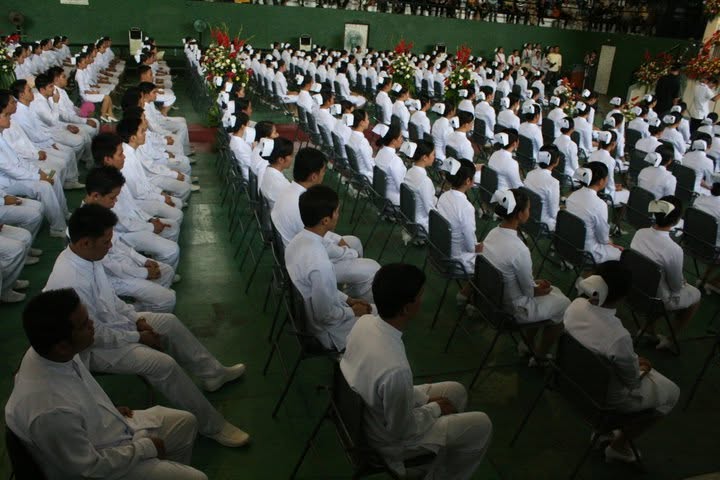
I understood that distinction more intimately than I wanted to. The year had begun without stable employment after my previous contract as a Community Facilitator ended, and I had spent the following months trying to find my way back towards nursing. I still wanted to pursue opportunities abroad, which meant preparing seriously for another professional examination and revisiting knowledge I could not afford to approach casually.
What I needed, ideally, was time. Proper study time, preferably uninterrupted and accompanied by the sort of concentration found in inspirational advertisements where nobody ever needs to answer a phone, check a bill or wonder what is for dinner. I wanted hours in which difficult clinical questions could be difficult enough without household expenses entering the discussion.
Unfortunately, the electricity bill showed very little respect for professional development. Neither did groceries, transportation or any of the other ordinary expenses involved in keeping a family functioning.
Then an offer arrived from my previous organisation. They needed someone to document a weekly seminar, a temporary role rather than the stable employment I had been hoping for. It was familiar enough for me to understand what would be expected, but it was not nursing and it was not part of the straightforward professional route I had been trying to rebuild.
Under easier circumstances, perhaps I would have asked only whether the work suited me and whether I had enough time to do it. Instead, I found myself looking at two responsibilities that refused to stand politely in separate corners. There was the examination I needed to prepare for, and there were my parents, whose financial struggle I could see more clearly now that I was old enough to understand what ordinary life actually cost.
The offer therefore became more complicated than a temporary job. Accepting it meant losing some study time. Refusing it meant protecting my review schedule while turning away from an opportunity to earn at a moment when money at home mattered.
I was no longer choosing between work and study in theory. I was deciding what I could reasonably afford to postpone.
There is a certain kind of advice that sounds wonderfully sensible until it enters a household with bills. Focus on the future. Protect your goals. Invest in yourself. Study now so you can earn more later. All of that can be true, but it often assumes the person pursuing the future has enough financial room to wait for it.
Waiting is much easier when somebody else can comfortably keep the present running.
I had reached the age when my parents’ financial difficulties could no longer remain background scenery. When we are children, household money seems to appear through mysterious adult processes. There is rice, school supplies somehow materialise, electricity continues working and bills are dealt with by people who seem to possess secret knowledge unavailable to anyone under eighteen.
Adulthood ruins the illusion.
Eventually, you understand that food represents money earned and spent, that electricity does not continue because the house personally likes you, and that parents do not possess unlimited reserves despite years of behaving as though they can somehow solve everything. You begin hearing the calculations behind purchases. You notice the pause before certain expenses. Sometimes you notice tiredness where, as a child, you saw only competence.
That change in perspective can be unsettling. The people who once seemed capable of carrying everything start looking like people who might appreciate somebody else carrying part of it.
I do not want to turn my parents’ difficulties into something sentimental for the sake of a better essay. Financial strain is not improved by beautiful language, and there were probably worries they never explained to me completely. What I knew was simpler: I could see that things were difficult, and I was uncomfortable watching from the side while telling myself that my future required my full attention.
It was not because my parents had ordered me to abandon my plans. They had not. Nursing still mattered to me, and the examination still deserved proper preparation. But the future I wanted had begun competing with responsibilities already standing in the room.
Responsibilities are terribly bad at respecting study timetables.
We often use the word distraction for anything that interferes with a long-term goal. Family responsibilities, however, do not fit comfortably into that category. An opportunity to earn money was not the equivalent of wasting an afternoon on something trivial. It was a way to contribute, even modestly, to the household I was still part of.
That made the decision morally and practically untidy. Concentrating solely on my examination might improve my preparation. Accepting the temporary work might ease some immediate pressure. Both choices made sense, and that was precisely the problem.
There was no magical third arrangement in which I earned money, studied for hours without interruption, slept properly and somehow discovered that August had been granted thirty-six-hour days. I would have applied enthusiastically for membership in such a calendar. Unfortunately, the Department of Time appeared unwilling to negotiate.
I had to work with twenty-four hours like everyone else.
Perhaps the hardest decisions are not the ones between something obviously good and something obviously foolish. Those are comparatively generous. The difficult ones arrive when two legitimate responsibilities both deserve something from the same limited supply of time, money or energy.
If I accepted the job, my study schedule would have to change. If I declined it, I would keep more time for review but lose income that could help now. Neither option guaranteed success because more study hours could not promise a passing examination, and temporary work could not promise lasting financial stability.
I was not choosing between success and failure.
I was choosing between risks.
That experience made me think differently about time. We like saying everybody receives the same twenty-four hours, usually in motivational speeches delivered by people who have apparently never had to consider who else already owns part of those hours. The clock may distribute time equally. Freedom over time is distributed far less fairly.
One person can spend an afternoon studying because food, bills and housing are secure. Another spends that same afternoon earning because the household cannot comfortably lose the income. Both possess twenty-four hours; only one truly controls all of them.
The difference is not ambition.
It is circumstance.
The temporary documentation job would not solve everything. I knew that. Temporary work produces temporary income, and once the assignment ended, the examination would still be there along with the larger question of what employment would come afterwards.
But perhaps I did not need the job to solve everything before allowing it to be useful.
That thought mattered because we can become strangely particular about career choices when judging other people. Someone trains for one profession and takes temporary work somewhere else, and suddenly everyone becomes a career consultant. Why are you doing that? Is it related to your qualification? Wouldn’t it be better to wait for something more suitable?
Waiting sounds wonderfully strategic when waiting is free.
It rarely is.
Rice does not become cheaper because somebody has a nursing degree. Electricity companies remain disappointingly unmoved by professional ambition. A market vendor is unlikely to offer a substantial discount because the customer is preparing for an international examination.
Even an inspiring career journey still needs groceries.
Perhaps this is why career paths look much more organised in hindsight than they feel while we are actually living them. Later, we describe temporary jobs as stepping stones, useful detours or chapters that somehow prepared us for what followed. At the time, many of those choices are simply responses to whatever circumstances are asking from us that month.
Sometimes the work we accept is the work available when we need income.
There should be less embarrassment in saying that.
The assignment itself involved documenting a weekly seminar. It was not the same as my previous community facilitation work, but the environment was familiar, and the role required something I had always valued: careful attention to words.
Documentation can look deceptively simple once finished. A few organised pages give no indication of how much judgement may have gone into deciding what mattered, what belonged in the record and how to present discussions accurately enough for someone who was not there to understand what happened.
Good documentation is not creative writing. That distinction was important to someone like me, because in an essay I can wander into a metaphor, interrogate an ordinary object and allow humour to trespass without permission. A seminar report is considerably less interested in my literary ambitions.
Imagine opening official minutes and reading that a routine discussion had unfolded “beneath the merciless fluorescent lights while opposing philosophies collided across the room.” Beautiful, perhaps. Useful to the organisation, probably not. The job required accuracy, clarity and restraint. There was something appealing in that.
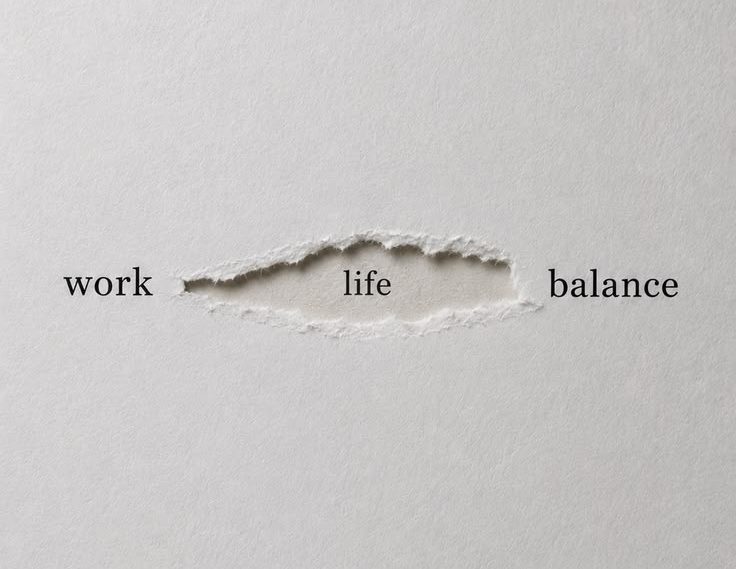
I could work with language, earn money and make use of an opportunity that had appeared during an uncertain year. The challenge was ensuring the temporary job did not quietly consume the professional goal I still wanted to pursue. That meant confronting another word adults enjoy using: balance.
Work-life balance. Financial balance. Emotional balance. Balanced schedules. Everyone recommends balance with the confidence of people describing an object available at a shop somewhere.
In practice, balance can resemble carrying three plates, a cup of coffee and a ringing telephone through a crowded room while pretending nothing is about to fall.
Yes, I could work and study. Both activities, unfortunately, required the same brain.
A full day concentrating on seminar discussions and producing accurate documentation could leave me tired. Opening nursing materials afterwards might still be possible, but possible and effective are not always identical. A schedule that looks heroic on paper can be completely useless if the person expected to follow it becomes too exhausted to think clearly.
I had to plan around the person who actually existed, not the imaginary woman who woke before sunrise, studied efficiently, worked perfectly, exercised, maintained excellent emotional health and somehow wrote an insightful blog post before bed. I knew this imaginary woman. She was extremely productive. She was also beginning to annoy me. Most importantly, she did not exist.
The real version of me could become tired, distracted and worried. My mental well-being had already been strained by the uncertainty of the year, so adding responsibilities required some realism. Recognising that was not an excuse to avoid effort. It was part of deciding what could be sustained.
I think we sometimes confuse commitment with exhaustion. We admire people who stay awake late studying, work long hours and carry several responsibilities simultaneously. Their determination may indeed be admirable, but being exhausted does not automatically mean a plan is working well.
Professional preparation requires attention. Learning becomes harder when the brain has been running all day on obligation and stubbornness.
Accepting the work therefore meant adjusting rather than pretending nothing else had changed. Some study sessions might need to be shorter. Certain subjects would require prioritisation. Some days would be less productive than others. The goal could no longer be perfection. It had to be continuity.
That was difficult for me because when I take something seriously, I want to do it properly. Half-hearted preparation never appealed to me. But real life does not always provide the laboratory conditions in which our best plans would prefer to operate. Sometimes responsibility means doing good work inside imperfect conditions.
I could take the examination seriously without possessing unlimited study time. I could accept temporary work without abandoning nursing. I could contribute financially without assuming responsibility for solving every problem my parents faced. Those distinctions mattered because beneath the practical decision was something more personal: guilt.
There is a particular helplessness in watching people you love struggle when you do not yet have enough resources to change very much. You notice their effort, remember their sacrifices and want to make things easier, but your ability to help is smaller than your desire to help.
That gap can feel like failure even when it is simply limitation.
I had no stable job and was preparing for an examination that might improve my future prospects. My capacity to contribute financially was therefore limited. Those were circumstances, yet I sometimes converted them into accusations against myself.
I should already have a proper career. I should be earning more. My parents should not still be carrying so much. The word should was becoming dangerously efficient.
Adult children often want to support their parents, particularly in Filipino families where helping one another is deeply woven into how family responsibility is understood. There is nothing wrong with that desire. But love does not automatically manufacture income. Wanting to help and being able to help are different realities. That does not make the first less sincere.
The temporary job could provide something now. The nursing examination represented something more uncertain and distant: the possibility that eventually I might qualify for better professional opportunities and become capable of contributing much more. One benefit was visible. The other existed mainly in plans. Human beings tend to respond more urgently to what they can see.
Economists might describe the decision through opportunity cost, present needs and future benefits. An hour spent working cannot simultaneously become an uninterrupted hour of study. Money used for one necessity cannot be used for another.
Perfectly sensible terminology.
Considerably less comfortable when the competing options involve people you love.
Beneath all the theory was a much simpler question: how could I devote myself entirely to building a future while watching my parents struggle in the present? I did not have a perfect answer. Perhaps there was not one.
The decision also complicated my understanding of independence. We often imagine adulthood progressing towards complete self-sufficiency: earn your own money, manage your own expenses and stop relying on family. Yet families rarely operate as neat collections of financially isolated individuals. Parents help children. Later, children may help parents. Siblings contribute differently. Relatives step in during difficult periods.
Independence, perhaps, does not require pretending we never need anybody. A better question might be whether support moves through relationships in ways that remain fair and sustainable. Preparing for an examination could itself be an investment in future independence. Accepting temporary work could be a practical response to present responsibility. The two goals were not enemies, even though they were competing for the same hours. They needed negotiation.
Family sacrifice made the issue even more complicated. Filipino families know the language of sacrifice very well. Parents sacrifice for children, older siblings help younger ones and people contribute whenever someone encounters difficulty. There is beauty in that kind of solidarity. There is also danger if sacrifice becomes an unlimited expectation.
Loving my parents did not require abandoning every professional ambition. Helping now should not destroy my ability to become more secure later. Likewise, investing in my future did not require pretending the household’s present difficulties were irrelevant.
Both timelines mattered. The temporary job therefore began looking less like a deviation and more like what it actually was: available work during a period when available work mattered. It was not glamorous. It was not permanent. It was not the nursing opportunity I eventually wanted. It was useful. Perhaps usefulness was enough.
Not every job has to become a destination. Some jobs exist because we need income, because circumstances have changed or because the ideal role has not yet arrived. There is dignity in work even when it does not fit elegantly inside the professional biography we hope to have someday.
I had begun 2016 imagining that much of the year would be devoted to examination preparation. By August, reality had revised the schedule without requesting permission. That did not mean the original plan had been foolish. Plans are simply decisions made according to the information available at the time.
When the information changes, responsible people reconsider. I was not abandoning nursing. I was responding to financial reality. That distinction helped. The arrangement would not be perfect. I would have seminar work to complete, study materials waiting and household responsibilities continuing in the background. Some days I would probably wish for more hours, and on others I might question why childhood had advertised adulthood as freedom when it appeared increasingly to consist of calculations. There was no effortless choice. Only a workable one.
Looking back at difficult periods, we often give them more narrative order than they originally possessed. We call something a stepping stone because we now know where the path eventually went. In August 2016, I did not have that advantage.
I did not know whether working abroad would happen. I did not know whether the examination would eventually go well. I could not promise that temporary work would make anything significantly easier. What I knew was that an opportunity to earn had appeared while I was preparing for an examination and watching my parents deal with financial pressure. The decision belonged to that moment.
That was enough context.
I did not need to turn the job into the opening chapter of some grand success story. I also did not need to diminish it because it was temporary. It allowed me to work, earn, contribute and feel slightly less helpless about circumstances at home. Those were legitimate reasons. Eventually, I return to the calculator.
It still sits there with its small buttons and total lack of compassion, waiting to calculate whatever numbers are entered. Income, transport, groceries, examination expenses, household costs and whatever might remain afterwards.
Its arithmetic would remain stubborn.
Money earned would be available. Money spent would be gone. Optimism could not alter either fact. But the calculator could only tell me part of the story. It could measure how much I earned. It could not measure the relief of being able to contribute. It could subtract expenses. It could not calculate the discomfort of watching my parents worry. It could help organise a budget. It could not decide how much study time I should protect or how much professional ambition I could reasonably postpone. Those questions required judgement, and judgement is considerably messier than arithmetic.
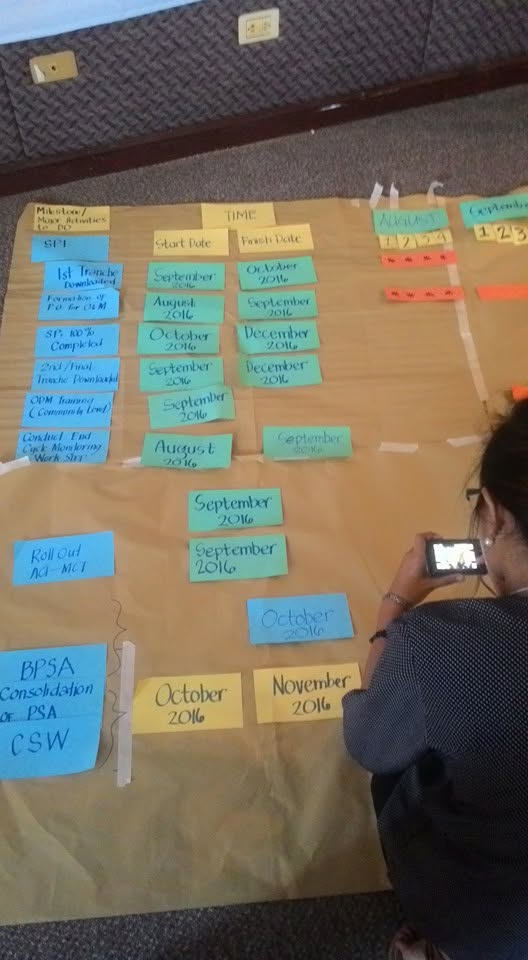
August would pass through its ordinary weeks: seminar days, documentation, study materials, household expenses and the continuing uncertainty of what would happen after the temporary assignment ended. It was not the arrangement I would have designed under easier circumstances.
It was the arrangement I had.
Perhaps adulthood is partly learning that the best available decision does not always produce the most elegant story. Sometimes it is simply the decision that responds most responsibly to the life already happening.
I had spent months preparing for a future that might eventually take me abroad. Now I was being reminded that my present was still here in the Philippines, where the people I loved had needs that could not wait until I passed an examination.
Both mattered. The future I wanted.
The family I had.
The challenge was learning how to honour one without behaving as though the other had disappeared.
I would still study. I would still review the nursing knowledge required for the examination and keep considering professional opportunities carefully. But accepting temporary work did not mean I had betrayed that ambition.
For the moment, earning money was part of what the present required.
There was no disgrace in that.
We are often told to keep our eyes on the prize, which sounds excellent until concentrating entirely on the distant prize prevents us from noticing someone struggling beside us. I did not want to sacrifice my future. I also did not want to become so consumed by building it that I ignored the reality of my own household.
Perhaps maturity is partly discovering that important things can compete with one another. The answer is rarely as simple as choosing whichever responsibility sounds more impressive when explained to somebody else.
By evening, I imagined putting the calculator back into its drawer. The numbers would remain the same, the household would continue and my nursing materials would still be waiting for me. Tomorrow would contain another twenty-four hours, despite my formal objection. Somewhere between the weekly seminar and the examination review, I would try to make both responsibilities fit. Not beautifully. Not perfectly. Reasonably. That was all I could promise.
I had no stable career to announce, no guaranteed overseas future and no certainty about the examination ahead. I had been offered temporary work documenting a weekly seminar, and the offer mattered because life at home had made money matter urgently.
I wanted to help my parents. I wanted to return to nursing. Most of all, I wanted a future in which those two desires would no longer have to compete so painfully for the same limited resources. That future had not arrived yet. For now, there was work available.

I reached again for the calculator. Its display showed a blank zero, which seemed almost rude considering how many responsibilities were waiting to be entered. But at least the machine was honest. It could not promise that everything would work out. Neither could I. What I knew was simpler: some jobs are accepted because they lead directly towards our dreams, while others are accepted because the people we love cannot live indefinitely on the promise of what we might one day become. Both kinds of work can matter.The examination remained important. So did the next grocery bill. And in August 2016, I was learning why the second could not always wait for the first.
Still building tomorrow without abandoning today,
Anj



























Leave a Reply