I would love to tell you that Liverpool became one of my favourite cities to visit because of its extraordinary musical history, beautiful waterfront, impressive architecture and undeniable cultural importance. That would sound sophisticated, cultured and wonderfully appropriate coming from someone who writes a travel blog. Unfortunately, it would only be partly true, because if I am being completely faithful to the story, Liverpool originally secured its place high on my list for a considerably more important reason: Jollibee.

There, I said it. Whenever homesickness begins creeping in and my Filipino taste buds start demanding something that British fish and chips simply cannot negotiate with, Liverpool suddenly becomes extremely attractive. I could pretend the conversation begins with, “Shall we visit the museums?” or “Maybe we should explore the waterfront again,” but somewhere underneath all that respectable cultural curiosity is usually another thought: I haven’t had Chickenjoy in a while. Apparently, you can take the Filipina out of the Philippines, move her to England, introduce her to centuries of British history and beautiful architecture, and she will still organise part of the itinerary around fried chicken and gravy. I have accepted this about myself.
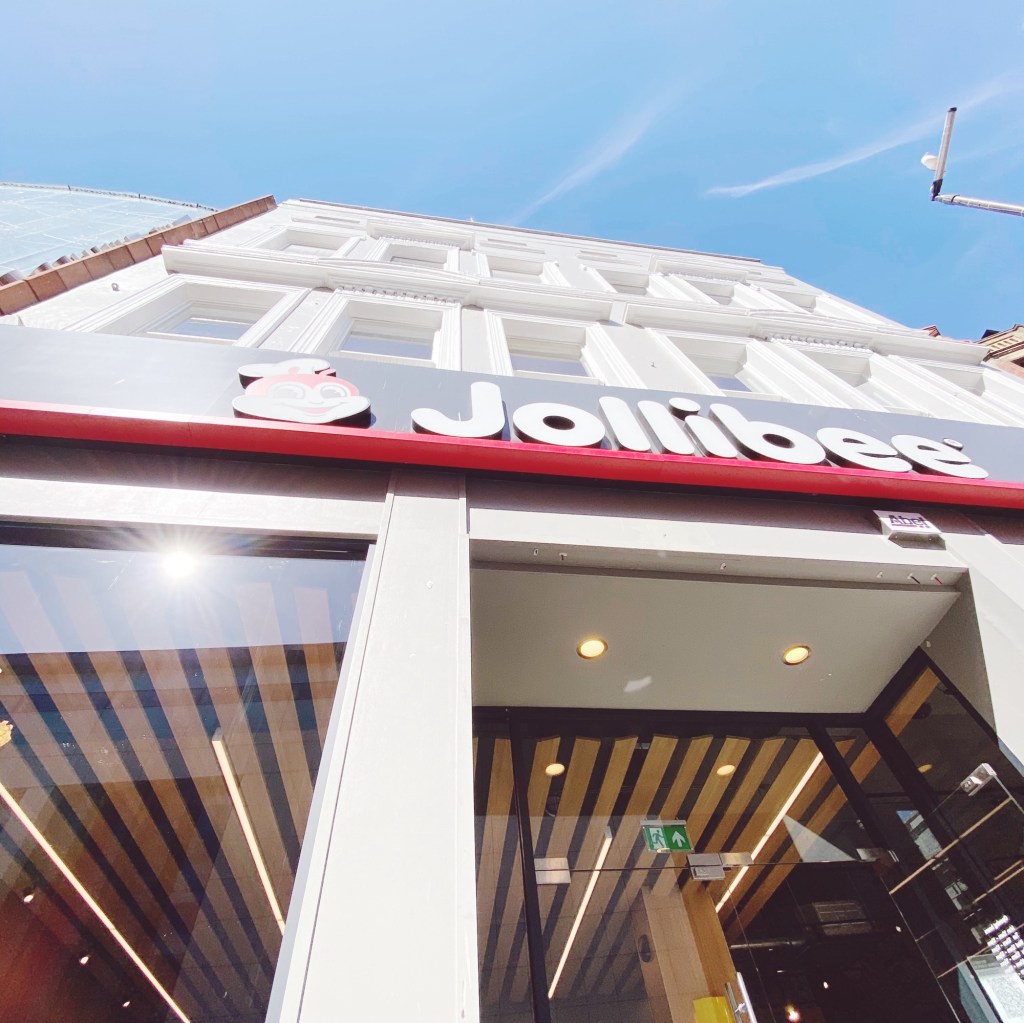
The funny thing is that Jollibee may sometimes be the excuse that gets me thinking about Liverpool, but it is never the only reason I am glad I went. Somewhere between satisfying my Filipino cravings and heading home again, Liverpool always manages to remind me that there is much more to this city than my beloved red-and-white bee. Over time, it has become one of those places I genuinely enjoy returning to, because every visit seems to contain a little bit of everything I love about travelling: history, architecture, music, water, culture, long walks, photographs, good food and those unexpected moments when an ordinary day away becomes another memory worth keeping.
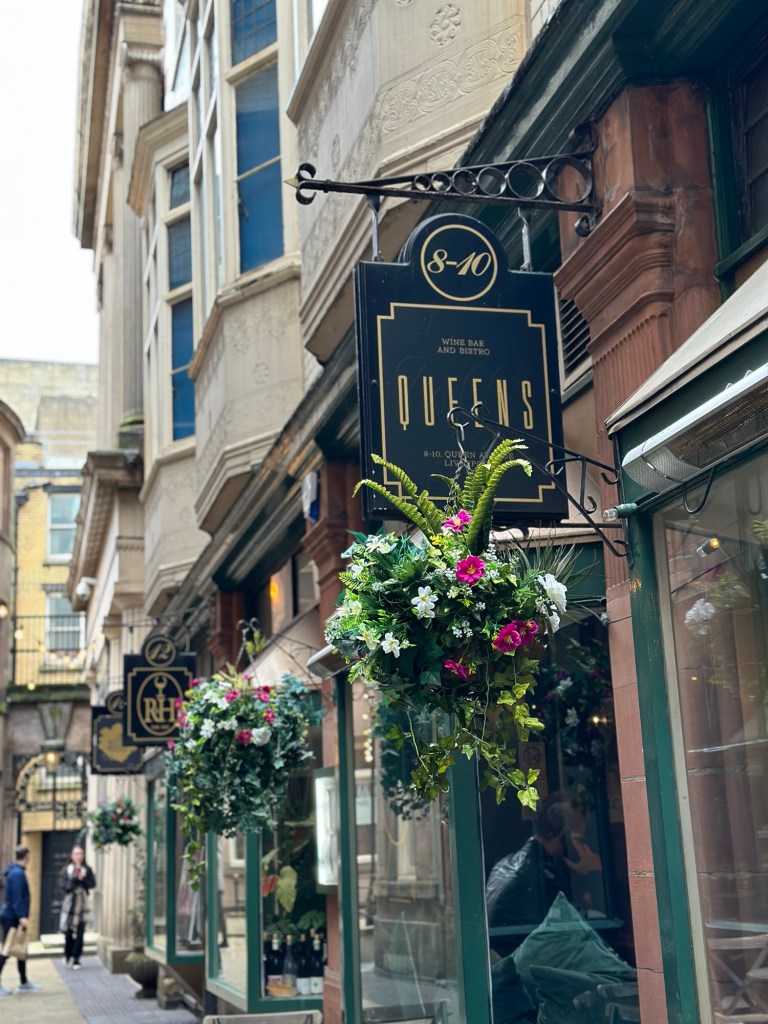
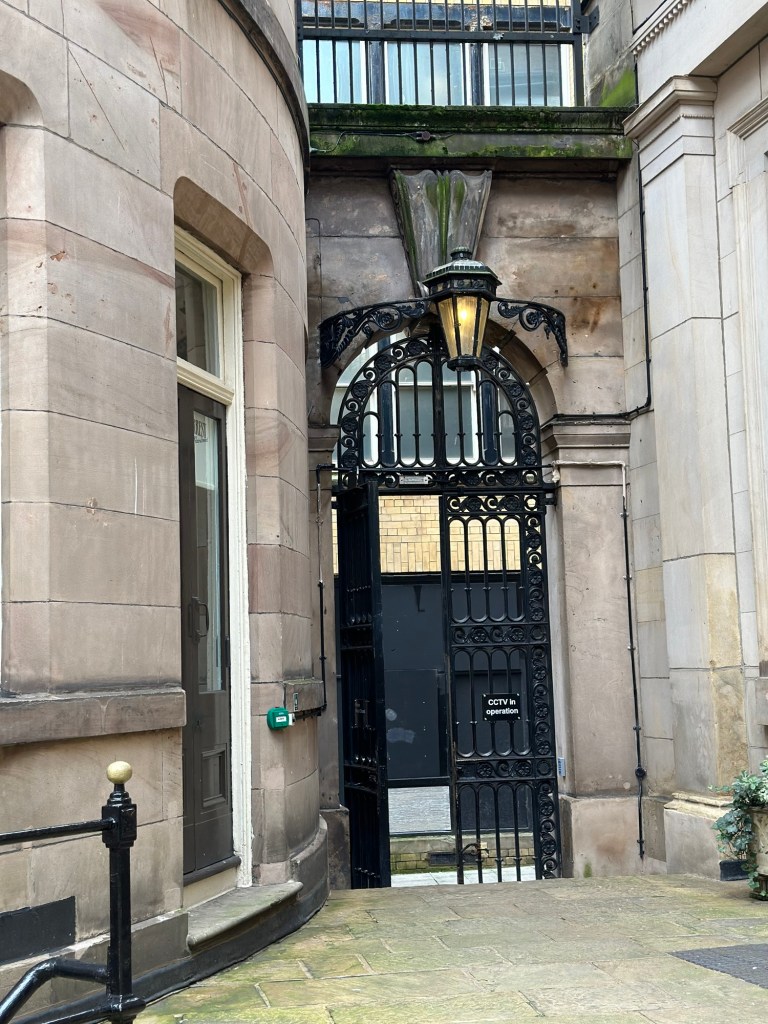
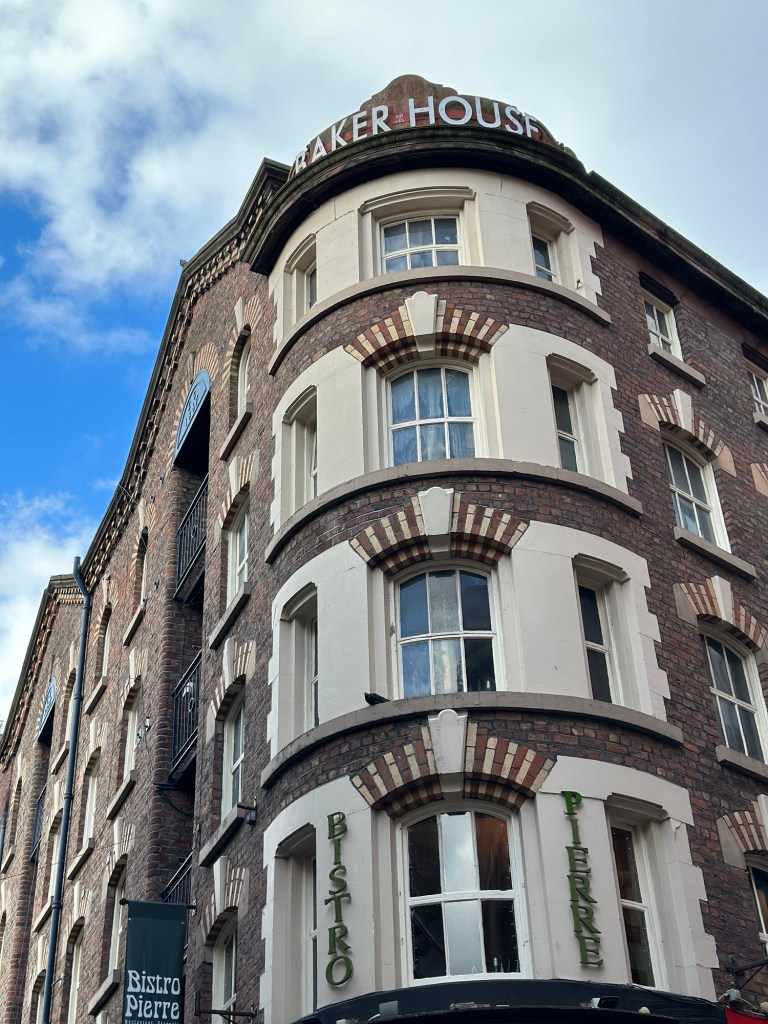
Liverpool has personality. That was one of the first things I noticed about it. It does not feel as though it is trying to become another London or compete with somewhere else. It seems perfectly comfortable being itself. You hear that identity in the unmistakable Scouse accent, see it in the football shirts and feel it in the city’s connection to music, maritime history and the River Mersey. There is pride here, but there is also humour and warmth. Some cities impress you because of how beautiful they are, while others stay with you because they have character. Liverpool somehow manages to have both.


Whenever I explore Liverpool, I am naturally drawn towards the waterfront. There is something about arriving near the River Mersey that makes the city seem to open up. After walking between buildings and busy streets, suddenly there is space in front of you—the river stretching towards the horizon, boats moving across the water, the breeze becoming stronger and the gulls making their presence known with the confidence of creatures who apparently believe the entire waterfront belongs to them.

The Royal Albert Dock is probably one of my favourite areas to wander. Its distinctive red-brick warehouses and cast-iron architecture carry Liverpool’s maritime past, but the area does not feel trapped in history. Today, museums, galleries, restaurants and cafés sit around the water while people stroll along the dock, take photographs or simply stop for a while. I love that mixture of old and new. The buildings have remained while the purpose around them has changed, almost as though Liverpool has learned how to carry its history without allowing history to stop it from moving forward.
Maybe there is a small lesson in that too. We all carry old versions of ourselves, memories, mistakes and chapters that helped shape who we became, but carrying the past does not mean we have to continue living inside it. Sometimes growth is not about destroying what came before. It is about finding a new purpose for what remains.
I like walking around the dock without rushing. Perhaps that is something age has changed about the way I travel. Years ago, I thought travelling meant fitting as much as possible into one day. I wanted to see everything, photograph everything and make sure no attraction escaped the itinerary. Now I have learned that some of my favourite memories happen when I am doing almost nothing particularly impressive. Walking beside the water. Sitting somewhere with a coffee. Watching people pass. Taking another photograph of something I have probably photographed before. The best travel memories are not always created when we are trying hardest to make them; sometimes they happen quietly in the spaces between the places we planned to see.

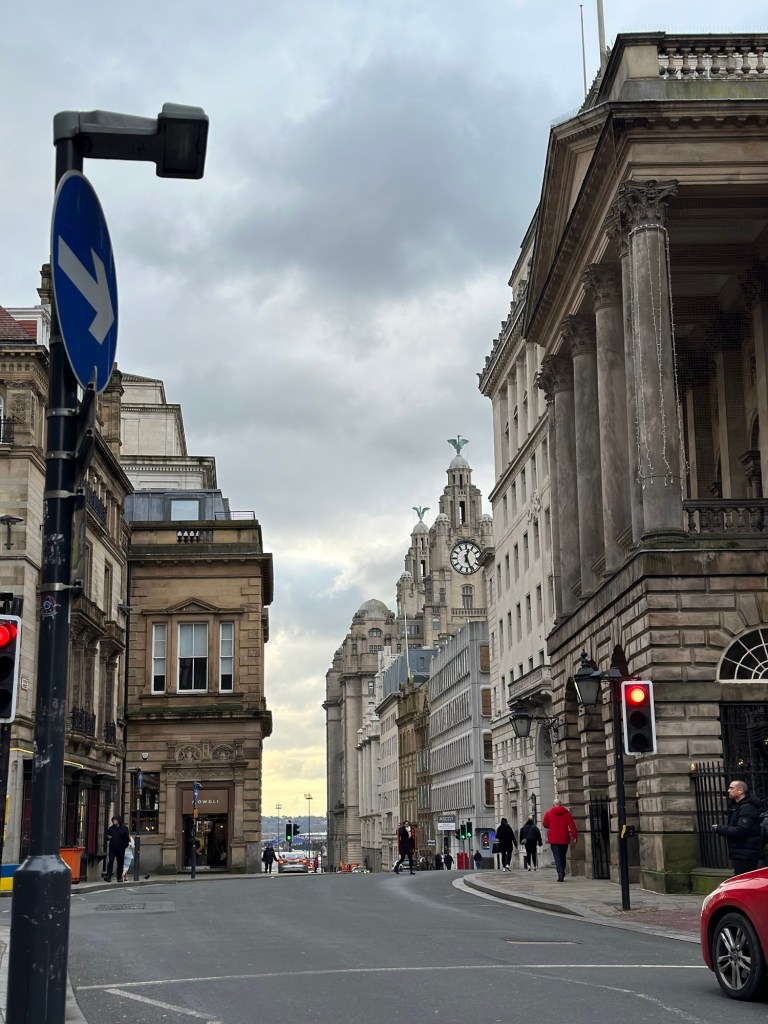
Around Pier Head, Liverpool becomes grander. The famous Three Graces give the waterfront much of its unmistakable character, with the Royal Liver Building standing proudly beside the Mersey and the Liver Birds watching over the city. They are among those landmarks that immediately tell you where you are. Even if you have seen photographs before, standing there gives them a completely different scale.
Looking across the Mersey also makes Liverpool’s history easier to imagine. This is a city deeply shaped by the water, by ships, trade, migration, arrivals and departures. Countless people have stood somewhere along this river carrying lives completely different from mine. Some were leaving everything familiar behind. Others were arriving somewhere unknown. Some probably stood there excited about what came next, while others must have wondered whether they had made the right decision.
Perhaps because I have built my adult life away from the country where I grew up, places connected with migration and journeys always make me reflective. Living abroad changes the meaning of the word home. It stops being as simple as a single location on a map. The Philippines will always be home because it holds my childhood, my family, my beginnings and the earliest versions of me. England has become home because this is where much of my adult life has unfolded. Somewhere between the two, I have realised that home can be more than one place without either one becoming less important.
Liverpool’s museums give another layer to the city beyond what you see while walking around it. The Museum of Liverpool helps connect the waterfront and streets with the people and events that shaped them, and I have increasingly come to appreciate museums when I travel. When I was younger, I mainly wanted to see something beautiful and take a photograph beside it. Now I find myself wanting to know more. Who lived here? What happened here? What did this city survive? What made its people proud? What stories are hidden behind the buildings everyone photographs? Perhaps growing older changes the way we travel. We stop collecting only photographs and begin collecting context.
Of course, you cannot explore Liverpool for very long without eventually encountering four names that changed not only this city but music around the world: John, Paul, George and Ringo. The Beatles are woven so deeply into Liverpool’s identity that their story seems to appear everywhere. The Beatles Story at the Royal Albert Dock traces their journey from their early Liverpool days to a level of fame they could probably never have fully imagined when they first started playing together.
What fascinates me about stories like theirs is not simply how successful they became. It is remembering that there was a time when they did not know how the story would end. We know what The Beatles became because we are looking backwards. They had to live through the beginning without that knowledge. They had to practise, perform, make mistakes, keep going and live through all the uncertainty before anyone could call their story extraordinary. I think about that sometimes when I become impatient with my own life. We look at other people’s completed chapters and compare them with the unfinished chapter we are currently living, forgetting that nobody experiences life backwards. Every extraordinary story once belonged to someone who had absolutely no idea what was coming next.


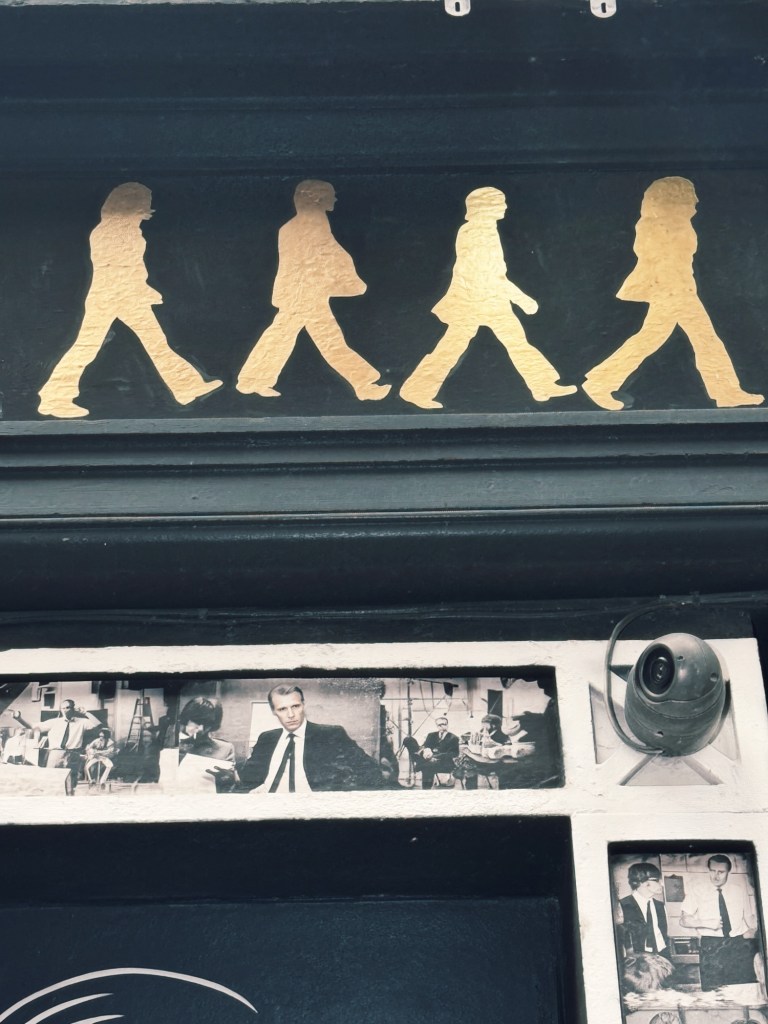
Mathew Street and the Cavern Quarter make that musical history feel even closer. There is something special about walking somewhere knowing that music which eventually travelled around the world had humble beginnings nearby. The Cavern Club has become legendary because of its association with The Beatles, but what I like about the area is that music does not feel as though it has been placed behind glass. It still feels alive. There are venues, visitors, signs, photographs and music spilling into the streets, almost as though Liverpool refuses to allow its musical past to become completely silent.
Then there are the Beatles statues at Pier Head, showing the four of them simply walking together beside the Mersey. I like the simplicity of that image. They are not standing dramatically on a giant stage. They are just walking, which somehow feels appropriate. Before people become legends, they are simply people going somewhere.
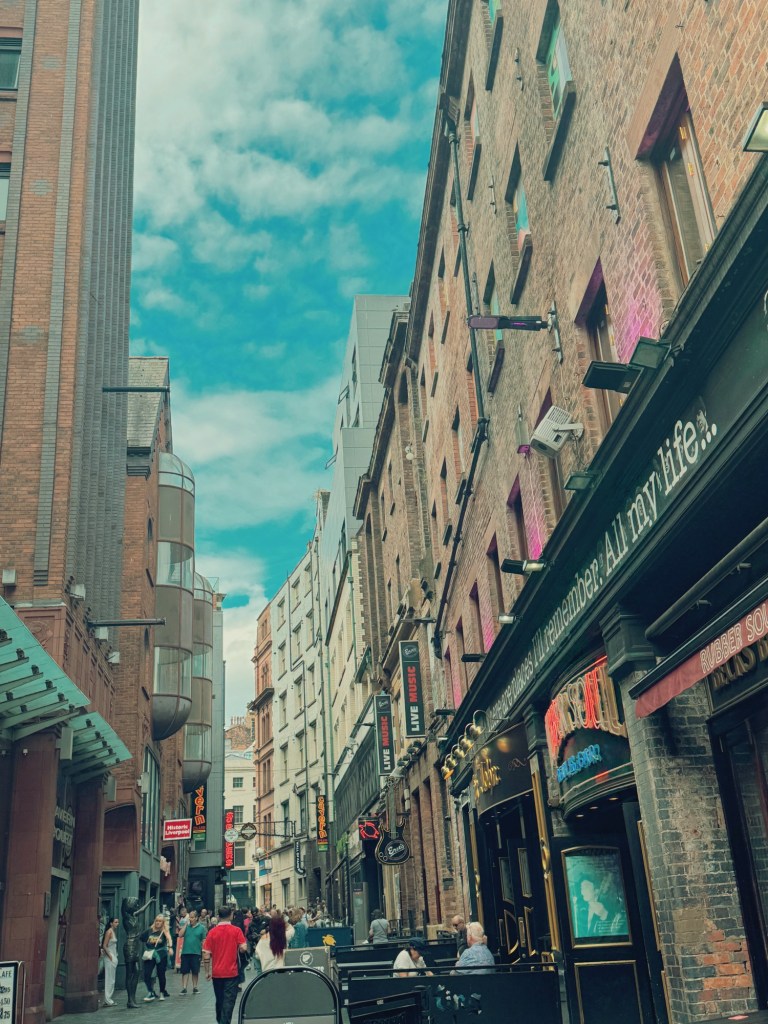
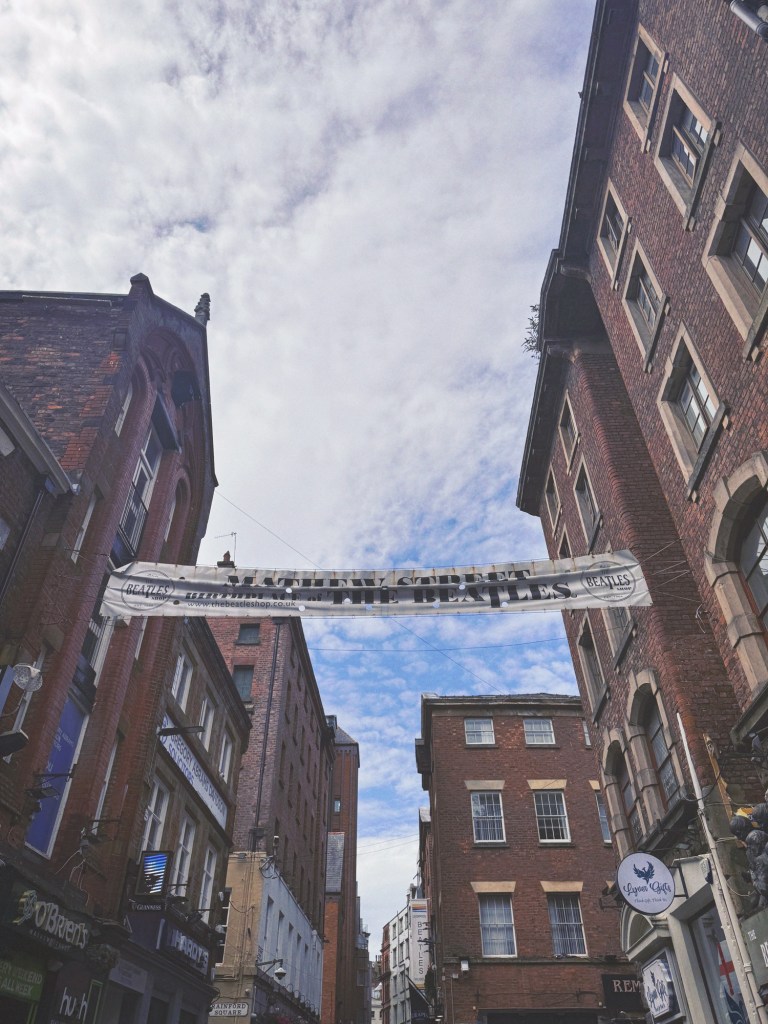
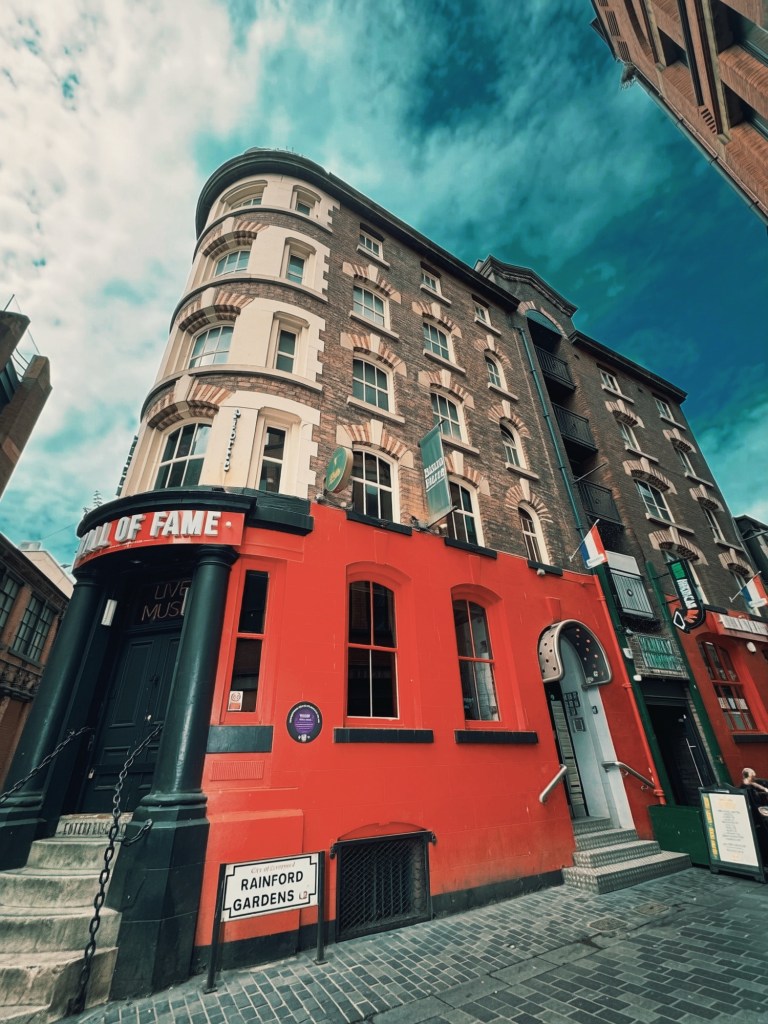
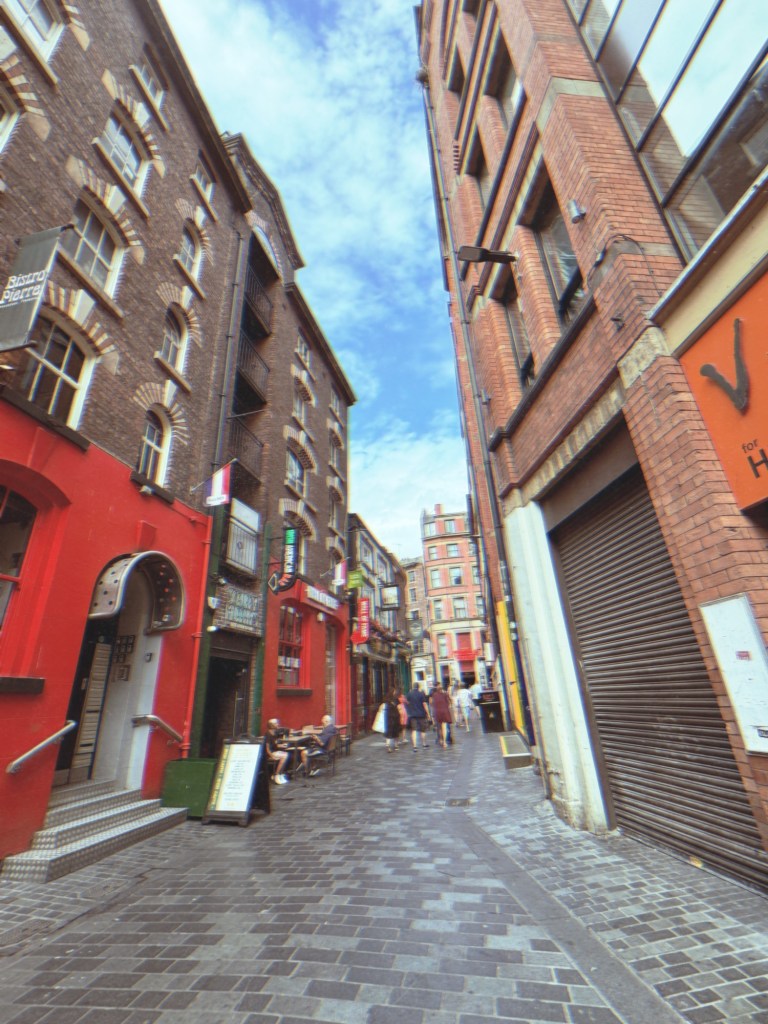
Penny Lane and Strawberry Field carry that same strange familiarity. Their names travelled around the world through music, yet they began as ordinary places connected to ordinary lives. I love that idea because it reminds me that meaning is often something we give to places. A road can simply be a road until a memory happens there. A building can simply be a building until someone creates something inside it. A city can simply be a name on a map until part of our own life becomes attached to it. Perhaps that is also why I enjoy writing about my travels. I am not trying simply to document where I have been. I want to remember what those places meant to me when I was there.
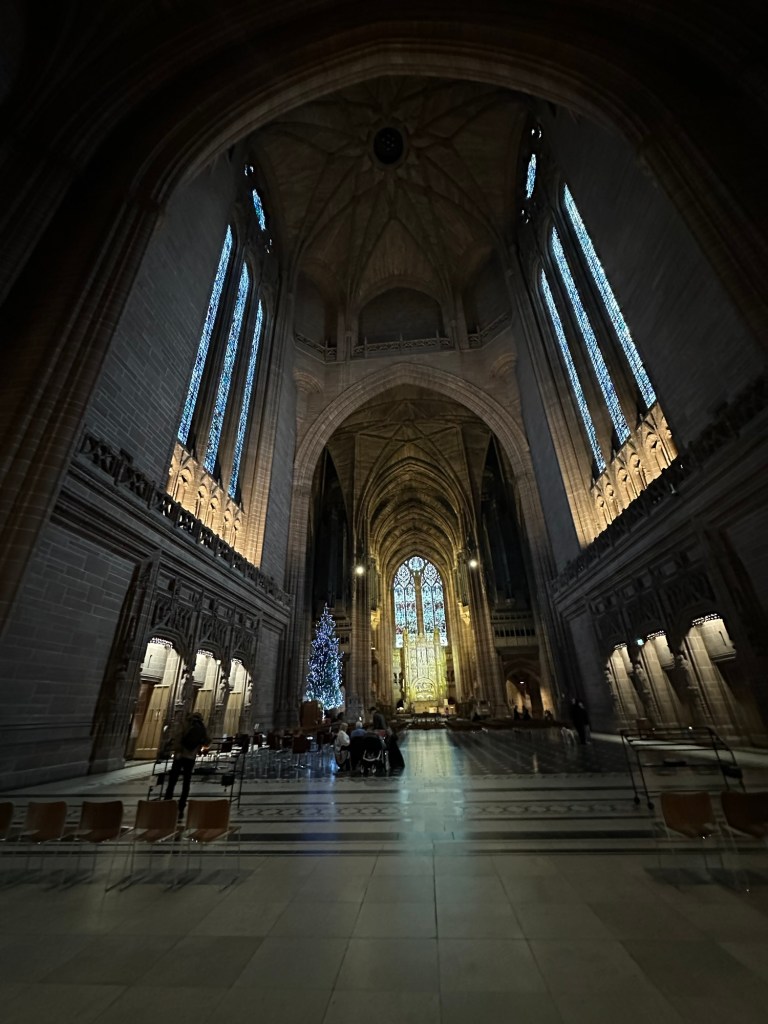
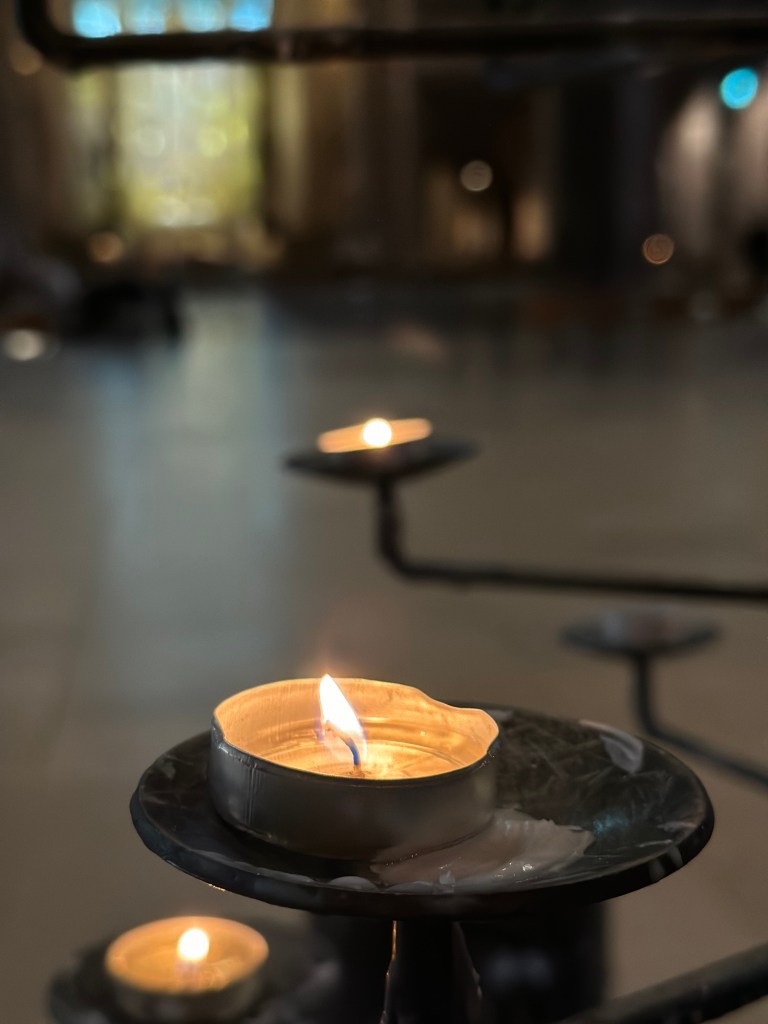
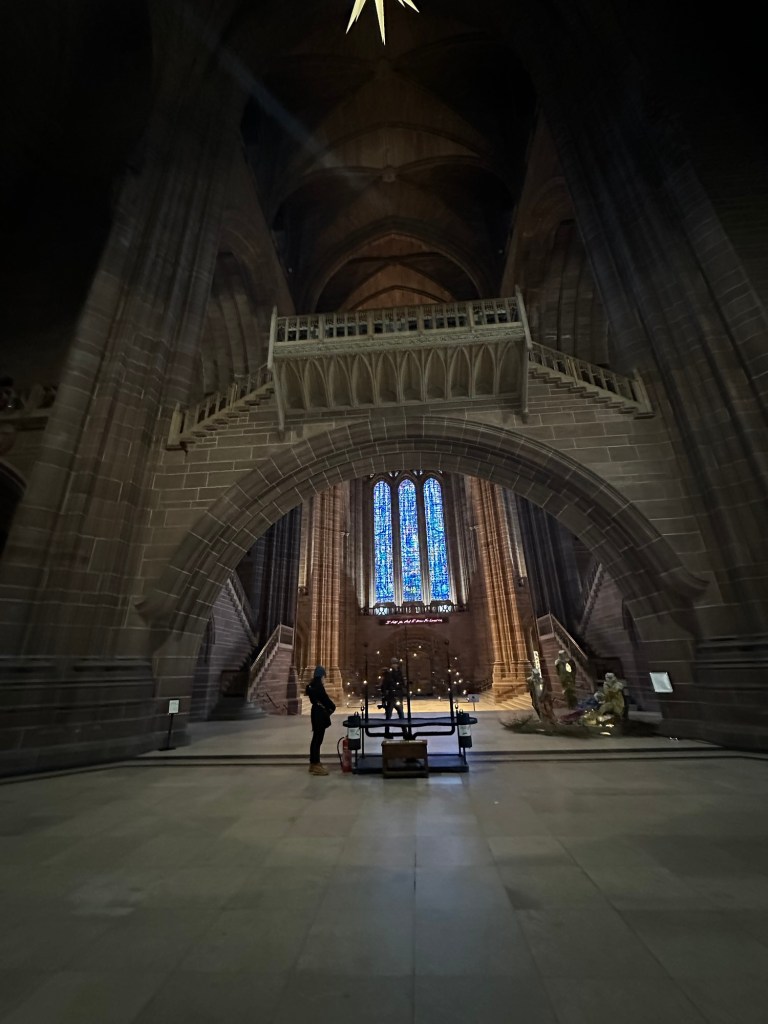
Liverpool Cathedral gives the city an entirely different atmosphere. After the energy of the waterfront and the music around Mathew Street, walking into such an enormous sacred space naturally slows me down. There is something about churches and cathedrals that makes me instinctively become quieter. No matter how busy the itinerary outside has been, entering a place of worship seems to create a little pause in the day.
Liverpool Metropolitan Cathedral offers something completely different again. I find the contrast between Liverpool’s two cathedrals fascinating because they look so unlike each other and yet both were created as places of faith. One carries the grandeur and weight we often associate with traditional cathedral architecture, while the other is modern, circular and distinctive. Perhaps there is something beautiful in that contrast. Things do not need to look alike to hold the same meaning. Beauty does not have one approved design, and neither does faith or life.


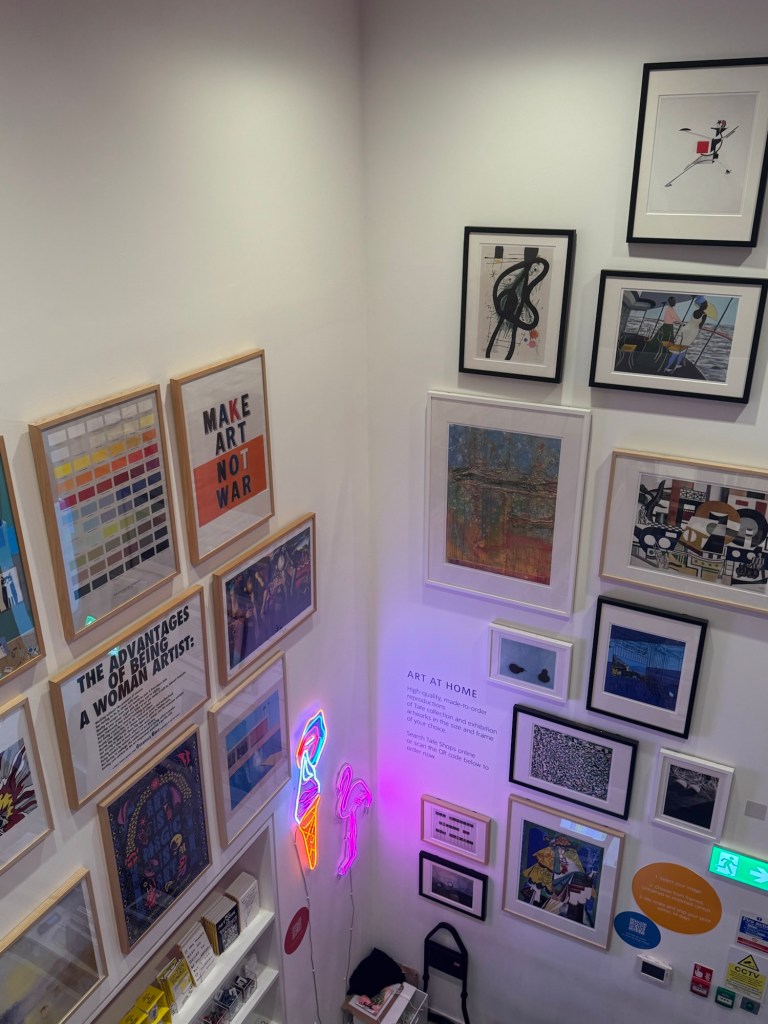
Around William Brown Street, the World Museum and Walker Art Gallery reveal another cultural side of Liverpool. These are the kinds of places where saying, “We’ll just have a quick look,” can somehow result in several hours disappearing. Museums and galleries have become places I enjoy more as I get older because they force me to slow down and look properly. There is always something humbling about standing in front of an object, painting or artefact that existed long before I arrived and may continue to exist long after I am gone.
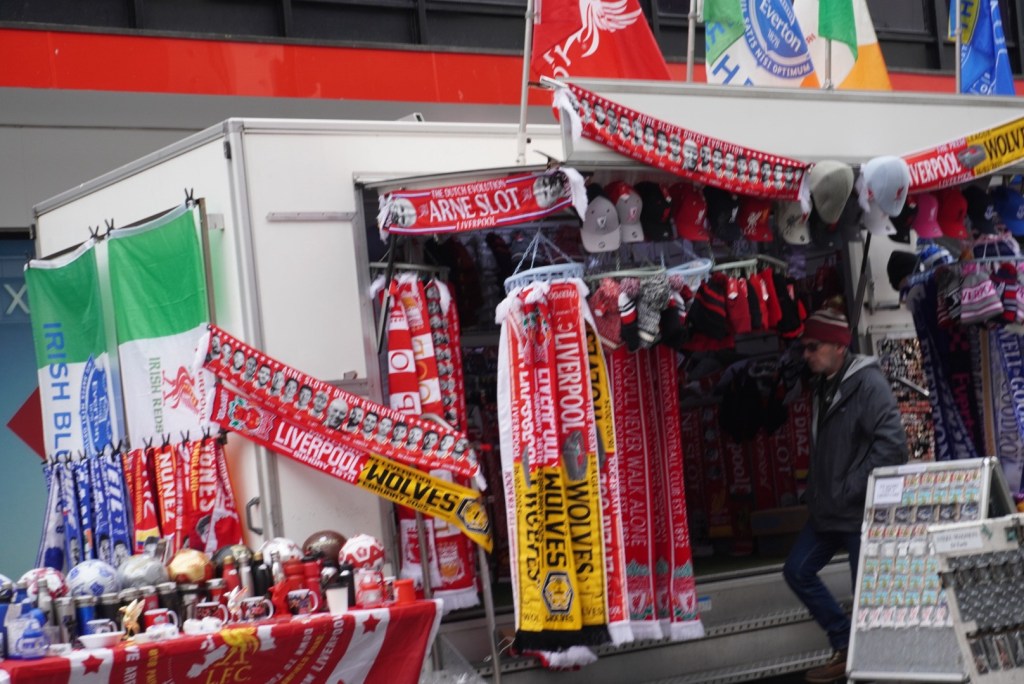
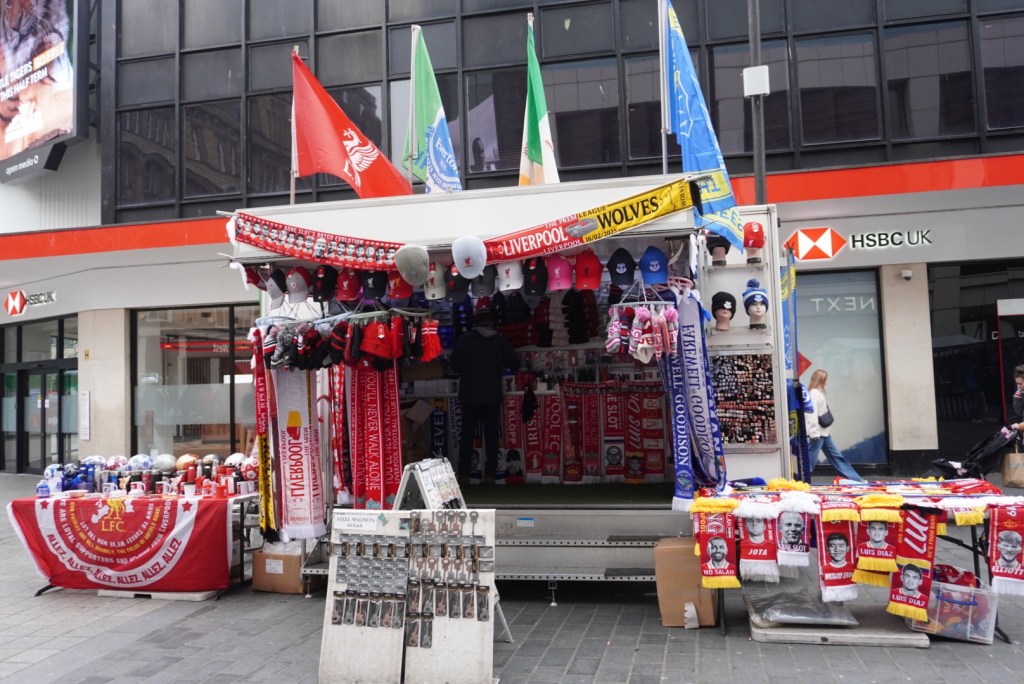
And then there is football, because pretending Liverpool and football can be discussed separately would be slightly ridiculous. Anfield is more than a stadium to generations of Liverpool FC supporters. It carries decades of victories, disappointments, memories and belonging. Even if football is not the main reason for visiting, you quickly understand how deeply it belongs to the city’s identity.
I think places become important because people repeatedly pour emotion into them. A stadium is concrete and seats until generations fill it with hope and belonging. A music venue is simply a room until someone performs there and creates something people remember. A waterfront is water and buildings until millions of individual lives pass beside it. Places become meaningful because people leave invisible pieces of themselves there.
And sometimes a fast-food restaurant becomes emotionally significant because a homesick Filipino walks through the door.
Which finally brings me back to the true VIP of my Liverpool itinerary.
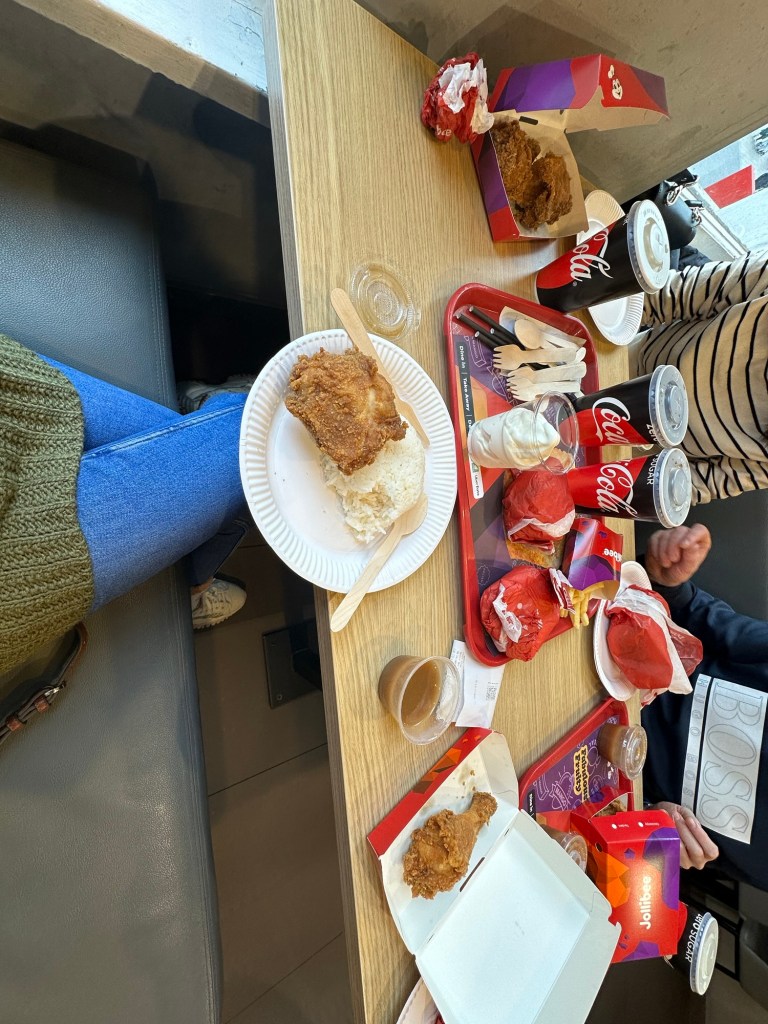
After hours of walking around Liverpool, there is something embarrassingly satisfying about seeing that familiar red Jollibee sign. Suddenly my sophisticated cultural exploration of British maritime history, architecture and music develops a very important Filipino subplot involving Chickenjoy, gravy and Jolly Spaghetti. I regret absolutely nothing.
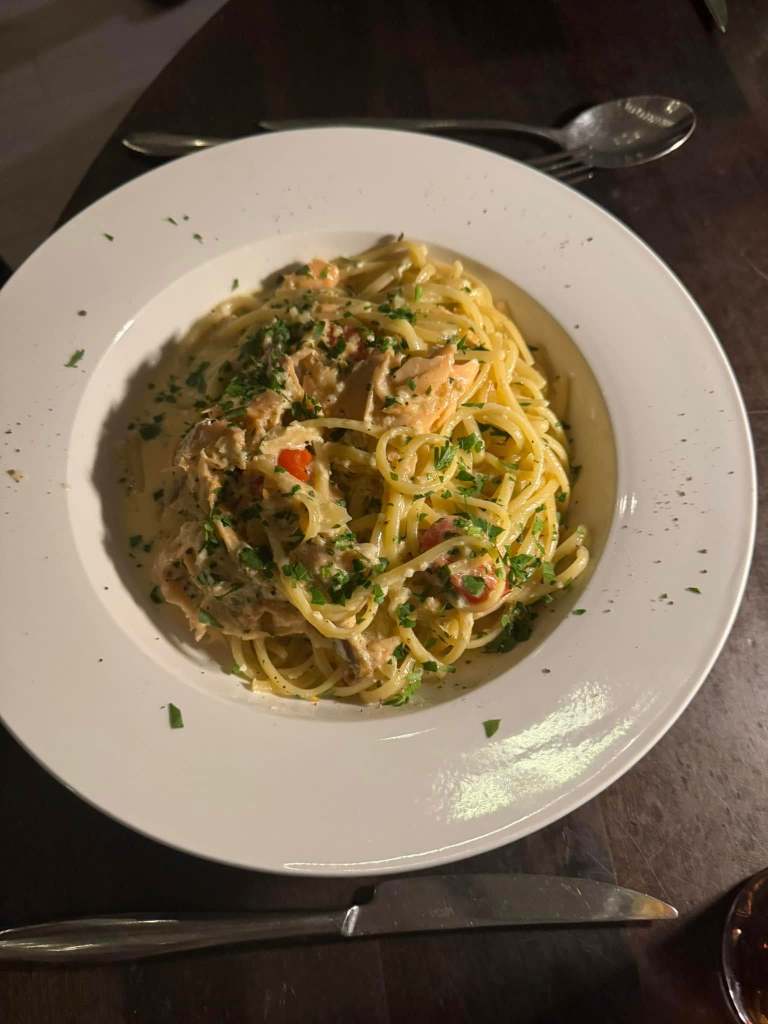
To someone who did not grow up with it, Jollibee might simply look like another fast-food restaurant. For me, and probably for many Filipinos living abroad, familiar food carries an emotional weight completely disproportionate to what is inside the box. Chickenjoy tastes like more than fried chicken when you are far from the Philippines. Jolly Spaghetti does not need to compete with authentic Italian pasta because it belongs to an entirely different category of memory. It tastes like childhood, birthdays, family gatherings, afternoons out, celebrations and ordinary days back home.
Food has a remarkable ability to remember things for us.
Sometimes a familiar taste can shorten thousands of miles in a single bite.
Maybe that is why Liverpool remains high on my list whenever I begin craving something that feels like home. I joke that I go there for Jollibee, and there is enough truth in that joke to make it dangerous, but I think the reason goes deeper than simply craving fried chicken. Living abroad teaches you that homesickness does not always arrive dramatically. Sometimes you are perfectly happy with the life you have built and suddenly find yourself craving a particular meal, hearing a familiar song or smelling something that takes you immediately back to another country.
In those moments, home does not necessarily mean wanting to leave the life you have now. Sometimes it simply means wanting to touch the life you came from for a little while.
That is what Jollibee gives me in Liverpool.
A familiar taste in an unfamiliar context.
A tiny piece of the Philippines in the middle of a very British city.
And perhaps that is why I have grown so fond of the combination. Liverpool gives me something new while Jollibee gives me something familiar. I can spend the day beside the Mersey, wander around the Royal Albert Dock, admire the Liver Building, follow the story of The Beatles, walk through museums, stand quietly inside cathedrals and explore streets carrying centuries of British history, then sit down with Chickenjoy and suddenly feel connected to a childhood thousands of miles away.
There is something almost symbolic about that now that I think about it.
My life in the UK has become a mixture rather than a replacement. Moving to another country did not require me to erase where I came from. England has given me another home, another chapter and experiences I could never have imagined when I was younger, but the Philippines remains woven into the way I think, eat, remember, laugh and understand family.
One home does not have to defeat the other.
The heart is apparently capable of carrying several places at once.
Sometimes home is the country where you were born. Sometimes it is the house you return to after work. Sometimes it is the person travelling beside you. Sometimes it is your mother’s cooking or a childhood song. Sometimes it is a memory you did not realise you missed until something brings it back.
And sometimes, on a particular afternoon in Liverpool, home arrives in a red box with gravy on the side.
That is probably why Liverpool has become more than somewhere I visit when I am craving Jollibee. The craving may occasionally start the conversation, but the city always gives me much more than the meal I originally came for. It gives me the Mersey, the Royal Albert Dock, the Liver Birds watching over the waterfront, music, museums, art, cathedrals, history and streets carrying stories much older than mine.
Then, after all of that, it gives me Chickenjoy.
Frankly, I consider that an excellent itinerary.
The older I become, the more I realise that travelling does not always need to transform us dramatically. Not every journey needs to end with a profound revelation about the meaning of existence. Sometimes travelling simply gives us another good day in a life that moves far too quickly. We walk somewhere new, learn something we did not know, eat something we love, take too many photographs, laugh about something insignificant and return home slightly richer in memories than when we left.
Maybe that is enough.
Liverpool has also taught me why I enjoy returning to places rather than treating cities as boxes to tick from a list. The landmarks may remain where I left them, but I am not always the same person returning. Every trip happens during a different chapter of my life. I arrive carrying different worries, different hopes and different things occupying my mind. The Royal Liver Building may look almost exactly as I remember it, the Mersey continues flowing and Beatles songs still escape from somewhere around the city, but another version of me has arrived to experience them.
Perhaps returning somewhere can occasionally teach us more about ourselves than visiting somewhere new. It gives us something familiar against which we can quietly measure how much we have changed.
So yes, Liverpool remains one of the places near the top of my list whenever the Filipino craving becomes suspiciously specific. I will continue joking that Jollibee is one of my major tourist attractions, because some truths deserve to be accepted rather than corrected. But somewhere along the way, my Chickenjoy pilgrimage became genuine affection for the city itself.
I may arrive thinking about food, but I leave having walked beside the Mersey, learned another piece of history, listened to music, admired architecture, stood quietly in prayer, taken photographs and added another ordinary day to the collection of memories that makes living abroad feel increasingly less like somewhere I moved to and more like the life I have built.
Perhaps that is my favourite thing about Liverpool. It gives me somewhere different to explore while reminding me that home does not always have to be thousands of miles away. Sometimes pieces of it follow us. They appear in people, traditions, songs, memories and food, waiting in unexpected corners of the new life we are creating.
And if that little piece of home happens to come crispy, with rice and gravy on the side, I am certainly not going to complain.
Apparently, home comes with gravy,
Anj 🍗


















Leave a Reply