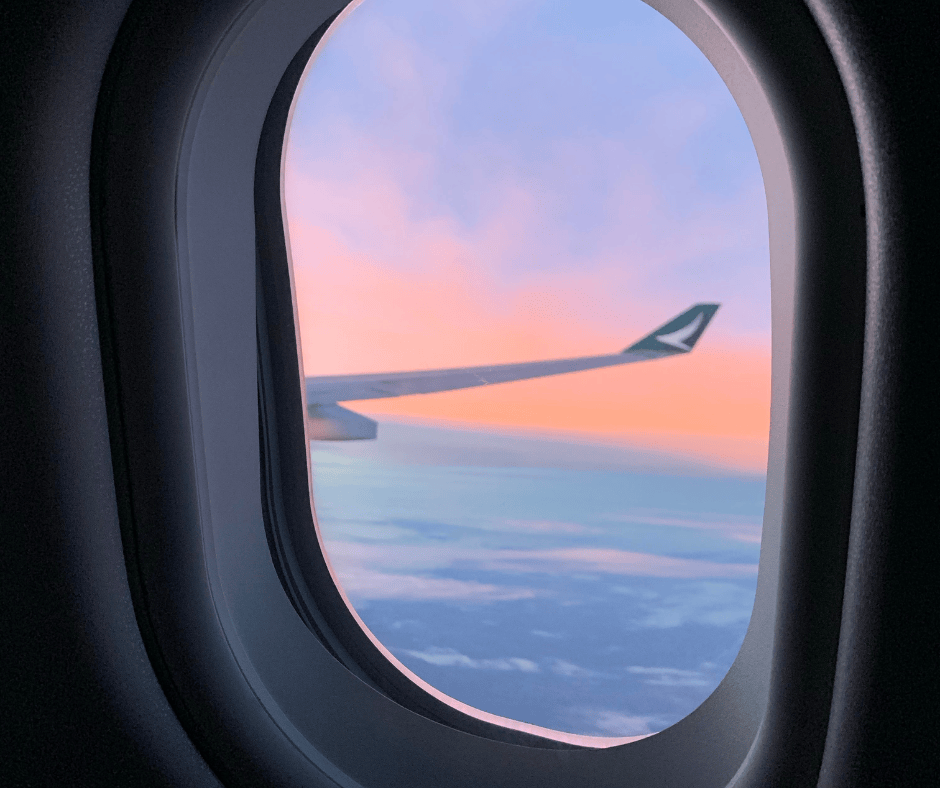
Homebound
The decision to go home began with a number glowing on a screen. I remember sitting there staring at the price of the plane tickets as though prolonged eye contact might persuade the airline to reconsider. The laptop threw that familiar bluish light across the room, the kind that makes every financial decision look slightly more serious after dark. Dates were open in one tab, flights in another, and somewhere nearby Mama’s things were already beginning to gather for her return to the Philippines. I had not planned to go with her. This was not one of those holidays carefully built months in advance, with annual leave arranged neatly, itineraries saved and a countdown happily ticking on my phone. Going home had entered the conversation suddenly, carrying far heavier luggage than anything we would eventually check in at the airport. Hans had died, and after that, the arithmetic changed. There are moments when plans stop behaving like plans because life has already altered the question. I had reasons to stay in the UK, of course. There was work, money, responsibilities and the uncomfortable figure sitting on the payment page reminding me that long-haul flights do not become sentimental simply because somebody is grieving. But then there was Mama. She was going home, and every time I imagined her making that journey alone—the airport queues, the luggage, the connections, the hours suspended between countries—it sat badly with me. The more I tried to list sensible reasons not to go, the more reasons appeared on the other side. Hans was gone. Family was gathering. Mama was leaving. Home suddenly felt less like somewhere I could visit later and more like somewhere I needed to be now. So I looked at the total again, accepted that my bank account probably had an opinion, realised my heart had already voted, and pressed pay. Just like that, what had not been a trip became one.
There was no cinematic swell of music afterwards, no confetti, no dramatic sense that destiny had approved the transaction. The booking confirmation appeared with the emotional range of an electricity bill: reference number, flight details, baggage allowance and proof that a few seconds earlier several hundred pounds had belonged to me. I sat looking at it with that peculiar combination of relief and financial grief known to anyone who has ever bought an international ticket at short notice. Apparently love sometimes comes with an e-ticket and a mildly offensive exchange rate. In the days that followed, the journey began assembling itself around us. Suitcases opened, clothes appeared on beds and chairs, chargers went missing while technically remaining somewhere inside the house, and passports were checked repeatedly because international travel temporarily removes your ability to trust your own memory. Mama prepared to return home, Jan was coming too, and I began to realise that what had initially felt impulsive was becoming something I was deeply grateful I had done.
By the time we reached London for the first flight, exhaustion had already started nibbling at the edges of the excitement. Airports have their own climate: recycled air, coffee, perfume drifting from duty-free shops, suitcase wheels rattling over hard floors and announcements spoken with the calm authority of people who know everyone is secretly worried about missing something. Travellers moved around us carrying neck pillows, documents, children, oversized hand luggage and expressions ranging from delighted to spiritually defeated. There is something peculiar about airports when you live abroad. They are neither quite departure nor arrival. They are the corridor between versions of your life. One set of people waits at one end, another waits at the other, and for several hours you belong mostly to Gate B42.
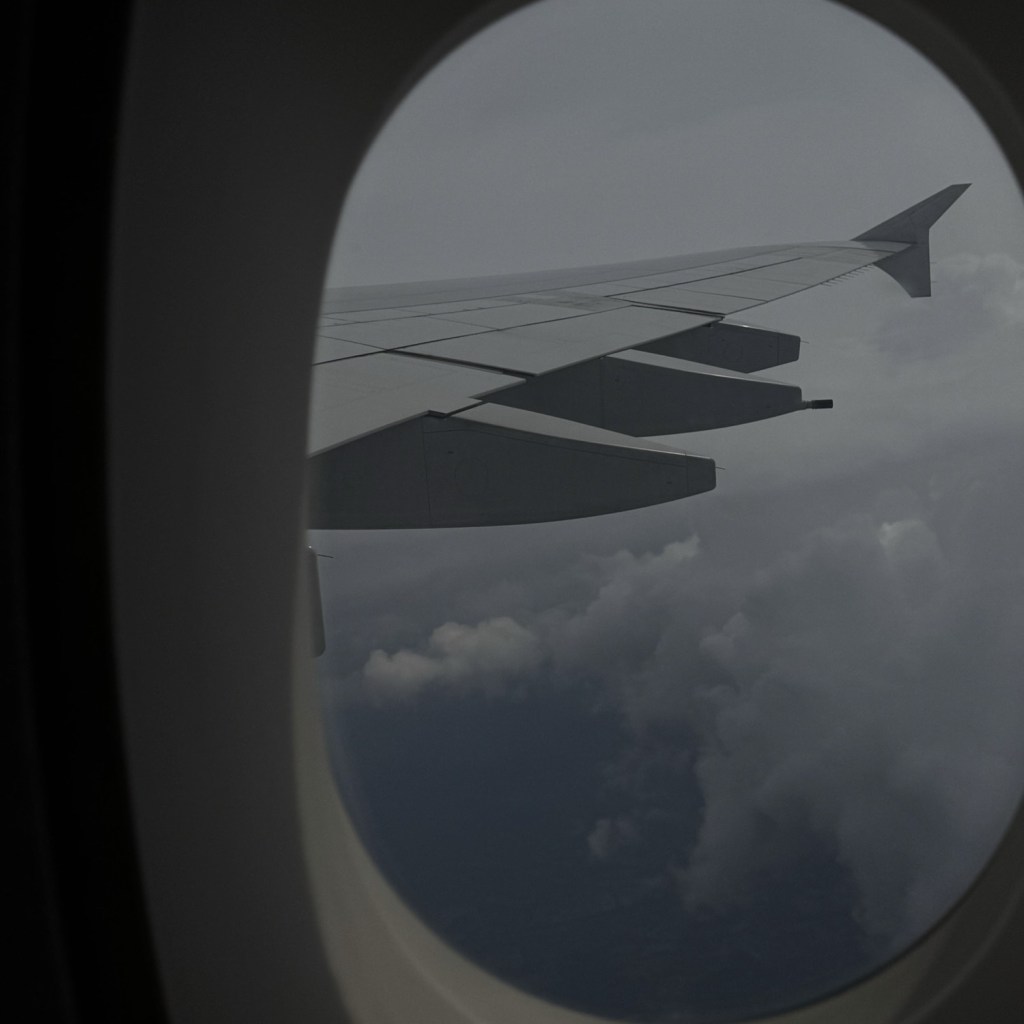
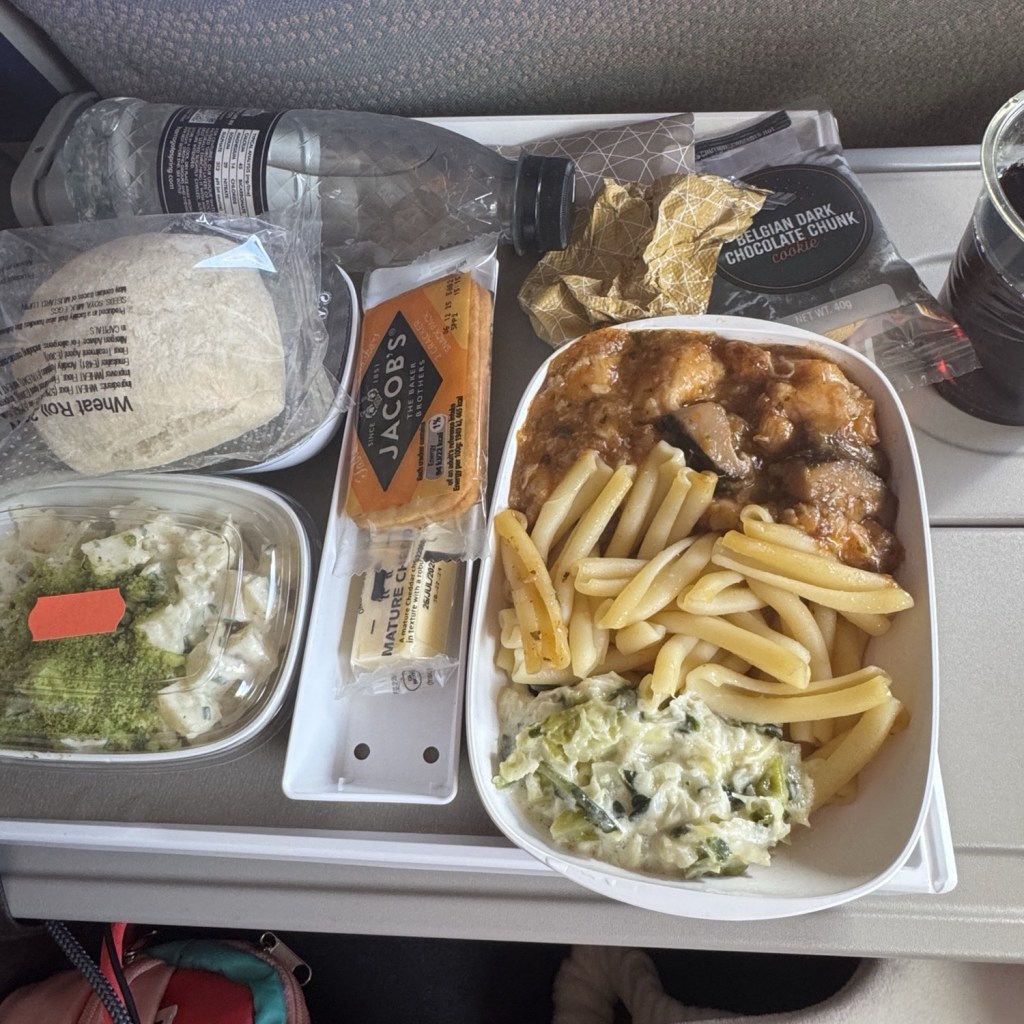
We boarded carrying more emotion than energy, and long-haul flying began its usual campaign against the human body. Somewhere between London and Dubai, my neck pillow declared itself decorative rather than functional. My knees became aware of every minute. Cabin lights dimmed, blankets appeared and people attempted sleep in positions that would concern a physiotherapist. A baby cried somewhere behind us, somebody opened a packet of crisps with astonishing acoustic power, and time slowly became theoretical. Then came the airline meal: soft penne in a mysterious sauce, a wedge of cheddar clinging stubbornly to its wrapper, a bread roll sealed as though it contained confidential information and a cookie apparently assigned the enormous responsibility of improving morale. I looked at Mama, then at Jan, and nobody needed to say anything. Families can communicate disappointment through eye contact with remarkable efficiency. We ate anyway, because travel teaches humility in unexpected forms and sometimes humility is accepting aeroplane pasta while mentally composing a love letter to rice.
By then, I was already dreaming about the food waiting at home: sinigang with steam rising from the bowl, crispy pata with that dangerous combination of crackling skin and absolutely no interest in cholesterol, garlic rice, kilawin and pancit. Food with colour, acid, salt, smoke and familiarity. When you live abroad, hunger occasionally becomes geographical. The hours blurred after that. I stopped knowing whether my body believed it was night, morning or merely being punished. My eyes closed and reopened beneath the low cabin lights. Screens glowed in dark rows. People slept with mouths open in complete surrender to social dignity. Somewhere over another country, I woke convinced I had slept for hours and discovered that approximately eighteen minutes had passed. Long-haul flying is character building in ways nobody requested.
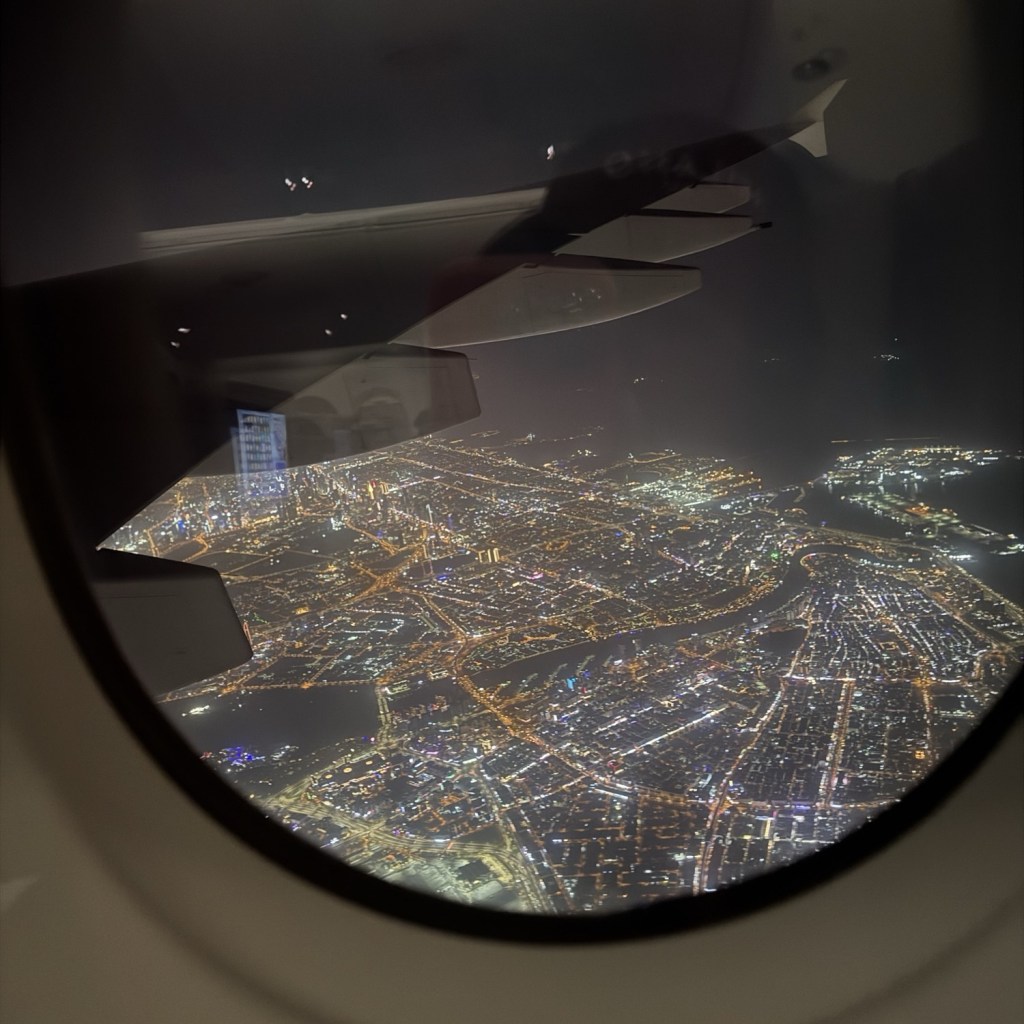
Then Dubai appeared below us. I pressed closer to the window and watched the city emerge from darkness in lines of gold. Roads stretched beneath the aircraft like illuminated veins, buildings glittered in precise clusters and the blackness around them made everything appear almost unreal. From thousands of feet above, cities look wonderfully organised. You cannot see anyone worrying about money, grief, work, family or tomorrow. You only see light. For a few minutes I watched without saying much, thinking that somewhere below were millions of private lives continuing beneath those beautiful patterns: people beginning shifts, people ending relationships, families eating dinner, somebody receiving good news and somebody else receiving the kind of news that changes the price of a plane ticket from too expensive to book it. Distance has a strange way of rearranging value.
Later, darkness began thinning at the horizon. Sunrise from an aeroplane does not behave quite like sunrise from the ground. From above the clouds, the first light seems almost impossibly clean—a thin line of gold appearing at the edge of everything, widening gradually until the clouds beneath begin catching colour. Grey turned pearl, then cream, then pale gold, while the cabin remained dim and the world outside seemed to rebuild itself slowly. I watched longer than I expected. Faith has often felt a little like that to me: not a guarantee that difficult things disappear, but the stubborn existence of light while you are still sitting inside the dark. Hans was still gone. Grief had not become easier because the sky was beautiful. But watching that sunrise reminded me that sorrow and beauty can occupy the same morning without either cancelling the other.
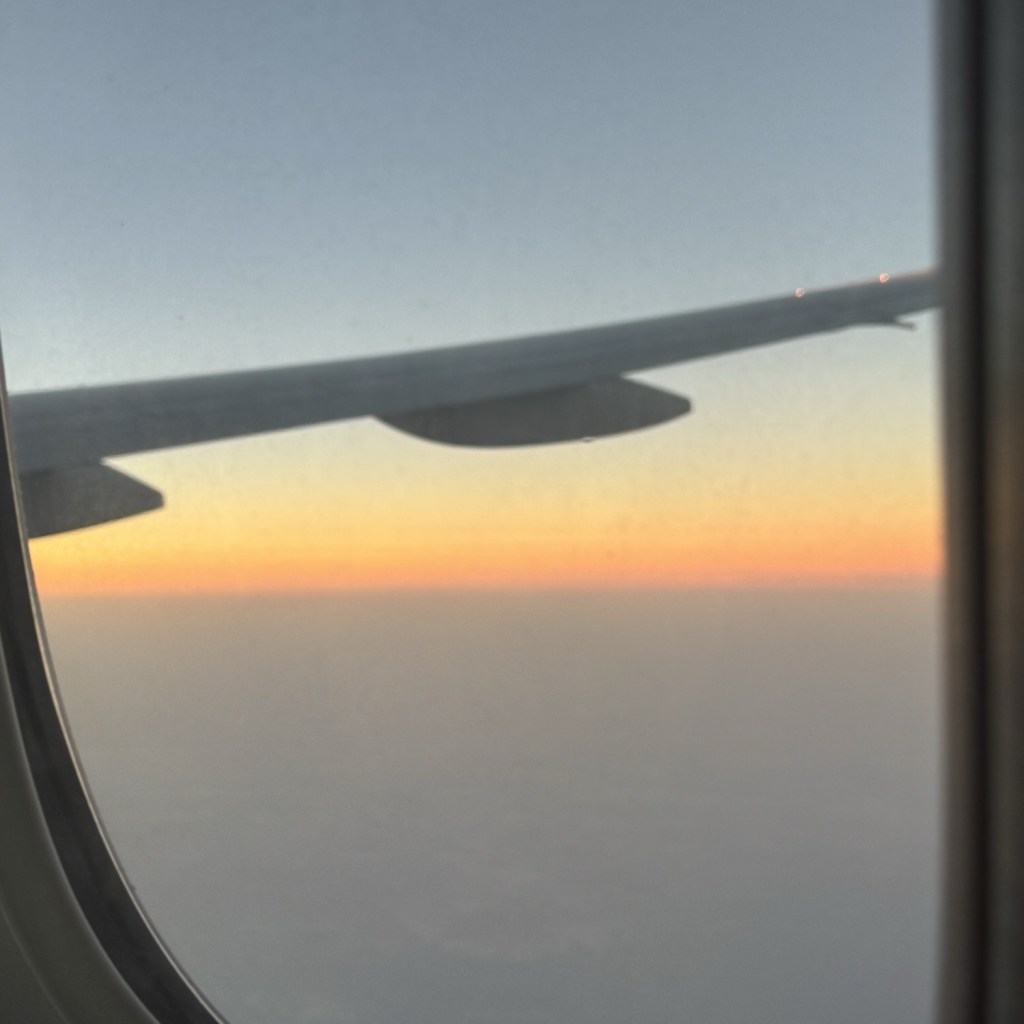
Eventually, the hours brought us closer to Cebu. The announcement about our descent changed something in me immediately. Tiredness was still there, my legs had reached the stage where they appeared to belong to somebody else, and my hair had surrendered several countries earlier, yet when the coastline began appearing below us, fatigue suddenly had competition. Roads sharpened beneath us, rooftops multiplied and the coastline came into view. I leaned towards the window with the ridiculous concentration of somebody hoping to identify an entire childhood from several thousand feet above. Cebu had continued existing perfectly well without me, but seeing it still felt personal.
When the aircraft doors eventually opened, the heat introduced itself immediately. Warm, humid air slipped into the spaces airport air-conditioning had failed to defend, and after hours inside a controlled cabin climate, the difference was almost physical enough to touch. The Philippines has a smell I never notice properly until I have been away: humidity, concrete warmed by the sun, traffic, food somewhere nearby and something earthy underneath it all. I inhaled and recognised it before I had time to analyse it. Home. Immigration queues remained immigration queues, unfortunately, because homecoming does not grant diplomatic immunity from standing in line while exhausted. Mama, Jan and I shuffled forward with luggage, passports and whatever fragments of energy remained while other arrivals carried their own stories around us. Children ran towards relatives, couples held each other longer than ordinary greetings require, grandparents reached for grandchildren and people cried openly without caring who watched. Airports are strange theatres for love. Arrivals and departures happen only metres apart, and one side of the building is breaking hearts while the other is putting them temporarily back together.
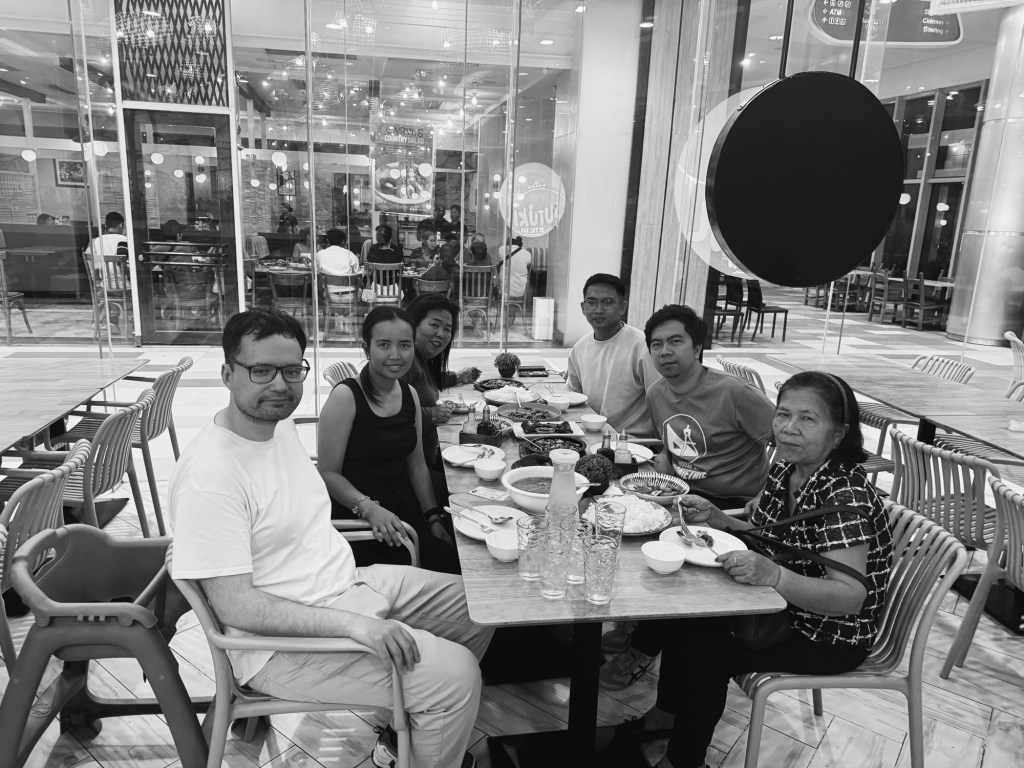
When our family finally came into view, there were no speeches prepared for the occasion. There did not need to be. There were hugs that lasted slightly longer because everyone was measuring absence without saying so. Faces I had been seeing through screens had depth again, and voices came from the correct direction instead of through a phone speaker. Because this was the Philippines, emotion was allowed approximately several minutes before somebody made sure we ate. The table that followed felt almost medicinal. Crispy pata, sinigang na baboy, pancit, kilawin, grilled ribs and garlic rice filled the space until I began to wonder whether my relatives believed we had crossed continents specifically because Britain had stopped supplying food. After hours of airline meals, the rice alone looked worthy of a reunion. Then I smelled the sinigang, and that familiar sour steam reached me before the first spoonful. Several months of distance collapsed into one bowl. Food is unfairly powerful that way. It slips past whatever emotional organisation you have attempted and goes directly to memory.


The room itself was gloriously noisy. Conversations overlapped, somebody interrupted somebody who had already interrupted somebody else, plates moved around, hands reached across the table and laughter arrived from different directions. There were several conversations happening simultaneously and no official chairperson trying to restore order. I had missed that noise. Living in Britain had taught me to appreciate many things about quieter spaces, personal schedules and orderly routines, but Filipino family gatherings have their own acoustics. Silence is rarely the objective. Affection often sounds like somebody asking whether you have eaten while placing more food on your plate before you answer. For a while I simply sat there, tired enough to feel slightly detached from my own body, eating food I knew by memory while voices moved around me.
That was when the trip began making sense. I had originally looked at the ticket as a decision: should I go, was it sensible, could I justify the expense, was there enough time, could everything else be arranged? But grief has a way of exposing the limits of practical questions. Hans’s death had already reminded us, painfully, that there are no guarantees about the next gathering. Mama was going home. Family was there. I had spent years abroad learning to plan responsibly, save carefully and consider consequences, all of which remain useful adult skills. Yet sometimes adulthood also requires recognising when the spreadsheet is not the most important document on the table. There had been more reasons to go home than to let Mama make that journey without me, and I was grateful I had listened to them.
Living abroad changes your relationship with ordinary things because absence improves their visibility. Rice becomes emotional. The hum of an electric fan can sound nostalgic. Humidity, which I once considered one of the Philippines’ more personal attacks, can somehow feel comforting after enough British winters. A bowl of soup can carry twenty years of memory without spilling any of it. We often imagine homesickness as missing spectacular things, but in reality I think we miss background noise: a familiar voice from another room, a particular way somebody calls your name, plates on a table, motorbikes outside, the smell of food before you see it and a language your brain does not need to translate. Distance takes ordinary life and puts a frame around it.
Coming home also means meeting a version of yourself that stayed behind in memory. Roads change, new buildings appear, shops disappear, people become older and children become taller than the image you have been carrying of them. Home refuses to freeze politely while you live somewhere else, yet the body remembers. Certain turns still feel familiar, certain smells require no introduction, your humour adjusts its accent and your mouth finds old words without searching. Cebu had changed, and so had I, but recognition survived anyway.
Living in Britain has shaped me profoundly. My work, routines, independence and much of my adult life now belong there. Returning to the Philippines does not undo any of that. If anything, going back makes me understand more clearly that identity is capable of keeping several addresses without creating a crisis. I do not have to choose which place is allowed to be home. One holds the life I built, while the other remembers where I began. Faith travelled with me between them. Somewhere between booking the ticket, losing Hans, worrying about Mama travelling alone, watching sunrise over the clouds and finally sitting at that crowded table, I kept returning to the idea that we rarely understand the value of presence until absence makes it expensive. Sometimes God’s lessons arrive through scripture, sometimes through grief, and sometimes, apparently, through an airline booking page asking whether you are absolutely certain you would like to proceed with payment. I had been certain enough to click.
By the end of that first meal in Cebu, I understood the decision differently. The ticket had bought transportation, certainly: London to Dubai, Dubai to Cebu, a seat, baggage allowance, several questionable meals and the temporary destruction of my sleeping pattern. But that was not really what I had paid for. I had paid to sit beside Mama on the journey instead of imagining her travelling alone. I had paid for one more arrival, one more family table and one more chance to hear voices without a phone between us. I had paid to be physically present during a season when loss had already reminded me how quickly presence can become memory. No booking website knows how to price that.
That evening, surrounded by familiar food and the noisy affection of family, I thought about the screen where the journey had begun. I remembered the fare glowing back at me, the hesitation before payment and the small internal argument about whether an unplanned trip was sensible. If I could return to that moment, I would still stare at the price and I would still wince because I am not suddenly irresponsible. But I would press the same button. The journey had started with me staring at a number and wondering whether going home was worth the cost. By the time I was sitting at that family table, tired, overfed and surrounded by the people I had crossed continents to see, the answer felt embarrassingly simple. The number on the screen could tell me exactly what the ticket cost. It could never tell me what going home was worth.
Ticket paid. Worth unquestioned.
Anj ✈️ 🖤


































Leave a Reply