Friday began with the sound of thousands of people waiting for a name.
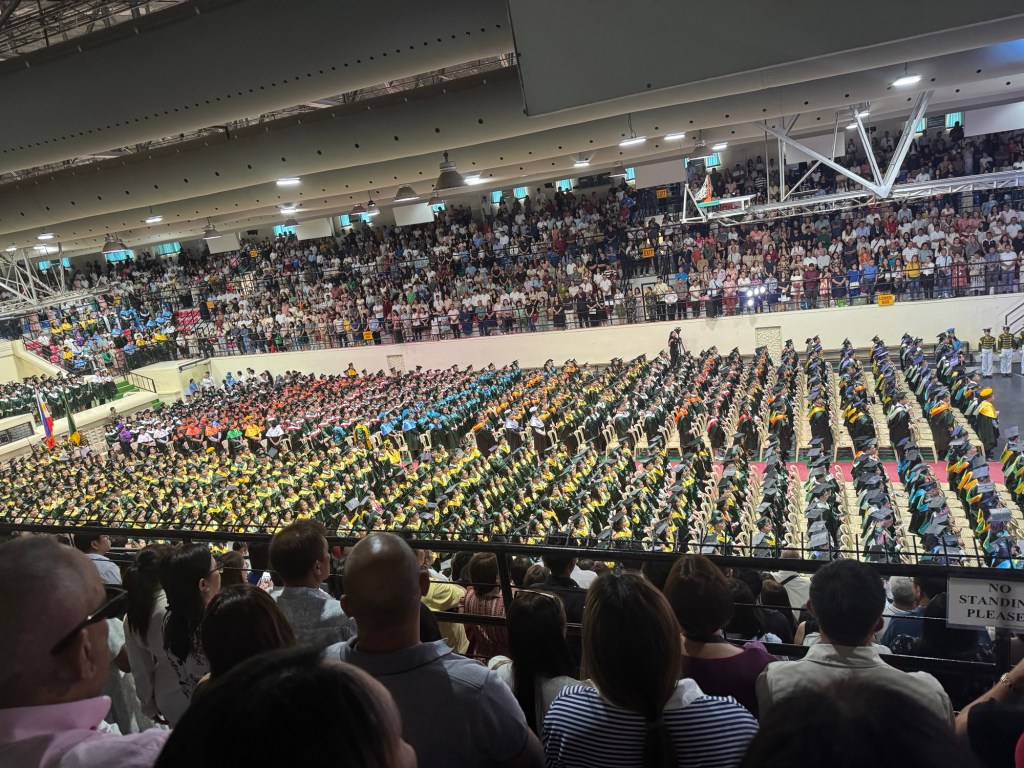
Inside the coliseum, conversations overlapped beneath the hum of anticipation. Families searched the rows for familiar faces, phones were already raised before anything had properly begun, and somewhere among that enormous gathering of students, parents, siblings, friends and teachers sat my younger brother. The 117th Commencement Exercises of the University of San Jose-Recoletos had brought together graduates from different colleges and different disciplines, each wearing the visible evidence of years that nobody in that room could fully see. From where I was sitting, the ceremony looked grand. But I knew that behind every toga was a much smaller, more private story: deadlines survived, examinations feared, disappointments swallowed, money stretched, sleep sacrificed, prayers repeated and ordinary mornings when someone simply decided to get up and try again.
Then I found him.
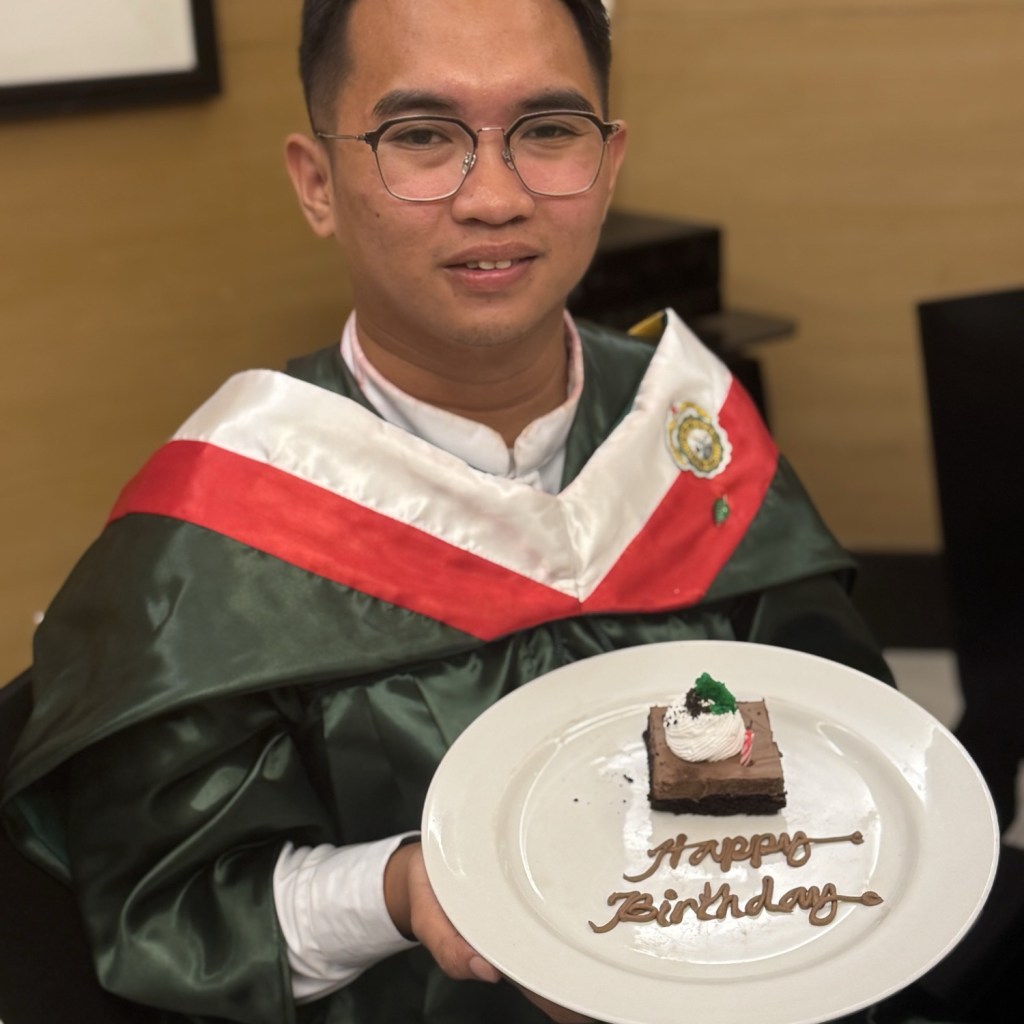
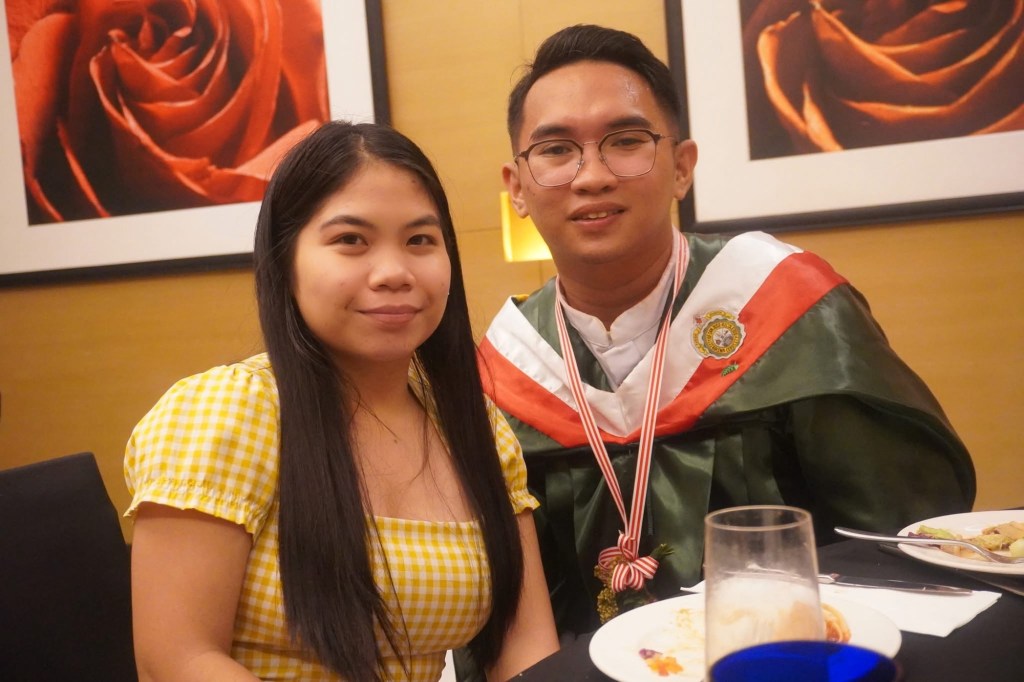
Among the sea of green togas and crimson linings, there he was—still, focused and perhaps completely unaware that his older sister was looking at him with the sort of pride that makes you unexpectedly emotional in public. For a few seconds, the noise around me seemed to recede. I was no longer looking at hundreds of graduates. I was looking at my brother and thinking about the distance between wanting something and finally reaching it.
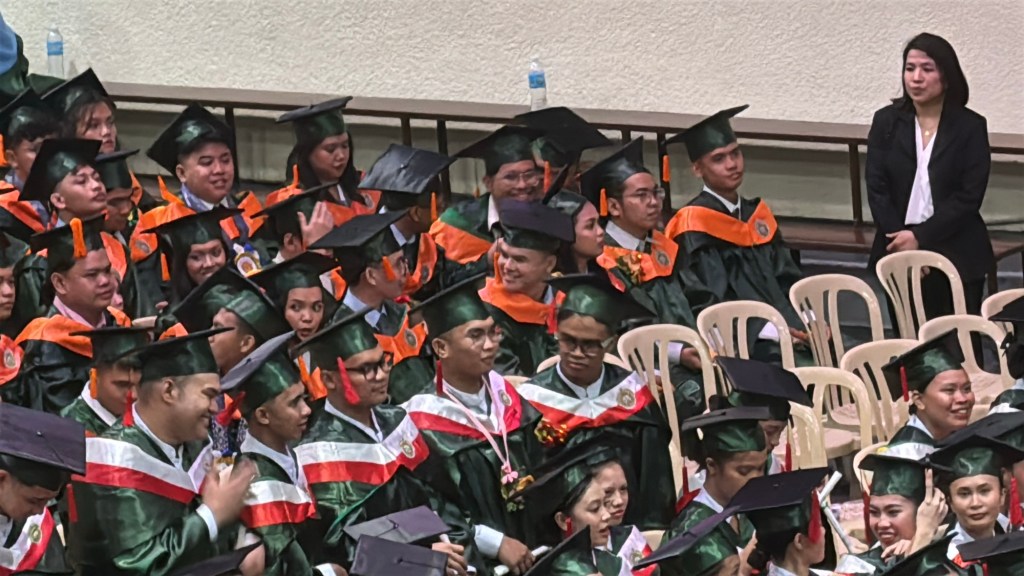
Graduation photographs make achievement look wonderfully tidy. Everyone is dressed properly. The stage is polished. Names are announced. People applaud. Someone takes a photograph at exactly the right moment, and years of work are compressed into a few seconds of ceremony. Life, of course, is rarely that organised. The road towards a milestone contains things that never make it into the photograph: uncertainty, exhaustion, mistakes, delays, frustration, moments of comparison and those private conversations with yourself when you wonder whether you are capable of becoming the person you once imagined.
That was what I thought about as I watched him.
I did not see his graduation as a resurrection of an old version of him, because perhaps becoming is more subtle than that. We do not completely leave our former selves behind every time we succeed. We carry them with us—the frightened version, the uncertain version, the stubborn version, the hopeful version, the one who almost gave up and the one who decided not to. They all arrive at the finish line together.
Success does not erase the struggle that preceded it; it gives the struggle a different meaning.
Perhaps that is why witnessing someone you love graduate feels different from watching a stranger cross a stage. You know some of the invisible history. You remember the conversations that happened before the congratulations. You remember when the outcome was still uncertain. You know that the person receiving applause was once simply sitting somewhere with a problem in front of him, trying to figure out what to do next.
And as his sister, there was another layer to my pride. Nursing is a profession I know beyond its pristine uniforms and ceremonial pins. I know its privilege, but I also know its weight. I know that beyond graduation waits a profession that will ask for knowledge, judgement, resilience, humility and compassion, sometimes all within the same exhausting hour. There will be patients he remembers long after leaving the ward, difficult days when confidence falters, moments when he will have to speak up, ask for help, admit that he does not know something and keep learning anyway. Watching him graduate therefore did not feel like watching him arrive at the end of something. It felt like watching him stand at the entrance of another beginning.
My prayer for him is not that the road ahead becomes easy. Easy roads do not necessarily make good nurses. I hope instead that whatever the profession teaches him, it never teaches him to become indifferent. I hope experience sharpens his judgement without hardening his heart. I hope knowledge gives him confidence without taking away humility. I hope he remembers that behind every hospital number is a human being whose ordinary life has suddenly been interrupted, and that sometimes what patients remember most is not the complexity of what we did but the humanity with which we did it.
But graduation was only one part of what Friday meant to us.
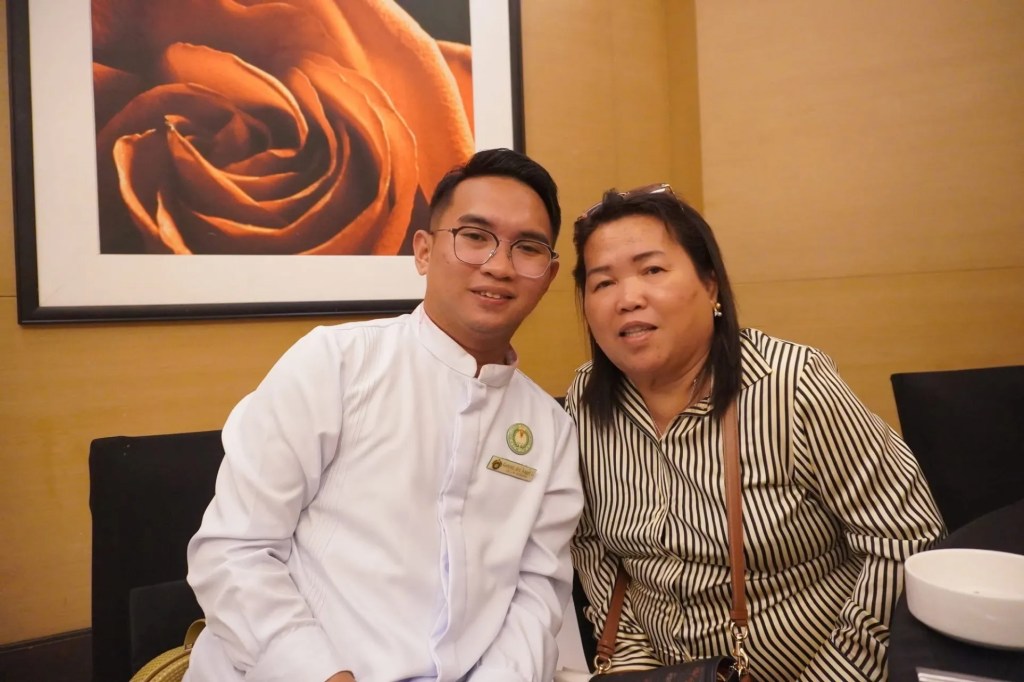
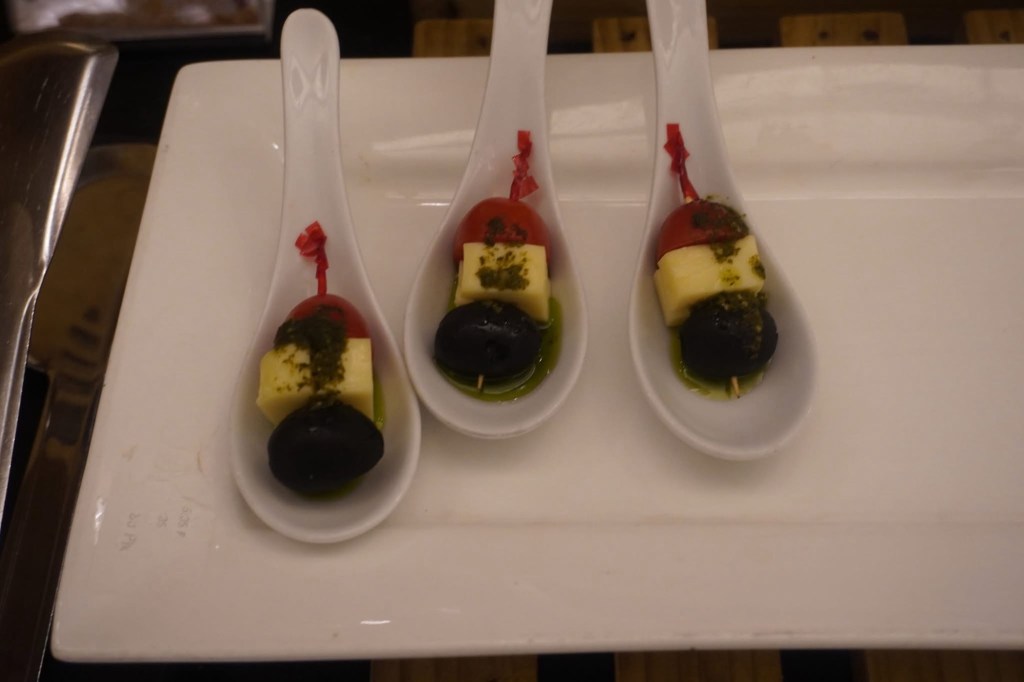
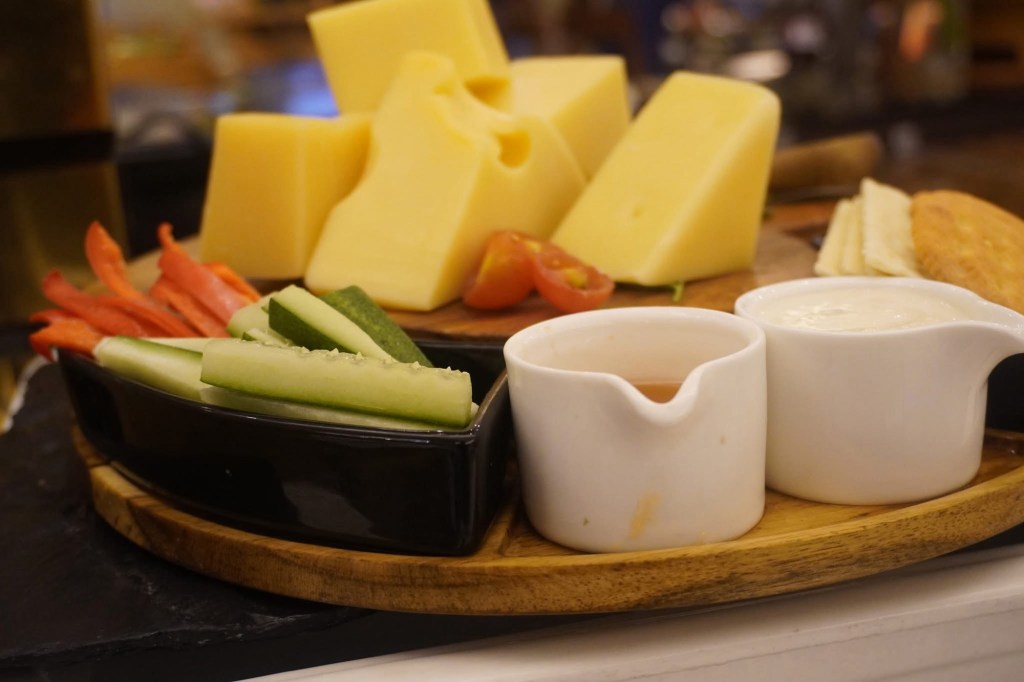
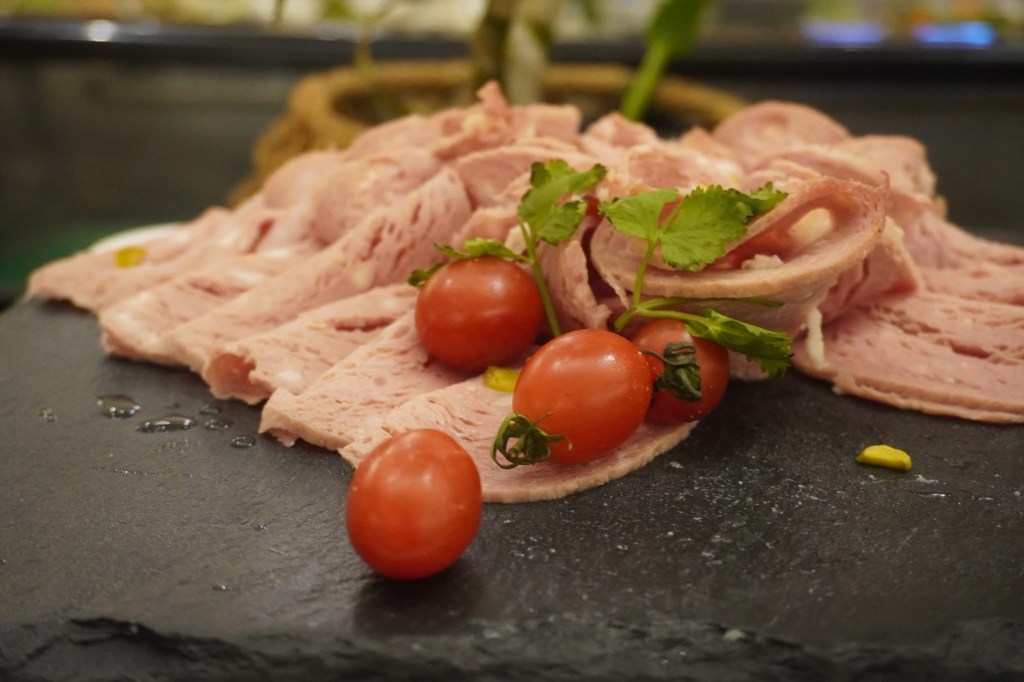
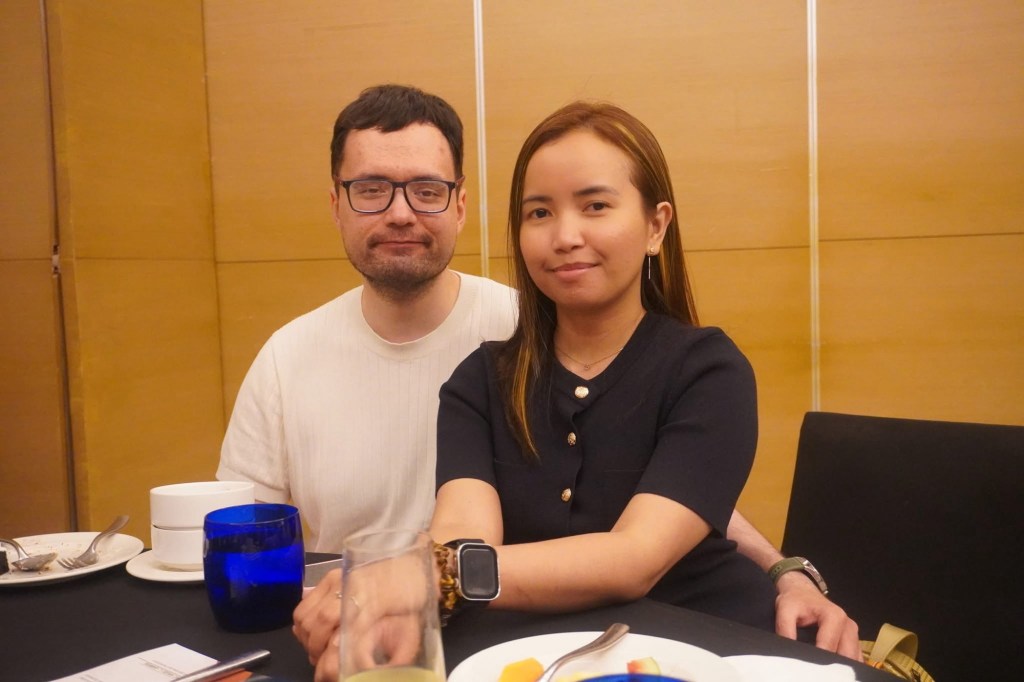
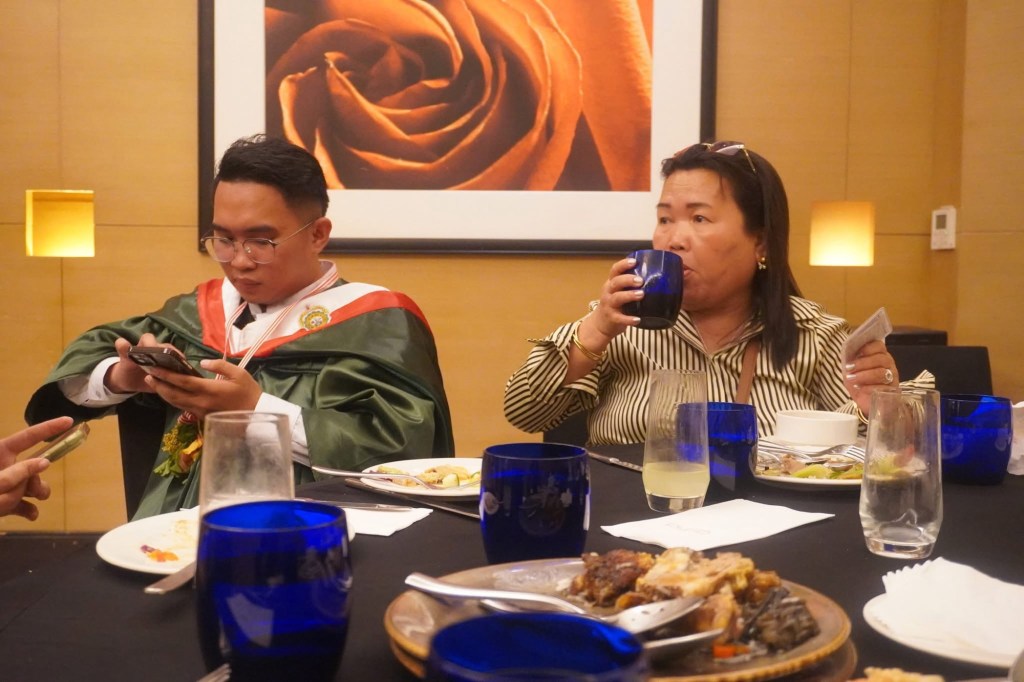
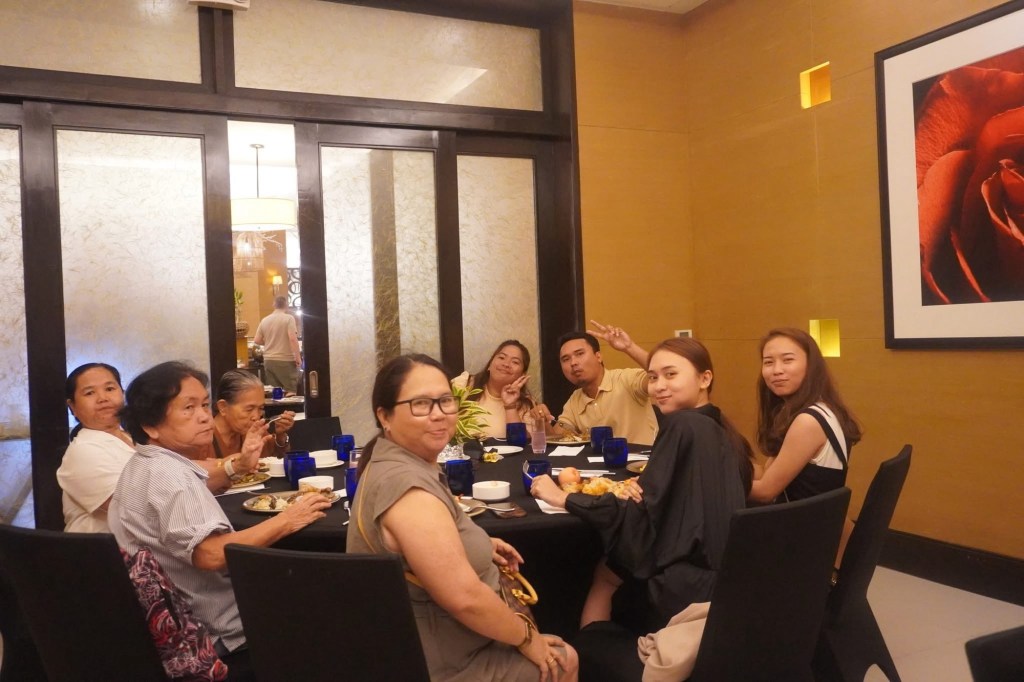
After the ceremony, our family gathered at Pusô Bistro. Even the name felt appropriate. Pusô means heart, and there seemed to be an extraordinary amount of heart being carried into that restaurant with us. We came to celebrate a graduate, but tucked underneath that celebration was another occasion we had deliberately left unfinished.
My brother’s birthday.
His birthday had been on May 5, but May 5 had become something none of us expected it to become. On the very same day, we lost our cousin Hans.
There are dates that begin belonging to one thing and suddenly become responsible for carrying two. A birthday is supposed to invite celebration, but grief does not consult calendars before arriving. That year, May 5 became both the anniversary of someone’s arrival into this world and the day someone else left it. We could not pretend otherwise. We did not have the emotional vocabulary for singing loudly while our family was trying to comprehend a death. Celebration felt inappropriate then, not because my brother’s life mattered any less, but because grief had entered the family so recently that joy needed somewhere quieter to wait.
So we waited.
I think there is wisdom in that too. Sometimes we pressure ourselves to return to normal far too quickly. We speak about moving forward as though grief should observe a timetable, as though enough days passing automatically gives the heart permission to behave normally again. But grief is not administrative. It does not respond to deadlines. There are days when you can laugh genuinely and then feel guilty for laughing. There are celebrations where somebody’s absence suddenly becomes more noticeable precisely because everyone else is present. There are moments when happiness arrives and grief sits beside it without asking either feeling to leave.
Friday became one of those days.
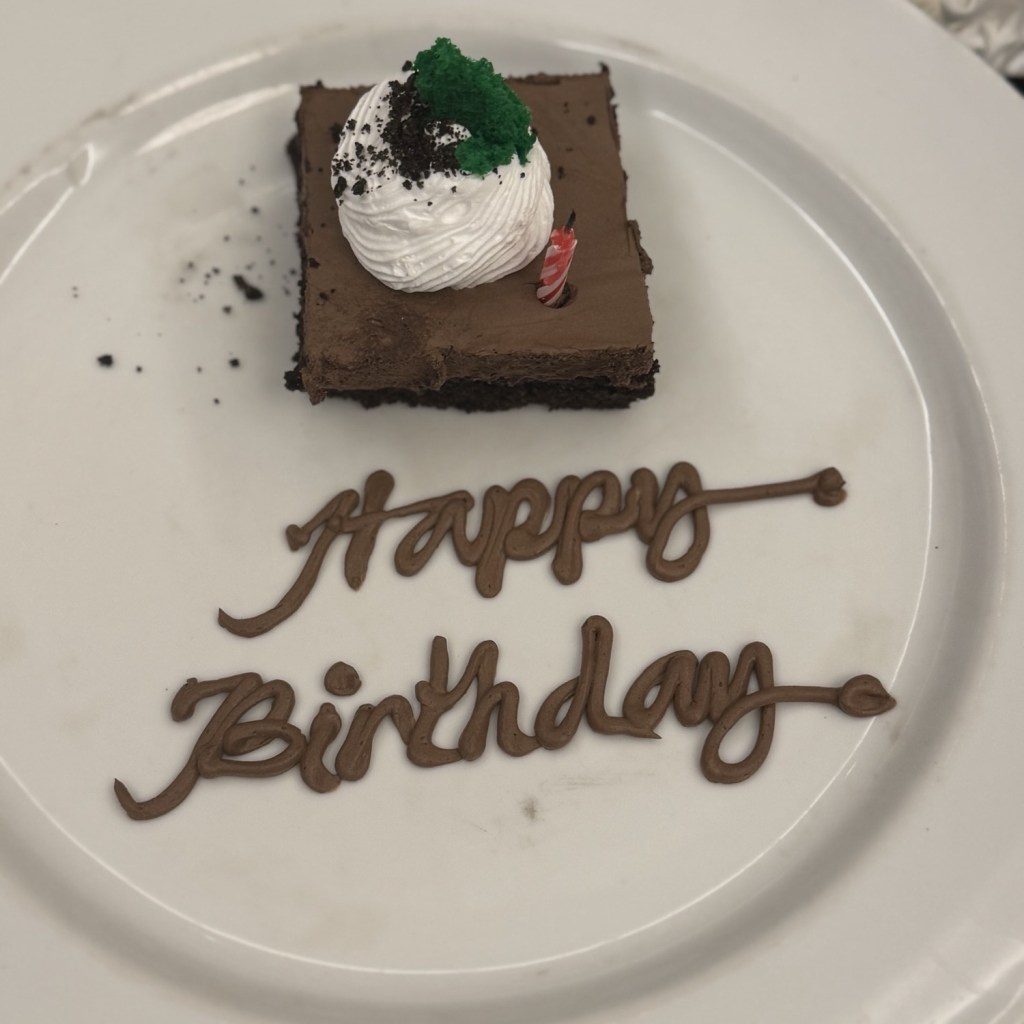
When my brother held up his dessert with Happy Birthday written across the plate in chocolate, I felt the complicated tenderness of finally giving him the celebration we had postponed. We were not replacing what happened on May 5. We were not pretending the loss had become easier simply because time had passed. We were allowing joy to return without requiring grief to disappear first.
And perhaps that is one of the hardest things death teaches those who remain: grief and joy are not enemies. They are often evidence of the same thing—love. We grieve because someone mattered, and we celebrate because someone matters. The heart is somehow capable of carrying both. It can miss one person while laughing with another. It can thank God for what remains while still asking why something had to be taken. It can feel an absence at the same table where it recognises abundance.

I thought about Hans throughout the day. Not every second in a dramatic or overwhelming way, but in those little spaces grief seems to occupy after the initial shock has passed. His absence existed quietly among us. I have learned that missing someone does not always announce itself through tears. Sometimes it is simply the thought, He should have been here. Sometimes it is looking around a family gathering and instinctively noticing the person who is no longer part of the noise. Sometimes grief is not an interruption at all. It is a background presence that has learned how to live beside everything else.
There is a temptation after losing someone to believe that enjoying life somehow betrays them. For a while, happiness can almost feel disloyal. How can we laugh when somebody we love can no longer laugh with us? How can we celebrate another year when someone else’s years have ended? How do we continue making plans when death has already shown us how fragile plans can be?
I do not think there are easy answers to those questions. But faith has slowly changed the way I carry them. I no longer believe remembering the dead requires us to become less alive. If anything, loss has made the ordinary privilege of being alive feel more urgent. Hans’ death did not teach me that celebrations are meaningless because everything eventually ends. It taught me the opposite. Things matter precisely because they do not last forever.
That long table at Pusô Bistro therefore felt sacred to me in a way I could not have understood when I was younger. It was not sacred because everything was perfect. It was sacred because we were there. We had people to celebrate, people to remember, food to share and another evening granted to us without any guarantee that life would ever arrange precisely the same group around precisely the same table again.
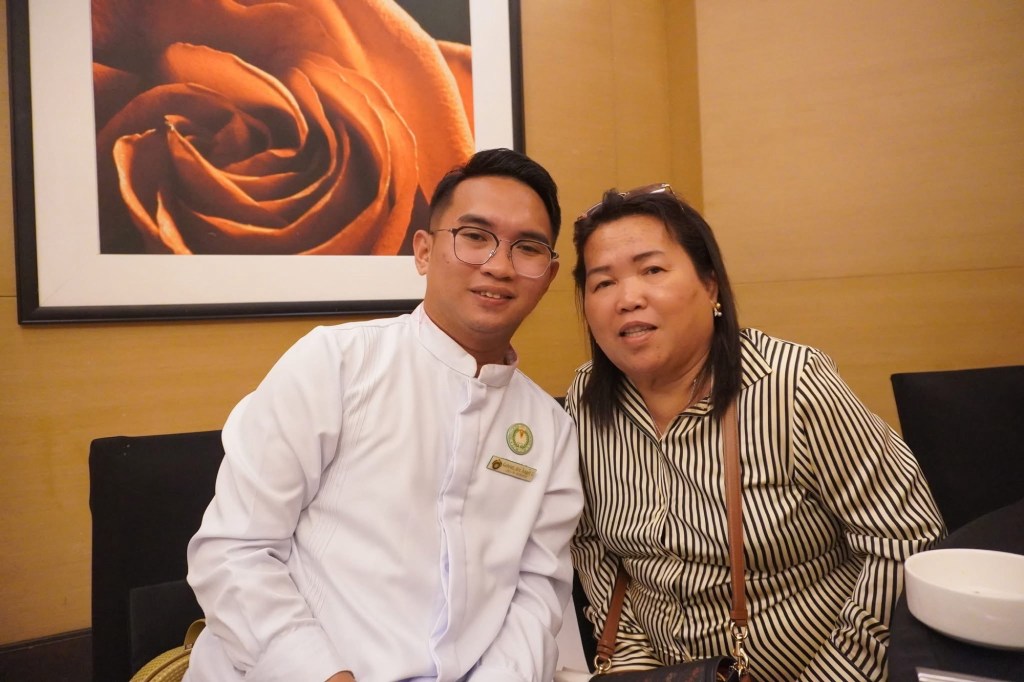
There were toasts and laughter. There were photographs—many photographs, because we are Filipino and apparently no significant family event can legally conclude until every possible permutation of relatives has been documented. There were the formal ones where everyone tried to stand properly, followed inevitably by the less dignified ones that probably captured us more accurately anyway.

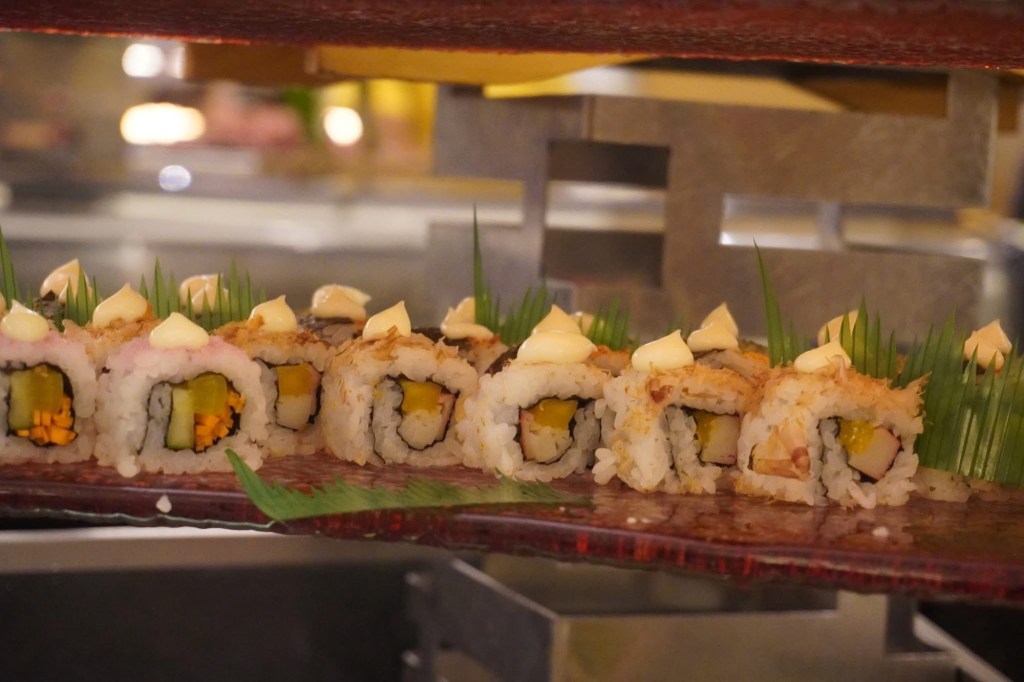
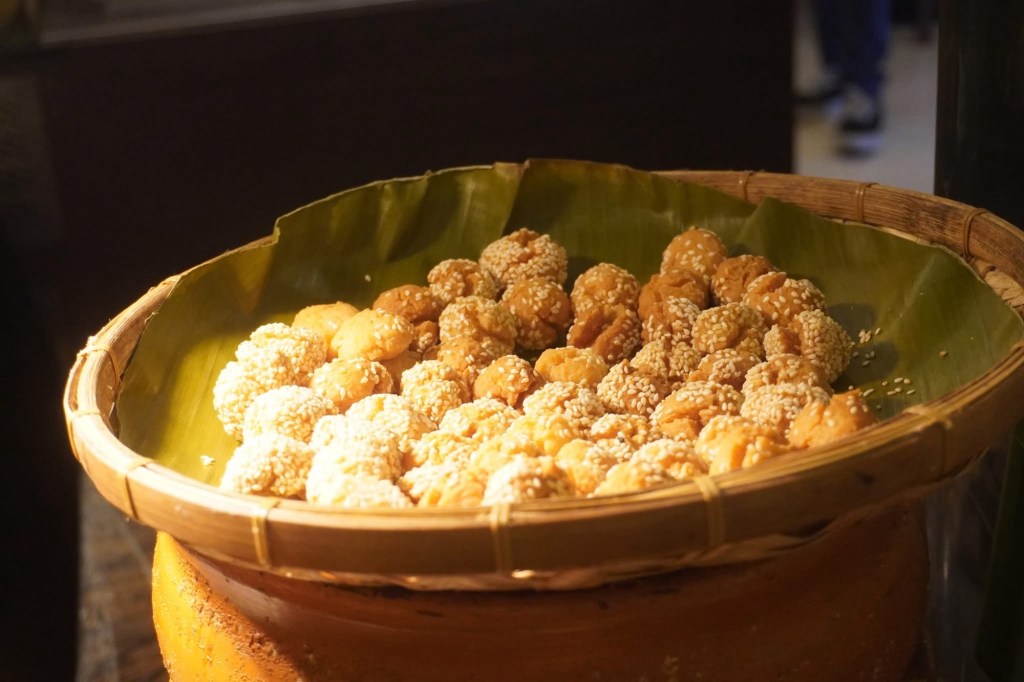
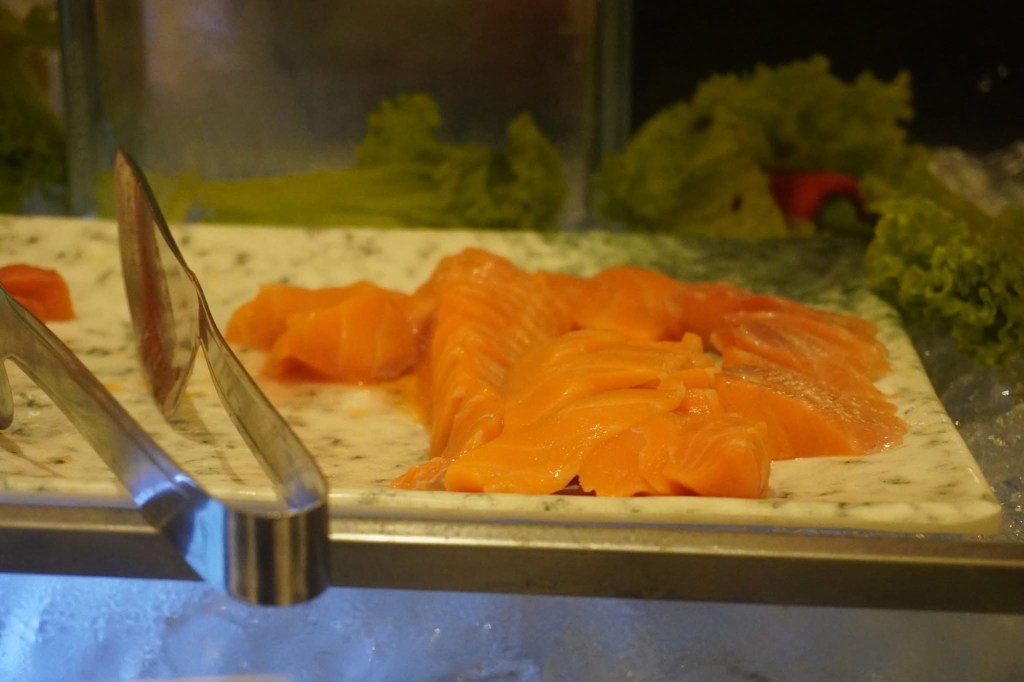



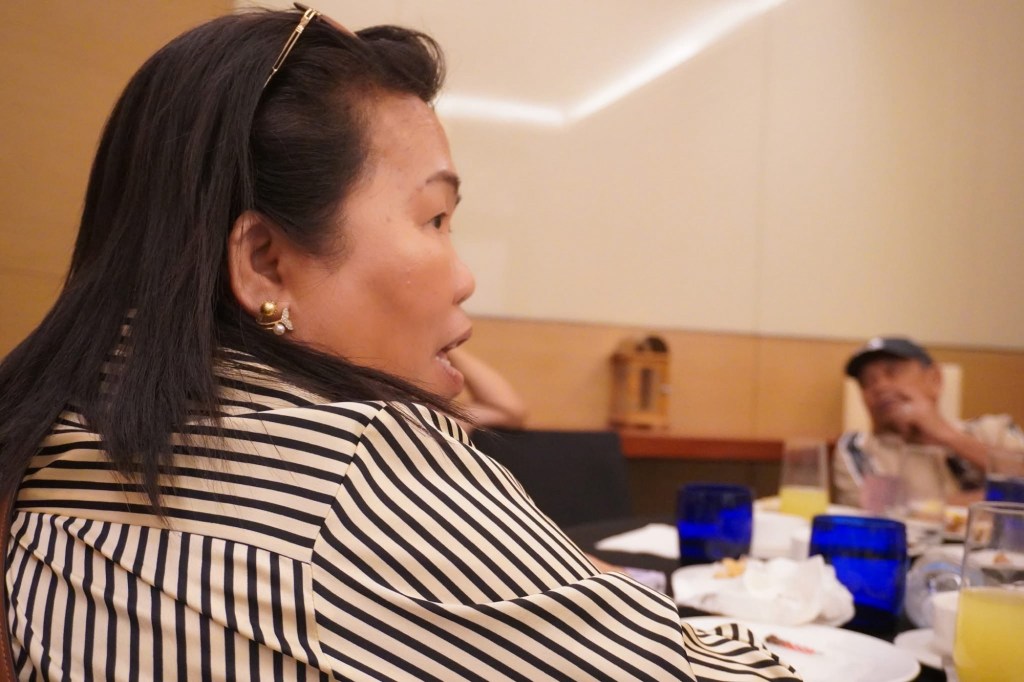
Living away from the Philippines has made me increasingly attentive during gatherings like this. Distance changes your relationship with ordinary family moments. When you live near the people you love, it is easy to assume there will always be another lunch, another birthday, another random afternoon when everyone happens to be home. When you live thousands of miles away, those assumptions become less comfortable. Family gatherings require flights, annual leave, planning and sometimes a little luck. You begin looking around tables differently because you understand that the most valuable thing in the room is not necessarily what is being celebrated. Sometimes, it is simply the fact that everyone managed to be there.
Perhaps that was why, as the afternoon slowly surrendered to evening, I found myself watching more than talking. I looked around the table at my family laughing, eating, passing plates and interrupting one another in that wonderfully familiar way families do. I watched my brother being both a graduate and, finally, the birthday boy. I thought about all the people who had helped him reach this moment, the sacrifices that were visible and those that would never appear in a photograph. And inevitably, I thought of Hans. It struck me how extraordinary it is that a family can be celebrating and grieving at precisely the same time and somehow remain intact.
Life rarely gives us emotions one at a time. That may be one of adulthood’s least advertised truths. We imagine happiness as something pure and uncomplicated, untouched by sadness, but the older I become, the less often life seems to work that way. Some of my happiest moments contain the quiet absence of someone I wish were still here. Some achievements remind me of sacrifices I wish nobody had needed to make. Some prayers are answered beside other prayers whose answers I still cannot understand. Gratitude and grief, pride and longing, celebration and remembrance frequently arrive together, and perhaps maturity is not learning how to separate them but developing enough emotional space to let them coexist without demanding that one invalidate the other.
I also found myself thinking about how easily we postpone living. We tell ourselves we will celebrate when life becomes less complicated, visit family when work becomes quieter, take photographs when we look better, say I love you when the moment feels right, forgive when enough time has passed, or call someone tomorrow because today feels inconvenient. Then death enters a family and exposes how fragile those assumptions really are. Tomorrow is useful for making plans, but it has never been a promise, and I do not mean that pessimistically. If anything, loss has made me want to live more deliberately. I want to take the photograph even when nobody is perfectly arranged. I want to sit at the table a little longer. I want to notice my mother’s laughter, remember how my relatives tell their stories and listen even to the family jokes I have heard a hundred times before. I want to celebrate people while they are still here rather than becoming eloquent about their importance only after they are gone.
Hans’ death remains painful, and I no longer think love requires us to transform every loss into a beautiful lesson before we are allowed to carry it. Some losses are simply losses. Faith does not oblige us to pretend that death does not hurt. Even Jesus wept. There is room within belief for sorrow, questions and the difficult admission that we desperately wanted a different outcome. At the same time, faith reminds me that grief does not have the final word. I cannot explain why some people are given decades while others are given far less, and I do not want to reduce human suffering to convenient phrases about God’s plan simply because uncertainty makes us uncomfortable. What I can do is accept that the limits of my understanding are not the limits of God’s presence. I can pray for the people we have lost, entrust them to His mercy and continue loving the people who are still sitting beside me. Perhaps, on certain days, that is enough faith.
My brother’s graduation became unexpectedly symbolic because of everything surrounding it. Here was a young man completing one chapter of his life only weeks after our family had been painfully reminded that life itself has limits. One event represented beginning while the other had forced us to confront an ending, and somewhere between those two realities stood all of us, trying to understand how people continue after loss. The answer, I realised, was not particularly dramatic. We continued simply by showing up. We dressed for the graduation, applauded when names were called, took far too many photographs, gathered around a table, finally celebrated a postponed birthday, remembered Hans, laughed, ate and thanked God. Maybe resilience is often less cinematic than we imagine. Sometimes it is simply the decision to continue participating in life after life has hurt you.
I looked at my brother that day and felt proud not merely because he had earned his degree, but because he had reached a place that once existed only somewhere in his imagination. There is something extraordinary about witnessing another person’s becoming. You see them standing inside a reality that used to be only an ambition, and if you have known them long enough, you also remember all the versions of them who had no idea whether they would ever arrive there. His graduation reminded me that becoming takes time and that life rarely follows the elegant chronology we imagine when we first make our plans. There are detours, failures, delays and seasons when nothing appears to be moving at all. There are moments when everybody else’s life seems to be progressing while yours appears stubbornly stationary. Yet a delayed journey is not necessarily a failed one. Sometimes the road simply asks more of us before revealing where it has been leading.
Perhaps that lesson extends far beyond graduation. We are accustomed to measuring our lives against calendars, silently deciding that by a certain age we should have achieved something, become someone or understood more than we currently do. Yet life does not always respect our schedules. Neither does grief, growth, love or faith. Some of the most consequential changes within us happen during seasons when we are convinced we are falling behind. Friday reminded me to become gentler with timelines—my brother’s, my family’s and especially my own.
By evening, the celebration had already begun its transformation into memory. The applause from the coliseum had disappeared, the plates had been cleared and photographs were accumulating on our phones. My brother’s postponed birthday had finally been celebrated, although the reason we postponed it remained quietly present among us. We did not have to choose between remembering Hans and celebrating my brother. We could miss someone and still laugh. We could acknowledge that May 5 had broken our hearts while remaining grateful that it was also the day my brother entered the world years earlier. We could mourn a life that ended while celebrating another life continuing. The human heart, I am learning, is far more capacious than we give it credit for.
There is a photograph from that day that I suspect will become more valuable to me as the years pass. Right now, I see familiar faces, clothes, food, a restaurant and a family celebration. Years from now, I may look at the same photograph and notice entirely different things. I may notice how young everyone looked, who travelled far to be there, who was laughing beside whom and all the details of that particular season of our lives that I currently take for granted. Photographs become valuable because time changes their meaning. Maybe that is why I take so many. I am not merely documenting how something looked; perhaps I am trying, however impossibly, to preserve evidence that for one brief moment, these people I love occupied the same piece of time with me.
Friday deserves to be remembered for that reason. Of course, I want to remember it as the day my brother graduated and the day we finally celebrated his birthday, but I also want to remember what it taught me about family and about the strange architecture of being alive. We had recently encountered death, yet there we were witnessing a beginning. We were carrying grief, yet laughter still found its way back to us. Someone was missing, but love had not disappeared with him. Death changes the number of people around the table, but it does not erase the love that once sat there.
Hans remains part of our family story. His absence will probably appear in future celebrations in ways we cannot predict. Some days it may hurt sharply, while on others his name may produce a smile before it produces tears. That is one of the peculiarities of grief: it changes because we change. Remembering someone, however, does not require us to stop creating new memories. Perhaps one of the most loving things we can do for those who have gone before us is to refuse to waste the life that remains in us. Continuing to live does not mean we have forgotten them; it means their death did not extinguish everything they taught us about being alive.
So this entry is for my brother, who sat somewhere among hundreds of graduates while his family searched for him in the crowd. It is for the student he once was and the nurse he is becoming, for every difficult day that eventually led him to that stage and for every person whose love, prayer, encouragement or sacrifice helped him continue. It is also for Hans, whose absence was present in its own quiet way. I hope our laughter did not diminish our remembrance of him. I believe love is generous enough to understand that continuing to live is not the same as forgetting.
And perhaps this is also for anyone who has ever entered a celebration carrying grief. You are allowed to enjoy the food. You are allowed to laugh until your stomach hurts. You are allowed to take photographs, make plans, travel, celebrate birthdays and become excited about tomorrow. Joy does not betray the people you have lost. Your capacity to experience happiness after loss is not evidence that you loved them less; it is evidence that grief did not take your entire life with it.
Friday was no ordinary day after all. It began inside a roaring coliseum, surrounded by hundreds of dreams finally being called by name, and somewhere among them was my brother’s. It continued around a long table where graduation and a postponed birthday became one celebration, where laughter returned after a season when laughter had felt difficult and where the absence of someone we loved reminded us to treasure everyone who remained.
I went home that evening thinking about how strange life can be. It can break your heart and then, without repairing it completely, place something beautiful into your hands. It can teach you that happiness after grief will never feel exactly like happiness before it, but that does not make it inferior. Sometimes it makes happiness more conscious, more deliberate and more sacred. We did not need to leave our grief behind in order to celebrate. We brought it with us and simply made room beside it for joy. Perhaps that is how we continue after losing someone—not by choosing between the past and the future, but by carrying love from one into the other. We remember the people who are gone, celebrate the people who remain and thank God for what was, what is and whatever He may still be preparing beyond what we can currently see.
My brother graduated, his birthday was finally celebrated, Hans was deeply missed, and our family laughed again. None of those truths contradicted the others; somehow, they all belonged to the same day. That may be what I will remember most when the photographs eventually become old and this particular Friday becomes one of those family stories we tell years from now. Life did not wait for our grief to disappear before offering us something beautiful. Instead, it reminded us that the heart can mourn and celebrate, remember and continue, ache and remain grateful, all at once.
Maybe that is what love ultimately teaches us. It does not protect us from endings, nor does it guarantee that everyone we love will remain for as long as we want them to. What it does is leave something behind that absence cannot entirely remove. It changes the way we remember, the way we gather, the way we value time and the way we hold the people who are still here. On Friday, love looked like a brother in a graduation toga, a birthday dessert that had waited for a more bearable day, a family gathered around one table, a cousin deeply missed and laughter that finally felt permissible again.
We celebrated without forgetting. We remembered without refusing ourselves joy. We carried the ache and the gratitude together, and perhaps that is one of the quietest forms of courage life eventually asks from us: to continue loving what remains while honouring what we have lost.
And through all of it, love remained.
— Anj ♥


































Leave a Reply