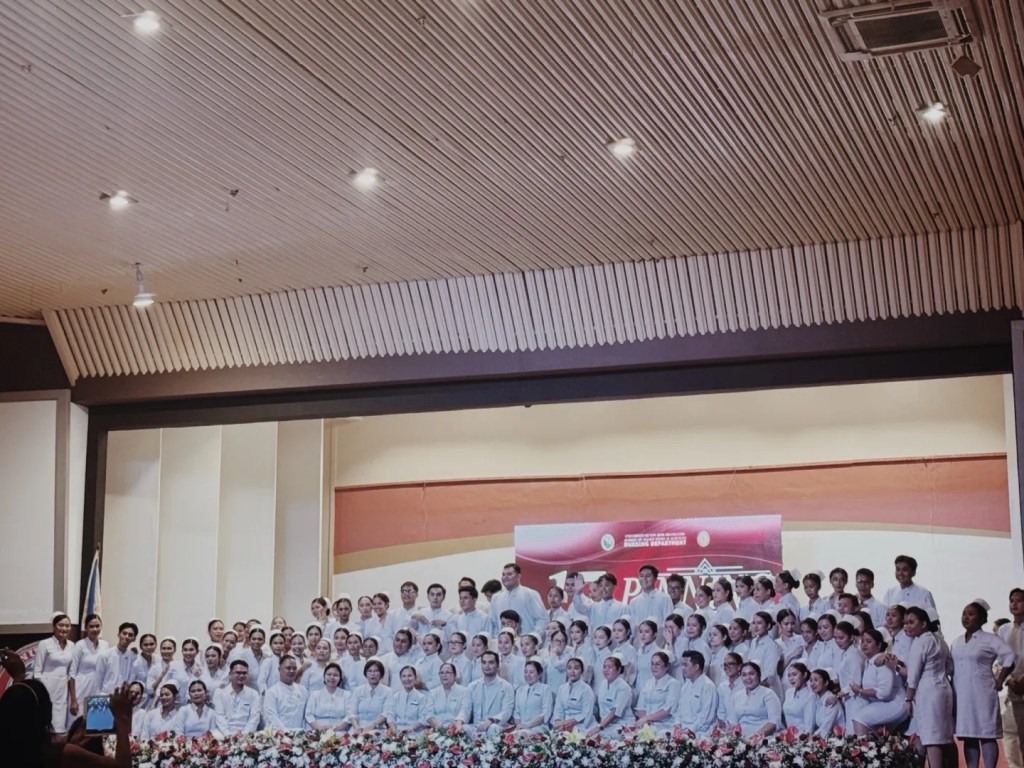
Yesterday, I watched my younger brother walk across a stage in white.
There are moments when time behaves strangely. It moves forward, because of course it does, and yet somehow gathers the past and brings it into the room with you. As I watched him in his nursing uniform, shoulders squared beneath the lights, I could see the young man standing there, but I could also see fragments of everything that had come before him: years of studying, exhaustion, disappointments, family conversations, sacrifices that were rarely spoken about, prayers whispered when nobody quite knew what would happen next, and all those ordinary days that did not look important at the time but had quietly carried him towards this one.
It was the 17th Pinning Ceremony at the University of San Jose-Recoletos, and although ceremonies are usually governed by programmes, speeches and carefully arranged rituals, this one felt deeply personal. A pin is such a small object when you think about it. You could hold it between two fingers. It weighs almost nothing. Yet on a day like this, it becomes unexpectedly heavy with meaning. It carries years.
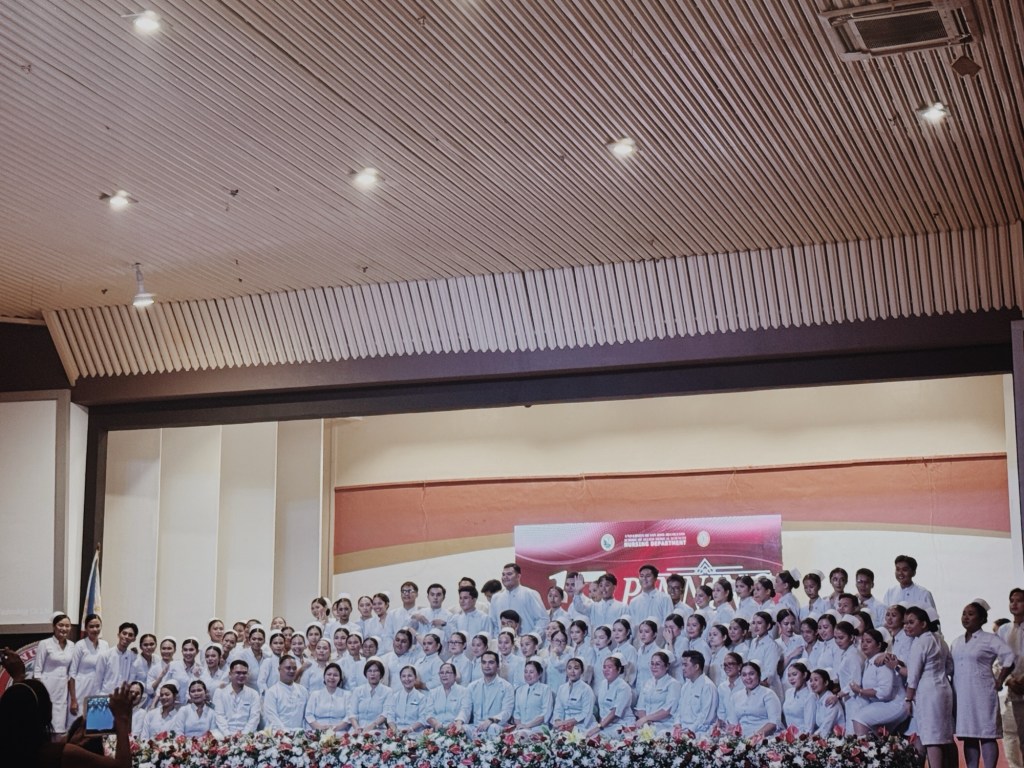
Watching him made me think about how deceptive achievement can look from the outside. We usually encounter success at the end, when everything has already been polished for presentation. We see the uniform, the photograph, the ceremony and the congratulations. What we rarely see is the less photogenic architecture underneath it: the days someone wanted to stop, the examinations that did not go as expected, the financial sacrifices, the self-doubt, the exhaustion, and the people quietly rearranging parts of their own lives so someone else could continue pursuing theirs. No graduation photograph can contain all of that, but the people who lived through it know. Family knows.
Perhaps that is why milestones like this belong, in some small way, not only to the person standing onstage but also to everyone who helped keep the road beneath their feet. There are parents who worried quietly, siblings who encouraged and occasionally annoyed them in precisely the way siblings are apparently required to do, teachers who demanded more because they recognised potential, friends who made difficult days bearable, and people who prayed, provided, waited and stayed. Achievement may eventually have one person’s name printed on it, but very few meaningful achievements are ever accomplished entirely alone.
And then there are the people who should have been sitting among us but no longer could.
I thought of Papa.
There is a peculiar tenderness to celebrating milestones after losing someone. You can be genuinely happy and still notice the empty place. Grief does not always enter a joyful room to destroy it; sometimes it simply takes a quiet seat beside gratitude and reminds you that someone is missing from the photograph. I found myself wondering what Papa would have looked like watching his son standing there in white. I imagine the pride would have been unmistakable even if he had tried to conceal it. There are certain moments when I still instinctively think, Papa should have seen this, and perhaps that thought will accompany many of our milestones for the rest of our lives.
Faith, however, has gradually taught me not to understand love only through physical presence. I cannot claim to know the mysteries beyond this life, and the older I become, the more comfortable I am admitting that some things belong to God rather than to human certainty. What I can do is entrust Papa to Him, carry his memory into the celebrations he helped make possible, and believe that death does not render a person’s love irrelevant. The chair may be empty, but the life that once occupied it has already altered ours. In that sense, Papa was part of yesterday too—not as someone I needed to pretend was physically there, but as someone whose love, sacrifices and memory remain woven into the family standing there.
When the screen lit up with my brother’s face beneath the emblem of the Nursing Department, I felt something tighten in my chest. Pride was there, certainly, but pride felt too simple a word for everything I was feeling. There was gratitude, relief, memory and something close to awe at the strange way life can wound a family in one chapter and still permit joy to enter another.
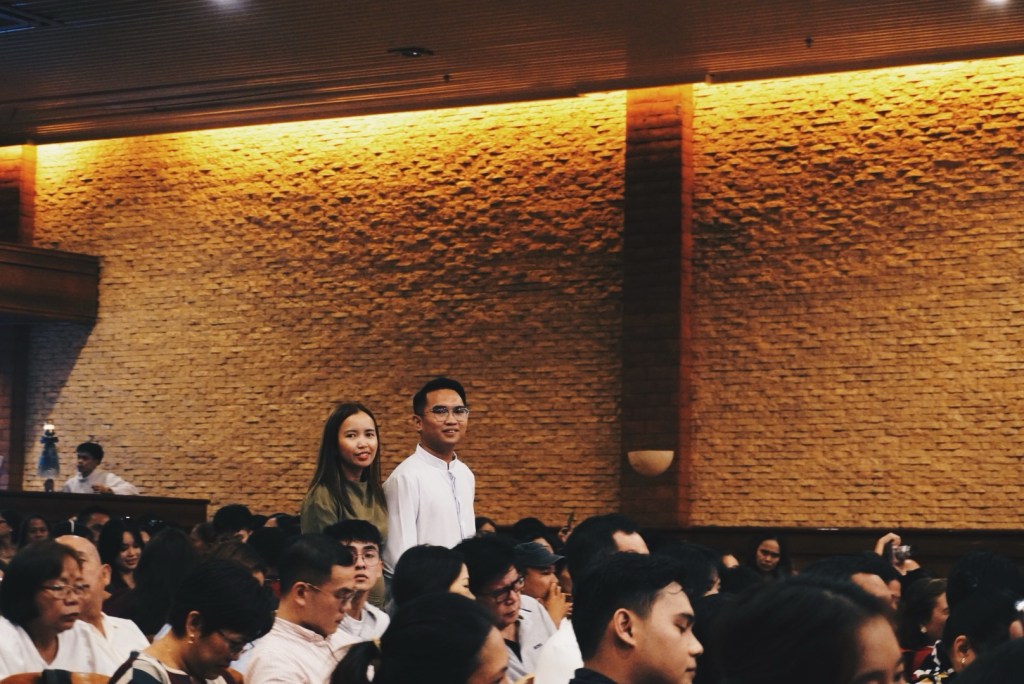
Perhaps this is something adulthood slowly teaches us about happiness. Pure happiness, untouched by everything that came before it, becomes increasingly rare. Adult joy carries history. We celebrate birthdays while remembering people who no longer have them. We welcome beginnings while carrying endings. We watch someone succeed and remember all the times they struggled. We thank God for what has arrived while still remembering the prayers that seemed unanswered. Joy does not erase what hurt us, nor should it have to. It simply proves that pain did not acquire exclusive ownership of our future.
There is something profoundly hopeful about that.
The ceremony affected me differently too because nursing is not an abstract profession to me. I know what waits beyond the pristine white uniform and carefully staged photographs. I know nursing can be immensely rewarding, but I also know its fatigue. I know the responsibility that arrives when another human being becomes dependent upon your judgement, vigilance and compassion. I know that some shifts follow you home. I know there will be patients he remembers years later, families whose faces remain unexpectedly vivid, difficult decisions, missed meals, aching feet, mistakes to reflect upon, moments of uncertainty and days when he may question whether he is good enough.
A pinning ceremony therefore feels less like an ending and more like standing at a threshold. The uniform may be white now, immaculate beneath ceremony lights, but nursing will eventually give it stories.
My hope for him is not that he becomes a perfect nurse, because such a person does not exist. I hope instead that he becomes a conscientious one. I hope knowledge never makes him arrogant and experience never makes him indifferent. I hope he remembers that the patient in front of him is somebody’s parent, child, sibling, partner or entire world. I hope he asks when he does not know, speaks when something is unsafe, reflects when something could have been done better, apologises when he is wrong, and never mistakes seniority for infallibility. Most importantly, I hope the profession sharpens his judgement without dulling his humanity, because competence may make someone a good clinician, but compassion is often what allows another human being to remember that they were genuinely cared for.
Naturally, however, no Filipino family can sustain this level of emotional reflection indefinitely without somebody eventually asking the most important logistical question of any celebration: Asa ta mangaon?
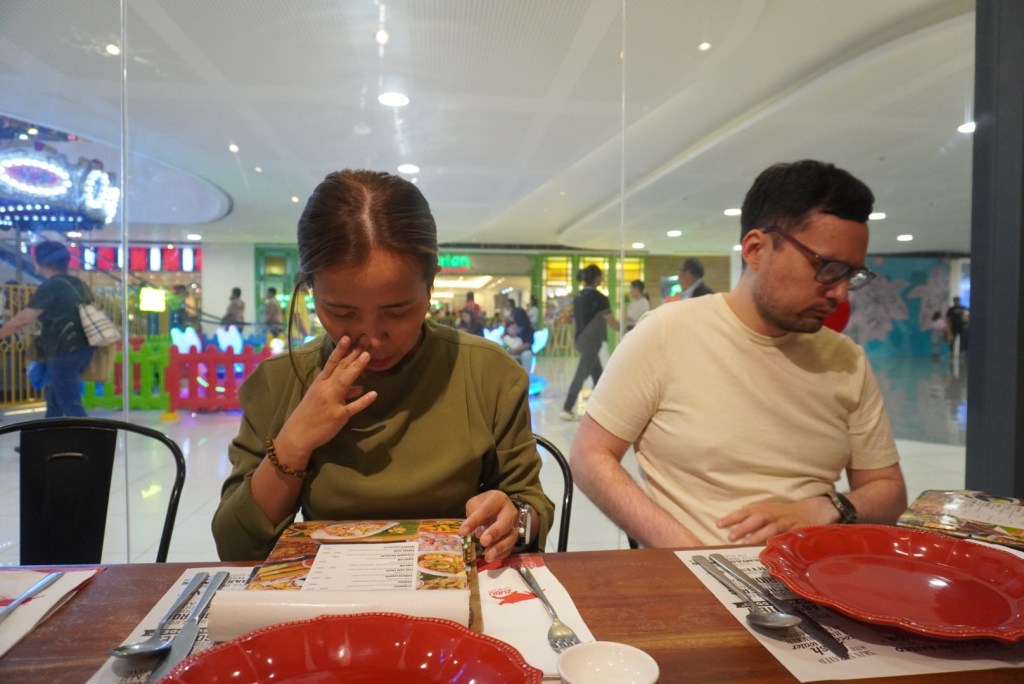
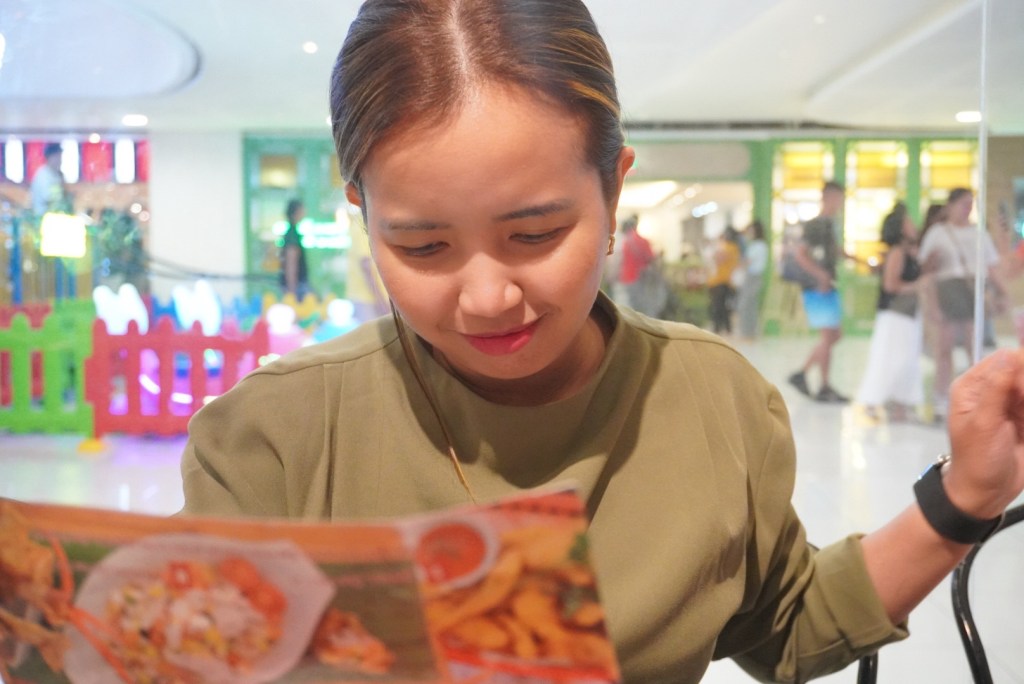
And because this was Cebu, because we were celebrating, and because joy apparently becomes more official once crispy pork skin is involved, we went to Zubuchon.

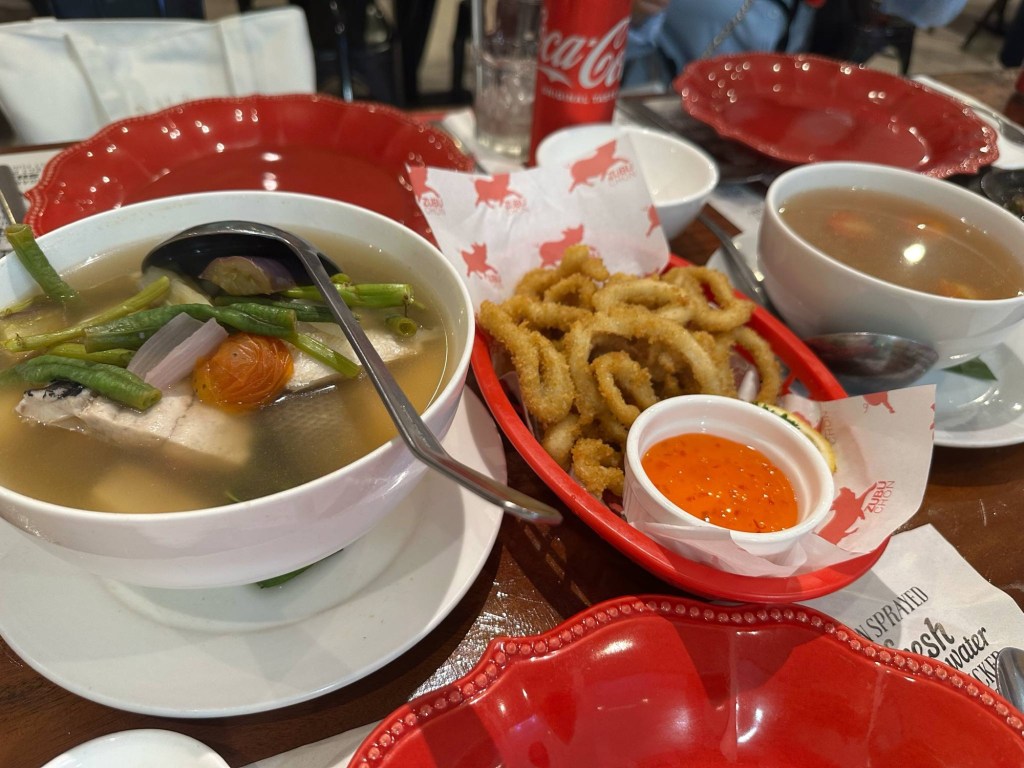
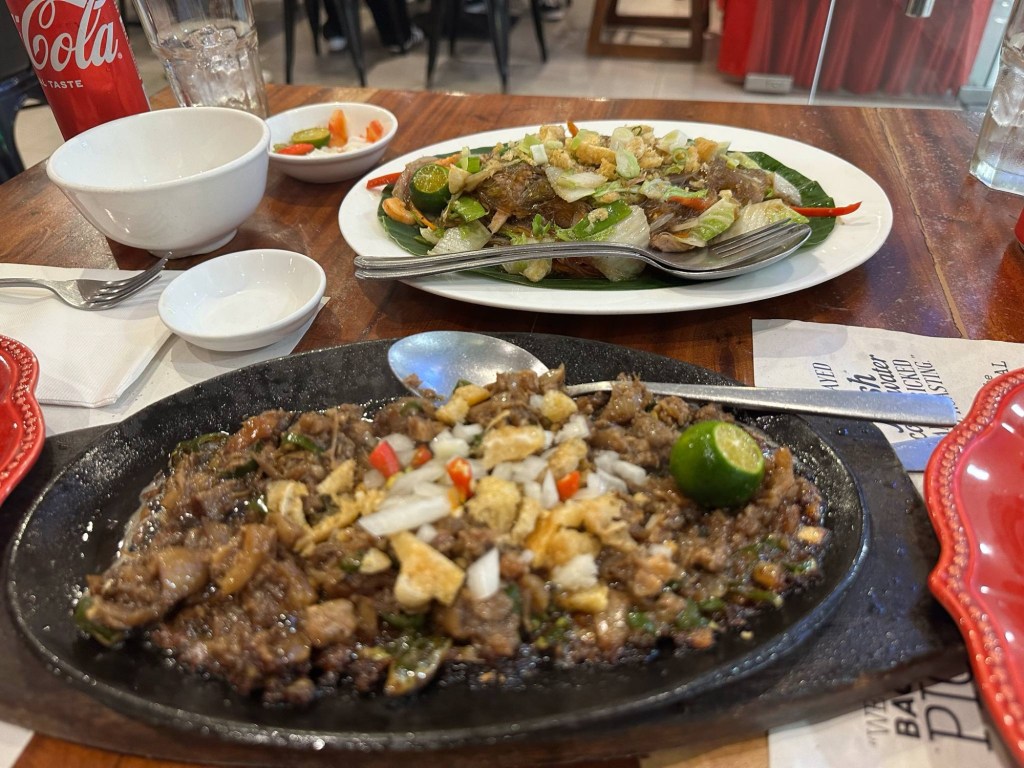
There are foods that accompany celebrations, and then there is lechon in Cebu, which practically behaves as though it has been personally invited. When the plates arrived, steaming and fragrant, conversation temporarily lost some of its importance. The golden skin cracked beneath the spoon while the meat underneath was tender enough to surrender without much persuasion. There was warm rice, dipping sauces and the inevitable negotiation over which pieces belonged to whom, because familial love may be unconditional, but apparently there are still boundaries when it comes to the crispiest part of the lechon.
Around that table were people who had known my brother long before the uniform. They had seen his ordinary days, his stubborn days, his uncertain days and probably the days when the dream of nursing felt considerably less inspiring than it did beneath the ceremony lights. There were jokes, photographs, glasses being passed around and conversations overlapping until nobody seemed entirely sure which story belonged to whom anymore. There were those familiar little moments that would seem insignificant to anyone watching from another table but meant everything to the people living them.
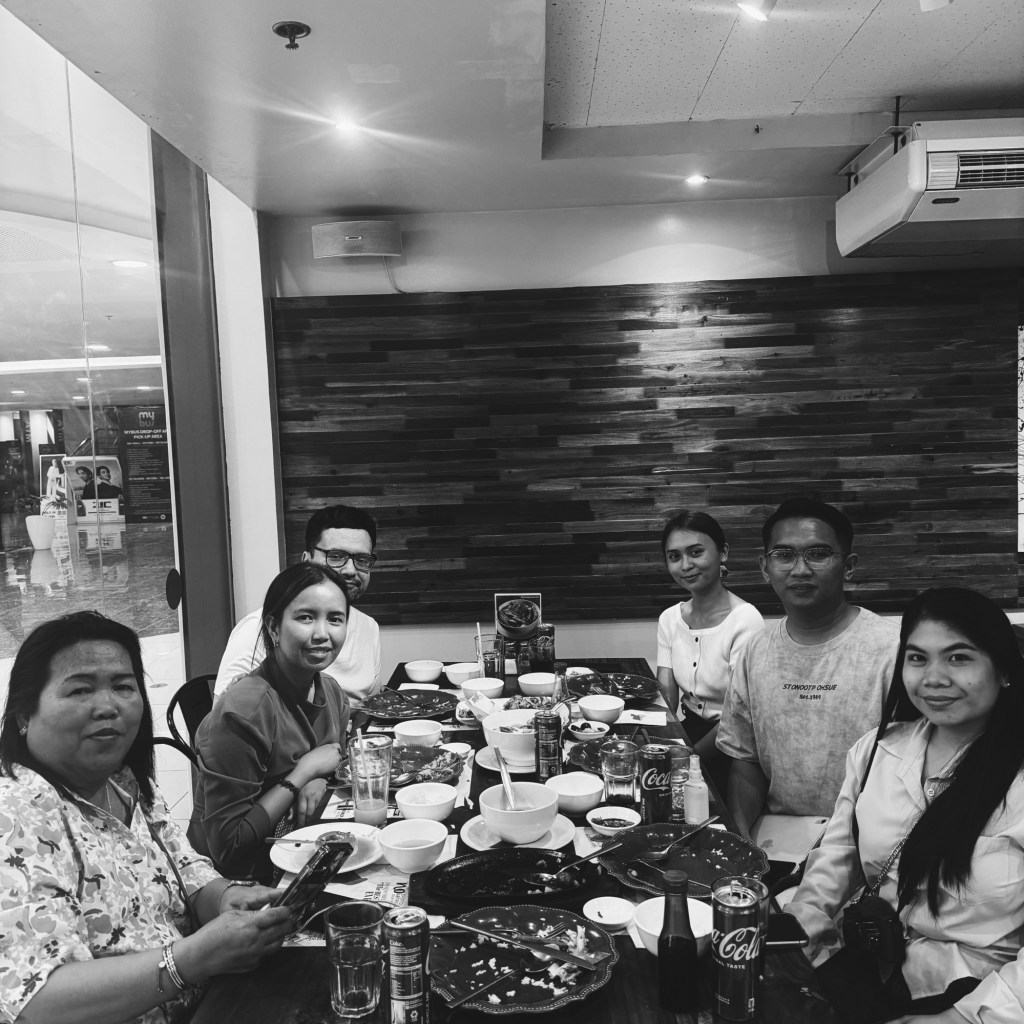
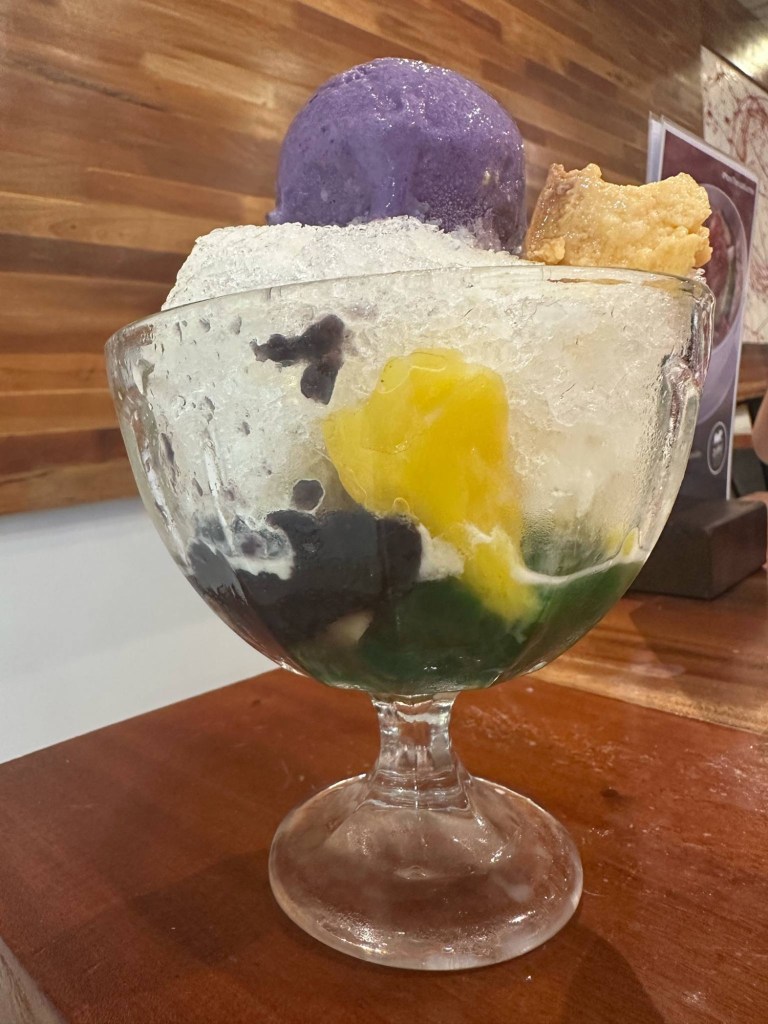
Eventually there was halo-halo, colourful and gloriously excessive, because apparently finishing a Filipino celebration without dessert would constitute some form of administrative error. As we ate, I caught myself doing something I seem to do more often now: instead of immediately joining another conversation, I simply looked around the table and watched everyone.
This. This was it.
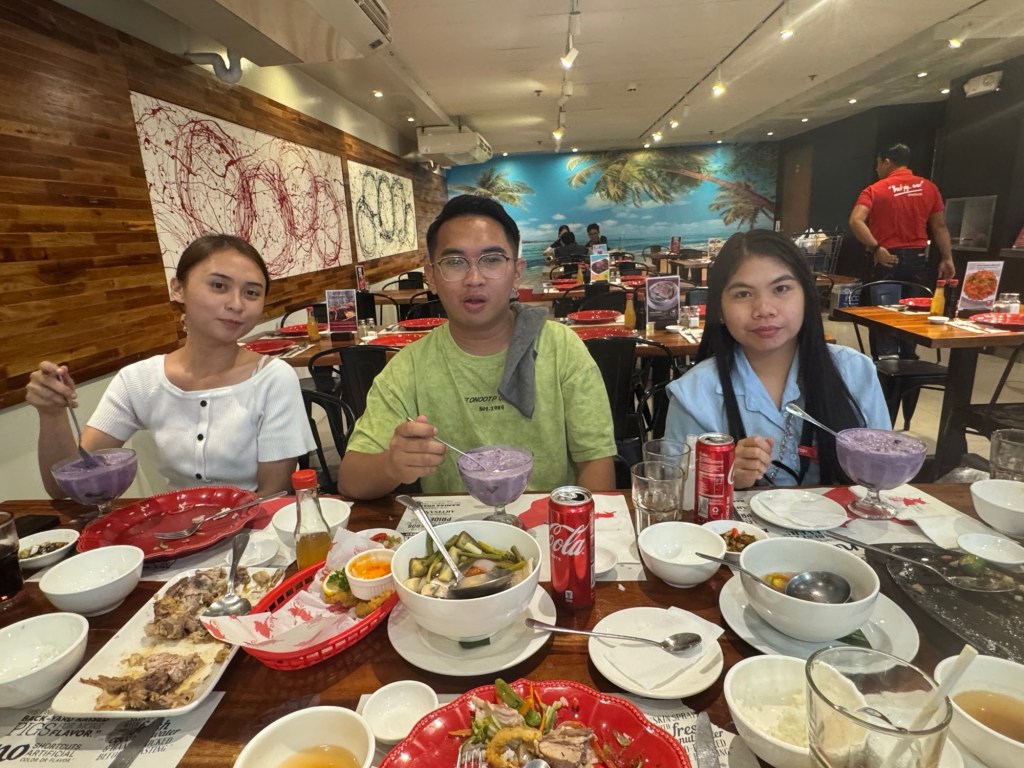
Maybe distance taught me to do that.
When you live thousands of miles away from your family, you become acutely aware that access to them is no longer ordinary. Family dinners require plane tickets. Birthdays happen through screens. Milestones sometimes arrive as photographs sent to group chats. You learn to calculate time differences before calling and become accustomed to loving people from another country while trying to build a life in the one where you currently stand. Coming home therefore changes the texture of simple gatherings. A table is no longer merely a table. It becomes evidence that, for this particular moment, we somehow managed to be in the same place.
That matters to me more than it used to.
There was probably a younger version of me who would have considered the ceremony the important part and the meal afterwards simply the celebration. Now I am not so certain. The ceremony gave us the milestone, but the table gave the milestone somewhere to belong. Achievements are wonderful, but eventually the applause stops. Certificates are stored away, photographs disappear beneath newer photographs, uniforms become ordinary work clothes and professional titles become part of everyday introductions. What remains important is knowing where we return when nobody is clapping anymore.
Who knows what the certificate cost us emotionally? Who remembers the version of us before the title? Who knew our failures before strangers began congratulating our success? Who sits beside us when there is nothing left to celebrate? Perhaps those are the people who give achievement its deepest meaning.
Life has also taught our family that milestones are never guaranteed. There have been birthdays missed, plans altered, separations created by geography and losses that permanently changed the composition of our table. We have lived enough life to understand that photographs eventually become historical documents of their own. One day we will look at these pictures and notice not merely how young everyone looked, but who was there, what we were going through, what we did not yet know and how fortunate we were to occupy the same frame.
That awareness could make life frightening if I allowed it to. Instead, I am trying to let it make me present. I do not want fear of eventually losing people to prevent me from appreciating the fact that I still have people to love. I do not want anxiety about tomorrow to make today’s blessings invisible. Faith, for me, increasingly means learning to receive the present without demanding guarantees about the future.
God has never promised me a life without difficult chapters. I understand that more clearly now. There have been prayers whose answers I did not understand, doors that closed, people I desperately wanted to keep and seasons when His plans seemed incomprehensible from where I was standing. There were moments when faith required much more than simply believing that everything would turn out exactly as I wanted. Sometimes faith meant accepting that I could not see the entire story and trusting God anyway.
Looking around that table reminded me that grace does not always mean being spared from hardship. Sometimes grace is being carried through it and eventually finding yourself seated at another table, laughing again.
Perhaps that is what yesterday represented. It was not proof that everything had always been easy. It was proof that difficult things had not been the end of the story. Pain had happened. Loss had happened. Disappointments had happened. Distance had happened. None of those realities disappeared simply because we were celebrating. Yet neither did they possess the authority to prevent joy from returning.
My brother’s journey belongs to him. He studied, endured, made decisions, faced consequences and continued. The achievement is his. But surrounding that individual accomplishment was something larger: family, sacrifice, faith and the invisible network of people whose love made perseverance easier when the road became difficult. It reminded me that although we must ultimately walk our own paths, very few of us arrive anywhere meaningful entirely by ourselves.
And this is one thing I hope he remembers long after the pinning photographs have disappeared beneath newer pictures: the title nurse is something he will earn professionally, but the values he carries into that title will determine what kind of nurse he becomes. There will always be someone more knowledgeable, someone faster, someone more experienced and someone with more letters after their name. There will be difficult colleagues, demanding days and moments when the system itself tests the compassion that brought him into the profession. But integrity does not require being the cleverest person in the room. It requires doing what is right even when nobody is applauding. Humility means continuing to learn even after people begin asking you for answers. Kindness matters precisely because healthcare often encounters people on some of the worst days of their lives.
The pin attached to his uniform may be small enough to hold between two fingers, but what it represents is enormous. It carries responsibility. It carries trust. It represents years of education, but it also marks the beginning of a profession in which learning never truly ends. I hope he remembers where he came from and the people whose sacrifices helped him stand there. I hope difficult days never persuade him that kindness is weakness, and success never convinces him that he has nothing left to learn. Above all, I hope he carries his faith with him, not as an expectation that God will make every road easy, but as an assurance that he does not have to understand every road before taking the next faithful step.
Maybe that was the lesson I carried from the celebration too. For so much of our lives, we ask God to show us the entire plan. We want reassurance before we move, explanations before we accept and certainty before we trust. Yet when I look backwards, some of the most important parts of our family’s story were written during periods when none of us knew exactly what would happen next. There were disappointments we could not immediately understand, prayers whose answers seemed delayed and losses we would never have chosen. Still, life continued to unfold. Yesterday did not erase any of those difficult chapters, nor did it need to. It simply reminded me that one painful chapter does not possess the authority to determine the ending of the entire story.
As for me, I carried something quieter home from that day: gratitude. Not the decorative kind we place beneath photographs because it sounds appropriate, but the deeper and sometimes humbling gratitude that comes from understanding how easily life could have unfolded differently. I was grateful that I was there to witness my brother’s milestone, grateful for the people gathered around the table, and grateful for the food, the noise, the photographs, the teasing and even the little inconveniences that inevitably accompany a Filipino family celebration. I was grateful for everyone who had helped him reach that stage, for every sacrifice that had gone unnoticed and for every prayer offered when the outcome was still uncertain. I was grateful for Papa too, because although his absence remains one of the permanent silences within our family, his love still belongs to our story. Most of all, I was grateful to God, not because every road leading us there had been easy, but because through roads we understood and others we did not, somehow we had arrived.
Yesterday began with my younger brother standing beneath bright lights in a white nursing uniform, walking across a stage towards something he had worked years to reach. It ended very differently, around a table scattered with empty plates, half-finished glasses, spoons resting inside bowls of halo-halo, photographs accumulating on our phones and conversations continuing long after the formalities had ended. Somewhere between those two scenes, I realised that what we were celebrating was much larger than a pin, a uniform or the beginning of a profession. We were celebrating perseverance, family, sacrifice, faith and the people who remain beside us when life becomes difficult. We were also carrying the people who could no longer physically sit at the table with us, because love has a peculiar way of remaining part of a family even after death changes its shape.
Perhaps that is what a full-circle moment really means. It is not returning to the place where you started as the same person. It is arriving somewhere new and suddenly being able to see the entire road behind you—the difficult turns, the unanswered prayers, the people who helped, the disappointments that nearly convinced you to stop and the ordinary days that quietly carried you forward. From the stage, an achievement can look beautifully simple: a student walks across, receives recognition, smiles for a photograph and everyone applauds. But families know the invisible history behind that walk. We know what happened before the applause.
I looked at my brother differently yesterday. He is still my younger brother, of course, which means no professional qualification will ever grant him immunity from sibling teasing, but for a moment I could also see the man and the nurse he is becoming. I felt proud, but beneath the pride was something even stronger: gratitude that I had been given the privilege of witnessing this particular page of his life.
I used to think blessings were primarily the things we prayed to receive. Growing older has made me realise that sometimes the greater blessing is simply having enough awareness to recognise what has already arrived. Yesterday, there was a brother whose perseverance had brought him to a stage he once only imagined, a family able to witness it, food waiting afterwards, memories being made and another reason to thank God. None of it was guaranteed. That is precisely why it mattered.
I went home full in every possible sense—full from the food, certainly, but also full of laughter, pride, memory and gratitude. Above all, I carried a renewed appreciation for the long, imperfect and beautiful road that had brought our family there. It had not been an uncomplicated road, and there were parts of it I would never have chosen for us, but perhaps grace is not always found in being given an easier journey. Sometimes grace is discovering that God has remained with us through the difficult one.
And so my prayer for my brother is simple. May he walk into this profession remembering that nursing is both privilege and responsibility. May knowledge make him capable without making him proud, may experience make him wiser without making him indifferent, and may difficult days strengthen his character without hardening his heart. May he remember the family who stood behind him before the title existed, the sacrifices that helped him reach this point and the God who carried us through chapters we did not always understand. As for the rest of us, may we never become so accustomed to blessings that we forget how many prayers once stood behind them.
Yesterday was not merely a celebration. It was one of those rare moments when the past, present and future seemed to occupy the same room. I could see where my brother had been, where he stood now and the enormous life still waiting beyond that white uniform. I could see our family’s losses alongside our blessings and understand that neither needed to erase the other. Somewhere between the ceremony and that noisy Cebuano table, I found myself thinking that perhaps this is what grace often looks like—not a life untouched by hardship, but a life that still finds reasons to gather, give thanks, love and continue after hardship has had its say.
For that, my heart is deeply grateful. I am proud of my brother, grateful for my family, mindful of those we continue to carry in memory and thankful to God for allowing me to be present for this chapter. The road here was long, imperfect and sometimes painful, but yesterday reminded me that beautiful things can still grow from roads we once struggled to understand. Perhaps we do not need to comprehend every part of the journey while we are walking it. Sometimes we simply need enough faith to keep going until, one day, we are able to look back and realise that what once seemed like scattered pieces had somehow become part of a story.
And maybe that is what I want to remember most about this day. Not simply that my brother received his pin, or that we ate lechon afterwards, or that another family milestone was added to our collection of photographs. I want to remember that we were there. Together. That there was laughter around the table, someone to be proud of, someone to miss, something to celebrate and a God to thank. Life does not always give us the complete explanation for how we arrive at certain moments, but occasionally it gives us enough perspective to recognise grace when we are standing inside it. Yesterday was one of those days, and for that alone, I will remember it with a grateful heart.
So, THIS MUST BE THE PART.
All glory to God, always.
With love, Anj ♥



































Leave a Reply