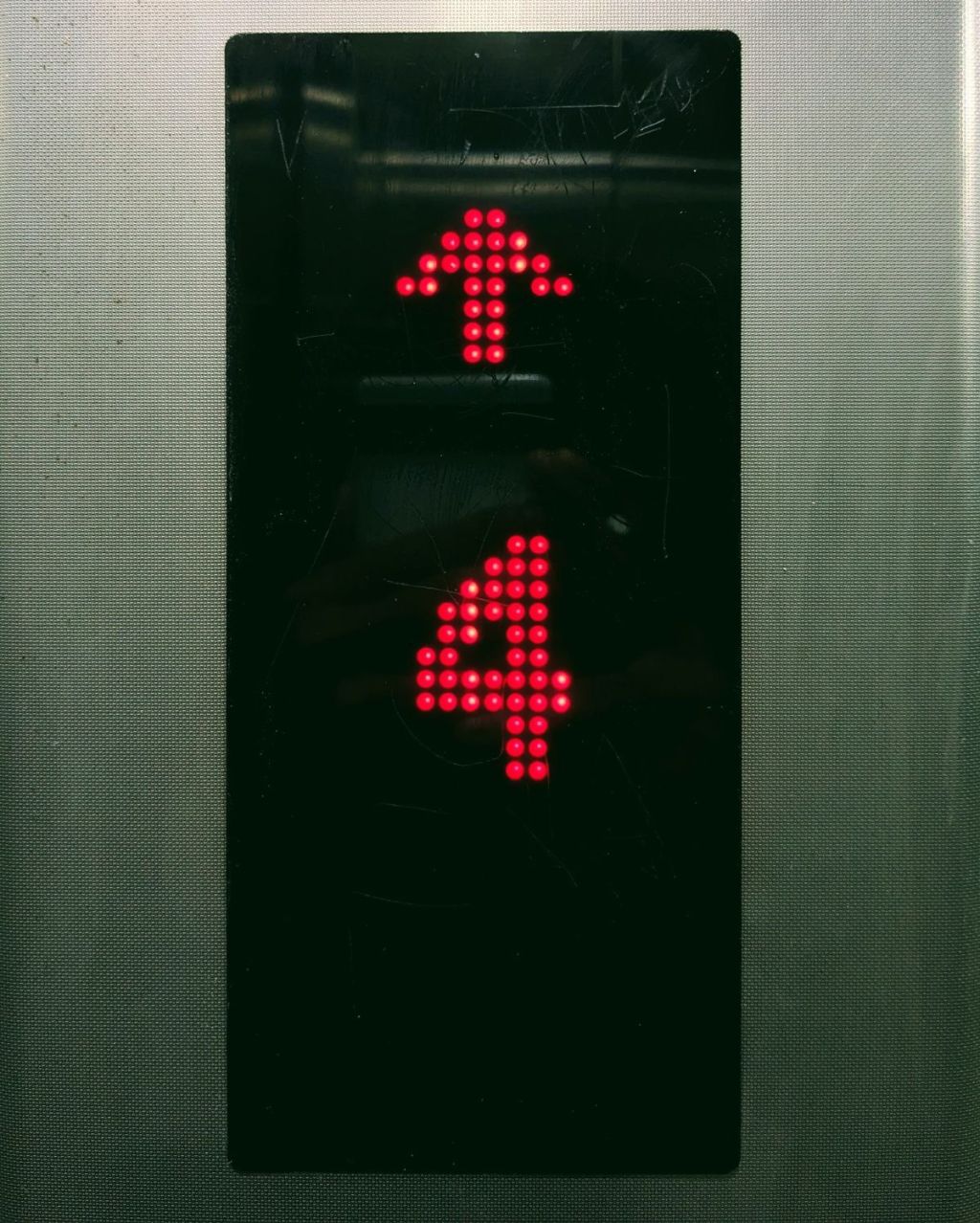
I stepped into the lift, pressed the button and immediately reached for my phone. The doors had not even finished closing. I was going up four floors. Four. The entire journey would take roughly fourteen seconds, yet apparently fourteen seconds of standing quietly with my own thoughts had become an unreasonable demand. Before the lift reached the second floor, I had opened an app without knowing why. By the third, I was scrolling through something I had not been looking for. Then the doors opened and I walked out carrying absolutely nothing I would remember. That bothered me more than it probably should have, not because I had spent fourteen seconds on my phone, but because I had not really chosen to. My hand had moved before the decision existed. There had been no thought process involving curiosity, usefulness or even boredom. The phone was simply there, my fingers knew the route, and apparently the smallest gap in the day now required immediate occupation. Fourteen seconds. I used to think distraction required considerably more effort.
That tiny lift journey made me notice how often I do the same thing elsewhere. Waiting for something to load, standing in a queue, sitting through adverts, waiting for someone to arrive, travelling from one place to another, even the brief pause before a meeting starts can become an invitation to check something. We have become remarkably efficient at filling every small pocket of nothing. There was a time when boredom simply happened to us. You waited. You looked around. You watched people. You stared out of windows. Your mind wandered into places that served no practical purpose whatsoever. Perhaps you remembered something embarrassing from 2009 and suffered accordingly. Perhaps you invented an entire future conversation that would never happen. Perhaps you noticed the person beside you had very nice shoes. Now boredom barely gets through the door before an algorithm escorts it back out.
That is the kind of technology I think I would be better off without. Not the phone itself, not the internet, and not even social media entirely. Those things have given me too much that I value to pretend otherwise. I can speak to family across countries, find information within seconds, share writing, learn, work, navigate somewhere unfamiliar and watch a cat video at an emotionally appropriate moment. I am not interested in pretending modern technology has contributed nothing except ruined attention spans and neck pain. What I would happily lose is the part specifically designed to make stopping difficult: the endless scroll, autoplay, notifications that manufacture urgency, recommendations that quietly become another thirty minutes, and features built around the assumption that if one thing ends, another must immediately begin before we have enough time to remember that we were supposed to leave.
There is something clever about a feed with no bottom. It removes the natural moment when you might otherwise stop. A book has a final page. A film has credits. A conversation eventually runs out of subjects or somebody says they need to go. Even a packet of crisps, regrettably, comes to an end. The scroll does not. There is always another post, another video, another opinion, another stranger reorganising a cupboard with suspicious competence, another recipe I will save and almost certainly never cook, another outrage, another joke, and another person apparently waking at five in the morning, exercising, journalling, meal-prepping and building a business before I have successfully identified which alarm I am trying to turn off. The feed never says, “That is probably enough now.” That decision belongs to us, which would be much easier if the entire system were not designed to make “one more” feel harmless. One more usually is harmless. So is the next one. That is how forty-five minutes acquires excellent camouflage.
What unsettles me is not simply the amount of time involved. I have wasted time in many traditional ways and intend to continue doing so occasionally. Not every minute requires productivity, and I do not want leisure to become another performance metric. Watching something silly because it makes me laugh is not a moral failure. The difference is intention. There is a difference between deciding to watch something for half an hour and discovering you have been scrolling for half an hour without ever deciding to begin. One feels like rest. The other can feel as though somebody quietly borrowed your attention and returned it slightly exhausted.
I think attention may be one of the most valuable things we own precisely because it never feels like property. We protect our money. We lock doors. We choose carefully who gets access to certain parts of our lives. Yet attention is handed away in hundreds of tiny pieces because each individual piece seems too small to matter. A notification takes three seconds. A suggested video takes twenty. Checking whether anything new happened takes perhaps a minute. Then the mind carries fragments of all of it afterwards. That may be the part I notice most. The phone can be back in my pocket while my head remains crowded with things I never intended to invite inside: somebody else’s argument, somebody else’s purchase, somebody else’s holiday, a headline I did not need, or an opinion from someone I do not know about a subject I was not thinking about until thirty seconds ago. We have access to more information than any previous generation could have imagined, and still there are moments when I find myself wondering why my brain feels untidy. Perhaps it is because every empty shelf has been offered something.
There is also something peculiar about the way constant stimulation changes our tolerance for stillness. A pause begins to feel incomplete. Eating without watching something can feel oddly bare. Walking without audio can feel inefficient. Waiting without scrolling can make fourteen seconds seem surprisingly long. But the pause was never empty. That is what I am beginning to remember. When I stop filling every gap immediately, the world starts becoming visible again in embarrassingly ordinary ways. I notice conversations happening nearby. I notice the rhythm of footsteps. I notice what I am actually eating instead of discovering the plate is empty while I remain halfway through somebody’s video essay. I notice when I am tired, which is useful information usually obscured by stimulation. Most importantly, I start hearing my own thoughts before somebody else’s content interrupts them.
That can be inconvenient because my own thoughts do not always come with background music, captions or a satisfying conclusion in under sixty seconds. Some are unfinished, some are boring, some repeat themselves, and a few could definitely benefit from editing. But they belong to me. I think we underestimate how much creativity depends on apparently unproductive moments. Ideas need somewhere to wander before they become useful. Reflection needs gaps. Even memory seems to require a certain amount of mental empty space before it decides what deserves keeping. If every waiting room, journey, queue and silent moment is filled before the mind can stretch its legs, we should not be surprised when concentration begins feeling like a skill from a previous civilisation.
Technology was supposed to save time, which is one of the better jokes of modern life. Communication became instant. Banking became faster. Maps became smarter. Shopping became easier. Entire errands moved onto screens. In theory, we should all possess enormous reserves of free time. Naturally, we used some of it to watch strangers argue in comment sections. Efficiency created space, and technology immediately developed several excellent methods for occupying it. Still, I do not think the answer is to become aggressively anti-technology. I am not going to throw my phone into a lake, move into a cottage and communicate solely through handwritten letters carried by unusually committed pigeons. I like convenience. I like connection. I like being able to find obscure information at midnight for reasons that seemed important at the time.
I simply want to be more suspicious of anything that behaves as though my attention belongs to it by default. That means occasionally allowing a queue to remain a queue, a walk to remain a walk, a meal to remain a meal, and a lift ride to last fourteen seconds without requiring entertainment. It also means accepting boredom again. Boredom has terrible branding. It sounds like something has gone wrong. But perhaps boredom is simply the moment before the mind chooses its own direction. Before constant access to stimulation, we had little choice but to sit inside that gap occasionally. Maybe some good things grew there.
I think of all the things that do not compete particularly well with a screen: a person speaking slowly, a view that does not change quickly, a book that takes fifty pages to reveal what it is doing, a cat asleep in a ridiculous position, a long conversation without photographs, or a thought that needs several minutes before becoming interesting. The ordinary world has terrible engagement metrics. It does not autoplay, rarely sends notifications and has no infinite scroll, yet it contains almost everything I actually remember. That is the irony. I can spend hours online and retain almost none of what passed beneath my thumb, while a ten-minute conversation can stay with me for years. I can consume hundreds of images in one evening and still remember the way someone laughed across a table. The things demanding the most attention are not always the things deserving it.
So I am trying to become more deliberate about where mine goes. Not perfectly, because I know myself well enough to avoid heroic promises. There will still be evenings when I open one video and emerge significantly later with extensive knowledge about a subject I had never previously cared about. I will still check my phone unnecessarily. I will still fall for the occasional headline written by somebody who has weaponised curiosity with admirable precision. The goal is not purity. It is interruption: noticing the moment my hand reaches automatically, asking what I actually came here for, recognising when enjoyment has turned into inertia, and remembering that “I could keep scrolling” and “I want to keep scrolling” are not always the same sentence.
Recently, I have started enjoying small stretches of unfilled time again. Nothing profound happens. I do not immediately achieve enlightenment because I stood in a queue without checking Instagram. Usually I simply stand there. But I notice things. I notice myself becoming less impatient with pauses, I notice that not every spare second needs to become productive or entertaining, and I notice that attention feels different when I decide where it goes.
Perhaps that is what I would remove if someone really gave me the power to change one piece of technology: not the device, but the machinery that turns attention into something endlessly harvestable. I would remove the parts designed to make enough feel slightly insufficient. One more video. One more refresh. One more look. There will always be more because that is the whole business model. Life, unfortunately, operates with the opposite arrangement. There will not always be more of everything: not more time with every person, not more ordinary evenings, and not more walks, meals, conversations, seasons or years in exactly the form we have them now. That makes attention feel less like a productivity issue and more like a way of deciding what gets to become our life.
And that brings me back to the lift. The next time I stepped inside, I pressed the button and felt my hand move towards my pocket. I stopped it. The doors closed, and nothing happened. I watched the numbers change above the door and listened to the faint mechanical hum until the lift reached my floor and opened. Four floors. Fourteen seconds. I had missed absolutely nothing, and for once, I had been there for all of them.
Attention returned to owner,
Anj 🖤











Leave a comment