
I sometimes wonder what the receipt would look like if time allowed returns. ITEM: one ordinary day. CONDITION: already lived. REFUND: impossible. EXCHANGE: twenty-four hours only. No extensions, no changes, no keeping anyone when the day is over. Tonight, with rain tracing thin lines down the window and my laptop open in front of me, that ridiculous thought stopped feeling ridiculous. The room was dim except for the glow of the screen, the rain kept tapping against the glass, and the clock carried on with the calm arrogance of something that never has to explain where all the hours go. If time suddenly agreed to trade, what would I offer for one day from my past? Money would be useless. Sleep, perhaps. A future birthday. Several years of accumulated loyalty points. I suspect I would become embarrassingly negotiable very quickly.
The strange thing is that I would not ask for a graduation, a holiday, a birthday or one of the happiest days I can remember. I would not choose anything impressive enough to have its own photographs. I would ask for a weekday so ordinary that nobody thought to preserve it. A Tuesday, perhaps. Maybe a Wednesday. The television could be on. Someone could be cooking. There could be dishes in the sink, something misplaced on the table and somebody complaining about something completely unimportant. Nothing extraordinary would need to happen at all. I would only ask for one condition in the bargain: Papa would still be alive. That would be enough. Not a miracle. Not a rewritten ending. Just twenty-four hours in a world where I could still walk into a room and find him there.
Maybe we would talk about nothing worth remembering. I might only half-listen because back then I still believed conversations reproduced themselves indefinitely. Why concentrate on every word when there would always be another one tomorrow? Nobody sitting in that room would know that years later I would consider the chance to sit there again an impossible luxury. I would not need an adventure. I would not ask for wisdom. I would simply want twenty-four more hours in a world where my father was available.
Availability is one of the things grief eventually teaches you to miss. At first, memory goes towards the obvious landmarks: birthdays, holidays, photographs, final conversations, the last time you saw somebody, the last time they said your name. Later, the longing becomes strangely ordinary. You miss the fact that they existed somewhere. You could call. You could ask a completely unnecessary question. You could walk into a room and find them there. You could become irritated with each other, leave, and speak again tomorrow. There was still a next time waiting somewhere, like something nobody thought could run out. Death does not only remove a person from the present. It quietly cancels all the ordinary futures you had assumed would contain them.
Life is almost unfairly good at hiding valuable things inside boring days. It never interrupts breakfast to announce, “Pay attention. You are going to miss this.” There is no countdown floating above the people we love. Nobody warns us before the last uneventful dinner. There is no bell before the final ordinary Sunday when everyone is still sitting where they usually sit. We are not instructed to memorise a laugh because one day memory may reproduce it imperfectly. We simply live. We get tired. Somebody speaks while we glance at our phone. We say we will call tomorrow. We postpone a visit because next weekend appears perfectly available. Most of the time, we are right. There is another dinner, another Sunday, another phone call, another chance to say what we forgot. Until eventually there is not.
If time actually accepted my bargain and handed me one ordinary day with Papa again, I do not think I would try to rewrite what comes afterwards. Knowing the ending would make those twenty-four hours almost unbearably expensive, but I would not waste them negotiating with the future. I would notice the present properly. I would listen to his voice with the concentration of someone taking notes for an exam she would later be forced to sit alone. I would memorise the actual rhythm of it—the way he pronounced certain words, how his voice changed when he was joking, what happened to his face when something annoyed him. I would probably stare long enough for him to become suspicious and ask why I was looking at him strangely. I can already imagine having no sensible answer. Nothing, Pa. I just know something you don’t. I know how expensive this ordinary moment becomes later.
I would watch his hands, how he sat, the expression that arrived just before a laugh, all the small movements nobody thinks to photograph because they seem too insignificant while they are still repeatable. Grief develops an astonishing appetite for details memory was never instructed to save. Years later, it asks for the exact sound of a laugh, the way someone entered a room, the expression they made while thinking, and memory has to rummage through old drawers saying, “I didn’t know we were going to need that.”
I would ask questions too, so many that Papa might eventually wonder whether I had secretly become a journalist. I would ask about the man he was before he became my father. Children have a peculiar way of imagining that parents began at parenthood. Papa was always Papa. Mama was always Mama. We grow older and eventually realise they had entire lives before we appeared and reorganised the household around ourselves. They were young once. They worried about work, money and relationships. They made questionable decisions. They had dreams that changed, ambitions that disappeared, plans that survived and others they quietly buried. They probably looked at older adults and wondered when they themselves would finally understand what they were doing, only to become the adults we later assumed had everything figured out.
I would ask Papa what frightened him when he was young, what he imagined his life would look like, what he regretted, what made him proud and which sacrifices I had been too young to recognise while he was making them. I would ask what he wished someone had told him at twenty. Maybe he would answer seriously. Maybe he would laugh and tell me I was asking too many questions. Either way, this time I would listen all the way to the end. Most of all, I would stay. I would not keep checking the time. I would not be mentally preparing for tomorrow. I would not be thinking about work, chores, plans or some irritating problem that would eventually shrink into something far less important than it felt that afternoon. I would sit beside him even if we said nothing, especially if we said nothing. Grief has taught me that silence beside somebody you love and silence after they are gone can sound identical while containing entirely different worlds. One is presence. The other is the space presence used to occupy.
When we are young, time feels abundant enough to waste without consequence. We rush Monday because we want Friday. We count down to holidays. We wish difficult weeks away. We say, “I can’t wait until next year,” “until graduation,” “until I earn more,” “until we travel,” “until I get the job,” as though the present is a waiting room where we sit until the proper version of life finally calls our name. We become extraordinarily good at standing inside today while staring over its shoulder towards tomorrow. Then somebody dies, and time reveals what it had been doing all along: moving, even while we were not looking.
Perhaps one of the hardest things I have learned is that those ordinary days were never the queue before my real life began. They were the life itself. Life was happening while someone cooked in the kitchen, while Papa watched television, during conversations nobody recorded, during dinners, errands, jokes, arguments and afternoons when everybody happened to be home and nothing worth reporting occurred. There was once a period when having the people I loved alive and within reach felt completely normal. I understand now what an extraordinary form of wealth normal can be.
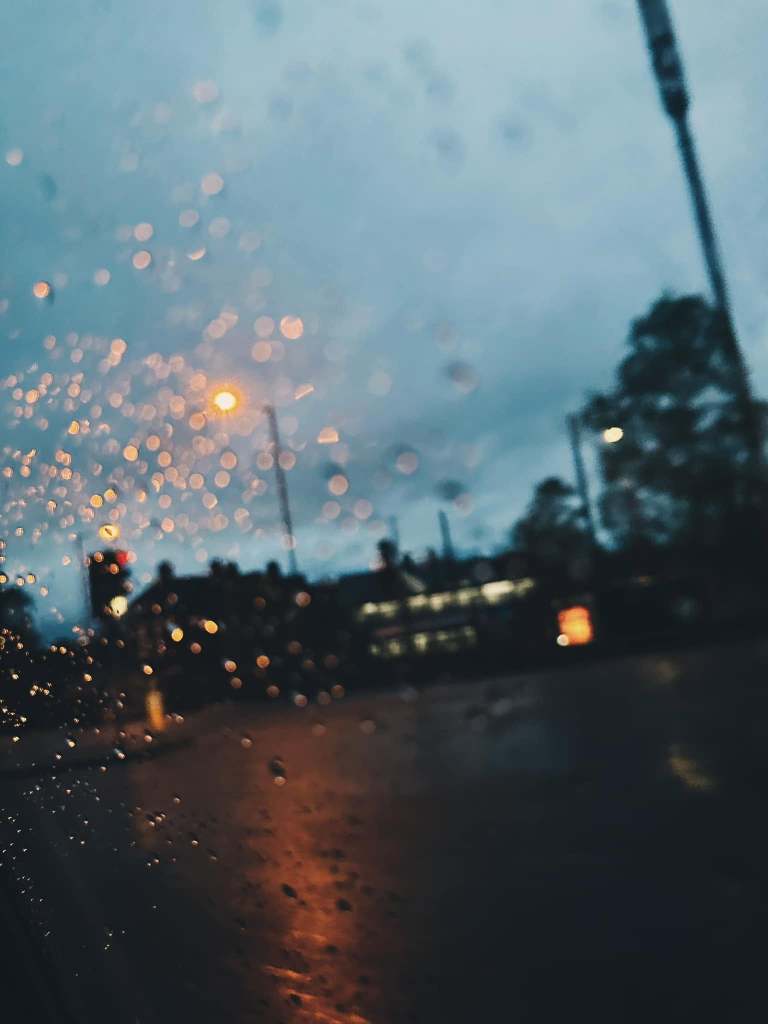
Maybe that is why rain makes me sentimental. It slows the room down just enough for memory to catch me. Tonight I keep wondering how many ordinary days with Papa have vanished completely from my mind. There must have been hundreds. Tuesdays and Wednesdays that left no photograph, no diary entry and no particular story because there was no reason to preserve them. Papa would still be there tomorrow. There would be another meal, another joke, another Sunday, another year. Back then, they were simply days. Now I would bargain embarrassingly hard for one of them.
But missing yesterday has to change something about how I treat today, otherwise grief becomes a room I repeatedly enter only to rearrange the same furniture. I cannot return to those afternoons, but I can allow them to teach me what to do with the people still within reach. I can call while somebody is still able to answer. I can listen to a story I have heard eight times without immediately informing the storyteller that I already know the ending. I can stay at the table a little longer. I can take the photograph and then put the phone down. I can say thank you before gratitude becomes something whispered towards a picture. I can say I love you while the words still have somewhere living to land.
One day, the things in my life now will become somebody’s—or my own—memories too. Perhaps an older version of me will look back at these years and notice what I currently overlook. She may miss this house, these routines, the work I sometimes complain about, my cats doing something ridiculous, Jan somewhere nearby, Mama’s voice on the phone, a meal that seemed entirely forgettable while it was happening. Perhaps she will look at photographs of this version of me and think, You had no idea how much was still there.
I do not want gratitude to keep arriving after the funeral. Of course, writing that sentence does not mean I will become a permanently enlightened creature who appreciates every Tuesday. Tomorrow I will almost certainly become irritated by something objectively ridiculous. I will wish a shift away. I will postpone a phone call. I will become distracted while somebody speaks. Human beings are excellent at understanding profound lessons and then requiring refresher training. Maybe awareness does not need to make us flawless. Perhaps it only needs to tap us on the shoulder occasionally and say, “Look again.”
If I could make that impossible bargain with time, I would still choose the unremarkable day with Papa. I would not ask for a miracle. I would not try to rearrange the ending. I would simply ask for twenty-four more hours inside a world where my father still existed. I would sit beside him. I would listen. I would probably take a few photographs, although I suspect borrowed time would quickly feel too expensive to spend entirely through a screen. I would hug him differently—not the casual sort of hug given to someone you assume you will see again, but the kind you give when you know precisely what tomorrow will eventually take away.
I would tell him, “Pa, I love you. Thank you.” I would thank him for sacrifices I only recognised after I was old enough to understand their cost, for all the ordinary things that did not look like sacrifice at the time, and for the pieces of himself that somehow remained inside the woman I became. Then I think I would tell him something he never got to hear. I would tell him not to worry too much about his daughter. Life becomes difficult in places, but she keeps going. She worries more than necessary. She makes mistakes. She carries responsibilities he never gets to see. She becomes tired and gets back up. She travels to places she wishes she could show him. She works. She writes. She laughs. She misses him in ways that still surprise her, but she is okay. Not because losing him ever became easy, but because some people disappear from the physical shape of our lives while remaining embedded in the person they helped create.
Then, eventually, the day would end, and that is the cruel part of this imaginary bargain. I would have to lose him again. I would watch the hours disappear knowing exactly what waited beyond midnight. There would probably come a point when every minute became painful because I would know there were fewer remaining than before. I would know exactly what the terms had been from the beginning: twenty-four hours only, no extensions, no changes, no keeping anyone when the day is over. It would be a terrible bargain by almost every reasonable measure, and I would still take it. Another goodbye would be worth one more ordinary hello.
The rain is still tapping against the window as I write this, although my fingers have slowed. The memories that entered earlier and scattered themselves around the room have settled into something less restless. I started tonight asking which day from my past I would relive, but somewhere between Papa’s voice, an imaginary Tuesday and the rain, the question turned itself around. What if the day I will someday desperately wish to borrow is one I am living now?
I do not want to carry that thought fearfully. Life would become unbearable if every dinner felt like a rehearsal for grief and every goodbye came with the weight of mortality hanging over it. We are allowed to be ordinary with the people we love. We are allowed to get annoyed, become distracted, complain about traffic and leave dishes until later. Love does not need to spend every minute preparing for loss. But perhaps I can let the thought interrupt me occasionally. Call when I can. Listen properly. Stay for another coffee. Take the photograph and then look up. Forgive what is small enough to forgive. Ask the question now. Say thank you while there is still someone in front of me to roll their eyes at the sentimentality. Say I love you while somebody can still hear it. And when a day gives me absolutely nothing remarkable to remember, perhaps I can be grateful for that too.
The rain continues. My laptop is still open. The room looks completely ordinary. Somewhere between the water against the glass and the pauses between my thoughts, I miss Papa again, but gratitude sits beside the missing now. There were once Tuesdays when I did not have to miss him. He was simply there. I barely noticed because I thought those days came in unlimited supply.
So if time ever appears with that impossible receipt and offers me the same terrible terms—one old day, already lived, no changes, no extensions, no refunds—I already know what I would sign for. I would not ask for the grandest day of my life. I would not ask for a miracle, a milestone or a celebration. I would ask for one ordinary weekday, with nothing remarkable happening and Papa somewhere in it.
The bargain would still be cruel.
I’d still take it.
Still grateful for the Tuesdays I once had,
Anj 🖤


































Leave a Reply