
This morning began with the slightly unpleasant awareness that this is my last rest day. The final day off always feels different from the others because tomorrow has already started standing somewhere in the background, quietly reminding me that alarms, routines and responsibilities are preparing to reclaim me. The earlier rest days still feel completely mine. The last one feels borrowed. I could already sense my mind beginning to arrange itself for work, so before it became too responsible, I opened Spotify and played a ’90s mix. I was not searching for anything meaningful. I just wanted music in the background while I enjoyed the remaining hours of freedom before my work brain returned and started behaving as though everything required a plan.
Music, unfortunately, has never respected such innocent intentions. It has an unfair advantage over memory. You can spend years forgetting something, then a few familiar notes appear and suddenly your mind knows exactly which door to open. A smell might return you to a kitchen. A photograph can resurrect a holiday. But music seems capable of returning an entire version of yourself before you have even realised you were missing her. Somewhere between one song and the next, tomorrow’s shift disappeared from my thoughts and I was back in high school. Not one particular day, more like the atmosphere of being that age. I remembered carrying notebooks around and having absolutely no idea how complicated adulthood would eventually become. I remembered already loving stories, long before I understood that writing would continue following me through different countries, jobs, losses, relationships and versions of myself. Back then, I did not analyse writing. I did not wonder whether something was publishable, meaningful or grammatically respectable. I had an idea, I opened a notebook, and I wrote. That was the entire creative process.
Then, very clearly, I remembered the notebook. It was not one of those beautiful leather journals that looks as though it was purchased specifically so a future author could stare thoughtfully into the distance beside it. It was an ordinary high-school notebook with a celebrity on the cover, which at the time probably made it approximately twelve times more sophisticated in my eyes. I can even remember the Panda pen I used. Memory is ridiculous that way. There are probably significant things from those years I could not retrieve even if somebody offered me money, yet apparently my brain decided the brand of pen deserved permanent archival status. Maybe it remembered because those ordinary things were part of something important before I knew it was important.
That notebook became one of the first places where I discovered the peculiar pleasure of inventing people who did not exist and then making their lives unnecessarily complicated. I wrote fiction by hand, page after page, letting characters meet, fall in love, misunderstand each other, make questionable choices, suffer dramatically and eventually find their way through whatever emotional disaster teenage me had arranged for them. There was something wonderfully uncomplicated about writing on paper. No blinking cursor accusing me of inactivity. No delete button inviting me to rewrite the same sentence seventeen times. If something went wrong, I crossed it out, squeezed another sentence into the margin, drew an arrow somewhere and continued as though this were a perfectly legitimate publishing system.
I cannot remember every storyline now, but I remember the excitement. A new idea would arrive and I wanted to catch it before it escaped. Opening the notebook felt like entering somewhere that existed only because I had decided it should. I could make two people meet. I could separate them five pages later. I could make somebody fall in love with the wrong person, introduce a misunderstanding that could probably have been resolved through one sensible conversation, and then prolong the suffering because apparently teenage writers have no ethical obligations towards fictional characters. Some things, I suppose, have always been consistent.
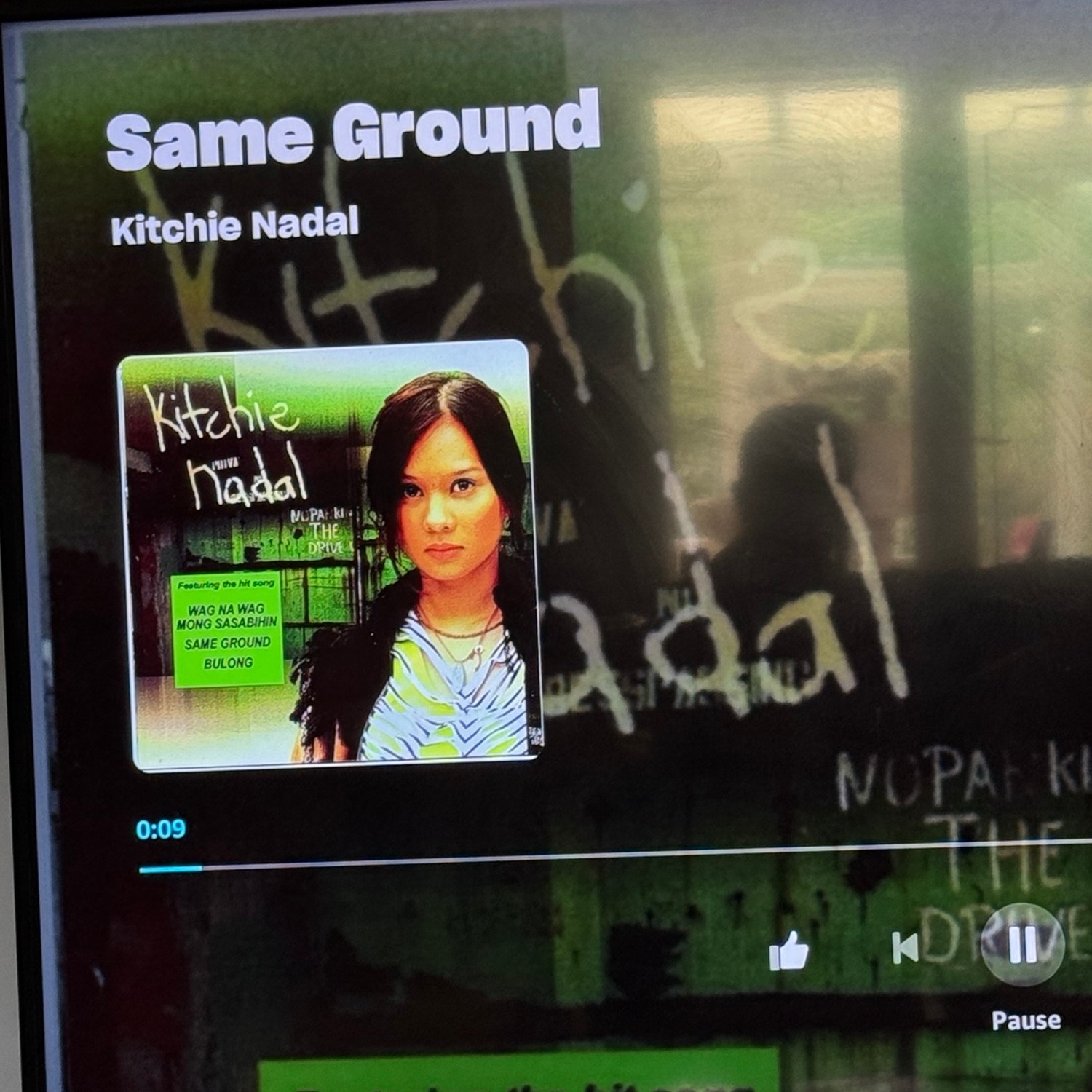
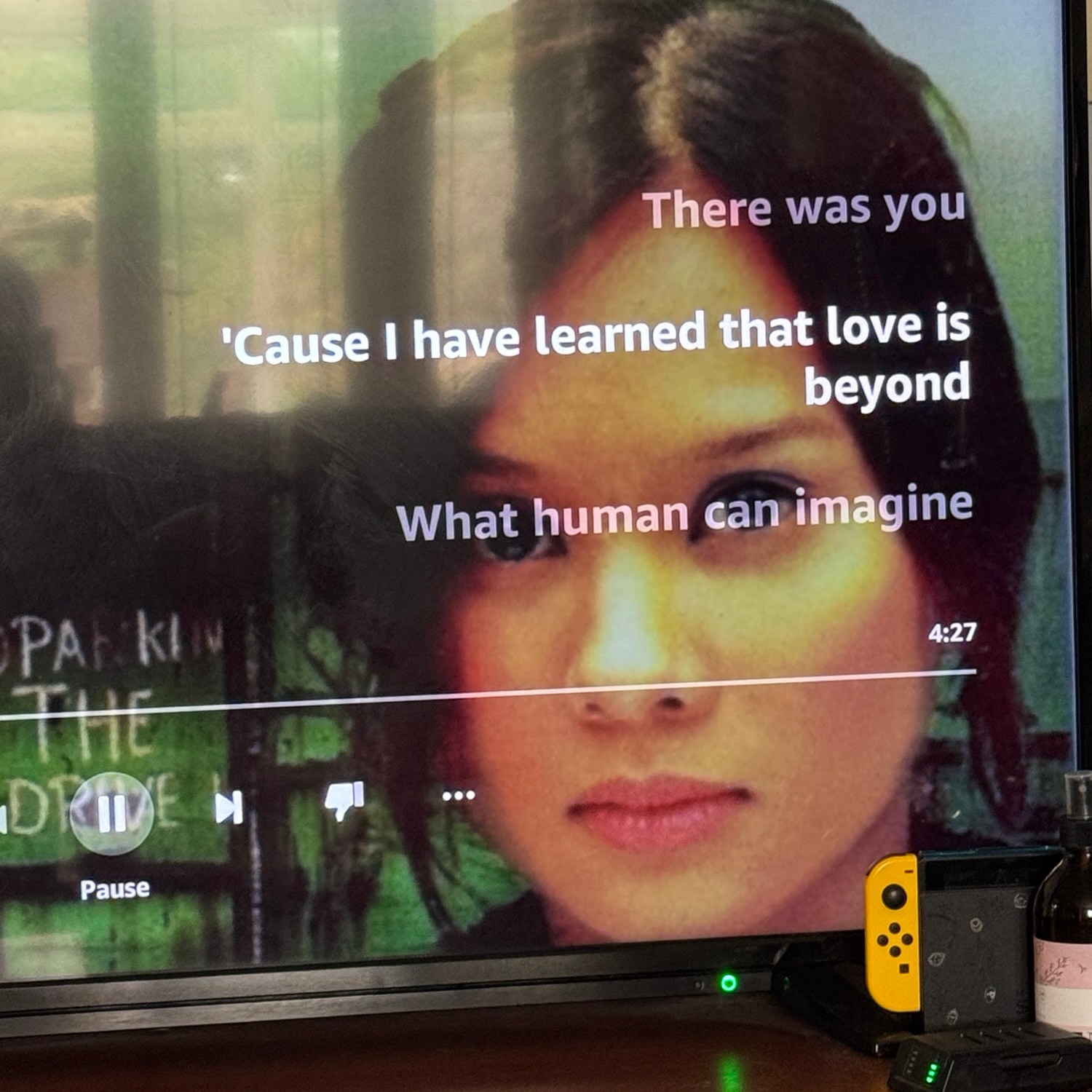
Then there was Kitchie Nadal. She was one of my favourite singers during that period, and Same Ground became one of those songs that attached itself firmly to a certain version of me. There was something in the emotion of it that fascinated my teenage imagination. Maybe it was the idea of two people still connected somehow but unable to meet each other in the right place. Maybe it was simply because I was at the age when one sad song could provide enough emotional material for an entire television franchise. Naturally, I wrote a story.
I took the feeling Same Ground left behind and turned it into my own romantic comedy with sadness woven through it. I was not trying to reproduce the song. I think I was doing something writers often do before they even know to call themselves writers: taking an emotion that refuses to leave and building somewhere for it to live. Out came characters, romance, humour, heartbreak and probably enough dramatic misunderstanding to make any emotionally stable adult ask why nobody in the story simply spoke to each other. Thinking about it this morning made me laugh, but it also made me unexpectedly sentimental, because somewhere between remembering the notebook, the Panda pen and teenage me manufacturing heartbreak for fictional people, I realised that girl was already becoming me.
She did not know it. She had no idea where life would take her. She did not know what kind of work she would eventually do or where she would live. She did not know which people she would meet, which ones she would keep, which ones she would lose or how many times reality itself would produce stories stranger than anything she could have invented. She certainly could not have imagined that decades later she would be sitting on the final morning of a rest day, listening to old music and remembering how easily stories once came to her. Real life had not yet taught her everything it knew about heartbreak either. At that age, sadness could be written into a character and contained inside a notebook. You could close the cover and go to dinner. Adulthood eventually taught me that actual stories are much less obedient.
Life gave me endings I would never have chosen, beginnings I did not see coming, delayed plans, unanswered questions, people I could never have invented properly and ordinary moments that somehow became more important than the dramatic ones. Perhaps that is why my writing changed too. The imagination stayed, but experience gave it weight. The celebrity notebook became laptops, phones and tablets. Handwritten stories became documents, blog posts, poems and books. Fiction slowly made room for work, travel, faith, family, grief, memory and all the complicated things adulthood keeps placing on the table. But beneath all of that, I think the reason I write has remained almost embarrassingly similar. Sometimes a feeling needs somewhere to go.
That was true when I was a teenager filling pages with invented people, and it remains true now. Sometimes there is an idea I cannot leave alone. Sometimes there is a memory I want to preserve before time rounds off its edges. Sometimes I do not fully understand what I feel until I see it turned into words. And sometimes I simply enjoy the peculiar freedom of arranging sentences until something inside me finally says, Yes. That is what I meant. Maybe writing was never merely something I learned. Maybe it became one of the ways I learned myself.
There is something comforting about discovering that certain parts of us survive all the versions we become. High-school me and thirty-six-year-old me would probably disagree about many things. She might question some of my decisions. I would definitely question some of her fashion choices. The technology changed. Friendships changed. Dreams became more realistic in some places and more ambitious in others. Life made me more practical and, in certain ways, more cautious. Yet one old song was enough to shrink all those years. Suddenly there she was again, holding that notebook.
Life gave her responsibilities she could never have imagined. It took her places she had not yet learned to pronounce correctly. It introduced her to people who would become chapters of their own. It made her stronger in ways she never asked to become strong and gave her losses she would not yet have known how to write. But somehow it never completely removed the part of her that could hear a song and immediately imagine another world.
I think adulthood can make us believe that growing up requires abandoning those earlier selves. We collect titles and responsibilities until they become louder than the person underneath them. We become professionals, partners, caregivers, taxpayers and people who suddenly have strong opinions about electricity bills. We become very good at asking what needs to be done next and gradually stop asking what once made us happy without needing to accomplish anything. Maybe that is one reason nostalgia has value, provided we do not move into it permanently.
I do not want to become sixteen again. I have no desire to repeat adolescence, examinations or whatever hairstyle I thought was acceptable at the time. I like the woman I became, even knowing what it cost to become her. But every now and then, looking backwards reminds me that younger versions of ourselves occasionally knew things adulthood trained us to forget. My younger self knew that writing could simply be fun. She did not require an audience before creating something. She did not need every story to contain a profound message. She did not wonder whether somebody would eventually monetise the hobby. She heard a song, imagined two people falling in love and reached for her notebook. That was enough.
There is something almost rebellious about that now. Adulthood wants everything to justify itself. If you write, perhaps you should publish. If you take photographs, perhaps you should grow an audience. If you become good at making something, sooner or later somebody will suggest selling it. We are very efficient at turning joy into another form of labour. But perhaps not everything we love needs employment. Some things are allowed to exist simply because they make us feel alive.
Tomorrow I will return to work. My alarms will return. The familiar rhythm will start again, and this last rest day will become another unremarkable square on the calendar. Bills, duties and practical things will continue showing absolutely no interest in my nostalgic revelations. But today, for a little while, I am allowing myself to sit beside that old memory. I can almost see the notebook, the celebrity cover that probably looked significantly cooler in 2000-something than it would today, the Panda pen moving across the page, my handwriting travelling line after line as I tried to decide what happened next, and Kitchie Nadal playing somewhere nearby while Same Ground supplied exactly the kind of emotional fuel a teenage girl apparently required to write a romantic comedy that was probably much sadder than any comedy had permission to be.
I sometimes wonder what would happen if those pages suddenly appeared in front of me now. I would notice every grammatical error within seconds. I would probably laugh at the dialogue. I suspect there would be a disturbing number of dramatic coincidences and at least one character suffering because nobody had explained the concept of direct communication. But I do not think I would correct anything. I would just read. Those pages would no longer matter because the story was brilliant. They would matter because they contained evidence. Every crossed-out sentence, ridiculous plot twist and unnecessarily complicated character would prove that the instinct was already there before I knew what it might become.
Maybe our earliest creations are precious for exactly that reason. They existed before we became skilled enough to become embarrassed by them, before perfectionism, before comparison, before somebody convinced us that being inexperienced was something to hide. When we were younger, we simply made things. Perhaps some childhood interests were never phases at all. Maybe they were clues. The child who constantly drew may have been learning how to observe. The teenager who photographed everything may have been discovering a desire to preserve. The one who filled ordinary notebooks with fictional people may have been learning that stories would always be one of the ways she understood the world.
Not every early passion has to become a profession in order to have mattered. Some simply become threads. For years they may disappear underneath careers, chores, relationships and the thousand practical things adulthood requires. Then one morning Spotify plays an old song and suddenly you realise the thread was never cut. It was only running somewhere underneath everything else. Writing did that for me. The stories changed because I changed. The girl creating romantic fiction became the woman who writes about nursing, travel, faith, loss, family, memory, ridiculous cats, ordinary days and whatever thought has refused to leave her alone that week. But the impulse underneath it feels strangely familiar: notice something, feel something, and try not to let it disappear without leaving a few words behind.
Maybe that is what I loved most about remembering her this morning. Tomorrow I will put the professional version of myself back on. I will return to responsibility and whatever the day requires. But the woman who goes to work is not the entirety of me. Somewhere beneath the uniform, the schedules, the plans and everything adulthood has added is still a girl sitting with an ordinary notebook, convinced that a Panda pen and one good song are perfectly adequate materials for creating an entire universe.
I would quite like to keep her, not because I want to move backwards, but because she remembers something I occasionally forget: creativity does not always need permission, usefulness or an impressive destination. We are allowed to return to things because we once loved them. We are allowed to write stories nobody requested. We are allowed to listen to old music and become sentimental about cheap notebooks. We are allowed to meet earlier versions of ourselves without cringing at how earnest they were. They were doing their best with what they knew, and sometimes they left clues for us everywhere.
The playlist eventually moved to another song. Morning continued. Tomorrow remained tomorrow, completely unimpressed by my trip through memory. Nothing about my schedule changed. I am still going back to work. But something had been returned to me. Not the past itself, because I would not want that. Nostalgia is more useful when it brings something forward instead of dragging us backwards. This morning, it brought me the beginning of my love for writing.
Perhaps that is why Same Ground still feels strangely appropriate after all these years. Life has carried me far beyond that celebrity-covered notebook. The pages are different now, the stories are different, and the person holding the pen has changed in almost every possible way. Yet somehow, writing and I keep meeting on the same ground. Maybe growing up was never supposed to mean leaving every younger version of ourselves behind. Perhaps it simply means travelling far enough to discover which parts of them quietly packed their bags and came with us.



































Leave a Reply