
On growing up with less, the invisible cost of belonging, and learning that kindness should never be an admission fee.
I have always found it interesting how family gatherings have two entirely different versions of the same event. In one version, people are sitting around the table, laughing, catching up, helping themselves to another serving of food, and discussing everything from family news to somebody’s questionable life decisions. In the other version, someone is standing in the kitchen, checking whether the rice is ready, preparing another dish, collecting empty plates, or washing an astonishing number of utensils that seem to multiply every time nobody is looking. Both groups attended the same gathering, but their experiences could hardly be more different. One gets the celebration. The other makes sure there is something to celebrate with.
When I was younger, I remember watching my parents during family gatherings. While other people were enjoying themselves, my parents were often busy cooking, preparing food, serving, or washing dishes afterwards. I can still picture that contrast: people sitting together, conversations carrying on, the familiar noise of a gathering, and my parents somewhere in the background making sure things were taken care of. I do not remember questioning the arrangement aloud. Perhaps I was too young to understand the social dynamics, or perhaps I had already accepted that this was simply what happened when families came together. But I remember feeling something uncomfortable whenever I noticed them working while everybody else seemed to be enjoying the occasion.
I wanted them to sit down too. I wanted them to eat without having to think about who still needed serving or which plates were waiting in the sink. I wanted them to join the conversations, laugh with everybody else, and experience the gathering as guests rather than people responsible for making it run smoothly. It was not that I disliked helping. Filipino gatherings would probably collapse within minutes if everybody suddenly decided that preparing food and washing dishes were beneath them. Someone has to do the work, and contributing is a perfectly respectable expression of hospitality. What troubled me was seeing the same people doing so much of it while others appeared free to enjoy what had been prepared.
I have wondered whether our circumstances had something to do with it. We were not a wealthy family, and although I did not fully understand money or social standing as a child, I was aware that people did not always occupy equal positions in life.
Children notice more than adults sometimes realise.
We observe who seems comfortable making requests, who hesitates before asking for something, who offers help first, and who quietly takes care of responsibilities without expecting recognition. We may not possess the vocabulary to explain those observations, but they can leave impressions that remain with us long after we have forgotten the details of the occasion.
I cannot say with certainty why my parents helped as much as they did. Perhaps they genuinely enjoyed contributing. Perhaps they considered it their responsibility or simply followed the customs they had grown accustomed to. Hospitality has always been important in Filipino families, and offering help during gatherings can be an expression of affection rather than evidence of unfair treatment. I do not want to rewrite their experience according to assumptions they never expressed. But I know how it looked to me as a child. I saw the people I loved working while others were sitting, and something about that arrangement made my heart ache.
I think a part of me quietly began associating belonging with usefulness.
It was not a deliberate conclusion. I did not sit down one afternoon and decide that the safest way to earn acceptance was to become indispensable. Children rarely develop their beliefs through such organised reasoning. We watch, imitate, absorb, and gradually begin treating certain behaviours as necessary. I had seen how people who contributed were appreciated, how those who helped were considered dependable, and how being accommodating could make social situations easier. Somewhere along the way, I began believing that perhaps the best way to secure my place among other people was to make myself useful enough that nobody would have a reason to exclude me.
For years, I did not recognise anything particularly troubling about that. I liked being helpful. I wanted people to feel comfortable around me, and I took pride in being someone who could be relied upon. If somebody needed assistance, I tried to offer it. If friends were making plans, I was often willing to adjust. If relatives asked for something, I considered how I might accommodate them. I became familiar with saying that anything was fine, even when I had a preference I could easily have expressed. I thought I was simply being considerate, and sometimes I genuinely was. But beneath that consideration was occasionally another motive I found harder to admit: I wanted to remain welcome.
There is a peculiar insecurity in wanting to belong while being afraid of becoming inconvenient.
You learn to notice other people’s moods, anticipate what they might need, and offer assistance before anyone formally asks. You become skilled at reading situations and adjusting yourself to fit them. In the beginning, these behaviours may receive positive responses. People appreciate your flexibility, your willingness to contribute, and your apparent ability to get along with almost anybody. Eventually, however, you may discover that you have become extremely knowledgeable about what everybody else prefers while remaining surprisingly quiet about your own wishes.
I remember how easily I could agree to plans simply because I wanted to be included. I might have been tired, busy, or not particularly interested in the activity, yet the thought of missing a gathering felt more uncomfortable than the inconvenience of attending. I wanted to be remembered when invitations were made, included in conversations, and considered part of the group. I did not need to be the most popular person in the room. In fact, I have always had a quieter, observant side and often preferred listening to competing for attention. But I wanted to know that my presence mattered, that I was somebody people thought of even when they did not need a favour.
There were moments when being left out made me question myself more than the situation deserved. If friends gathered without me, I wondered whether I had done something wrong. If somebody seemed distant, I reconsidered our last conversation. Had I offended them? Had I failed to make enough effort? Was there something I should have said differently? Sometimes there was a perfectly ordinary explanation. People have different schedules, interests, and friendships, and nobody can reasonably expect to participate in every social arrangement. But my younger self could transform a missed invitation into an internal investigation of considerable sophistication. By the time I had finished examining the evidence, I had usually become both the principal suspect and the person responsible for resolving the matter.
I dislike admitting that because I have always considered myself capable of independence. I can make important decisions, work through difficult situations, and enjoy spending time alone. I am not somebody who needs constant company to feel occupied. But independence does not automatically remove the desire to be accepted. We can be confident in one area of life and surprisingly sensitive in another. I could manage professional responsibilities while still worrying that a friend might be upset with me. I could express a strong opinion about something important and then hesitate to suggest where we should eat because I did not want to inconvenience the group.
I think many of us underestimate how deeply the desire to belong influences ordinary behaviour. We tend to imagine people-pleasing as an obvious inability to refuse requests, but it can be much quieter than that. It appears when we laugh at something that makes us uncomfortable, agree with an opinion we do not entirely share, or volunteer our time because we worry that refusing might disappoint somebody. It appears when we explain ourselves repeatedly, hoping that another person will eventually understand our intentions. Sometimes it appears when we continue investing in relationships that offer very little in return because we have become attached to the idea that enough effort will eventually make us feel securely included.
Family complicated this further because belonging within a family is supposed to be something we receive through the relationship itself. We do not choose our relatives in the same way we choose friends, and the connection often carries expectations of loyalty, respect, and practical assistance. Growing up Filipino, I learned that helping family mattered. If somebody needed support, relatives were expected to consider what they could contribute. I still value that principle, especially because I know how important family assistance can be when resources are limited and people encounter difficult circumstances.
But I also learned that family expectations can become difficult to separate from affection. When somebody has helped us before, gratitude is natural. When relatives are struggling, concern is appropriate. Yet there are occasions when requests begin to feel less like opportunities to offer kindness and more like obligations whose limits have never been discussed. I used to worry that refusing something might make me appear ungrateful or selfish, particularly if the person asking believed that family loyalty should always take precedence over individual circumstances.
For a long time, I spent too much energy trying to make sure nobody had grounds to think badly of me. I explained decisions, considered other people’s feelings, and occasionally agreed to things before properly asking whether I could manage them. I wanted relatives to understand that I cared, even when I could not help in the way they wanted. If someone seemed disappointed, I felt compelled to provide another explanation. Perhaps the first one had not been clear enough. Perhaps they needed more background information. Perhaps a carefully organised account of my financial responsibilities, practical limitations, and genuine intentions would finally convince them that refusing a request did not mean I had stopped loving them.
Unfortunately, human relationships do not always become easier simply because we provide more documentation.
There are people who understand an explanation perfectly well but remain disappointed by the decision. They may have hoped for another outcome, or their expectations may differ from what we can reasonably offer. Sometimes the disagreement is genuine and deserves conversation. Other times, further explanation simply repeats information everybody already understands. I have spent far too many hours attempting to persuade people that a decision made with consideration was not intended as a personal rejection.
I am slowly learning that somebody can be disappointed with me without that disappointment becoming evidence that I have failed as a daughter, relative, or person.
That realisation has taken longer than I expected. Perhaps because the childhood image of my parents working during family gatherings remained somewhere in my understanding of what it meant to be accepted. I had seen people I loved contributing so much, and perhaps I unconsciously believed that generosity was what secured a person’s place among others. If you helped enough, adjusted enough, and made yourself sufficiently useful, surely people would recognise your value and continue making room for you.
But usefulness and belonging are not identical.
A person can be grateful for what you provide without developing the same interest in you when you have nothing to offer. Someone may appreciate your help while rarely considering whether you need assistance yourself. A group may welcome your contributions without necessarily making much effort to understand your preferences or circumstances. None of this automatically means people are malicious or intentionally exploitative. Sometimes relationships develop patterns simply because everyone becomes accustomed to behaving in a particular way.
I had to confront my own part in those patterns. If I continually insisted that everything was fine, how could I expect other people to recognise when something was not? If I regularly agreed to arrangements without expressing my limitations, it was hardly surprising when people assumed I remained comfortable with them. I could not reasonably expect everybody to understand boundaries I had never communicated. That was an uncomfortable discovery because it meant that changing my relationships would sometimes require changing the behaviour I had used to maintain them.
Friendship taught me another version of the same lesson. When I was younger, I sometimes imagined that strong friendships required constant contact, regular gatherings, and the reassuring feeling of being included in every important occasion. I liked being remembered, and I appreciated the little gestures that showed someone had thought of me. A message, an invitation, or a familiar conversation could make me feel that I belonged somewhere beyond the responsibilities of everyday life.
As the years passed, however, friendships became more complicated to maintain. People moved, developed careers, entered relationships, started families, and acquired commitments that made spontaneous gatherings less practical. Living abroad introduced additional distance, and working irregular nursing shifts made my own availability increasingly unpredictable. Sometimes weeks passed before I could properly catch up with people I cared about, and there were occasions when arranging a meeting required enough coordination to resemble a minor diplomatic negotiation.
I began noticing which friendships could accommodate those changes without becoming fragile. Some people remained familiar despite long intervals between conversations. We could reconnect, share updates, and continue enjoying one another’s company without treating the passage of time as an accusation. Other connections gradually became quieter, sometimes because circumstances changed and occasionally because the effort required to maintain them was no longer equally shared.
At first, I tried to prevent that from happening. I would send messages, suggest plans, and attempt to preserve the familiarity we once had. I believed that if I cared enough, perhaps I could keep every meaningful friendship exactly where it had always been.
But relationships are not museum exhibits. People change, priorities shift, and sometimes the connection that once felt effortless requires a different kind of attention. I could make an effort, but I could not provide both sides of a friendship simply because I was afraid of losing it.
That was difficult to accept because I had always valued loyalty. I did not want to become somebody who abandoned people simply because maintaining the relationship required effort. I still believe friendships deserve time, patience, and consideration, particularly during difficult periods when people may be less available than usual. But loyalty should not require one person to remain permanently responsible for keeping the connection alive. There is a difference between understanding that someone is busy and becoming accustomed to being the only person who remembers to reach out.
These days, I am more interested in the quality of friendships than the number of people surrounding me. I appreciate those who can share ordinary conversations without making every meeting an event, who understand that work and personal responsibilities sometimes interfere with plans, and who remain interested in the relationship even when nobody needs anything. I value friends who can disagree respectfully, laugh at ridiculous things, and allow silence without immediately interpreting it as a problem.
I still enjoy gatherings, photographs, celebrations, and the pleasure of spending time with people I love. But I no longer want every invitation to become a measure of whether I matter. Sometimes people will make plans without me, and that is perfectly reasonable. I also make plans that do not involve every person I know. We cannot be present in everybody’s lives at all times, and I am becoming less interested in interpreting ordinary social arrangements as personal judgements.
Work provided another place where my desire to belong became particularly noticeable. Nursing depends heavily upon teamwork, and being part of a supportive team can make difficult shifts considerably easier. I have always appreciated colleagues who communicate well, help one another, and understand the particular pressures of working in healthcare. There is a kind of camaraderie that develops when people share demanding experiences, especially when humour becomes one of the few available ways to make a complicated day feel manageable.
When I was a younger nurse, I wanted experienced colleagues to consider me dependable. I wanted to be someone they could trust, someone willing to learn and contribute rather than create additional difficulties. I was conscious of being inexperienced, and I sometimes worried that asking too many questions would make me appear less capable than I wanted to be. Positive feedback mattered enormously because it reassured me that I was developing in the right direction.
As my responsibilities increased, I became more confident professionally, but I also recognised how easily the desire to be helpful could encourage me to accept more than was reasonable. I disliked the possibility of being considered uncooperative, especially when everybody else seemed busy. There were times when I felt tempted to volunteer for something simply because someone needed assistance, without immediately considering the effect upon my own workload, rest, or other responsibilities.
I have learned that being a good colleague does not mean being endlessly available.
Sometimes professional responsibility requires recognising limitations, communicating clearly, and ensuring that decisions are appropriate rather than agreeable. It means contributing fairly, accepting feedback, and being willing to speak when something needs reconsideration. It also means understanding that professional respect cannot depend entirely upon whether every colleague personally likes me.
I still value positive working relationships, and I appreciate being part of a team where people look after one another. But I am becoming less concerned about being everybody’s favourite person. I would rather be known for sound judgement, professional integrity, kindness, and reliability than for my willingness to accept every additional request without question.
There is an important difference between being liked and being respected. Sometimes those qualities overlap, but they are not interchangeable. A person may appreciate our agreeable nature without necessarily recognising the effort behind it. Another may disagree with us occasionally yet still trust our competence and judgement. I have become more comfortable with the idea that disagreement does not automatically threaten belonging, particularly when everybody involved remains respectful.
I think that has been one of the most valuable changes in my understanding of relationships. I used to associate harmony with security. If nobody was disappointed, if everybody seemed comfortable, and if I had successfully avoided disagreement, I assumed the relationship was doing well. But harmony achieved through constant accommodation can conceal an imbalance. One person may be comfortable because another has become accustomed to absorbing every inconvenience.
Eventually, something has to change.
Sometimes that change begins with a small refusal. You explain that you cannot attend something because you are tired, unavailable, or simply have other priorities. You tell a relative that you are not in a position to provide the assistance they are requesting. You express a different opinion during a conversation or suggest another arrangement that better reflects your circumstances. These are ordinary decisions, but for somebody accustomed to seeking approval, they can feel disproportionately significant.
I remember how uncomfortable it initially felt to stop offering elaborate explanations. A simple answer seemed insufficient, as though I needed to demonstrate that I had considered every possible alternative before being permitted to decline. I worried that somebody might interpret my refusal as selfishness, indifference, or ingratitude. Sometimes I still worry about that, particularly when the relationship matters deeply to me. But I am slowly learning that another person’s interpretation does not automatically determine whether my decision was reasonable.
The greatest thing my younger self would be proud of is that I am learning to belong without having to purchase my place through constant usefulness, agreement, or self-sacrifice.
I still want to be generous, dependable, and considerate, but I no longer believe those qualities should require me to abandon my own needs simply to remain welcome. I can contribute because I care, rather than because I am afraid that failing to contribute will make me less valuable.
I think about my parents whenever I consider that distinction. I remember watching them work during gatherings and wishing they could enjoy themselves like everybody else. At the time, I did not fully understand why that image affected me so deeply. Perhaps I was beginning to notice differences in circumstances and status without possessing the words to explain them. Perhaps I simply disliked seeing the people I loved remain busy while others relaxed. I cannot know exactly what those moments meant to my parents, but I know what they taught me to notice.
For years, I thought the answer was to become someone whose usefulness would guarantee acceptance. If I could contribute enough, perhaps nobody would overlook me. If I remained accommodating, perhaps people would always want me around. It was an understandable response, particularly for a child trying to make sense of social arrangements that seemed unequal. But the strategy carried a cost I did not recognise until much later.
I became skilled at adjusting myself, sometimes before anybody had even expressed an expectation. I worried about disappointing people and occasionally felt guilty for having ordinary limitations. I made decisions according to how others might respond rather than beginning with what I genuinely believed was appropriate. I wanted a place at the table, but somewhere along the way I became so concerned with ensuring everybody else was comfortable that I forgot I was allowed to sit down too.
It would be easy to turn that realisation into an angry account of people who failed to appreciate me, but I do not think that would be entirely fair. Many people have shown me genuine kindness, and I remain grateful for the relationships that have shaped my life. I have received support, encouragement, friendship, and opportunities I could not have created alone. Not every imbalance was intentional, and not every disappointment was evidence of somebody else’s wrongdoing. Sometimes I expected people to understand needs I had never communicated, or I interpreted circumstances through insecurities that belonged more to my own history than to the situation itself.
Recognising that has made me more thoughtful about the difference between genuine mistreatment and ordinary human imperfection.
People forget things, become busy, misunderstand one another, and sometimes fail to notice when somebody else has contributed more than they should. I have undoubtedly done the same. I do not want to approach every relationship as though I am searching for evidence that someone has failed to appreciate me. I would rather communicate honestly, consider other people’s circumstances, and recognise patterns over time instead of drawing conclusions from individual moments.
But kindness towards others should not require endless excuses for arrangements that consistently leave one person carrying too much.
I have become more willing to examine whether a relationship allows room for the ordinary, imperfect version of me. Can I decline something without fearing that the connection will collapse? Can I express an opinion without immediately preparing to defend my character? Can I admit that I am tired, unavailable, or struggling without feeling that I have become a disappointment? Can I spend time with somebody without being expected to provide a favour, solve a problem, or fulfil a particular role?
These questions matter to me now because I have spent enough years confusing acceptance with approval. Approval often depends upon what we do, how we behave, or whether we meet somebody’s expectations. Belonging, at least in the relationships I value most, should offer something more stable. It should allow people to be present without constantly demonstrating why they deserve the invitation.
I have also learned to appreciate my own company. There was a time when an evening without plans might have made me wonder whether I was missing something. If friends were gathering elsewhere, I could feel tempted to join even when I was exhausted. Now I genuinely enjoy having time to myself. I can read, write, drink coffee, watch something entertaining, or spend an evening at home with Jan and the cats without feeling that the absence of a social occasion represents a problem requiring correction.
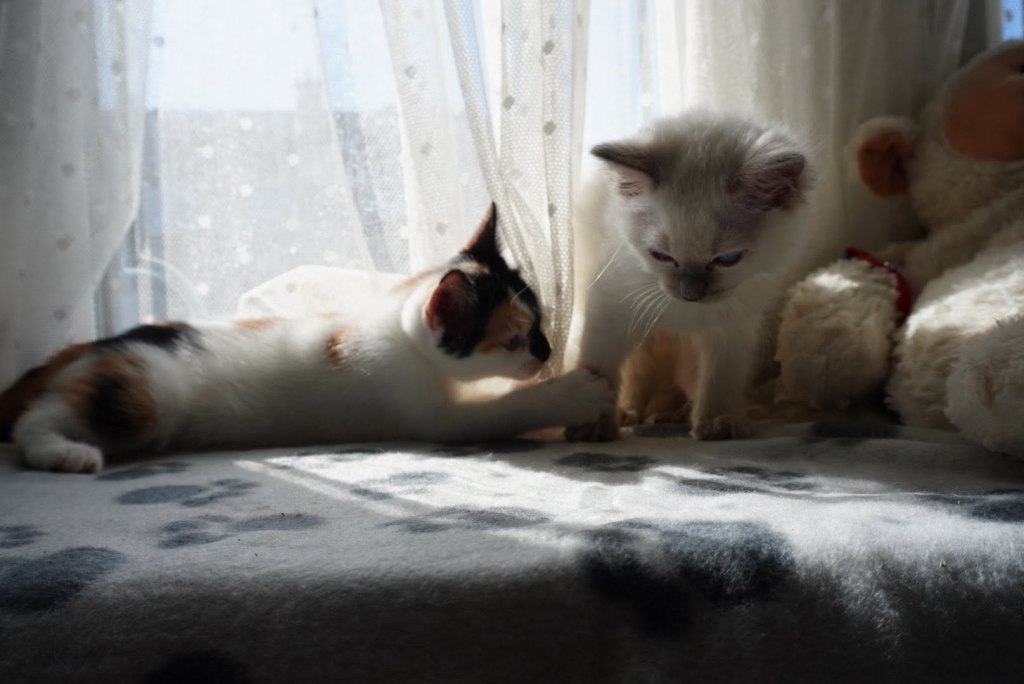
Miyuki and Luna, in particular, have offered a fascinating demonstration of confidence without any apparent interest in earning approval. They occupy the most comfortable places in the house, interrupt activities whenever they consider it necessary, and expect affection with the assurance of creatures who have never once questioned whether they deserve it. Neither has made a meaningful contribution towards the household bills, and both remain entirely convinced that their presence constitutes more than adequate compensation.
I admire that attitude, although I suspect society would become difficult to manage if human beings adopted the complete feline approach to relationships. We cannot all demand attention at inconvenient hours, ignore instructions, and knock objects off tables simply because somebody has failed to recognise our importance. Nevertheless, I think there is something amusing about how confidently cats occupy space. They do not appear concerned with proving that they are useful enough to justify being there.
I would like a modest portion of that confidence, preferably without the destructive tendencies.
I also want to be more mindful of how I include other people. Remembering the discomfort of wanting to belong has made me attentive to quieter individuals who may be uncertain about their place in a group. I appreciate invitations offered without pressure, conversations where people are allowed to participate naturally, and gatherings where contributing does not become a condition for feeling welcome.
I do not believe every person must become close friends with everybody else.
Relationships develop differently, and compatibility cannot always be manufactured through good intentions. But I think we can make ordinary social situations more considerate by noticing who may be standing at the edge of a conversation, who has been doing much of the work, and whether the people helping have also had an opportunity to enjoy themselves.
Perhaps that is another reason the image of my parents has remained with me. It encouraged me to notice the people who make gatherings possible while receiving very little attention themselves. There are always individuals working behind the scenes, whether they are preparing food at family celebrations, organising social events, or taking on responsibilities that allow others to relax. Their contributions deserve recognition, but so does their right to enjoy the occasion.
I would like to think I have become more thoughtful about that as I have grown older. If someone has been preparing food, perhaps somebody else can take over for a while. If one person has been organising everything, perhaps the rest of the group can contribute. If somebody is always the one checking that everyone else is comfortable, perhaps we can ask whether they are comfortable too. These gestures are small, but they acknowledge that consideration should not move in only one direction.
I am beginning to see that the childhood ache I felt while watching my parents was not simply about poverty. It may also have been about dignity, fairness, and the desire to see people I loved treated as participants rather than merely contributors. I wanted them to have the same opportunity to sit, laugh, eat, and enjoy themselves as everybody else. Perhaps I was too young to understand the different reasons adults behave as they do, but I recognised something important about how it feels when people remain busy serving an occasion they are supposed to be part of.
The irony is that I spent many of the following years reproducing a version of that arrangement in my own relationships. I became the person who tried to make everything easier, who worried about disappointing others, and who occasionally considered her own preferences only after everyone else’s had been accommodated. I had felt sad watching my parents work while others enjoyed themselves, yet I gradually developed the habit of treating my own comfort as something that could wait until everybody else was satisfied.
It has taken me years to recognise that contradiction.
I do not regret being helpful. Some of my most meaningful relationships have been strengthened through generosity, practical support, and the willingness to make an effort when somebody needed me. I believe those qualities remain important, and I would be disappointed if becoming more independent made me less compassionate.
But I no longer want kindness to become a way of negotiating for acceptance. I would rather offer what I can genuinely afford to give, whether that involves time, attention, effort, or practical assistance, without turning the gesture into a silent request for reassurance that I still matter.
I want friendships where people can choose one another without keeping a running account of favours. I want family relationships where gratitude is expressed through consideration rather than permanent indebtedness. I want working relationships where professional respect comes from competence, honesty, and mutual support rather than from one person’s willingness to absorb every additional responsibility. Most of all, I want to remain comfortable being myself even when that means I am not the most convenient person in every situation.
There are still moments when the old habits return. I may feel tempted to explain a refusal more thoroughly than necessary or wonder whether somebody has interpreted my decision unfairly. If I discover that friends have gathered without me, I might briefly feel the familiar disappointment before reminding myself that not every occasion requires my presence. I still care what people think, particularly those whose judgement I respect. I doubt I will ever become entirely indifferent to other people’s opinions, and I am not sure that would be desirable.
But I am learning to distinguish between caring about a relationship and making my worth dependent upon its approval.
That is the change I would want my younger self to see. She may have imagined that growing older would make her more successful, independent, knowledgeable, or financially secure. I hope she would appreciate the things I have accomplished, but I think this quieter achievement might mean more to her than she initially realised. The girl who once watched her parents working during gatherings and wished they could simply sit down has become a woman who is slowly learning to offer herself the same consideration.
I would tell her that she does not need to become indispensable to be loved.
She does not have to agree with every friend to remain a good friend, and she does not need to accept every request to demonstrate that family matters to her. She can work hard without assuming that exhaustion is the price of professional respect. She can be generous while recognising that her resources and energy are limited. Most importantly, she can have a preference, express an opinion, or decline an invitation without treating the possibility of disappointment as evidence that she has done something terrible.
I imagine she would need time to believe me. She spent so many years observing how helpful people were appreciated that she might struggle to understand why I was encouraging her to become more selective about what she offered. I would explain that usefulness is a wonderful quality when it grows from genuine willingness, but it becomes a poor foundation for self-worth when we begin believing that people have no reason to keep us around without it.
I would also tell her that some relationships will change as she becomes more comfortable expressing herself.
People who are accustomed to her flexibility may be surprised when she begins establishing limits. Others will hardly notice because they never required her to abandon those limits in the first place. Some connections will remain meaningful, while others may gradually become less close. It will not always be comfortable, but she will discover that being accepted for a version of herself she can genuinely sustain is far more reassuring than maintaining approval through constant adjustment.
There is something almost comical about how long it took me to understand that. I have spent years developing professional skills, learning complicated information, and managing responsibilities that once seemed intimidating. Yet one of the more difficult lessons of adulthood has been learning that I am allowed to choose a restaurant, decline a request, and sit quietly at a gathering without immediately searching for something useful to do.
I still appreciate helping in the kitchen, by the way. I enjoy cooking when I have the time and inclination, and I understand the pleasure of contributing to a gathering where people are enjoying themselves. I have no intention of approaching every family occasion with a formal declaration that I am no longer available for domestic duties. That would be rather dramatic, not to mention inconvenient for whoever was expecting help with the dishes.
But I want helping to be something shared rather than silently assigned, and I want the people who contribute to have time to enjoy themselves too.
Perhaps that is where the memory of my parents and the person I am becoming finally meet. I cannot go back and change those childhood gatherings, nor can I know exactly what my parents felt while preparing food and washing dishes. I can only remember what I witnessed and recognise how it influenced the way I understood acceptance. I saw their effort, felt protective of them, and eventually developed my own habit of making myself useful in the hope that I would always have a place among others.
Now I want to do something different with that memory.
Instead of allowing it to remind me that belonging must be earned, I want it to encourage me to notice the worth of people beyond what they contribute. I want to appreciate the relative who helps prepare a meal and the one who simply needs a little time to sit. I want friendships where people can offer support without becoming permanently responsible for everybody else’s needs. I want to respect colleagues for the quality of their work while remembering that they are human beings whose lives extend beyond their professional usefulness.
And I want to offer myself the same understanding.
I think the younger version of me would be proud of that, although she might express her approval quietly. Perhaps she would remember sitting at a family gathering, watching her parents move between the kitchen and the table, and wishing somebody would tell them that the dishes could wait. Perhaps she would recognise the familiar ache of wanting the people she loved to be included in the enjoyment rather than remaining occupied with making it possible.
I would like to tell her that I understand why she felt that way. I would also tell her that she will spend years learning to extend that compassion towards herself, sometimes awkwardly and with several unnecessary explanations along the way.
There will still be gatherings where she helps prepare food. There will be friends who need her, relatives she wants to support, and colleagues who appreciate her willingness to contribute. None of those things needs to disappear. The change is that she will become more willing to recognise when she has done enough, when another person can take over, or when the most appropriate thing she can do is simply enjoy being there.
She will no longer need every invitation to confirm her importance. She will stop treating every disagreement as evidence that a relationship is in danger. She will become more comfortable having a smaller circle of people who appreciate her company without requiring constant proof that she deserves a place.
And perhaps, at the next gathering, she will finish helping in the kitchen, wash her hands, and sit down while the conversation is still going on. She will join the laughter, enjoy the food, and allow somebody else to notice the plates waiting by the sink. Not because she has become less generous, but because she has finally begun recognising that she is also part of the occasion.
For most of my life, I thought belonging was something I needed to earn by making myself useful. I am beginning to understand that the people who genuinely care about me should also want me present when there is nothing left to organise, prepare, solve, or provide.
There is a kind of acceptance that becomes visible only when we stop performing for it, and I have grown to appreciate that far more than the reassurance of being needed.
I think my parents deserved that kind of consideration too. Whatever their reasons for helping during those gatherings, I wish the little girl watching them could have felt certain that their place among the family did not depend upon how much work they completed. I wish she could have understood that poverty did not make anybody less deserving of comfort, respect, or enjoyment, and that contributing to a celebration should never determine whether a person is entitled to participate in it.
Perhaps I cannot change what I saw, but I can change what I learned from it.
The next time somebody asks where I want to eat, I intend to give an actual answer. It will probably involve ramen, pho, or somewhere with a menu interesting enough to make me temporarily forget the amount of money I had intended to save that month. If the group chooses another place, that is fine too. I no longer need every small decision to become a referendum on whether I belong.
And when the meal is finished, I will happily help clear the table if assistance is needed. I may even wash a few dishes, particularly if everybody else has contributed and the kitchen requires another pair of hands. But I would also like to return to the conversation before the gathering is over, sit beside the people whose company I came to enjoy, and have the sort of ordinary evening I once wished my parents could experience more often.
After all those years of trying to earn a seat, I am finally learning that I can simply pull out a chair.
— Anj,
formerly the unofficial volunteer for every favour, gathering, and emotional support committee, still generous with her time but increasingly protective of where it goes, and firmly convinced that after years of trying to earn a place at everybody else’s table, she is entitled to enjoy the pancit before somebody asks her to wash the kaldero.

































Leave a Reply