On an old woman with a walking stick, a childhood I remember in fragments, and a kindness I felt long before I knew what to call it.
I do not remember her name. In fact, I am not even sure I ever knew it.
I cannot tell you where she lived, whether she had children, or what happened to her after she disappeared from the little stretch of road that belonged to my childhood. I remember almost nothing about her life, which makes it rather strange that I remember her at all. There are people whose names I have known for years, whose faces I have seen repeatedly, and whose conversations I have participated in, yet I could barely describe them now. Meanwhile, somewhere in the crowded filing cabinet of my memory, an elderly woman with a walking stick has been occupying a remarkably permanent space without ever introducing herself properly.
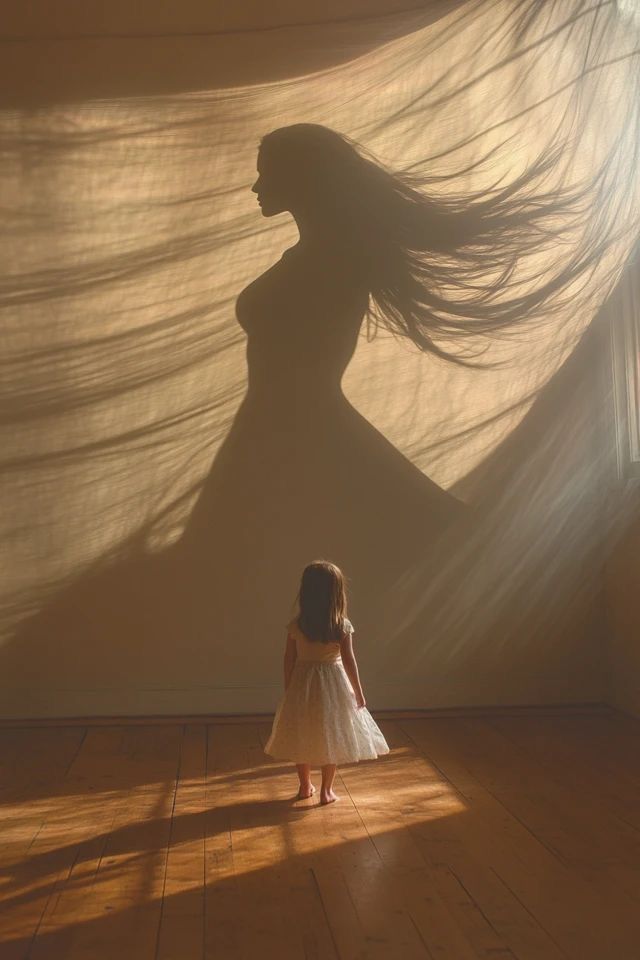
I must have been around seven, eight, or perhaps nine years old. The exact year escapes me, although I know it belonged to the period when our family was living in Toledo City, Cebu, and selling food as part of our livelihood. My childhood was filled with the ordinary sights and sounds of a Filipino neighbourhood, where people passed one another frequently enough for familiar faces to become part of the scenery. There were neighbours, children, people going about their business, and the kind of daily movement that made the street outside our house feel like an extension of our home. Sometimes I would be outside with Mama, watching people pass while she attended to the food we were selling. I was young enough to find nearly everything interesting and old enough to begin observing things I did not fully understand.
That was where I remember seeing her.
She was an elderly woman, perhaps in her seventies or eighties, although I admit that childhood is not particularly reliable when estimating age. When you are eight, anyone approaching fifty already seems to possess a respectable amount of ancient wisdom, and someone with white hair and a walking stick might as well have witnessed the construction of the pyramids. I cannot say exactly how old she was. I only remember that she looked very old to me, and that she walked with a stick, passing our house so regularly that I began recognising her as part of the day.
I do not remember every detail of her appearance. Her face has softened with time, and I would not trust myself to describe her clothing or the expression she usually wore. But I remember the stick, her age, and the particular feeling that came over me whenever I saw her walking along the road. It was not fear, although children can sometimes be intimidated by unfamiliar elderly people. Nor was it simply curiosity about where she was going. I felt something closer to concern, an inexplicable wish that she did not have to keep walking, that she could sit somewhere comfortable and rest instead of being outside under the heat.
Whenever she passed, I would sometimes call out to her and ask for her blessing. In Cebuano, it would have been that familiar gesture of respect we learn as children, asking an elder to bless us even when we are not related by blood. Bless ko, Nay, or something much like it. I cannot remember the exact words I used on every occasion, but I remember wanting to acknowledge her respectfully. It felt entirely natural to me, despite the fact that she was not my grandmother, aunt, or any relative whose place in our family could be explained through a complicated collection of surnames.
In Filipino culture, mano or pagmamano, and our familiar practice of asking elders for a blessing, carries a meaning that goes beyond the physical gesture. As children, we learn that age deserves consideration and that respect need not be reserved exclusively for people who share our blood. We address older people through affectionate terms such as Nanay, Tatay, Lola, or Lolo, even when they are technically strangers. Perhaps that was why calling out to her felt so ordinary. I had been taught to respect elders, and she was an elder passing our home. From a child’s perspective, the matter required very little additional explanation.
But the respect was not what made the memory stay.
It was the sadness.
I remember looking at her and wondering why someone so old still had to walk around so much. I did not know where she was going. I had no evidence that she was being neglected or that anyone was making her work. For all I knew, she might have been visiting someone, buying something, or simply following a routine she enjoyed. Perhaps the walks gave her independence, a reason to leave home, or an opportunity to see people she knew. These possibilities are obvious to me now, but they did not occur to my younger self with the same clarity. At that age, I saw an elderly woman walking with a stick and felt that she ought to be resting.
In my small understanding of how the world should work, reaching such an advanced age ought to have entitled a person to a certain amount of comfort. Someone should have been looking after her. Someone should have been making sure she had eaten, that she was not too tired, and that she did not need to keep going outside if walking had become difficult. I remember feeling a peculiar heaviness whenever she passed, almost as though her journey was somehow unfair. I could not explain why I felt that way, especially because I knew almost nothing about her circumstances. I simply wanted her to have somewhere she could stop.
Perhaps this was one of my earliest encounters with the uncomfortable fact that age does not automatically bring ease.
When we are children, we often imagine that adulthood follows a predictable arrangement. People grow older, work hard, raise families, and eventually reach a stage when somebody else takes care of them. We assume that grandparents rest, that younger family members help, and that the people who have already spent decades carrying responsibilities should finally be allowed to put some of them down. It is a pleasant idea, especially when your understanding of old age comes largely from the elders you know and the expectations you hear discussed at home.
Reality, of course, is less considerate.
There are elderly people who continue working because they enjoy remaining active and independent. Others do so because they have responsibilities that have not disappeared simply because their bodies have aged. Some have families who care for them, while others manage life with limited support. Poverty can make old age especially difficult, not because every elderly person who walks outside is necessarily struggling, but because financial insecurity rarely respects the age at which someone ought to be allowed to retire. The practical demands of living can continue long after a person has become tired of meeting them.
I did not understand any of that properly when I was eight.
I only knew that the woman looked old, and the sight of her walking made me wish somebody would tell her she could rest.
Looking back, I wonder whether my feelings were connected to the circumstances of my own childhood. We were not wealthy, and I grew up understanding that earning a living required effort. Our family sold food, and I was familiar with seeing adults occupied by responsibilities that did not necessarily pause because they were tired. I saw Mama working, preparing things, and attending to the practical details of everyday life. I knew that money did not simply appear because somebody needed it and that people often had to keep working regardless of how they felt.
Perhaps, without fully recognising it, I had begun noticing how closely work and survival could be connected.
When you grow up in a family where money matters in very practical ways, you may develop an awareness of effort before you understand economics. You notice the hours people spend preparing things, the customers who come and go, and the way adults organise their days around what needs to be done. You may not know much about household finances, but you begin understanding that some families have fewer opportunities to stop working than others.
I cannot say that this was precisely what I was thinking when I watched the elderly woman pass. Childhood memories are not transcripts, and I do not want to place adult explanations into the mind of a little girl who was probably also thinking about snacks, playing outside, and whatever other concerns occupied her afternoon. But I do wonder whether the sight of someone so old continuing along the road touched something I had already begun recognising: that some people seem to spend a very long time carrying responsibilities, and that rest is not always something they can simply choose.
I think what unsettles me most about the memory now is how little I knew about her. I had made an emotional judgement based upon a few seconds of observation, repeated across several days. I did not know whether she was happy, lonely, tired, financially struggling, or perfectly content with her daily routine. I did not know whether she lived with relatives or preferred being independent. I certainly did not know what she thought about the little girl who sometimes called out to ask for her blessing as she passed.
Perhaps she found it sweet. Perhaps it amused her. Perhaps she barely remembered the interaction by the time she reached the next house.
I like to imagine that she appreciated it, although I have no way of knowing.
There is something rather humbling about remembering somebody so vividly while realising that you may have occupied only a few seconds of their day. She was living an entire life that existed beyond my understanding. She had a childhood of her own, relationships, memories, disappointments, perhaps children or grandchildren, and experiences that had shaped the person walking past our house. By the time I encountered her, she had already lived several decades more than I could comprehend. To me, she was simply the old woman with the stick. To herself, she was somebody with a history.
I wonder what she had been like when she was young. Had she once been a girl who ran along the same kinds of roads without thinking about how difficult walking might become? Had she spent years working, raising a family, or helping other people? Had she known the excitement of celebrations, the worry of difficult seasons, or the satisfaction of finally accomplishing something she had hoped for? I cannot answer any of those questions, and perhaps that is why the memory feels strangely incomplete. I remember the end of a long human story without knowing any of the chapters that came before it.
As children, we rarely appreciate that older people were once young in exactly the same way we are. We see their present age and treat it almost as though they have always existed in that form. A grandmother has always been a grandmother. An old man has always walked slowly. An elderly woman with a stick seems to belong naturally to the world of older people, as though she arrived there without passing through childhood, adolescence, love, ambition, disappointment, and all the ordinary complications of living.
It took me growing older to appreciate how misleading that perspective can be.
The woman I saw walking past our house was not merely old. She was somebody who had lived long enough to accumulate a lifetime of experiences that I would never know. Her walking stick was only one visible detail of a much larger existence. Yet to my younger self, that detail was enough to produce a concern I could not quite explain.
Perhaps the feeling was compassion in its earliest, least sophisticated form.
I did not know what she needed. I had nothing particularly useful to offer, and I could not have solved whatever difficulties she might have been experiencing. I was a child standing outside a house where my family sold food, watching someone pass along a familiar road. But I remember wanting something good for her. I wanted her to be comfortable, to be looked after, and not to have to struggle if she was already tired.
There was no reward attached to that feeling. She was not a relative whose affection I hoped to receive. I did not know her well enough to expect friendship, recognition, or anything in return. I simply felt concerned about somebody whose life was almost entirely unknown to me.
I think that is what makes the memory meaningful after all these years.
So much of our kindness as adults becomes entangled with obligations, expectations, and complicated relationships. We help family because we love them and because we share responsibilities. We support friends because friendship involves mutual consideration. We assist colleagues because teamwork matters. Those are valuable forms of kindness, but they exist within relationships where expectations are already established.
The concern I felt for that woman belonged to none of those arrangements.
She was a stranger, and yet I wanted her to have an easier day.
Perhaps some of our earliest lessons in compassion come before we understand anyone’s circumstances, when we simply recognise that another person might be tired and wish the world would be gentler with them. I cannot know whether the woman needed the rest I imagined for her, but I recognise the tenderness behind that childhood wish. It was a desire for someone else’s comfort without expecting anything from them, and I think there is something worth preserving in that.
As I grew older, I encountered many situations that complicated my understanding of kindness. I learned that good intentions do not automatically mean we understand what another person needs. Sometimes helping requires listening rather than assuming. Sometimes people value their independence and do not want us to interpret their ordinary activities as evidence of helplessness. An elderly person walking with a stick may be managing perfectly well and may consider the walk an important part of maintaining their freedom. Respecting someone involves recognising their dignity and choices, not simply wishing to remove every difficulty we imagine they might be experiencing.
That is something I would want my younger self to understand. She was not wrong to feel concerned, but she did not possess enough information to know what would actually make the woman’s life better. It is possible to care sincerely and still misunderstand the situation. Perhaps that is one of the reasons compassion needs curiosity and humility alongside emotion. We must be willing to see people as more than the circumstances we observe from a distance.
Working in nursing has only made that distinction more important to me. I have learned that age alone tells us very little about somebody’s abilities, preferences, or wishes. Two people of the same age can have completely different levels of independence, health, and support. Some older adults are remarkably active, while others require assistance with everyday needs. The important thing is not to decide what someone’s life should look like based solely upon their age, but to understand the person in front of us and consider what matters to them.
I wish I could go back and ask the elderly woman a few ordinary questions. Not to investigate her circumstances like a professional assessment, but simply because I am curious about the person behind the memory. Where was she going every day? Did she enjoy the walk? Was there somewhere she liked visiting? Did she live nearby? Was she happy when children greeted her along the road?
Perhaps the answers would reveal something entirely different from what I imagined.
She might have told me that she enjoyed going outside, that the walk gave her something to look forward to, or that she preferred moving around rather than remaining inside the house. She might have explained that she had errands to complete or people she wanted to visit. Or perhaps she really was tired and carrying responsibilities that had become difficult with age. I will never know, and I am learning to leave that uncertainty where it belongs rather than inventing a story simply to satisfy my curiosity.
Still, I cannot help thinking about what life must have looked like through her eyes. She passed our house repeatedly while I remained part of the familiar scenery along her route. Perhaps she recognised Mama and the food we were selling. Perhaps she knew the neighbourhood far better than I did and had memories attached to houses, roads, and people I had barely begun to notice. She may have watched children grow older, families move away, and familiar places change around her.
For all I know, our house was only one small landmark in a journey she had been making for years.
I wonder whether she noticed the little girl who kept asking for her blessing. Perhaps she regarded me as another child practising the manners expected in our community. The gesture may have lasted only a moment, but I remember its meaning. I wanted to acknowledge her, not because she possessed any authority over me or because we shared a family connection, but because I considered her worthy of respect.
There is something beautiful about that part of Filipino culture. The familiar terms we use for elders can create a sense of connection even between people who are not related. Calling someone Nay, Tay, Lola, or Lolo does not make them part of our family in the legal or biological sense, but it can communicate warmth and consideration. These expressions remind us that respect and affection need not always be limited by blood.
Of course, cultural gestures become meaningful through how we treat people beyond the greeting itself. Asking for a blessing is lovely, but respect also involves patience, practical consideration, and recognising an older person’s individuality. It means listening when they speak, allowing them choices, and not reducing them to their age or physical limitations. I think the little girl I was understood the first part instinctively. The rest would require growing older.
Perhaps that is why the memory has returned to me now, after so many years. I have spent much of adulthood learning how complicated human beings can be, particularly when their circumstances, relationships, and responsibilities are involved. I have seen enough of life to understand that kindness is not always straightforward and that helping someone requires more than simply feeling sorry for them.
Yet there is still something moving about remembering a time when my concern was uncomplicated.
I was not thinking about whether the woman deserved help, whether she had made responsible decisions, or whether her circumstances were partly the result of choices I did not understand. I was certainly not considering social policies, retirement arrangements, or the economics of ageing. I was a child who saw someone much older than herself walking along the road and wished she could rest.
That was the entire thought.
There is something both innocent and incomplete about it, and I appreciate those qualities differently now. I do not want to romanticise childhood as though children possess perfect judgement or an understanding of suffering that adults somehow lose. Children can be mistaken, unfair, and wonderfully confident about things they barely understand. I was no exception. But they can also respond to another person’s apparent difficulty before developing the complicated explanations adults sometimes use to distance themselves from it.
I think we become more cautious as we grow older. We learn that appearances can mislead, that some situations are beyond our control, and that not every expression of concern is appropriate. Those lessons matter. But perhaps we should be careful not to allow greater understanding to become an excuse for indifference.
We can recognise uncertainty while still caring.
I do not know what happened to the woman. I cannot remember when I last saw her pass our house or whether there was a particular day when I noticed that she no longer came along the road. Childhood memories rarely provide proper endings. People appear in our lives, become familiar, and then gradually disappear from our awareness as circumstances change. Sometimes we move, grow older, or simply become interested in other things. Years later, a small detail returns unexpectedly, and we realise that somebody has remained in our memory without our understanding why.
She is one of those people for me.
I have lived in different places since then, met countless people, and experienced enough changes that my childhood sometimes feels like a world belonging to somebody else. The road outside our house, the food we were selling, and the familiar routines of those years exist now largely through memories. But the image of the elderly woman with her walking stick has remained, quietly attached to the feeling I experienced whenever she appeared.
I wonder whether my concern was partly connected to the way I saw Mama working. I knew that adults often carried responsibilities that children could not fully appreciate. Perhaps seeing an elderly woman moving along the road reminded me of how much effort ordinary life could require. I may have wanted her to rest because I was already beginning to understand that people could become tired from responsibilities that never seemed entirely finished.
Or perhaps there was no complicated explanation. Perhaps I simply had a tender spot for elderly people and found the sight of someone walking slowly with a stick emotionally difficult. Not every childhood feeling requires a grand psychological theory. Sometimes a memory remains because it touched us in a way we never quite understood, and perhaps that is sufficient.
I like that possibility too.
There is a temptation, particularly when writing personal essays, to turn every memory into evidence of a larger destiny. I could claim that watching the woman pass our house was an early sign that I would eventually become a nurse, as though the universe had been carefully arranging my professional interests before I was old enough to understand them. It would make a wonderfully convenient story, but I do not think life is always that neatly organised. My decision to pursue nursing developed through many experiences, opportunities, and choices. One elderly woman walking past our house cannot reasonably be credited with determining my career.
But perhaps the memory reveals something smaller and more personal. I was capable of feeling concern for someone I barely knew. I noticed a person who might otherwise have blended into the ordinary movement of the street. I wanted her to be comfortable, even though I had no idea whether she actually needed the kind of comfort I imagined.
That seems enough.
I think about the distance between the little girl standing beside Mama and the woman I am now. There are decades of experiences between us, including changes in how I understand family, responsibility, poverty, ageing, and the way people move through the world. I have become more aware of how complicated circumstances can be and less inclined to assume I understand someone’s entire life from what I happen to observe.
Yet I hope I have not completely lost the instinct that made me notice her.
I want to remain someone who pays attention to people beyond the roles they occupy or the usefulness they provide. Someone who recognises that the elderly person walking slowly in front of me may have somewhere important to go, even if their pace is inconvenient to someone else. Someone who understands that a person’s age does not erase their independence, but also does not make their need for kindness any less important.
I would like to think that if I encountered her today, I might respond with more understanding than I possessed as a child. I would not automatically assume she needed to stop walking, nor would I imagine that being old meant she should remain at home while younger people handled everything. I might simply greet her respectfully, ask how she was if the opportunity arose, and allow her to tell me something about herself rather than constructing an explanation from the few details available to me.
Perhaps she would have had an interesting story. I suspect most people do, particularly those who have lived long enough to see places and people change around them. I might have learned something about the neighbourhood, her family, or the ordinary routines she enjoyed. Or perhaps she would have preferred to continue walking, in which case I hope I would have had the good sense to let her go about her day.
I find myself smiling at that thought because it reminds me how seriously my younger self regarded her. To an eight-year-old, a woman of seventy or eighty seemed almost impossibly old. I probably imagined that she had already done everything a person could reasonably be expected to do in life and should now spend the remainder of her days sitting comfortably somewhere while younger relatives attended to her needs.
I wonder what I would have made of an elderly woman who genuinely enjoyed walking around the neighbourhood every day. Perhaps I would have been deeply puzzled by her refusal to take advantage of what I considered the privileges of old age. I might even have attempted to explain that she was supposed to be resting, despite possessing absolutely no qualifications in gerontology or an understanding of her personal circumstances.
Children can be wonderfully authoritative about subjects they have not studied.
Still, I find the concern endearing. I remember wanting her to have an easier life, and there is something touching about the fact that this feeling has remained clearer than almost anything else about her. I have forgotten the details of her face, her clothing, and where she was going, yet I remember wishing she could stop and rest.
Perhaps the people who remain in our memories are not always those who did something significant for us. Sometimes they are the ones who awakened a feeling we did not yet understand.
She did not teach me a lesson deliberately. She did not sit me down, offer advice, or explain anything about ageing, poverty, or the demands of everyday life. She simply passed our house with her walking stick while I stood outside beside Mama. Whatever meaning I found in those encounters developed quietly, without either of us knowing that an ordinary moment might remain with me for so long.
I have no idea whether she is still alive, although given how many years have passed and how old she seemed at the time, I know that is unlikely. I do not know where her story eventually led, and perhaps I never will. But whenever I remember her, I find myself wishing something very similar to what I wished as a child: that she was treated kindly, that the people around her recognised her worth, and that she had opportunities to rest when she needed them.
I also hope she had reasons to enjoy those walks. I hope the road she travelled offered familiar faces, ordinary conversations, or little moments that made her day pleasant. Perhaps she had somewhere she looked forward to reaching. Perhaps the walking stick was simply part of how she continued living independently, and the journey I interpreted as difficult was actually something she valued.
I like to leave room for that possibility.
There is one thing I remain particularly grateful for in this memory. The little girl standing outside our house did not need to know the woman’s name or share her blood to consider her deserving of respect. She saw an elderly stranger and wanted to acknowledge her with the familiar gesture she had learned at home. Beneath that gesture was a quiet concern that somebody older and perhaps more tired than she was ought to receive a little gentleness from the world.
I think I would like to keep that part of myself.
I cannot return to the street of my childhood and find the woman passing our house again. I cannot ask her where she was going or discover whether her life was anything like the story my younger self imagined. But I can remember her without claiming to know what I never knew. I can allow the memory to remain incomplete and still appreciate what it reveals about the way I once saw other people.
And if I could return for a few moments to that afternoon in Toledo, I think I would stand beside Mama and watch the road just as I did when I was little. I would see the people passing, hear the familiar neighbourhood sounds, and perhaps notice the elderly woman approaching with her stick. My younger self would recognise her immediately and call out for her blessing, with the uncomplicated confidence of a child who believed respect could be offered freely to anybody old enough to deserve it.
I would probably smile at her, partly because I remember how earnestly she cared and partly because I know how little either of us understood about the woman walking past.
Then I would let the woman continue her journey, wherever it was taking her. I would not try to decide what her life ought to look like or imagine that I could resolve circumstances I knew nothing about.
But I think I would still hope that, somewhere along the way, she had a comfortable chair waiting for her, a little food if she was hungry, and somebody who was genuinely pleased when she came home.
— Anj,
once a curious little girl outside a food stall in Toledo who apparently appointed herself the unofficial welfare officer of every elderly passer-by, now older and considerably less confident about knowing what strangers need, but still hoping that the woman with the walking stick had somewhere lovely to rest whenever she wanted to.


























Leave a Reply