An unexpected discovery in the Cotswolds, where centuries-old timber, antique treasures, and a wonderfully eccentric interior made a simple coffee stop rather memorable.
I have a rather questionable habit whenever I visit somewhere new. While most sensible people walk into a café, examine the menu, order something, and find a comfortable seat, I tend to become distracted by the furniture. Give me an old wooden cabinet, a slightly weathered wall, an antique mirror, or a ceiling supported by enormous timber beams, and suddenly I am examining the interior as though I have been appointed an unofficial heritage inspector. This habit became particularly evident during our visit to Foletta in Stow-on-the-Wold, a charming little establishment we discovered while exploring the Cotswolds in April 2026. We had stopped for coffee, which should have been a relatively straightforward activity, but somewhere between the entrance and the counter, I developed a far greater interest in the building than in whatever I had originally intended to order. In my defence, Foletta is the sort of place that makes being easily distracted feel entirely reasonable.
Stow-on-the-Wold
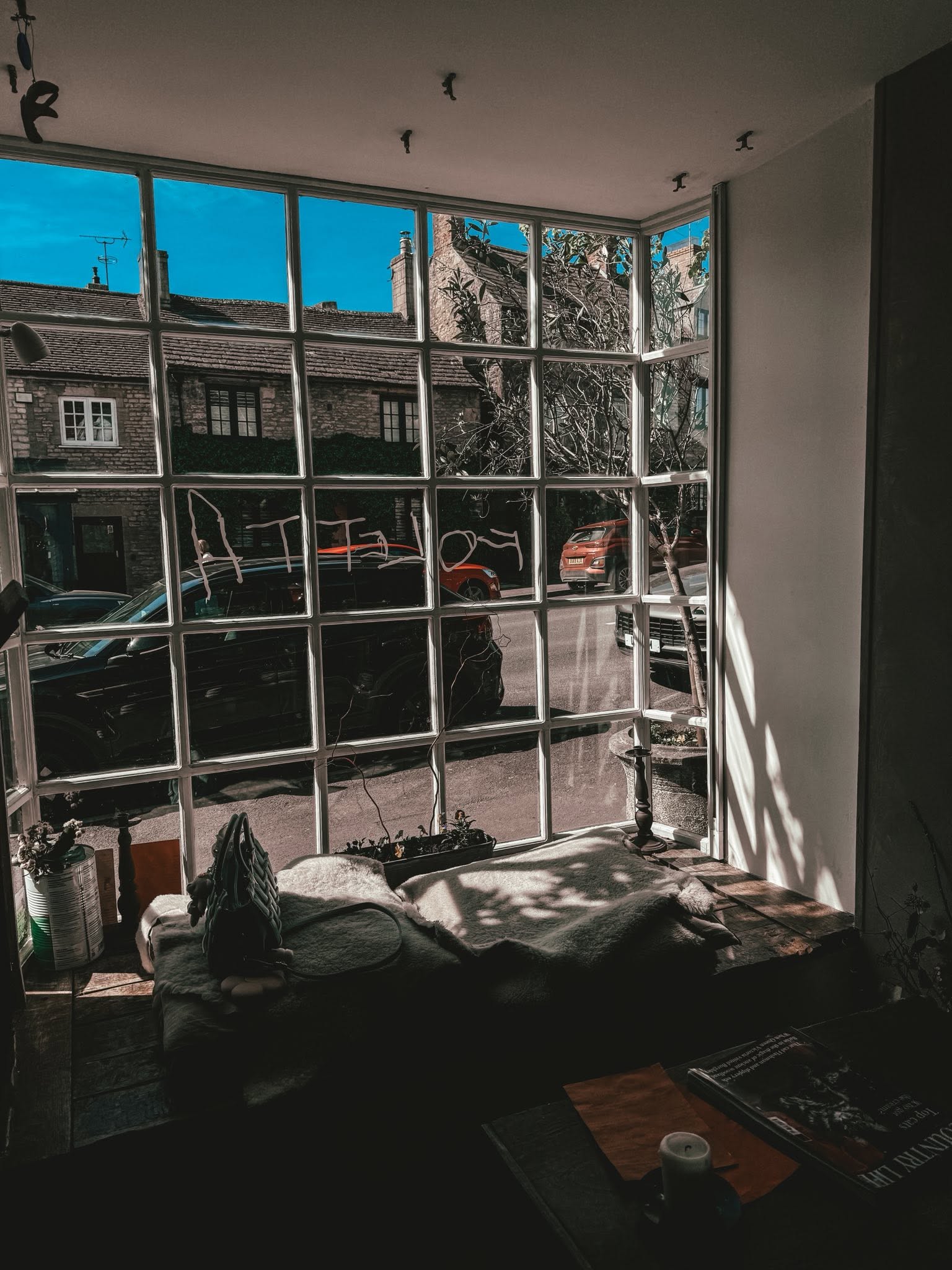
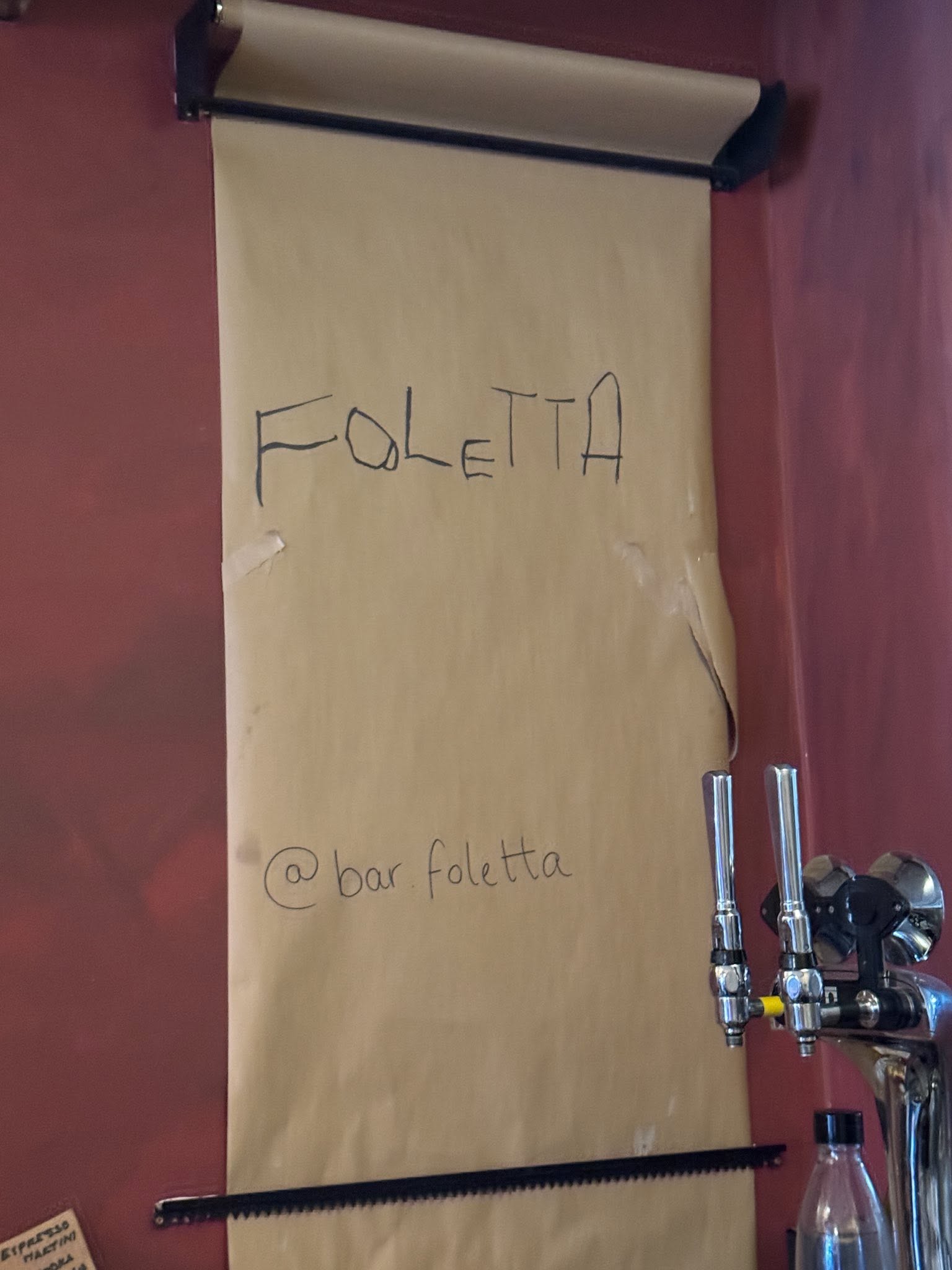
Stow-on-the-Wold is already the kind of English town that encourages unnecessary photography. Its honey-coloured stone buildings, independent shops, narrow streets, and unmistakable Cotswold character make even an ordinary wander rather enjoyable. There is something appealing about towns that have managed to preserve their architectural identity despite centuries of change. And while there is certainly no shortage of attractive cafés in this part of Gloucestershire, Foletta caught my attention because it offered something slightly different from the traditional countryside tearoom. Rather than presenting a polished interpretation of rustic charm, it seemed to embrace the beautiful irregularities of an old building, filling its rooms with vintage objects, mismatched furniture, and carefully considered details. It had the sort of personality that would probably be impossible to reproduce convincingly in a newly built commercial unit, no matter how many reclaimed wooden tables one purchased.
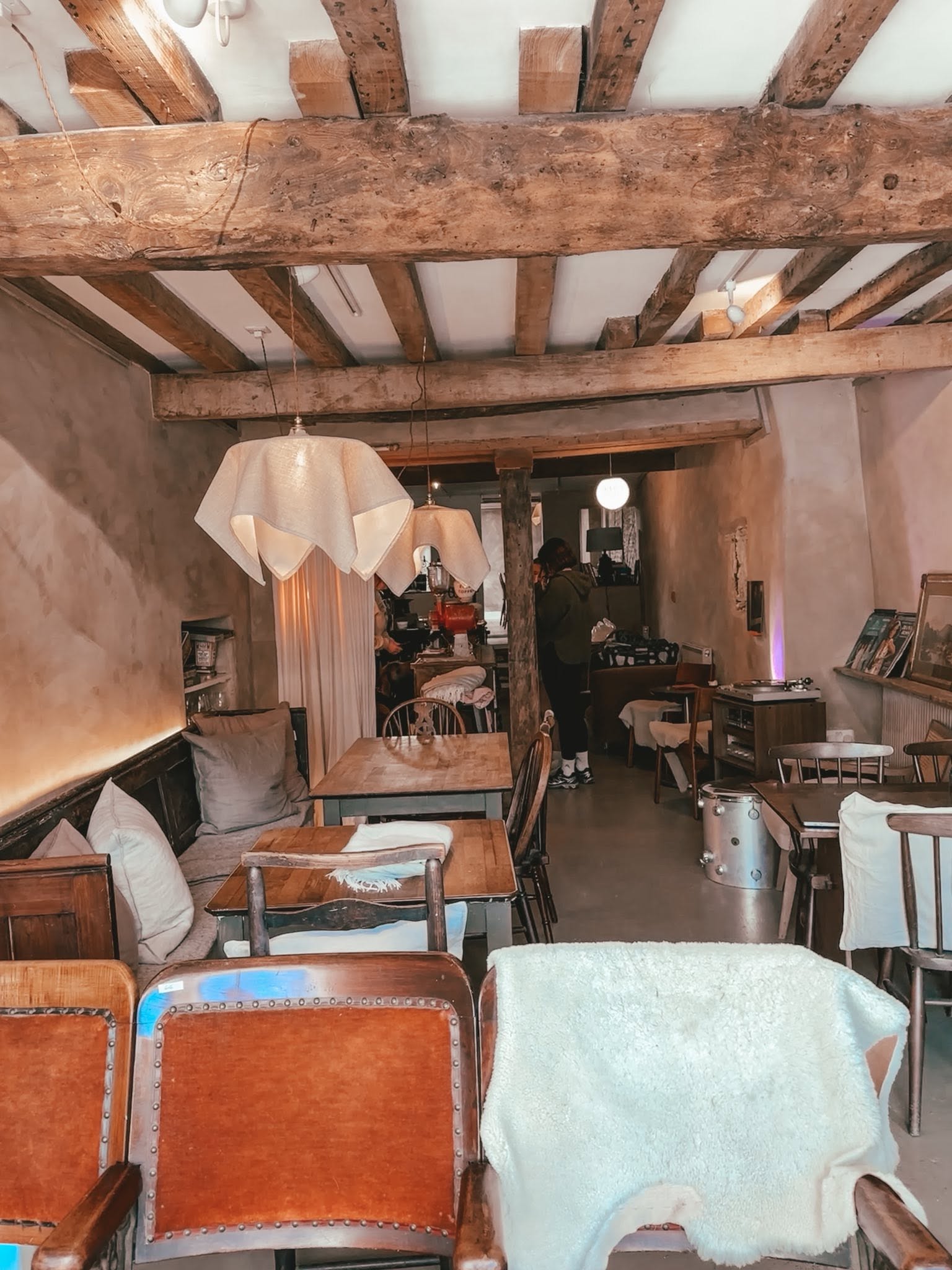
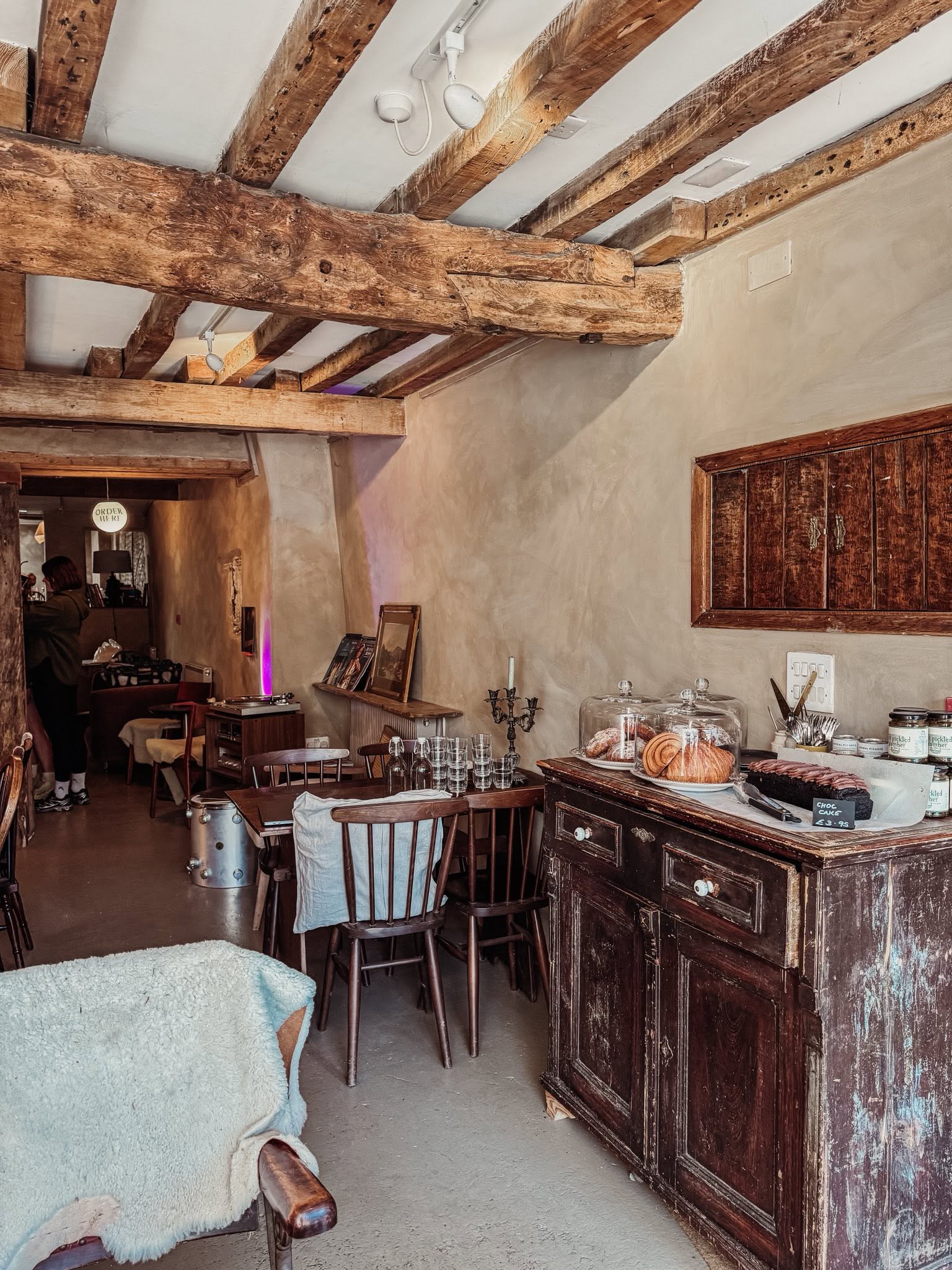
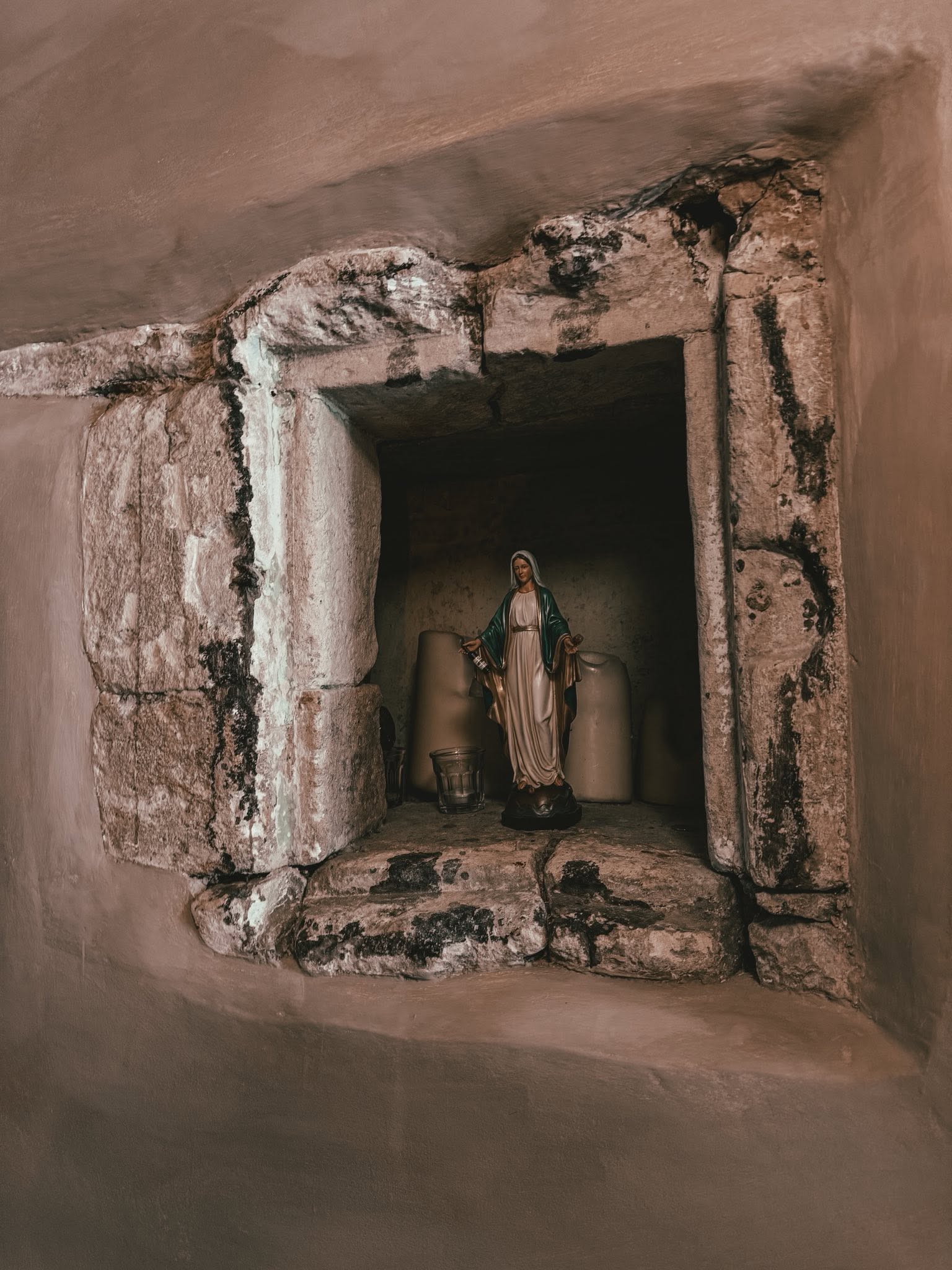
What I did not realise during our visit was quite how old the building actually was. According to Foletta’s official website, the establishment occupies a historic shopfront dating back to 1480, making the setting considerably older than many of the antique objects displayed within it. The business is family-run by two sisters and their mother, whose English, Australian, and Italian heritage influences the menu and the character of the place. Even the name Foletta carries a family connection, originating from their Italian ancestry and its long association with farming. I found this particularly interesting because, having explored the café, it made sense that such a personal history should influence its surroundings. There was something more intimate about the arrangement than a conventional commercial interior, as though generations of possessions, preferences, and family stories had somehow found themselves sharing the same rooms. I cannot pretend to know the individual history of every object, but I certainly appreciated that the place had a story beyond its rather photogenic appearance.
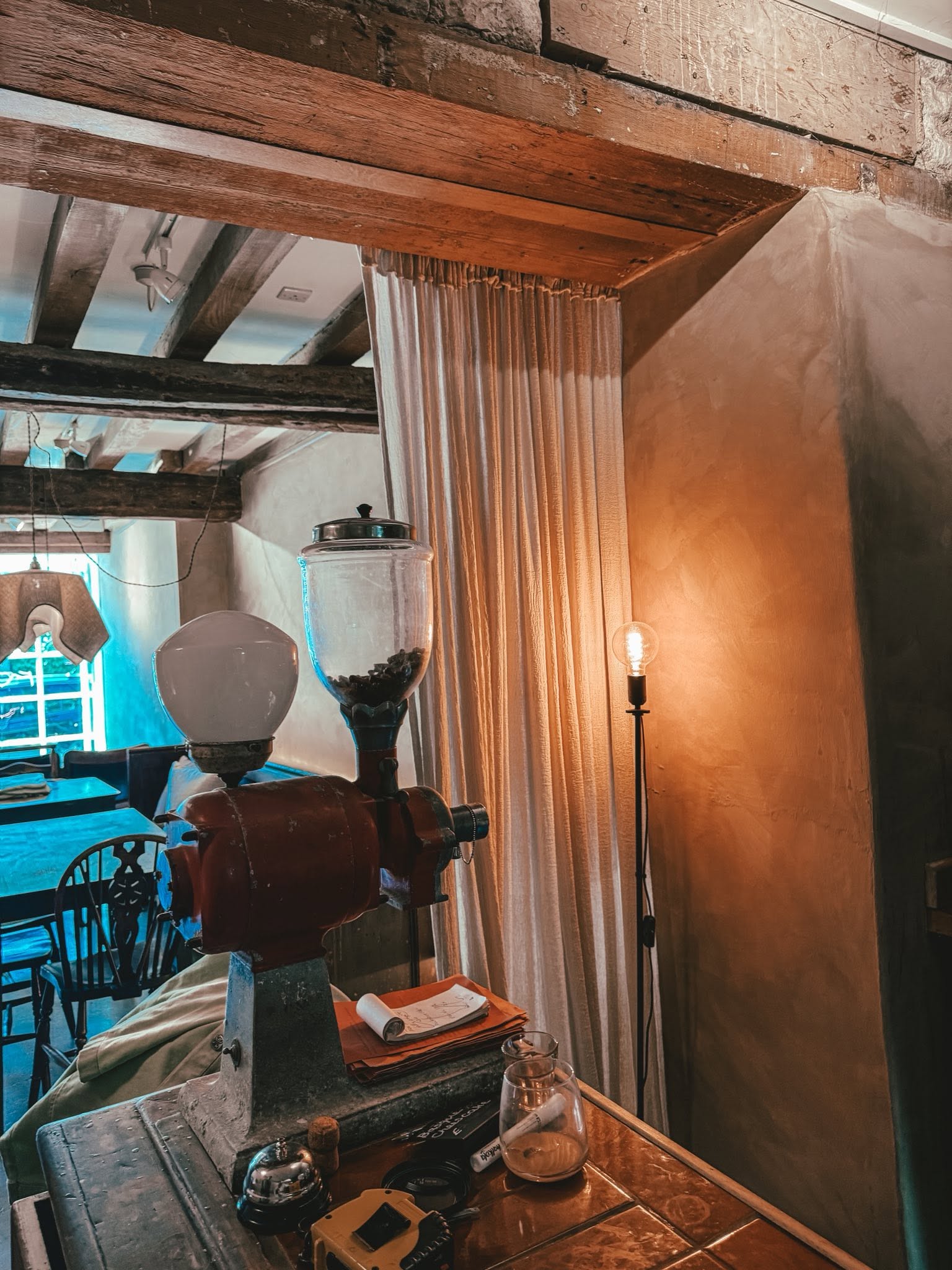
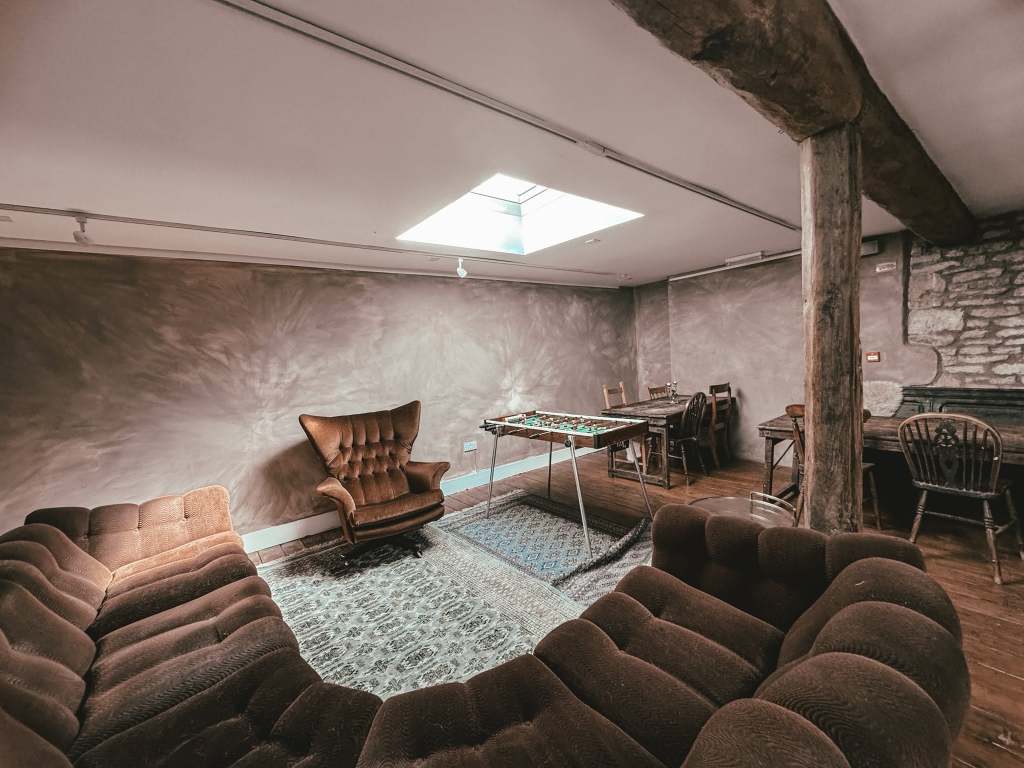
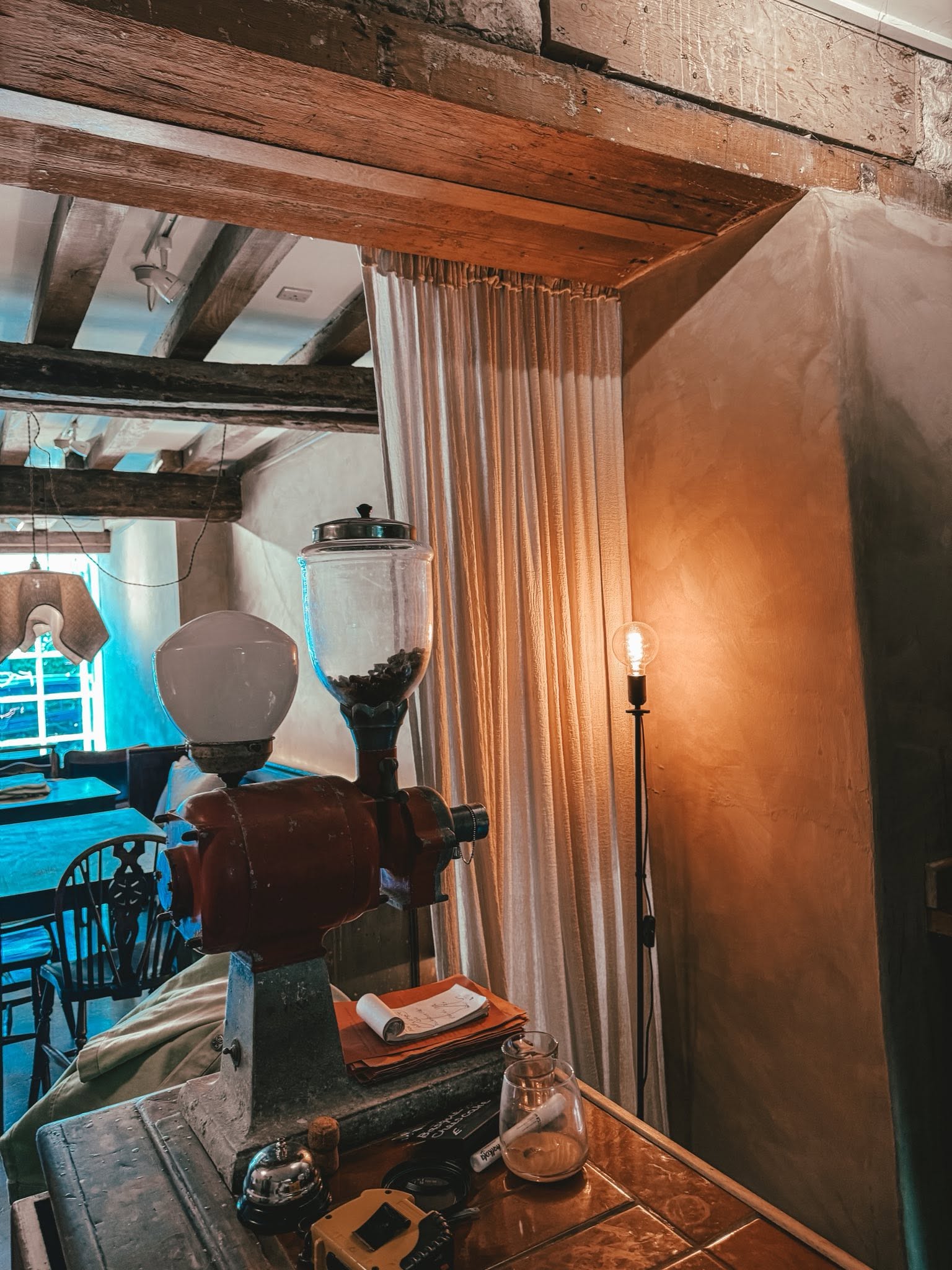
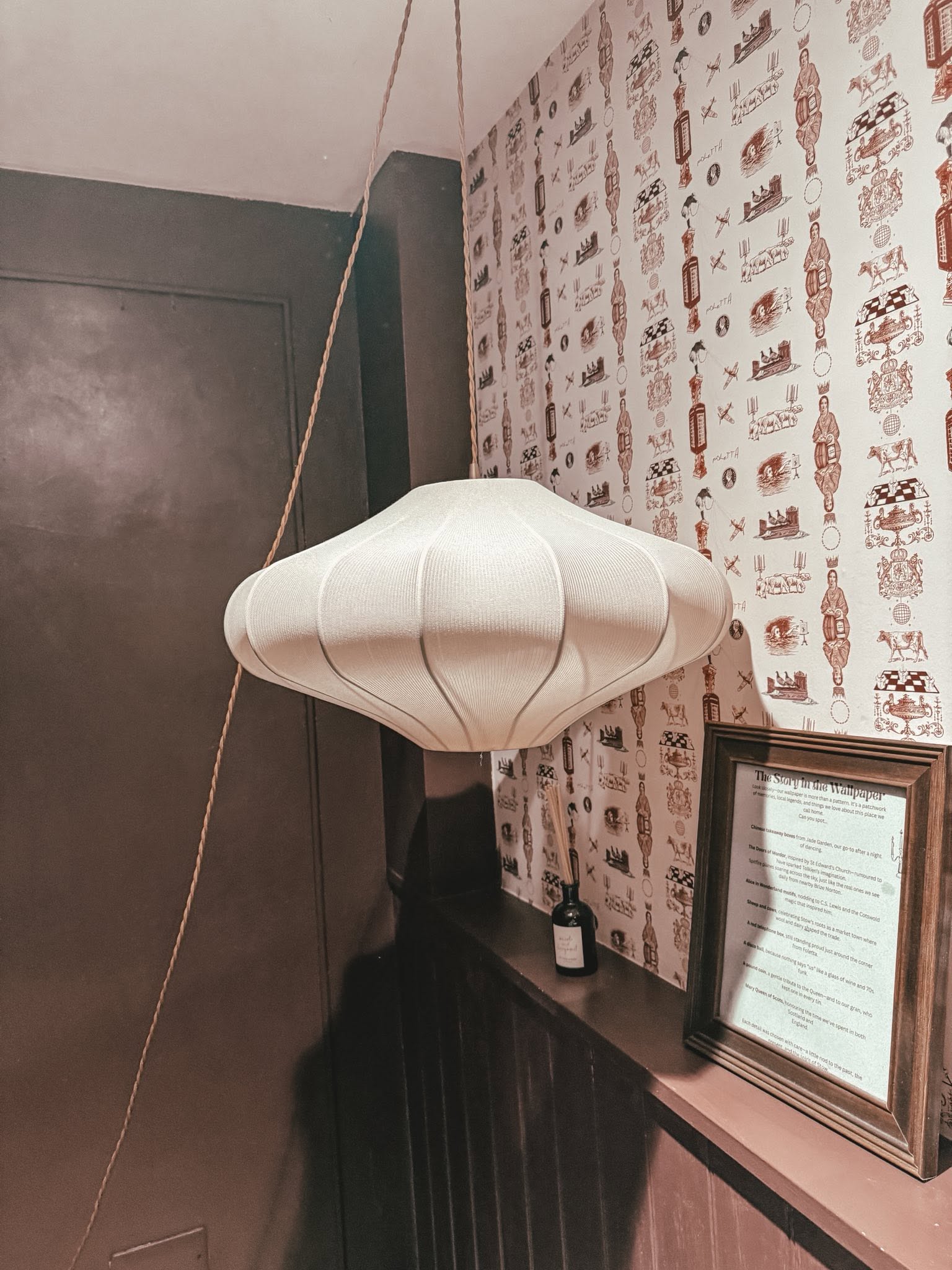
The first thing that struck me was the woodwork. Enormous exposed beams stretched across the ceiling, their rough surfaces and irregular shapes providing an extraordinary contrast to the softer furnishings beneath them. I have always had a weakness for old English architecture, particularly buildings where the original structural elements remain visible. There is something fascinating about timber that has endured for centuries, carrying the evidence of age without appearing particularly concerned about it. Beneath those beams were wooden chairs of different styles, antique cabinets, rustic tables, softly textured walls, and lampshades that looked as though they had been selected for their character rather than their ability to match. The entire space possessed a lovely lived-in quality. It was neither conventionally luxurious nor deliberately shabby. It simply looked comfortable being itself, which is perhaps more difficult to achieve than any particular decorating trend.
One of the loveliest details was the old wooden cabinet displaying pastries beneath glass domes. Beside it were vintage furnishings and small decorative pieces, each contributing to the impression that there was always something else worth examining. I particularly liked the contrast between the dark wooden furniture and the lighter, textured walls. The colours were warm and muted, with browns, creams, and the occasional unexpected accent giving the interiors a slightly nostalgic atmosphere. Anyone familiar with my fondness for earth tones, old books, antique objects, and furniture with questionable resale value will understand why this place appealed to me almost immediately. I suspect I could have spent an unreasonable amount of time inspecting the cabinets alone. Fortunately, I managed to resist asking whether any of them were for sale, although I cannot guarantee that the thought never occurred to me.
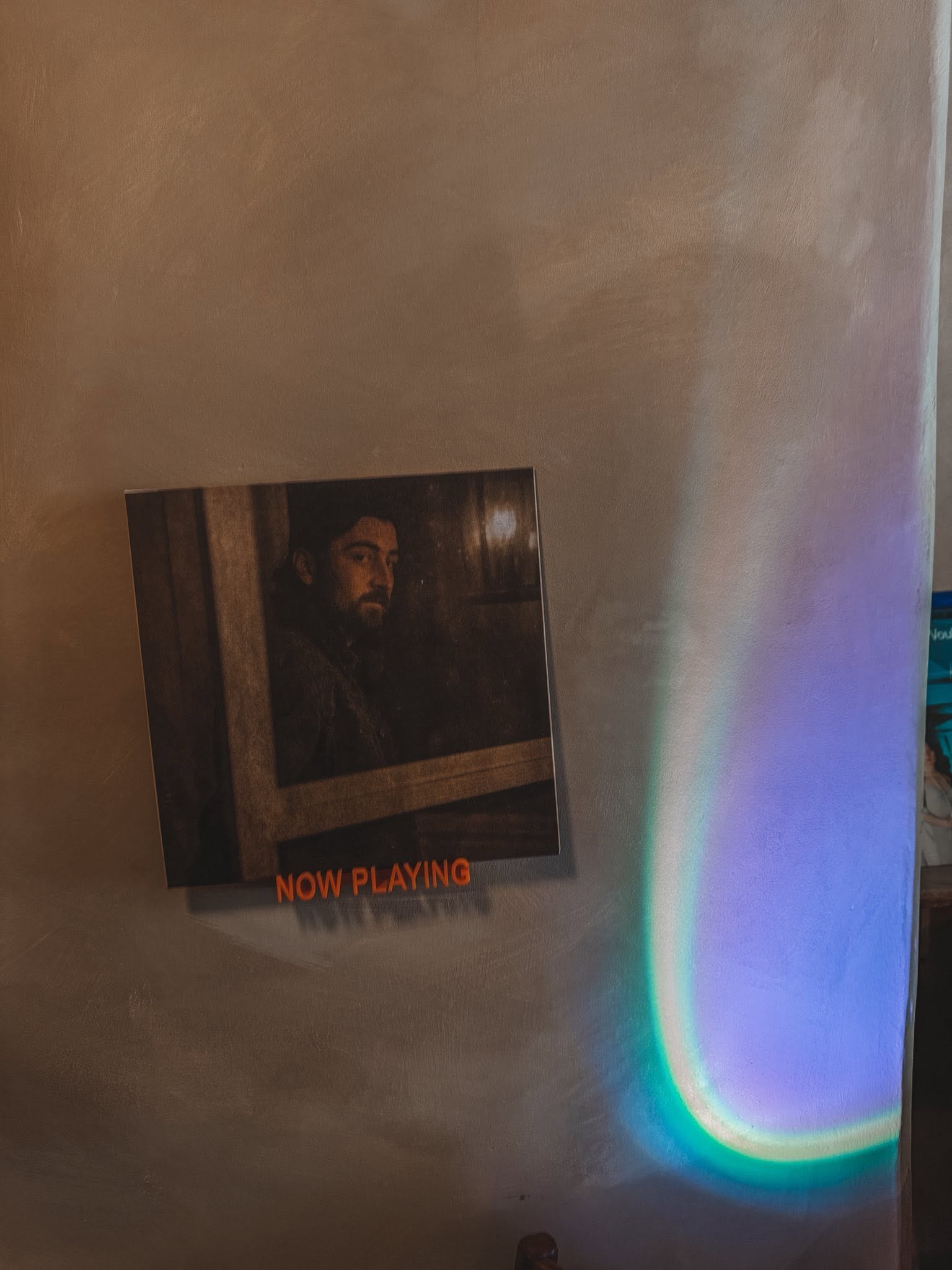
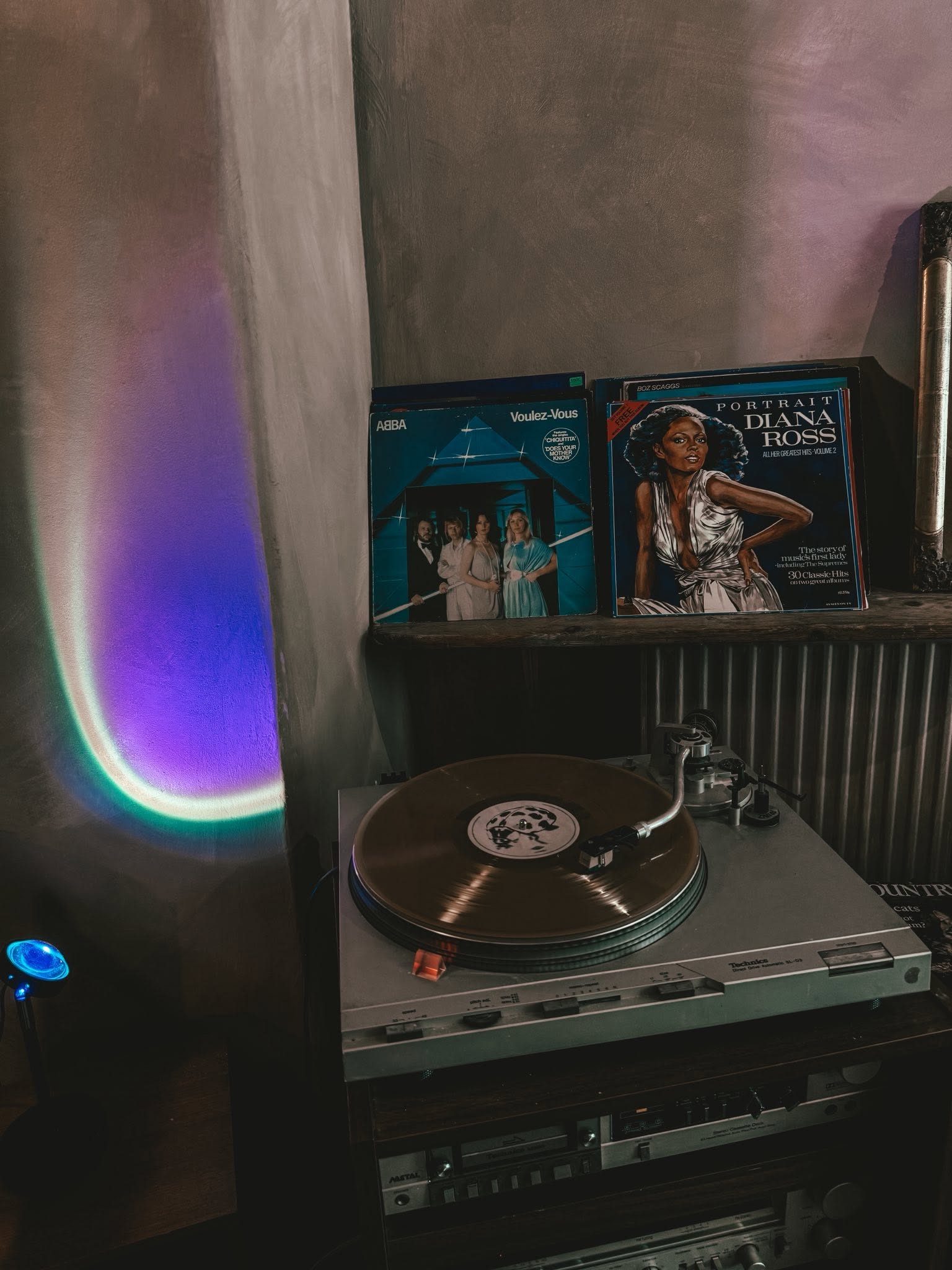
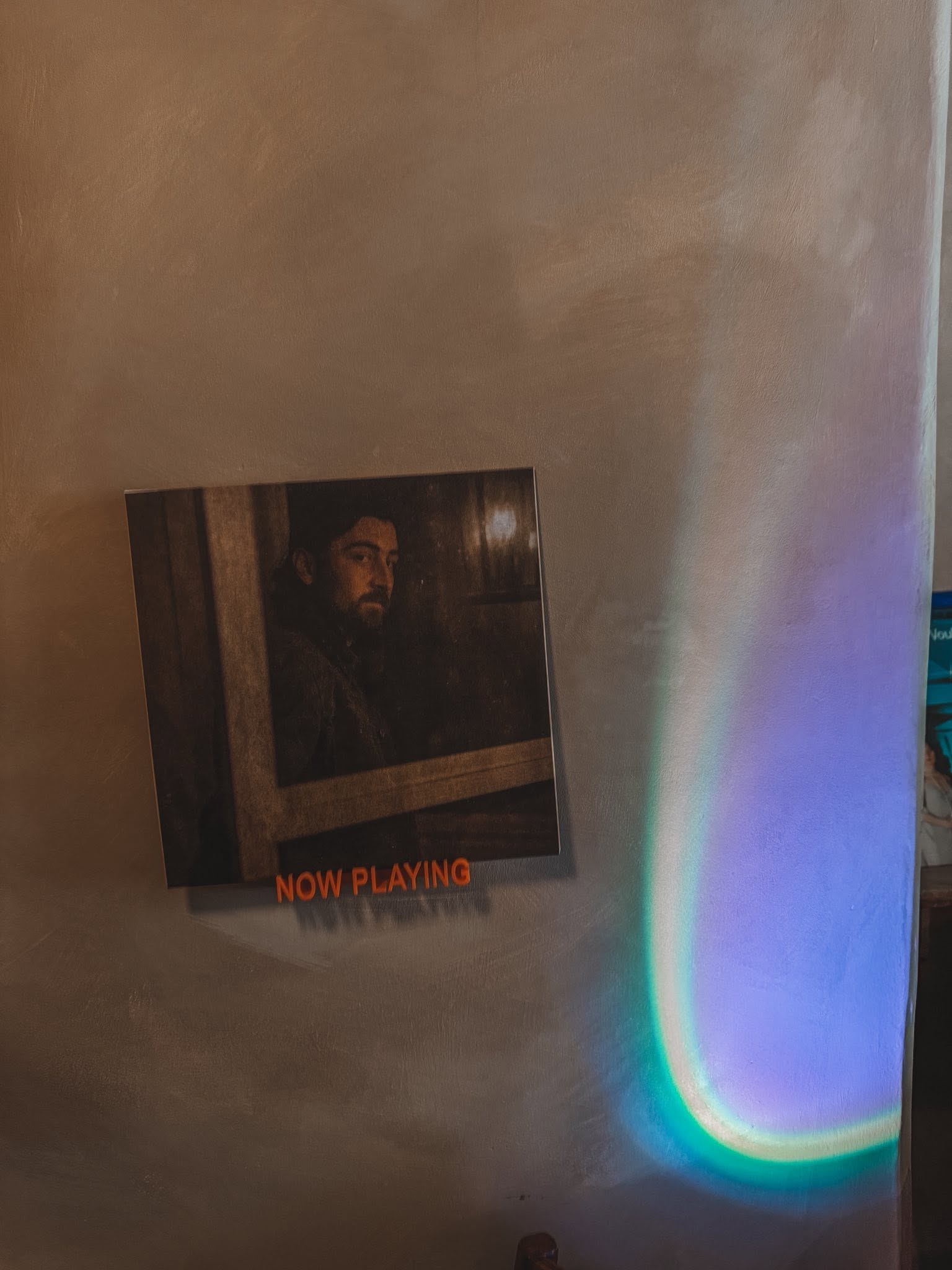
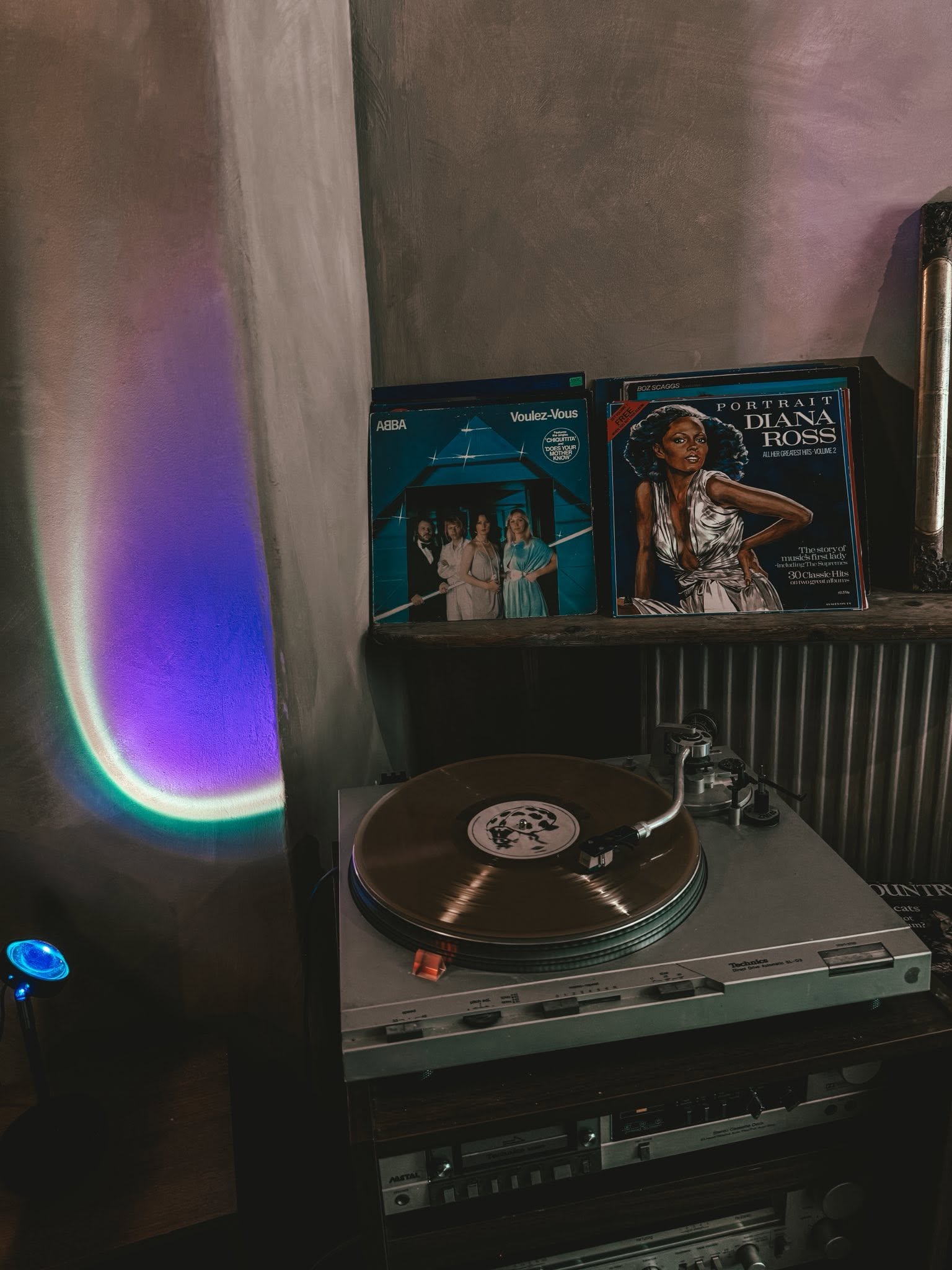
And then there was the music corner. An old record player sat beneath a collection of vinyl records, including ABBA and Diana Ross, while coloured lighting cast an almost theatrical glow across the wall. I loved the unexpected combination. Here was a building whose origins stretched back to the fifteenth century, casually accommodating twentieth-century music and contemporary café culture. A vintage coffee grinder stood elsewhere beneath the timber beams, adding another wonderfully nostalgic detail. Rather than looking like a carefully arranged exhibition, these objects seemed to contribute naturally to the personality of the place. Foletta’s own description of its concept includes coffee and vinyl, and I could see how music was part of its identity rather than simply something playing in the background. I have always found that interesting spaces tend to have several layers of character, and this particular combination of historic architecture and retro furnishings was especially appealing.
INTERIOR
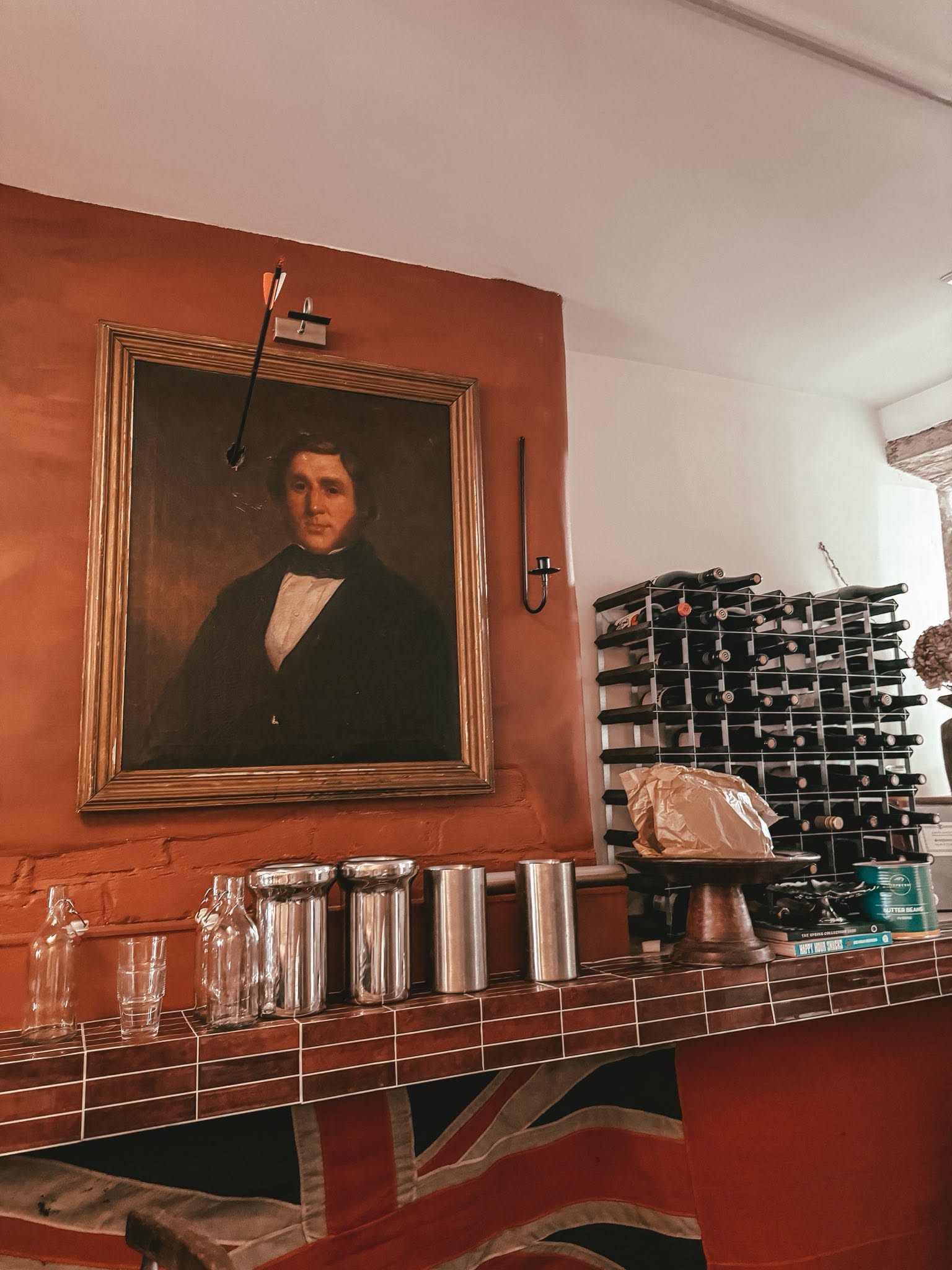
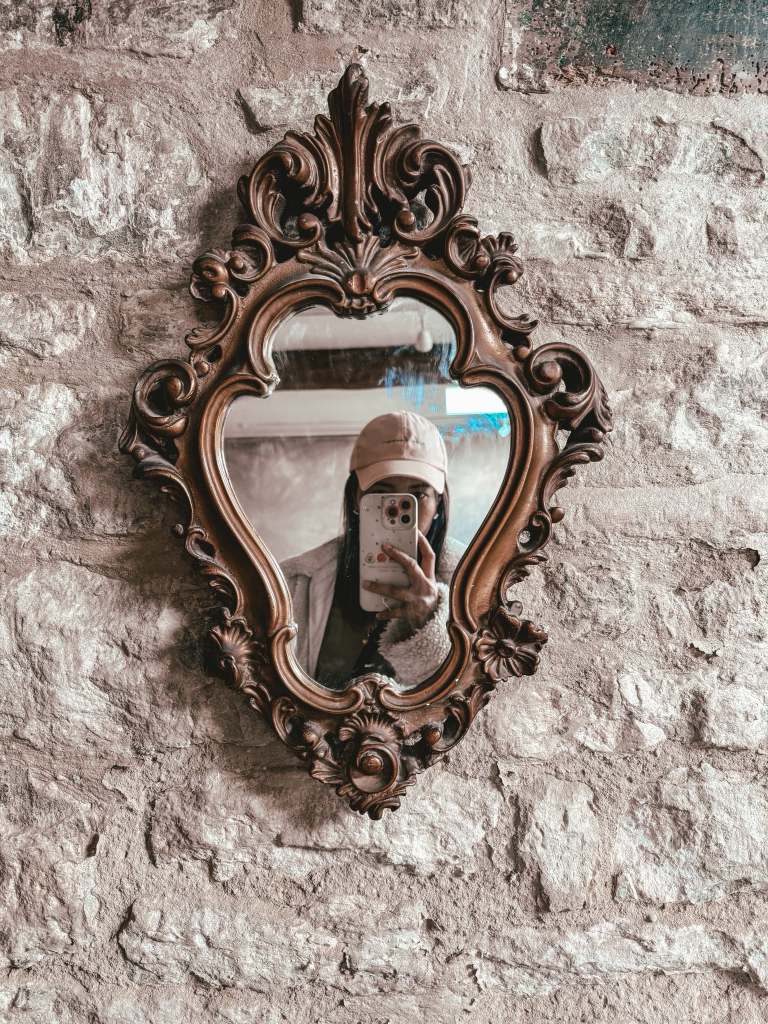
Another pleasant surprise was discovering that the café extended beyond the main seating area. One room featured comfortable vintage sofas, an armchair, patterned rugs, exposed stonework, and a table-football game. It almost felt like entering somebody’s old-fashioned sitting room, except that someone had apparently decided a little friendly competition would improve the atmosphere. The furniture was delightfully mismatched, and the room had a rather relaxed quality that made it easy to imagine people spending an afternoon there. In another corner, a beautiful ornate mirror hung against a rough stone wall. Naturally, I took a photograph of myself in it. I am not entirely sure when photographing one’s reflection in antique mirrors became an essential part of my travel routine, but apparently it has. The elaborate frame was too lovely to ignore, and I thought it looked particularly striking against the uneven stonework. Somewhere in my collection of photographs from this visit, the mirror probably receives almost as much attention as the café itself.
PERSONALITY
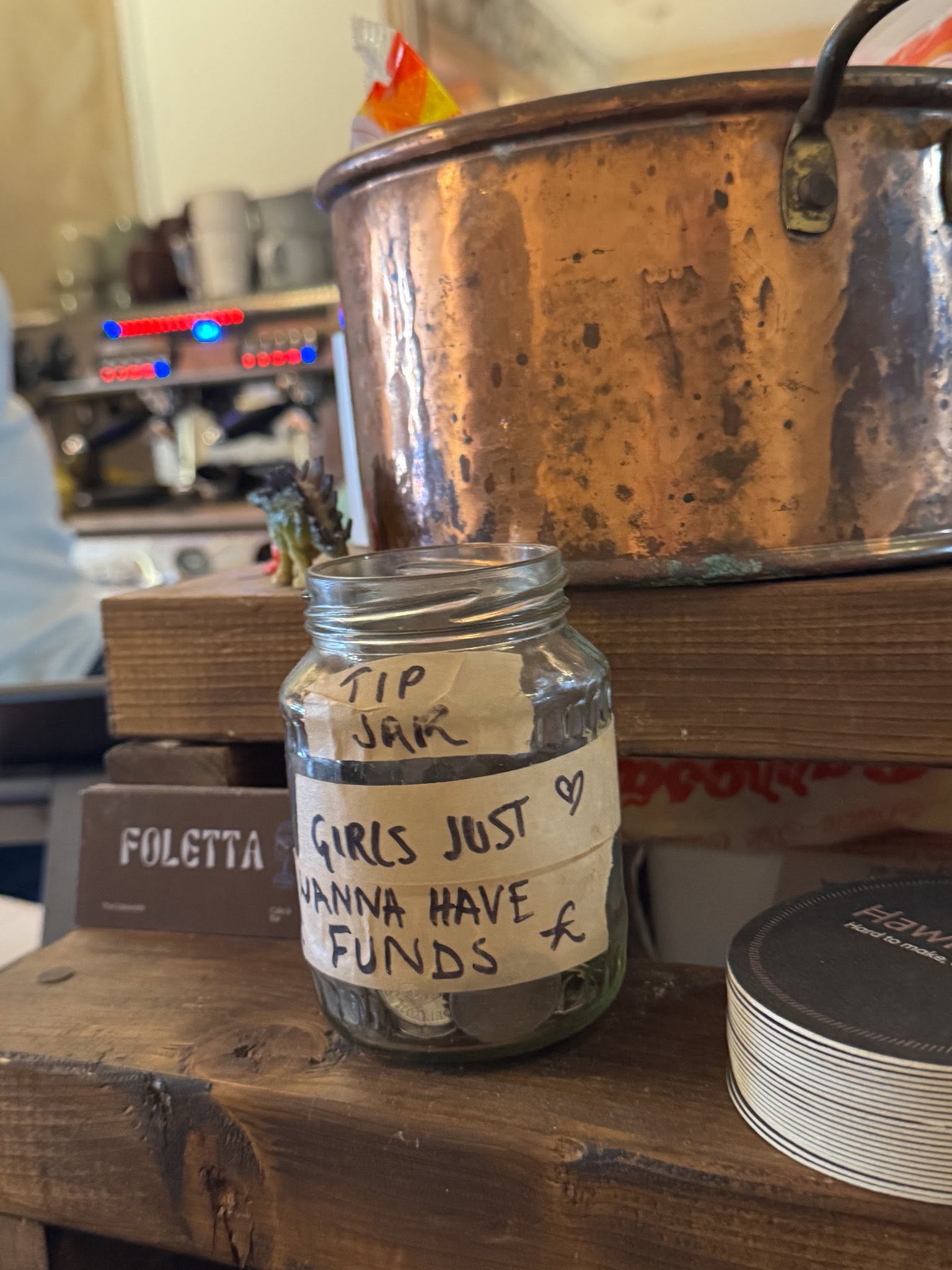
What I appreciated most about Foletta was that it had personality without taking itself too seriously. Near the counter stood a tip jar bearing the handwritten message, “Girls Just Wanna Have Funds.” I thought that was rather brilliant. A little humour tucked among centuries-old beams and vintage furnishings was exactly the sort of detail that made the place feel approachable. Sometimes beautifully decorated establishments can seem almost too conscious of their own aesthetic, leaving visitors slightly reluctant to disturb the arrangement. Foletta did not give me that impression. Its slightly eccentric mixture of old objects, playful details, and comfortable furniture suggested somewhere intended to be enjoyed rather than merely admired. Of course, I still proceeded to photograph practically everything, but that was entirely my own doing.
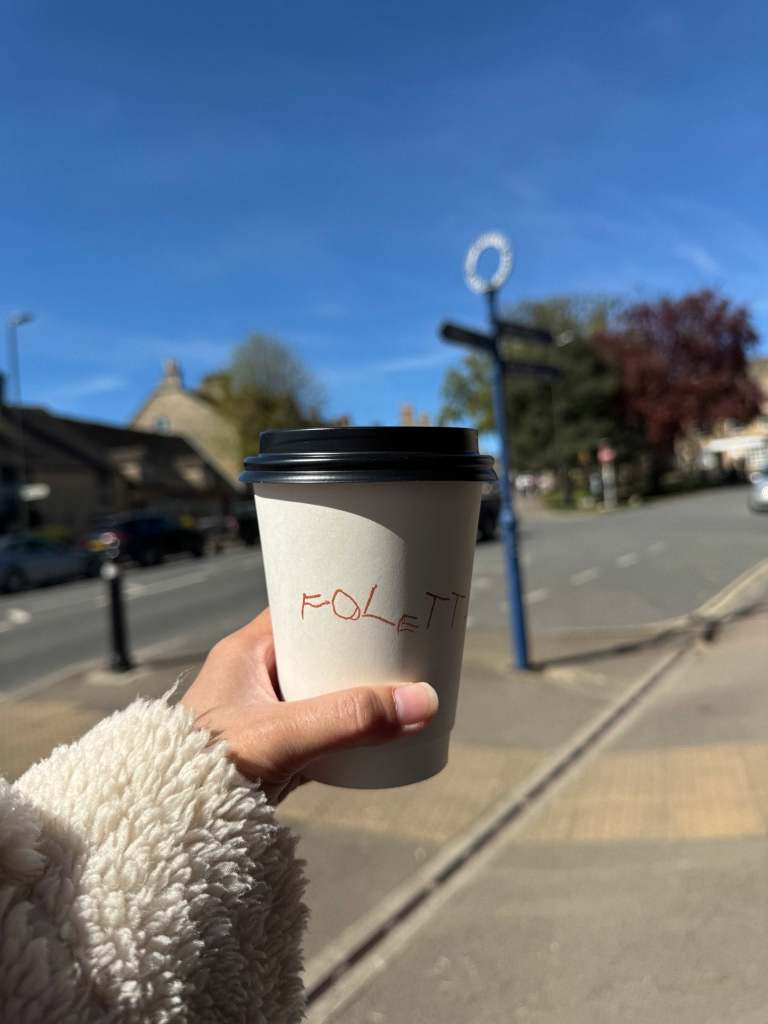
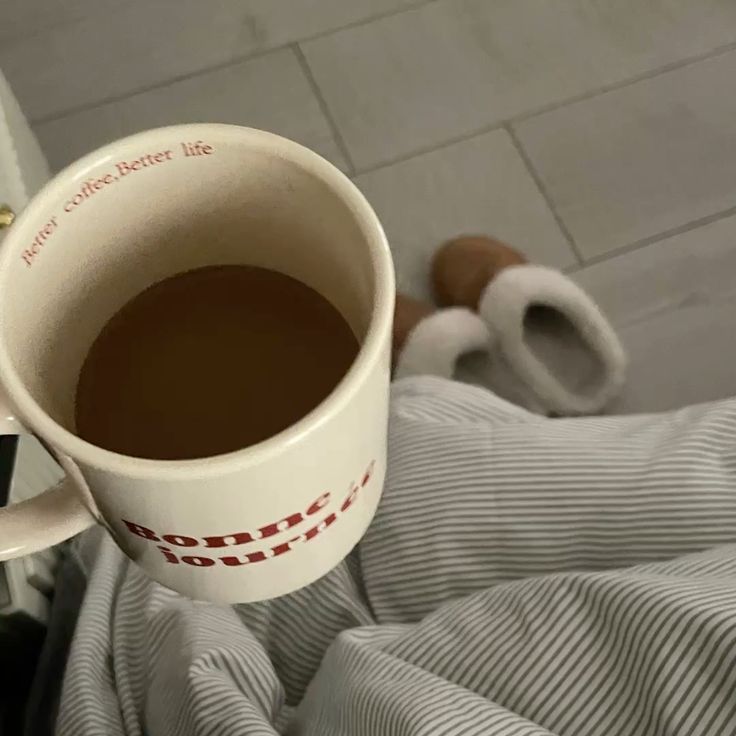
As for the coffee, ours was a relatively simple stop, and I would rather be fair about what I can genuinely review. I remember carrying my takeaway cup outside into the beautiful April sunshine, the name Foletta handwritten across it, with the blue sky and the streets of Stow-on-the-Wold stretching behind me. It was one of those ordinary travel moments that became unexpectedly memorable because of everything surrounding it. I did not sample enough of the menu to offer an informed assessment of its food, nor would I pretend that one coffee makes me an authority on the establishment’s entire offering. What I can speak about with considerable enthusiasm, however, is the atmosphere. From the unusual layout to the lovingly assembled furnishings, Foletta made a strong impression on me as a place with a distinctive character.
Having looked further into its background, I also discovered that Foletta describes its menu as drawing inspiration from cherished family recipes and the family’s connections to England, Australia, and Italy. The establishment operates as more than a conventional daytime café, hosting events and making use of its characterful rooms for social gatherings. I rather like that idea, particularly in a historic building where different spaces can offer different experiences. Our visit only gave us a glimpse of what the establishment has to offer, but it was enough to make me curious about returning. There is something rather appealing about independent places that grow from personal ideas and family history rather than a predictable formula. They may not always appeal to everyone, but when their particular character happens to match your own taste, the experience can be especially enjoyable.
Would I recommend Foletta?
Certainly, although I think it helps to understand what makes it special. If you prefer contemporary interiors, minimalist furniture, wide-open spaces, and perfectly uniform seating arrangements, its eclectic layout may not be your preferred style. But if you appreciate historic buildings, antiques, vintage music, warm interiors, and establishments with an individual personality, I would definitely suggest having a look inside while visiting Stow-on-the-Wold. It is also worth remembering that our experience was primarily a coffee stop and an opportunity to explore the surroundings, rather than a comprehensive food review. My recommendation is therefore based principally on the charm of the setting and how much I enjoyed being there. I would happily return to try more of the menu and experience the place without spending quite so much time studying the furniture, although I suspect the latter promise would be difficult to keep.
Looking through my photographs now, months after that April afternoon, I am amused by how thoroughly I documented the interiors. There are pictures of wooden beams, antique chairs, cabinets, lamps, a coffee grinder, vinyl records, an ornate mirror, and even the tip jar. The actual coffee makes an appearance too, although rather late in the collection, which probably reveals more about my priorities than I intended. But these photographs also remind me why I enjoy discovering independent establishments while travelling. I am interested not only in the obvious attractions of a place but also in the small decisions people make about their surroundings, the objects they choose to preserve, and the details that give an ordinary room its personality. A place does not have to look new, expensive, or perfectly coordinated to be memorable; sometimes its imperfections and accumulated history are precisely what make it worth remembering. Foletta demonstrated that rather nicely, without needing an elaborate explanation or a grand architectural spectacle.
I left with my coffee, an excessive number of photographs, and a renewed appreciation for people who see the possibilities in old buildings rather than treating their age as something that needs correcting. Foletta may have been a relatively small part of our Cotswolds outing, but it became one of the places I remembered most clearly afterwards. Perhaps that is the peculiar pleasure of travelling without expecting every stop to be extraordinary. Occasionally, an interesting doorway leads to a room full of beautiful old furniture, a handwritten joke on a tip jar, and a perfectly pleasant afternoon. For someone who already has a weakness for antiques and unusual interiors, that is quite sufficient entertainment.
And should I ever return to Stow-on-the-Wold, I know exactly where I would like to stop for another coffee. Preferably with enough time to sit and enjoy it properly, rather than conducting another unsolicited photographic inventory of the premises.
Until the next coffee stop,
Anj
— still collecting memories, photographing furniture, and pretending I have enough space at home for more antiques.
Planning a visit? Foletta is located at 8 Park Street, Stow-on-the-Wold, Gloucestershire, GL54 1AQ, in the heart of the Cotswolds. Opening days and hours can vary, so check its official website before travelling.
Official website: https://www.foletta.co.uk/
Visited April 2026. This is an independent account of our experience, based on our visit and photographs. Background information about the establishment was checked against Foletta’s official website.






















Leave a Reply