
Two books down, two kingdoms’ worth of trouble, and a royal family desperately in need of supervision.
By Victoria Aveyard
Reading Journal: Currently Reading
Books Completed: Red Queen & Glass Sword
Next on My Shelf: King’s Cage & War Storm
Category: YA Fantasy & Dystopian Fiction | Political Fantasy | Book Reviews
“Anyone can betray anyone.”
— Victoria Aveyard, Red Queen
There is something deeply suspicious about a society that divides its citizens according to the colour of their blood. Blood already performs several perfectly respectable functions, including transporting oxygen, defending the body against infection, and occasionally making healthcare professionals question their career choices during particularly difficult shifts. Assigning it the additional responsibility of determining social class, political authority, and eligibility for wearing expensive crowns seems rather excessive. Nevertheless, this is precisely the arrangement Victoria Aveyard introduces in Red Queen, a fantasy series in which the privileged bleed silver, the ordinary bleed red, and almost everybody has a questionable relationship with honesty.
I have finished the first two books, Red Queen and Glass Sword, and I am beginning to suspect that trust is a luxury nobody in this fictional kingdom can afford. There are royal conspiracies, secret loyalties, unexpected powers, and enough political manipulation to keep an entire department of investigative journalists employed indefinitely. If the characters are not plotting against one another, they are concealing something important, reconsidering an alliance, or making an emotionally questionable decision that will almost certainly become somebody else’s problem.
Yet beneath the palace intrigue and spectacular displays of supernatural ability lies something considerably more interesting than the familiar fantasy of an ordinary girl discovering that she possesses extraordinary powers. Aveyard’s fictional society is built upon inequality, inherited privilege, and a carefully maintained belief that certain people are naturally entitled to rule over others. The more I read, the more fascinated I become by the contradictions within this world, particularly the ease with which people justify injustice when the existing arrangement happens to benefit them.
It is a rather uncomfortable subject, although thankfully the book provides enough lightning, betrayal, and royal drama to prevent the experience from resembling an unusually elaborate political science lecture.
What the Series Is About
Victoria Aveyard’s Red Queen series takes place in Norta, a kingdom divided by blood. Silvers possess extraordinary abilities and occupy society’s highest positions, while Reds live with poverty, restricted opportunities, and the threat of compulsory military service. The division is presented as natural and unquestionable, allowing the ruling class to justify its authority through abilities that ordinary citizens supposedly lack.
At the centre of the story is Mare Barrow, a seventeen-year-old Red from the Stilts whose future appears largely predetermined by her family’s circumstances. She has few opportunities for advancement, and the possibility of being conscripted into the military hangs over her life. But an unexpected encounter brings her into the royal palace, where an extraordinary discovery threatens the foundation of Silver supremacy.
Mare possesses an ability that, according to everything her society believes, she should not have.
Naturally, the royal family responds to this development with the kind of transparency and ethical leadership one might expect from a deeply insecure monarchy. Rather than acknowledge that their entire social hierarchy may be based upon a dangerously flawed assumption, they construct an elaborate explanation intended to preserve the existing order.
What follows is a story of political deception, shifting loyalties, rebellion, and the complicated consequences of becoming a symbol of something far larger than oneself.
The first book, Red Queen, introduces Mare to the dangerous world of Silver royalty and establishes the central conflicts surrounding power, loyalty, and identity. Its sequel, Glass Sword, expands the narrative beyond the palace, exploring the growing rebellion and the personal consequences of resisting an entrenched political system.
I have yet to read King’s Cage and War Storm, so my thoughts here concern only the first two novels. I am deliberately leaving the larger series’ conclusion unexplored, partly to avoid spoilers and partly because I prefer forming an opinion after an author has finished making their argument.
And judging by the first two books, Aveyard still has several arguments, betrayals, and emotionally complicated conversations waiting for me.
Red Queen: An Ordinary Girl in a Very Unordinary Kingdom
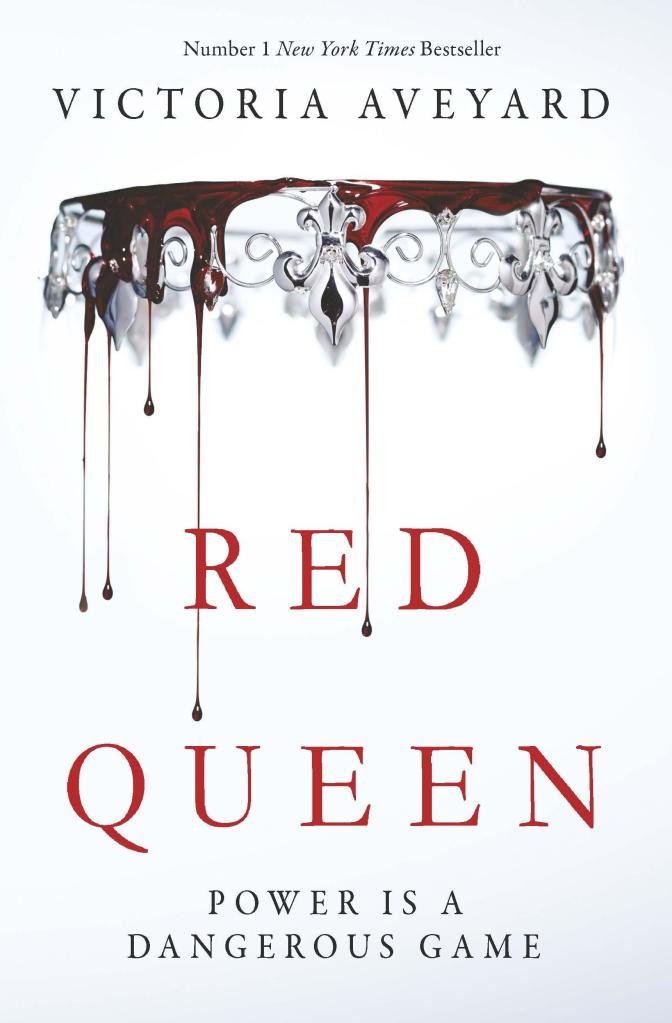
The first book immediately captured my attention through its premise.
Mare Barrow is not the conventional fantasy heroine who begins her journey with an established sense of destiny. She is shaped by the practical realities of poverty, family responsibility, and limited opportunity. Her initial concerns are not particularly glamorous. She wants to protect those she loves and avoid a future that appears to offer very little freedom.
I appreciated this beginning because it grounds the fantasy in recognisable human circumstances. Before Mare becomes involved in royal politics, she is someone attempting to navigate a society in which the opportunities available to her are determined largely by birth.
The contrast becomes particularly effective when she enters the palace.
Aveyard presents the Silver court as a place of extraordinary wealth, elaborate ceremony, and carefully maintained appearances. Beautiful surroundings conceal a political environment in which information is valuable, public perception is carefully controlled, and personal relationships are inseparable from ambition.
The setting has an almost cinematic quality. I could imagine the polished floors, elaborate gowns, intimidating architecture, and elegantly dressed individuals smiling politely at people they would happily undermine before dinner.
What makes the palace especially interesting is that its luxury does not merely provide attractive scenery. It represents the extraordinary distance between the ruling class and the ordinary citizens whose labour sustains the kingdom.
Mare’s presence disrupts that comfortable arrangement.
She is outspoken, suspicious, and frequently unwilling to accept the explanations offered by those in authority. Her perspective allows readers to question the assumptions upon which Norta’s hierarchy depends.
However, I cannot claim to have agreed with every decision she makes.
Mare can be impulsive, secretive, and spectacularly stubborn. There were moments when I wanted to remind her that possessing electrical powers does not automatically make every personal judgement correct. Yet her imperfections also make her more interesting than a heroine whose decisions are consistently wise and morally uncomplicated.
She is a young woman attempting to understand an unfamiliar world while navigating circumstances in which almost every relationship carries political consequences.
That would test anyone’s judgement.
Even without the additional inconvenience of being surrounded by people capable of manipulating fire, metal, and minds.
Glass Sword: When Rebellion Becomes More Complicated Than Resistance
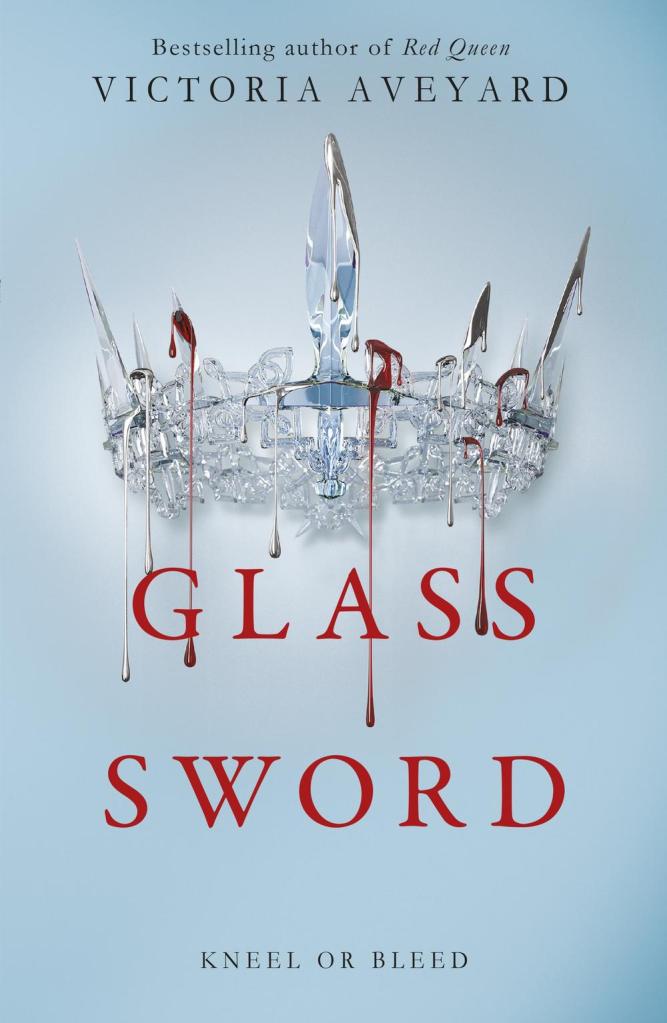
If Red Queen introduces an unjust society and the possibility of challenging it, Glass Sword begins examining what happens when resistance develops into a far more complicated undertaking.
The second book expands Aveyard’s fictional world, moving beyond the palace and introducing new characters, abilities, and political tensions. Mare’s circumstances change considerably, and her responsibilities become increasingly difficult to separate from her personal fears and loyalties.
I appreciated this expansion because it challenges the simplicity of the first novel’s central conflict.
Recognising injustice is one thing. Determining how to respond to it, particularly when other people’s lives are affected by our decisions, is considerably more difficult.
Mare begins confronting the burden of becoming a symbol of resistance. Her unusual abilities make her valuable to the rebellion, but they also expose her to expectations that no individual could reasonably satisfy without considerable personal cost.
What interested me most was the way Aveyard begins questioning the relationship between good intentions and good decisions.
Mare wants to help others, yet her determination can make her dismissive of perspectives that differ from her own. Her fear of betrayal influences her relationships, sometimes preventing her from recognising the value of cooperation.
I found these contradictions believable, although occasionally frustrating.
There were sections in which her internal conflicts appeared to repeat themselves, and I felt that the novel could have benefited from a more economical treatment of certain emotional dilemmas. The search-driven structure also makes portions of the narrative feel less focused than the first book’s palace setting.
Nevertheless, Glass Sword develops an important aspect of the series: rebellion is not automatically virtuous simply because the system being challenged is unjust.
People who share a common enemy may have different ambitions, priorities, and beliefs about how change should occur.
That distinction gives the second book greater political complexity, even when its pacing becomes uneven.
Mare Barrow: Courage, Contradictions, and Questionable Decisions
I have mixed feelings about Mare, which is probably one of the reasons I find her interesting.
I admire her determination to challenge the circumstances imposed upon her. She refuses to accept that her birth should define the entirety of her future, and she possesses a strong instinct to protect people who have been treated unfairly.
At the same time, she can become so absorbed in her own interpretation of events that she struggles to recognise when her actions are creating additional problems.
There is a difference between independence and refusing to consider anybody else’s advice. Mare occasionally approaches that distinction with the enthusiasm of someone determined to test how much chaos a single person can generate.
But I think Aveyard understands something important about human behaviour.
People do not automatically become emotionally mature because circumstances require them to demonstrate courage. Fear, anger, insecurity, and previous disappointments can continue influencing their decisions even when they possess extraordinary abilities.
Mare’s reluctance to trust others is particularly significant.
The betrayals she experiences make her suspicious of people’s intentions, and that suspicion becomes both a protective instinct and a limitation.
I find this psychologically interesting because trust always involves uncertainty. We cannot know another person’s every intention, yet relationships and cooperation become difficult when we insist upon eliminating all possibility of disappointment.
Mare wants to protect herself and the people she loves, but she must also confront the possibility that isolation cannot provide every answer.
I am curious to see how Aveyard develops this tension in the remaining books.
For now, I appreciate Mare most when her convictions are challenged rather than merely celebrated.
Cal, Maven, and the Politics of Being a Prince
The royal characters provide some of the first two books’ most interesting conflicts, particularly because privilege does not affect everyone in the same way.
Cal has been raised within the institutions of Silver authority. His upbringing has shaped his understanding of duty, leadership, and political responsibility. He possesses qualities that make him sympathetic, yet he also faces the difficulty of questioning a system that has provided him with identity, opportunity, and status.
I find this contradiction more interesting than the familiar appeal of a handsome fictional prince.
It is relatively easy to recognise injustice when we are personally disadvantaged by it. The more difficult question is whether we are willing to challenge an unfair arrangement when doing so may require surrendering something we value.
Cal’s position brings this problem into focus.
Maven offers a very different exploration of power, ambition, and emotional manipulation.
Without revealing the major developments of the first novel, I will say that Aveyard uses his character to examine the difference between outward appearances and underlying intentions. His relationship with Mare introduces uncertainty into the reader’s understanding of loyalty, affection, and political motivation.
What I appreciate is that the royal relationships cannot be separated entirely from the wider conflict.
Love and loyalty are complicated enough in ordinary circumstances. Introducing hereditary power, military authority, and deeply entrenched political inequality makes matters considerably worse.
There were moments when I thought everyone involved might benefit from a lengthy conversation conducted somewhere far away from the palace.
Preferably with an impartial mediator.
And absolutely no weapons.
Beneath the Crowns: The Problem with Inherited Privilege
The political foundation of Red Queen is what makes the series more interesting to me than an ordinary romantic fantasy.
Norta’s hierarchy is justified through the belief that Silvers are naturally superior to Reds. Their extraordinary abilities reinforce the idea that political authority belongs to those with silver blood.
Yet the discovery of people whose abilities contradict this assumption exposes a fundamental weakness in the system’s ideology.
If the distinction between rulers and subjects is not as absolute as everyone has been taught, what happens to the moral justification for their unequal treatment?
I appreciate how Aveyard transforms this question into a dramatic fictional conflict.
Throughout history, societies have justified unequal access to rights, opportunity, and authority through inherited status, class, ancestry, and claims of natural superiority. These systems often become so deeply embedded in everyday life that people begin treating them as inevitable rather than constructed.
Norta exaggerates this pattern through supernatural abilities, but the underlying mechanism remains recognisable.
The privileged benefit from the existing arrangement and therefore have strong incentives to preserve it. Those who suffer under the system face the additional challenge of convincing others that circumstances long considered normal are fundamentally unjust.
What fascinates me is how power influences the arguments people are willing to accept.
We are often remarkably principled when condemning disadvantages imposed upon ourselves. Maintaining the same principles when they threaten our own privileges requires considerably more honesty.
A society reveals much about its values not through the privileges it celebrates, but through the people it expects to accept less without questioning why.
This is the idea I find most compelling in Aveyard’s fictional world.
I would like to see the remaining books explore the institutions sustaining Silver authority in greater depth. The political premise is fascinating, but the first two novels occasionally give more attention to individual relationships than to the economic and social mechanisms that maintain the caste system.
Still, the foundation is strong enough to make me curious about where the larger conflict will lead.
The Art of Betrayal: Why Trust Is the Most Dangerous Currency
One of the most memorable features of the first two books is the constant uncertainty surrounding people’s intentions.
Aveyard understands how effectively secrets can sustain narrative tension. Her characters conceal information, negotiate competing loyalties, and repeatedly discover that personal relationships can be used for political advantage.
In the first book particularly, the palace becomes an environment in which appearances are carefully managed.
Beautiful clothing and impeccable manners provide little reassurance about anyone’s character.
This is where the series becomes genuinely entertaining.
There is something wonderfully dramatic about fictional aristocrats conducting polite conversations while privately planning one another’s downfall. The amount of emotional energy devoted to maintaining these deceptions is remarkable. I sometimes wonder whether Norta’s political elite might have achieved considerably more had they spent half as much time addressing the kingdom’s problems as they did protecting their own secrets.
But beneath the entertainment lies a serious observation about trust.
When deception becomes a normal feature of political life, people begin interpreting every relationship through suspicion.
Loyalty becomes difficult to establish, and even sincere intentions can be misunderstood.
I found myself considering how closely this resembles aspects of ordinary human behaviour, although thankfully most real-life disagreements do not involve electricity or royal succession.
We make assumptions about people based upon limited information. We sometimes interpret their choices through our own fears or previous experiences. And when trust has been damaged, we may begin anticipating betrayal even where none exists.
Aveyard explores these instincts through increasingly dramatic circumstances.
The difficulty, from a literary perspective, is that repeated betrayals can gradually lose their impact if readers begin expecting every apparent alliance to conceal another deception.
That is one aspect I will be watching as I continue the series.
A surprising revelation is powerful because it changes our understanding of a story. If every relationship becomes suspicious by default, surprise becomes harder to sustain.
The Writing: Fast-Paced, Cinematic, and Occasionally Overcrowded
Aveyard’s writing is one of the reasons the first two books are easy to become absorbed in.
Her prose is accessible, her descriptions are vivid without becoming excessively elaborate, and her dialogue frequently sustains the tension between characters.
I particularly enjoyed the visual contrast between Mare’s life in the Stilts and the luxury of the Silver palace. The settings reinforce the series’ political ideas without requiring constant explanation.
The supernatural abilities also give the story a striking visual quality. Scenes involving electricity, fire, and other powers are easy to imagine as part of an ambitious cinematic adaptation.
However, the two books differ in their narrative strengths.
Red Queen benefits from a clearly defined setting and central mystery. The palace provides a contained environment in which relationships, political tension, and revelations develop with considerable momentum.
Glass Sword expands that world, but its broader structure occasionally makes the narrative feel less tightly controlled. Some sequences become repetitive, and the continued emphasis on Mare’s emotional struggles can slow the progression of the larger conflict.
I also wanted greater development of certain secondary characters. The series introduces individuals with interesting abilities and backgrounds, but the first two novels do not always give them sufficient space to become fully realised personalities.
Nevertheless, Aveyard demonstrates a strong understanding of suspense, particularly through the relationship between personal secrets and political consequences.
Her writing may not possess the complexity of more literary fantasy, but it succeeds in creating an engaging narrative world.
And sometimes an entertaining book is exactly what one wants.
Not every reading experience needs to involve a philosophical crisis, although Aveyard appears determined to provide several political ones for good measure.
What I Have Taken Away So Far
Having finished Red Queen and Glass Sword, I find myself thinking less about Mare’s extraordinary abilities and more about the ordinary human weaknesses that make her world so unstable.
Ambition, fear, jealousy, loyalty, pride, and the desire for control influence almost every major conflict in the story.
The supernatural powers may make these tendencies more spectacular, but they do not fundamentally change their nature.
I have always been interested in how people respond when they acquire authority or find themselves in circumstances where their decisions significantly affect others.
Power can provide opportunities to act according to our principles, but it can also make it easier to justify choices we would once have condemned.
In professional life, this distinction matters. Leadership and authority carry responsibilities towards people whose circumstances, perspectives, and needs may differ from our own. Having the power to make a decision does not automatically make that decision fair or wise.
As a nurse, I appreciate the importance of combining professional judgement with accountability, communication, and respect for others. Knowledge and authority are valuable, but their purpose should extend beyond the individual who possesses them.
Aveyard’s fictional world brings these questions into sharper focus through a society where power is literally visible in the abilities of its ruling class.
The series also makes me think about how easily a cause can become entangled with personal ambition.
People may begin with sincere intentions yet gradually adopt questionable methods when convinced that achieving their objective is sufficiently important.
This is the moral tension I hope Aveyard continues exploring in the remaining novels.
For now, the first two books have given me enough interesting ideas to make continuing the series worthwhile.
They have also reinforced a perfectly sensible personal policy: never trust a fictional royal court without conducting extensive background checks.
My Verdict So Far: Two Books Down, Two to Go
After completing the first two novels, I can say that Red Queen has established an intriguing fictional world with considerable potential.
The opening book is particularly effective at combining palace intrigue, social inequality, and dramatic revelations. I enjoyed its atmosphere, the uncertainty surrounding the central relationships, and the way Mare’s existence challenges the political assumptions of her society.
Glass Sword broadens the narrative and raises the stakes, although I found its pacing less consistent. The exploration of rebellion and responsibility is compelling, but certain sections feel repetitive, and some character conflicts occupy more attention than I would have preferred.
What keeps me interested is the series’ willingness to question the relationship between power and morality.
Aveyard creates characters who are flawed, frequently unreliable, and occasionally convinced that their intentions justify almost anything.
I appreciate that complexity, even when their decisions test my patience.
I am withholding an overall rating until I have finished King’s Cage and War Storm. Two books are enough to establish an opinion about the series’ direction, but not enough to evaluate how successfully its major themes and relationships are ultimately developed.
A strong beginning is valuable.
A satisfying conclusion is an entirely different accomplishment.
Would I Recommend It So Far?
Yes, particularly to readers who enjoy young adult fantasy with political intrigue, complicated relationships, and morally imperfect characters.
If you enjoyed The Hunger Games, Divergent, or The Selection, the first two Red Queen novels may appeal to you, especially if you prefer fantasy settings with supernatural abilities and royal politics.
The series is particularly engaging when exploring inherited privilege, rebellion, trust, and the ethical responsibilities accompanying power.
However, readers who prefer tightly structured narratives or more detailed political world-building may find certain elements underdeveloped.
Best read when: You want palace intrigue, unreliable alliances, dangerous abilities, and enough political betrayal to make you question whether anyone in the fictional kingdom has ever considered telling the truth.
My reading progress: Two of the four main novels completed. King’s Cage and War Storm are still waiting on my reading list, and I intend to reserve my final judgement until the last page.
The thought I would take away so far: Power may reveal what people are capable of, but the way they choose to use it reveals far more about who they are.
The Last Word: Trust Issues and Other Royal Accessories
I began this review questioning the wisdom of constructing an entire civilisation around the colour of somebody’s blood.
Two books later, I remain unconvinced that Norta’s ruling class has given sufficient consideration to the administrative, ethical, or political consequences of this arrangement.
What fascinates me, however, is how readily people within Aveyard’s world accept the hierarchy because it has always existed. The system appears natural to those who benefit from it, while those disadvantaged by it are expected to regard their circumstances as inevitable.
It is an uncomfortable reminder that familiarity should never be confused with fairness.
I also find myself increasingly interested in the characters who must decide whether their loyalties belong to individuals, institutions, or principles.
That distinction is easy to discuss in theory and considerably more difficult to practise when the choices involve people we care about.
I have not yet reached the end of Mare Barrow’s story, and there are enough unresolved questions to keep me curious about what comes next. I want to know how Aveyard will develop the consequences of rebellion, whether the characters will become more thoughtful about their decisions, and what her fictional kingdom might look like if its citizens finally begin questioning the assumptions that sustain it.
I suspect the answers will involve further betrayal, complicated alliances, and a significant amount of lightning.
For now, I have two more books waiting.
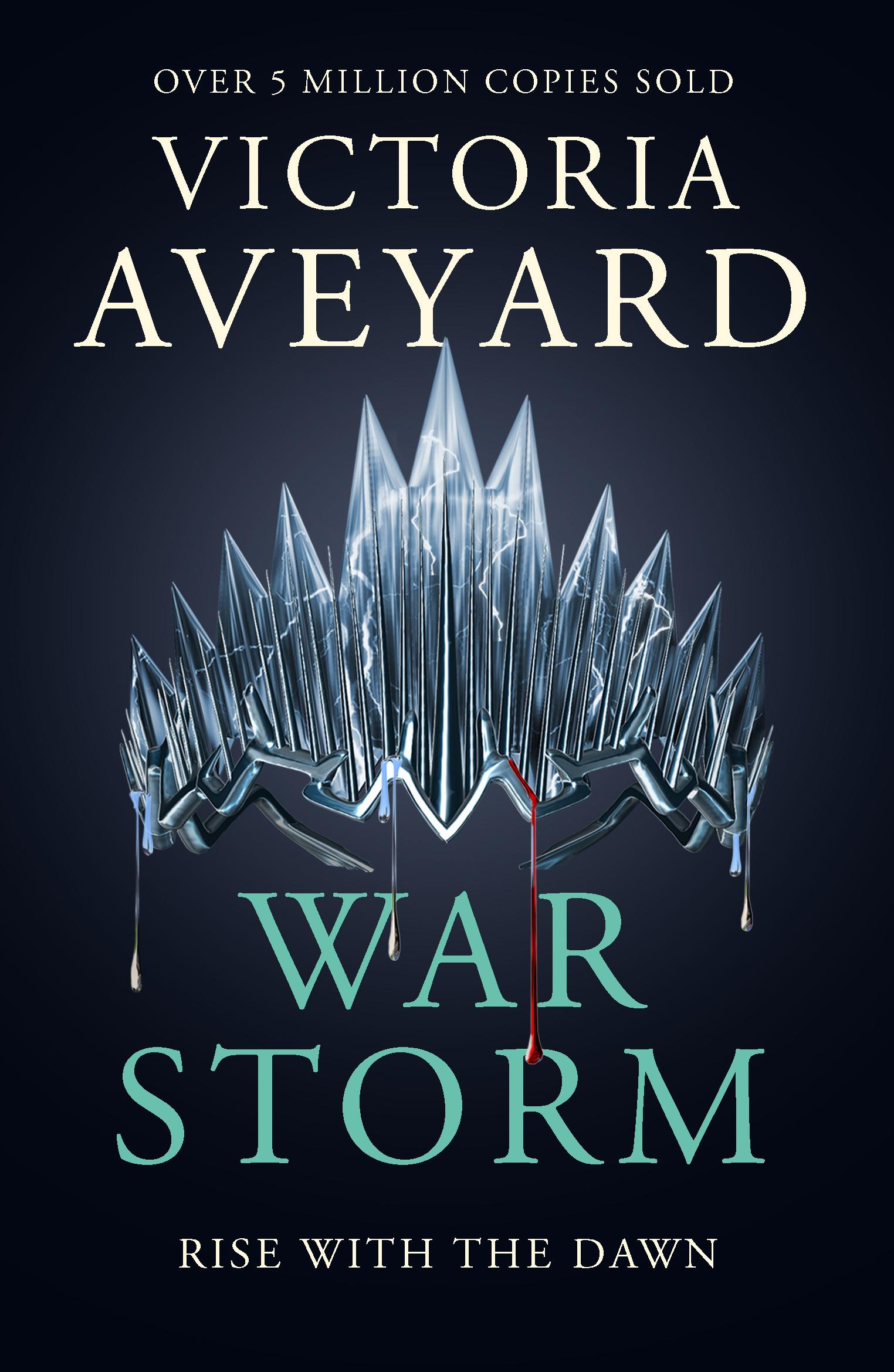
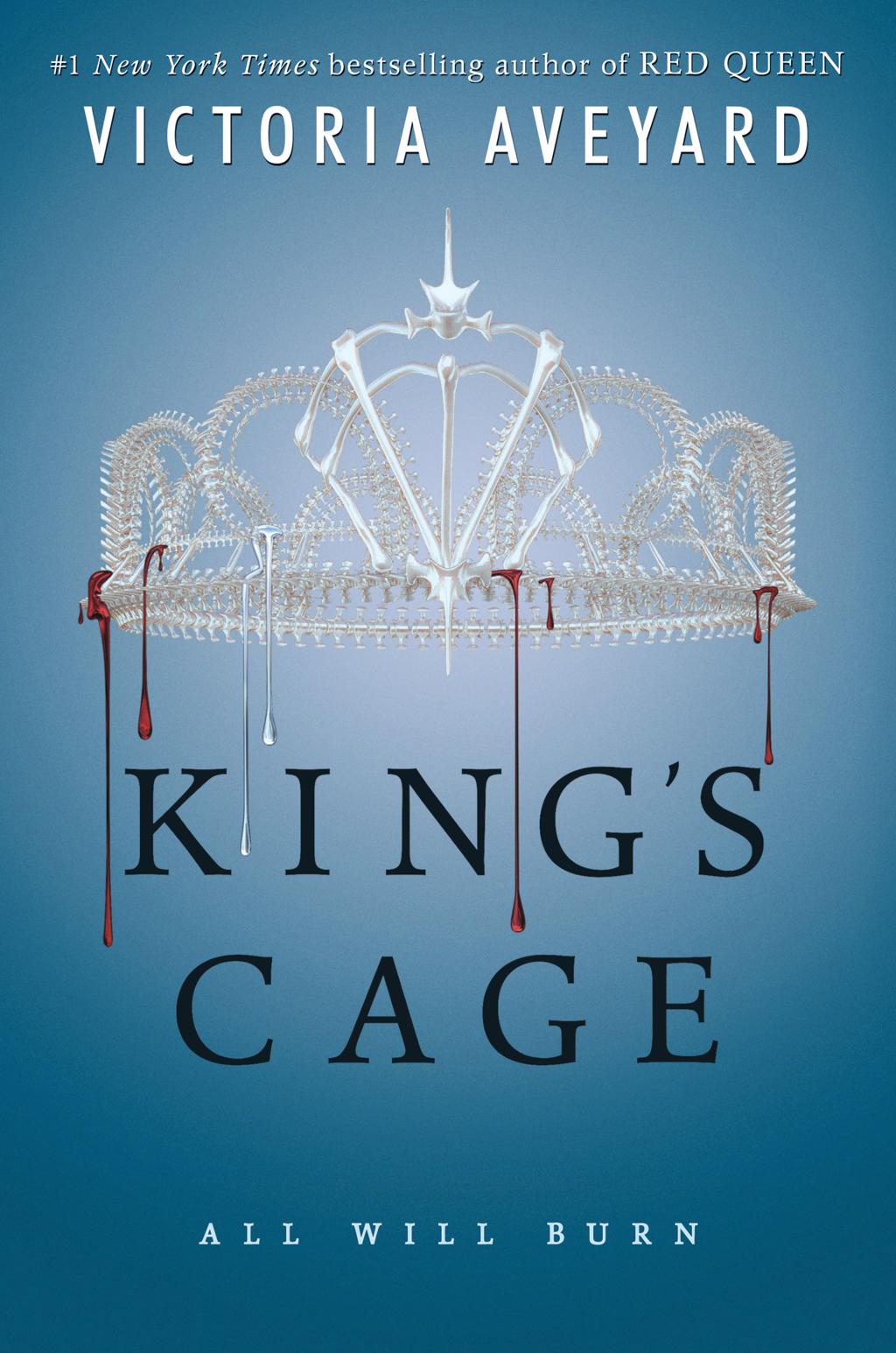
And if the first half of the series has taught me anything, it is that one should approach a royal family with caution, examine every apparent friendship, and never underestimate the political significance of a young woman who has had quite enough of everybody’s nonsense.
As for Norta’s future, I will withhold judgement until I have finished the remaining novels.
Unlike certain members of its monarchy, I prefer to gather the evidence before reaching a conclusion.
Yours in unfinished series, questionable monarchies, and literary trust issues,
Anj


































Leave a Reply